
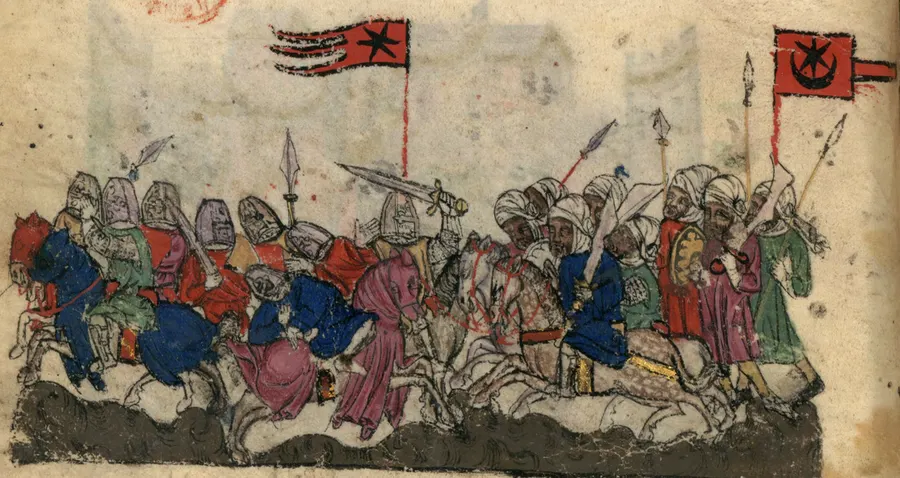
 The Battle of the Yarmuk in an early 14th-century manuscript of Hayton’s Flower of the Histories of the East, with the Arab army under a crescent banner and the Byzantines under a starImage: anonymous Catalonian illustrator · Public domain
Arab armies defeat the Byzantines at the Yarmuk and win Syria
Within a few years of the Prophet Muhammad’s death in 632, the armies of the new Muslim state had burst out of Arabia into the Byzantine province of Syria and taken Damascus. The emperor Heraclius gathered a large army of Byzantine troops and allies to drive them out, and the Arab commanders pulled back to unite their forces near the Yarmuk River, a tributary of the Jordan, on today’s border between Syria and Jordan. The battle lasted six days. Britannica dates its start to 20 August 636, while many other accounts make 20 August the final and decisive day. Under the generalship of Khalid ibn al-Walid, the Arab forces broke the Byzantine army, and many fleeing soldiers died in the steep ravines around the battlefield. Byzantine rule in Syria was over, Jerusalem surrendered soon afterwards, and the victory opened the way for the rapid spread of the early caliphate across the Middle East.
Source: Britannica: Battle of Yarmouk ↗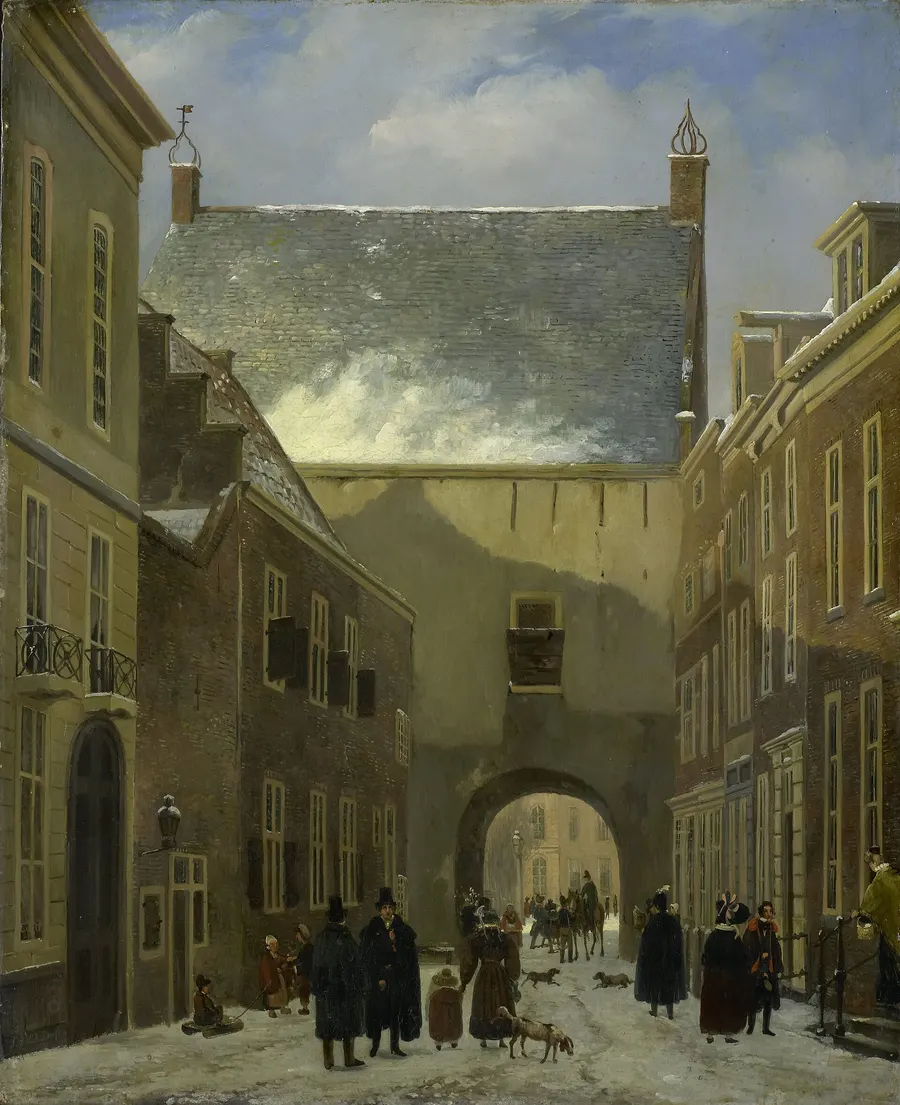 The Gevangenpoort in The Hague, the prison gate where the de Witt brothers were seized, in a painting in the RijksmuseumImage:
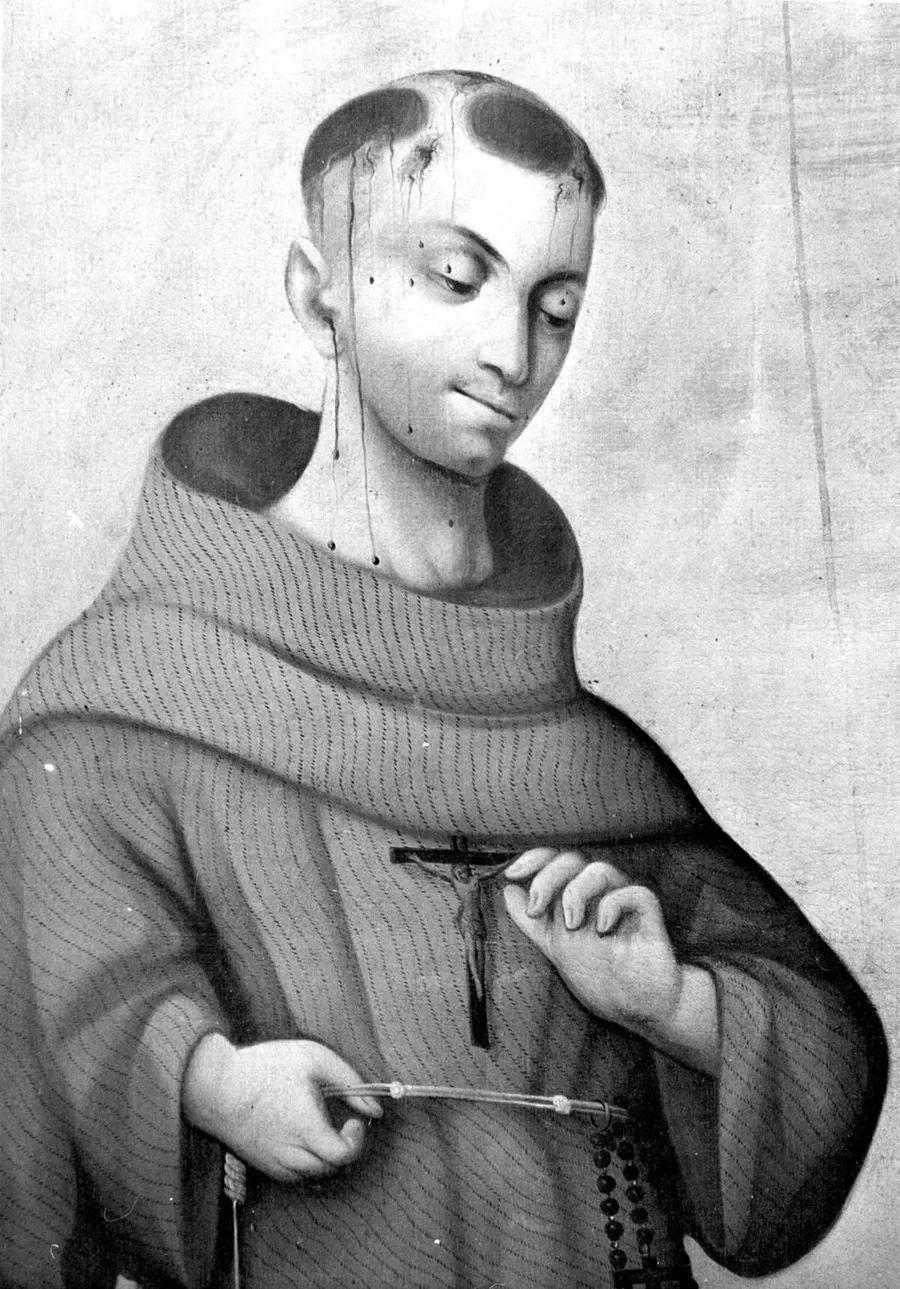 Francisco Garcés, the Franciscan friar who was present when the presidio site was chosenImage:
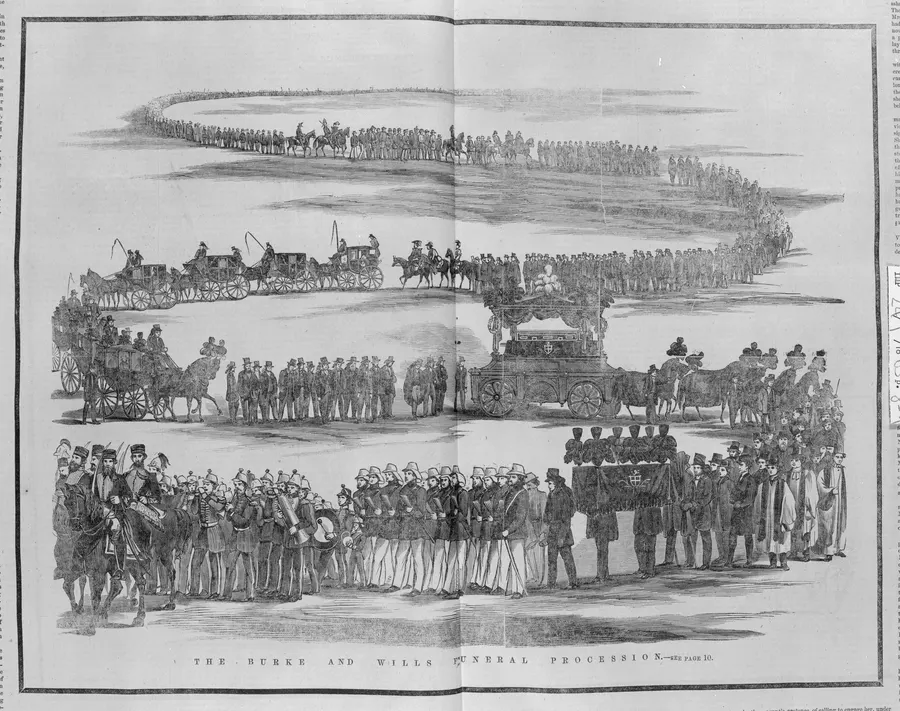 The funeral procession for Burke and Wills in Melbourne in January 1863, from the Illustrated Melbourne PostImage:
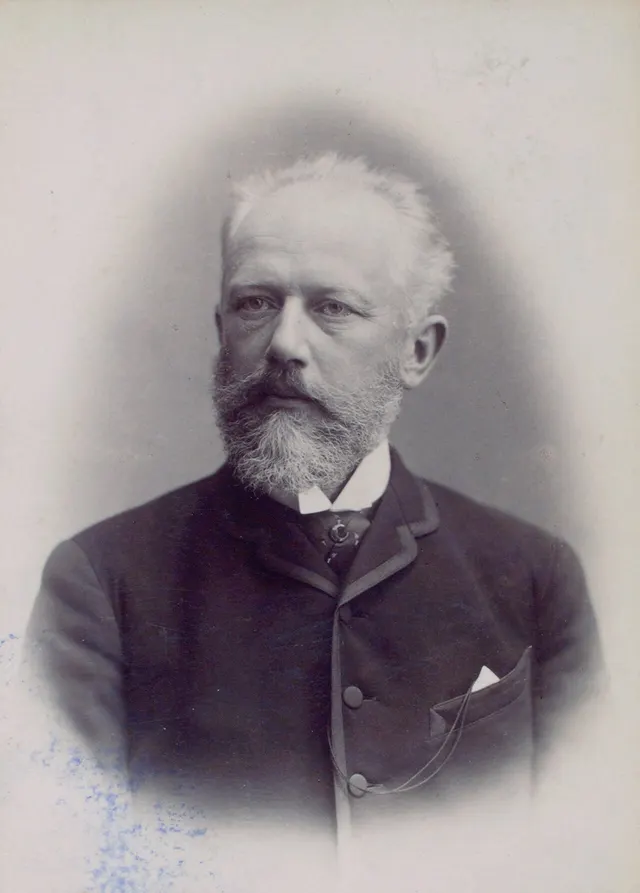 Pyotr Ilyich Tchaikovsky, photographed by Émile ReutlingerImage:
 A Tongmenghui membership certificate dated 1912Image:
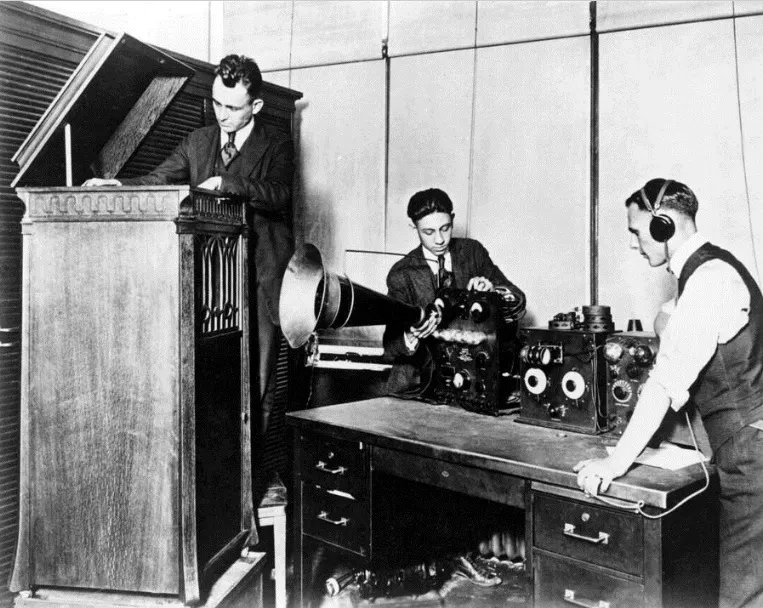 Staff at work in the 8MK radio station of the Detroit News in August 1920Image:
 A wartime poster carrying Churchill’s words about the RAF pilots of the Battle of BritainImage:
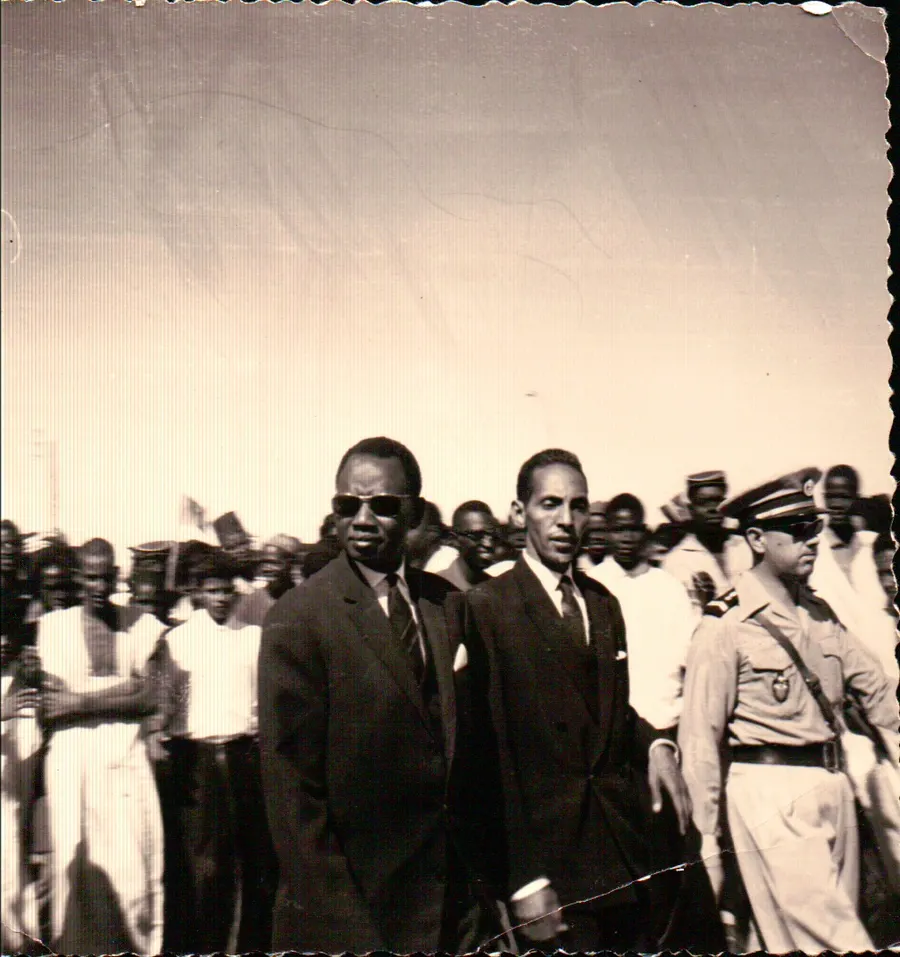 Mamadou Dia, head of Senegal’s government when it broke away from the Mali FederationImage:
 Burning barricades and Soviet tanks in Czechoslovakia on 21 August 1968, in a photograph held by the US National ArchivesImage:
 A Titan IIIE-Centaur rocket lifts Voyager 2 off from Cape Canaveral on 20 August 1977Image:
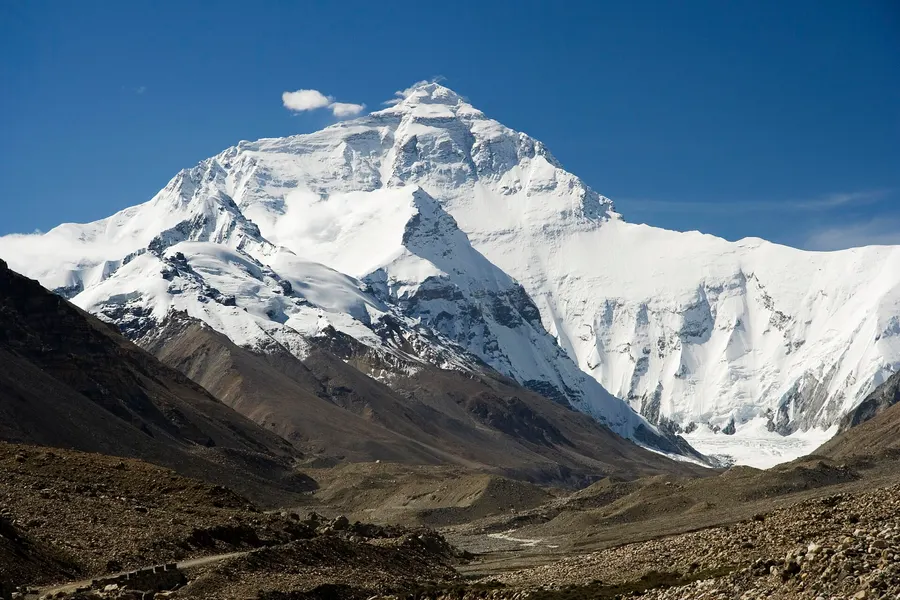 The north face of Mount Everest from the Tibetan side, the side Reinhold Messner climbed alone in 1980Image:
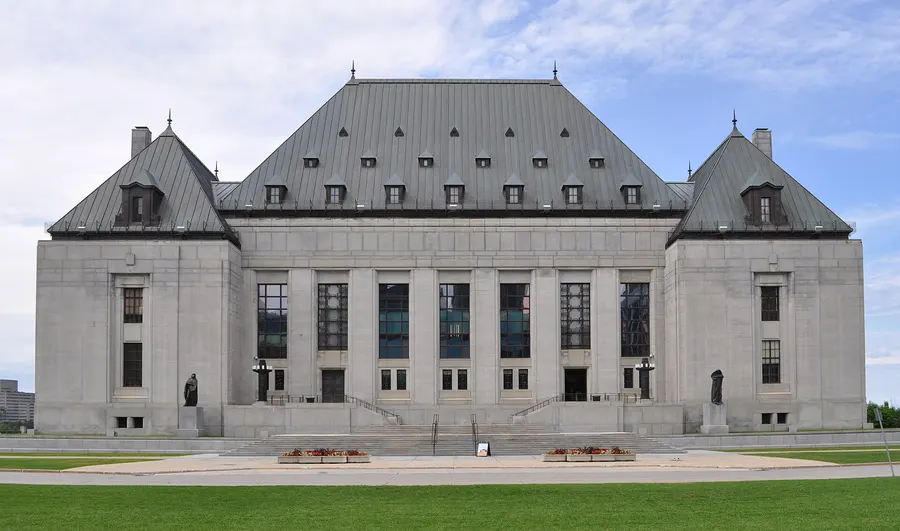 The Supreme Court of Canada building in OttawaImage: