HISTORY & TIMELINE
22 August

A journey through
22 August in history

The story of 22 August runs from the Battle of the Standard in 1138 to Grigori Perelman’s refusal of the Fields Medal in 2006. In between come the death of Richard III at Bosworth, Charles I raising his standard at Nottingham, James Cook’s claim to eastern Australia on Possession Island, the schooner America’s victory round the Isle of Wight, the first Geneva Convention, the founding of the Natal Indian Congress, the treaty that annexed Korea to Japan, Paul VI’s arrival in Bogotá, Rhodesia’s exclusion from the Munich Olympics and the armed theft of The Scream from the Munch Museum.

II
THE MIDDLE AGES

Medieval History

Kingdoms, conflict, faith, power and the changing medieval world.

1138
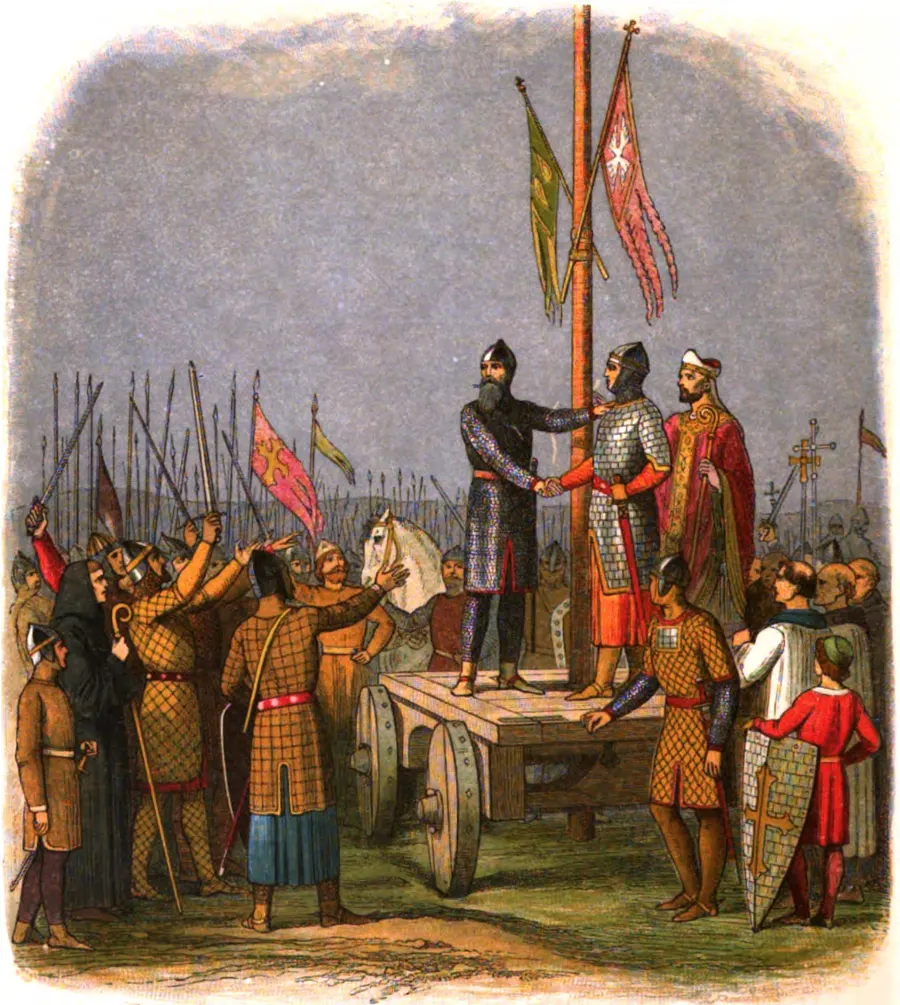
Walter l'Espec swearing an oath before the battle, from James Doyle's A Chronicle of England (1864)Walter l’Espec swearing an oath before the battle, from James Doyle’s A Chronicle of England (1864)Image: James William Edmund Doyle / Edmund Evans · Public domain
world · Europe

The English defeat the Scots at the Battle of the Standard

While England was divided by civil war between King Stephen and the Empress Matilda, King David I of Scotland invaded the north of the country. Archbishop Thurstan of York raised the northern barons and their men against him, and they gathered round a cart carrying a ship’s mast hung with the banners of northern saints, the ‘Standard’ that gave the battle its name. On 22 August 1138, near Northallerton in Yorkshire, the English beat off the Scottish attacks in about two hours and David’s army fled.

Source: Historic England: Battlefield report, Northallerton 1138 ↗
1485
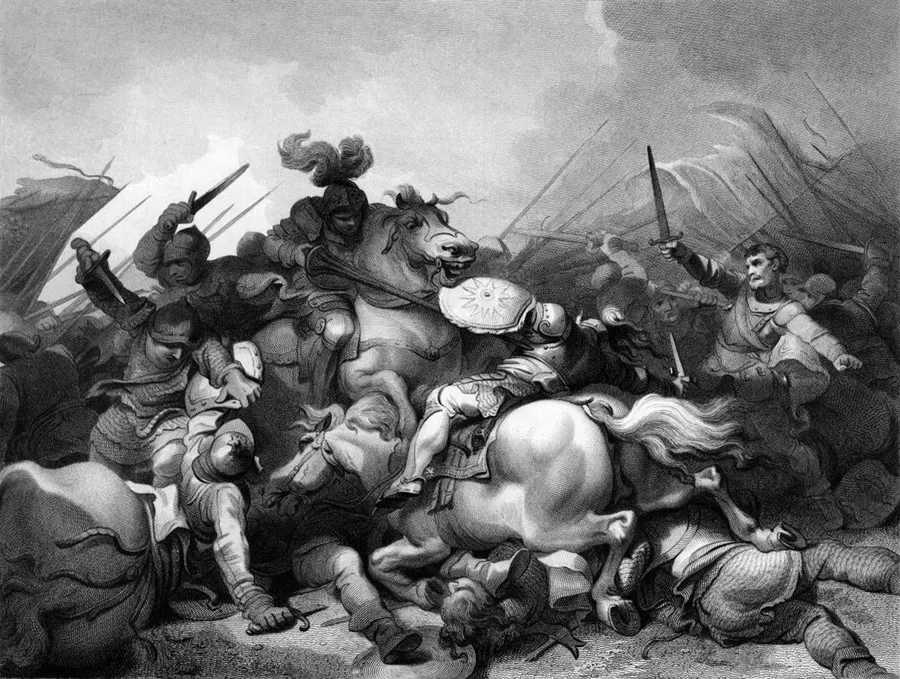
The Battle of Bosworth as imagined by Philip James de Loutherbourg in 1804The Battle of Bosworth as imagined by Philip James de Loutherbourg in 1804Image: Philip James de Loutherbourg · Public domain
world · Europe

Richard III dies at Bosworth and the Tudors take the throne

For thirty years the English crown had passed back and forth between the rival houses of Lancaster and York in the Wars of the Roses. In 1483 Richard, Duke of Gloucester, took the throne as Richard III after setting aside his young nephews, the sons of Edward IV, who were never seen again. Many nobles turned against him, and in August 1485 Henry Tudor, the leading Lancastrian claimant, landed in Wales from exile in France and marched into England with a small army. On 22 August 1485 the two armies met near Market Bosworth in Leicestershire. Richard had the larger force, but the powerful Stanley brothers held back, and when Richard led a charge at Henry, Sir William Stanley’s men attacked him from the side. Richard was unhorsed and killed, the last English king to die in battle. Henry was crowned as Henry VII, founding the Tudor dynasty, and Richard’s remains, buried in Leicester, were found under a car park in 2012.

Source: Britannica: Battle of Bosworth Field ↗
III
A CHANGING WORLD

Early Modern Era

Exploration, political change, scientific development and expanding global connections.

1642
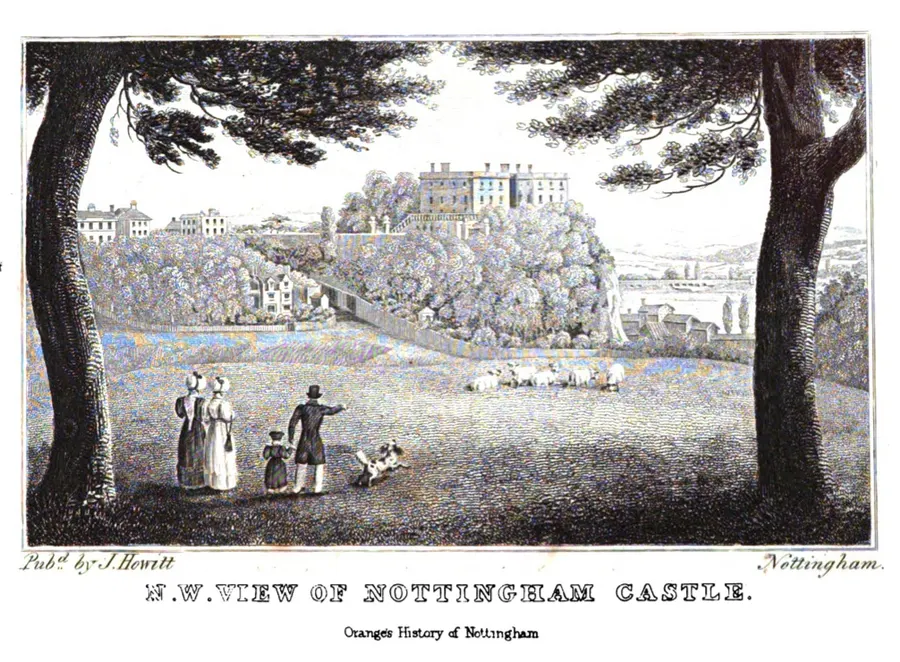
Nottingham Castle in 1840 by James Orange; the medieval castle where Charles raised his standard was later pulled down and replaced by a ducal mansionNottingham Castle in 1840 by James Orange; the medieval castle where Charles raised his standard was later pulled down and replaced by a ducal mansionImage: James Orange, 1840 · Public domain
world · Europe

Charles I raises his standard at Nottingham

By the summer of 1642 King Charles I and Parliament had quarrelled for years over taxes, religion and who should command the army. On 22 August 1642 the king had his royal standard raised at Nottingham Castle, calling his loyal subjects to arms against Parliament. It was in effect a declaration of war, and the conflict that followed, the English Civil War, ended with the king’s execution in 1649. Few men answered the call at first, and Nottingham itself soon became a Parliamentarian stronghold.

Source: Nottingham Castle: The timeline of the castle ↗
1770
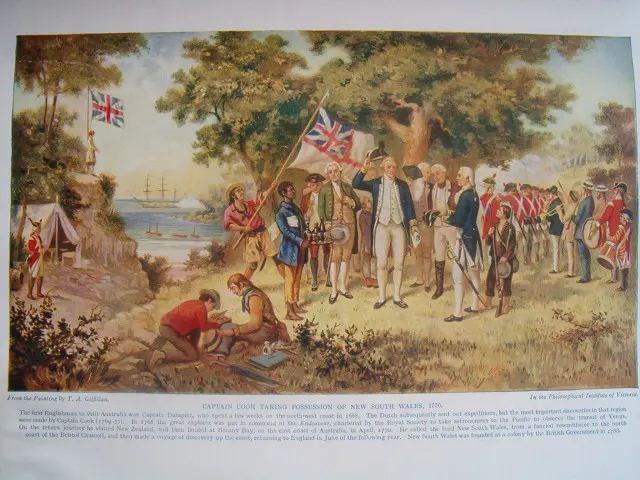
Captain Cook taking possession of New South Wales in 1770, as imagined by John Alexander Gilfillan in the 19th centuryCaptain Cook taking possession of New South Wales in 1770, as imagined by John Alexander Gilfillan in the 19th centuryImage: John Alexander Gilfillan · Public domain
world · Oceania

James Cook claims eastern Australia for Britain

In 1770, on his first voyage of exploration, James Cook sailed HMS Endeavour north along the whole eastern coast of Australia, charting it for the first time. Near the end of the journey the ship had to pick its way through the reefs at the northern tip of Cape York, in the waters of the Kaurareg people, who know the island Cook landed on as Bedanug. On 22 August 1770 Cook went ashore on a small island he called Possession Island, raised the British colours and, in the name of King George III, claimed the whole east coast for Britain under the name New South Wales. The ceremony ended with three volleys of musket fire, answered from the ship. No one asked the land’s owners, and the claim was the legal basis for the British colony founded at Sydney Cove in 1788.

Source: National Museum of Australia: Cook’s journal, August 1770 ↗
IV
THE NINETEENTH CENTURY

The 1800s

Industry, empire, invention, reform and a century of enormous transformation.

1851
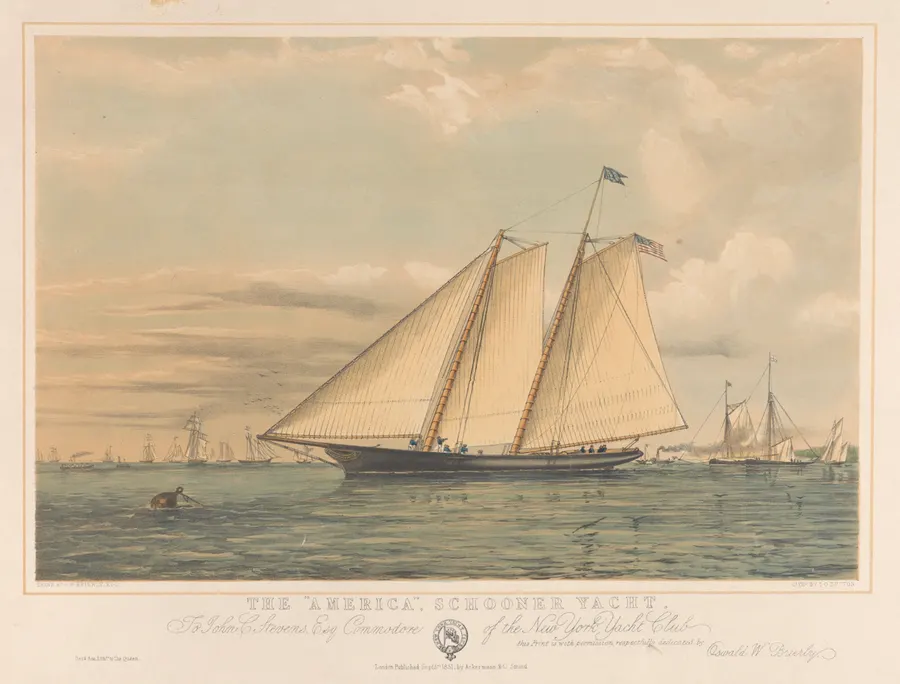
The schooner yacht America of the New York Yacht Club, in a print after Oswald BrierlyThe schooner yacht America of the New York Yacht Club, in a print after Oswald BrierlyImage: Oswald W. Brierly, published by Ackermann & Co. · Public domain
sport · Europe

The schooner America wins the race that names the America’s Cup

In 1851, the year of the Great Exhibition in London, a group of New York Yacht Club members led by its commodore, John Cox Stevens, had a fast schooner built to show off American shipbuilding. Named America and designed by George Steers, she crossed the Atlantic and challenged the yachts of Britain’s Royal Yacht Squadron at Cowes on the Isle of Wight. On 22 August 1851 America raced a fleet of British yachts round the Isle of Wight for a silver trophy known as the Hundred Guinea Cup, with Queen Victoria among the spectators. She finished well ahead of the field. In 1857 her owners gave the trophy to the New York Yacht Club as a prize for international competition, and the America’s Cup, named after the yacht, is now the oldest trophy in international sport.

Source: Royal Museums Greenwich: The yacht America ↗
1864
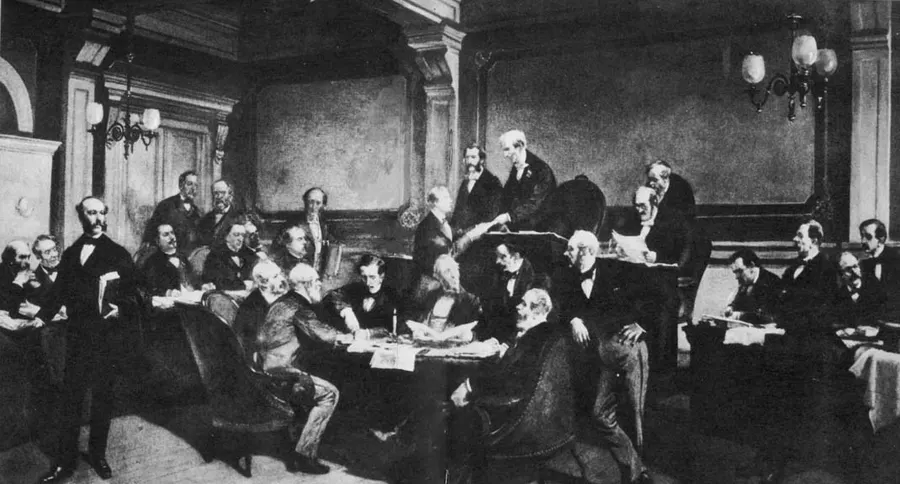
The signing of the first Geneva Convention in 1864, in a painting by Charles Édouard Armand-DumaresqThe signing of the first Geneva Convention in 1864, in a painting by Charles Édouard Armand-DumaresqImage: Charles Édouard Armand-Dumaresq · Public domain
politics · Europe

Twelve states sign the first Geneva Convention

After seeing thousands of wounded soldiers left without care at the Battle of Solferino in 1859, the Geneva businessman Henry Dunant called for neutral relief societies and for an international agreement to protect the wounded in war. A small Geneva committee took up the idea, and in August 1864 the Swiss government invited states to a diplomatic conference in the city. On 22 August 1864 the delegates of twelve states, among them France, Prussia, Italy, Spain, Belgium and Switzerland, signed the Convention for the Amelioration of the Condition of the Wounded in Armies in the Field. It was only ten articles long, but it laid down that wounded soldiers must be cared for whatever their side, that doctors, nurses and field hospitals were neutral, and that they would be marked by a red cross on a white background. It was the first of the treaties that make up modern international humanitarian law.

Source: ICRC: Geneva Convention, 22 August 1864 ↗
1894
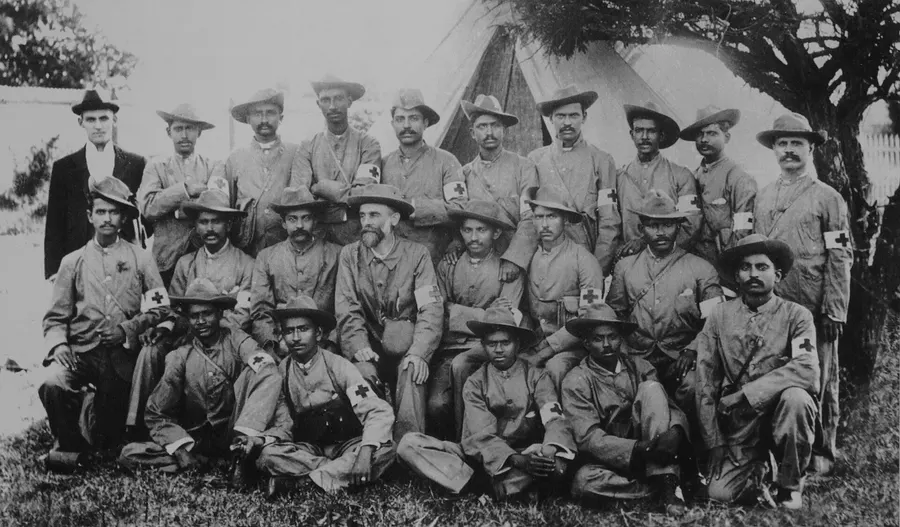
Gandhi with the Indian Ambulance Corps he organised in Natal during the South African War of 1899 to 1902Gandhi with the Indian Ambulance Corps he organised in Natal during the South African War of 1899 to 1902Image: Unknown author · Public domain
politics · Africa

Gandhi helps found the Natal Indian Congress

Mohandas Gandhi arrived in Durban in 1893 as a young lawyer hired by an Indian trading firm. In South Africa he met daily discrimination, and was thrown off a train for refusing to leave a first-class compartment. In 1894, as he was about to sail home, he read that the Natal parliament planned to take the vote away from Indians, and the Indian merchants of Durban persuaded him to stay and lead the opposition. On 22 August 1894 the Natal Indian Congress was formally founded, with the merchant Abdulla Haji Adam as president and Gandhi as secretary. It was the first lasting political organisation of Indians in South Africa. It sent petitions, wrote to the press in Britain and India and held meetings, and it became the training ground for the methods of non-violent protest Gandhi later used in India. The Congress worked alongside the African National Congress in the struggle against apartheid.

Source: South African History Online: Natal Indian Congress ↗
V
THE TWENTIETH CENTURY

The 1900s

War and peace, technological leaps, social change, politics, sport and popular culture.

1910
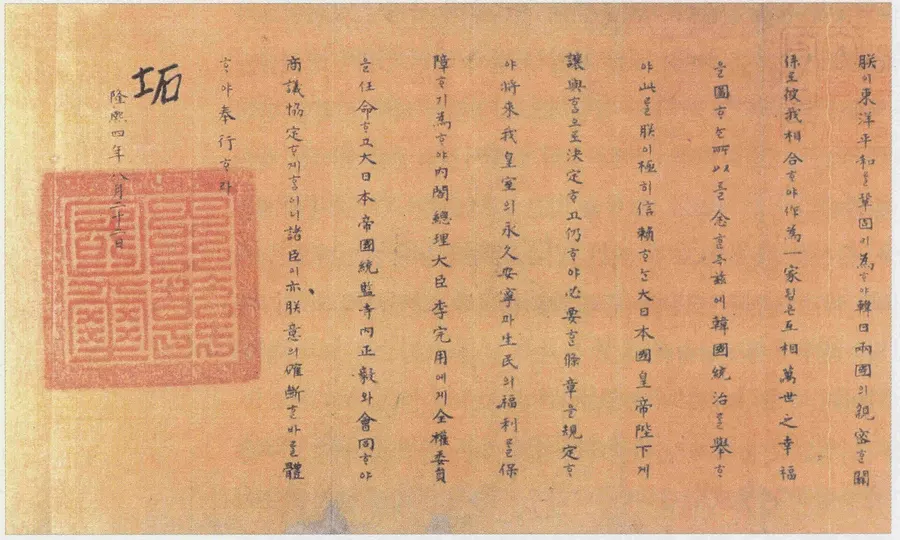
The power of attorney, signed and sealed by Emperor Sunjong, that authorised Prime Minister Yi Wan-yong to conclude the annexation treatyThe power of attorney, signed and sealed by Emperor Sunjong, that authorised Prime Minister Yi Wan-yong to conclude the annexation treatyImage: Sunjong of Korean Empire · Public domain
politics · Asia

Japan forces a treaty of annexation on Korea

After defeating China in 1895 and Russia in 1905, Japan was the dominant power in Korea. In 1905 it made the country a protectorate and took control of its foreign affairs, and in 1907 it forced Emperor Gojong to abdicate in favour of his son Sunjong and disbanded the Korean army. Japanese officials ran more and more of the government, while armed Korean resistance was crushed. On 22 August 1910 the Japanese resident-general, Terauchi Masatake, and the Korean prime minister, Yi Wan-yong, signed a treaty by which the emperor of Korea handed over all rights of sovereignty to the emperor of Japan. It was made public on 29 August, and the 500-year-old Joseon dynasty came to an end. Korea was ruled as a Japanese colony until 1945; Koreans have always regarded the treaty as forced on them, and in 1965 Japan and South Korea agreed that it was ‘already null and void’.

Source: US Office of the Historian: Foreign Relations of the United States, 1910, annexation of Korea ↗
1968
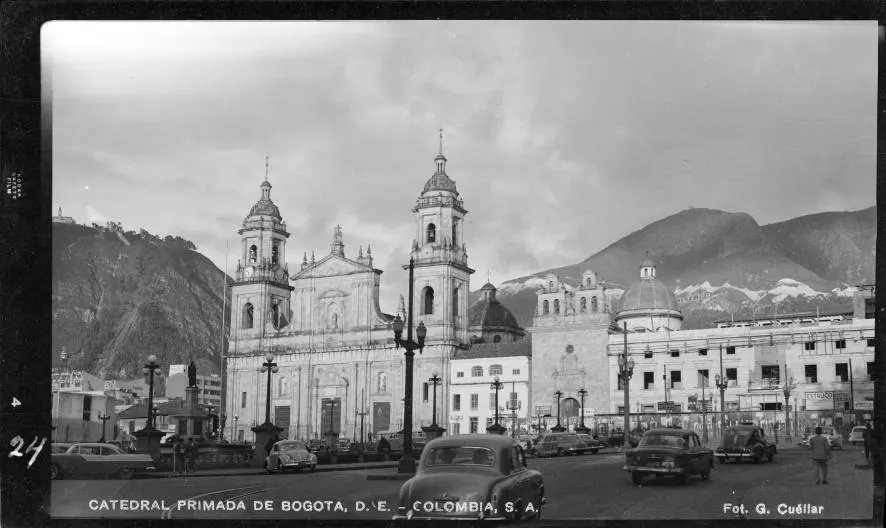
Bogotá Cathedral in 1950Bogotá Cathedral in 1950Image: G. Cuéllar · Public domain
world · Americas

Paul VI becomes the first pope to visit Latin America

On 22 August 1968 Pope Paul VI landed in Bogotá for the International Eucharistic Congress, the first visit by a pope to Latin America, home to a large share of the world’s Catholics. Over four days he addressed Colombia’s president, its bishops and priests and huge crowds of rural workers, speaking about poverty and social justice while warning against violent revolution. He also opened the conference of Latin American bishops that met afterwards at Medellín.

Source: Vatican: Apostolic journey to Bogotá, 1968 ↗
1972
The Olympic Stadium in Munich, built for the 1972 Games, photographed in 2014The Olympic Stadium in Munich, built for the 1972 Games, photographed in 2014Image: M(e)ister Eiskalt; derivative work by Hic et nunc · CC BY-SA 3.0
sport · Africa

Rhodesia is shut out of the Munich Olympics

Rhodesia, whose white minority government had declared independence from Britain in 1965 to avoid majority rule, had been invited to the 1972 Olympic Games in Munich. African countries threatened to boycott the Games if its team took part. On 22 August 1972, four days before the opening, the International Olympic Committee voted to withdraw the invitation. Rhodesia was expelled from the Olympic movement in 1975, and returned only as independent Zimbabwe at the Moscow Games of 1980.

Source: South African History Online: Rhodesia withdraws from Summer Olympic Games ↗
VI
2000 TO TODAY

Modern Day

The events of recent decades that have already become part of the historical record.

2004
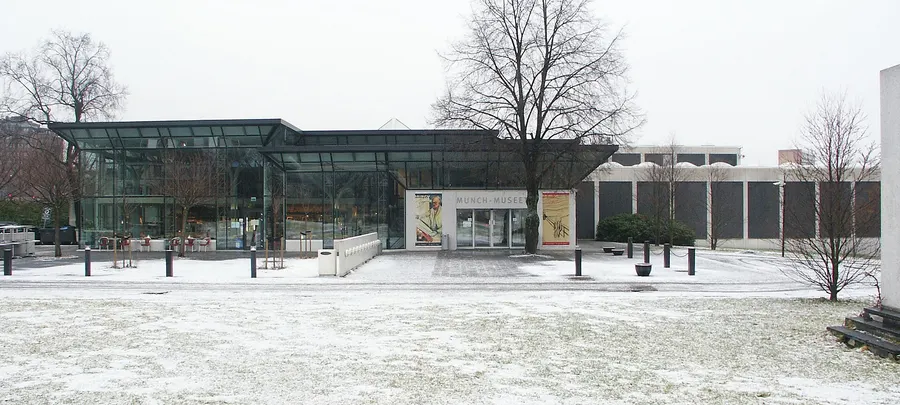
The old Munch Museum at Tøyen in Oslo, from which The Scream and Madonna were stolen in 2004The old Munch Museum at Tøyen in Oslo, from which The Scream and Madonna were stolen in 2004Image: Frode Inge Helland · CC BY 2.5
culture · Europe

Armed men steal The Scream from the Munch Museum in Oslo

Edvard Munch made several versions of The Scream, his image of a figure clutching its face under a blood-red sky, and it has become one of the best-known pictures in the world. One painted version belongs to Norway’s National Museum; another, painted in tempera on board, was kept with thousands of his works in the Munch Museum at Tøyen in Oslo, which the city opened in 1963. Shortly after 11 in the morning on 22 August 2004, two masked men with pistols walked into the museum, threatened the unarmed guards and pulled The Scream and Munch’s Madonna off the wall in front of startled visitors, escaping in a waiting car. Both paintings were recovered by the police two years later, damaged, and several men were convicted. The theft led museums around the world to tighten their security, and the Munch collection has since moved to a new building on Oslo’s waterfront.

Source: Munch Museum: A Scream through culture ↗
2006
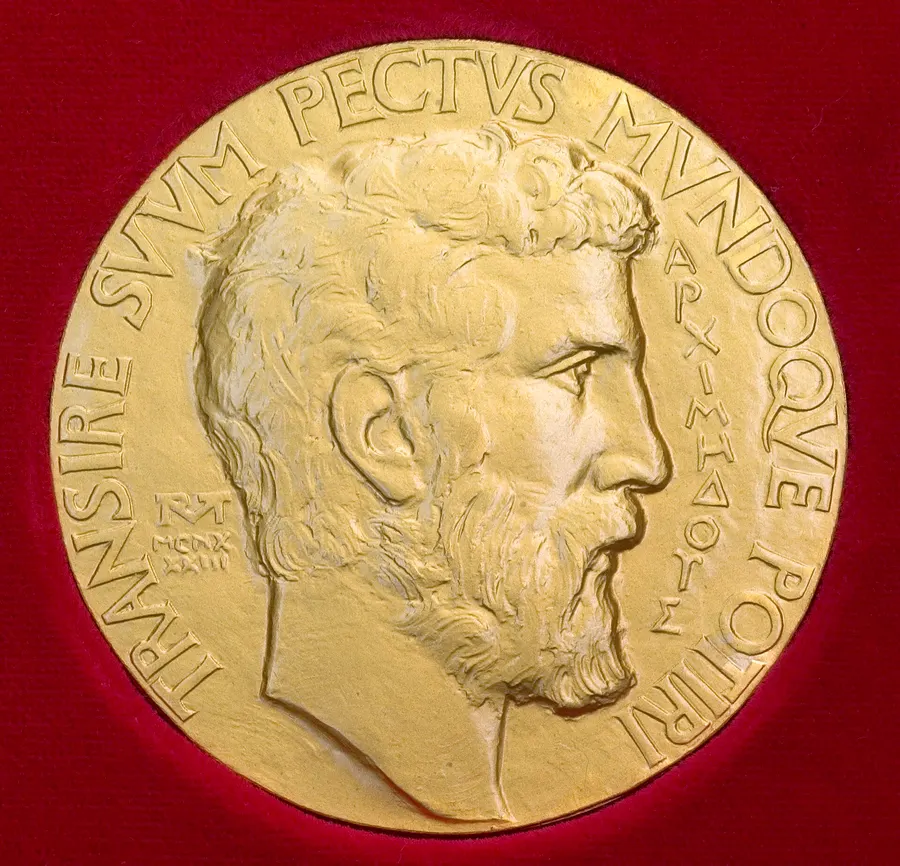
The front of the Fields Medal, showing the Greek mathematician ArchimedesThe front of the Fields Medal, showing the Greek mathematician ArchimedesImage: Stefan Zachow for the International Mathematical Union · Public domain
science · Global

Grigori Perelman turns down the Fields Medal

The Poincaré conjecture, posed by the French mathematician Henri Poincaré in 1904, was one of the most famous unsolved problems in mathematics, a question about the basic shape of three-dimensional space. In 2002 and 2003 the Russian mathematician Grigori Perelman, working quietly in St Petersburg, posted a series of papers online that proved it, building on the ‘Ricci flow’ methods of the American Richard Hamilton. On 22 August 2006, at the opening of the International Congress of Mathematicians in Madrid, Perelman was named as one of four winners of the Fields Medal, the highest award in mathematics. The president of the International Mathematical Union then told the audience that he regretted that Dr Perelman had declined it. He was the first person ever to refuse the medal, and in 2010 he also turned down a million-dollar prize from the Clay Mathematics Institute.

Source: International Mathematical Union: Fields Medals 2006 ↗
WHY THESE MOMENTS?

Significance before volume

This page is not the longest possible list of events. It is a chronological journey through 22 August, where each entry is chosen for historical significance, human interest and reliability.

Facts are checked against authoritative museums, archives, universities and reference works. Where sources disagree, the page says so.

EXPLORED THE DEEPER STORY?

Return to the highlights of 22 August

Discover the lighter side of the date with famous birthdays, culture, firsts and lives remembered.

Explore This Day →
← PREVIOUS DAY21 August
HISTORY & TIMELINE22 August
NEXT DAY →23 August