
HISTORY & TIMELINE
23 August

A journey through
23 August in history

The story of 23 August runs from Odoacer’s proclamation as king of Italy in 476 to the first human-powered aircraft to win the Kremer Prize in 1977. In between come the trial and execution of William Wallace, the Battle of Chaldiran, the Treaty of Prague that ended the Austro-Prussian War, the unveiling of Copenhagen’s Little Mermaid, Japan’s declaration of war on Germany, the crowning of Faisal I in Baghdad, the execution of Sacco and Vanzetti, the Nazi-Soviet pact, the bombing of Stalingrad, the shelling of Kinmen, the first picture of Earth from lunar orbit, the Wave Hill walk-off and the Baltic Way.

I
EARLIEST RECORDS

Ancient & Early History

The earliest worthwhile records and events connected with this date.

476
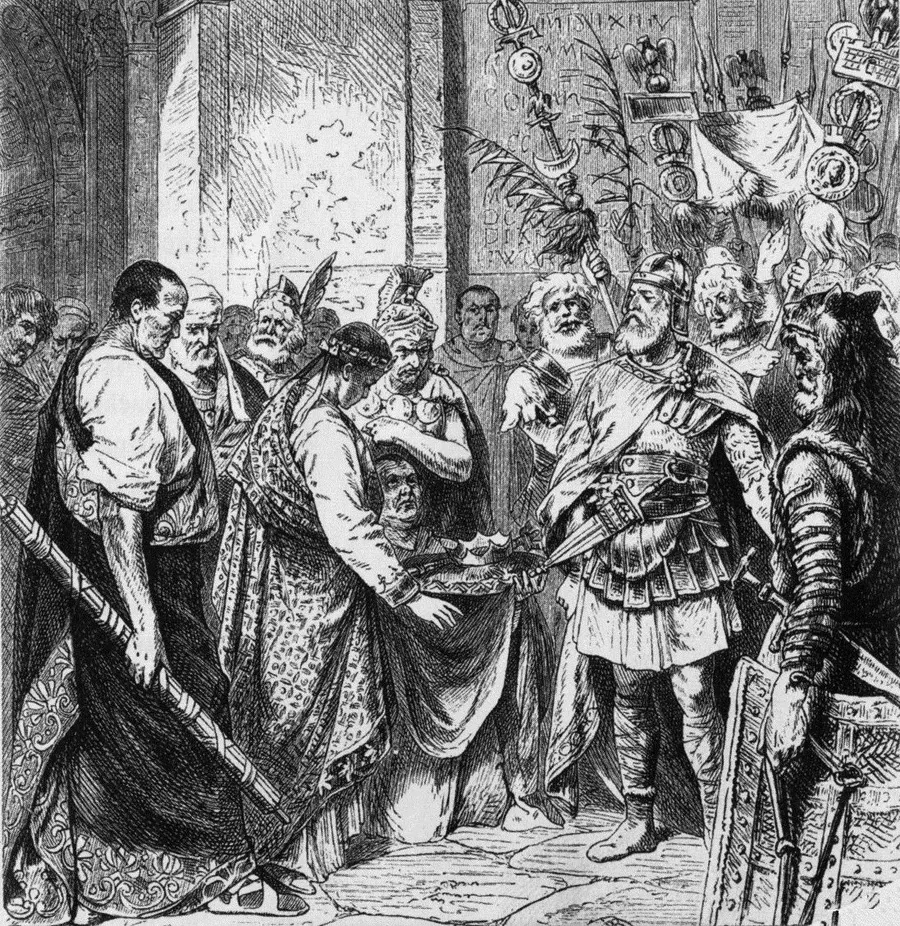
Romulus Augustulus gives up the crown to Odoacer, in a much later engraving by B. MörlinsRomulus Augustulus gives up the crown to Odoacer, in a much later engraving by B. MörlinsImage: Bernhard Mörlins (B. Moerlins) · Public domain
politics · Europe

Germanic troops proclaim Odoacer king in Italy

By the 470s the Western Roman Empire was defended largely by Germanic soldiers serving for pay. When the general Orestes, who had made his young son Romulus Augustulus emperor, refused their demand for land in Italy, the troops turned to one of their officers, Odoacer, and on 23 August 476 proclaimed him king. Orestes was killed within days and the boy emperor was deposed and pensioned off. No new emperor was named in the West, and the year 476 is often taken as the end of the Western Roman Empire.

Source: World History Encyclopedia: Odoacer ↗
II
THE MIDDLE AGES

Medieval History

Kingdoms, conflict, faith, power and the changing medieval world.

1305
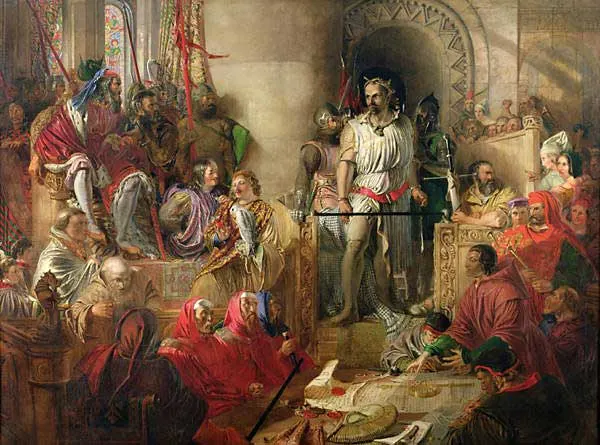
The Trial of William Wallace at Westminster, a 19th-century painting by Daniel MacliseThe Trial of William Wallace at Westminster, a 19th-century painting by Daniel MacliseImage: Daniel Maclise · Public domain
politics · Europe

William Wallace is condemned at Westminster and executed

William Wallace had led the Scottish resistance to Edward I of England, winning a famous victory at Stirling Bridge in 1297. Betrayed and captured near Glasgow in August 1305, he was taken to London and brought to Westminster Hall on 23 August, where he was condemned as a traitor; he answered that he could not be a traitor to a king he had never sworn to obey. The same day he was hanged, drawn and quartered at Smithfield, and he became Scotland’s great national hero.

Source: Britannica: William Wallace ↗
III
A CHANGING WORLD

Early Modern Era

Exploration, political change, scientific development and expanding global connections.

1514
Shah Ismail at the Battle of Chaldiran, in a 17th-century Persian manuscript painting by Muin MusavvirShah Ismail at the Battle of Chaldiran, in a 17th-century Persian manuscript painting by Muin MusavvirImage: Muin Musavvir · Public domain
world · Middle East

Ottoman guns break the Safavid cavalry at Chaldiran

In the early 1500s the young Shah Ismail I founded the Safavid dynasty in Iran and made Shia Islam its state faith. His influence reached deep into eastern Anatolia, where many Turkmen tribes followed him, and this alarmed the Sunni Ottoman Empire. Sultan Selim I, who had seized the Ottoman throne from his father in 1512, set out to destroy the threat, and in 1514 he marched east with a huge army. On 23 August 1514 the two armies met on the plain of Chaldiran, in north-western Iran. Ismail’s army was built around its famous cavalry, while Selim’s had heavy cannon and Janissary infantry armed with muskets. The Safavid charges broke against the Ottoman guns, and Ismail was defeated and fled. Selim went on to occupy the Safavid capital, Tabriz, for a time. The battle gave the Ottomans eastern Anatolia and roughly fixed the frontier between the Turkish and Iranian worlds for centuries.

Source: Britannica: Battle of Chāldirān ↗
IV
THE NINETEENTH CENTURY

The 1800s

Industry, empire, invention, reform and a century of enormous transformation.

1866
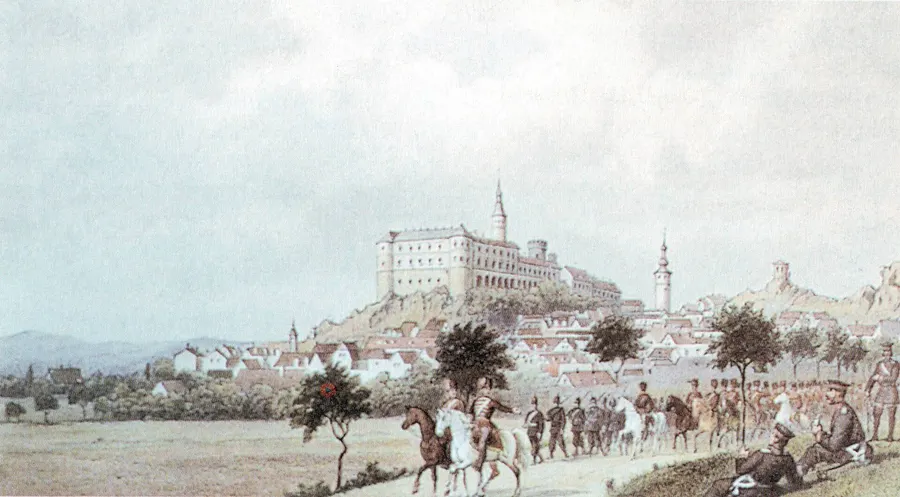
Prussian troops at Nikolsburg, where the preliminary peace was agreed, in a lithograph of 1866Prussian troops at Nikolsburg, where the preliminary peace was agreed, in a lithograph of 1866Image: Unknown author · CC0
politics · Europe

The Treaty of Prague ends the Austro-Prussian War

In the summer of 1866 Prussia defeated Austria in a lightning war of seven weeks, decided at Königgrätz in July. A preliminary peace was agreed at Nikolsburg, and the final treaty was signed in Prague on 23 August 1866. Austria lost only Venetia, which went to Italy, but it had to accept the end of the old German Confederation and its own exclusion from German affairs. Prussia annexed Schleswig-Holstein, Hanover and other states and led a new North German Confederation, a long step towards a united Germany.

Source: Britannica: Treaty of Prague ↗
V
THE TWENTIETH CENTURY

The 1900s

War and peace, technological leaps, social change, politics, sport and popular culture.

1913
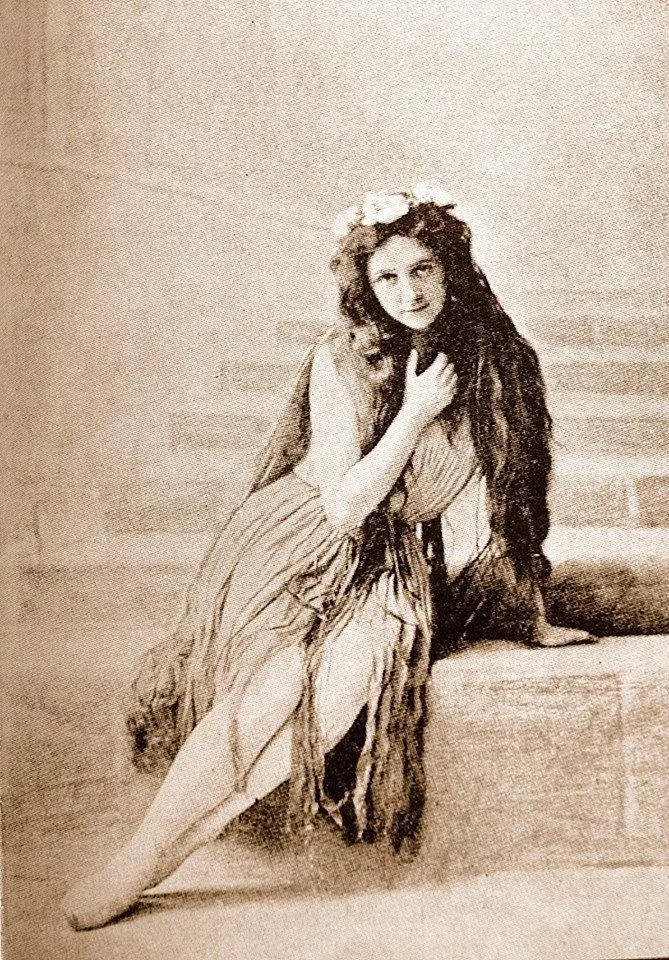
The ballerina Ellen Price as the Little Mermaid at the Royal Danish Ballet in 1909, the performance that inspired the statueThe ballerina Ellen Price as the Little Mermaid at the Royal Danish Ballet in 1909, the performance that inspired the statueImage: Unknown author · Public domain
culture · Europe

Copenhagen’s Little Mermaid takes her place on the rocks

Hans Christian Andersen’s fairy tale ‘The Little Mermaid’, first published in 1837, tells of a young sea creature who gives up her voice for the chance of a human soul. In 1909 the brewer Carl Jacobsen, son of the founder of Carlsberg, saw a ballet version of the story at the Royal Theatre in Copenhagen and was so taken with it that he commissioned the sculptor Edvard Eriksen to make a statue of the mermaid. The bronze figure, just over a metre high, was unveiled on 23 August 1913 on a rock by the Langelinie promenade, as Jacobsen’s gift to the city. The ballerina Ellen Price is said to have been the model for the head, and Eriksen’s wife Eline for the body. The modest statue became the best known symbol of Copenhagen, visited by more than a million people a year, and has survived being beheaded, painted and even blown off her rock.

Source: VisitCopenhagen: The Little Mermaid ↗
1914
Japanese sailors coming ashore during the Siege of Tsingtao in 1914Japanese sailors coming ashore during the Siege of Tsingtao in 1914Image: Paul Thompson (photographer) · Public domain
world · Asia

Japan declares war on Germany

Japan was allied to Britain, and when the First World War broke out it saw a chance to expand its influence in China and the Pacific. On 15 August 1914 it demanded that Germany withdraw its warships from Asian waters and hand over its leased territory of Jiaozhou, with the port of Tsingtao (Qingdao). Germany did not reply, and on 23 August 1914 Japan declared war. Japanese and British forces besieged Tsingtao, which surrendered in November, and Japan also took Germany’s islands in the north Pacific.

Source: 1914-1918-online, International Encyclopedia of the First World War: Qingdao, Siege of ↗
1921
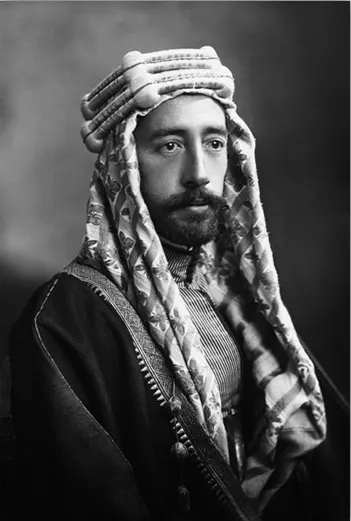
Faisal I, king of Iraq from 1921 to 1933Faisal I, king of Iraq from 1921 to 1933Image: Unknown authorUnknown author · Public domain
politics · Middle East

Faisal I is crowned king of Iraq

After the First World War Britain ruled Iraq under a League of Nations mandate, but a large revolt in 1920 persuaded it to set up an Arab government. Faisal, son of Sharif Hussein of Mecca and a leader of the Arab Revolt, had just been driven out of Syria by the French. Britain backed him as king, and after a referendum he was crowned in Baghdad on 23 August 1921. He worked to build a state out of a divided country and led it to independence and League of Nations membership in 1932.

Source: Britannica: Faisal I ↗
1927
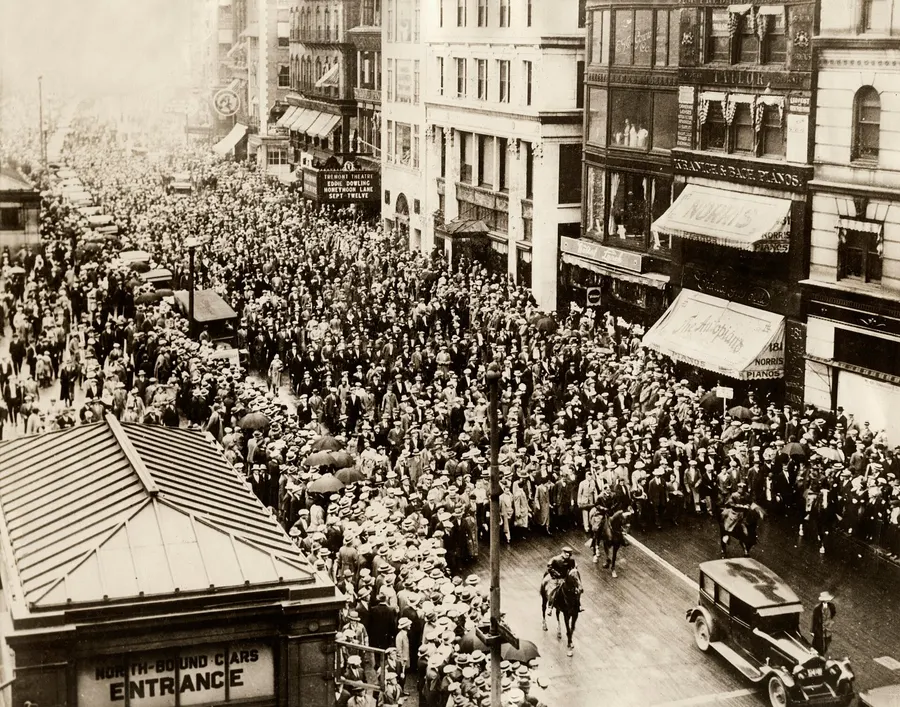
Thousands of people follow the hearses carrying Sacco and Vanzetti through Boston in August 1927 (Nationaal Archief)Thousands of people follow the hearses carrying Sacco and Vanzetti through Boston in August 1927 (Nationaal Archief)Image: Unknown author · Public domain
politics · Americas

Sacco and Vanzetti are executed in Massachusetts

Nicola Sacco and Bartolomeo Vanzetti were Italian immigrants and anarchists living in Massachusetts. In 1920 they were arrested for the murder of a paymaster and a guard during a robbery in South Braintree, and in 1921 they were convicted and sentenced to death. Many people, in America and abroad, believed that the evidence against them was weak and that the trial had been coloured by prejudice against immigrants and radicals, and their appeals dragged on for six years. Despite protests and petitions from around the world, the two men were executed in the electric chair at Charlestown State Prison just after midnight on 23 August 1927. Huge crowds followed their funeral through Boston. Exactly fifty years later, on 23 August 1977, Governor Michael Dukakis issued a proclamation stating that they had not been treated justly and that any stigma should be removed from their names.

Source: Mass.gov: Sacco and Vanzetti, the executions and funeral ↗
1939
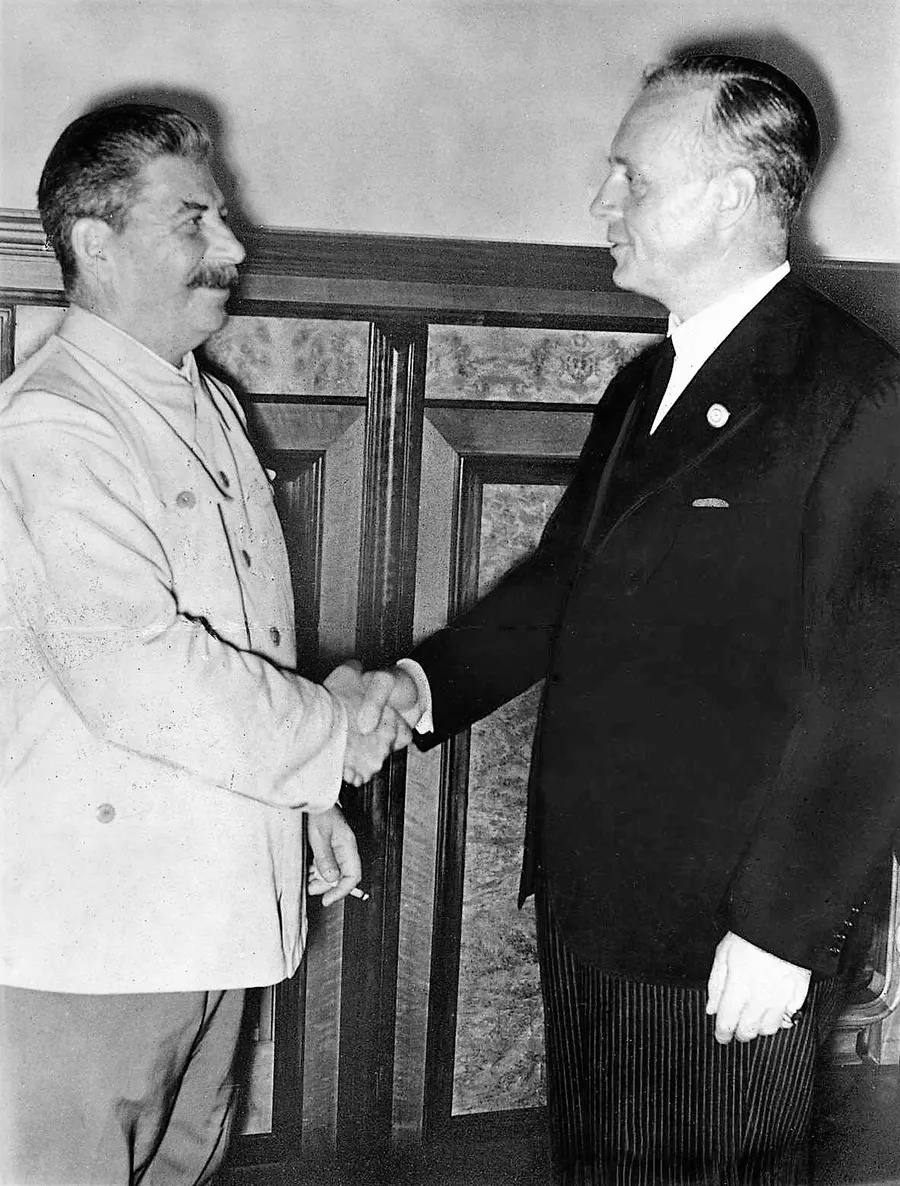
Stalin and the German foreign minister Joachim von Ribbentrop in the Kremlin after the signing of the pact on 23 August 1939 (German Federal Archives)Stalin and the German foreign minister Joachim von Ribbentrop in the Kremlin after the signing of the pact on 23 August 1939 (German Federal Archives)Image: Template:Helmut Laux · CC BY-SA 3.0 de
politics · Europe

Hitler and Stalin’s foreign ministers sign the Nazi-Soviet pact

Through the 1930s Nazi Germany and the Soviet Union had treated each other as mortal enemies, and in the summer of 1939 Britain and France were still trying to bring Moscow into an alliance against Hitler. But Stalin distrusted the Western powers, and Hitler wanted a free hand to attack Poland without having to fight the Soviet Union as well. In August secret talks moved quickly, and the German foreign minister, Joachim von Ribbentrop, flew to Moscow. On 23 August 1939 Ribbentrop and the Soviet foreign minister, Vyacheslav Molotov, signed a ten-year non-aggression pact, each side promising not to attack the other. A secret protocol divided eastern Europe between them: Poland was to be split, and Finland, Estonia and Latvia fell into the Soviet sphere, with Lithuania added soon afterwards. Germany invaded Poland nine days later, and the Soviet Union denied the protocol’s existence until 1989. Since 2009, 23 August has been marked in the European Union as a day of remembrance for the victims of totalitarian regimes.

Source: United States Holocaust Memorial Museum: German-Soviet Pact ↗
1942
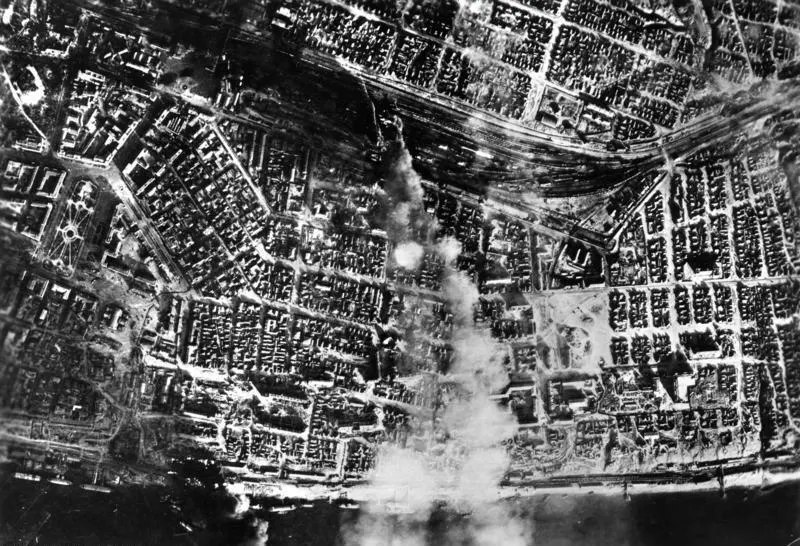
A German aerial photograph of Stalingrad in August 1942, with smoke rising from bomb strikes near a railway station (German Federal Archives)A German aerial photograph of Stalingrad in August 1942, with smoke rising from bomb strikes near a railway station (German Federal Archives)Image: Unknown author · CC BY-SA 3.0 de
world · Europe

German tanks reach the Volga and bombers set Stalingrad ablaze

In the summer of 1942 Germany’s armies drove deep into southern Russia towards the Volga and the oilfields of the Caucasus. On 23 August 1942 a German armoured corps broke through to the Volga just north of Stalingrad, and that evening hundreds of German aircraft bombed the city, setting much of its wooden housing on fire while most of its people were still there. It began the Battle of Stalingrad, which ended five months later with the surrender of an entire German army.

Source: Britannica: World War II, Stalingrad and the German retreat ↗
1958
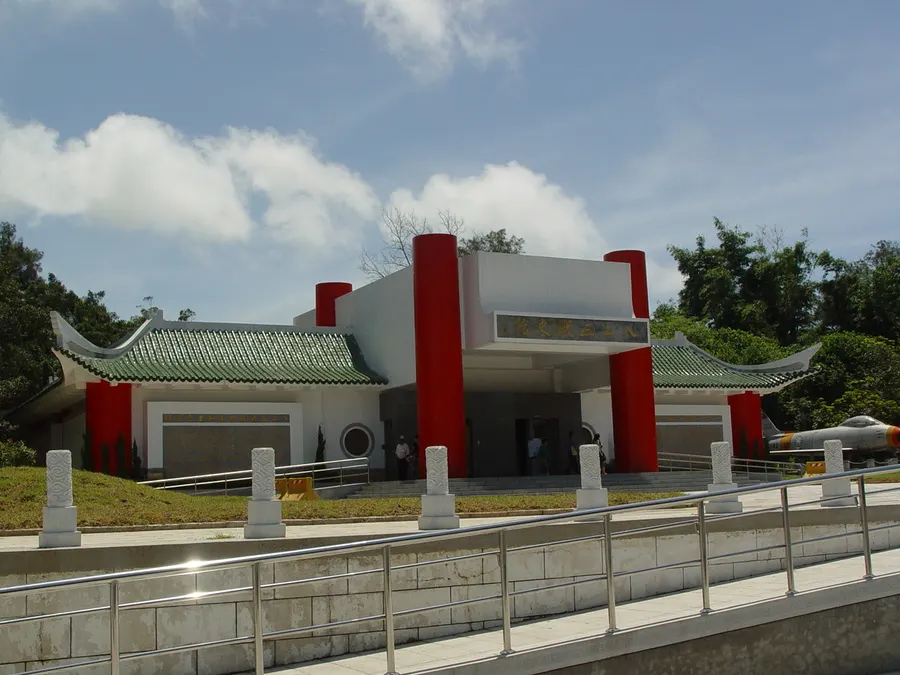
The August 23 Artillery Battle Museum on Kinmen, which remembers the bombardment, photographed in 2005The August 23 Artillery Battle Museum on Kinmen, which remembers the bombardment, photographed in 2005Image: Seasurfer · CC BY-SA 3.0
world · Asia

Chinese guns open fire on Kinmen and start a new Taiwan Strait crisis

After the Chinese Civil War, Chiang Kai-shek’s Nationalist government held Taiwan and a handful of small islands just off the mainland coast, among them Kinmen (Quemoy) and Matsu. The Communist People’s Republic claimed them all, and the United States had promised to help defend Taiwan. In the summer of 1958 Mao Zedong decided to test that promise. On 23 August 1958 Communist artillery opened a massive bombardment of the Kinmen islands, firing tens of thousands of shells on the first day alone. The United States sent warships to the strait and escorted Nationalist convoys to resupply the garrison, while the world feared that the crisis might grow into a wider war. After some weeks the shelling eased, and the two Chinese sides settled into a strange routine of firing shells, many of them filled with leaflets, on alternate days, which went on until 1979.

Source: US Office of the Historian: The Taiwan Straits crises, 1954-55 and 1958 ↗
1966
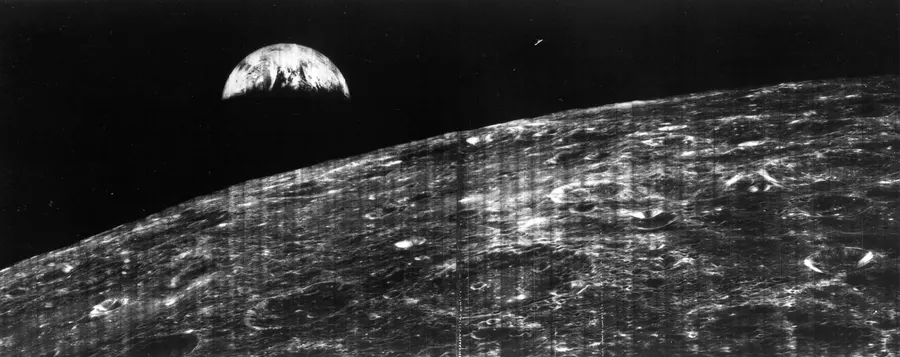
The first picture of Earth taken from lunar orbit, by Lunar Orbiter 1 on 23 August 1966 (NASA)The first picture of Earth taken from lunar orbit, by Lunar Orbiter 1 on 23 August 1966 (NASA)Image: NASA · Public domain
science · Americas

Lunar Orbiter 1 sends home the first picture of Earth from the Moon

Before astronauts could land on the Moon, NASA needed detailed maps of possible landing sites. Lunar Orbiter 1, launched in August 1966, was the first of five robotic spacecraft sent to photograph the lunar surface from orbit. It carried a camera that took pictures on film, developed them on board and then scanned them line by line to radio them back to Earth. On 23 August 1966, as the craft came round from the far side of the Moon on its 16th orbit, controllers turned its camera towards home. The result, received at a tracking station near Madrid, was the first photograph of Earth taken from the Moon’s orbit, a thin crescent rising above the grey lunar horizon. It caused a sensation, two years before Apollo 8’s colour ‘Earthrise’, and in 2008 a NASA project recovered the original tapes and produced a far sharper version.

Source: NASA: First view of Earth from Moon ↗
1966
A donkey team at Wave Hill station in the Northern Territory, about 1946, photographed by Axel PoignantA donkey team at Wave Hill station in the Northern Territory, about 1946, photographed by Axel PoignantImage: Axel Poignant · Public domain
politics · Oceania

Gurindji workers walk off Wave Hill station

Aboriginal stockmen and domestic workers on the cattle stations of the Northern Territory were paid far less than white workers, often partly in rations. On 23 August 1966, led by Vincent Lingiari, about 200 Gurindji workers and their families walked off Wave Hill station, owned by the British Vestey company. What began as a strike over pay became a demand for the return of their land, and the Gurindji held out for nine years, helping to bring about Australia’s first Aboriginal land rights law in 1976.

Source: National Museum of Australia: Wave Hill walk-off ↗
1977
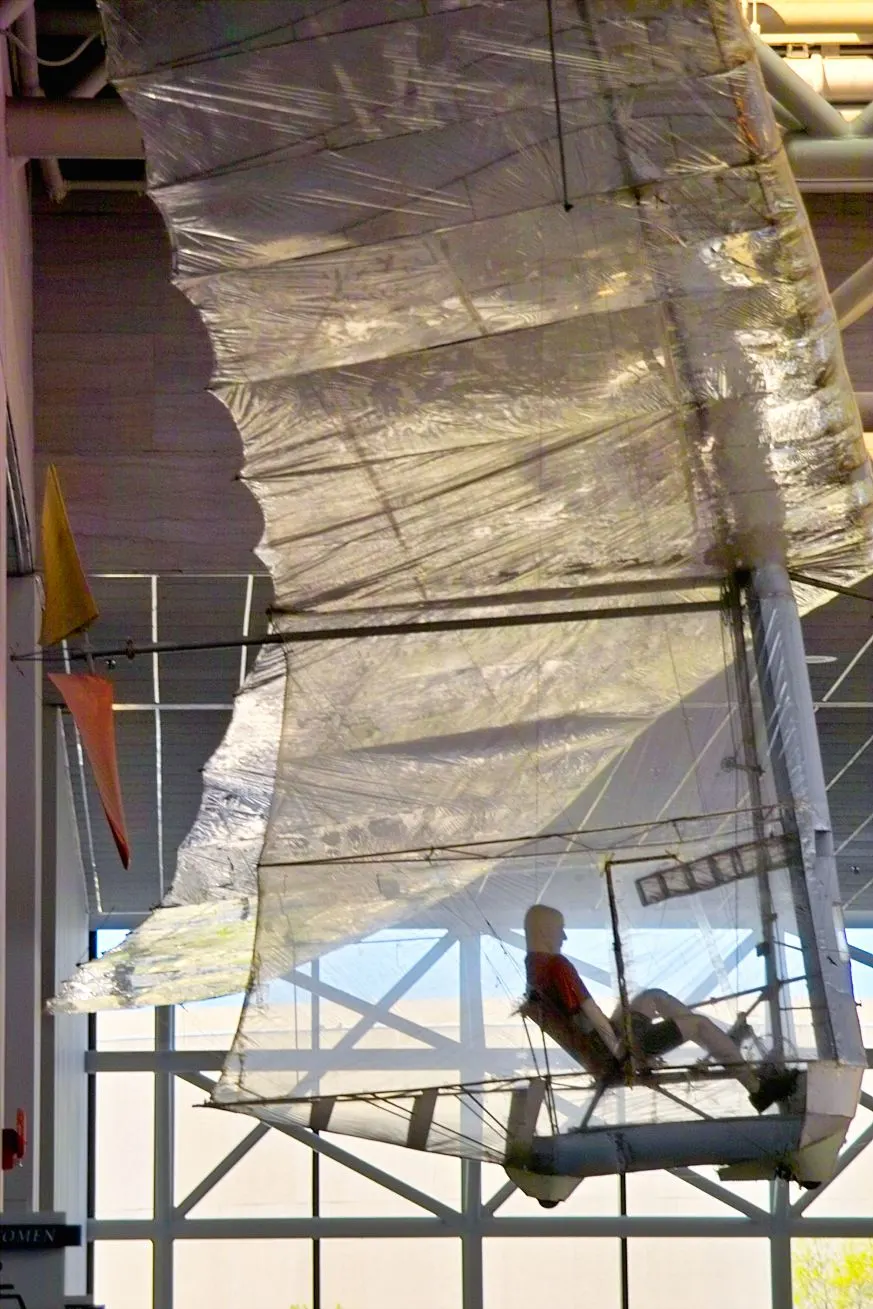
The Gossamer Condor hanging in the Smithsonian's National Air and Space Museum, photographed in 2006The Gossamer Condor hanging in the Smithsonian’s National Air and Space Museum, photographed in 2006Image: Dicklyon at English Wikipedia · Public domain
science · Americas

The Gossamer Condor wins the prize for human-powered flight

In 1959 the British industrialist Henry Kremer offered a prize for the first human-powered aircraft to fly a figure-of-eight course around two markers half a mile apart. Many teams tried and failed. On 23 August 1977, at Shafter in California, the cyclist Bryan Allen pedalled Paul MacCready’s Gossamer Condor, a huge, light craft of aluminium tubes, wire and plastic film, around the course in about seven and a half minutes and won the £50,000 prize. The aircraft is now in the Smithsonian’s National Air and Space Museum.

Source: Smithsonian Institution: The Gossamer Condor ↗
1989
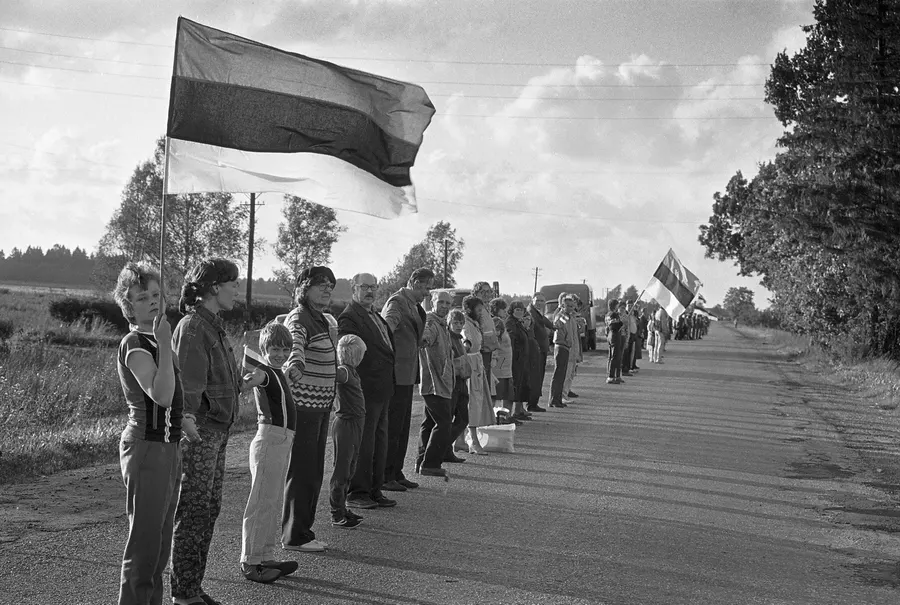
People holding hands along a country road in Estonia as part of the Baltic Way in 1989, photographed by Jaan KünnapPeople holding hands along a country road in Estonia as part of the Baltic Way in 1989, photographed by Jaan KünnapImage: Jaan Künnap · CC BY-SA 4.0
politics · Europe

The Baltic Way: a human chain 600 kilometres long

Estonia, Latvia and Lithuania had been independent between the two world wars, but in 1940 they were occupied and annexed by the Soviet Union under the secret terms of the Nazi-Soviet pact. By 1989, as Mikhail Gorbachev’s reforms loosened controls, popular movements in all three countries were demanding that Moscow admit the truth about the pact and accept that the annexation had been illegal. On the evening of 23 August 1989, the pact’s fiftieth anniversary, people from all three nations joined hands in an unbroken chain about 600 kilometres long, from Tallinn through Riga to Vilnius. It was organised by the Popular Fronts of Estonia and Latvia and Lithuania’s Sąjūdis movement; estimates of the number taking part vary, running up to two million. The peaceful protest drew the eyes of the world to the Baltic cause, and within two years all three countries had regained their independence. The documents of the Baltic Way are now on UNESCO’s Memory of the World register.

Source: UNESCO Memory of the World: The Baltic Way ↗
RESEARCH

Sources & Further Reading

Selected authoritative references supporting the events on this page.

World History Encyclopedia: Odoacer↗Wikipedia: Odoacer↗Britannica: William Wallace↗National Library of Scotland: 1305, Wallace executed↗UK Parliament: Early state trials in Westminster Hall↗Britannica: Battle of Chāldirān↗Encyclopaedia Iranica: Ottoman-Persian relations under Sultan Selim I and Shah Esmail I↗Britannica: Treaty of Prague↗Britannica: Germany, the defeat of Austria↗VisitCopenhagen: The Little Mermaid↗Britannica: Little Mermaid↗1914-1918-online, International Encyclopedia of the First World War: Qingdao, Siege of↗Imperial War Museums, Lives of the First World War: Siege of Tsingtao↗Britannica: Faisal I↗Wikipedia: Faisal I of Iraq↗Mass.gov: Sacco and Vanzetti, the executions and funeral↗Britannica: Sacco and Vanzetti↗United States Holocaust Memorial Museum: German-Soviet Pact↗Britannica: German-Soviet Nonaggression Pact↗European Parliament Think Tank: European Day of Remembrance for Victims of all Totalitarian and Authoritarian Regimes↗Britannica: World War II, Stalingrad and the German retreat↗The National WWII Museum: Unsung witnesses of the Battle of Stalingrad↗US Office of the Historian: The Taiwan Straits crises, 1954-55 and 1958↗Britannica: Taiwan Strait crises↗NASA: First view of Earth from Moon↗NASA Science: Lunar Orbiter 1↗National Museum of Australia: Wave Hill walk-off↗National Archives of Australia: The Wave Hill ‘walk-off’↗Smithsonian Institution: The Gossamer Condor↗Royal Aeronautical Society: 40 years on from the first Kremer Prize↗UNESCO Memory of the World: The Baltic Way↗Britannica: Baltic states, Soviet republics↗
WHY THESE MOMENTS?

Significance before volume

This page is not the longest possible list of events. It is a chronological journey through 23 August, where each entry is chosen for historical significance, human interest and reliability.

Facts are checked against authoritative museums, archives, universities and reference works. Where sources disagree, the page says so.

EXPLORED THE DEEPER STORY?

Return to the highlights of 23 August

Discover the lighter side of the date with famous birthdays, culture, firsts and lives remembered.

Explore This Day →
← PREVIOUS DAY22 August
HISTORY & TIMELINE23 August
NEXT DAY →24 August