
HISTORY & TIMELINE
18 August

A journey through
18 August in history

The story of 18 August runs from the clash of the French king and the Flemish towns at Mons-en-Pévèle in 1304 to the bronze plaque laid in 2019 for Okjökull, the first Icelandic glacier lost to a warming climate. In between come the printing of the first grammar of the Spanish language, the Paris wedding of Henry of Navarre and Margaret of Valois, John White’s return to an empty Roanoke, the eclipse in India that revealed helium, the great fire of Thessaloniki, the Tennessee vote that completed the Nineteenth Amendment, the opening of the Thousand Islands Bridge, Brojen Das’s swim across the English Channel, South Africa’s exclusion from the Tokyo Olympics, the arrest of Steve Biko and the resignation of Pervez Musharraf.

II
THE MIDDLE AGES

Medieval History

Kingdoms, conflict, faith, power and the changing medieval world.

1304
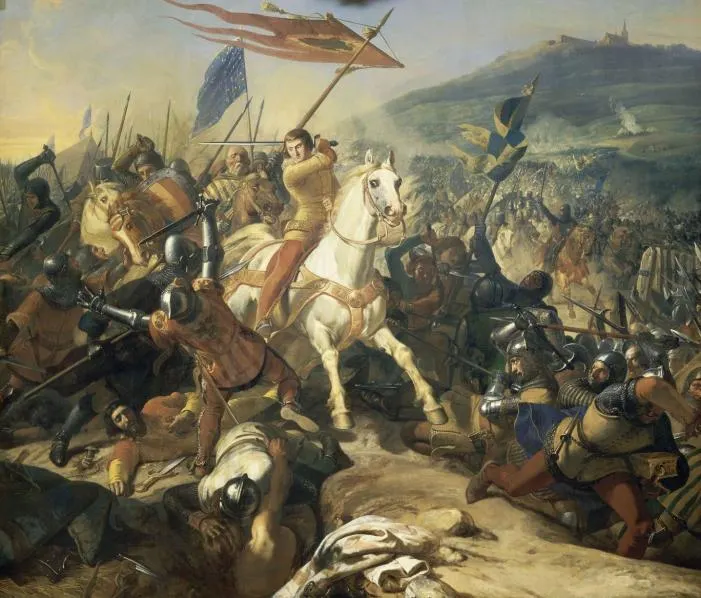
The Battle of Mons-en-Pévèle, painted by Charles-Philippe Larivière in 1839The Battle of Mons-en-Pévèle, painted by Charles-Philippe Larivière in 1839Image: Charles-Philippe Larivière · Public domain
world · Europe

Philip IV and the Flemish towns fight at Mons-en-Pévèle

Two years after the Flemish town militias destroyed a French army of knights at Courtrai, King Philip IV of France led a new army into Flanders. On 18 August 1304 it met the Flemings on the hill of Mons-en-Pévèle, south of Lille. After a long, hot day of fighting, a late Flemish charge reached the royal camp and the king himself had to fight for his life. The French held the field, and sources disagree over whether to call it a French victory or a draw, but the peace that followed gave Lille and Douai to France.

Source: Larousse: Bataille de Mons-en-Pévèle ↗
1492
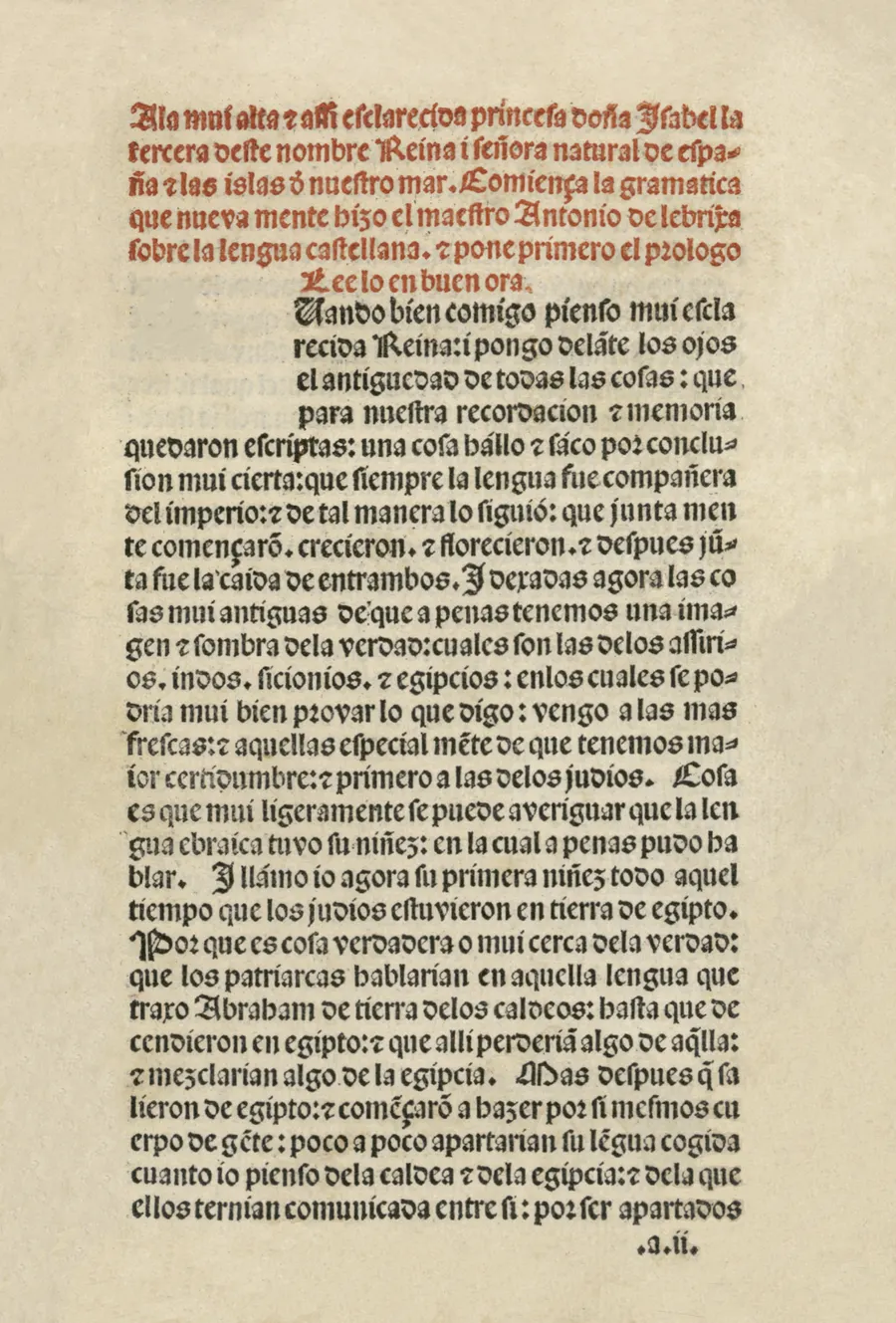
The first page of the prologue to Antonio de Nebrija's Gramática castellana, printed at Salamanca in 1492, addressed to Queen IsabellaThe first page of the prologue to Antonio de Nebrija’s Gramática castellana, printed at Salamanca in 1492, addressed to Queen IsabellaImage: Antonio de Nebrija, Gramática castellana (Salamanca, 1492) · Public domain
culture · Europe

The first grammar of the Spanish language comes off the press

Antonio de Nebrija was a scholar at the University of Salamanca who had studied in Italy and made his name with a Latin grammar. Turning to his own tongue, Castilian, he set out to give it rules as Latin had, at a time when scholars still thought of everyday languages as unworthy of serious study. His Gramática de la lengua castellana was finished printing at Salamanca on 18 August 1492, in the year that Granada fell and Columbus sailed. Dedicated to Queen Isabella, it was the first printed grammar of any modern European language, and its last book was a guide to teaching Castilian to speakers of other languages. Nebrija famously wrote that language had always been the companion of empire, yet the book sold poorly and was not reprinted until the 18th century.

Source: Biblioteca Nacional de España: Gramática castellana ↗
III
A CHANGING WORLD

Early Modern Era

Exploration, political change, scientific development and expanding global connections.

1572
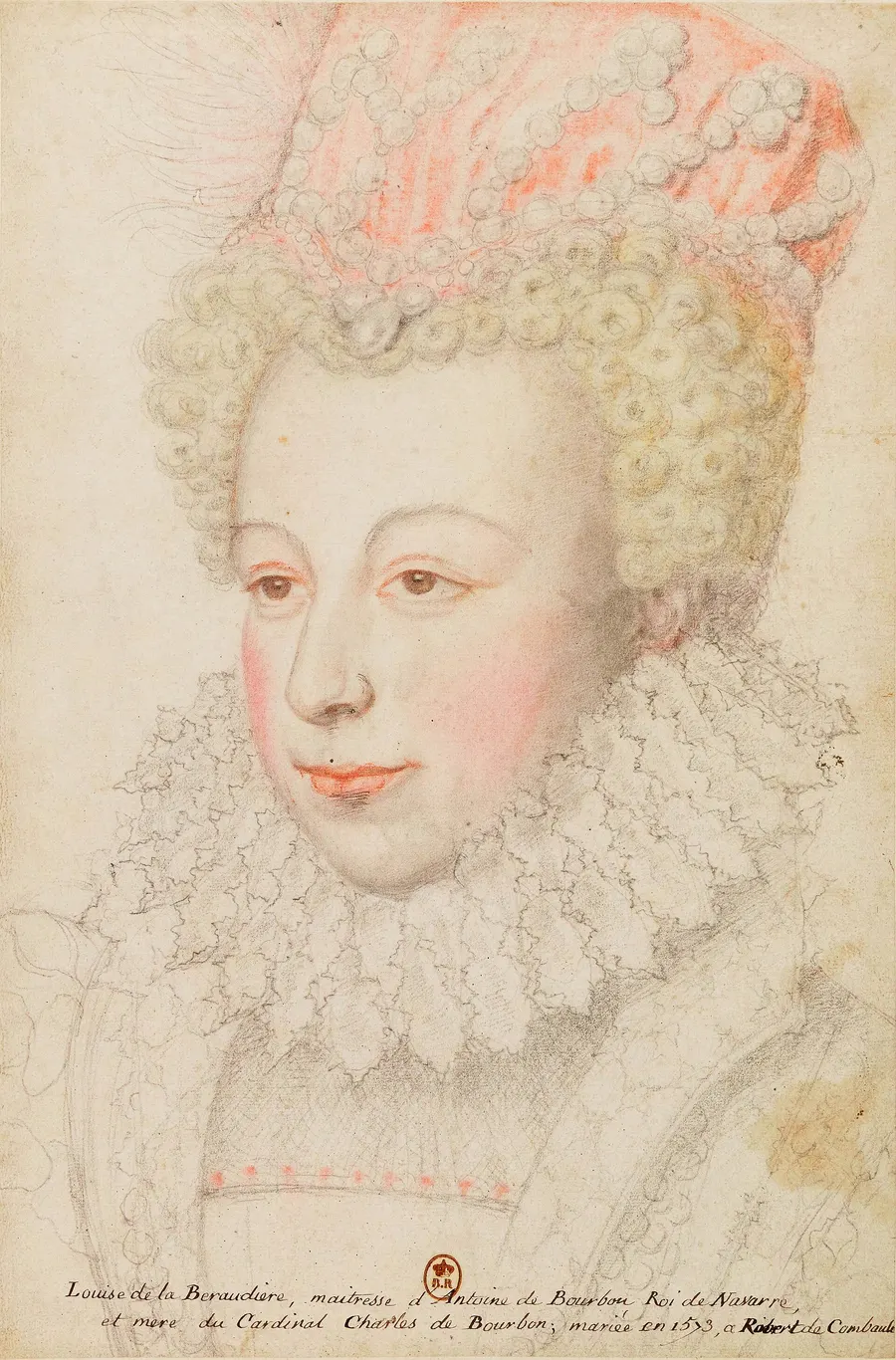
Margaret of Valois, the French king's sister, in a chalk portrait drawing of about 1574Margaret of Valois, the French king’s sister, in a chalk portrait drawing of about 1574Image: anonymous · Public domain
politics · Europe

Henry of Navarre marries Margaret of Valois in Paris

By 1572 France had been torn by ten years of war between Catholics and Protestant Huguenots. To seal a fragile peace, the queen mother, Catherine de’ Medici, arranged for her daughter Margaret, sister of the Catholic King Charles IX, to marry the young Huguenot prince Henry, King of Navarre. The pope refused to approve the match, and Paris, a fiercely Catholic city, watched uneasily as hundreds of Protestant nobles arrived for the celebrations. The couple, both 19, were married on 18 August 1572 on a platform built in front of Notre-Dame. Because of his faith, Henry stayed outside while the wedding mass was said, and his bride’s brother took his place. Six days later the peace collapsed in the St Bartholomew’s Day massacre, in which thousands of Huguenots were killed. Henry survived by converting, escaped the court in 1576 and became King Henry IV of France in 1589. The marriage was childless, and it was annulled in 1599.

Source: Britannica: Margaret of Valois ↗
1590
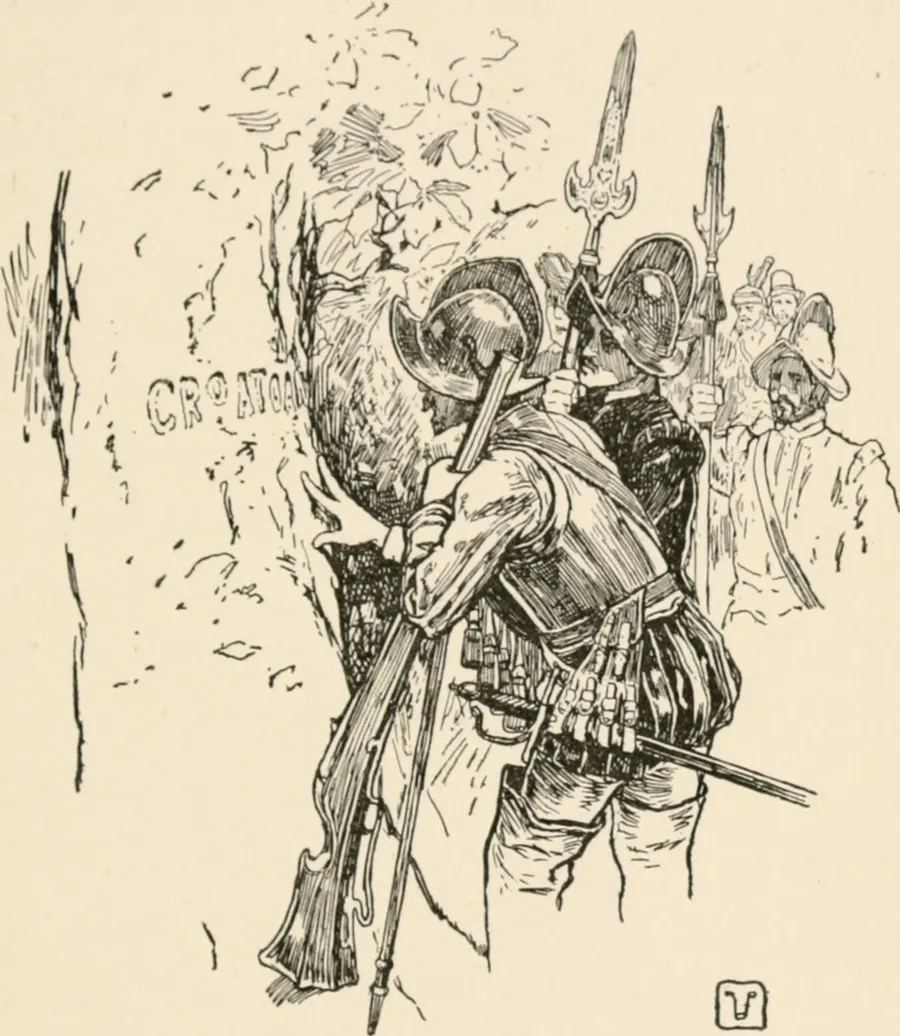
John White and his men find the word CROATOAN carved at the deserted settlement, in an illustration from a book of 1906John White and his men find the word CROATOAN carved at the deserted settlement, in an illustration from a book of 1906Image: Illustration from Wilbur F. Gordy, Stories of American Explorers (1906) · CC0

world · Americas

John White returns to Roanoke and finds the colony gone

In 1587 about 115 English men, women and children landed on Roanoke Island, off what is now North Carolina, to found a colony for Sir Walter Raleigh, with the artist John White as their governor. On 18 August 1587 White’s daughter Eleanor Dare gave birth to Virginia Dare, the first English child born in the Americas. Days later White sailed home for supplies, but war with Spain and the threat of the Armada kept ships in England, and he could not get back for three years. He finally landed on Roanoke on 18 August 1590, his granddaughter’s third birthday. The houses had been taken down and a palisade put up, and nobody was there. The letters ‘CRO’ were carved on a tree and the word ‘CROATOAN’ on a gatepost. The settlers had agreed to leave such a sign if they moved, with a cross if they left in danger, and there was no cross. White hoped they had gone to the friendly Croatoan people on Hatteras Island, but storms drove his ships away, and the ‘Lost Colony’ was never found.

Source: North Carolina Department of Natural and Cultural Resources: Origins of the Lost Colony mystery ↗
IV
THE NINETEENTH CENTURY

The 1800s

Industry, empire, invention, reform and a century of enormous transformation.

1868
A glass tube of helium glowing as an electric current passes through itA glass tube of helium glowing as an electric current passes through itImage: User:Pslawinski · CC BY-SA 2.5
science · Asia

An eclipse in India reveals a new element in the Sun

Astronomers in the 1860s had a new tool, the spectroscope, which splits light into its colours and shows the bright lines that each chemical element gives off. A total eclipse of the Sun on 18 August 1868 crossed southern Asia, and expeditions set up their instruments along its path. The French astronomer Jules Janssen observed it from Guntur in India and turned his spectroscope on the glowing prominences at the edge of the darkened Sun. Among their lines was a bright yellow one close to, but not quite matching, the familiar lines of sodium. Janssen also realised that the prominences could be studied without an eclipse, and did so the next day. In England Norman Lockyer saw the same yellow line that October, and their reports reached the French Academy of Sciences on the same day, so the two usually share the credit. Lockyer concluded that it came from an element unknown on Earth and named it helium, after the Greek word for the Sun. It was finally found on Earth in 1895.

Source: Smithsonian Magazine: How scientists discovered helium, the first alien element, 150 years ago ↗
V
THE TWENTIETH CENTURY

The 1900s

War and peace, technological leaps, social change, politics, sport and popular culture.

1917
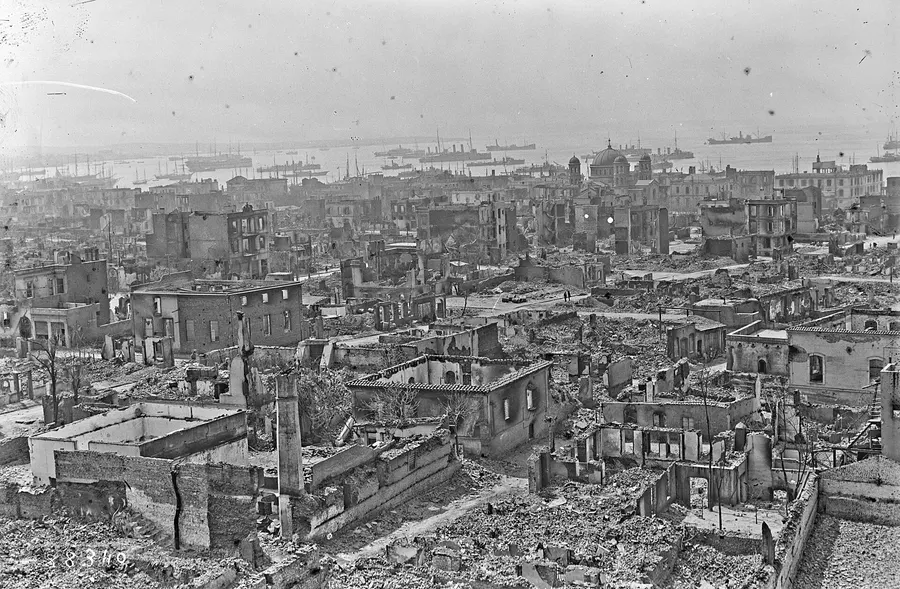
Ruined streets of Thessaloniki after the fire of 1917Ruined streets of Thessaloniki after the fire of 1917Image: Agence Rol · Public domain
world · Europe

The great fire of Thessaloniki

Thessaloniki had been part of Greece for only five years in 1917. For centuries an Ottoman port, it was a city of narrow streets and wooden houses, home to Greeks, Turks and one of the largest Jewish communities in the world, and during the First World War it was crowded with Allied soldiers and refugees. On the afternoon of 18 August 1917 a fire broke out in a house in the upper town. Driven by a strong wind, and with water scarce, it spread down through the old centre and burned for about 32 hours. Some 9,500 buildings were destroyed and more than 70,000 people were left homeless, many of them Jewish families who lost homes, shops and synagogues. The Greek government asked the French architect Ernest Hébrard to plan a new city, and his broad avenues and Aristotelous Square still shape the centre today.

Source: National Documentation Centre of Greece (SearchCulture): The Great Thessaloniki Fire of 1917 ↗
1920
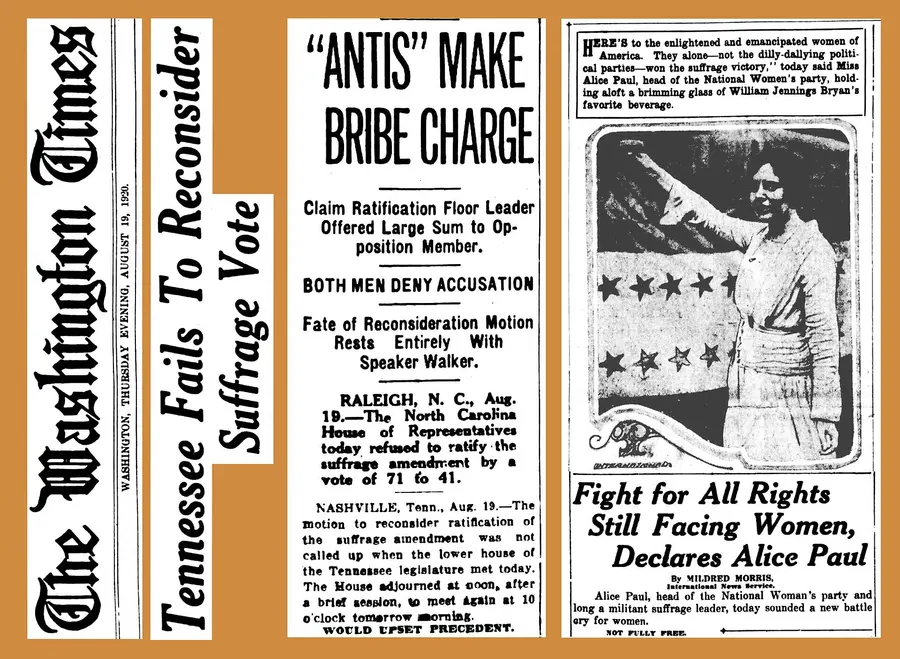
The Washington Times of 19 August 1920 reports that Tennessee has refused to reconsider its suffrage voteThe Washington Times of 19 August 1920 reports that Tennessee has refused to reconsider its suffrage voteImage: The Washington Times (newspaper) · Public domain
politics · Americas

Tennessee’s vote gives American women the right to vote

American women had campaigned for the vote since the Seneca Falls convention of 1848, and by 1920 several western states already allowed it. In June 1919 Congress at last passed the Nineteenth Amendment, which said that the right to vote could not be denied ‘on account of sex’, but it needed the approval of 36 of the 48 states. By the summer of 1920 thirty-five had ratified, and the campaign came down to Tennessee, where suffragists and their opponents, wearing yellow and red roses, filled the corridors of the state capitol in Nashville. On 18 August 1920 the state House of Representatives seemed deadlocked. Harry Burn, at 24 its youngest member, had arrived wearing an anti-suffrage red rose, but in his pocket was a letter from his mother urging him to ‘be a good boy’ and vote for ratification. He voted yes, and the amendment passed. Tennessee became the 36th state to ratify, and the amendment was certified in Washington eight days later, in time for millions of women to vote in that November’s presidential election.

Source: US National Park Service: Tennessee and the 19th Amendment ↗
1938
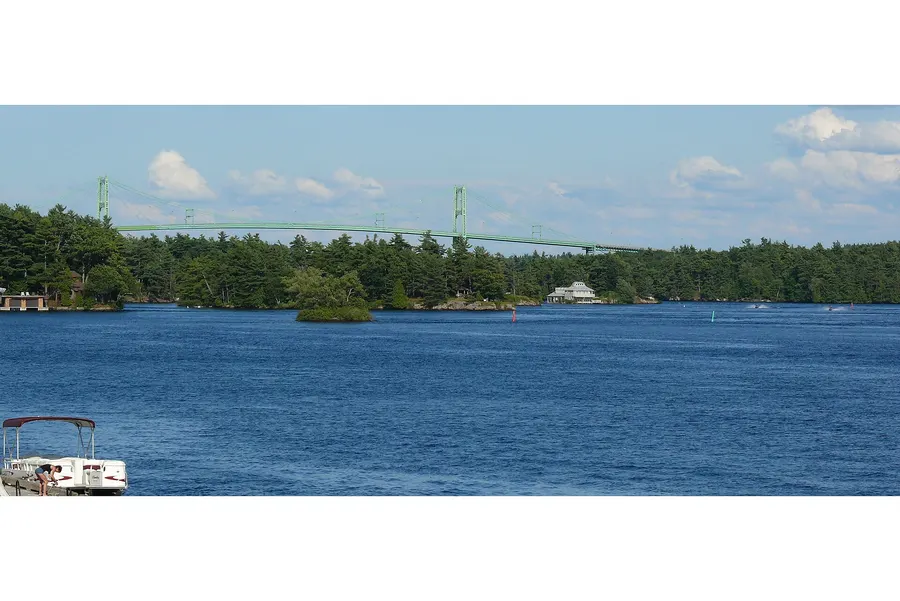
The Thousand Islands Bridge over the St Lawrence River, seen from Ivy Lea in OntarioThe Thousand Islands Bridge over the St Lawrence River, seen from Ivy Lea in OntarioImage: Ad Meskens · CC BY-SA 3.0
politics · Americas

Roosevelt pledges to defend Canada and opens the Thousand Islands Bridge

On 18 August 1938, as war clouds gathered over Europe, President Franklin D. Roosevelt crossed into Canada to receive an honorary degree at Queen’s University in Kingston, Ontario. There he promised that the United States would not stand idly by if Canadian soil were threatened by any other empire. That afternoon he and the Canadian prime minister, William Lyon Mackenzie King, opened the new Thousand Islands Bridge over the St Lawrence River in front of a crowd of more than 25,000.

Source: The American Presidency Project, UC Santa Barbara: Address at Queen’s University, Kingston, Ontario ↗
1958
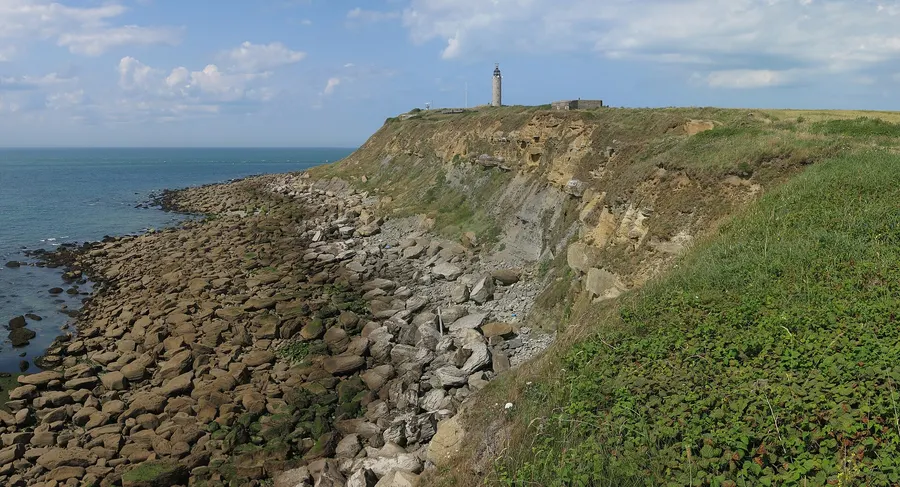
The French coast at Cap Gris-Nez, the nearest point to England, where many Channel swims beginThe French coast at Cap Gris-Nez, the nearest point to England, where many Channel swims beginImage: Jörg Braukmann · CC BY-SA 4.0
sport · Europe

Brojen Das becomes the first Asian to swim the English Channel

Brojen Das, a swimmer from Dhaka in what was then East Pakistan, was one of 39 swimmers from 23 countries in a race across the English Channel sponsored by the holiday-camp owner Billy Butlin. They set off from France around midnight at the start of 18 August 1958, and Das reached the English coast 14 hours and 52 minutes later, first among the men. He was the first Asian to swim the Channel, and he crossed it five more times in the next three years.

Source: Banglapedia, National Encyclopedia of Bangladesh: Das, Brojen ↗
1964
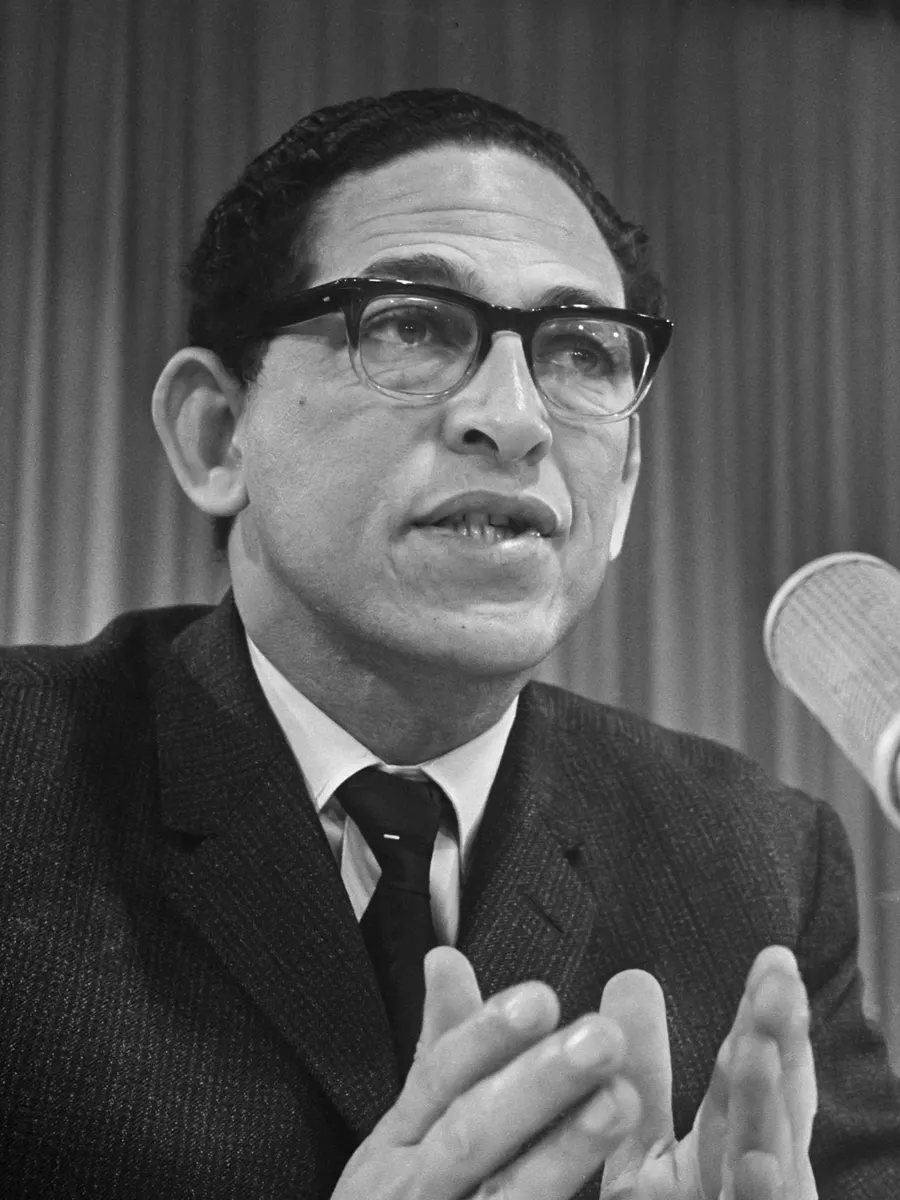
Dennis Brutus, a South African poet who campaigned against apartheid in sport, at a press conference in Amsterdam in 1967Dennis Brutus, a South African poet who campaigned against apartheid in sport, at a press conference in Amsterdam in 1967Image: Eric Koch for Anefo · CC BY-SA 3.0 nl

sport · Africa

South Africa is shut out of the Tokyo Olympics over apartheid

Under apartheid, South Africa’s Olympic teams were chosen from white athletes only, and black sportsmen and women could not compete against them at home. Campaigners inside the country and abroad pressed the International Olympic Committee to act, and in October 1963, meeting at Baden-Baden, the IOC told South Africa to end racial discrimination in its sport by the end of the year or miss the 1964 Games in Tokyo. The deadline was extended, and South Africa named a team that for the first time included seven black athletes, but the government insisted that they travel and live apart from the white team members. That did not satisfy the IOC, and on 18 August 1964 it withdrew South Africa’s invitation to Tokyo. It was the start of a long sporting isolation: South Africa was expelled from the Olympic movement in 1970 and did not return to the Games until Barcelona in 1992.

Source: South African History Online: SA is banned from the Olympic Games ↗
1977
Steve Biko's house in Ginsberg, the township of King William's TownSteve Biko’s house in Ginsberg, the township of King William’s TownImage: Thuvack · CC BY-SA 3.0

politics · Africa

Steve Biko is arrested at a police roadblock

Steve Biko, founder of South Africa’s Black Consciousness Movement, had been banned by the apartheid government since 1973 and was forbidden to leave the King William’s Town district. On 18 August 1977 he and his fellow activist Peter Jones were stopped at a police roadblock in the Eastern Cape and detained under the Terrorism Act. Held naked and in chains and beaten in custody, Biko died on 12 September, and his death caused outrage around the world.

Source: South African History Online: The life of Steve Biko ↗
VI
2000 TO TODAY

Modern Day

The events of recent decades that have already become part of the historical record.

2008
Pervez Musharraf, photographed in 2004Pervez Musharraf, photographed in 2004Image: Antônio Cruz/ABr · CC BY 3.0 br
politics · Asia

Pervez Musharraf resigns as president of Pakistan

General Pervez Musharraf seized power in Pakistan in a bloodless coup in October 1999 and made himself president in 2001. He became a key ally of the United States after the attacks of 11 September 2001, but at home his rule grew more troubled: in 2007 he suspended the chief justice, declared a state of emergency and finally gave up command of the army. In elections in February 2008 his supporters were heavily beaten, and the parties of Benazir Bhutto, assassinated weeks before, and Nawaz Sharif, whom he had overthrown, formed a coalition government. In August 2008 the coalition moved to impeach him for violating the constitution. On 18 August 2008, in a televised address of about an hour, Musharraf defended his record, admitted making mistakes and announced that he would resign rather than put the country through a damaging fight. Asif Ali Zardari, Benazir Bhutto’s widower, was elected president the following month.

Source: Britannica: Pakistan, the Pervez Musharraf government ↗
2019
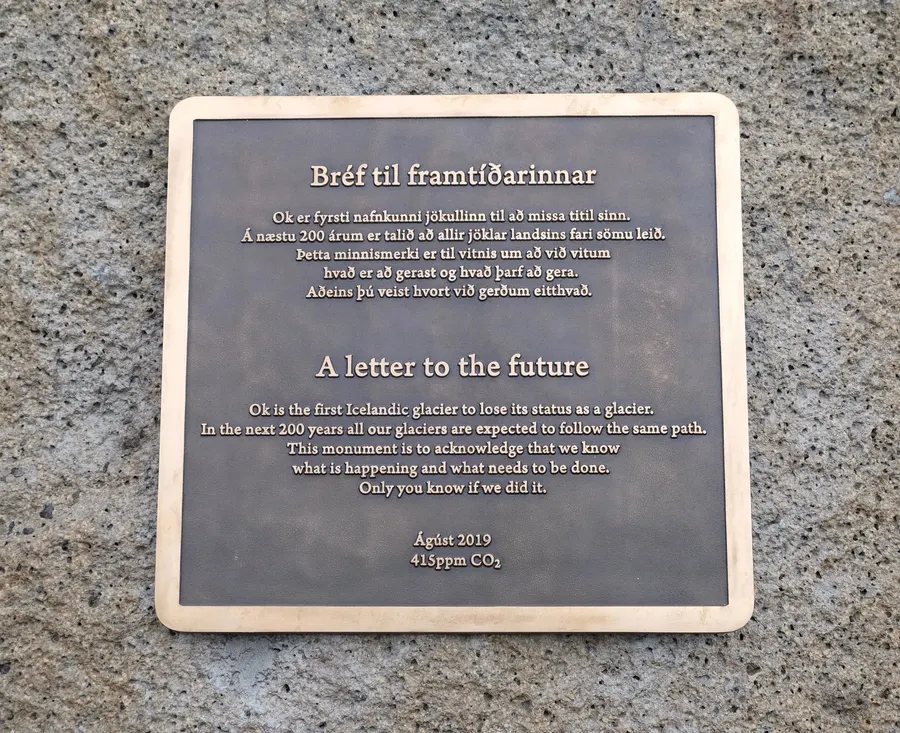
The memorial plaque to Okjökull on a bare rock where the glacier once layThe memorial plaque to Okjökull on a bare rock where the glacier once layImage: Dominic Boyer · CC BY-SA 4.0
science · Europe

Iceland unveils a memorial to Okjökull, a glacier lost to a warming climate

Okjökull, a glacier on the volcano Ok in western Iceland, had shrunk so far by 2014 that it was no longer moving and lost its status as a glacier. On 18 August 2019 about a hundred people, among them Iceland’s prime minister, Katrín Jakobsdóttir, and the former Irish president Mary Robinson, climbed the mountain to unveil a bronze plaque proposed by researchers from Rice University. Its words, by the writer Andri Snær Magnason, are addressed to the future and warn that all of Iceland’s glaciers may follow in the next 200 years.

Source: Rice University: Memorial honoring lost glacier to be installed in Iceland Aug. 18 ↗
RESEARCH

Sources & Further Reading

Selected authoritative references supporting the events on this page.

Larousse: Bataille de Mons-en-Pévèle↗Wikipedia: Battle of Mons-en-Pévèle↗Biblioteca Nacional de España: Gramática castellana↗Biblioteca Virtual Miguel de Cervantes: Gramática castellana↗Britannica: Margaret of Valois↗Musee protestant: The two wives of Henri IV↗North Carolina Department of Natural and Cultural Resources: Origins of the Lost Colony mystery↗US National Park Service, Fort Raleigh: Major theories of the Lost Colony↗Smithsonian Magazine: How scientists discovered helium, the first alien element, 150 years ago↗Wikipedia: Solar eclipse of August 18, 1868↗National Documentation Centre of Greece (SearchCulture): The Great Thessaloniki Fire of 1917↗Wikipedia: Great Thessaloniki Fire of 1917↗US National Park Service: Tennessee and the 19th Amendment↗US National Archives: 19th Amendment to the US Constitution, Women’s Right to Vote (1920)↗The American Presidency Project, UC Santa Barbara: Address at Queen’s University, Kingston, Ontario↗Thousand Islands Bridge Authority: Our history↗Banglapedia, National Encyclopedia of Bangladesh: Das, Brojen↗Wikipedia: Brojen Das↗South African History Online: SA is banned from the Olympic Games↗Olympics.com: Why South Africa was barred from the Olympics↗South African History Online: The life of Steve Biko↗Britannica: Steve Biko↗Britannica: Pakistan, the Pervez Musharraf government↗NPR: Facing impeachment, Pakistan’s Musharraf resigns↗Rice University: Memorial honoring lost glacier to be installed in Iceland Aug. 18↗NASA Earth Observatory: Tribute to a glacier that is no more↗
WHY THESE MOMENTS?

Significance before volume

This page is not the longest possible list of events. It is a chronological journey through 18 August, where each entry is chosen for historical significance, human interest and reliability.

Facts are checked against authoritative museums, archives, universities and reference works. Where sources disagree, the page says so.

EXPLORED THE DEEPER STORY?

Return to the highlights of 18 August

Discover the lighter side of the date with famous birthdays, culture, firsts and lives remembered.

Explore This Day →
← PREVIOUS DAY17 August
HISTORY & TIMELINE18 August
NEXT DAY →19 August