
HISTORY & TIMELINE
27 April

A journey through
27 April in history

From an imperial wedding in Constantinople in 395 to the leaders of the two Koreas meeting at Panmunjom in 2018, 27 April has seen English knights rout the Scots at Dunbar, Swiss pikemen cut down by gunfire at Bicocca, American marines at Derna, London’s first Olympic Games begin, Sierra Leone become independent, Expo 67 open in Montreal and the Commons elect its first woman Speaker. This timeline follows the date across more than sixteen centuries.

I
EARLIEST RECORDS

Ancient & Early History

The earliest worthwhile records and events connected with this date.

395
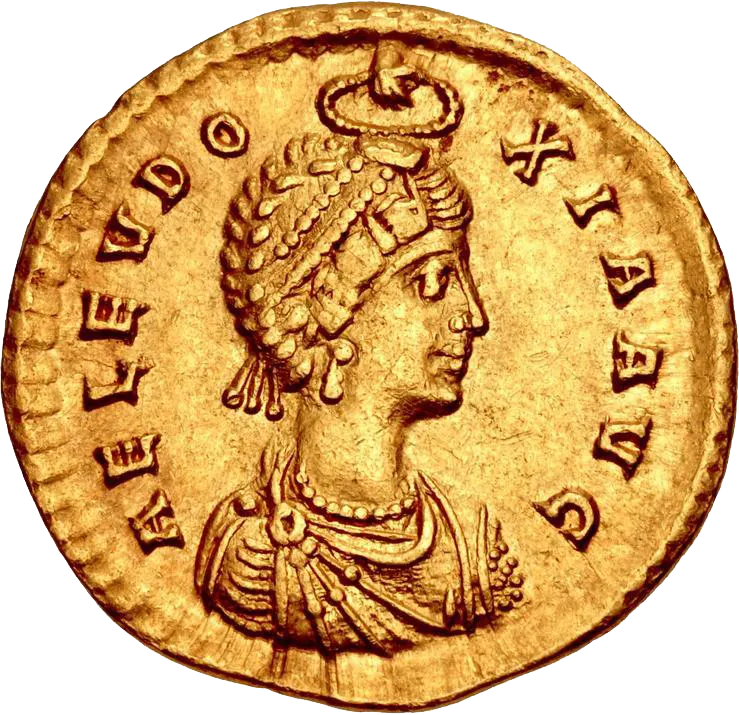
A gold solidus of Empress Aelia Eudoxia.A gold solidus of Empress Aelia Eudoxia.Image: CNG · CC BY-SA 2.5
politics · Europe

Emperor Arcadius marries Aelia Eudoxia

On 27 April 395 the young eastern Roman emperor Arcadius married Aelia Eudoxia in Constantinople, only three months after the death of his father, Theodosius I. The match was arranged by the court chamberlain Eutropius to outflank a rival minister. Eudoxia, the daughter of a Frankish general, was proclaimed Augusta in 400 and became one of the most prominent empresses of her time. Her son Theodosius II went on to reign for more than four decades.

Source: De Imperatoribus Romanis (Loyola University Chicago): Aelia Eudoxia ↗
II
THE MIDDLE AGES

Medieval History

Kingdoms, conflict, faith, power and the changing medieval world.

1296
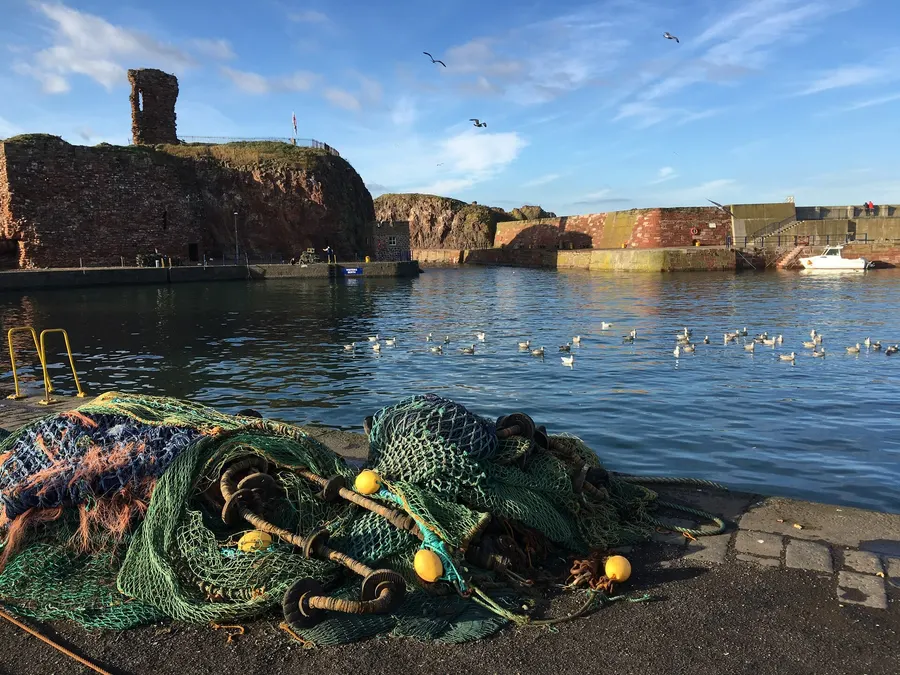
The ruins of Dunbar Castle above the harbour at Dunbar, East Lothian.The ruins of Dunbar Castle above the harbour at Dunbar, East Lothian.Image: Jennifer Petrie · CC BY-SA 2.0
world · Europe

The Scots are routed at Dunbar

On 27 April 1296 an English army under John de Warenne, Earl of Surrey, met the Scottish host outside Dunbar in East Lothian. Edward I of England had invaded Scotland weeks earlier to punish King John Balliol for refusing to serve him and for making an alliance with France. The Scots left a strong position on high ground and were scattered by the English cavalry, and Dunbar Castle surrendered the next day. It was the only major battle of the campaign: by July Balliol had given up his crown, opening the long Wars of Scottish Independence.

Source: Oxford Reference: Battle of Dunbar ↗
III
A CHANGING WORLD

Early Modern Era

Exploration, political change, scientific development and expanding global connections.

1521
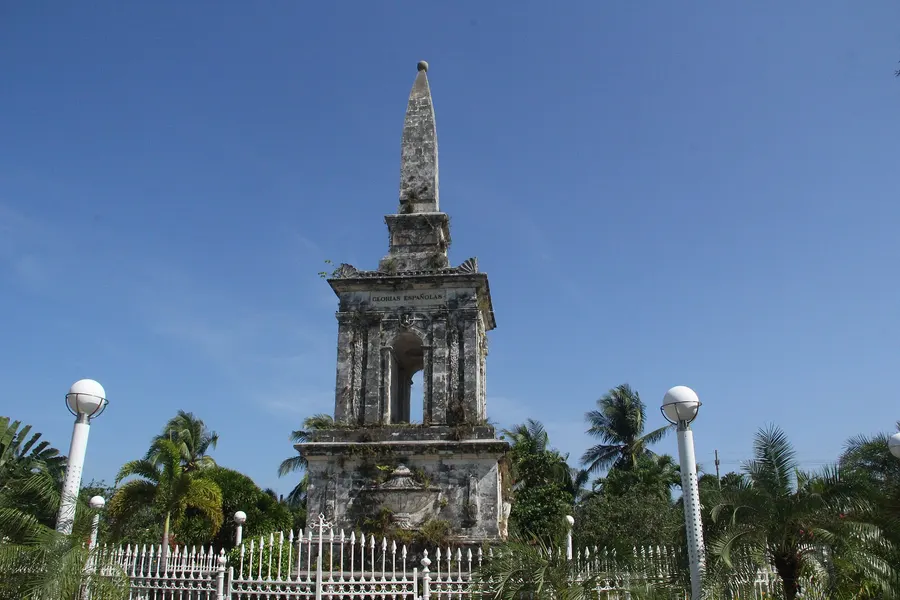
The Mactan Shrine in Lapu-Lapu City, near the site of the battle; the tower is the 19th-century monument to Magellan.The Mactan Shrine in Lapu-Lapu City, near the site of the battle; the tower is the 19th-century monument to Magellan.Image: Badz Patanag · CC BY-SA 3.0
world · Asia

Lapulapu’s warriors defeat Magellan at Mactan

On 27 April 1521 Ferdinand Magellan waded ashore on the island of Mactan, in the central Philippines, with a few dozen armed men. He had come to force Lapulapu, the island’s datu, to submit to Spain and to the ruler of neighbouring Cebu, but a wide coral reef kept his ships and their guns too far out to help. Lapulapu’s warriors, far more numerous, drove the Spaniards back through the shallows and killed Magellan in the fighting. The survivors sailed on and one ship eventually completed the first voyage round the world, while in the Philippines Lapulapu is honoured as the first to resist European conquest.

Source: National Historical Commission of the Philippines: 500 years of the Battle of Mactan ↗
1522
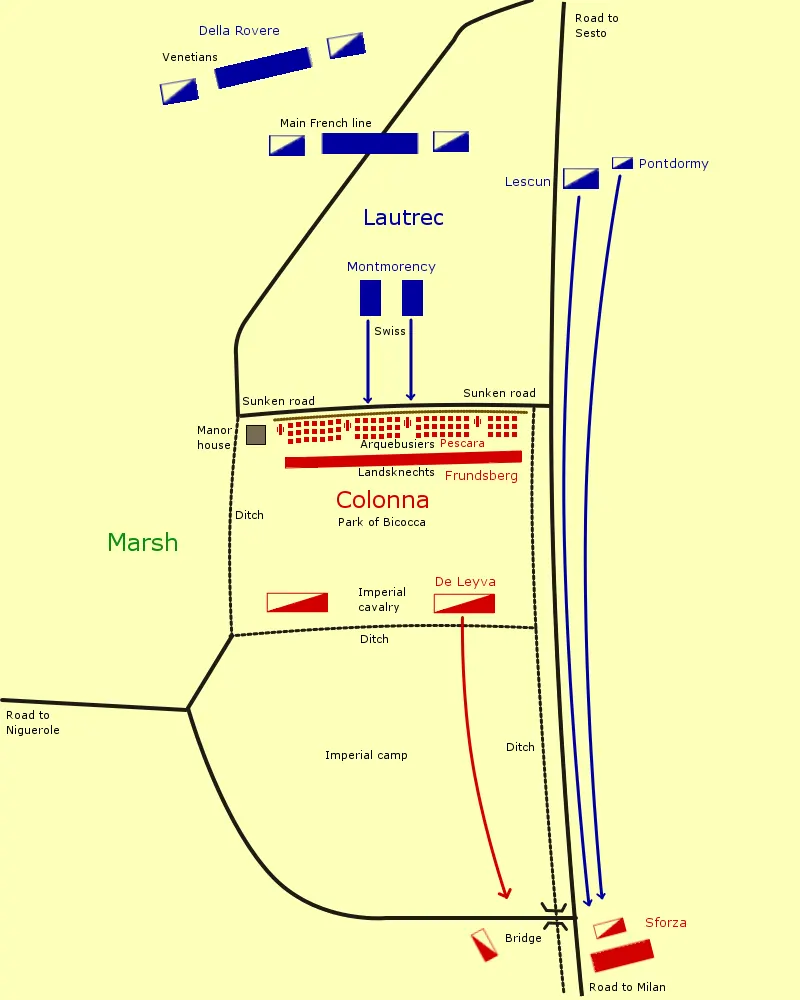
A modern diagram of the Battle of Bicocca, with French movements in blue and Imperial ones in red.A modern diagram of the Battle of Bicocca, with French movements in blue and Imperial ones in red.Image: Kirill Lokshin · CC BY-SA 3.0
world · Europe

Gunfire breaks the Swiss at Bicocca

On 27 April 1522 Swiss pikemen serving France charged an Imperial and Spanish army dug in at the Bicocca estate, north-east of Milan. Spanish arquebusiers and artillery behind earthworks cut them down before they could close, and thousands of Swiss were killed in about half an hour. The French commander Lautrec withdrew from Lombardy, leaving Milan in the emperor’s hands. The battle ended the Swiss reputation for invincibility and showed how firearms were changing warfare.

Source: Swiss National Museum blog: The Battle of Bicocca ↗
IV
THE NINETEENTH CENTURY

The 1800s

Industry, empire, invention, reform and a century of enormous transformation.

1805
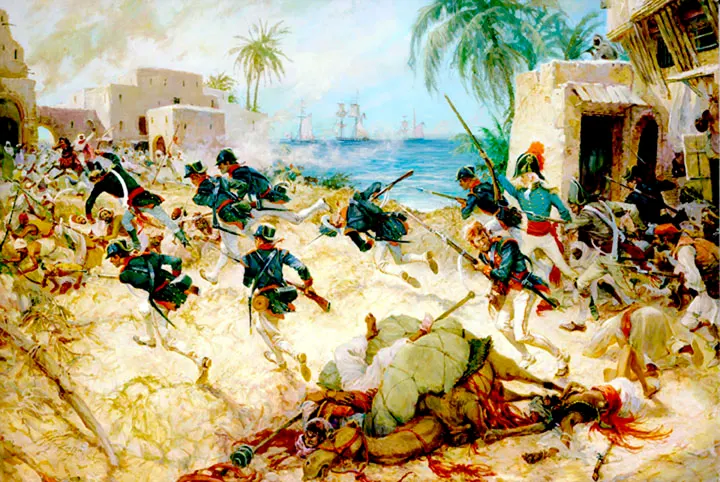
The assault on Derna, painted by the Marine Corps artist Charles Waterhouse (Marine Corps Art Collection).The assault on Derna, painted by the Marine Corps artist Charles Waterhouse (Marine Corps Art Collection).Image: Charles Waterhouse (Marine Corps Art Collection) · Public domain
world · Africa

American marines storm Derna

On 27 April 1805 a small force led by the American agent William Eaton attacked Derna, in what is now eastern Libya, with three US Navy ships firing in support. Eaton had marched some 500 miles across the desert from Egypt with a mixed band of Arab horsemen, Greek and European mercenaries and eight US Marines. The town fell the same day, in an attempt to put Hamet Karamanli on the throne of Tripoli. The campaign is remembered in the line ‘to the shores of Tripoli’ in the Marines’ hymn.

Source: Naval History and Heritage Command: Battle of Derna, 27 April 1805, Selected Naval Documents ↗
1813
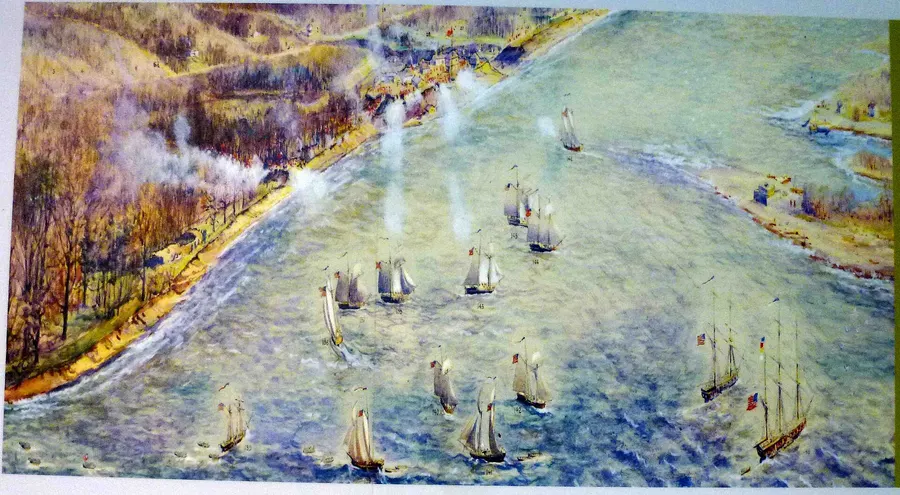
The American naval force off York during the attack of 1813, in a watercolour by Owen Staples.The American naval force off York during the attack of 1813, in a watercolour by Owen Staples.Image: Owen Staples · Public domain
world · Americas

American troops take and burn York

On 27 April 1813 an American fleet landed a large force of troops west of York, the small capital of Upper Canada that is now Toronto. The British regulars, Canadian militia and Ojibwe warriors defending it were outnumbered and fell back after hours of fighting. As they withdrew the British blew up the fort’s powder magazine, and the blast killed or wounded more than 200 Americans, among them their commander, the explorer Zebulon Pike. The Americans went on to burn the parliament buildings, and the raid was one of the grievances behind the burning of Washington the following year.

Source: American Battlefield Trust: York ↗
V
THE TWENTIETH CENTURY

The 1900s

War and peace, technological leaps, social change, politics, sport and popular culture.

1908
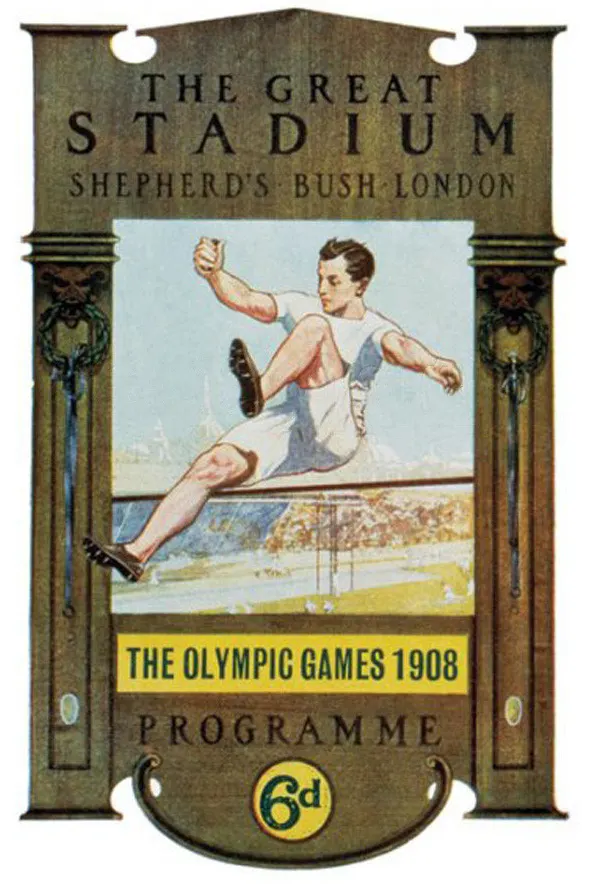
The cover of the programme for the 1908 Olympic Games at the Great Stadium, Shepherd's Bush.The cover of the programme for the 1908 Olympic Games at the Great Stadium, Shepherd’s Bush.Image: Arthur Stockdale Cope · Public domain
sport · Europe

London’s first Olympic Games begin

On 27 April 1908 the Olympic Games held in London got under way, quietly, at Queen’s Club in West Kensington. Evan Noel beat Cecil Browning in the first round of the racquets tournament, the opening contest of Games that would run on and off until the end of October. The grand opening ceremony at the new White City stadium did not take place until July. London had stepped in after Rome withdrew, and the 1908 Games were the first to have a purpose-built main stadium and a formal parade of nations.

Source: Olympedia: Racquets at the 1908 Summer Olympics ↗
1961
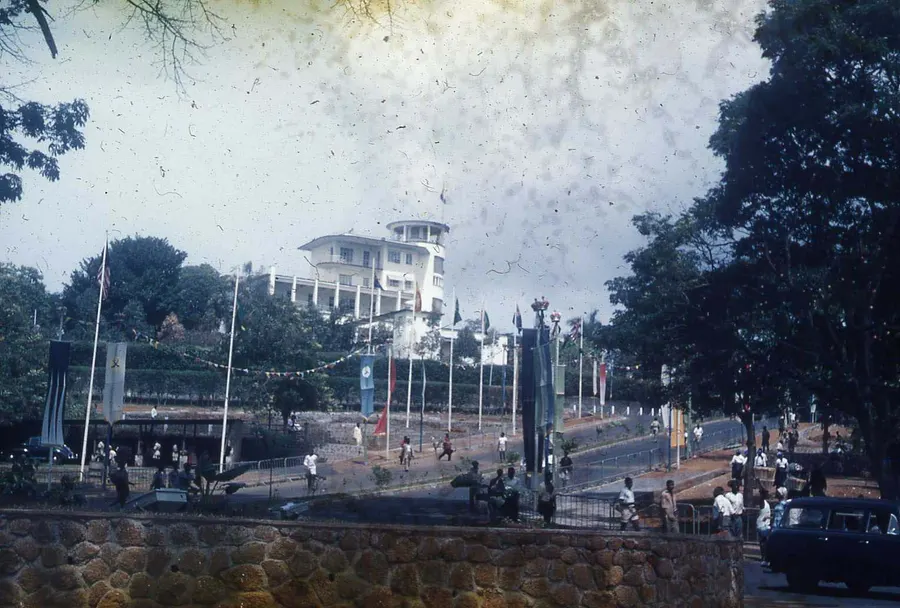
State House in Freetown, Sierra Leone.State House in Freetown, Sierra Leone.Image: Jared & Melanie & Huxley Ponchot · CC BY 2.0
politics · Africa

Sierra Leone becomes independent

On 27 April 1961 the British colony and protectorate of Sierra Leone became a single independent country within the Commonwealth. The date was fixed as ‘the appointed day’ in the Sierra Leone Independence Act passed at Westminster that March. Sir Milton Margai, a doctor who had led the country towards self-government, became its first prime minister. The day is still kept as Sierra Leone’s Independence Day.

Source: legislation.gov.uk: Sierra Leone Independence Act 1961 ↗
1967
The Biosphère in Montreal, the geodesic dome built as the United States pavilion for Expo 67.The Biosphère in Montreal, the geodesic dome built as the United States pavilion for Expo 67.Image: Équinoxe · CC BY-SA 4.0
culture · Americas

Expo 67 opens in Montreal

On 27 April 1967 Governor General Roland Michener declared Expo 67 open at the Place des Nations in Montreal, before some 7,000 invited guests and the world’s press. The fair, built partly on islands enlarged and created in the St Lawrence River, was the centrepiece of Canada’s centennial year. The public came through the gates the next morning, and more than 300,000 people visited on the first day. Over six months some 50 million visits were recorded, and Moshe Safdie’s Habitat 67 housing complex still stands as a reminder of the fair.

Source: Library and Archives Canada: 50 years of Expo 67 ↗
1992
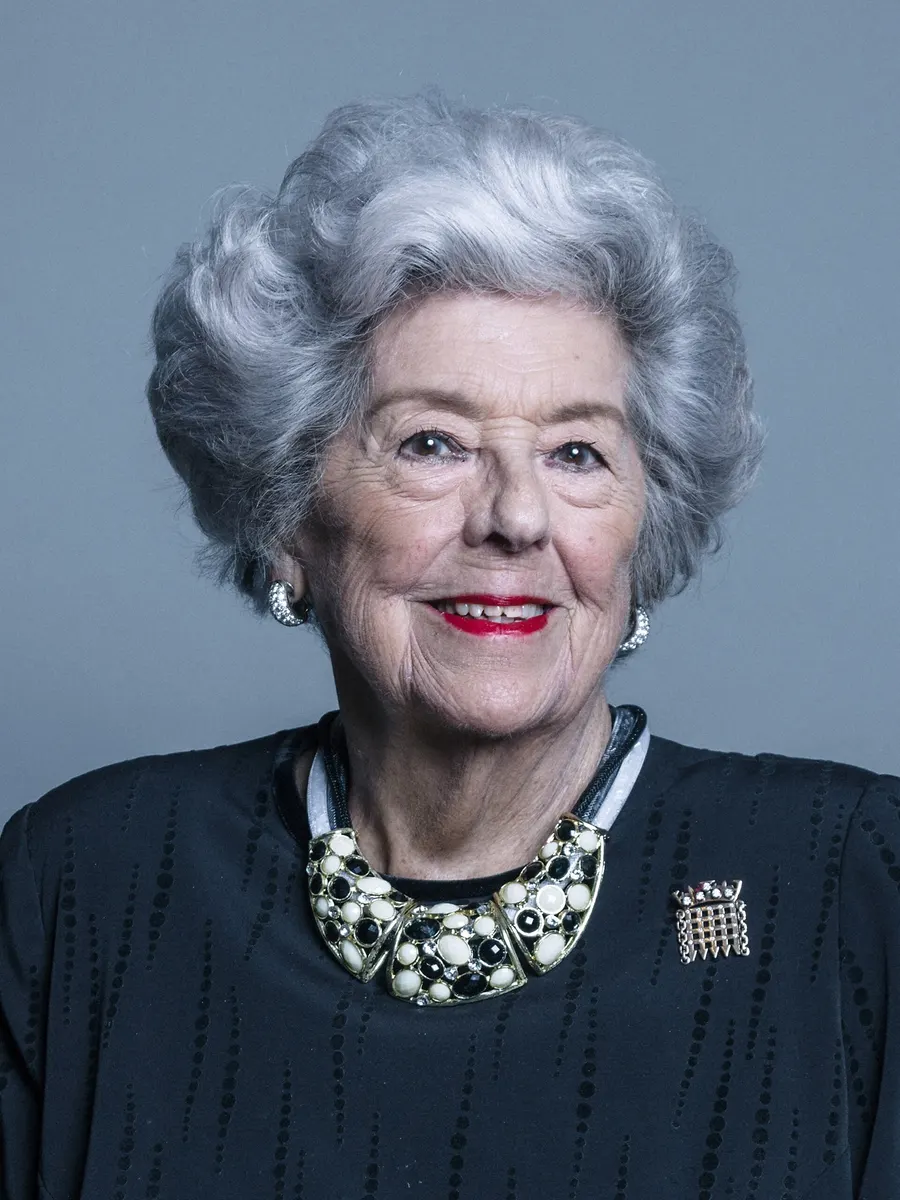
Baroness Boothroyd in her official House of Lords portrait.Baroness Boothroyd in her official House of Lords portrait.Image: Chris McAndrew · CC BY 3.0
politics · Europe

Betty Boothroyd becomes the first woman Speaker

On 27 April 1992 the House of Commons elected the Labour MP Betty Boothroyd as its Speaker, the first woman to hold the office in its seven centuries. She beat the Conservative Peter Brooke by 372 votes to 238 in the first contested election for the chair in 40 years. MPs broke with custom and applauded the result. She served until 2000, becoming known for her firm, good-humoured command of the House.

Source: Open University Library digital archive: Baroness Betty Boothroyd ↗
1994
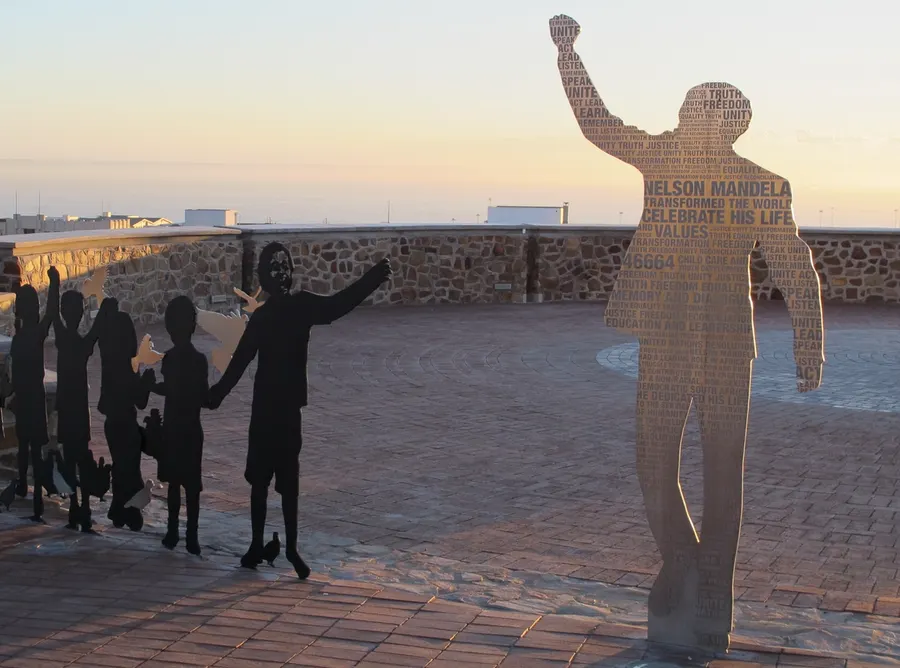
A memorial in Port Elizabeth (Gqeberha) that recalls the long, winding queues of voters in 1994, with a figure of Nelson Mandela.A memorial in Port Elizabeth (Gqeberha) that recalls the long, winding queues of voters in 1994, with a figure of Nelson Mandela.Image: Suzi-k · CC BY-SA 3.0
politics · Africa

South Africa votes as one nation

On 27 April 1994 millions of South Africans voted in the country’s first election open to adults of every race. Many had never been allowed to vote before, and people stood for hours in queues that often stretched for more than a kilometre. Voting ran over several days and turnout reached almost 87 per cent. The African National Congress won about 63 per cent of the vote, Nelson Mandela became president the following month, and the date is now kept as Freedom Day.

Source: Apartheid Museum: 1994 Election ↗
VI
2000 TO TODAY

Modern Day

The events of recent decades that have already become part of the historical record.

2005
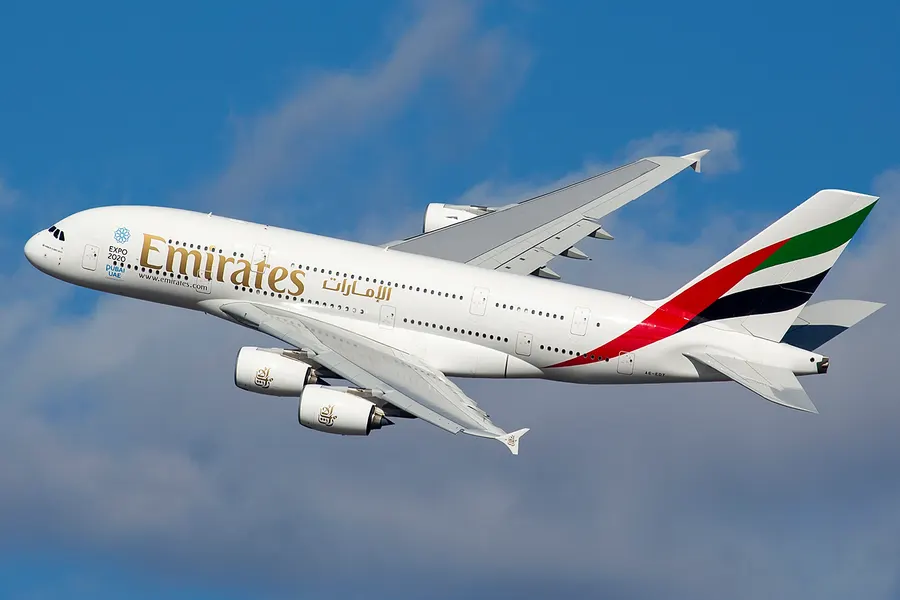
An Airbus A380 of Emirates in flight near New York in 2013.An Airbus A380 of Emirates in flight near New York in 2013.Image: Maarten Visser from Capelle aan den IJssel, Nederland · CC BY-SA 2.0
science · Europe

The Airbus A380 makes its first flight

On 27 April 2005 the first Airbus A380 took off from Toulouse-Blagnac in south-west France at 10.30 in the morning. Tens of thousands of people gathered around the airport to watch the double-decker, the largest passenger airliner ever built, climb away. The test crew flew for almost four hours before landing back at Toulouse. The A380 entered service with Singapore Airlines in 2007 and could carry more than 500 passengers, though airlines later turned to smaller twin-engined jets and production ended in 2021.

Source: Airbus: Happy 20th anniversary, A380! ↗
2018
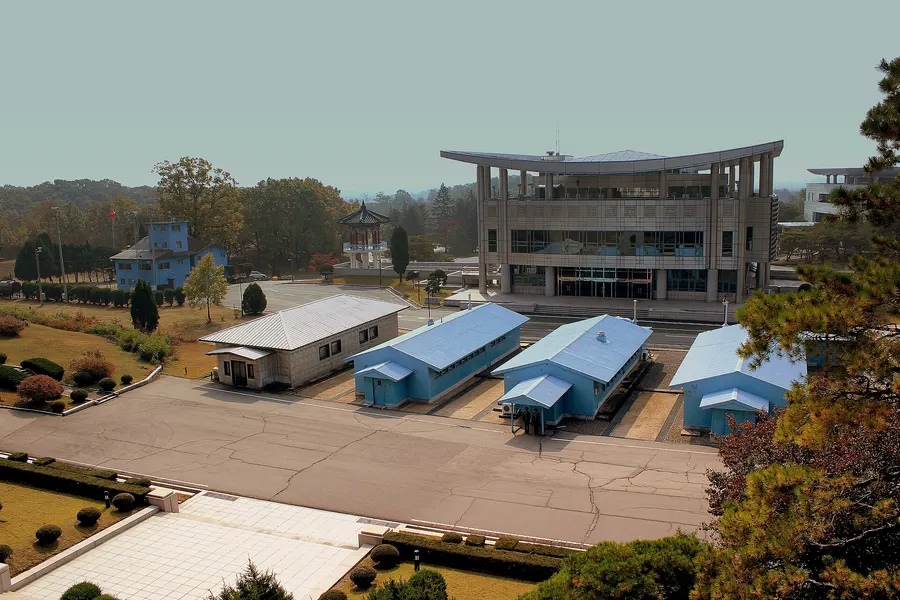
The blue conference huts on the line at Panmunjom, with the South Korean side's buildings behind, in 2012.The blue conference huts on the line at Panmunjom, with the South Korean side’s buildings behind, in 2012.Image: calflier001 · CC BY-SA 2.0
politics · Asia

The leaders of the two Koreas meet at Panmunjom

On 27 April 2018 Kim Jong Un stepped over the concrete line at Panmunjom, becoming the first North Korean leader to set foot in the South since the Korean War. He and South Korea’s president, Moon Jae-in, held talks at the Peace House in the Joint Security Area. They signed a declaration promising no more war on the peninsula, a liaison office and reunions for separated families. Many of its hopes later faded as relations cooled.

Source: National Committee on North Korea: Panmunjom Declaration for Peace, Prosperity and Unification of the Korean Peninsula ↗
RESEARCH

Sources & Further Reading

Selected authoritative references supporting the events on this page.

De Imperatoribus Romanis (Loyola University Chicago): Aelia Eudoxia↗Wikipedia: Aelia Eudoxia↗Oxford Reference: Battle of Dunbar↗HistoryOfWar: Battle of Dunbar, 27 April 1296↗Wikipedia: Battle of Dunbar (1296)↗National Historical Commission of the Philippines: 500 years of the Battle of Mactan↗Britannica: Mactan Island↗The Conversation (Australian Catholic University historians): Ferdinand Magellan’s death 500 years ago is being remembered as an act of Indigenous resistance↗Wikipedia: Battle of Mactan↗Wikipedia: Lapulapu↗Swiss National Museum blog: The Battle of Bicocca↗Wikipedia: Battle of Bicocca↗Naval History and Heritage Command: Battle of Derna, 27 April 1805, Selected Naval Documents↗Wikipedia: Battle of Derna (1805)↗American Battlefield Trust: York↗Wikipedia: Battle of York↗Olympedia: Racquets at the 1908 Summer Olympics↗Wikipedia: Rackets at the 1908 Summer Olympics↗legislation.gov.uk: Sierra Leone Independence Act 1961↗Wikipedia: Sierra Leone (1961–1971)↗Library and Archives Canada: 50 years of Expo 67↗Wikipedia: Expo 67 opening week↗Open University Library digital archive: Baroness Betty Boothroyd↗Wikipedia: 1992 Speaker of the British House of Commons election↗Apartheid Museum: 1994 Election↗South African History Online: Freedom Day, 27 April↗Wikipedia: 1994 South African general election↗Airbus: Happy 20th anniversary, A380!↗Wikipedia: Airbus A380↗National Committee on North Korea: Panmunjom Declaration for Peace, Prosperity and Unification of the Korean Peninsula↗Wikipedia: April 2018 inter-Korean summit↗
WHY THESE MOMENTS?

Significance before volume

This page is not the longest possible list of events. It is a chronological journey through 27 April, where each entry is chosen for historical significance, human interest and reliability.

Facts are checked against authoritative museums, archives, universities and reference works. Where sources disagree, the page says so.

EXPLORED THE DEEPER STORY?

Return to the highlights of 27 April

Discover the lighter side of the date with famous birthdays, culture, firsts and lives remembered.

Explore This Day →
← PREVIOUS DAY26 April
HISTORY & TIMELINE27 April
NEXT DAY →28 April