
-215
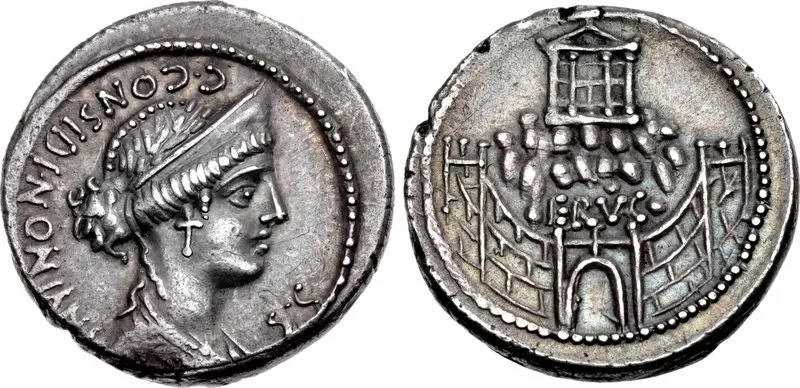 A Roman silver coin of 57 BC showing Venus Erycina and, on the reverse, her temple on Mount Eryx in Sicily.Image: CNG · CC BY-SA 2.5
culture · Europe
Rome dedicates a temple to Venus of Eryx
On 23 April 215 BC, by the date the Romans kept as its founding day, a temple to Venus Erycina was dedicated on the Capitoline Hill in Rome. Quintus Fabius Maximus had vowed it after the crushing defeat by Hannibal at Lake Trasimene two years earlier, on the advice of the Sibylline Books. The goddess was brought from Eryx in Sicily, a sign of Rome’s search for divine help in its war with Carthage. The day was also the Vinalia, a wine festival held at the temple.
Source: Platner and Ashby, A Topographical Dictionary of Ancient Rome (LacusCurtius, University of Chicago): Venus Erucina ↗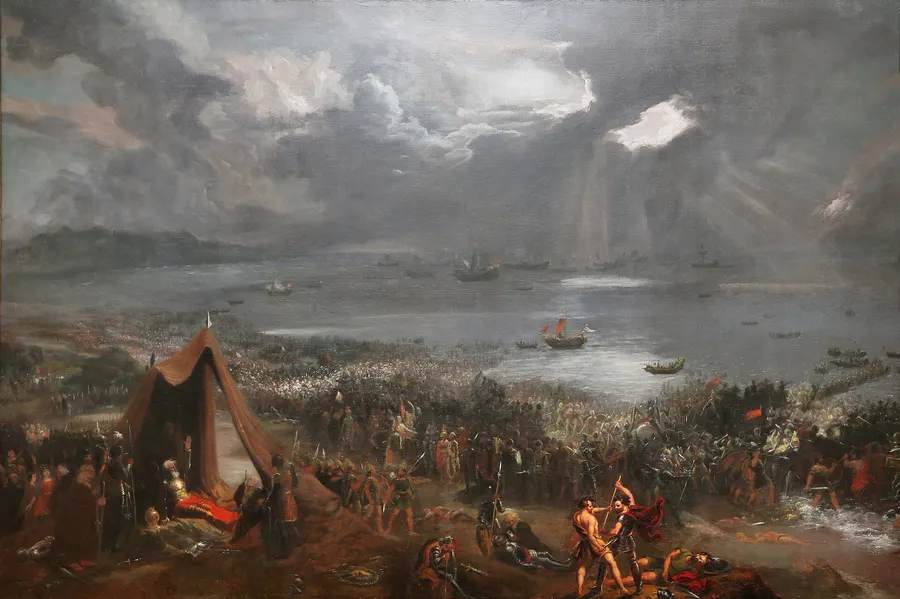 The Battle of Clontarf, painted by Hugh Frazer in 1826, more than eight centuries after the battle.Image:
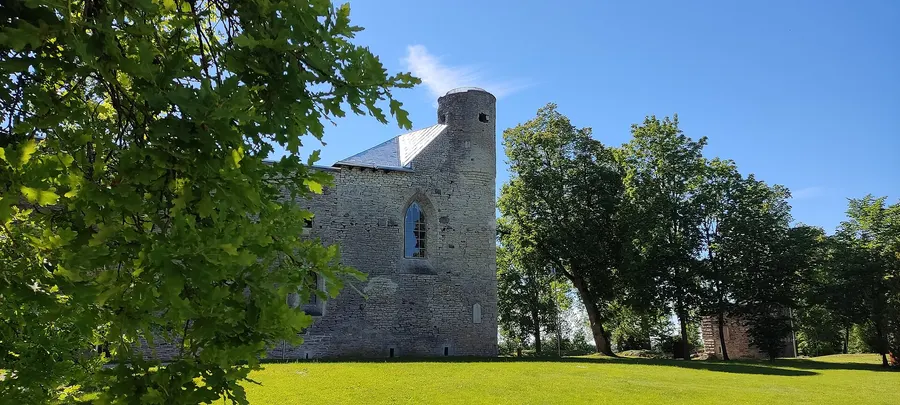 The ruins of Padise monastery in Estonia, whose monks were killed at the start of the uprising.Image:
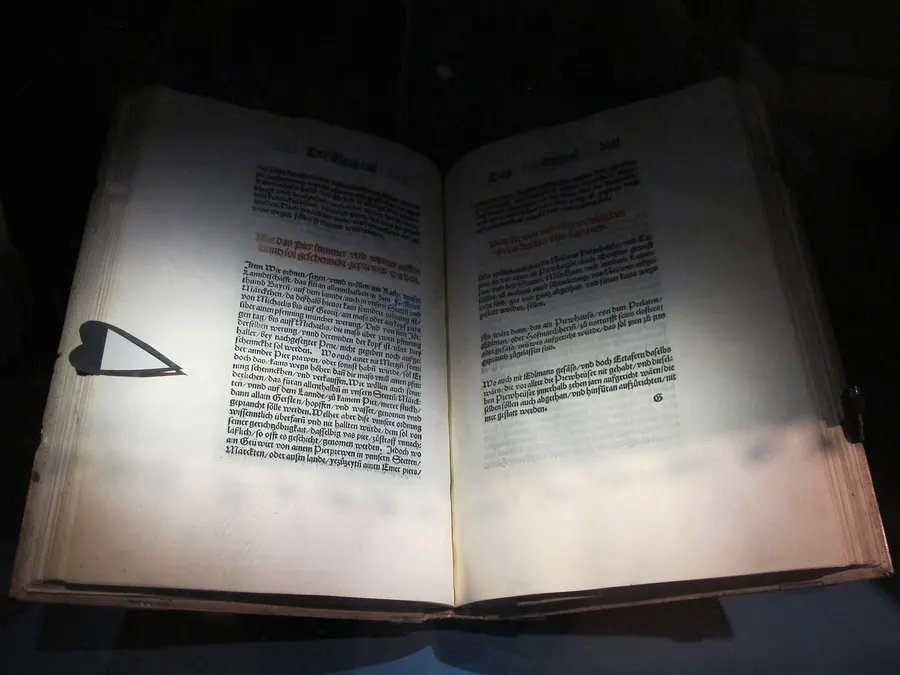 The 1516 Bavarian state ordinance containing the beer rules, on display at the Bavarian state exhibition at Aldersbach in 2016.Image:
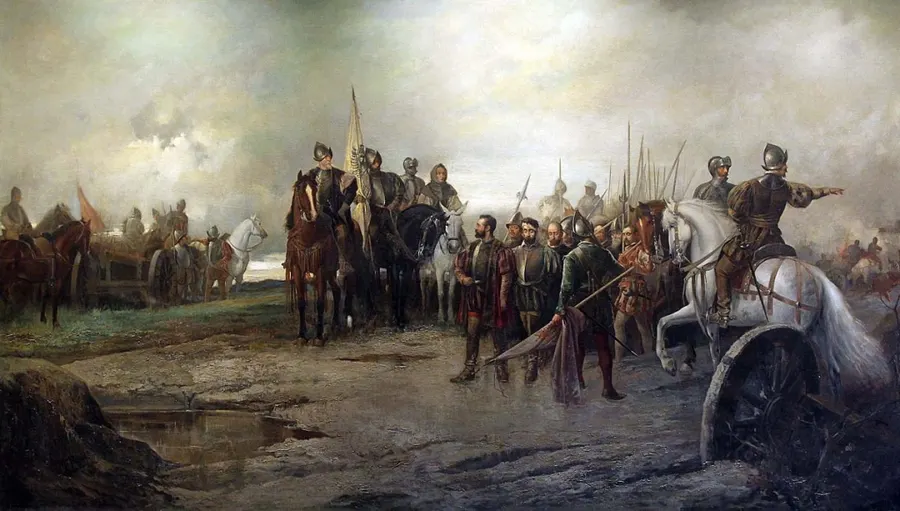 The Battle of Villalar as imagined by the 19th-century painter Manuel Picolo López.Image:
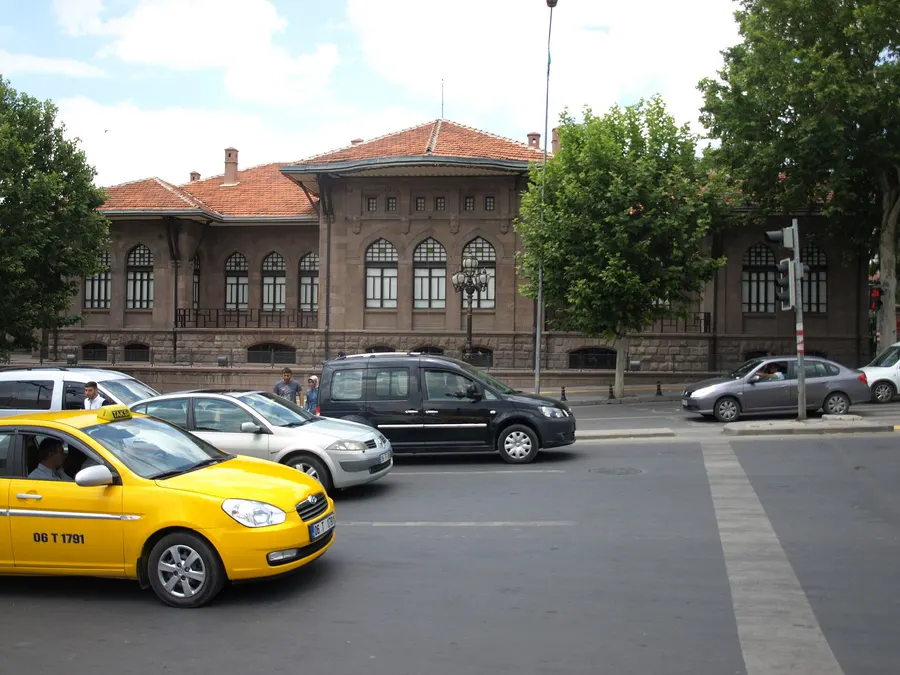 The first Grand National Assembly building in Ankara, now the Museum of the War of Independence.Image:
 The cover of the programme for the 1927 FA Cup final at Wembley, dated 23 April 1927.Image:
 Manuel Roxas as a delegate for Capiz, from an early Philippine booklet of delegates.Image:
 Vladimir Komarov, the cosmonaut who flew Soyuz 1.Image:
 The Namibian flag outside Namibia’s mission to the United Nations in New York.Image:
 A 2023 sign marking 30 years since the referendum, with its 99.8 per cent ‘Yes’ result.Image:
 YouTube co-founder Jawed Karim, who posted the first video, photographed in 2008.Image: