HISTORY & TIMELINE
17 April

A journey through
17 April in history

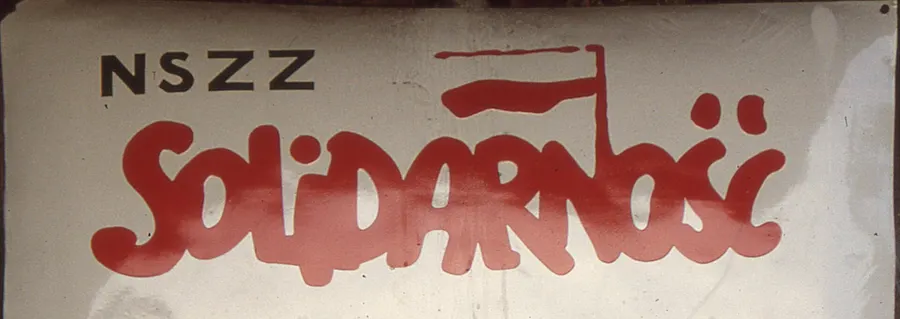
From the contract that sent Columbus west in 1492 to the discovery of an Earth-sized planet in 2014, 17 April has seen Ellis Island’s busiest day, Britain’s first national park, Bangladesh’s wartime government take its oath in a mango grove, Canada bring its constitution home and Poland’s Solidarity union become legal again. This timeline follows the date across more than five centuries.

JUMP THROUGH TIME
II
THE MIDDLE AGES

Medieval History

Kingdoms, conflict, faith, power and the changing medieval world.

1492
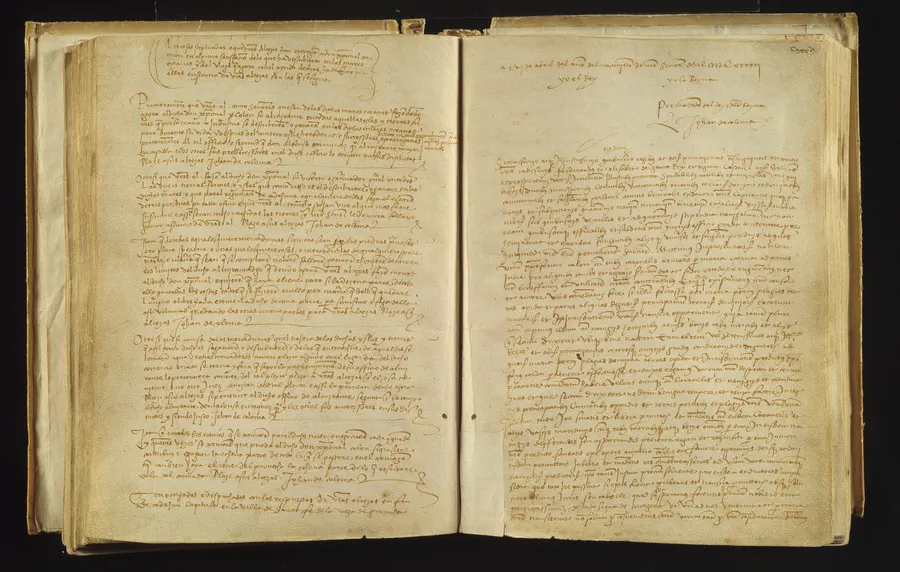
The register of the Capitulations of Santa Fe, kept in the Archive of the Crown of Aragon in Barcelona.The register of the Capitulations of Santa Fe, kept in the Archive of the Crown of Aragon in Barcelona.Image: XpoferenS · Public domain
world · Europe

Columbus gets his contract

On 17 April 1492, in the royal camp of Santa Fe outside newly conquered Granada, Isabella of Castile and Ferdinand of Aragon agreed terms with Christopher Columbus. The Capitulations of Santa Fe promised him the titles of admiral, viceroy and governor of any lands he found, plus a tenth of the wealth they produced. Within four months he sailed west. The original register entry survives in the Archive of the Crown of Aragon in Barcelona and is listed in UNESCO’s Memory of the World.

Source: UNESCO Memory of the World: Santa Fe Capitulations ↗
IV
THE NINETEENTH CENTURY

The 1800s

Industry, empire, invention, reform and a century of enormous transformation.

1895
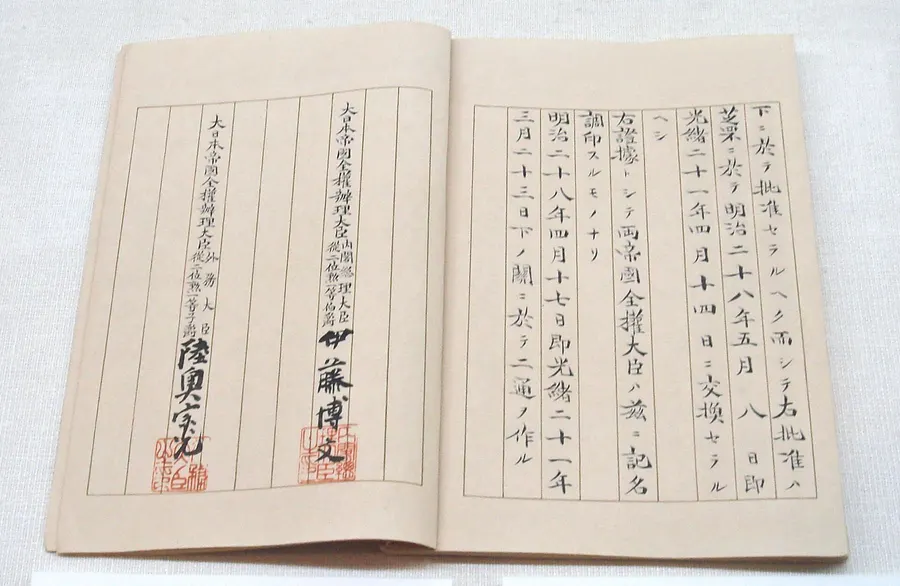
The Japanese text of the Treaty of Shimonoseki, signed on 17 April 1895.The Japanese text of the Treaty of Shimonoseki, signed on 17 April 1895.Image: World Imaging · CC BY-SA 3.0
world · Asia

The Treaty of Shimonoseki ends the First Sino-Japanese War

On 17 April 1895 Japan’s prime minister Itō Hirobumi and the veteran Chinese statesman Li Hongzhang signed a peace treaty at Shimonoseki, ending a war that China had lost badly on land and at sea. China recognised Korea’s independence, handed Taiwan, the Pescadores and the Liaodong Peninsula to Japan, and agreed to pay a huge indemnity. The settlement announced Japan as a new power in East Asia. Within days Russia, Germany and France pressed Tokyo to give back Liaodong, a humiliation that fed the rivalry leading to the Russo-Japanese War a decade later.

Source: Britannica: Treaty of Shimonoseki ↗
V
THE TWENTIETH CENTURY

The 1900s

War and peace, technological leaps, social change, politics, sport and popular culture.

1907
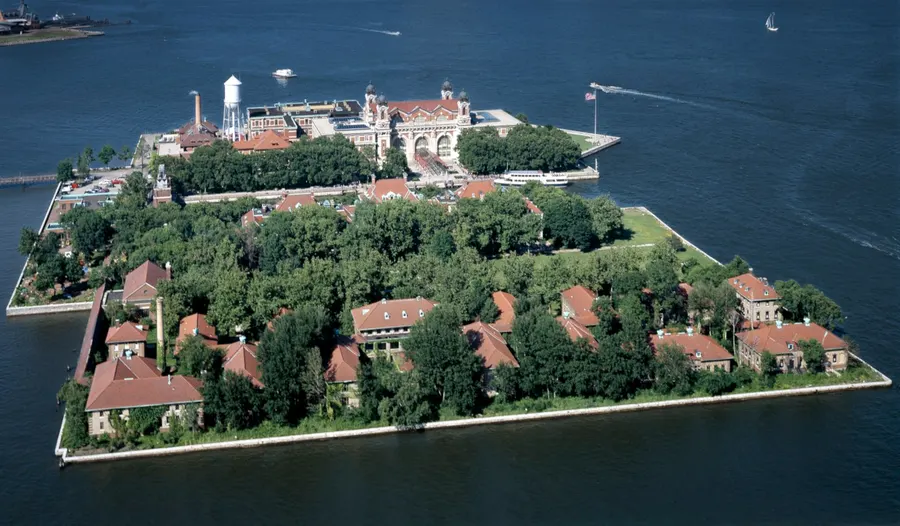
Ellis Island in New York Harbor from the air, photographed by Carol M. Highsmith in 2001.Ellis Island in New York Harbor from the air, photographed by Carol M. Highsmith in 2001.Image: Carol M. Highsmith · CC BY-SA 4.0
world · Americas

Ellis Island’s busiest day

On 17 April 1907 inspectors at Ellis Island in New York Harbor processed 11,747 new arrivals, more than on any other single day in the station’s history. That year, its busiest, over a million immigrants passed through the island, most of them from southern and eastern Europe. Each faced medical and legal checks in the great registry hall before stepping on to the ferry for Manhattan.

Source: US National Park Service: Ellis Island Chronology ↗
1941
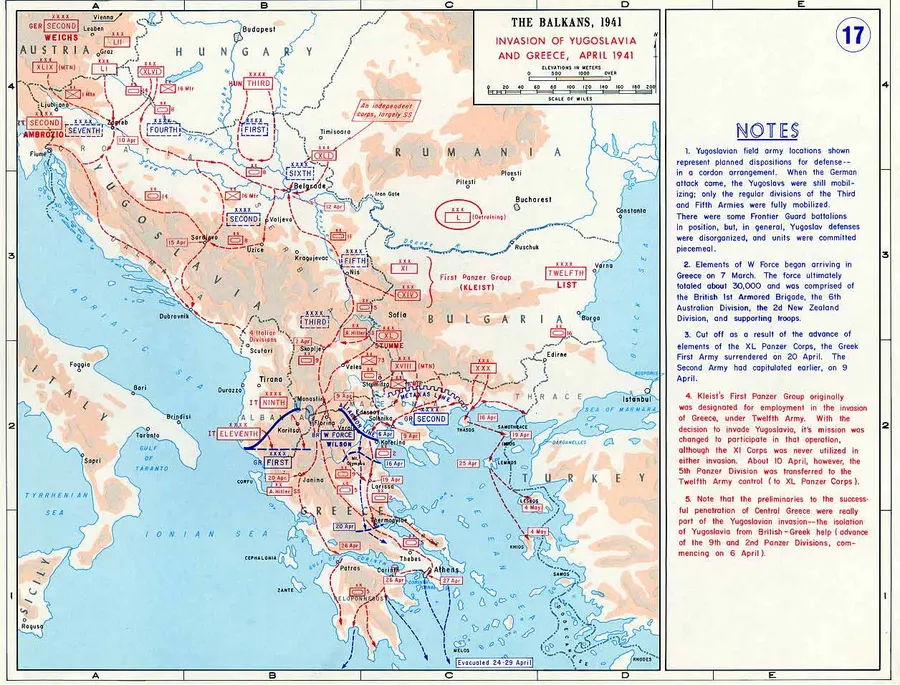
A US Military Academy map of the Axis campaign in the Balkans in April 1941.A US Military Academy map of the Axis campaign in the Balkans in April 1941.Image: Maps Department of the U.S. Military Academy, West Point. · Public domain
world · Europe

Yugoslavia surrenders to the Axis

On 17 April 1941 Yugoslav commanders signed an armistice in Belgrade, only eleven days after German, Italian and Hungarian forces invaded. King Peter II and his government had already left the country for exile in London. The kingdom was then carved up among the occupiers and a new Croatian puppet state, and resistance movements soon took to the mountains.

Source: United States Holocaust Memorial Museum: Axis Invasion of Yugoslavia ↗
1951
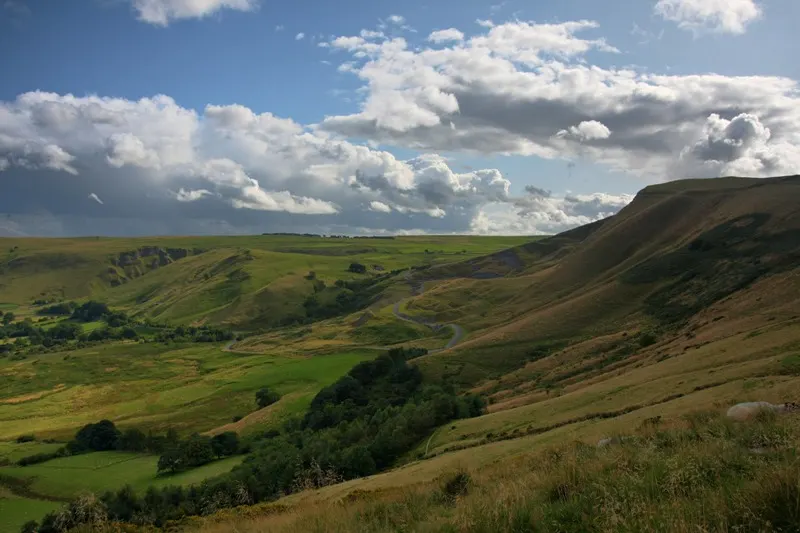
Mam Tor in the Peak District, with Winnats Pass in the distance.Mam Tor in the Peak District, with Winnats Pass in the distance.Image: Evilbish · CC BY 3.0
world · Europe

Britain’s first national park

On 17 April 1951 the Peak District became the first national park in the United Kingdom. The moors and dales between Manchester and Sheffield had been fought over by ramblers for decades, most famously in the mass trespass on Kinder Scout in 1932. The Lake District, Snowdonia and Dartmoor followed later the same year, the start of a network that now numbers fifteen parks.

Source: Peak District National Park Authority: Peak District facts ↗
1953
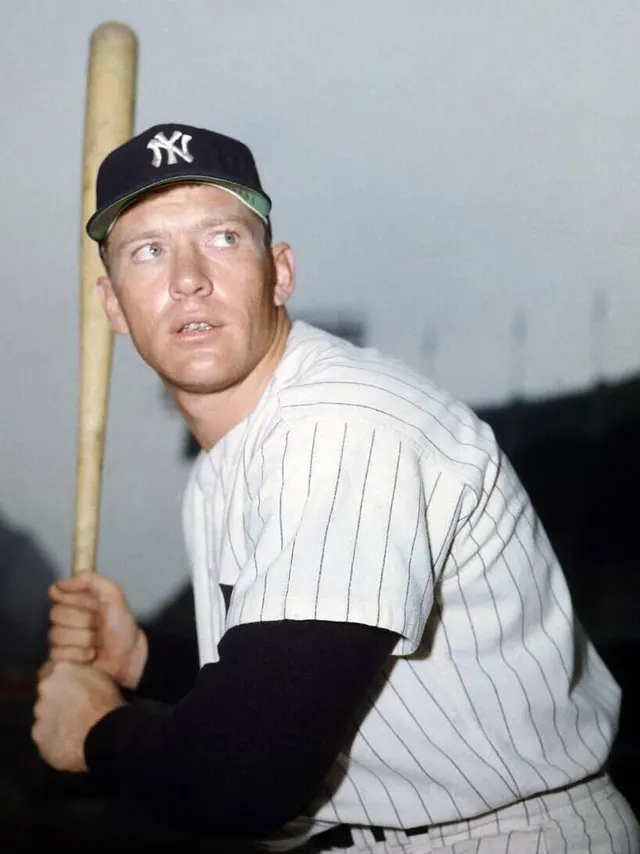
Mickey Mantle of the New York Yankees in 1957.Mickey Mantle of the New York Yankees in 1957.Image: Unknown · Public domain
sport · Americas

Mickey Mantle’s ‘tape-measure’ home run

On 17 April 1953 the 21-year-old New York Yankees outfielder Mickey Mantle hit a ball clean out of Griffith Stadium in Washington, the first player ever to do so. It cleared the left-field bleachers and clipped a beer sign on its way out. The Yankees’ publicist paced out where it came down and announced a distance of 565 feet (about 172 metres). The figure is still argued over, but the phrase ‘tape-measure home run’ has been part of baseball ever since.

Source: National Baseball Hall of Fame: Mantle hits 565-foot home run ↗
1961
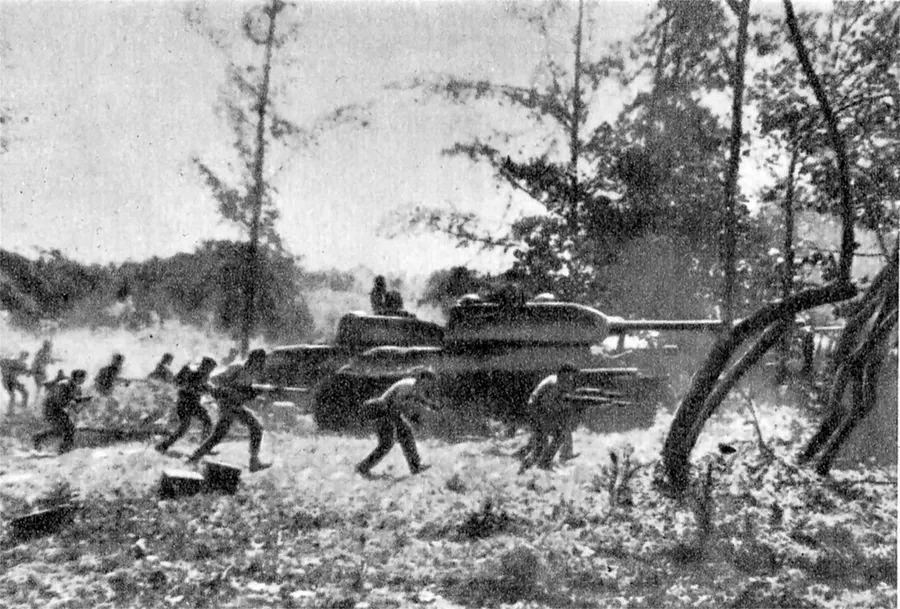
Cuban forces, backed by tanks, counter-attack near Playa Girón on 19 April 1961.Cuban forces, backed by tanks, counter-attack near Playa Girón on 19 April 1961.Image: Rumlin · CC BY 3.0

world · Americas

Exiles land at the Bay of Pigs

Before dawn on 17 April 1961 about 1,400 Cuban exiles, trained and equipped by the CIA and known as Brigade 2506, came ashore at the Bay of Pigs on Cuba’s southern coast. The plan assumed that a landing would spark a rising against Fidel Castro. No rising came. Cuban aircraft sank supply ships, and within about two days Castro’s forces had surrounded the brigade; most of its men were captured and later exchanged for food and medicine. The failure embarrassed President Kennedy’s new administration and pushed Havana closer to Moscow.

Source: JFK Presidential Library: The Bay of Pigs ↗
1964
The Spirit of Columbus, the Cessna 180 in which Jerrie Mock flew around the world, at the Smithsonian's Udvar-Hazy Center.The Spirit of Columbus, the Cessna 180 in which Jerrie Mock flew around the world, at the Smithsonian’s Udvar-Hazy Center.Image: Alan Wilson from Peterborough, Cambs, UK · CC BY-SA 2.0

world · Global

Jerrie Mock becomes the first woman to fly solo around the world

On 17 April 1964 Geraldine ‘Jerrie’ Mock, a 38-year-old mother of three from Ohio, landed her single-engine Cessna 180, the Spirit of Columbus, back at Port Columbus airport. She had set off 29 days earlier and covered about 37,000 kilometres. Hers was the first solo round-the-world flight by a woman, completing a journey Amelia Earhart had not lived to finish. Her little plane now belongs to the Smithsonian’s National Air and Space Museum.

Source: Smithsonian National Air and Space Museum: Celebrating Jerrie Mock ↗
1964
A 1965 Ford Mustang hardtop from the first production run.A 1965 Ford Mustang hardtop from the first production run.Image: Kroelleboelle · CC BY-SA 3.0
culture · Americas

The Ford Mustang meets the public

On 17 April 1964 Ford put its new Mustang on show to the public at the New York World’s Fair and in showrooms across the United States. Low, long-bonneted and affordable, it was pitched at a young generation of buyers. Crowds packed Ford’s pavilion, where visitors could ride in Mustang convertibles through Walt Disney’s Magic Skyway. The car sold more than 400,000 in its first year and gave its name to a whole class of ‘pony cars’.

Source: The Henry Ford: Mustang, the Birth of an American Icon ↗
1970
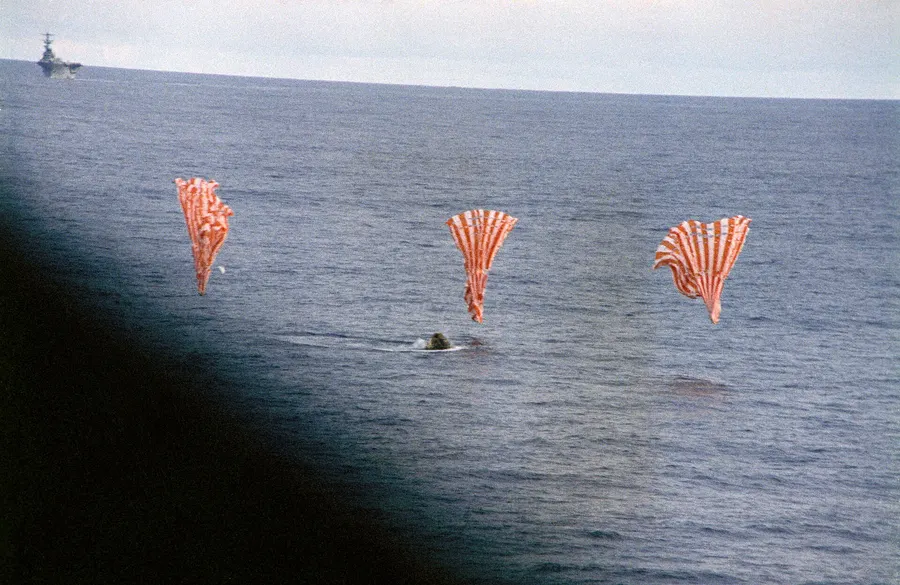
Apollo 13's command module splashes down in the South Pacific under its three parachutes, 17 April 1970.Apollo 13’s command module splashes down in the South Pacific under its three parachutes, 17 April 1970.Image: NASA Johnson Space Center · Public domain
science · Global

Apollo 13 comes home

At 12:07 pm Houston time on 17 April 1970, the capsule Odyssey splashed down in the South Pacific south-east of American Samoa, carrying Jim Lovell, Jack Swigert and Fred Haise. Four days earlier an oxygen tank had exploded on the way to the Moon, crippling their spacecraft. The crew survived by using their lunar module as a lifeboat, stretching supplies meant for two men for two days to keep three alive for four. NASA later called the mission a ‘successful failure’.

Source: NASA: Splashdown of Apollo 13 Command Module in South Pacific, April 17, 1970 ↗
1971
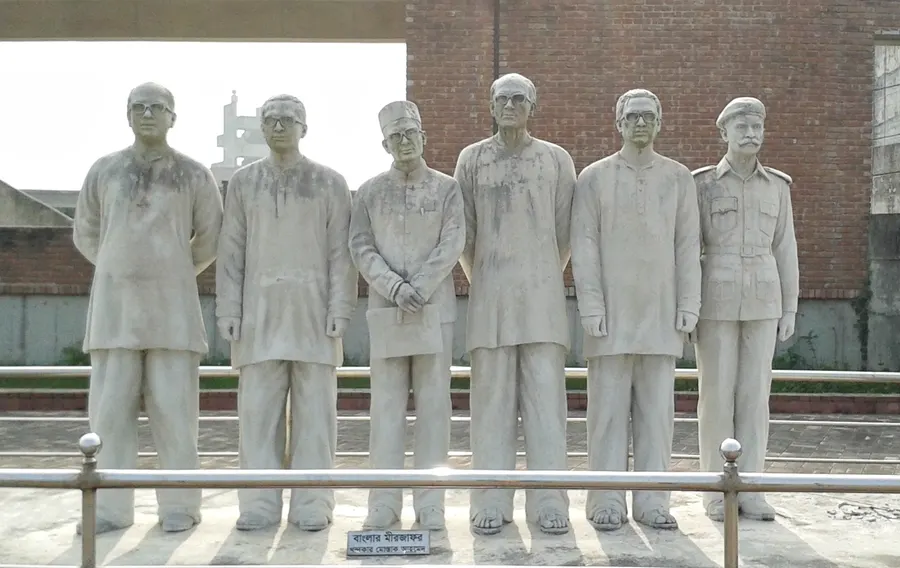
Sculptures of the provisional government of Bangladesh at the Mujibnagar memorial complex.Sculptures of the provisional government of Bangladesh at the Mujibnagar memorial complex.Image: ROCKY · CC BY-SA 4.0
world · Asia

Bangladesh’s wartime government takes its oath

On 17 April 1971, in a mango grove at Baidyanathtala near the Indian border, the provisional government of Bangladesh was sworn in before journalists and supporters. Sheikh Mujibur Rahman, held in West Pakistan, was named president, with Syed Nazrul Islam acting in his place and Tajuddin Ahmad as prime minister. The site was renamed Mujibnagar, and the government led the liberation struggle from exile until victory in December.

Source: Banglapedia: Mujibnagar Government ↗
1975
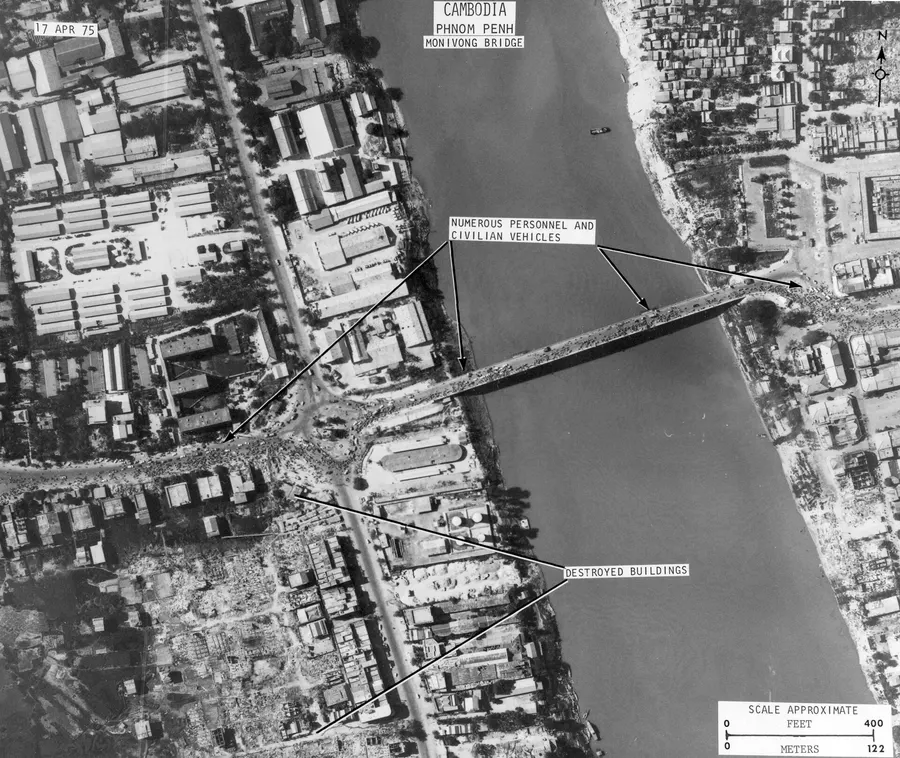
A US Air Force reconnaissance photograph of the Monivong Bridge in Phnom Penh, taken on 17 April 1975.A US Air Force reconnaissance photograph of the Monivong Bridge in Phnom Penh, taken on 17 April 1975.Image: United States Air Force photo 110342 · Public domain
world · Asia

The Khmer Rouge enter Phnom Penh

On 17 April 1975 Khmer Rouge fighters marched into Cambodia’s capital, Phnom Penh, ending five years of civil war. Many residents at first greeted them with relief that the fighting was over. Within days the new rulers ordered the whole city emptied, sending some two million people into the countryside on foot. It was the opening act of a regime under which, by 1979, an estimated 1.7 million Cambodians died.

Source: United States Holocaust Memorial Museum: Day One, April 17, 1975 ↗
1978
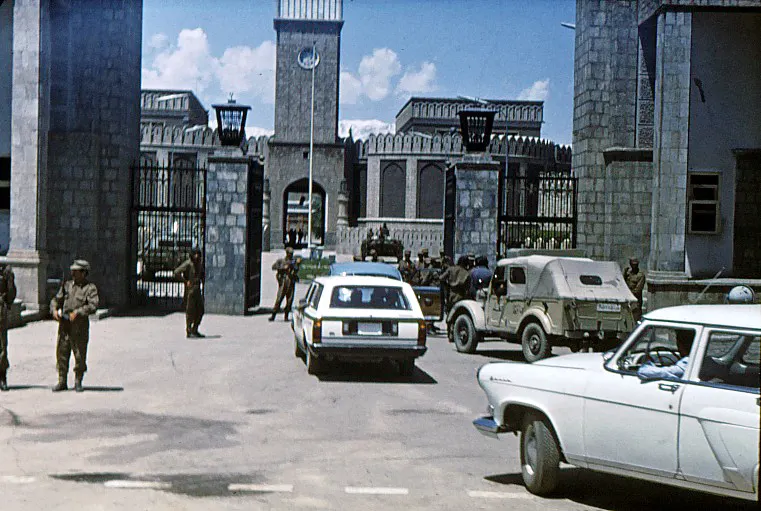
Soldiers and vehicles in Kabul the day after the Saur Revolution of April 1978.Soldiers and vehicles in Kabul the day after the Saur Revolution of April 1978.Image: Cleric77 · CC BY-SA 3.0
politics · Asia

A killing in Kabul sets off a revolution

On 17 April 1978 Mir Akbar Khyber, a leading figure in Afghanistan’s communist People’s Democratic Party, was shot dead in Kabul. His funeral became a large protest against President Mohammad Daoud Khan, who responded by arresting party leaders. Ten days later officers loyal to the party seized power in the Saur Revolution, beginning the long chain of upheaval that drew in Soviet troops at the end of 1979.

Source: Britannica: Afghanistan, civil war (communist phase, 1978-92) ↗
1982
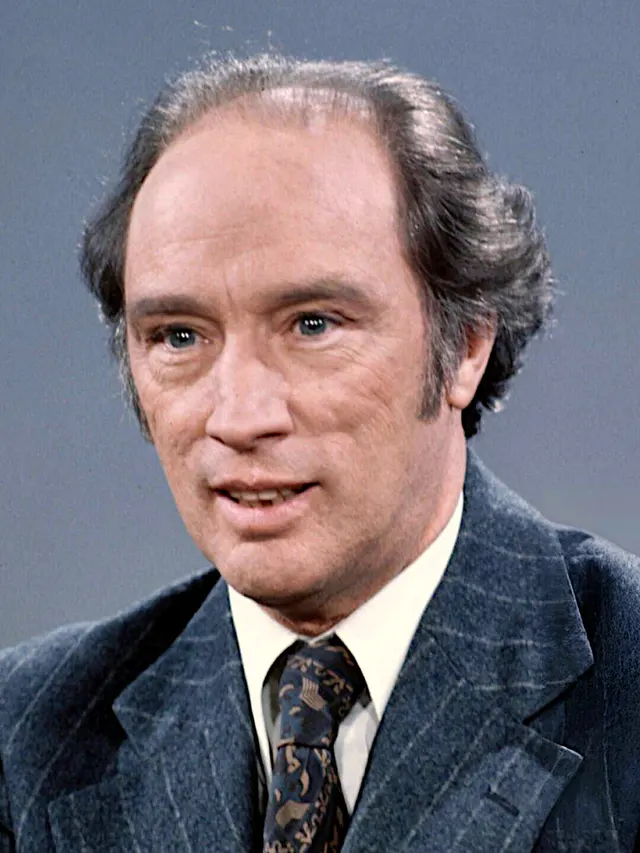
Pierre Trudeau, Canada's prime minister, in 1975.Pierre Trudeau, Canada’s prime minister, in 1975.Image: United Press International · Public domain
world · Americas

Canada brings its constitution home

On a wet 17 April 1982 on Parliament Hill in Ottawa, Queen Elizabeth II signed the proclamation of the Constitution Act, with Prime Minister Pierre Trudeau at her side. The act ended the British Parliament’s power to change Canada’s constitution and wrote in a Charter of Rights and Freedoms. Quebec’s government refused to endorse it, a grievance that shaped Canadian politics for years afterwards.

Source: The Canadian Encyclopedia: Constitution Act, 1982 ↗
VI
2000 TO TODAY

Modern Day

The events of recent decades that have already become part of the historical record.

2014
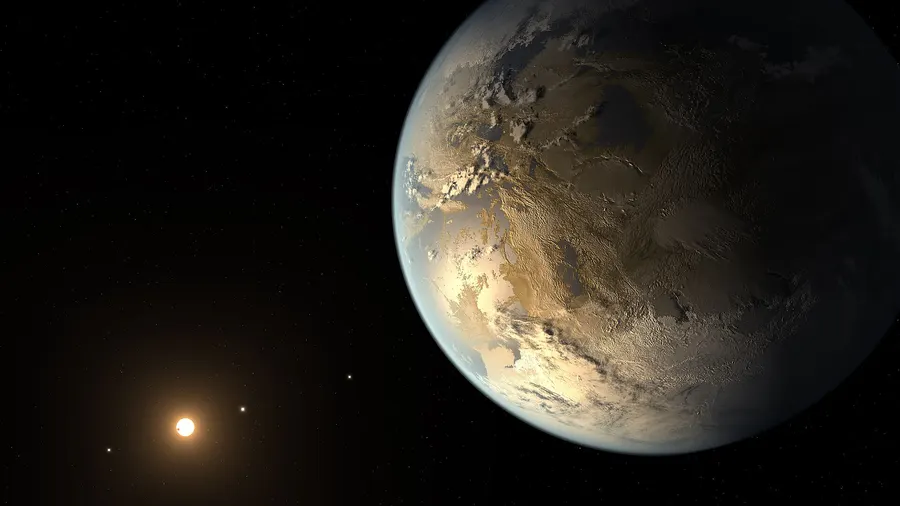
An artist's impression of Kepler-186f released by NASA on 17 April 2014.An artist’s impression of Kepler-186f released by NASA on 17 April 2014.Image: NASA Ames/SETI Institute/JPL-Caltech · Public domain
science · Global

An Earth-sized world in a habitable zone

On 17 April 2014 NASA announced Kepler-186f, the first confirmed planet close to Earth’s size orbiting in the ‘habitable zone’ of another star, where liquid water could exist on the surface. It lies about 500 light years away in the constellation Cygnus. The planet circles a small, cool red dwarf every 130 days and receives about a third of the energy Earth gets from the Sun. It showed that worlds of Earth’s size can sit in such zones elsewhere in the galaxy.

Source: NASA: Kepler-186f, the first Earth-size planet in the habitable zone ↗
RESEARCH

Sources & Further Reading

Selected authoritative references supporting the events on this page.

UNESCO Memory of the World: Santa Fe Capitulations↗Encyclopedia.com: Capitulations of Santa Fe↗Britannica: Treaty of Shimonoseki↗US Office of the Historian: Treaty of peace between Japan and China (FRUS 1895)↗US National Park Service: Ellis Island Chronology↗Statue of Liberty-Ellis Island Foundation: Ellis Island overview and history↗United States Holocaust Memorial Museum: Axis Invasion of Yugoslavia↗Britannica: Serbia in World War II↗Peak District National Park Authority: Peak District facts↗Wikipedia: Peak District↗National Baseball Hall of Fame: Mantle hits 565-foot home run↗Society for American Baseball Research: April 17, 1953, Mickey Mantle hits a mythic blast at Griffith Stadium↗JFK Presidential Library: The Bay of Pigs↗US Office of the Historian: The Bay of Pigs Invasion and its Aftermath↗Smithsonian National Air and Space Museum: Celebrating Jerrie Mock↗Ohio History Connection: Jerrie Mock’s Historic Flight↗The Henry Ford: Mustang, the Birth of an American Icon↗Ford Motor Company: Mustang Debut at World’s Fair↗NASA: Splashdown of Apollo 13 Command Module in South Pacific, April 17, 1970↗Britannica: Apollo 13, reentry and splashdown↗Banglapedia: Mujibnagar Government↗The Daily Star: Remembering the oath-taking of Mujibnagar government↗United States Holocaust Memorial Museum: Day One, April 17, 1975↗Britannica: Cambodian genocide↗Britannica: Afghanistan, civil war (communist phase, 1978-92)↗National Security Archive: Afghanistan, Lessons from the Last War↗The Canadian Encyclopedia: Constitution Act, 1982↗Government of Canada, Department of Justice: Learn about the Charter↗NSZZ Solidarność: History in dates↗Britannica: Solidarity↗NASA: Kepler-186f, the first Earth-size planet in the habitable zone↗Wikipedia: Kepler-186f↗
WHY THESE MOMENTS?

Significance before volume

This page is not the longest possible list of events. It is a chronological journey through 17 April, where each entry is chosen for historical significance, human interest and reliability.

Facts are checked against authoritative museums, archives, universities and reference works. Where sources disagree, the page says so.

EXPLORED THE DEEPER STORY?

Return to the highlights of 17 April

Discover the lighter side of the date with famous birthdays, culture, firsts and lives remembered.

Explore This Day →
← PREVIOUS DAY16 April
HISTORY & TIMELINE17 April
NEXT DAY →18 April