
HISTORY & TIMELINE
14 April

A journey through
14 April in history

From the Battle of Barnet in 1471 to the finished map of the human genome in 2003, 14 April has seen strange shapes reported in the sky over Nuremberg, Noah Webster publish his American dictionary, the first paying customers peer into Edison’s Kinetoscopes, a black blizzard of dust sweep the Great Plains and Georgians march to save their language. This timeline follows the date across more than five centuries.

II
THE MIDDLE AGES

Medieval History

Kingdoms, conflict, faith, power and the changing medieval world.

1471
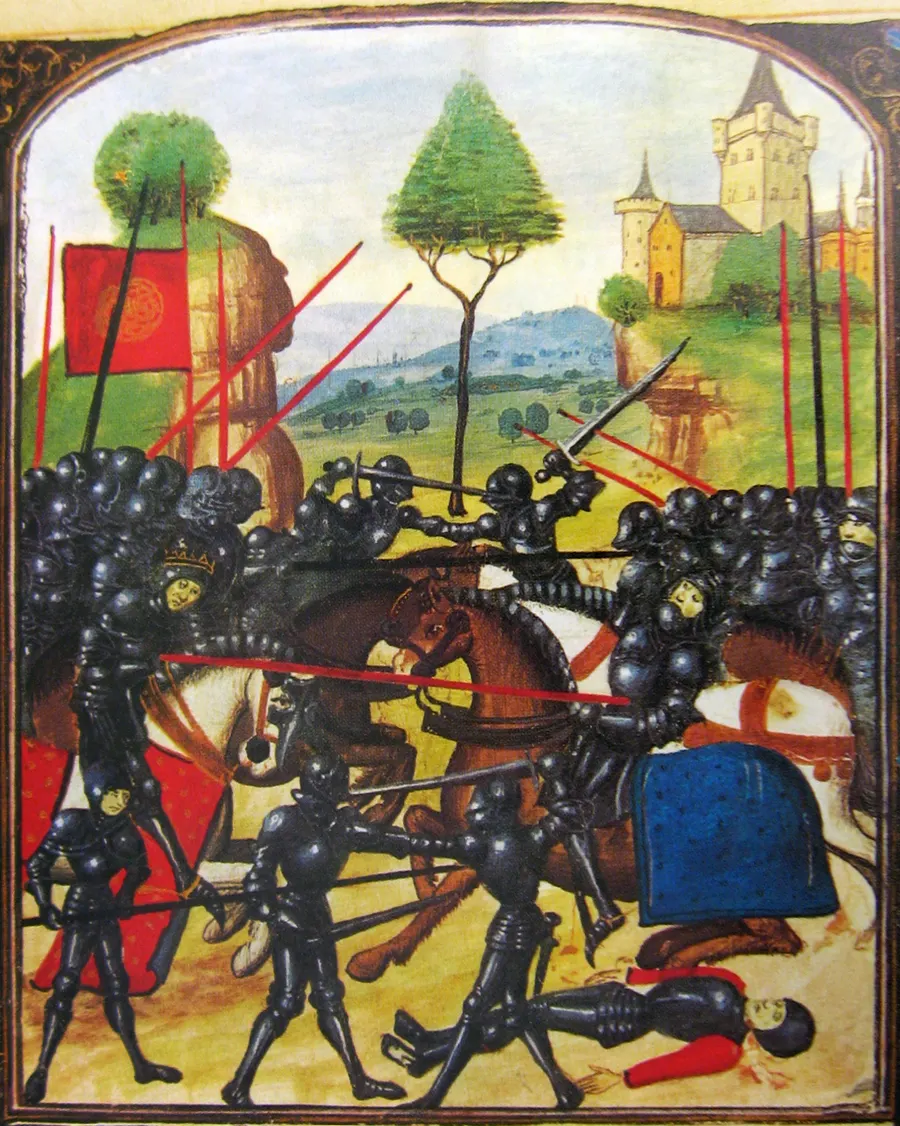
The Battle of Barnet in a 15th-century illustration from a Ghent manuscript.The Battle of Barnet in a 15th-century illustration from a Ghent manuscript.Image: Unknown 15th-century artist · Public domain
world · Europe

The Battle of Barnet

On Easter Sunday, in thick morning fog north of London, the Yorkist King Edward IV defeated the Lancastrian army led by the Earl of Warwick, ‘the Kingmaker’, who had changed sides and briefly restored Henry VI. Warwick was killed as he fled. Victory at Tewkesbury three weeks later made Edward’s throne secure. The date is by the Julian calendar.

Source: Encyclopaedia Britannica: Battle of Barnet ↗
III
A CHANGING WORLD

Early Modern Era

Exploration, political change, scientific development and expanding global connections.

1561
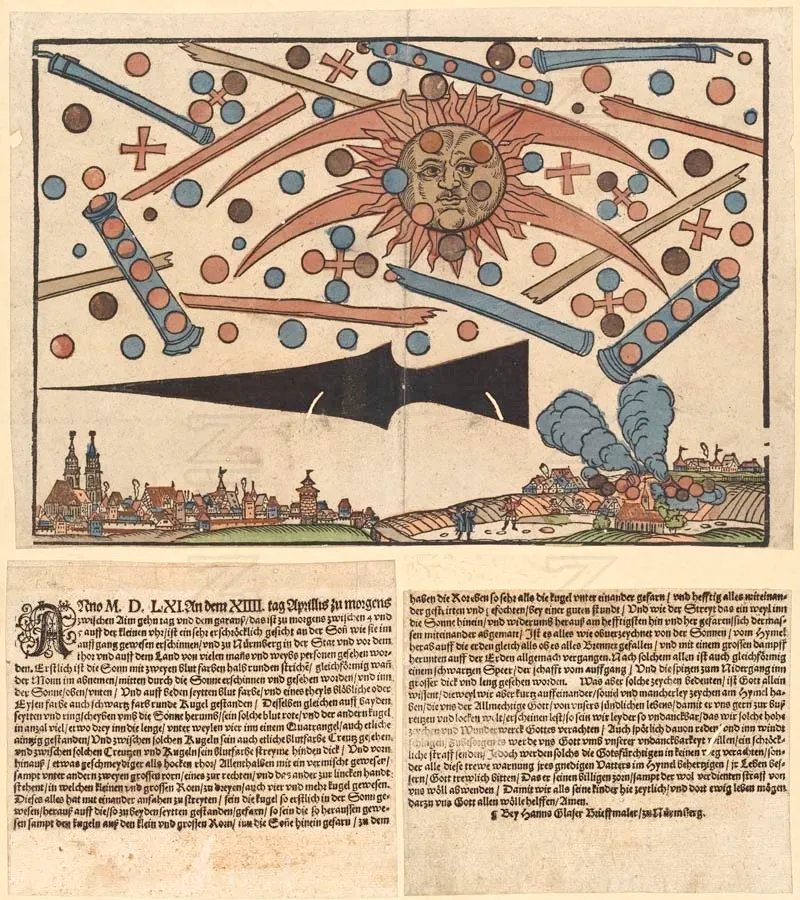
Hans Glaser's broadsheet describing the sky over Nuremberg on 14 April 1561.Hans Glaser’s broadsheet describing the sky over Nuremberg on 14 April 1561.Image: Hanns Glaser (print) · Public domain
science · Europe

Strange shapes in the sky over Nuremberg

A broadsheet printed by Hans Glaser reported that at sunrise on this day the people of Nuremberg saw globes, crosses and tubes ‘fighting’ in the sky around the sun. It is the only record of the event. Scientists today think the townsfolk probably saw a rare halo display, caused by sunlight shining through ice crystals. The date is by the Julian calendar.

Source: Zentralbibliothek Zürich (e-manuscripta): Himmelserscheinung über Nürnberg vom 14. April 1561 ↗
IV
THE NINETEENTH CENTURY

The 1800s

Industry, empire, invention, reform and a century of enormous transformation.

1828
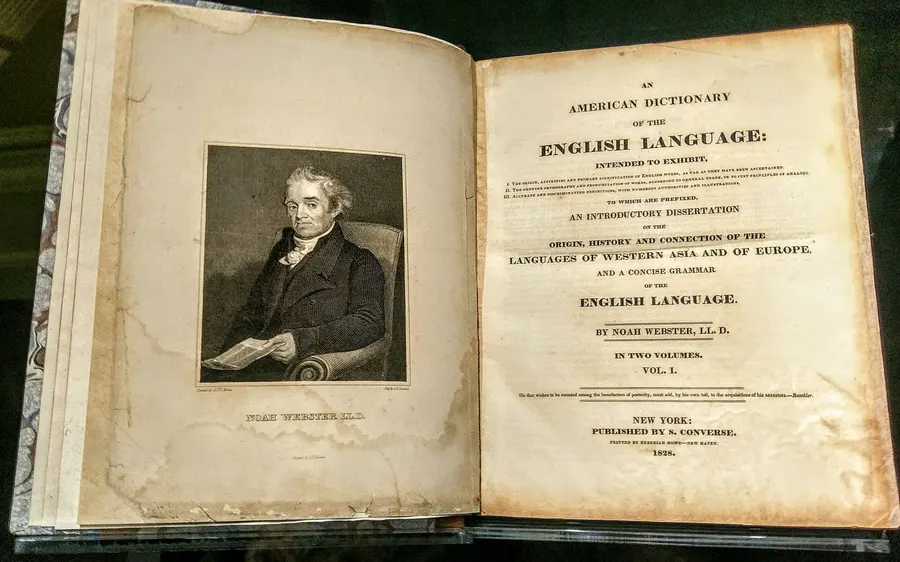
The title page and frontispiece portrait of Noah Webster's American Dictionary, 1828 (California State Library).The title page and frontispiece portrait of Noah Webster’s American Dictionary, 1828 (California State Library).Image: Cullen328 · CC BY-SA 3.0
culture · Americas

Webster’s American dictionary is published

Noah Webster’s An American Dictionary of the English Language was published on 14 April 1828, in two volumes with about 70,000 entries, around 12,000 of which had never appeared in a dictionary before. Webster had spent more than 20 years on it. He wanted Americans to have their own language, and his spellings, such as ‘color’ and ‘center’, became the American standard.

Source: Merriam-Webster: America’s first dictionary ↗
1865
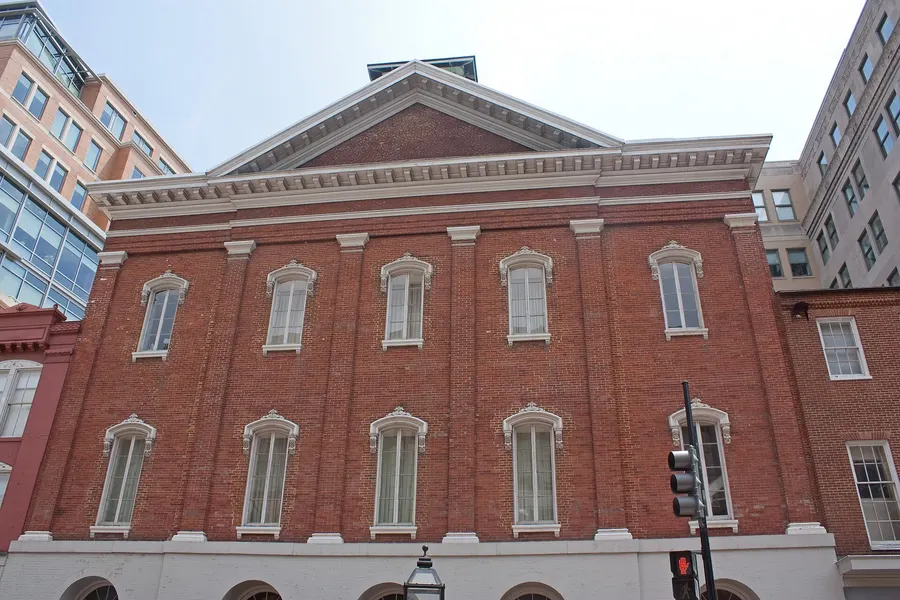
Ford's Theatre in Washington, where Lincoln was shot, photographed in 2011.Ford’s Theatre in Washington, where Lincoln was shot, photographed in 2011.Image: Wknight94 talk · CC BY-SA 3.0
politics · Americas

Abraham Lincoln is shot at Ford’s Theatre

Five days after Lee’s surrender, President Abraham Lincoln and his wife Mary went to Ford’s Theatre in Washington on the evening of 14 April 1865 to see the comedy Our American Cousin. During the third act the actor John Wilkes Booth, a Confederate sympathiser, crept into the presidential box and shot Lincoln in the back of the head. Booth leapt to the stage, breaking his leg, and escaped. Lincoln was carried to a house across the street and died the next morning, the first American president to be assassinated. Booth was cornered and killed 12 days later.

Source: Ford’s Theatre: Lincoln’s assassination ↗
1894
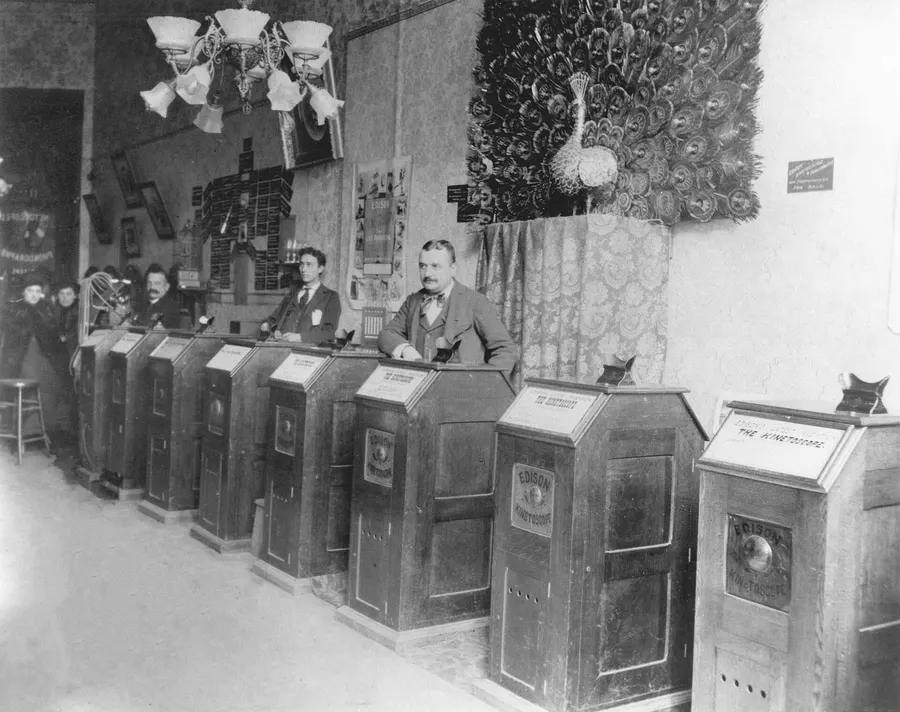
A Kinetoscope parlour in San Francisco, about 1894 to 1895.A Kinetoscope parlour in San Francisco, about 1894 to 1895.Image: Unknown photographer · Public domain
culture · Americas

The first Kinetoscope parlour opens

The Holland Brothers opened a parlour at 1155 Broadway in New York on 14 April 1894, with a row of Thomas Edison’s new Kinetoscopes. Customers bent over each wooden cabinet and peered through a viewer at a few seconds of moving pictures: strongmen, dancers, boxers and circus acts. It was the first time people paid to watch films. Within months parlours had opened across America and Europe, and cinema was on its way.

Source: Library of Congress: Early motion picture productions (Edison collection) ↗
V
THE TWENTIETH CENTURY

The 1900s

War and peace, technological leaps, social change, politics, sport and popular culture.

1912
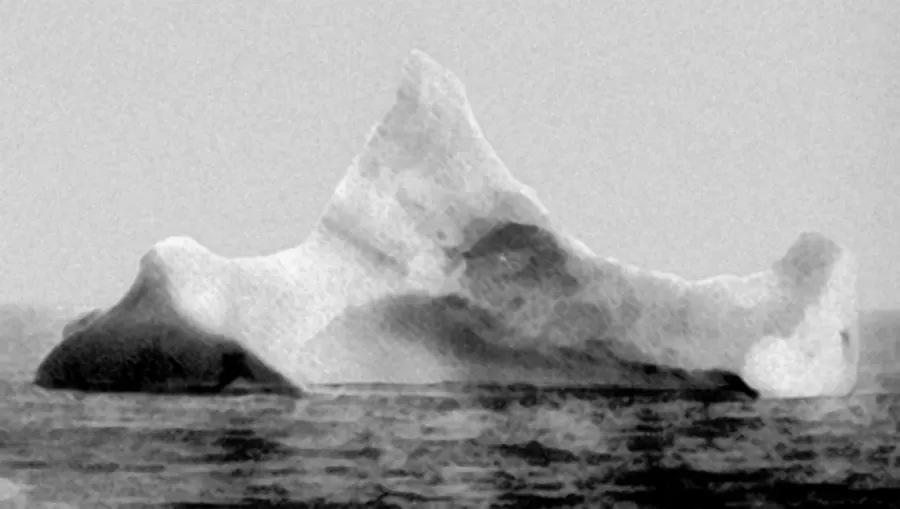
An iceberg photographed near the scene on the morning of 15 April 1912 by the chief steward of the liner Prinz Adalbert, thought to be the one the Titanic struck.An iceberg photographed near the scene on the morning of 15 April 1912 by the chief steward of the liner Prinz Adalbert, thought to be the one the Titanic struck.Image: The chief steward of the liner Prinz Adalbert · Public domain
world · Europe

The Titanic strikes an iceberg

At about 11.40 pm on 14 April 1912, four days out from Southampton and south of Newfoundland, the lookouts on the Titanic sighted an iceberg dead ahead. The ship turned, but the ice scraped along her starboard side below the waterline, opening her forward compartments to the sea. The ‘unsinkable’ liner went down at about 2.20 the next morning. There were lifeboats for barely half of those on board, and more than 1,500 people died in the icy Atlantic.

Source: Royal Museums Greenwich: RMS Titanic facts ↗
1931
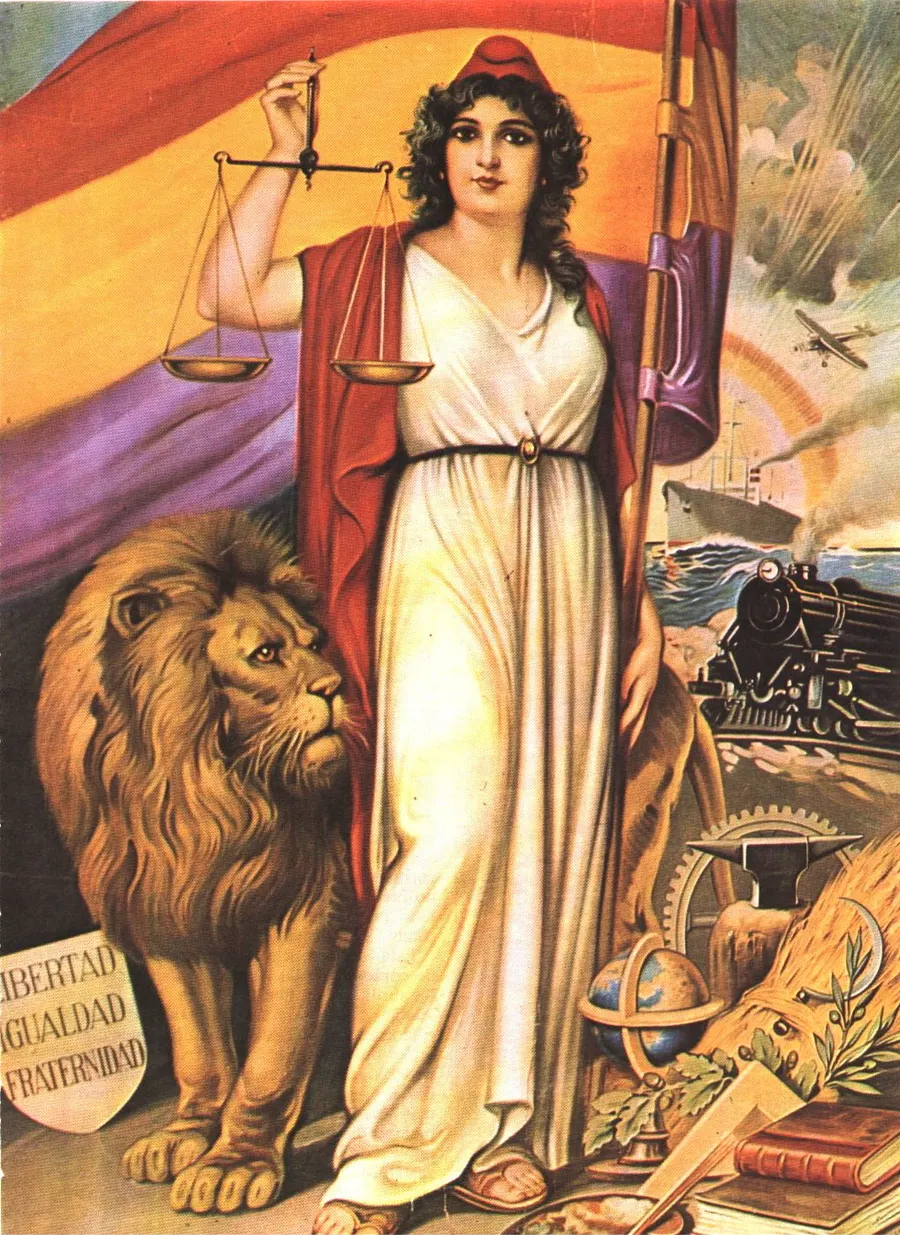
An allegory of the Spanish Republic, in a lithograph by S. Durá after J. Barrera.An allegory of the Spanish Republic, in a lithograph by S. Durá after J. Barrera.Image: S. Durá after J. Barrera · CC BY-SA 3.0
politics · Europe

Spain becomes a republic

Two days after local elections in which Spain’s big cities voted overwhelmingly for republican parties, the Second Spanish Republic was proclaimed on 14 April 1931. King Alfonso XIII left the country that day without formally giving up his throne. The new republic gave women the vote and set out to reform the army, the Church’s role and landholding. Its bitter divisions ended in the Civil War of 1936 to 1939 and Franco’s dictatorship.

Source: Encyclopaedia Britannica: Second Republic, Spanish history ↗
1935
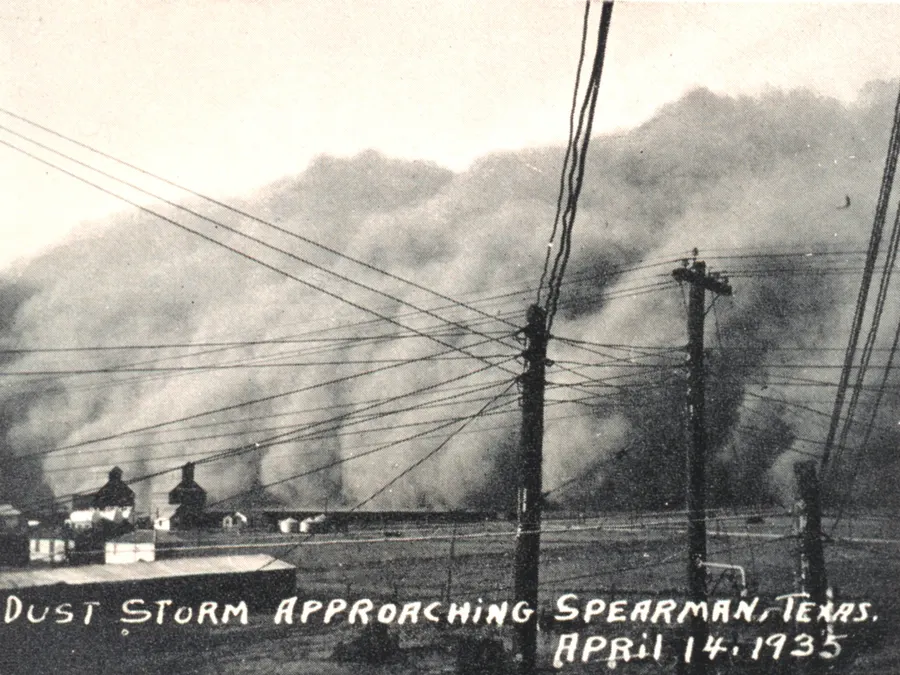
The dust storm approaching Spearman, Texas, on 14 April 1935, from the Monthly Weather Review.The dust storm approaching Spearman, Texas, on 14 April 1935, from the Monthly Weather Review.Image: US Weather Bureau (Monthly Weather Review) · Public domain
world · Americas

Black Sunday on the Great Plains

A towering wall of dust, hundreds of feet high, swept south across the drought-stricken Great Plains of the United States, turning afternoon into night. The worst ‘black blizzard’ of the decade gave the Dust Bowl its name the next day, and pushed Washington to set up soil conservation schemes.

Source: US National Weather Service, Norman: The Black Sunday dust storm of 14 April 1935 ↗
1978
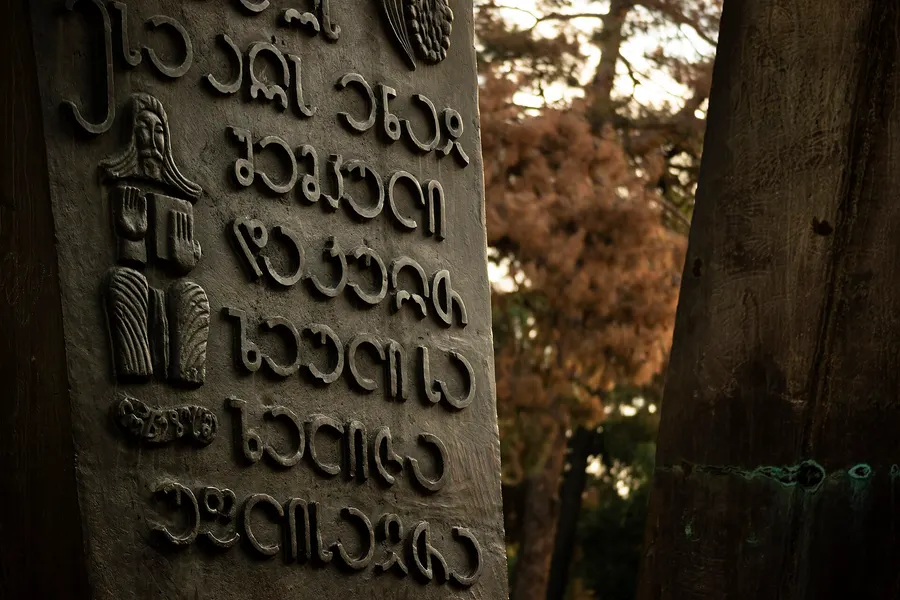
Georgian letters on the Deda Ena ('Mother Tongue') monument in Tbilisi.Georgian letters on the Deda Ena (‘Mother Tongue’) monument in Tbilisi.Image: Mostafameraji · CC BY-SA 4.0
world · Asia

Georgians march to save their language

When a new constitution for Soviet Georgia dropped Georgian as the republic’s sole official language, thousands of people, many of them students, marched through Tbilisi in protest. The same day Moscow backed down and the clause was restored, a rare victory against the Soviet authorities. Georgia celebrates 14 April as Georgian Language Day.

Source: Radio Free Europe/Radio Liberty: Georgian language protest of 1978 ↗
1988
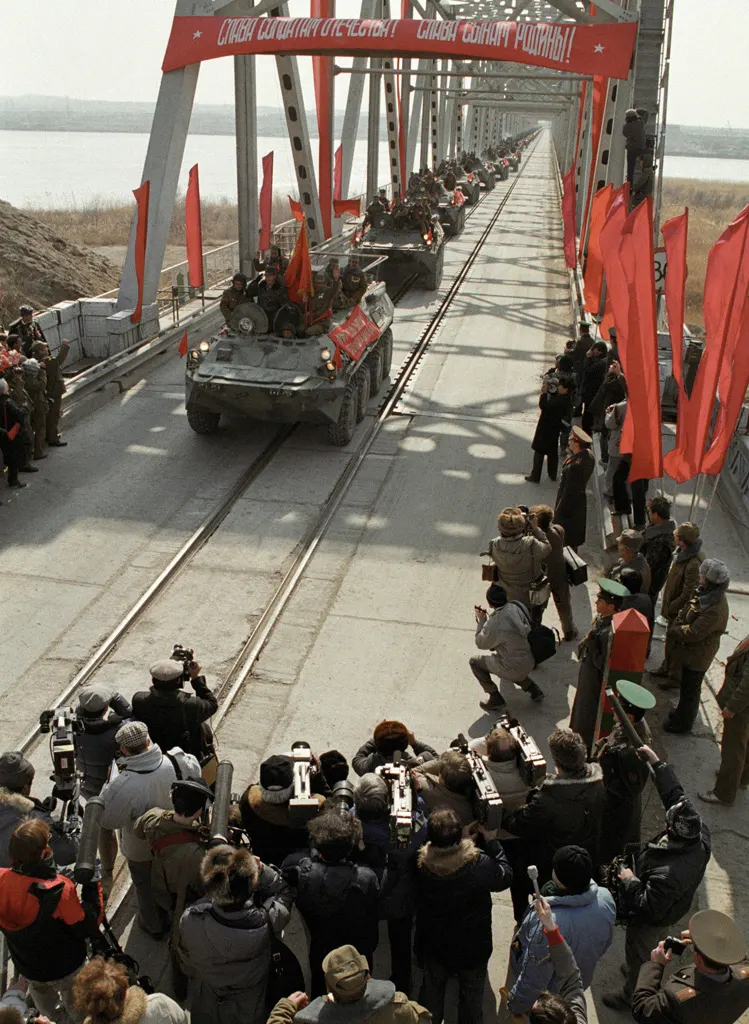
Soviet troops leaving Afghanistan, 1988 to 1989.Soviet troops leaving Afghanistan, 1988 to 1989.Image: A. Solomonov / А. Соломонов · CC BY-SA 3.0
world · Asia

The Geneva Accords on Afghanistan

At the United Nations in Geneva on 14 April 1988, Afghanistan and Pakistan signed agreements to end the war in Afghanistan, with the Soviet Union and the United States as guarantors. Moscow promised to pull out the troops it had sent in 1979. The withdrawal began in May 1988 and the last Soviet soldiers crossed home in February 1989. But the accords did not end the fighting between the Afghan government and the mujahideen, and the country’s civil war went on.

Source: United Nations Photo: Signing of the Geneva agreements on Afghanistan ↗
1999
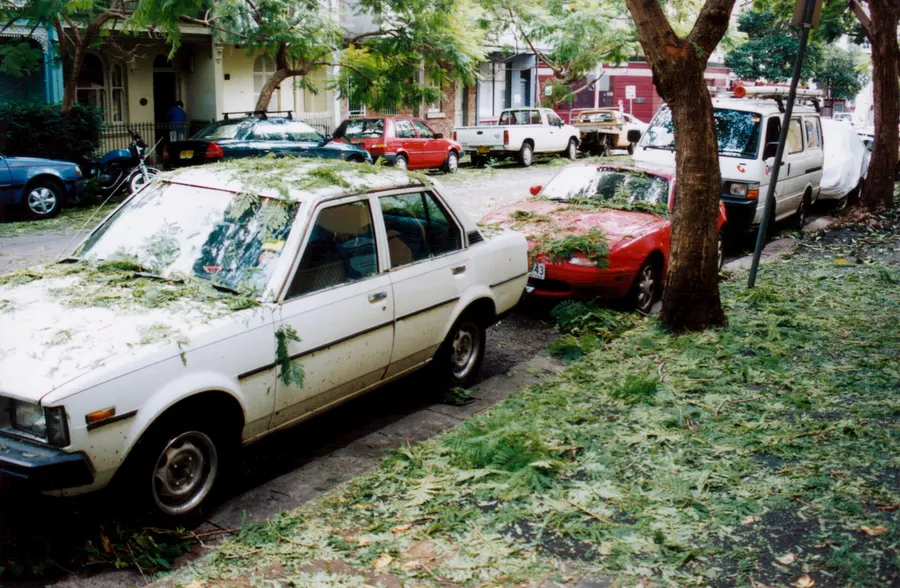
Cars damaged by the Sydney hailstorm, April 1999.Cars damaged by the Sydney hailstorm, April 1999.Image: Michael Thompson · CC BY-SA 3.0
world · Oceania

The great Sydney hailstorm

A supercell storm struck Sydney’s eastern suburbs without warning, pelting them with hailstones as big as cricket balls. About 22,000 homes and buildings and 63,000 cars were damaged, making it the costliest insured natural disaster in Australia’s history. It changed how the country’s weather service warns of severe storms.

Source: Australian Bureau of Meteorology: The Sydney hailstorm of 14 April 1999 ↗
VI
2000 TO TODAY

Modern Day

The events of recent decades that have already become part of the historical record.

2002
Supporters of Chávez outside the Miraflores palace in Caracas, April 2002.Supporters of Chávez outside the Miraflores palace in Caracas, April 2002.Image: Luigino Bracci Roa · CC BY 3.0
politics · Americas

Hugo Chávez returns to power

Two days after military officers removed Venezuela’s president, Hugo Chávez, and a business leader, Pedro Carmona, declared himself head of state, crowds of Chávez supporters gathered outside the Miraflores palace and loyal army units turned against the new regime. In the early hours of 14 April Chávez was back in office.

Source: Organization of American States: Report of the Secretary General on the situation in Venezuela, 2002 ↗
2003
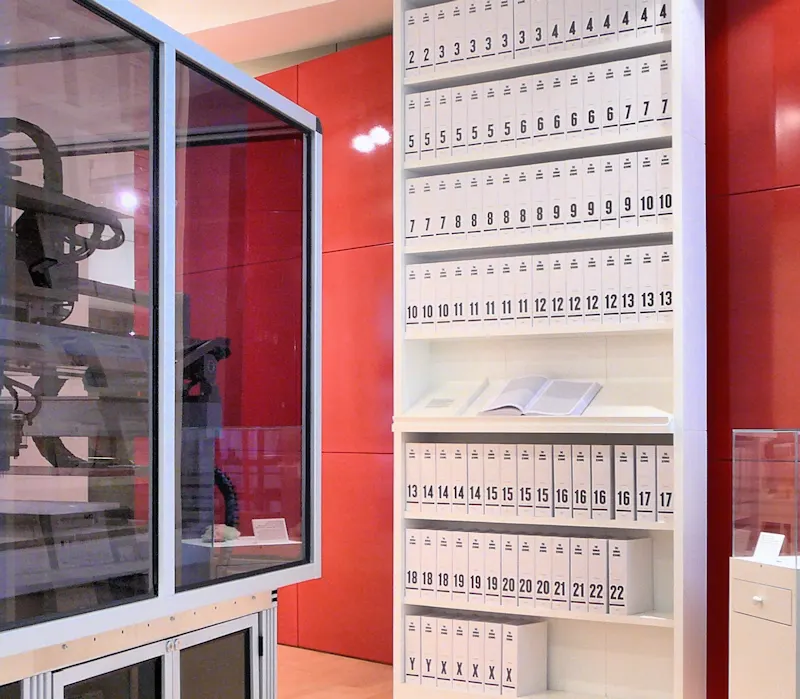
The human genome printed as a set of books, on show at the Wellcome Collection in London.The human genome printed as a set of books, on show at the Wellcome Collection in London.Image: Russ London · CC BY-SA 3.0
science · Global

The Human Genome Project is completed

On 14 April 2003 an international consortium of scientists from six countries announced that it had finished reading the human genome, the three billion letters of DNA code in our cells, more than two years ahead of schedule. The project had begun in 1990 and cost about 2.7 billion dollars. Its freely shared data has changed medicine and biology; the last small gaps in the sequence were filled only in 2022.

Source: National Human Genome Research Institute: International consortium completes Human Genome Project (2003) ↗
RESEARCH

Sources & Further Reading

Selected authoritative references supporting the events on this page.

Encyclopaedia Britannica: Battle of Barnet↗Historic England: Battle of Barnet 1471 (registered battlefield)↗Zentralbibliothek Zürich (e-manuscripta): Himmelserscheinung über Nürnberg vom 14. April 1561↗Wikipedia: 1561 celestial phenomenon over Nuremberg↗Merriam-Webster: America’s first dictionary↗Encyclopaedia Britannica: An American Dictionary of the English Language↗Ford’s Theatre: Lincoln’s assassination↗Encyclopaedia Britannica: Assassination of Abraham Lincoln↗Library of Congress: Early motion picture productions (Edison collection)↗Encyclopaedia Britannica: Kinetoscope↗Royal Museums Greenwich: RMS Titanic facts↗US National Archives, Prologue magazine: Titanic, 2012↗Encyclopaedia Britannica: Second Republic, Spanish history↗Encyclopaedia Britannica: Alfonso XIII↗US National Weather Service, Norman: The Black Sunday dust storm of 14 April 1935↗PBS American Experience: Black Sunday↗Radio Free Europe/Radio Liberty: Georgian language protest of 1978↗Institute for Development of Freedom of Information (IDFI): 14 April↗United Nations Photo: Signing of the Geneva agreements on Afghanistan↗National Security Archive (George Washington University): The Soviet withdrawal from Afghanistan, 1989↗Australian Bureau of Meteorology: The Sydney hailstorm of 14 April 1999↗Insurance Council of Australia: Historic catastrophes would have greater impact today↗Organization of American States: Report of the Secretary General on the situation in Venezuela, 2002↗Wikipedia: 2002 Venezuelan coup attempt↗National Human Genome Research Institute: International consortium completes Human Genome Project (2003)↗National Human Genome Research Institute: Human Genome Project timeline↗
WHY THESE MOMENTS?

Significance before volume

This page is not the longest possible list of events. It is a chronological journey through 14 April, where each entry is chosen for historical significance, human interest and reliability.

Facts are checked against authoritative museums, archives, universities and reference works. Where sources disagree, the page says so.

EXPLORED THE DEEPER STORY?

Return to the highlights of 14 April

Discover the lighter side of the date with famous birthdays, culture, firsts and lives remembered.

Explore This Day →
← PREVIOUS DAY13 April
HISTORY & TIMELINE14 April
NEXT DAY →15 April