HISTORY & TIMELINE
12 April

A journey through
12 April in history

From the crusaders’ capture of Constantinople in 1204 to the opening of Disneyland Paris in 1992, 12 April has seen the first Union Flag, Galileo questioned by the Inquisition, North Carolina call for independence, the polio vaccine declared safe, ‘Rock Around the Clock’ recorded and the first Space Shuttle launched. This timeline follows the date across nearly eight centuries.

JUMP THROUGH TIME
II
THE MIDDLE AGES

Medieval History

Kingdoms, conflict, faith, power and the changing medieval world.

1204
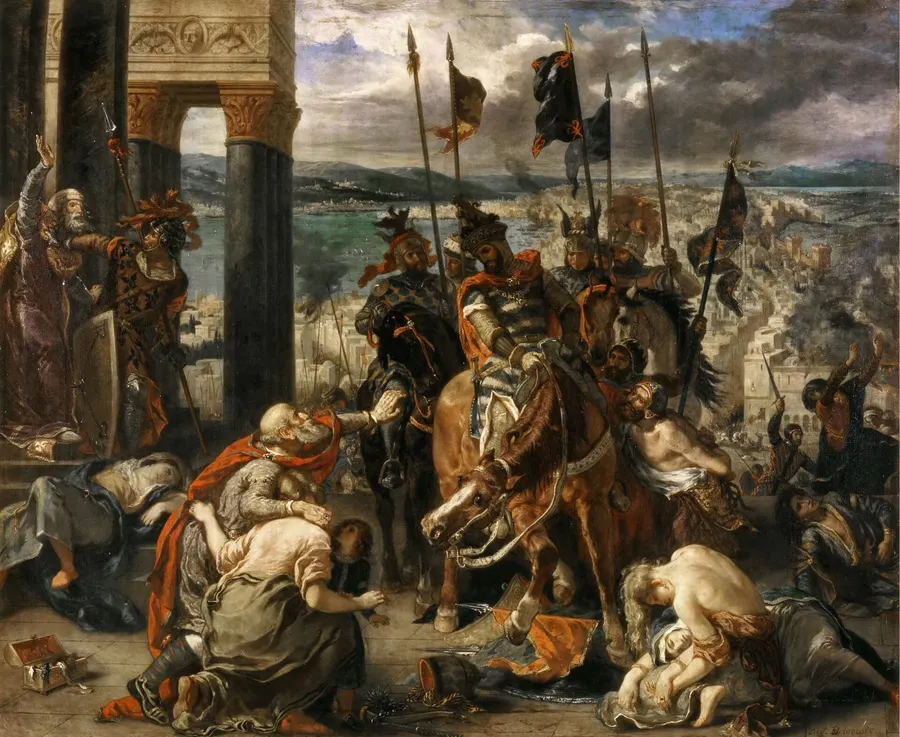
The Entry of the Crusaders into Constantinople, painted by Eugène Delacroix in 1840.The Entry of the Crusaders into Constantinople, painted by Eugène Delacroix in 1840.Image: Eugène Delacroix · Public domain
world · Middle East

Crusaders storm Constantinople

The Fourth Crusade had set out to attack Egypt, but debts to Venice and a quarrel over the Byzantine throne led it instead to the walls of Constantinople, the greatest Christian city of the day. On 12 April 1204 the crusaders forced their way in from the harbour. Over the next three days they looted the city, carrying off treasures that still fill churches and museums in the West, and set up a Latin empire. The sack deepened the split between Catholic and Orthodox Christians. The date is by the Julian calendar.

Source: World History Encyclopedia: 1204, the sack of Constantinople ↗
III
A CHANGING WORLD

Early Modern Era

Exploration, political change, scientific development and expanding global connections.

1606
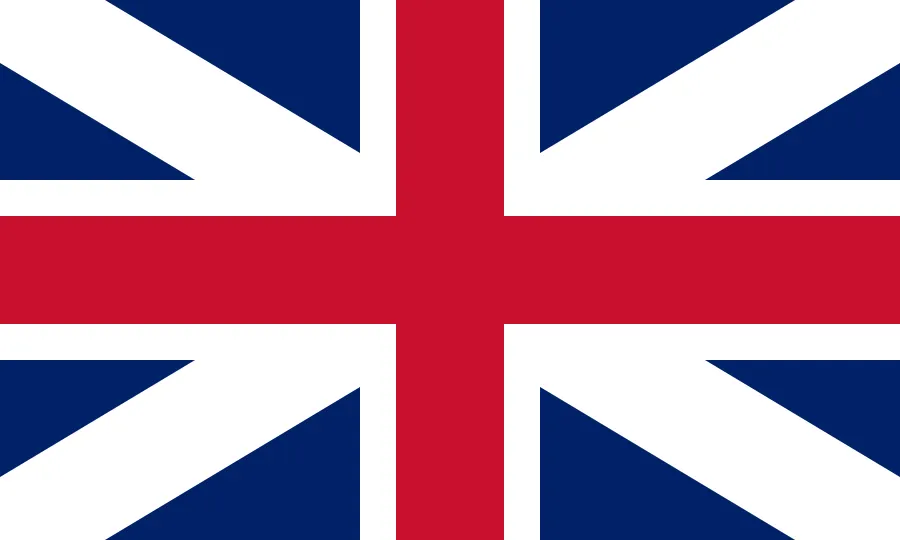
The design of the first Union Flag, used from 1606 to 1801.The design of the first Union Flag, used from 1606 to 1801.Image: Hoshie · Public domain
politics · Europe

The first Union Flag

Three years after he inherited the English throne, James VI of Scotland and I of England ordered all ships of both kingdoms to fly a new flag at the main mast, combining the red cross of St George with the white saltire of St Andrew on blue. Ireland’s cross of St Patrick was added in 1801. The date is by the Julian calendar.

Source: The Flag Institute: History of the Union Flag ↗
1633
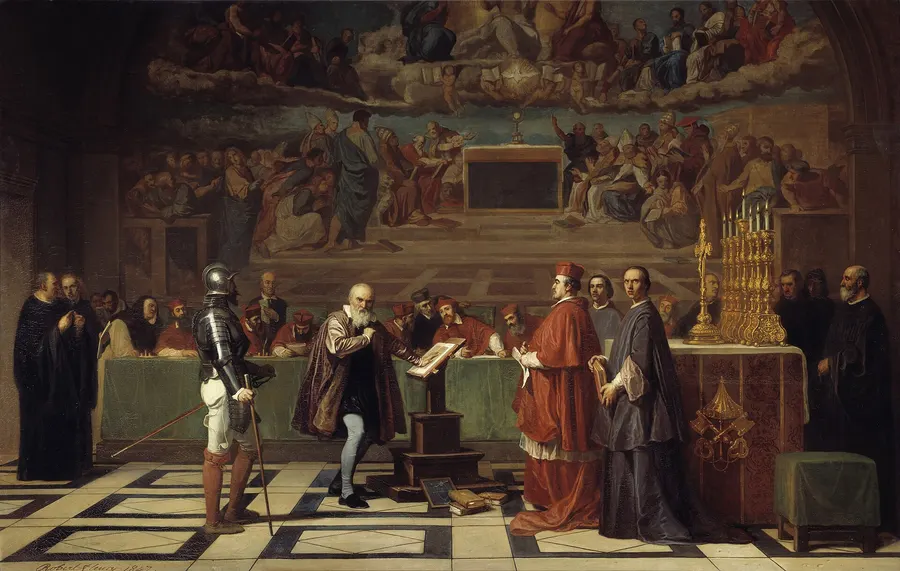
Galileo before the Holy Office, painted by Joseph-Nicolas Robert-Fleury in 1847.Galileo before the Holy Office, painted by Joseph-Nicolas Robert-Fleury in 1847.Image: Joseph-Nicolas Robert-Fleury · Public domain
science · Europe

Galileo faces the Inquisition

Aged 69, Galileo Galilei appeared before the Roman Inquisition for the first time, questioned about his Dialogue, which had argued for the Earth moving around the Sun, and about a warning given to him in 1616. In June he was forced to renounce his views and spent the rest of his life under house arrest.

Source: Famous Trials (University of Missouri-Kansas City): Galileo’s depositions ↗
1776
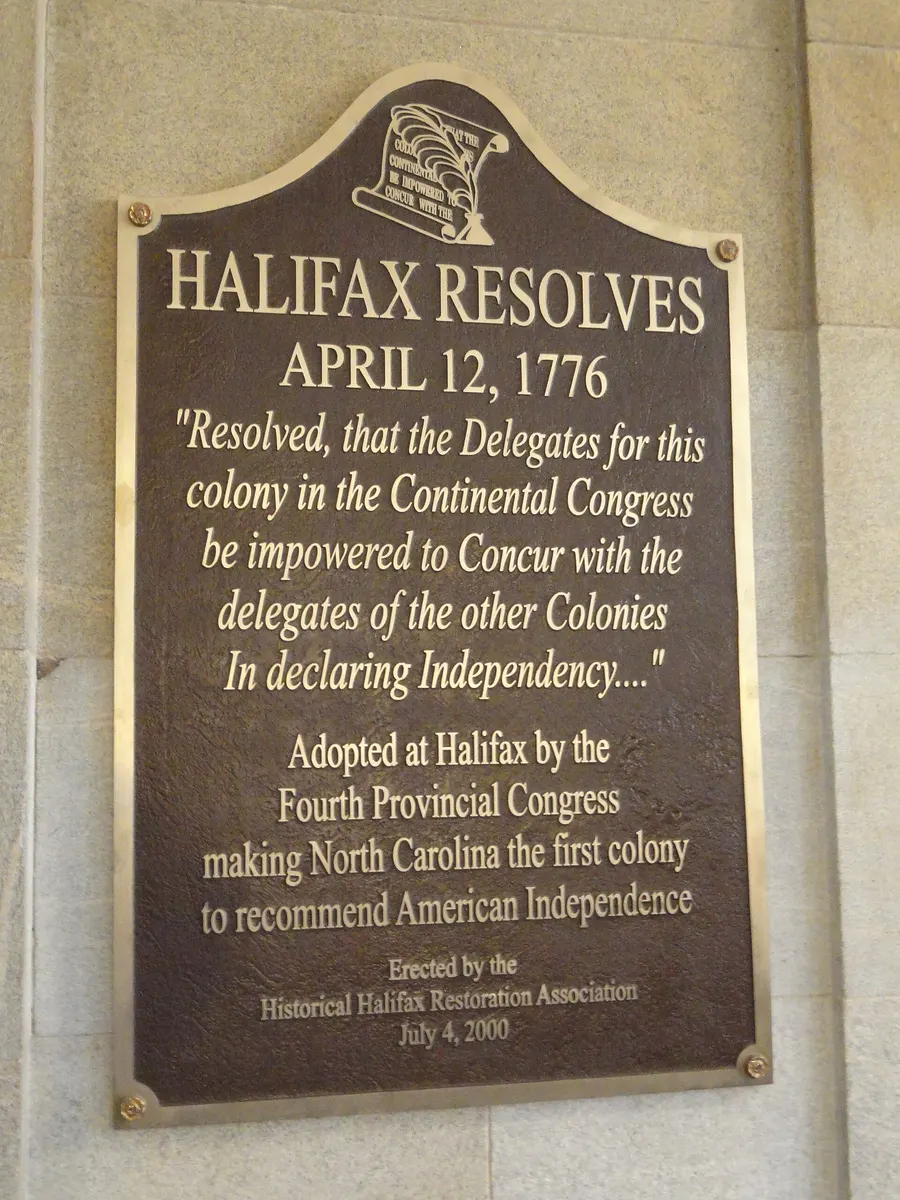
A plaque recording the Halifax Resolves in the North Carolina State Capitol, Raleigh.A plaque recording the Halifax Resolves in the North Carolina State Capitol, Raleigh.Image: Daderot · Public domain
world · Americas

North Carolina calls for independence

Meeting at Halifax, North Carolina’s revolutionary congress told its delegates in Philadelphia that they could vote for independence from Britain, the first colony to take that step officially. The Declaration of Independence followed 12 weeks later, and the date of the Halifax Resolves is on North Carolina’s flag.

Source: NCpedia (State Library of North Carolina): The Halifax Resolves ↗
1782
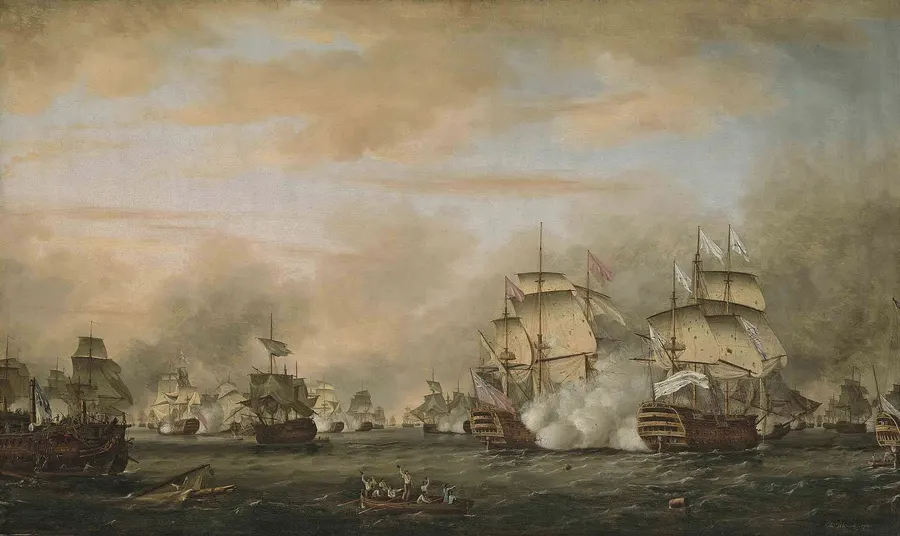
The Battle of the Saintes, 12 April 1782, painted by Thomas Whitcombe.The Battle of the Saintes, 12 April 1782, painted by Thomas Whitcombe.Image: Thomas Whitcombe · Public domain
world · Americas

The Battle of the Saintes

In the Caribbean between Dominica and Guadeloupe, a British fleet under Admiral George Rodney broke through the French line of battle and captured the French commander, the Comte de Grasse, with his flagship. The victory ended a French and Spanish plan to invade Jamaica.

Source: Royal Museums Greenwich: The Battle of the Saints, 12 April 1782 ↗
IV
THE NINETEENTH CENTURY

The 1800s

Industry, empire, invention, reform and a century of enormous transformation.

1861
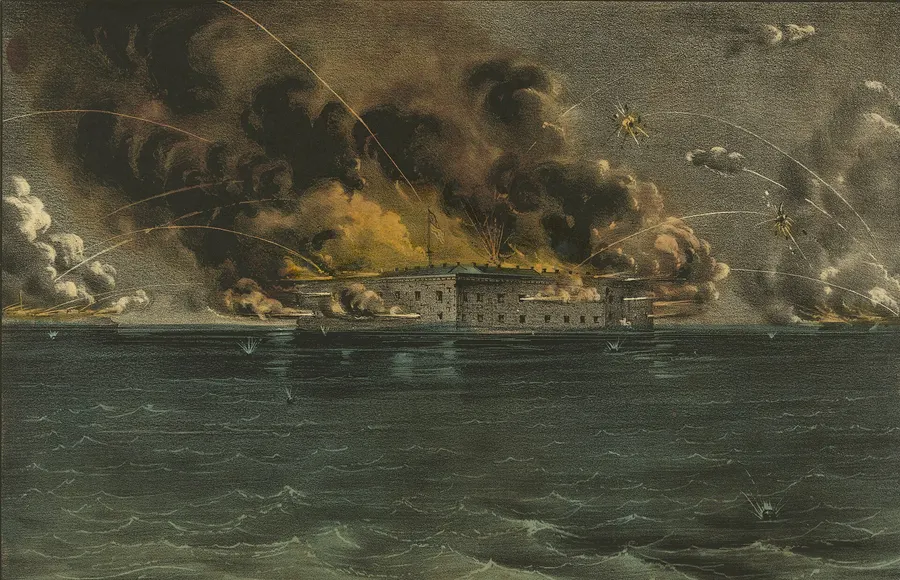
The bombardment of Fort Sumter in Charleston Harbour, in a Currier and Ives lithograph of about 1861.The bombardment of Fort Sumter in Charleston Harbour, in a Currier and Ives lithograph of about 1861.Image: Published by Currier and Ives · Public domain
world · Americas

The American Civil War begins at Fort Sumter

At 4.30 in the morning of 12 April 1861 a Confederate mortar fired a signal shell over Fort Sumter, a Union fort in the harbour at Charleston, South Carolina. Batteries around the harbour then opened fire. After some 34 hours of bombardment the fort’s commander, Major Robert Anderson, surrendered. The attack began four years of civil war that killed more than 620,000 people and ended slavery in the United States.

Source: US National Park Service: The Battle of Fort Sumter, April 1861 ↗
1877
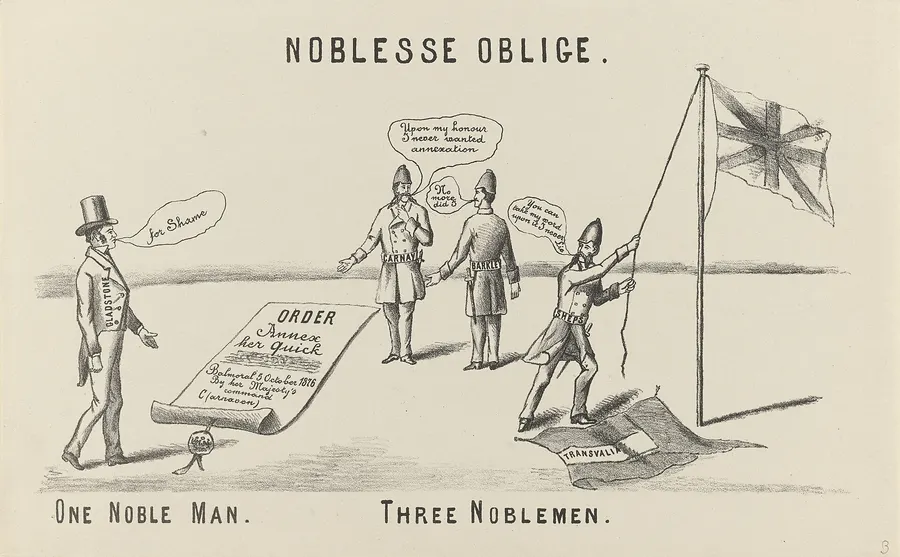
A satirical print of 1877 showing Theophilus Shepstone raising the British flag over the Transvaal (Rijksmuseum).A satirical print of 1877 showing Theophilus Shepstone raising the British flag over the Transvaal (Rijksmuseum).Image: Rijksmuseum · CC0
politics · Africa

Britain annexes the Transvaal

On 12 April 1877 the British official Sir Theophilus Shepstone, who had ridden into Pretoria with a small escort, proclaimed the Boer republic of the Transvaal a British colony. Not a shot was fired. Britain hoped to join southern Africa into one federation, but many Boers never accepted the takeover. Petitions failed, and at the end of 1880 they rose in revolt, winning back their independence in the First Anglo-Boer War.

Source: South African History Online: First Anglo-Boer War ↗
V
THE TWENTIETH CENTURY

The 1900s

War and peace, technological leaps, social change, politics, sport and popular culture.

1927
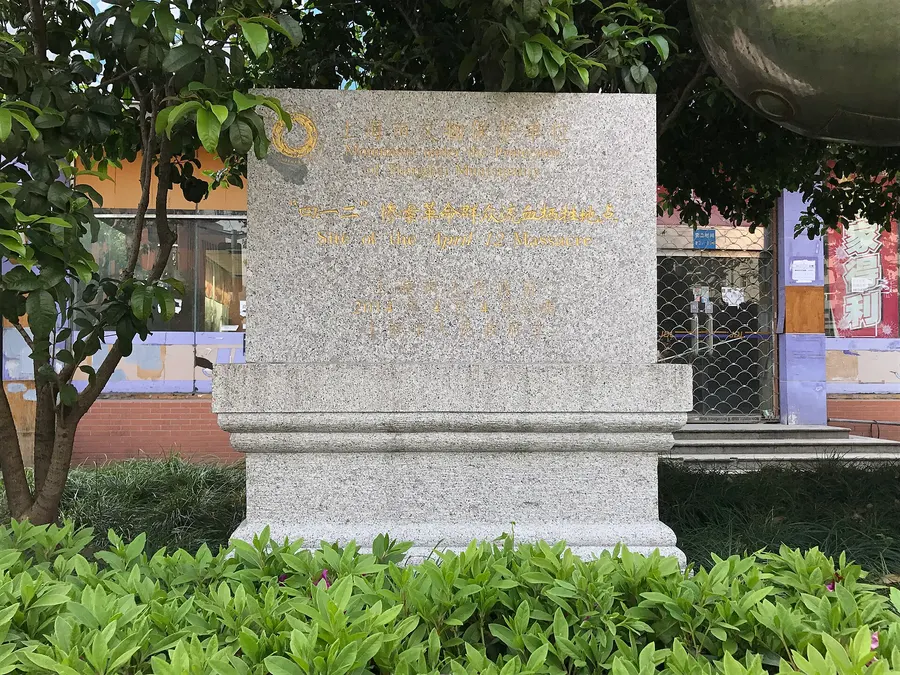
A memorial stone marking a site of the 12 April 1927 killings on Baoshan Road, Shanghai.A memorial stone marking a site of the 12 April 1927 killings on Baoshan Road, Shanghai.Image: Fayhoo · CC BY-SA 3.0
politics · Asia

The Shanghai purge

Before dawn, armed gangsters working with Chiang Kai-shek’s Nationalists attacked Communists and trade unionists in Shanghai. Hundreds were killed and many more arrested, and similar purges followed in other cities. The alliance between the Nationalists and the Communists was broken, and the long Chinese Civil War began.

Source: Encyclopaedia Britannica: Chiang Kai-shek ↗
1945
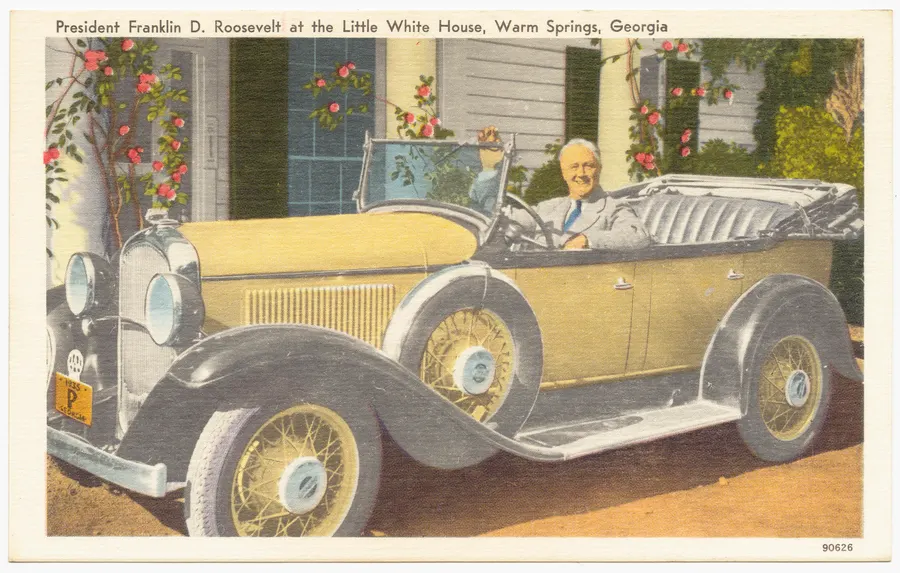
President Roosevelt in his car at the Little White House, Warm Springs, on a postcard of the 1930s or 1940s.President Roosevelt in his car at the Little White House, Warm Springs, on a postcard of the 1930s or 1940s.Image: Boston Public Library · Public domain
politics · Americas

President Franklin Roosevelt dies

Franklin D. Roosevelt, president since 1933 and elected four times, died of a massive stroke at his cottage at Warm Springs, Georgia, while sitting for a portrait. Victory in Europe was less than a month away. Vice-President Harry Truman was sworn in that evening.

Source: Miller Center, University of Virginia: Franklin D. Roosevelt, death of the president ↗
1954
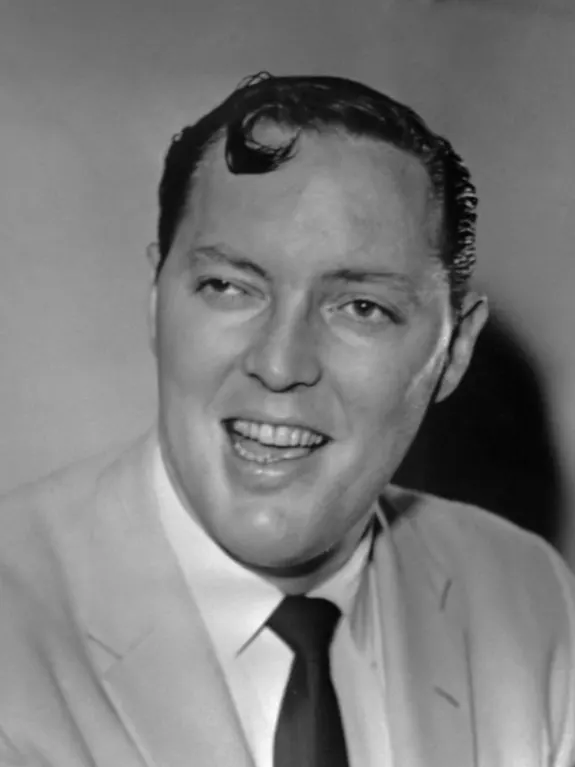
Bill Haley, photographed in 1974.Bill Haley, photographed in 1974.Image: Anefo · CC0
culture · Americas

‘Rock Around the Clock’ is recorded

At a Decca studio in a former Masonic hall in New York on 12 April 1954, Bill Haley and His Comets recorded ‘Rock Around the Clock’ in the last 40 minutes of the session, as the B-side of another song. It sold modestly at first. But when it played over the opening of the film Blackboard Jungle in 1955, it shot to number one, and became the record that carried rock and roll around the world.

Source: Library of Congress, National Recording Registry: Rock Around the Clock (essay) ↗
1955
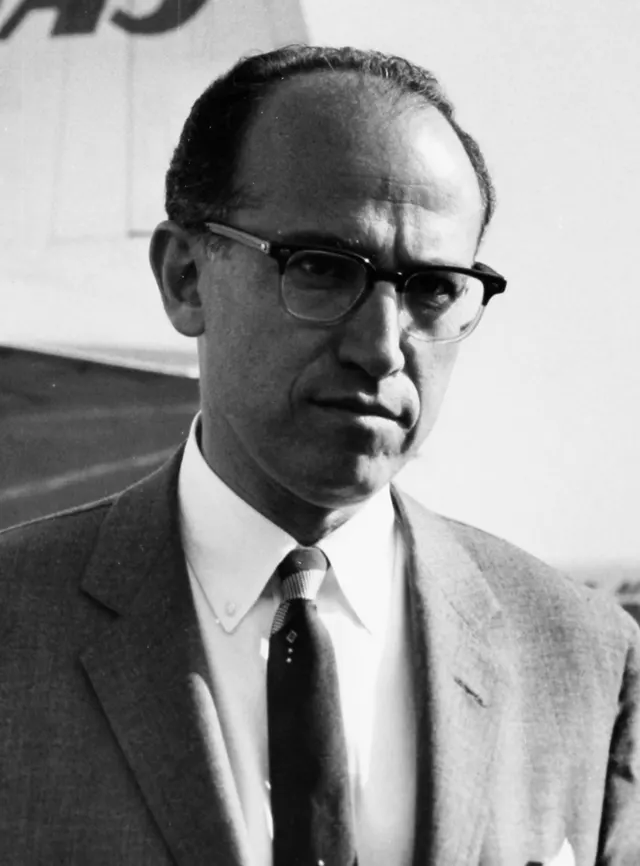
Jonas Salk, who developed the first effective polio vaccine.Jonas Salk, who developed the first effective polio vaccine.Image: SAS Scandinavian Airlines · Public domain
science · Americas

The polio vaccine is declared safe

In a packed hall at the University of Michigan on 12 April 1955, Dr Thomas Francis Jr announced the results of a trial involving more than 1.8 million children: Jonas Salk’s vaccine against polio was ‘safe, effective, and potent’. Church bells rang across America. Polio had paralysed tens of thousands of children a year, and within a few years of mass vaccination the number of cases in the United States fell dramatically.

Source: University of Michigan School of Public Health: The 1954 polio vaccine trials ↗
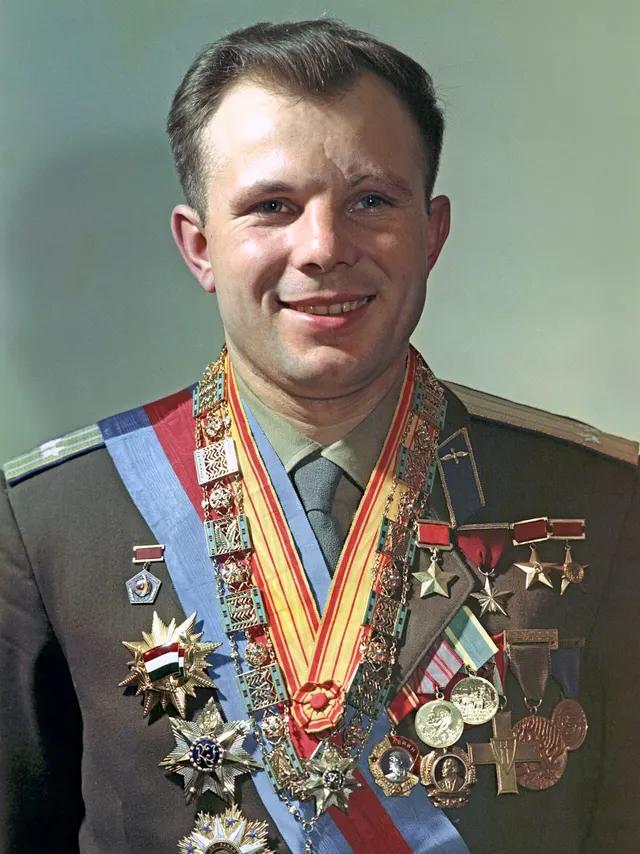
1961
Yuri Gagarin wearing his awards.Yuri Gagarin wearing his awards.Image: Aleksandr Mokletsov (Sovinformburo) · CC BY 4.0
world · Europe

Yuri Gagarin, the first person in space

On the morning of 12 April 1961 the Soviet air force pilot Yuri Gagarin, aged 27, was launched from Baikonur in the Vostok 1 capsule, calling out ‘Poyekhali!’, ‘Let’s go!’. He circled the Earth once in 108 minutes before parachuting down in a field near the Volga. His flight made him a worldwide hero and gave the Soviet Union a stunning lead in the space race. The United Nations now marks 12 April as the International Day of Human Space Flight.

Source: United Nations: International Day of Human Space Flight ↗
1980
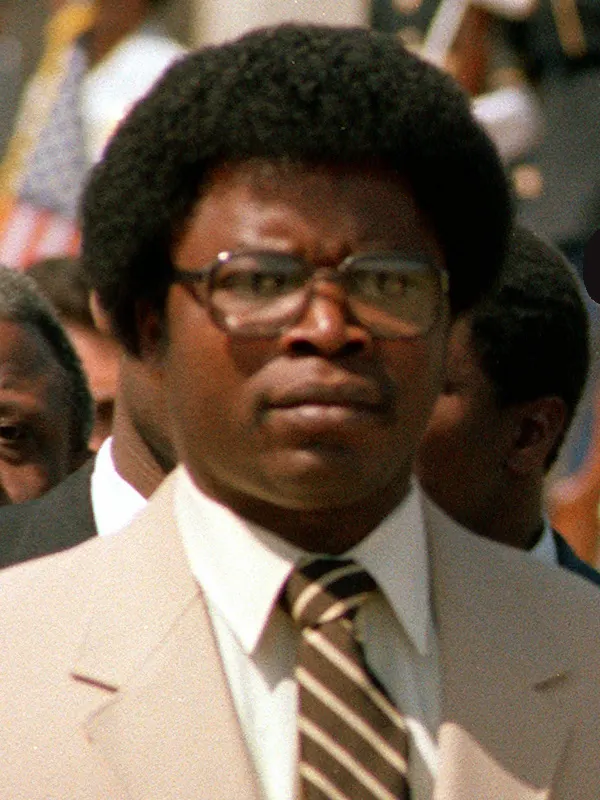
Samuel Doe on a visit to Washington, August 1982.Samuel Doe on a visit to Washington, August 1982.Image: Frank Hall · Public domain
politics · Africa

Samuel Doe seizes power in Liberia

Master Sergeant Samuel Doe and a group of soldiers stormed the Executive Mansion in Monrovia and killed President William Tolbert, ending more than a century of rule by the descendants of freed American slaves. Days later senior officials were publicly executed. Doe ruled until he was killed in the civil war in 1990.

Source: US Department of State, Office of the Historian: Foreign Relations of the United States, 1977 to 1980, volume XVII, document 55 ↗
1981
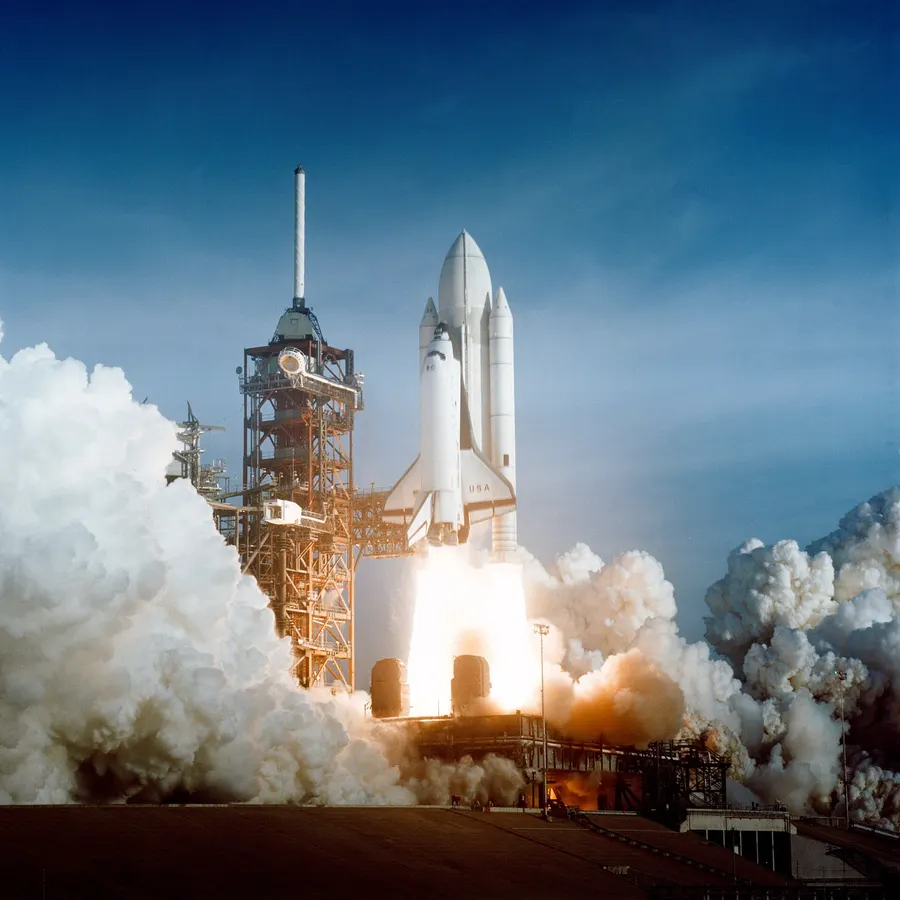
Space Shuttle Columbia lifts off from Kennedy Space Center on the first shuttle mission, 12 April 1981.Space Shuttle Columbia lifts off from Kennedy Space Center on the first shuttle mission, 12 April 1981.Image: NASA · Public domain
science · Americas

The first Space Shuttle flies

Exactly 20 years after Gagarin’s flight, NASA’s Space Shuttle Columbia lifted off from Florida at 7 am on 12 April 1981, with John Young and Robert Crippen aboard. It was the first time astronauts had flown a new spacecraft on its very first launch. After 37 orbits Columbia glided back to land on a runway in California, like an aeroplane. The shuttles flew 135 missions over 30 years, launching satellites and building the International Space Station.

Source: NASA: STS-1 ↗
1992
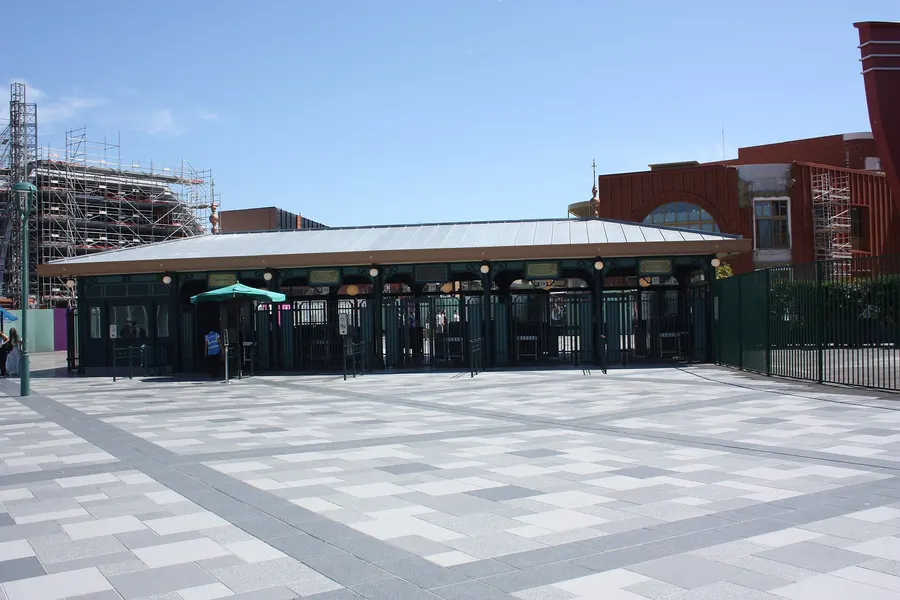
The entrance to Disneyland Paris at Marne-la-Vallée.The entrance to Disneyland Paris at Marne-la-Vallée.Image: Sneeuwvlakte · CC BY-SA 4.0
culture · Europe

Euro Disney opens near Paris

The Euro Disney Resort opened at Marne-la-Vallée, about 32 kilometres east of Paris, on 12 April 1992. It was Disney’s second park outside the United States, after Tokyo. Early years were difficult, with fewer visitors and more debt than planned, and some French critics called it a ‘cultural Chernobyl’. Renamed Disneyland Paris, it became one of Europe’s most visited attractions.

Source: Disneyland Paris News: History ↗
RESEARCH

Sources & Further Reading

Selected authoritative references supporting the events on this page.

World History Encyclopedia: 1204, the sack of Constantinople↗Encyclopaedia Britannica: Sack of Constantinople (1204)↗The Flag Institute: History of the Union Flag↗Royal Museums Greenwich: Union Flag (before 1801)↗Famous Trials (University of Missouri-Kansas City): Galileo’s depositions↗Stanford Encyclopedia of Philosophy: Galileo Galilei↗NCpedia (State Library of North Carolina): The Halifax Resolves↗Encyclopaedia Britannica: Halifax Resolves↗Royal Museums Greenwich: The Battle of the Saints, 12 April 1782↗Encyclopaedia Britannica: Battle of the Saintes↗US National Park Service: The Battle of Fort Sumter, April 1861↗American Battlefield Trust: Fort Sumter↗South African History Online: First Anglo-Boer War↗Encyclopaedia Britannica: Sir Theophilus Shepstone↗Encyclopaedia Britannica: Chiang Kai-shek↗Encyclopaedia Britannica: Northern Expedition↗Miller Center, University of Virginia: Franklin D. Roosevelt, death of the president↗Franklin D. Roosevelt Presidential Library: Document of the month, April↗Library of Congress, National Recording Registry: Rock Around the Clock (essay)↗Encyclopaedia Britannica: Rock Around the Clock↗University of Michigan School of Public Health: The 1954 polio vaccine trials↗University of Michigan, Bentley Historical Library: Poliomyelitis and the Salk vaccine (subject guide)↗United Nations: International Day of Human Space Flight↗United Nations press release GA/11066: General Assembly declares 12 April International Day of Human Space Flight↗US Department of State, Office of the Historian: Foreign Relations of the United States, 1977 to 1980, volume XVII, document 55↗BlackPast: Samuel Kanyon Doe↗NASA: STS-1↗NASA History: 40 years ago, Columbia takes flight↗Disneyland Paris News: History↗EBSCO Research Starters: Euro Disneyland opens↗
WHY THESE MOMENTS?

Significance before volume

This page is not the longest possible list of events. It is a chronological journey through 12 April, where each entry is chosen for historical significance, human interest and reliability.

Facts are checked against authoritative museums, archives, universities and reference works. Where sources disagree, the page says so.

EXPLORED THE DEEPER STORY?

Return to the highlights of 12 April

Discover the lighter side of the date with famous birthdays, culture, firsts and lives remembered.

Explore This Day →
← PREVIOUS DAY11 April
HISTORY & TIMELINE12 April
NEXT DAY →13 April