
HISTORY & TIMELINE
11 April

A journey through
11 April in history

From the joint coronation of William and Mary in 1689 to the Fair Housing Act of 1968, 11 April has seen Napoleon sent to Elba, a drummer boy become Costa Rica’s national hero, Spain’s empire in the Pacific and Caribbean pass to the United States, the world’s labour organisation drafted and 66 families found Tel Aviv on the sand dunes. This timeline follows the date across nearly three centuries.

JUMP THROUGH TIME
III
A CHANGING WORLD

Early Modern Era

Exploration, political change, scientific development and expanding global connections.

1689
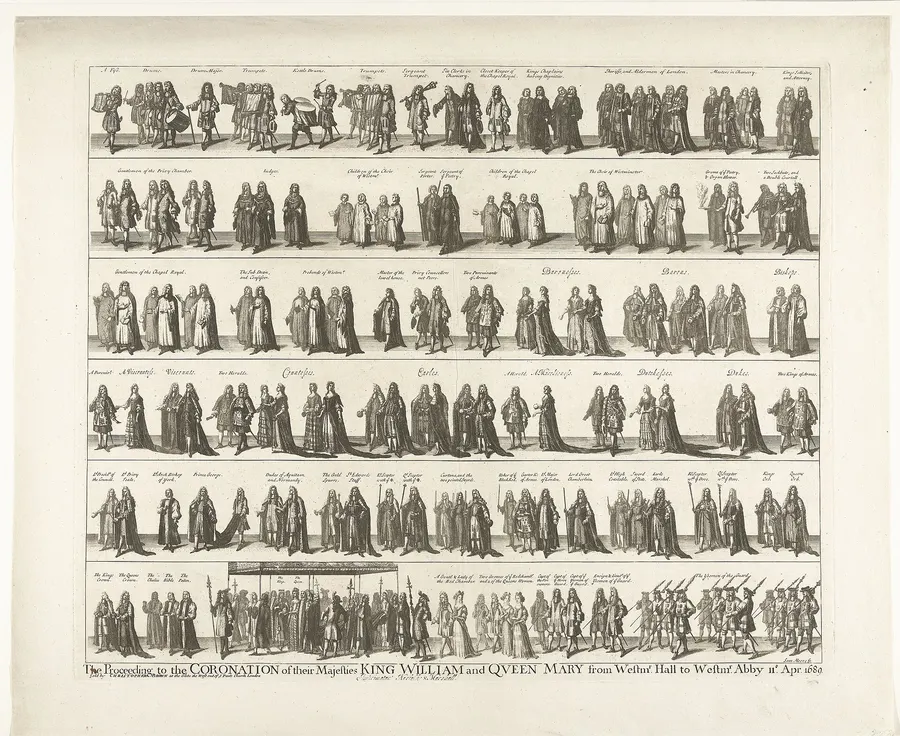
The procession to the coronation of William and Mary at Westminster Abbey, 11 April 1689, in a print held by the Rijksmuseum.The procession to the coronation of William and Mary at Westminster Abbey, 11 April 1689, in a print held by the Rijksmuseum.Image: Rijksmuseum · CC0
world · Europe

William and Mary are crowned together

After the Glorious Revolution drove out James II, his daughter Mary and her Dutch husband William of Orange were crowned in Westminster Abbey as joint sovereigns, the only time England has done so. A second coronation chair was made for Mary, and the coronation oath was changed. The date is by the Julian calendar.

Source: Westminster Abbey: William III ↗
1713
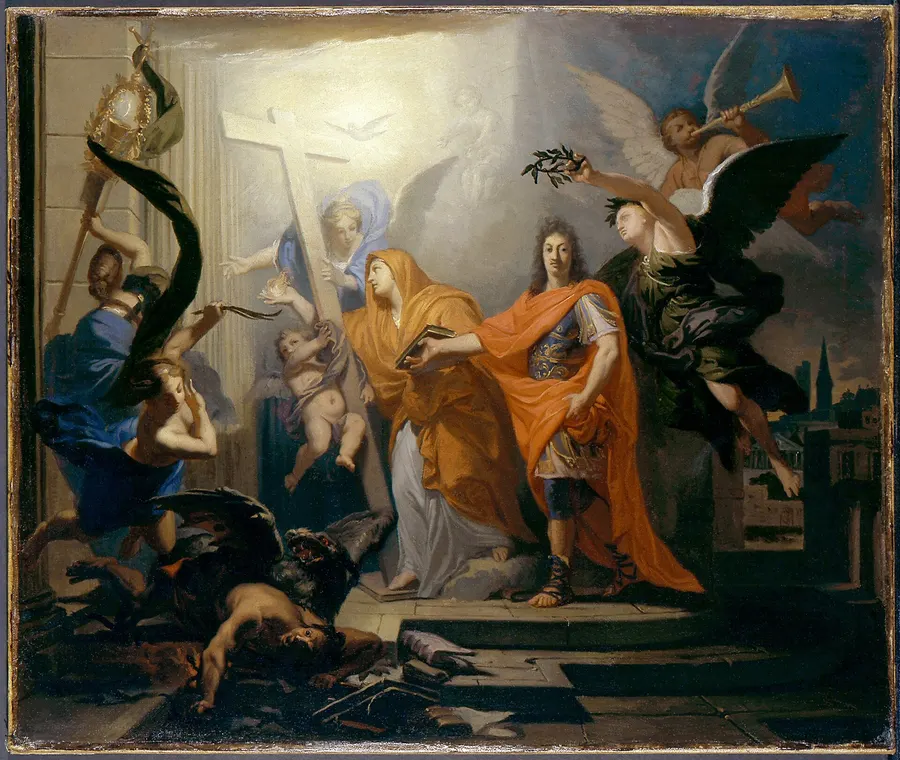
An allegory, probably of the Peace of Utrecht, painted by Antoine Rivalz (Metropolitan Museum of Art).An allegory, probably of the Peace of Utrecht, painted by Antoine Rivalz (Metropolitan Museum of Art).Image: Antoine Rivalz · CC0
world · Europe

The Treaty of Utrecht

At Utrecht in the Dutch Republic on 11 April 1713, France signed peace treaties with Britain, the Dutch, Prussia, Portugal and Savoy, ending most of the long War of the Spanish Succession. Louis XIV’s grandson kept the Spanish throne, but France and Spain were never to be united. Britain did well: France handed over Newfoundland, Nova Scotia and the Hudson Bay lands, and Spain later gave up Gibraltar and Minorca. The deals set Europe’s balance of power for a generation.

Source: Encyclopaedia Britannica: Treaties of Utrecht ↗
IV
THE NINETEENTH CENTURY

The 1800s

Industry, empire, invention, reform and a century of enormous transformation.

1814
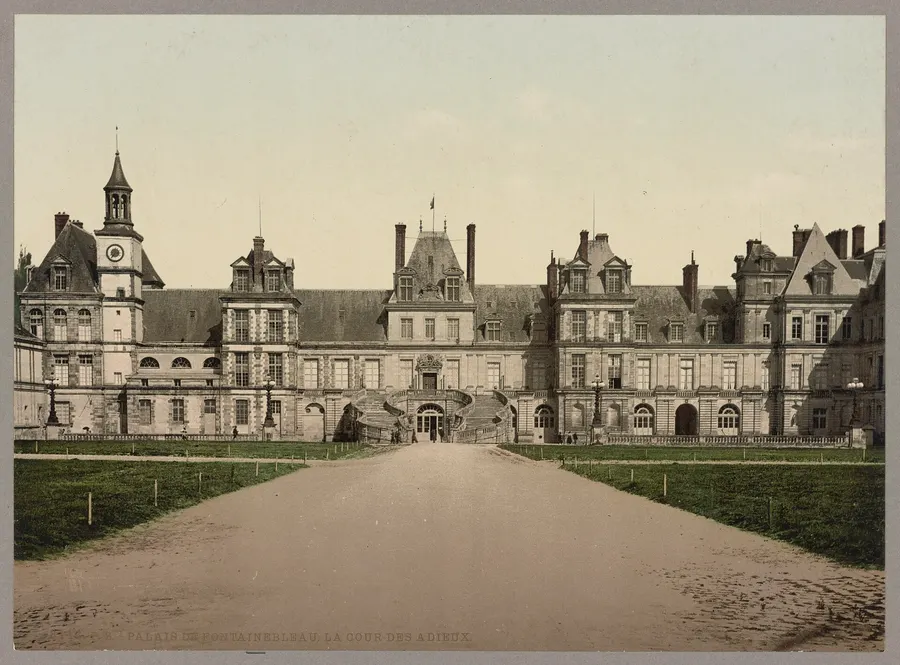
The Cour des Adieux at the palace of Fontainebleau, where Napoleon said farewell to his guard, in a photochrom of about 1900.The Cour des Adieux at the palace of Fontainebleau, where Napoleon said farewell to his guard, in a photochrom of about 1900.Image: Photoglob Co., publisher · Public domain
politics · Europe

Napoleon is sent to Elba

Five days after Napoleon’s abdication, his representatives and the allied powers signed the Treaty of Fontainebleau. He gave up the French throne but kept the title of emperor, and was given the small Mediterranean island of Elba to rule, with a pension and a guard of several hundred men. Less than a year later he escaped.

Source: Encyclopaedia Britannica: Napoleon I, downfall and abdication ↗
1899
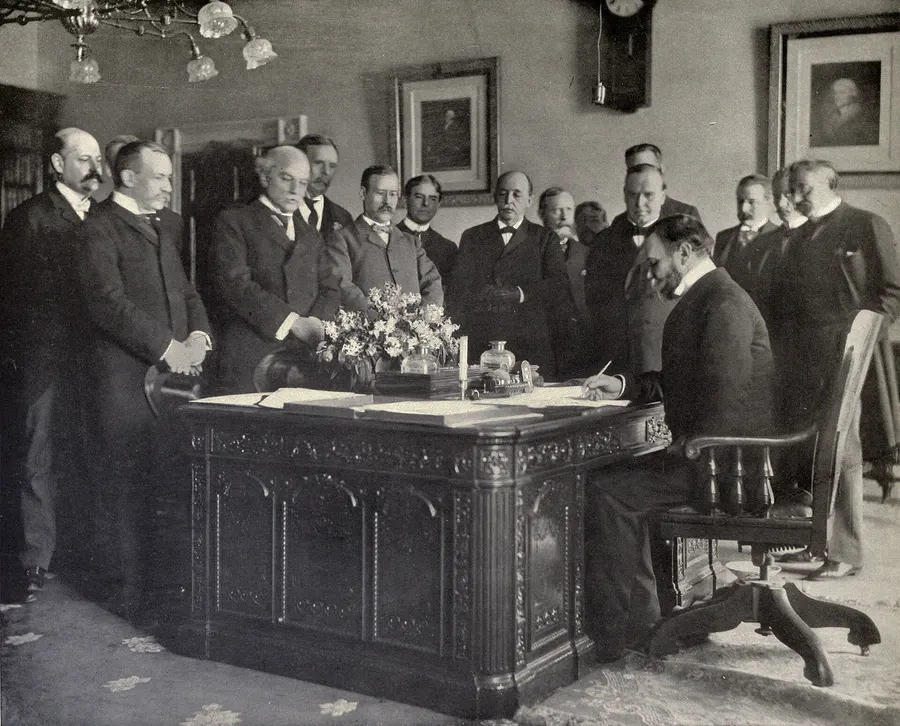
Secretary of State John Hay signs the memorandum of ratification in Washington, 1899, photographed by Frances Benjamin Johnston.Secretary of State John Hay signs the memorandum of ratification in Washington, 1899, photographed by Frances Benjamin Johnston.Image: Frances Benjamin Johnston · Public domain
politics · Americas

The Treaty of Paris takes effect

Ratifications of the treaty ending the Spanish-American War were exchanged in Washington and it was proclaimed in force. Spain gave up Cuba and handed Puerto Rico, Guam and the Philippines to the United States, which paid 20 million dollars for the Philippines. The US Senate had approved it by just one vote more than it needed.

Source: Library of Congress: Treaty of Paris of 1898 (research guide) ↗
V
THE TWENTIETH CENTURY

The 1900s

War and peace, technological leaps, social change, politics, sport and popular culture.

1909
Families gather on the dunes north of Jaffa to share out the first plots of Tel Aviv, 1909, photographed by Avraham Soskin.Families gather on the dunes north of Jaffa to share out the first plots of Tel Aviv, 1909, photographed by Avraham Soskin.Image: Avraham Soskin · Public domain
culture · Middle East

Tel Aviv is founded with a seashell lottery

On 11 April 1909 a few dozen Jewish families met on the sand dunes outside the port of Jaffa to share out plots for a new garden suburb. Akiva Aryeh Weiss drew 66 white shells marked with family names and 66 grey shells marked with plot numbers. The neighbourhood, called Ahuzat Bayit, was renamed Tel Aviv the next year. It grew into Israel’s second city, and its ‘White City’ of modernist buildings is now a UNESCO World Heritage Site.

Source: Tel Aviv-Yafo Municipality: History of the city ↗
1919
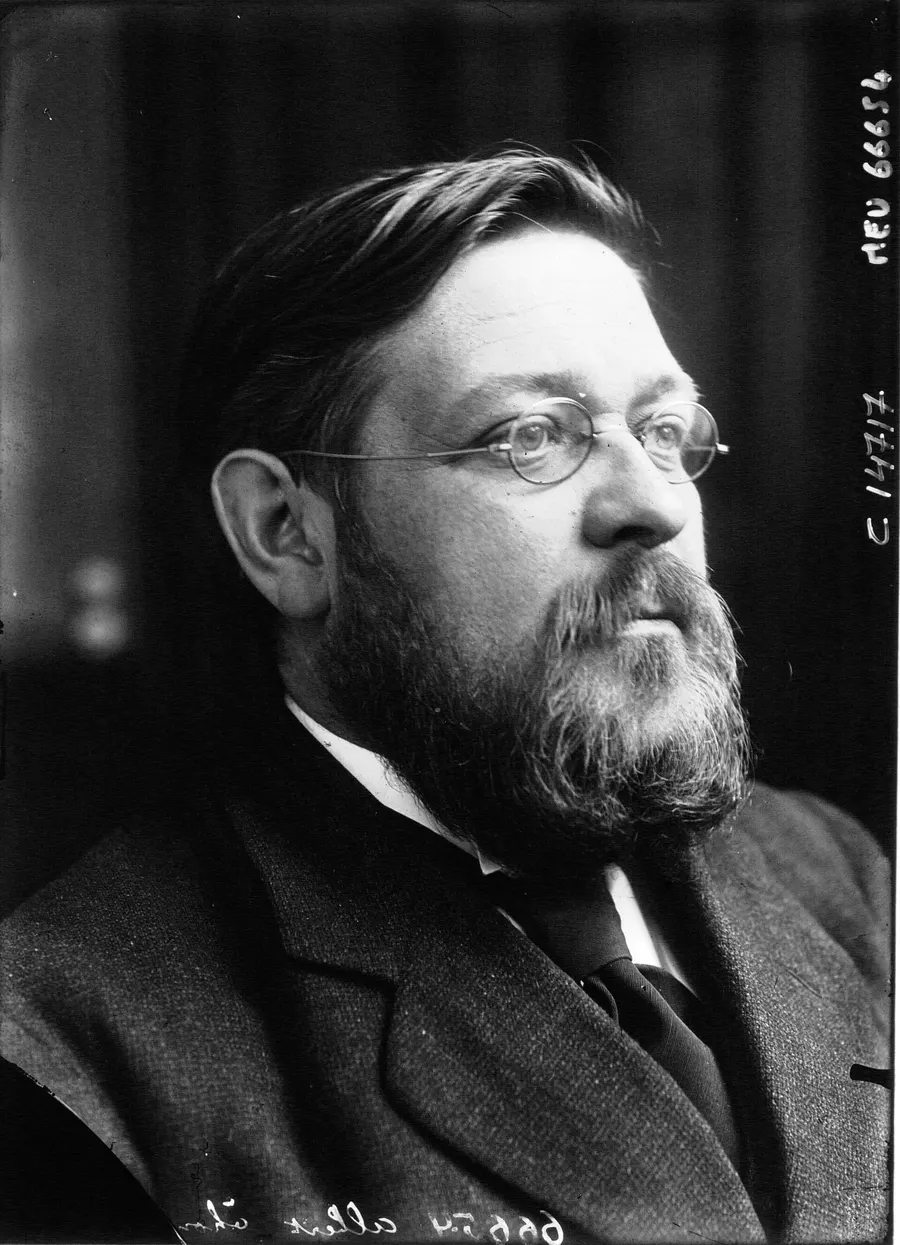
Albert Thomas, the ILO's first director, photographed during the First World War.Albert Thomas, the ILO’s first director, photographed during the First World War.Image: Agence Meurisse · Public domain
world · Global

The peace conference adopts the ILO’s charter

At the Paris Peace Conference, delegates adopted the labour clauses drafted by a commission chaired by the American union leader Samuel Gompers. Written into the Treaty of Versailles, they created the International Labour Organization to improve working conditions around the world. The Frenchman Albert Thomas became its first director.

Source: International Labour Organization: ILO Constitution ↗
1945
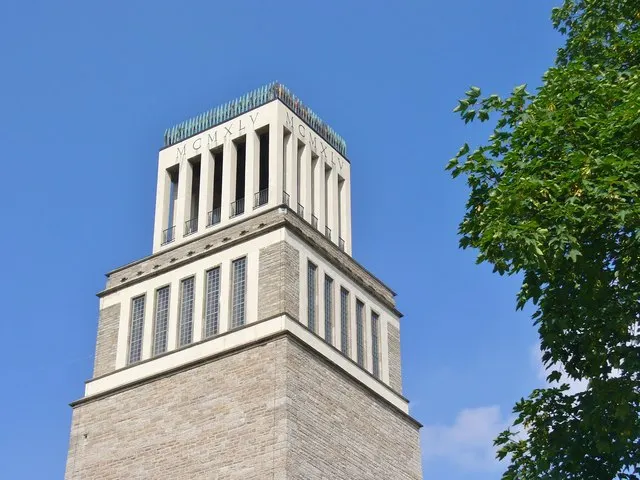
The bell tower of the Buchenwald memorial near Weimar, Germany.The bell tower of the Buchenwald memorial near Weimar, Germany.Image: Colin Smith on geo.hlipp.de · CC BY-SA 2.0
world · Europe

American troops reach Buchenwald

On the afternoon of 11 April 1945 tanks of the US Third Army reached Buchenwald concentration camp, near Weimar. As the SS fled, the prisoners’ own underground resistance took over the gate. The Americans found more than 21,000 people still alive in the camp, many close to death. Tens of thousands had died there since 1937, from hunger, disease, overwork, medical experiments and killing. The Americans made people from nearby Weimar walk through the camp, and brought journalists and politicians to see it, so that no one could deny what had happened.

Source: United States Holocaust Memorial Museum: US forces enter Buchenwald ↗
1951
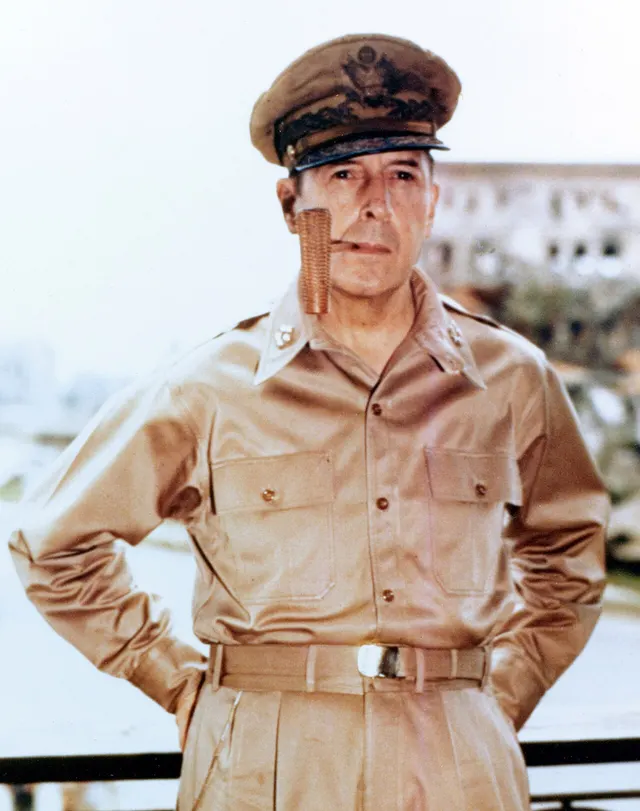
General Douglas MacArthur in Manila.General Douglas MacArthur in Manila.Image: Photographer not credited. · Public domain
politics · Americas

Truman fires General MacArthur

In an announcement released at one o’clock in the morning, President Harry Truman removed General Douglas MacArthur from command of the UN forces in Korea, saying he could not give wholehearted support to government policy. MacArthur had publicly pressed to widen the war into China. He came home to a hero’s welcome, but civilian control of the military held.

Source: Harry S. Truman Library: Statement and order by the President relieving General MacArthur of his commands ↗
1957
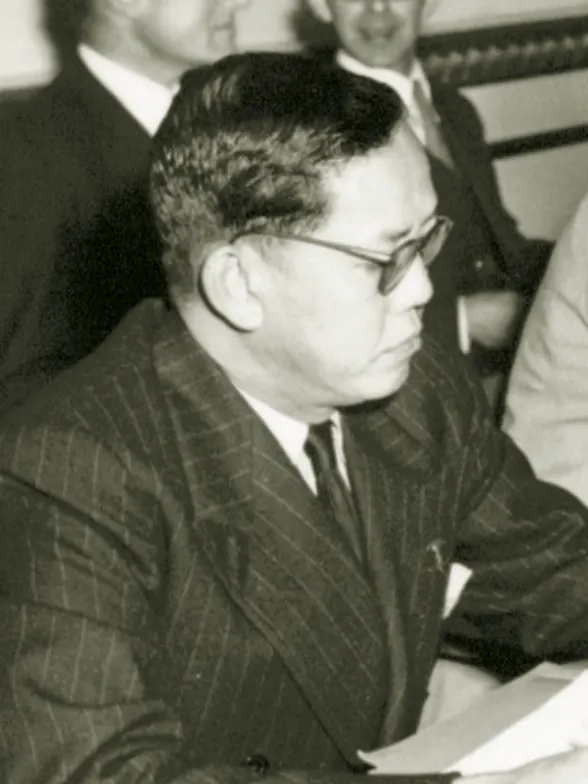
Lim Yew Hock at constitutional talks in London, 1956.Lim Yew Hock at constitutional talks in London, 1956.Image: Central Office of Information, London · Public domain
world · Asia

Singapore wins a promise of self-government

A month of talks in London led by Chief Minister Lim Yew Hock ended with agreement that Singapore would become a self-governing state, with Britain keeping control of defence and foreign affairs. Full internal self-government came in 1959, and independence in 1965.

Source: National Library Board Singapore, Infopedia: Second all-party constitutional mission ↗
1961
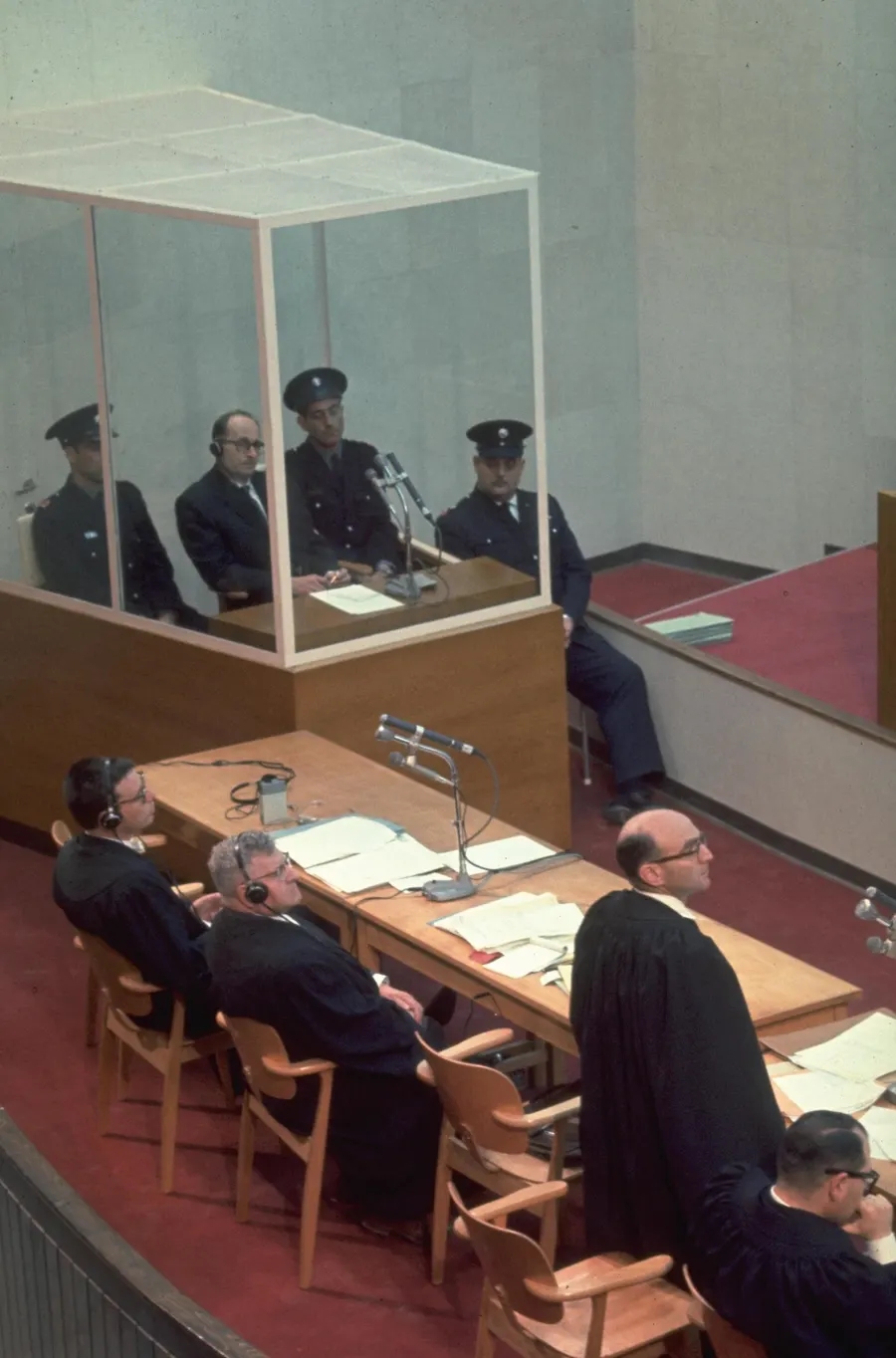
Adolf Eichmann, in a glass booth, at his trial in Jerusalem, 1961.Adolf Eichmann, in a glass booth, at his trial in Jerusalem, 1961.Image: Milli John · Public domain
world · Middle East

Adolf Eichmann goes on trial

Seized by Israeli agents in Argentina the year before, Adolf Eichmann, who had organised the deportation of millions of Jews to the Nazi death camps, went on trial before a Jerusalem court on 11 April 1961, facing 15 charges. More than 100 witnesses gave evidence, many of them survivors telling their stories in public for the first time, and the trial was filmed and broadcast around the world. Eichmann was found guilty in December 1961 and hanged in 1962.

Source: United States Holocaust Memorial Museum: Eichmann trial ↗
1968
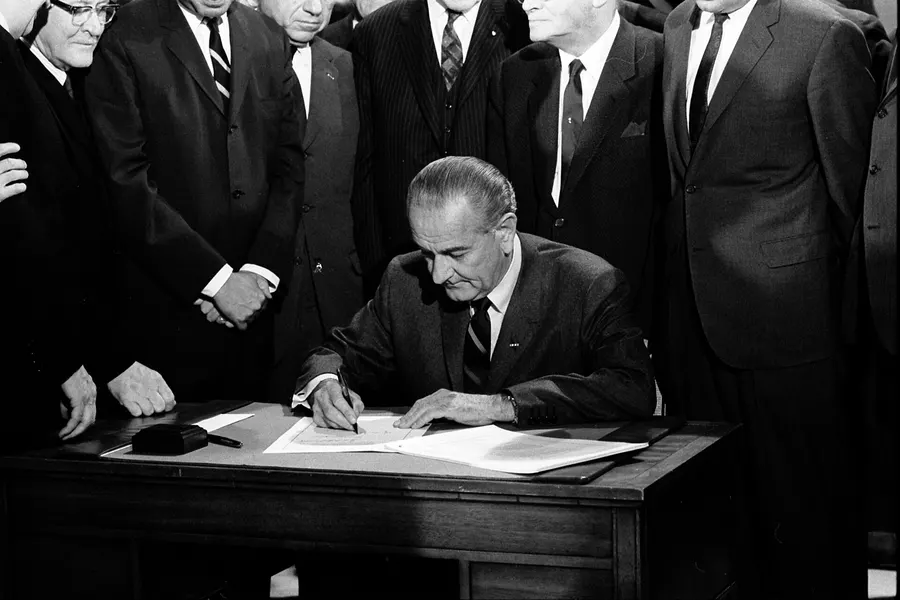
President Lyndon B. Johnson signs the Civil Rights Act of 1968, photographed by Warren K. Leffler.President Lyndon B. Johnson signs the Civil Rights Act of 1968, photographed by Warren K. Leffler.Image: Warren K. Leffler, U.S. News & World Report · Public domain
world · Americas

The Fair Housing Act becomes law

One week after the assassination of Martin Luther King Jr, President Lyndon Johnson signed the Civil Rights Act of 1968, which banned discrimination in the sale and renting of housing on grounds of race, colour, religion or national origin. Johnson had urged Congress to pass it as a tribute to King.

Source: US Department of Justice, Civil Rights Division: 1968 and the beginnings of federal enforcement of fair housing ↗
1979
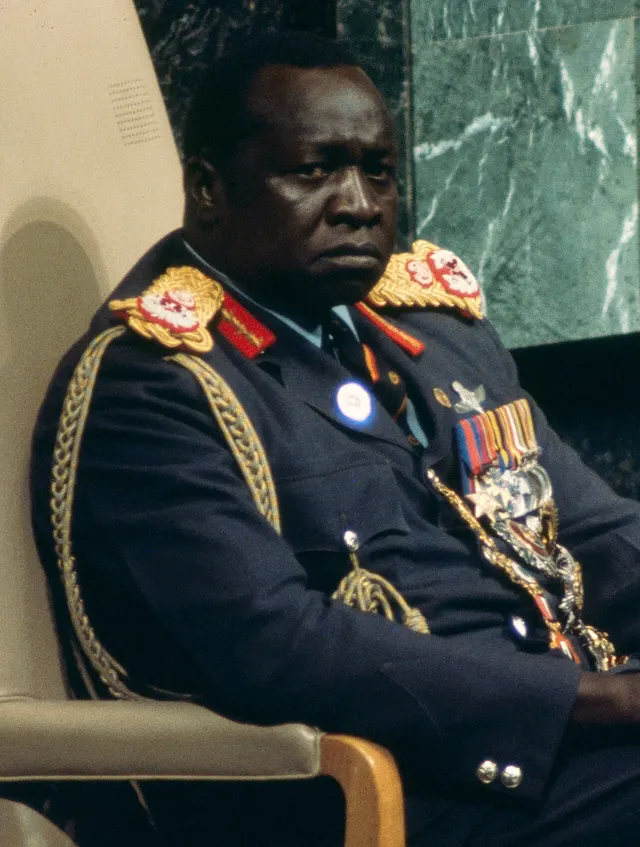
Idi Amin at the United Nations in New York.Idi Amin at the United Nations in New York.Image: Bernard Gotfryd · Public domain
politics · Africa

Kampala falls and Idi Amin flees

Tanzanian troops and armed Ugandan exiles entered Kampala, the capital of Uganda, on 11 April 1979, as the dictator Idi Amin fled. Amin had invaded Tanzania the previous October, and Tanzania’s counter-attack had driven deep into Uganda. His eight years in power had cost hundreds of thousands of lives. A new president was sworn in two days later, and Amin spent the rest of his life in exile, most of it in Saudi Arabia.

Source: Encyclopaedia Britannica: Idi Amin ↗
RESEARCH

Sources & Further Reading

Selected authoritative references supporting the events on this page.

Westminster Abbey: William III↗Royal Collection Trust: King William and Queen Mary’s coronation↗Encyclopaedia Britannica: Treaties of Utrecht↗World History Encyclopedia: War of the Spanish Succession timeline↗Encyclopaedia Britannica: Napoleon I, downfall and abdication↗Fondation Napoléon: The French campaign↗Library of Congress: Treaty of Paris of 1898 (research guide)↗The Avalon Project, Yale Law School: Treaty of Peace between the United States and Spain↗Tel Aviv-Yafo Municipality: History of the city↗Wikipedia: Tel Aviv↗International Labour Organization: ILO Constitution↗ILO Library: History of the ILO (research guide)↗United States Holocaust Memorial Museum: US forces enter Buchenwald↗Buchenwald Memorial: Chronology of the liberation↗Harry S. Truman Library: Statement and order by the President relieving General MacArthur of his commands↗US National Archives, The Text Message blog: When Truman fired the general↗National Library Board Singapore, Infopedia: Second all-party constitutional mission↗National Library Board Singapore, Infopedia: Merdeka talks↗United States Holocaust Memorial Museum: Eichmann trial↗Yad Vashem: The Eichmann trial↗US Department of Justice, Civil Rights Division: 1968 and the beginnings of federal enforcement of fair housing↗Encyclopaedia Britannica: Fair Housing Act↗Encyclopaedia Britannica: Idi Amin↗US Department of State, Office of the Historian: Foreign Relations of the United States, 1977 to 1980, volume XVII, document 167↗
WHY THESE MOMENTS?

Significance before volume

This page is not the longest possible list of events. It is a chronological journey through 11 April, where each entry is chosen for historical significance, human interest and reliability.

Facts are checked against authoritative museums, archives, universities and reference works. Where sources disagree, the page says so.

EXPLORED THE DEEPER STORY?

Return to the highlights of 11 April

Discover the lighter side of the date with famous birthdays, culture, firsts and lives remembered.

Explore This Day →
← PREVIOUS DAY10 April
HISTORY & TIMELINE11 April
NEXT DAY →12 April