HISTORY & TIMELINE
31 October

A journey through
31 October in history

From Luther’s challenge to the Church in 1517 to the day the world’s population was reckoned at seven billion in 2011, 31 October has brought reformations, revolutions and reckonings. This timeline follows the date across five centuries.

III
A CHANGING WORLD

Early Modern Era

Exploration, political change, scientific development and expanding global connections.

1517
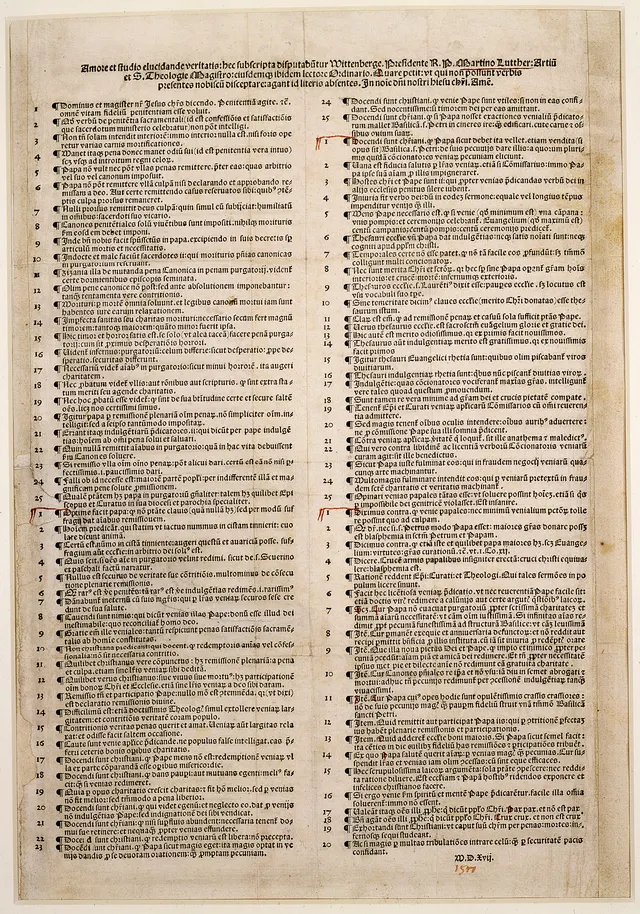
A printed edition of the Ninety-five Theses from 1517.A printed edition of the Ninety-five Theses from 1517.Image: Martin Luther · Public domain
culture · Europe

Martin Luther sends out his Ninety-five Theses

On 31 October 1517 Martin Luther, a friar and professor of theology at Wittenberg, sent a set of ninety-five propositions on indulgences to Albert, Archbishop of Mainz, asking him to rein in the preacher Johann Tetzel, whose sale of indulgences was raising money for the rebuilding of St Peter’s in Rome. Tradition holds that on the same day Luther nailed the theses to the door of Wittenberg’s Castle Church. Luther meant them as the basis for an academic debate, not a break with the Church. But they were printed and spread across Germany within weeks, the archbishop forwarded them to Rome, and the dispute that followed became the Protestant Reformation.

Source: Encyclopaedia Britannica: Ninety-five Theses ↗
IV
THE NINETEENTH CENTURY

The 1800s

Industry, empire, invention, reform and a century of enormous transformation.

1864
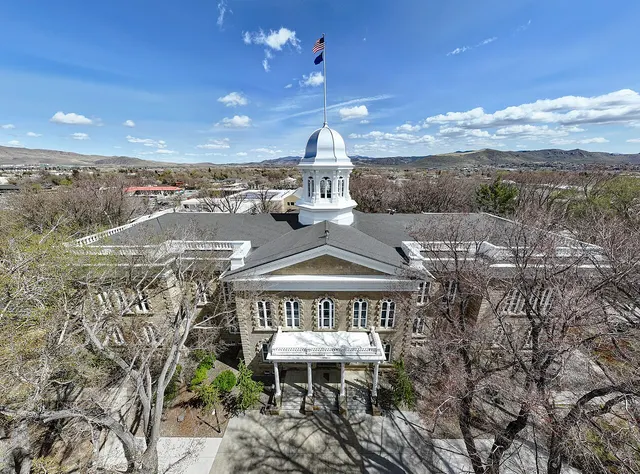
The Nevada State Capitol in Carson City.The Nevada State Capitol in Carson City.Image: Quintin Soloviev · CC0
politics · Americas

Nevada becomes the 36th state

President Abraham Lincoln proclaimed Nevada the 36th state of the Union on 31 October 1864, eight days before the presidential election. The territory’s new constitution had been sent to Washington by telegraph, at a cost of more than $3,400, then said to be the longest and most expensive telegram ever sent. Nevadans still mark the date as Nevada Day.

Source: US National Archives: the National Archives celebrates the 145th anniversary of Nevada statehood ↗
V
THE TWENTIETH CENTURY

The 1900s

War and peace, technological leaps, social change, politics, sport and popular culture.

1917
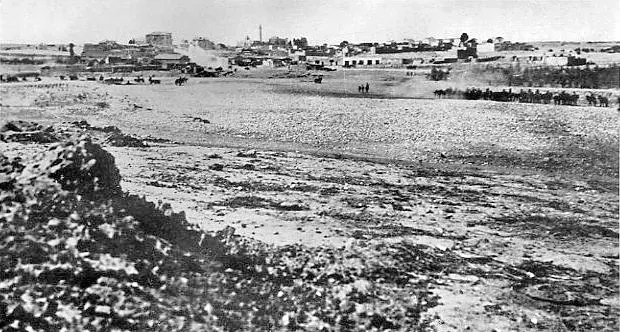
The town of Beersheba in 1917, the year it was captured.The town of Beersheba in 1917, the year it was captured.Image: AWM Credit reads: Lent by Brigadier General Wilson, CMG. · Public domain
world · Asia

The Light Horse charge at Beersheba

On 31 October 1917 British Empire forces attacked Beersheba, in southern Palestine, as part of the third battle of Gaza. By late afternoon the infantry had made little headway, and the town’s wells, vital for men and horses, were still in Ottoman hands. The 4th Australian Light Horse Brigade was then ordered to gallop straight at the town. The 4th and 12th Light Horse Regiments charged across open ground, overran the Ottoman trenches in less than an hour and took Beersheba and its water. Thirty-one light horsemen were killed. It was one of the last great cavalry charges in history, and it opened the way to breaking the Ottoman line.

Source: Australian War Memorial: Attack on Beersheba ↗
1918
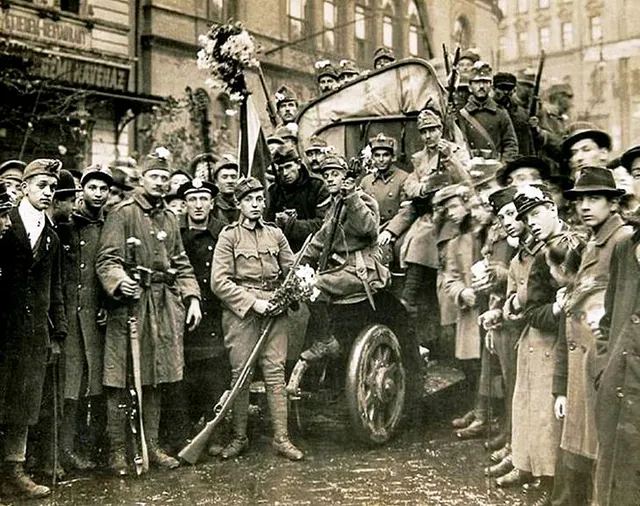
Participants in the Hungarian revolution, photographed on 31 October 1918.Participants in the Hungarian revolution, photographed on 31 October 1918.Image: hu:User:Mazarin07 · Public domain
politics · Europe

The Aster Revolution in Budapest

On 31 October 1918, as Austria-Hungary collapsed at the end of the First World War, soldiers and crowds wearing asters in their caps took control of Budapest, and King Charles appointed the liberal Count Mihály Károlyi prime minister. The new government promised to end the fighting and declared Hungary’s independence from Austria. Hungary was proclaimed a republic in November, with Károlyi as its provisional president.

Source: 1914-1918-online, International Encyclopedia of the First World War: Post-war turmoil and violence (Hungary) ↗
1941
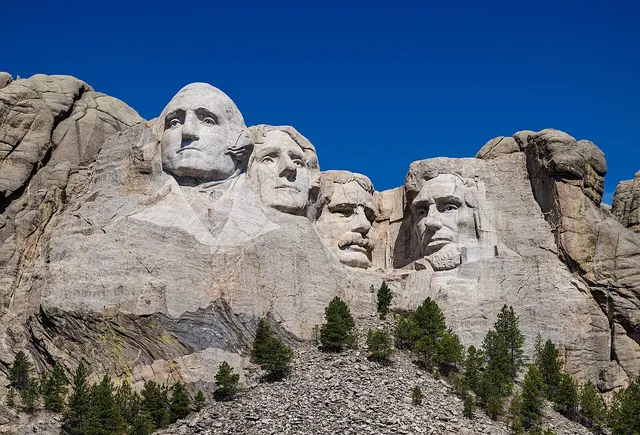
Mount Rushmore National Memorial, South Dakota.Mount Rushmore National Memorial, South Dakota.Image: Thomas Wolf, www.foto-tw.de · CC BY-SA 3.0
culture · Americas

Work on Mount Rushmore comes to an end

Carving on Mount Rushmore, in the Black Hills of South Dakota, ended on 31 October 1941, fourteen years after it began. The sculptor Gutzon Borglum had died earlier that year, and his son Lincoln carried on until the money ran out. The faces of George Washington, Thomas Jefferson, Theodore Roosevelt and Abraham Lincoln were blasted and drilled out of the granite by hundreds of local workers, many of them miners. The project cost nearly $990,000, most of it from federal funds.

Source: National Park Service: Carving history, Mount Rushmore ↗
1956
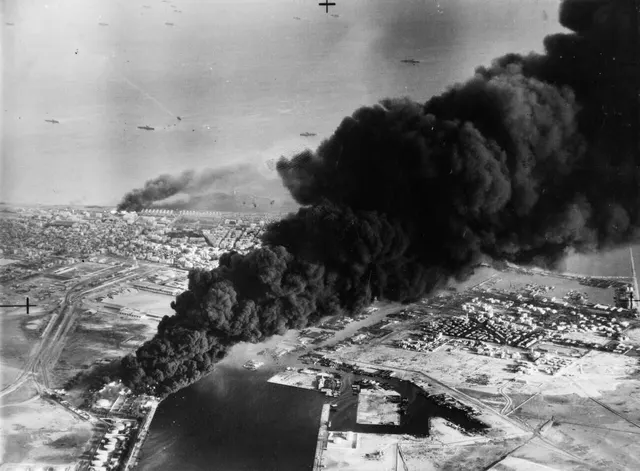
Smoke rises from oil tanks at Port Said during the Anglo-French landings of 5 November 1956.Smoke rises from oil tanks at Port Said during the Anglo-French landings of 5 November 1956.Image: Fleet Air Arm official photographer · Public domain
world · Africa

Britain and France begin bombing Egypt

On 31 October 1956, two days after Israel invaded Sinai, British and French aircraft began bombing Egyptian airfields and military targets. Valiant and Canberra bombers flew from Cyprus and Malta, while carrier aircraft attacked troops and vehicles. It was the opening of Operation Musketeer, meant to take back the Suez Canal, which President Nasser had nationalised in July. The attack had been agreed in secret with Israel at Sèvres a week before. It brought fierce opposition from the United States and the United Nations, and within weeks Britain and France were forced to withdraw, a turning point in the end of their empires.

Source: Imperial War Museums: Operation Musketeer in photographs ↗
1984
Indira Gandhi in March 1977.Indira Gandhi in March 1977.Image: Anefo · CC0
politics · Asia

Indira Gandhi is assassinated

On the morning of 31 October 1984 India’s prime minister, Indira Gandhi, was shot by two of her own Sikh bodyguards in the garden of her residence at 1 Safdarjung Road, New Delhi. The killing was in retaliation for Operation Blue Star, the army assault she had ordered in June that year on militants inside the Golden Temple at Amritsar, Sikhism’s holiest shrine. Her son Rajiv Gandhi succeeded her as prime minister. Her death was followed by days of violence against Sikhs in which more than a thousand people were killed.

Source: Encyclopaedia Britannica: Why was Indira Gandhi assassinated? ↗
1992
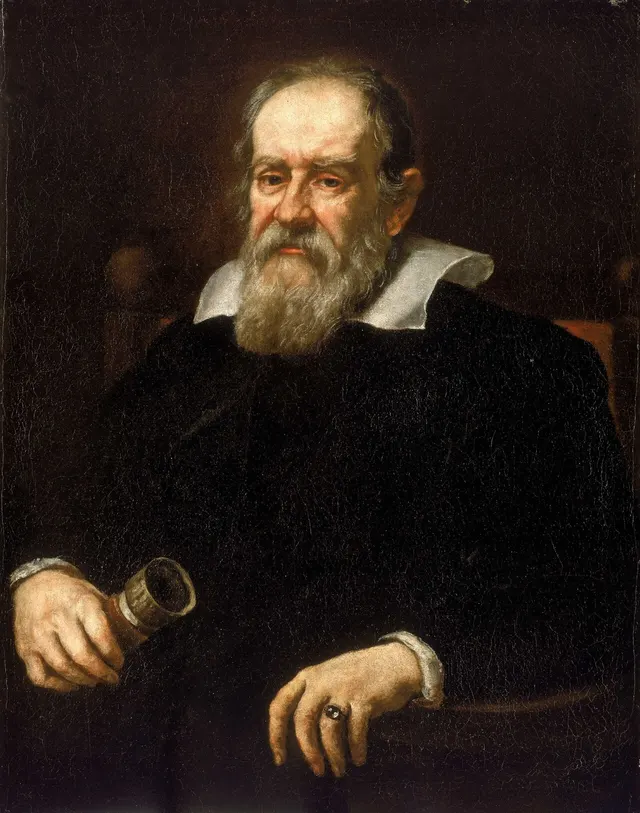
Galileo Galilei in old age, portrait of about 1640 attributed to Justus Sustermans.Galileo Galilei in old age, portrait of about 1640 attributed to Justus Sustermans.Image: Justus Sustermans · Public domain
science · Europe

The Pope closes the Galileo case

On 31 October 1992 Pope John Paul II addressed the Pontifical Academy of Sciences on the case of Galileo Galilei, condemned by the Inquisition in 1633 for teaching that the Earth moves round the Sun. He acknowledged that the theologians who judged Galileo had been wrong, and said the case had fed the mistaken idea that science and faith are opposed, a ‘sad misunderstanding’ that now belonged to the past.

Source: Pontifical Academy of Sciences: address of John Paul II, 31 October 1992 ↗
VI
2000 TO TODAY

Modern Day

The events of recent decades that have already become part of the historical record.

2011
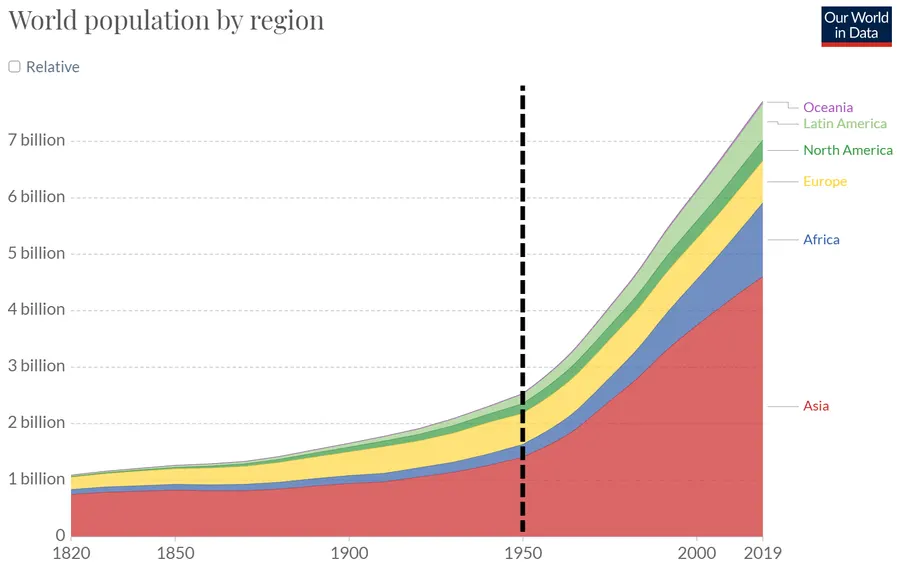
World population by region since 1820, in a chart from Our World in Data.World population by region since 1820, in a chart from Our World in Data.Image: Max Roser, Hannah Ritchie, and Esteban Ortiz-Ospina · CC BY 4.0
science · Global

The world reaches seven billion people

The United Nations chose 31 October 2011 as the day the world’s population reached seven billion, the date given by its official projections. The six-billion mark had been passed only in 1998. UN leaders used the day to call for action on food, water, health and the rights of women in a more crowded world.

Source: United Nations Population Fund: World population to reach 7 billion on 31 October ↗
WHY THESE MOMENTS?

Significance before volume

This page is not the longest possible list of events. It is a chronological journey through 31 October, where each entry is chosen for historical significance, human interest and reliability.

Facts are checked against authoritative museums, archives, universities and reference works. Where sources disagree, the page says so.

EXPLORED THE DEEPER STORY?

Return to the highlights of 31 October

Discover the lighter side of the date with famous birthdays, culture, firsts and lives remembered.

Explore This Day →
← PREVIOUS DAY30 October
HISTORY & TIMELINE31 October
NEXT DAY →1 November