HISTORY & TIMELINE
30 October

A journey through
30 October in history

From a battle on the banks of the Río Salado in 1340 to a bridge joining Europe and Asia in 1973, 30 October has seen wars ended, empires reformed and nations tested at the ballot box. This timeline follows the date across more than six centuries.

JUMP THROUGH TIME
II
THE MIDDLE AGES

Medieval History

Kingdoms, conflict, faith, power and the changing medieval world.

1340
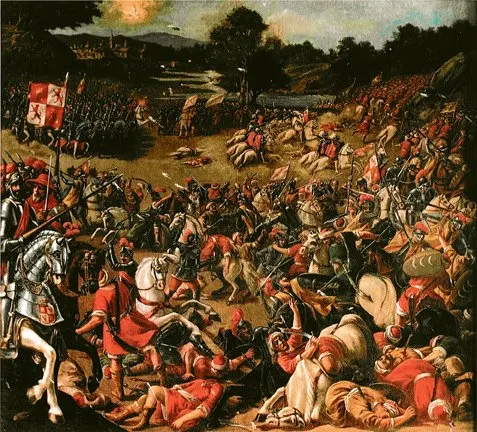
The Battle of Río Salado, painted by an unknown artist in the seventeenth century.The Battle of Río Salado, painted by an unknown artist in the seventeenth century.Image: Unknown artistUnknown artist · Public domain
world · Europe

The Battle of Río Salado

On 30 October 1340 (Julian calendar) the armies of Alfonso XI of Castile and Afonso IV of Portugal defeated the forces of the Marinid sultan Abu al-Hasan of Morocco by the Salado river near Tarifa. The Marinids had destroyed the Castilian fleet in the Strait of Gibraltar and crossed into Spain; after the defeat they withdrew to Africa. It was the last major attempt by a North African power to invade the Iberian Peninsula.

Source: Encyclopaedia Britannica: Battle of Río Salado ↗
V
THE TWENTIETH CENTURY

The 1900s

War and peace, technological leaps, social change, politics, sport and popular culture.

1905
Ilya Repin's painting 17 October 1905, of crowds celebrating the manifesto.Ilya Repin’s painting 17 October 1905, of crowds celebrating the manifesto.Image: Ilya Repin · Public domain
politics · Europe

Nicholas II issues the October Manifesto

On 30 October 1905, 17 October under the Old Style calendar then used in Russia, Tsar Nicholas II issued a manifesto drafted by Sergei Witte. Facing a general strike and revolution, he promised an elected legislature, the Duma, and basic civil liberties including freedom of speech, assembly and conscience. It ended unlimited autocracy in Russia, and it split the opposition enough for the revolution to be put down.

Source: Encyclopaedia Britannica: October Manifesto ↗
1918
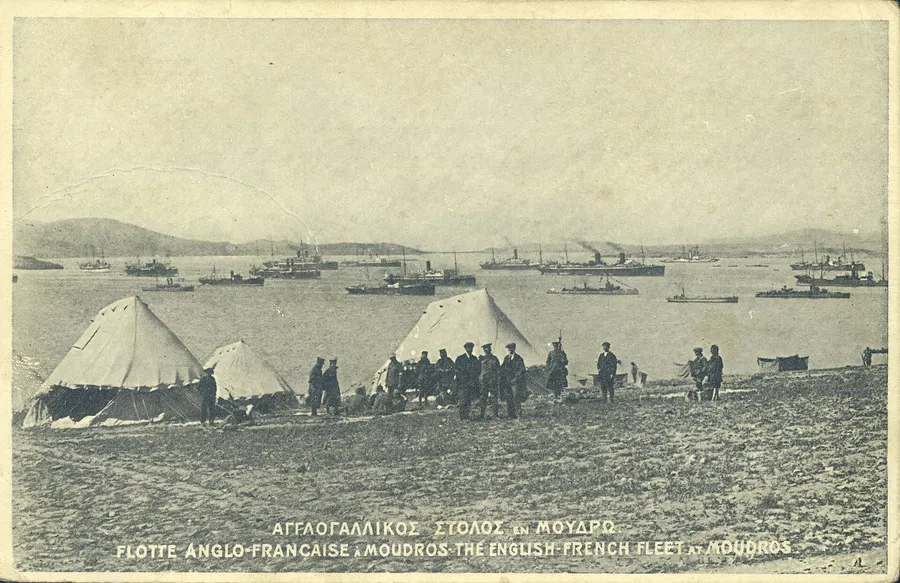
The British and French fleet at Mudros, on a Greek postcard of about 1918.The British and French fleet at Mudros, on a Greek postcard of about 1918.Image: The postcard was published by Aspiotis in c. 1918. · Public domain
politics · Asia

The Ottoman Empire signs the Armistice of Mudros

On 30 October 1918 representatives of the Ottoman Empire and of Great Britain, acting for the Allies, signed an armistice on board the battleship HMS Agamemnon, anchored in the harbour of Mudros on the Aegean island of Lemnos. It took the Ottomans out of the First World War. The terms were severe. The Ottomans had to open the Dardanelles and the Bosphorus to Allied ships, demobilise their army, surrender their remaining garrisons in Arabia, Syria and Mesopotamia, and let the Allies occupy any strategic point they chose. Within five years the empire that had lasted six centuries was gone.

Source: Encyclopaedia Britannica: Armistice of Mudros ↗
1938
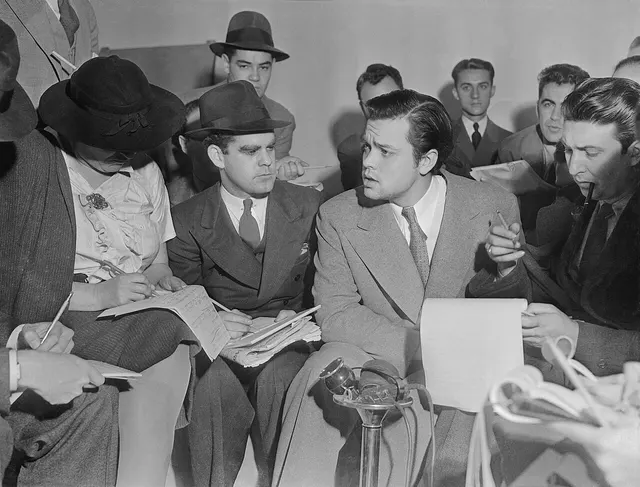
Orson Welles meets reporters after the broadcast, 31 October 1938.Orson Welles meets reporters after the broadcast, 31 October 1938.Image: Acme News Photos · Public domain
culture · Americas

The War of the Worlds goes out on the radio

On the evening of 30 October 1938 Orson Welles and the Mercury Theatre on the Air broadcast an adaptation of H. G. Wells’s novel The War of the Worlds on CBS radio. Instead of telling the story straight, they presented it as a run of breaking news bulletins interrupting a dance-music programme, reporting a Martian landing in New Jersey. Some listeners took the bulletins for real and rang police stations and newspapers, and the press reported a nationwide panic. How many people were actually fooled is still disputed. The broadcast made the 23-year-old Welles famous overnight.

Source: Library of Congress, National Recording Registry: The War of the Worlds (1938) ↗
1947
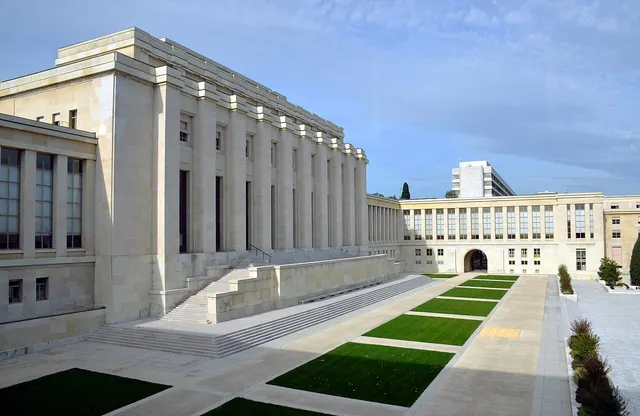
The Palais des Nations in Geneva, where the agreement was signed.The Palais des Nations in Geneva, where the agreement was signed.Image: Vassil · CC0
world · Global

Twenty-three nations sign the GATT

On 30 October 1947, at the Palais des Nations in Geneva, 23 countries signed the Final Act of the General Agreement on Tariffs and Trade. Twelve were developed economies and eleven developing ones. The agreement bound them to the tariff cuts negotiated that year and to rules meant to stop those cuts being undone by other barriers. Its central idea was trade without discrimination: each member would open its market to all the others on equal terms. The GATT took effect on 1 January 1948 and served as the framework for world trade for almost half a century, until the World Trade Organization replaced it in 1995.

Source: World Trade Organization: GATT 1947 and the grueling task of signing ↗
1961
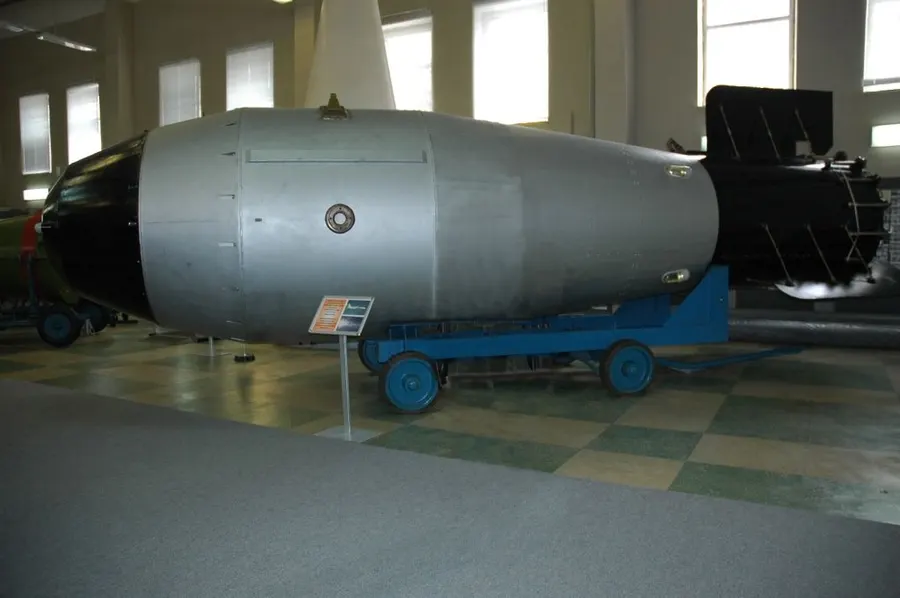
The casing of an RDS-202, a bomb of the same type as the Tsar Bomba, at the atomic weapons museum in Sarov.The casing of an RDS-202, a bomb of the same type as the Tsar Bomba, at the atomic weapons museum in Sarov.Image: User:Croquant with modifications by User:Hex · CC BY-SA 3.0
science · Europe

The Tsar Bomba, the largest explosion ever made

On 30 October 1961 the Soviet Union exploded a thermonuclear bomb about 4 km above Novaya Zemlya, an island in the Arctic Ocean. With a yield of about 50 megatons, the power of roughly 3,800 Hiroshima bombs, it remains the most powerful explosion ever caused by human beings. The mushroom cloud rose more than 60 km and the flash was seen about 1,000 km away. The design, on which Andrei Sakharov worked, could have reached 100 megatons, but the yield was halved to limit fallout. Too large to be a practical weapon, it was a demonstration of strength at a tense moment of the Cold War.

Source: Encyclopaedia Britannica: Tsar Bomba ↗
1973
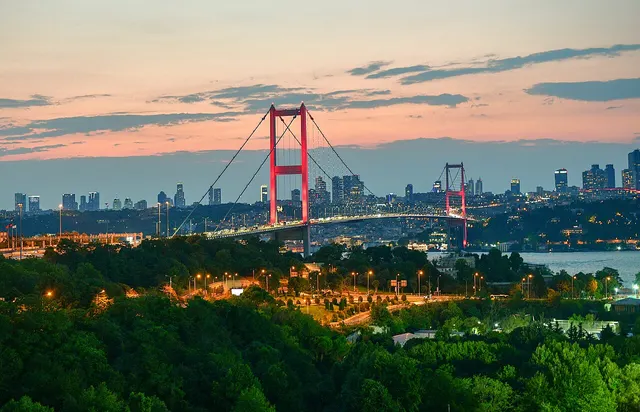
The Bosphorus Bridge in Istanbul today.The Bosphorus Bridge in Istanbul today.Image: Huseyinakbas63 · CC BY 4.0
world · Asia

The first bridge over the Bosphorus opens

The Bosphorus Bridge in Istanbul was opened by President Fahri Korutürk on 30 October 1973, in the week of the Turkish Republic’s fiftieth anniversary. With a main span of 1,074 metres it was among the longest suspension bridges in the world, and it was the first bridge across the strait that divides Europe from Asia. It was renamed the 15 July Martyrs Bridge in 2016.

Source: Anadolu Agency: in the Republic’s 50th year the Bosphorus Bridge joined two continents ↗
1974
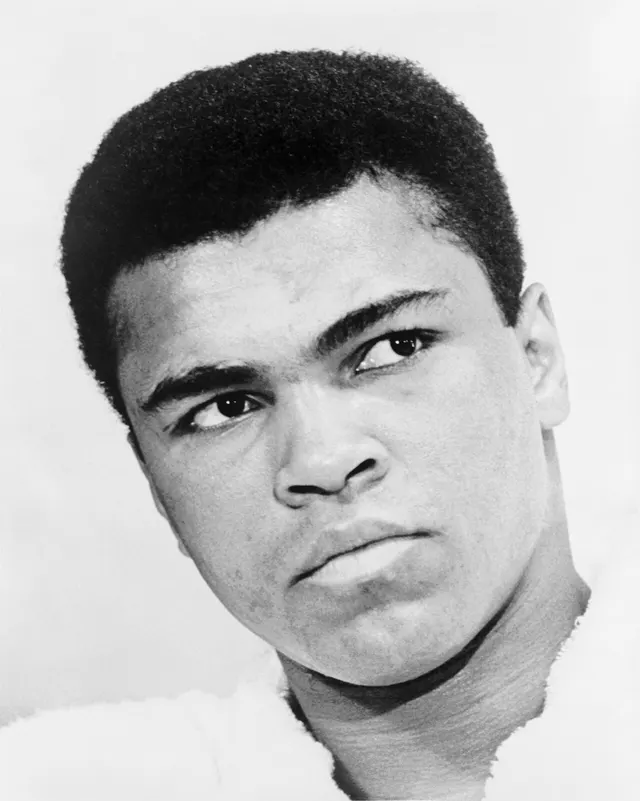
Muhammad Ali in 1967.Muhammad Ali in 1967.Image: Ira Rosenberg · Public domain
sport · Africa

The Rumble in the Jungle

On 30 October 1974 Muhammad Ali fought the heavyweight champion George Foreman in Kinshasa, Zaire, now the Democratic Republic of the Congo. The bout was arranged by the promoter Don King and paid for by Zaire’s ruler, Mobutu Sese Seko. About 60,000 people watched in the stadium and perhaps a billion on television. Foreman was the clear favourite. Ali spent round after round leaning on the ropes and letting Foreman punch himself out, the tactic he called rope-a-dope, then knocked him out in the eighth round to win back the world title.

Source: Encyclopaedia Britannica: Rumble in the Jungle ↗
1980
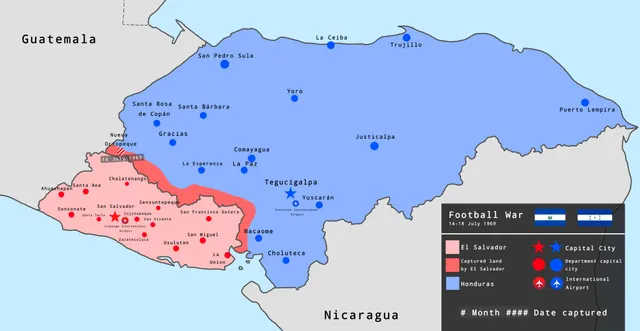
Map of the 1969 war between El Salvador and Honduras.Map of the 1969 war between El Salvador and Honduras.Image: JuanJose1969 · CC BY-SA 4.0
politics · Americas

El Salvador and Honduras make peace

On 30 October 1980, in Lima, El Salvador and Honduras signed a General Peace Treaty formally ending the differences left by their brief war of July 1969, known as the Football War. Both sides renounced the use or threat of force. The treaty set out a way to settle the disputed border, which the two countries later took to the International Court of Justice.

Source: United Nations Peacemaker: General Peace Treaty between El Salvador and Honduras ↗
1995
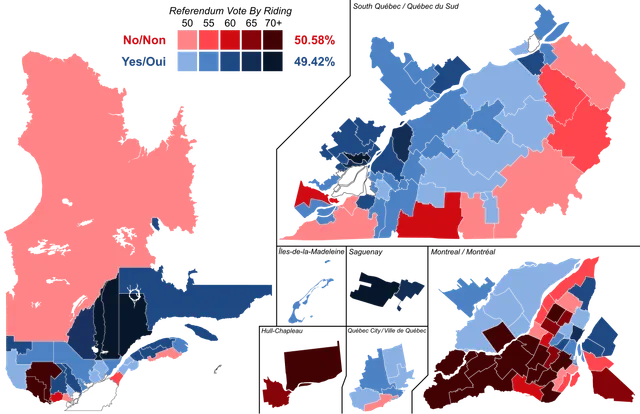
Results of the 1995 referendum by electoral district.Results of the 1995 referendum by electoral district.Image: DrRandomFactor · CC BY-SA 4.0
politics · Americas

Quebec votes by a whisker to stay in Canada

On 30 October 1995 voters in Quebec were asked whether the province should become sovereign. The No side won with 50.58 per cent of the vote against 49.42 per cent for Yes, a margin of fewer than 55,000 votes. Turnout was 93.5 per cent, one of the highest ever recorded in Canada. It was the province’s second referendum on the question, after one in 1980, and far closer. The result was followed by arguments over rejected ballots and the voters’ list, and it shaped Canadian politics for years afterwards.

Source: The Canadian Encyclopedia: Quebec Referendum (1995) ↗
WHY THESE MOMENTS?

Significance before volume

This page is not the longest possible list of events. It is a chronological journey through 30 October, where each entry is chosen for historical significance, human interest and reliability.

Facts are checked against authoritative museums, archives, universities and reference works. Where sources disagree, the page says so.

EXPLORED THE DEEPER STORY?

Return to the highlights of 30 October

Discover the lighter side of the date with famous birthdays, culture, firsts and lives remembered.

Explore This Day →
← PREVIOUS DAY29 October
HISTORY & TIMELINE30 October
NEXT DAY →31 October