
1799
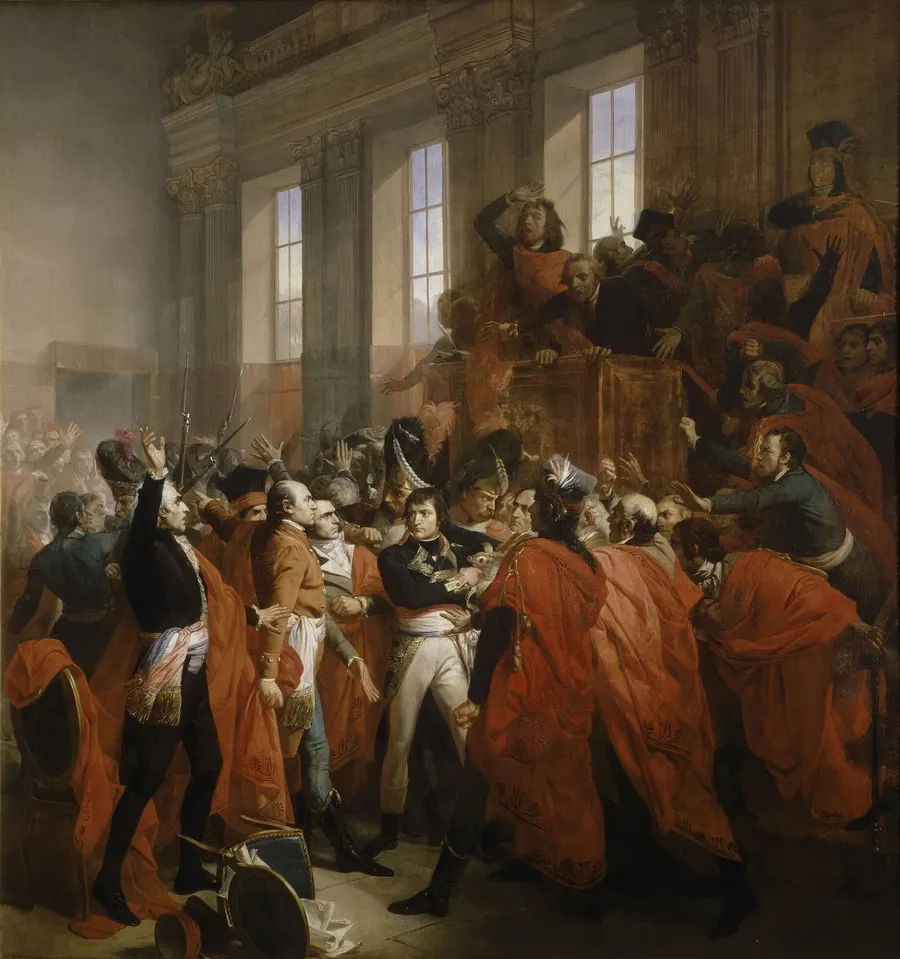 General Bonaparte in the Council of Five Hundred at Saint-Cloud, painted by François Bouchot.Image: François Bouchot · Public domain
politics · Europe
Napoleon’s coup of 18 Brumaire
On 18 Brumaire in the Year VIII of the French revolutionary calendar, 9 November 1799, the Council of Ancients in Paris, alarmed by rumours of a Jacobin plot, voted to move both chambers of the legislature to the palace of Saint-Cloud outside the city. It was the first step of a coup planned by the politician Emmanuel-Joseph Sieyès with General Napoleon Bonaparte, newly back from Egypt. The next day, surrounded by Bonaparte’s troops, the councils were forced to give way, and the government of the Directory was replaced by three consuls. Within weeks Bonaparte was First Consul and master of France, and the coup is often seen as the end of the French Revolution.
Source: Fondation Napoléon, napoleon.org: The coup d’état of 18 Brumaire An VIII (9 and 10 November 1799) ↗ The return of power to the emperor at Nijō Castle, painted by Murata Tanryō.Image:
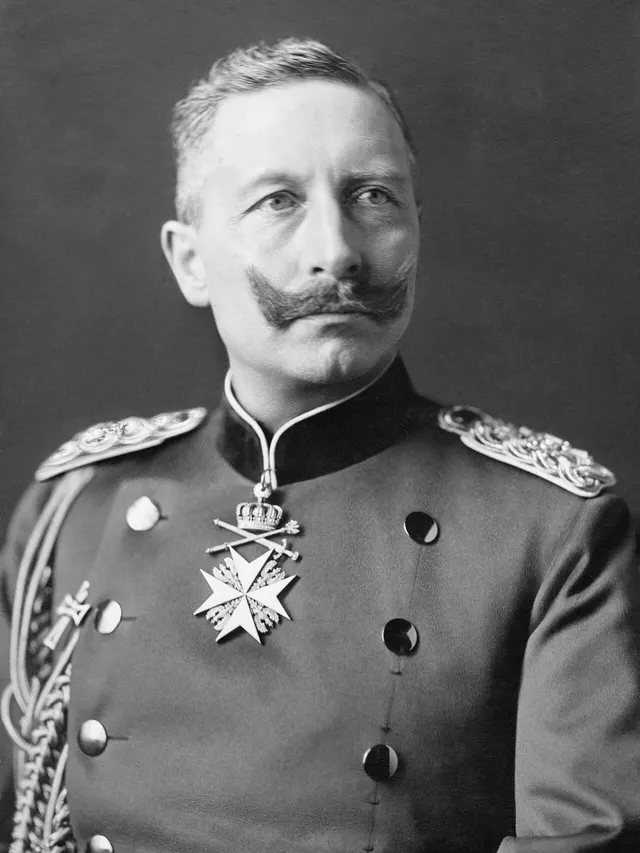 Kaiser Wilhelm II, from the studio of Thomas Heinrich Voigt.Image:
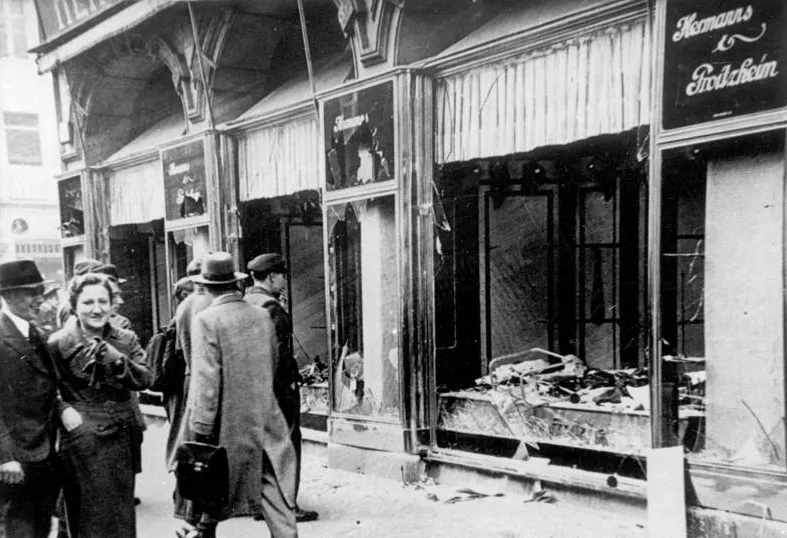 A Jewish-owned shop in Magdeburg wrecked during the pogrom of November 1938.Image:
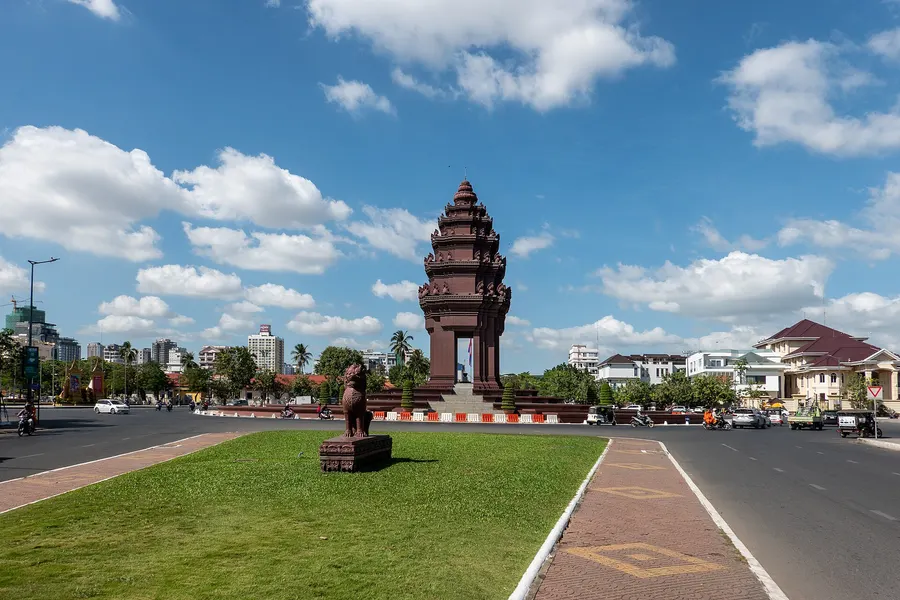 The Independence Monument in Phnom Penh, photographed in 2019.Image:
 The first Saturn V lifts off with Apollo 4 from the Kennedy Space Center, 9 November 1967.Image:
 Jann Wenner, the magazine’s founder, at the Texas Tribune Festival in Austin in 2022.Image:
 Garry Kasparov playing a simultaneous exhibition in Hamburg in 1985.Image:
 People climb on to the Berlin Wall as it opens, November 1989.Image:
 Nanda Devi, the highest mountain wholly within India, in Uttarakhand, 2013.Image: