HISTORY & TIMELINE
10 November

A journey through
10 November in history

From crusaders at the walls of Zara in 1202 to the fall of Bulgaria’s communist leader in 1989, 10 November has seen sieges, shipwrecks and changes of power. This timeline follows the date across almost eight centuries.

JUMP THROUGH TIME
II
THE MIDDLE AGES

Medieval History

Kingdoms, conflict, faith, power and the changing medieval world.

1202
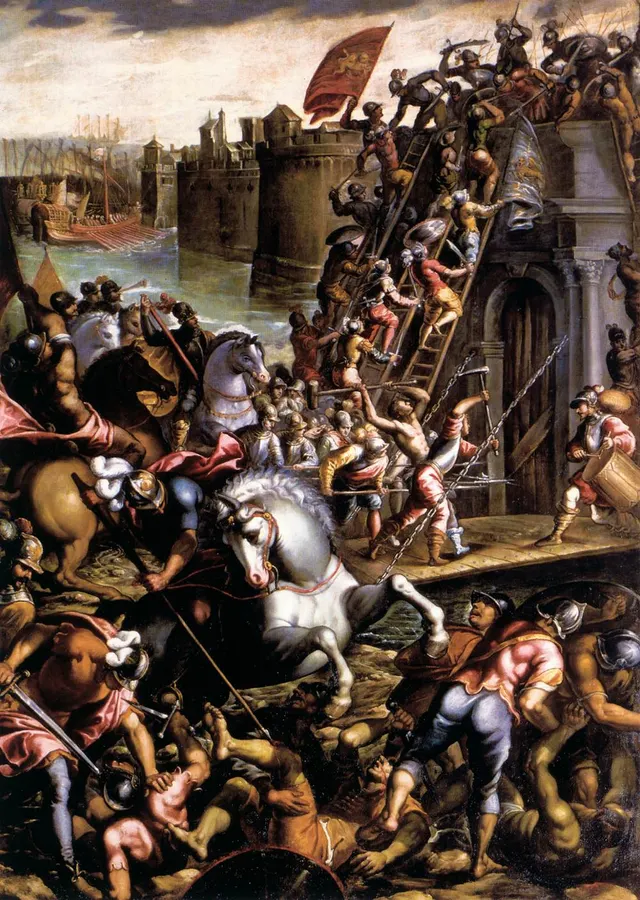
The siege of Zara (Zadar), in a painting by Andrea Vicentino.The siege of Zara (Zadar), in a painting by Andrea Vicentino.Image: Andrea Vicentino · Public domain
world · Europe

The Fourth Crusade reaches Zara

Unable to pay Venice for the fleet that was to carry them to the Holy Land, the leaders of the Fourth Crusade agreed to help the Venetians win back Zara (Zadar), a Christian city on the Dalmatian coast that had rebelled against them. The fleet arrived before the city on 10 November 1202 (Julian calendar), in spite of letters from Pope Innocent III forbidding the attack, and Zara fell within days. It was the first attack by a crusading army on a Christian city, and the same army went on to sack Constantinople in 1204.

Source: Encyclopaedia Britannica: Siege of Zara ↗
1444
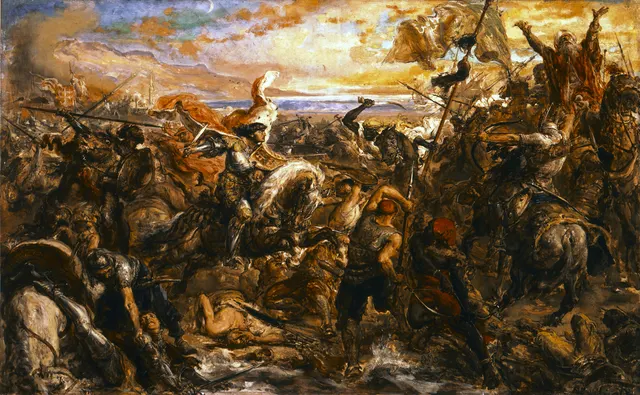
The Battle of Varna, painted by Jan Matejko in 1879.The Battle of Varna, painted by Jan Matejko in 1879.Image: Jan Matejko · Public domain
world · Europe

A crusade ends at the Battle of Varna

In 1444 Władysław III, king of Poland and Hungary, broke a truce with the Ottoman sultan Murad II and led a crusading army into the Balkans with the Hungarian general János Hunyadi. On 10 November 1444, near Varna on the Black Sea coast of present-day Bulgaria, they met a much larger Ottoman army. The young king led a charge on the sultan’s position, hoping to capture Murad, but was cut down by his elite guard, and the crusaders were routed. The defeat ended Western hopes of saving Constantinople, which fell to the Ottomans nine years later, and left the Balkans under Ottoman control.

Source: Encyclopaedia Britannica: Battle of Varna ↗
III
A CHANGING WORLD

Early Modern Era

Exploration, political change, scientific development and expanding global connections.

1775
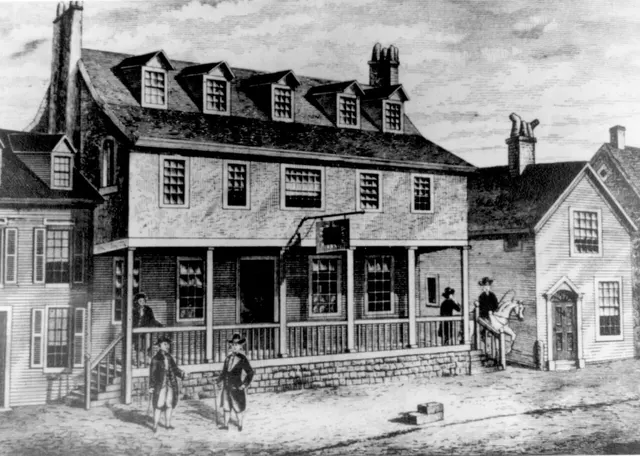
A sketch of Tun Tavern in Philadelphia.A sketch of Tun Tavern in Philadelphia.Image: Unknown · Public domain
world · Americas

Congress resolves to raise the Continental Marines

On 10 November 1775, early in the American War of Independence, the Continental Congress in Philadelphia resolved to raise two battalions of Marines to serve at sea. Recruiting is traditionally said to have begun at Tun Tavern in the city. The Continental Marines were disbanded after the war and the present Corps was created in 1798, but the United States Marine Corps still celebrates 10 November as its birthday.

Source: US National Archives, Founders Online: John Adams’s notes, 10 November 1775 ↗
V
THE TWENTIETH CENTURY

The 1900s

War and peace, technological leaps, social change, politics, sport and popular culture.

1928
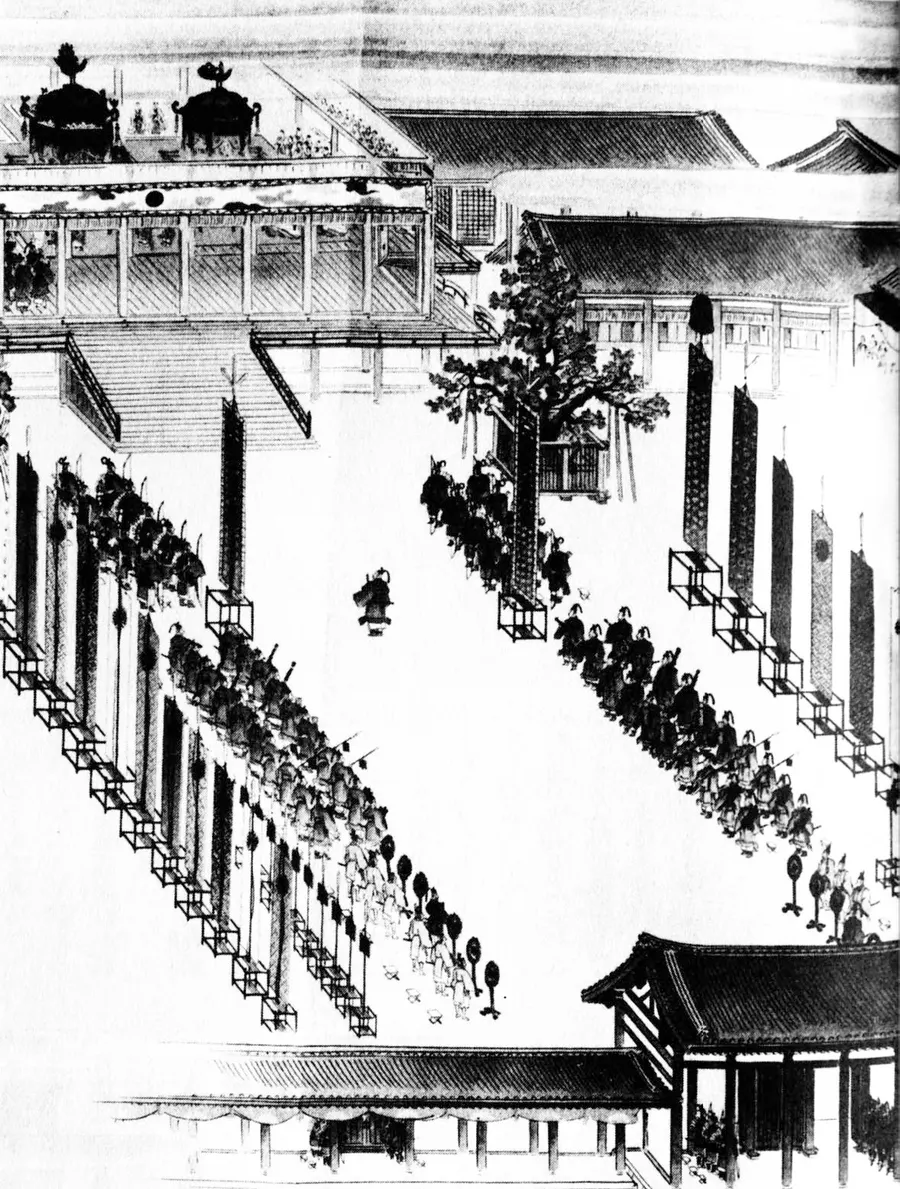
The enthronement ceremony at the Kyoto Imperial Palace, drawn for the Osaka Asahi newspaper, 1928.The enthronement ceremony at the Kyoto Imperial Palace, drawn for the Osaka Asahi newspaper, 1928.Image: 大阪朝日新聞 · Public domain
politics · Asia

Hirohito is enthroned in Kyoto

Hirohito had become emperor of Japan when his father, Emperor Taishō, died on 25 December 1926, but the formal ceremonies of accession took place almost two years later in the old capital, Kyoto. On 10 November 1928, in the Shishinden hall of the Kyoto Imperial Palace, he proclaimed his enthronement in ancient court robes before princes, officials and foreign guests. Newsreel companies from around the world filmed the ceremonies. Hirohito’s reign, known in Japan as Shōwa, lasted until his death in 1989, the longest of any Japanese emperor, through war, defeat and Japan’s rise as an economic power.

Source: Imperial Household Agency: Emperor Shōwa and Empress Kōjun ↗
1938
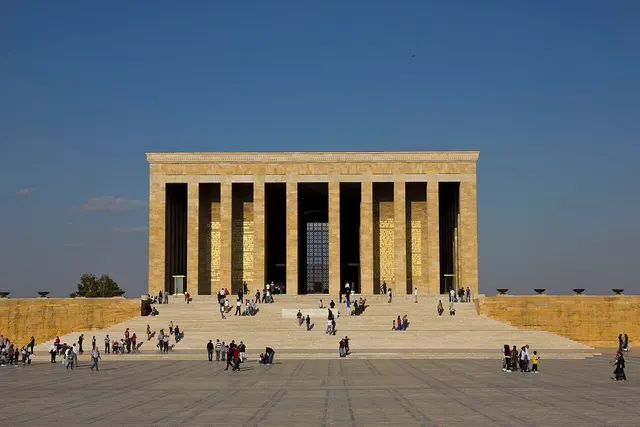
Anıtkabir, Atatürk's mausoleum in Ankara, photographed in 2011.Anıtkabir, Atatürk’s mausoleum in Ankara, photographed in 2011.Image: William Neuheisel from DC, US · CC BY 2.0
politics · Asia

Turkey mourns Atatürk

Mustafa Kemal Atatürk, the soldier who founded the Republic of Turkey in 1923 and led it as president through sweeping reforms of law, alphabet, dress and religion’s place in public life, died at the Dolmabahçe Palace in Istanbul at 9.05 a.m. on 10 November 1938. He was 57, and had been ill with cirrhosis of the liver. His death brought enormous public grief. His body was carried from Istanbul to Ankara, and in 1953 it was placed in Anıtkabir, the mausoleum built for him above the capital. Every year at 9.05 a.m. on 10 November, Turkey stops for a minute’s silence in his memory.

Source: Encyclopaedia Britannica: Kemal Atatürk ↗
1969
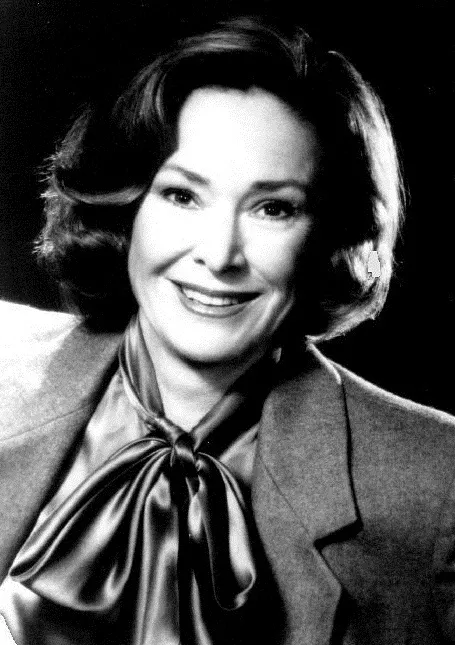
Joan Ganz Cooney, who created Sesame Street, photographed in 1985.Joan Ganz Cooney, who created Sesame Street, photographed in 1985.Image: Unknown authorUnknown author · Public domain
culture · Americas

Sesame Street goes on the air

On 10 November 1969 American children watched the first episode of Sesame Street, ‘Gordon Introduces Sally to Sesame Street’, on National Educational Television, the network that became PBS the following year. It was made by the Children’s Television Workshop, founded by the television producer Joan Ganz Cooney and the psychologist Lloyd Morrisett to use television to prepare young children, especially poorer ones, for school. With Jim Henson’s Muppets, city streets and lessons in letters and numbers, the programme was a success from the start. It has been on the air ever since.

Source: Encyclopaedia Britannica: Sesame Street ↗
1975
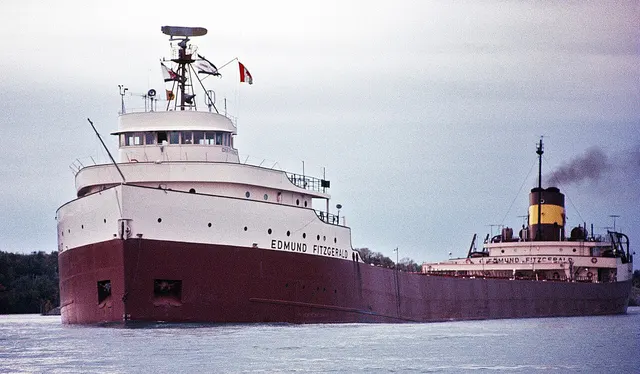
The Edmund Fitzgerald in 1971.The Edmund Fitzgerald in 1971.Image: Greenmars · CC BY-SA 3.0
world · Americas

The Edmund Fitzgerald is lost on Lake Superior

On 10 November 1975 the ore carrier Edmund Fitzgerald, 729 feet long and loaded with more than 26,000 tons of iron-ore pellets, sank in a violent storm on Lake Superior about 17 miles from Whitefish Point, Michigan. All 29 men aboard were lost, and no distress call was sent. The US Coast Guard concluded that water flooding the cargo hold through leaking hatch covers was the most likely cause. Gordon Lightfoot’s song of 1976 made it the best known of all Great Lakes shipwrecks.

Source: Great Lakes Shipwreck Historical Society: Edmund Fitzgerald ↗
1983
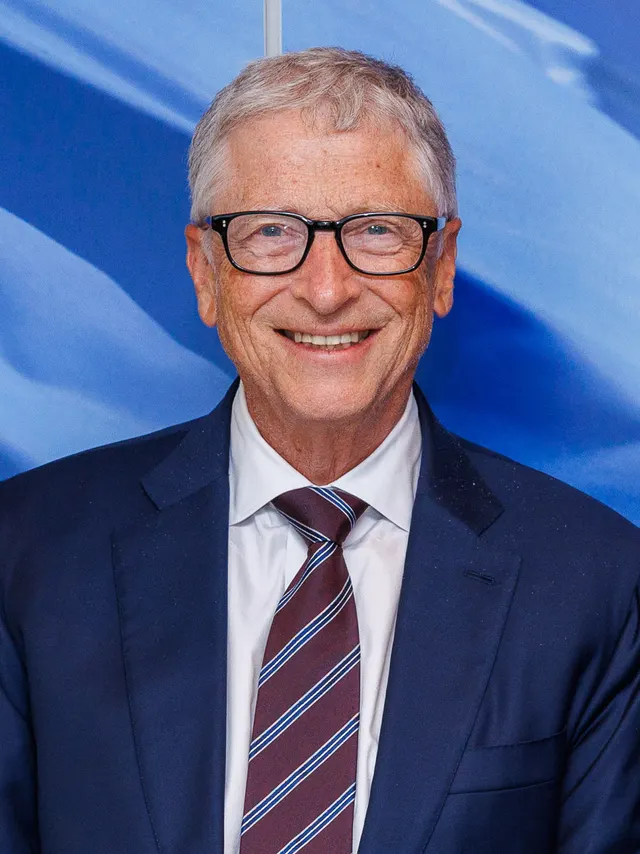
Bill Gates, co-founder of Microsoft, photographed in 2025.Bill Gates, co-founder of Microsoft, photographed in 2025.Image: Bogdan Hoyaux / European Union · CC BY 4.0
science · Americas

Microsoft announces Windows

On 10 November 1983 Bill Gates announced Microsoft Windows, a graphical environment for IBM-compatible personal computers that would let users work in windows on the screen with a mouse instead of typing commands. It was Microsoft’s answer to the graphical interfaces of machines such as Apple’s Lisa. After several delays, Windows 1.0 went on sale in November 1985. Later versions became the most widely used operating system for personal computers in the world.

Source: Microsoft: First version of Windows announced ↗
1989
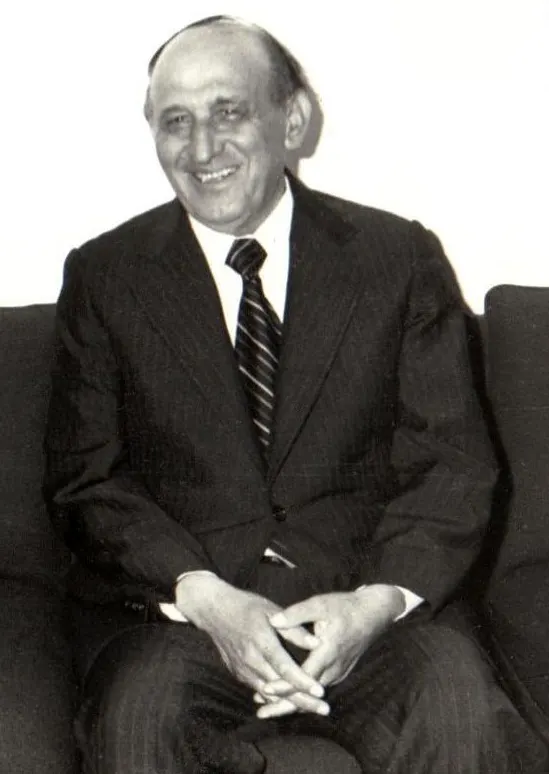
Todor Zhivkov.Todor Zhivkov.Image: Extracted by Fredy.00 · CC BY-SA 3.0 cz
politics · Europe

Bulgaria’s Todor Zhivkov is forced out

On 10 November 1989, the day after the Berlin Wall opened, the Central Committee of the Bulgarian Communist Party accepted the resignation of Todor Zhivkov, who had ruled the country for 35 years, longer than any other leader in the Soviet bloc. His removal was organised by the foreign minister Petar Mladenov, who replaced him. The date is remembered in Bulgaria as the start of its transition to democracy.

Source: Bulgarian National Radio: 10 November 1989, the start of Bulgaria’s transition to democracy ↗
1995
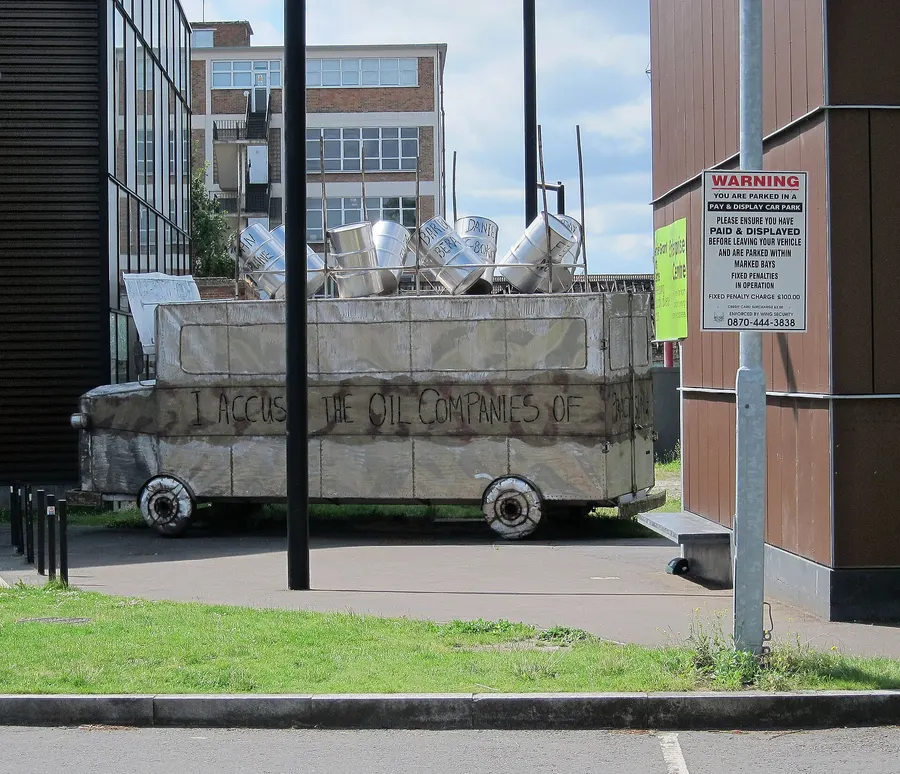
A steel sculpture of a Nigerian bus in north London, a memorial to Ken Saro-Wiwa, photographed in 2011.A steel sculpture of a Nigerian bus in north London, a memorial to Ken Saro-Wiwa, photographed in 2011.Image: Alan Stanton · CC BY-SA 2.0
politics · Africa

Nigeria executes Ken Saro-Wiwa and the Ogoni Nine

The Nigerian writer Ken Saro-Wiwa led the Movement for the Survival of the Ogoni People, which campaigned against the military government and the oil companies it blamed for the pollution of the Ogoni lands in the Niger Delta. In 1994 he and others were arrested after four Ogoni chiefs were killed, and a special military tribunal sentenced them to death in a trial condemned around the world as unfair. On 10 November 1995 Saro-Wiwa and eight fellow activists, the Ogoni Nine, were hanged in Port Harcourt. The next day the Commonwealth suspended Nigeria’s membership, and the United States and the European Union imposed sanctions.

Source: Encyclopaedia Britannica: Ken Saro-Wiwa ↗
WHY THESE MOMENTS?

Significance before volume

This page is not the longest possible list of events. It is a chronological journey through 10 November, where each entry is chosen for historical significance, human interest and reliability.

Facts are checked against authoritative museums, archives, universities and reference works. Where sources disagree, the page says so.

EXPLORED THE DEEPER STORY?

Return to the highlights of 10 November

Discover the lighter side of the date with famous birthdays, culture, firsts and lives remembered.

Explore This Day →
← PREVIOUS DAY9 November
HISTORY & TIMELINE10 November
NEXT DAY →11 November