
HISTORY & TIMELINE
6 November

A journey through
6 November in history

From the death of Gustavus Adolphus at Lützen in 1632 to Australia’s vote on becoming a republic in 1999, 6 November has seen battles, marches and ballots that changed nations. This timeline follows the date across almost four centuries.

JUMP THROUGH TIME
III
A CHANGING WORLD

Early Modern Era

Exploration, political change, scientific development and expanding global connections.

1632
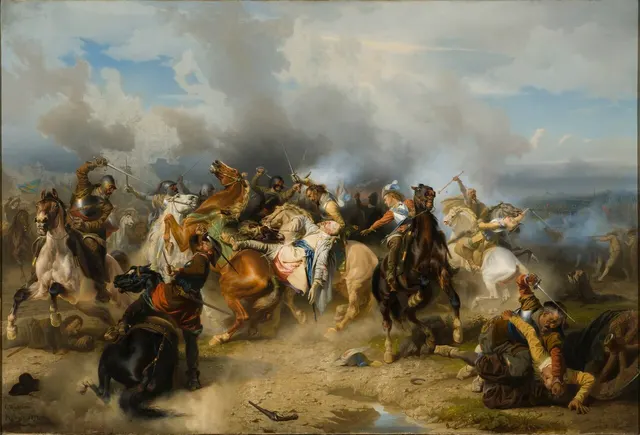
The death of Gustavus Adolphus at Lützen, painted by Carl Wahlbom in 1855.The death of Gustavus Adolphus at Lützen, painted by Carl Wahlbom in 1855.Image: Carl Wahlbom · Public domain
world · Europe

Gustavus Adolphus falls at Lützen

On 6 November 1632 (Julian calendar; 16 November in the Gregorian), near Lützen in Saxony, the Swedish army of King Gustavus Adolphus fought the imperial forces of Albrecht von Wallenstein in one of the great battles of the Thirty Years’ War. In fog and the smoke of the burning town, the king was hit several times and killed. The Swedes held the field, but lost the ruler who had made Sweden a great European power. Sweden still marks 6 November as Gustavus Adolphus Day.

Source: Encyclopaedia Britannica: Battle of Lützen ↗
IV
THE NINETEENTH CENTURY

The 1800s

Industry, empire, invention, reform and a century of enormous transformation.

1860
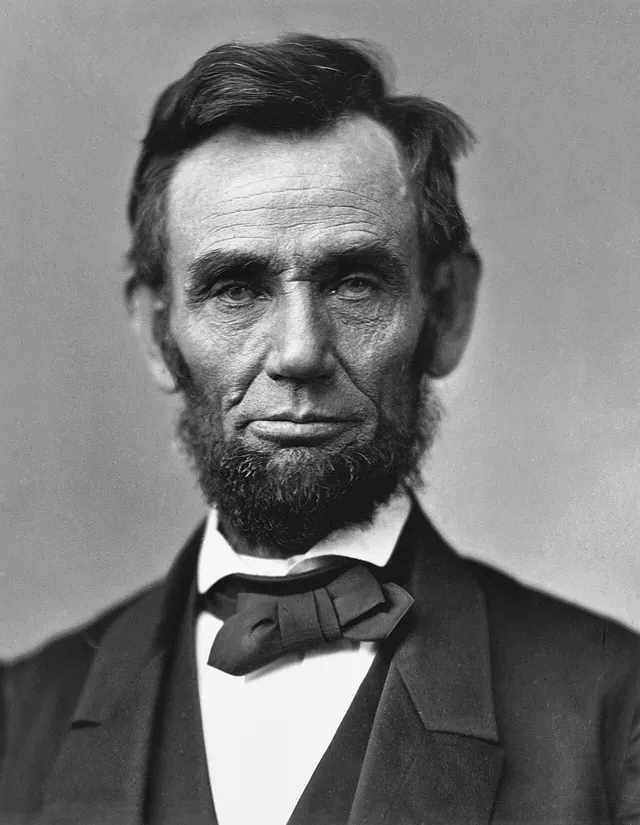
Abraham Lincoln, photographed by Alexander Gardner in November 1863.Abraham Lincoln, photographed by Alexander Gardner in November 1863.Image: Alexander Gardner · Public domain
politics · Americas

Abraham Lincoln is elected president

On 6 November 1860 Americans went to the polls in a country split over slavery. The Republican Abraham Lincoln faced three rivals: the Southern Democrat John C. Breckinridge, the Democrat Stephen A. Douglas and John Bell of the Constitutional Union party. Lincoln won less than 40 per cent of the popular vote but a clear majority of 180 electoral votes, carried almost entirely by the Northern states. Before he took office in March 1861, seven Southern states had seceded from the Union, and within weeks of his inauguration the Civil War began.

Source: US National Park Service: The elections of 1860 and 1864 ↗
1869
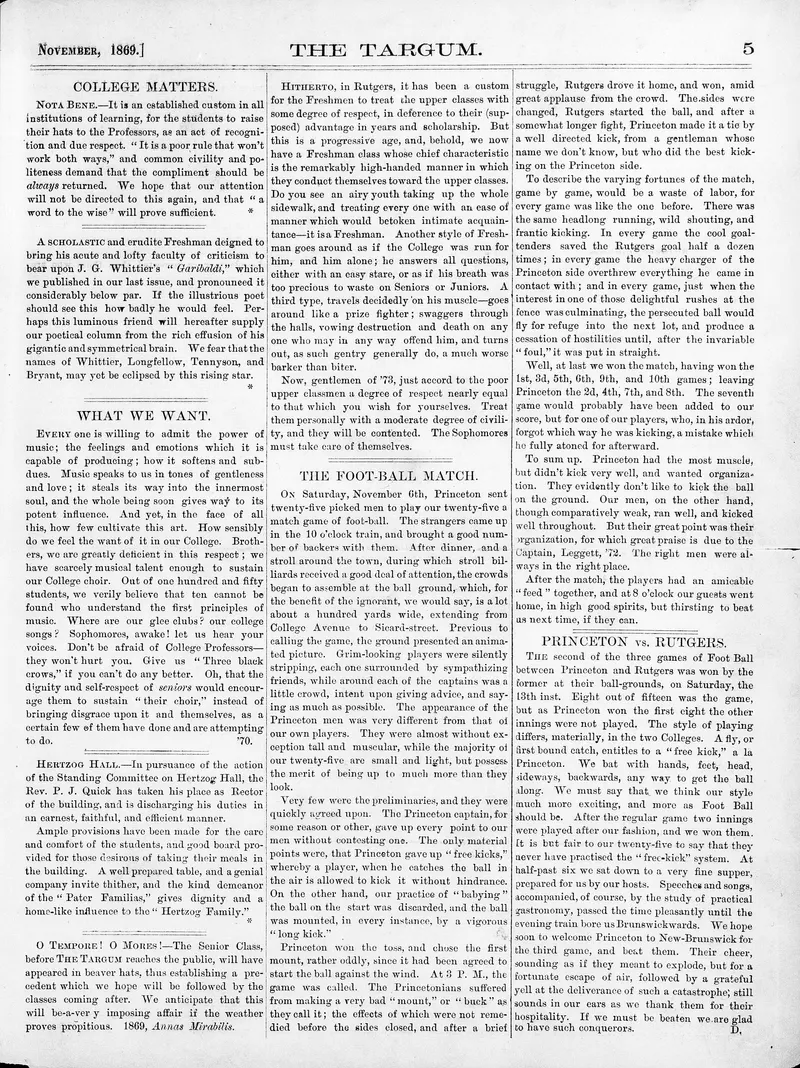
The Rutgers student newspaper, the Targum, reports the first game, November 1869.The Rutgers student newspaper, the Targum, reports the first game, November 1869.Image: Unknown authorUnknown author · Public domain
sport · Americas

The first game of college football

On 6 November 1869, on a field in New Brunswick, New Jersey, the students of Rutgers played those of Princeton, then the College of New Jersey, in what is counted as the first game of intercollegiate football. About a hundred people watched as the players threw off their coats, waistcoats and hats. The game looked more like soccer than modern American football: twenty-five men a side, a round rubber ball, and the first team to score six goals the winner. Rutgers won six to four. Princeton won the rematch a week later.

Source: Rutgers University: The birthplace of college football ↗
V
THE TWENTIETH CENTURY

The 1900s

War and peace, technological leaps, social change, politics, sport and popular culture.

1913
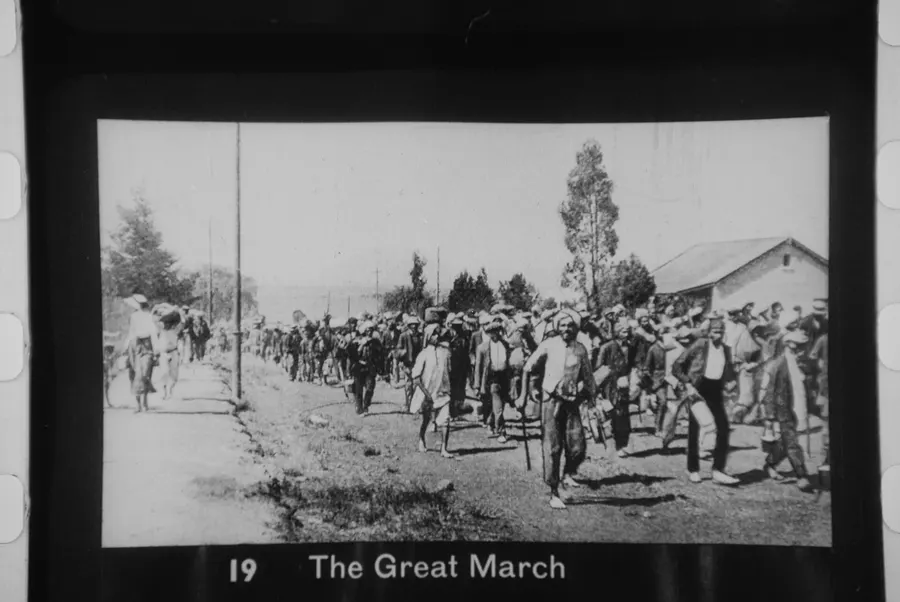
Marchers on the Great March in South Africa, 1913.Marchers on the Great March in South Africa, 1913.Image: Unknown authorUnknown author · Public domain
politics · Africa

Gandhi leads the Great March into the Transvaal

On 6 November 1913 Mohandas Gandhi led more than two thousand striking Indian mine workers, with 127 women and 57 children, out of Natal and across the border into the Transvaal, deliberately breaking the law that barred Indians from moving between the provinces. They were protesting against the Immigrants Regulation Act and a heavy tax on former indentured labourers. Gandhi was arrested, released on bail, rejoined the marchers and was arrested again. The mass arrests and strikes that followed forced the government to negotiate, and the campaign became the model for the non-violent resistance he later led in India.

Source: South African History Online: Gandhi is arrested as he leads a march of Indian miners in South Africa ↗
1917
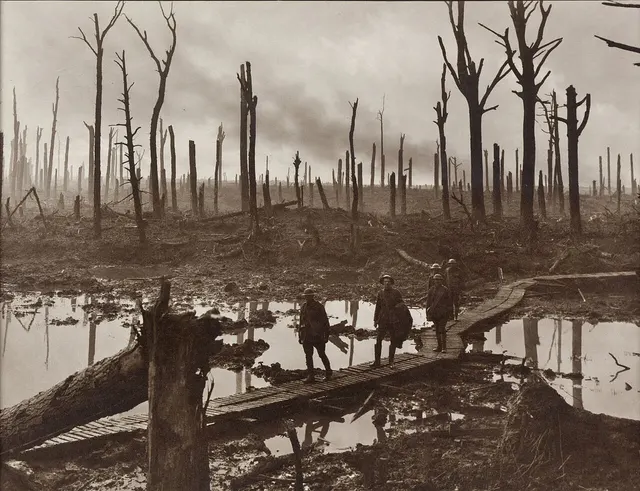
Australian gunners on a duckboard track through Chateau Wood near Ypres, 29 October 1917, photographed by Frank Hurley.Australian gunners on a duckboard track through Chateau Wood near Ypres, 29 October 1917, photographed by Frank Hurley.Image: Frank Hurley · Public domain
world · Europe

Canadian troops take Passchendaele

At 6 o’clock on the morning of 6 November 1917 the Canadian Corps attacked the ruined Belgian village of Passchendaele, the last objective of the long British offensive at Ypres. Men of the 27th (City of Winnipeg) Battalion fought through its cellars and dugouts, and by mid-afternoon the village was taken. Between late October and 11 November the Canadians lost more than 12,000 men killed, wounded or missing, about 4,000 of them dead.

Source: Veterans Affairs Canada: Battle of Passchendaele ↗
1962
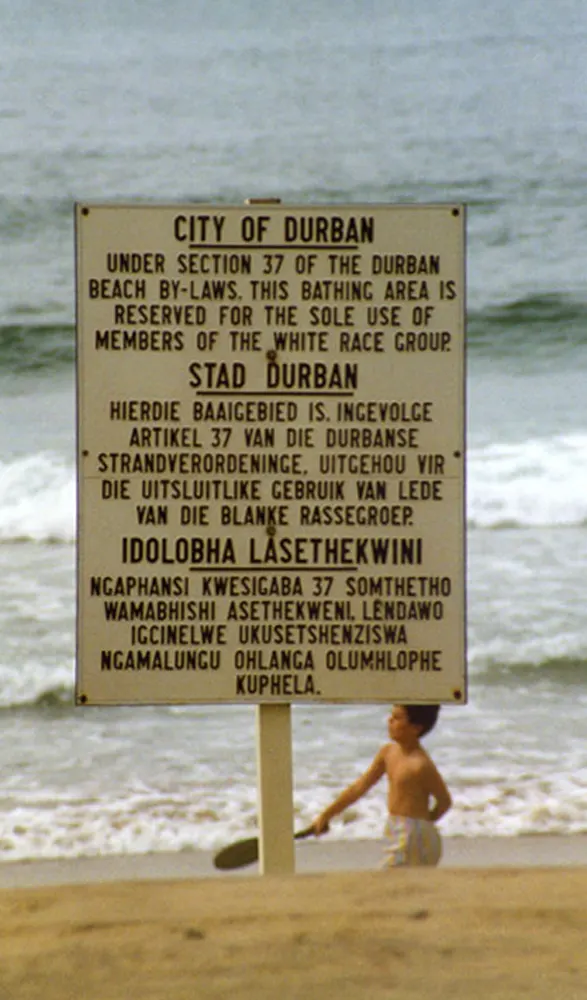
A sign on a Durban beach reserving it for white people, photographed in 1989.A sign on a Durban beach reserving it for white people, photographed in 1989.Image: Guinnog · CC BY-SA 3.0
politics · Africa

The UN calls for sanctions against apartheid

On 6 November 1962 the United Nations General Assembly adopted resolution 1761, condemning South Africa’s policy of apartheid and asking member states to impose sanctions on the country, including breaking off diplomatic relations and boycotting its goods. It also asked the Security Council to consider expelling South Africa from the UN. The resolution set up the Special Committee against Apartheid, which kept South Africa’s racial policies under review for the next three decades. It was not binding, but it marked the start of the international campaign that isolated the apartheid state.

Source: United Nations Digital Library: The policies of apartheid of the Government of the Republic of South Africa, resolution 1761 (XVII) ↗
1975
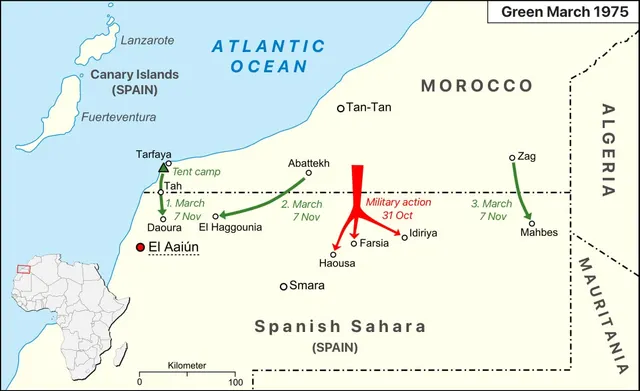
Map of the Green March into what was then Spanish Sahara, 1975.Map of the Green March into what was then Spanish Sahara, 1975.Image: Flaggingwill · CC BY-SA 4.0
politics · Africa

The Green March into Spanish Sahara

On 6 November 1975, at the call of King Hassan II, some 350,000 unarmed Moroccans began to march south from Tarfaya into Spanish Sahara, the colony Morocco claimed as its own. The United Nations Security Council deplored the march the same day. Within days Spain agreed to hand the territory over to Morocco and Mauritania. The Polisario Front, which sought independence for the territory, fought on, and Western Sahara’s status remains disputed; the United Nations still lists it as a non-self-governing territory.

Source: Kingdom of Morocco, Maroc.ma: HM the King’s speech on the 39th anniversary of the Green March ↗
1999
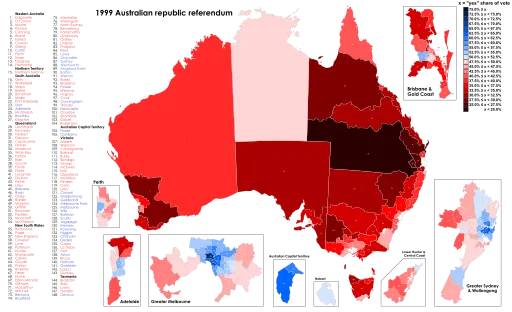
How each state and territory voted in the 1999 republic referendum.How each state and territory voted in the 1999 republic referendum.Image: Brythones, derivative of MrPenguin29 and Geoking66 · CC BY-SA 4.0
politics · Oceania

Australia votes against becoming a republic

On 6 November 1999 Australians voted in a referendum on replacing the Queen and the Governor-General with a president chosen by a two-thirds majority of Parliament. The proposal was defeated by more than a million votes and failed in every state; only the Australian Capital Territory voted Yes. A second question, on a new preamble to the constitution, was also rejected.

Source: Australian Electoral Commission: 1999 referendum report and statistics ↗
WHY THESE MOMENTS?

Significance before volume

This page is not the longest possible list of events. It is a chronological journey through 6 November, where each entry is chosen for historical significance, human interest and reliability.

Facts are checked against authoritative museums, archives, universities and reference works. Where sources disagree, the page says so.

EXPLORED THE DEEPER STORY?

Return to the highlights of 6 November

Discover the lighter side of the date with famous birthdays, culture, firsts and lives remembered.

Explore This Day →
← PREVIOUS DAY5 November
HISTORY & TIMELINE6 November
NEXT DAY →7 November