
HISTORY & TIMELINE
18 November

A journey through
18 November in history

From the Council of Clermont in 1095 to a spacecraft bound for Mars in 2013, 18 November has seen crusades called, nations founded and clocks reset. This timeline follows the date across more than nine centuries.

II
THE MIDDLE AGES

Medieval History

Kingdoms, conflict, faith, power and the changing medieval world.

1095
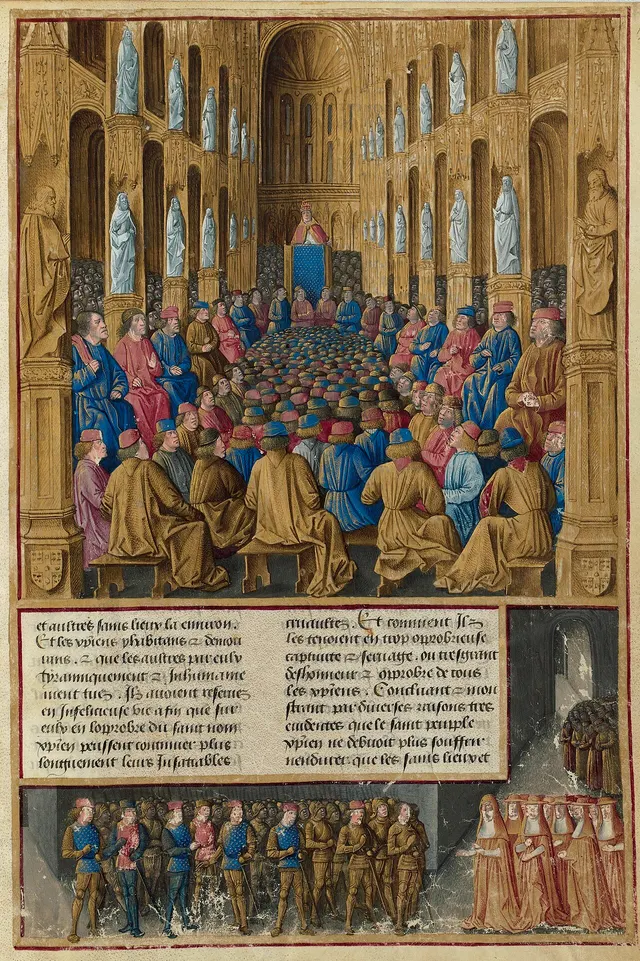
Pope Urban II preaching at the Council of Clermont, in a manuscript painted about 1474.Pope Urban II preaching at the Council of Clermont, in a manuscript painted about 1474.Image: Jean Colombe · Public domain
world · Europe

The Council of Clermont opens

Pope Urban II opened a church council at Clermont in central France on 18 November 1095, attended mostly by bishops from southern France. Much of its business was church reform, but envoys of the Byzantine emperor Alexius I had asked the West for help against the Seljuk Turks. Towards the end of the council Urban preached to a great crowd, urging Western knights to go to the aid of Eastern Christians and free Jerusalem, and promising those who went the remission of their penance. The crowd is said to have answered ‘God wills it’, and the First Crusade was launched.

Source: Encyclopaedia Britannica: Council of Clermont ↗
III
A CHANGING WORLD

Early Modern Era

Exploration, political change, scientific development and expanding global connections.

1626
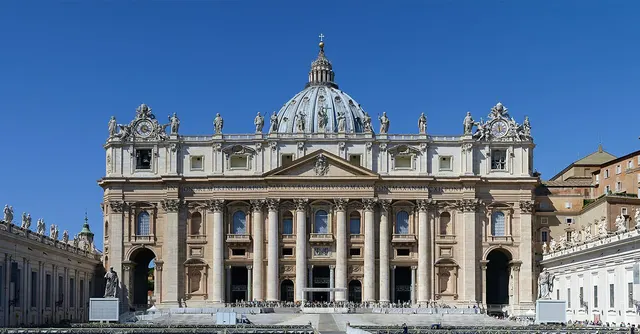
The facade of St Peter's Basilica, 2015.The facade of St Peter’s Basilica, 2015.Image: Alvesgaspar · CC BY-SA 4.0
culture · Europe

The new St Peter’s Basilica is dedicated

Pope Urban VIII dedicated the new St Peter’s Basilica in Rome on 18 November 1626, 120 years after work had begun in 1506 to replace the old basilica built under Constantine. Bramante, Michelangelo, Carlo Maderno and others had shaped the vast church, and Gian Lorenzo Bernini would go on to add its great colonnaded square.

Source: St Peter’s Basilica (official website): When was St Peter’s Basilica built? ↗
IV
THE NINETEENTH CENTURY

The 1800s

Industry, empire, invention, reform and a century of enormous transformation.

1883
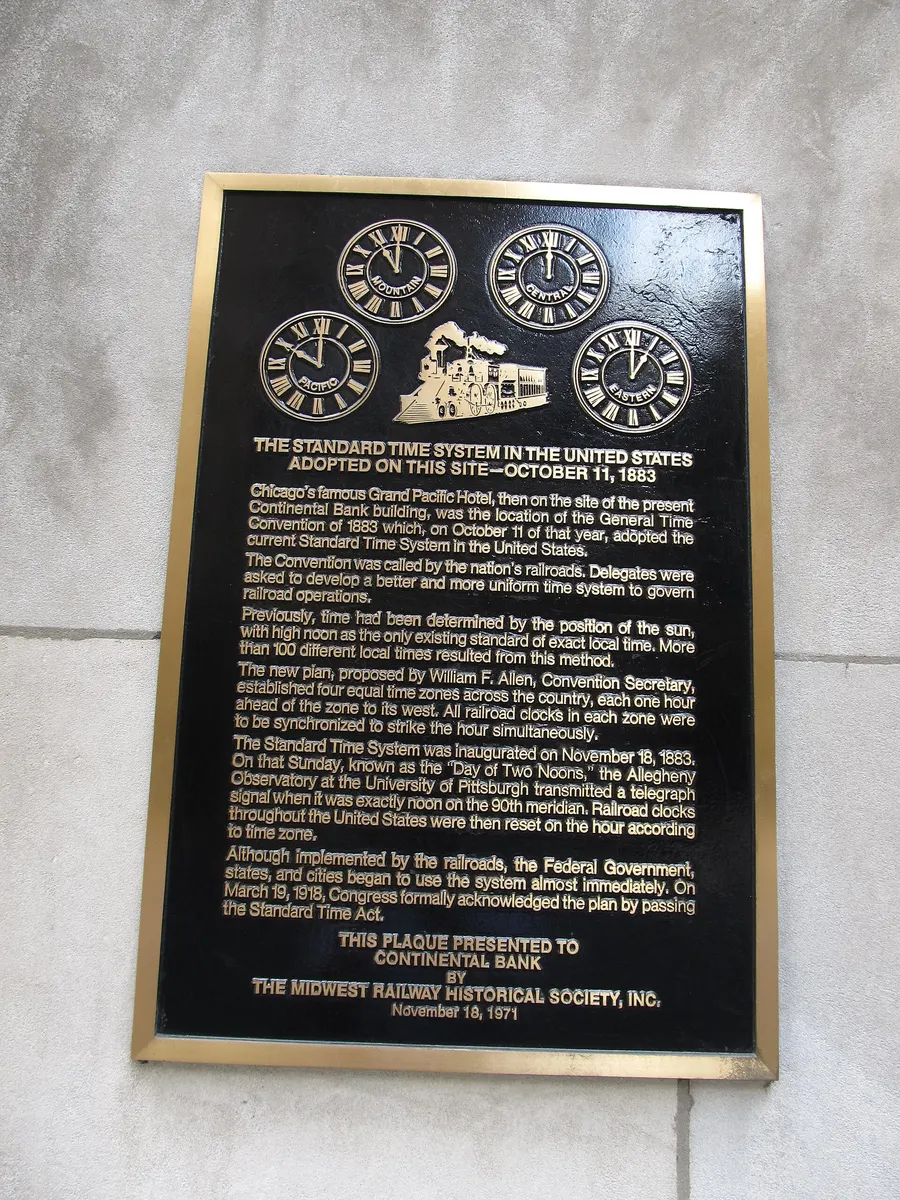
A plaque in Chicago marking where the railways agreed the standard time system in October 1883.A plaque in Chicago marking where the railways agreed the standard time system in October 1883.Image: Ken Lund from Reno, Nevada, USA · CC BY-SA 2.0
science · Americas

The day of two noons

Until 1883 North American towns kept their own local time, and the railways ran on dozens of different clocks. At noon on 18 November 1883 the railways of the United States and Canada switched to a new system of standard time zones, each an hour apart, devised by William F. Allen. In many cities clocks struck noon twice that day, once by the old local time and once by the new, and it became known as the ‘day of two noons’. Standard time was not written into American law until 1918.

Source: Library of Congress: The day of two noons ↗
V
THE TWENTIETH CENTURY

The 1900s

War and peace, technological leaps, social change, politics, sport and popular culture.

1903
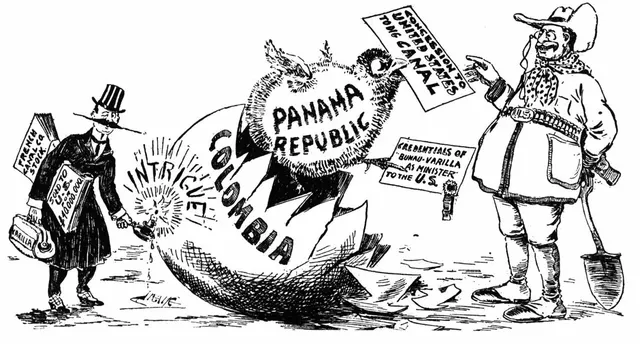
An American cartoon of 1903 on the Panama canal question.An American cartoon of 1903 on the Panama canal question.Image: unknown artist for New York Times · Public domain
politics · Americas

The Panama Canal treaty is signed

Two weeks after Panama broke away from Colombia with American support, the US Secretary of State John Hay and Philippe-Jean Bunau-Varilla signed a treaty in Washington on 18 November 1903. Bunau-Varilla, a French engineer acting for the new republic, signed only hours before a Panamanian delegation arrived. The treaty gave the United States, in perpetuity, control of a zone ten miles wide across the isthmus in which to build a canal, in return for $10 million and an annual payment. Panamanians resented it for decades, and it was replaced by the Torrijos-Carter treaties of 1977.

Source: US Office of the Historian: Building the Panama Canal, 1903-1914 ↗
1905
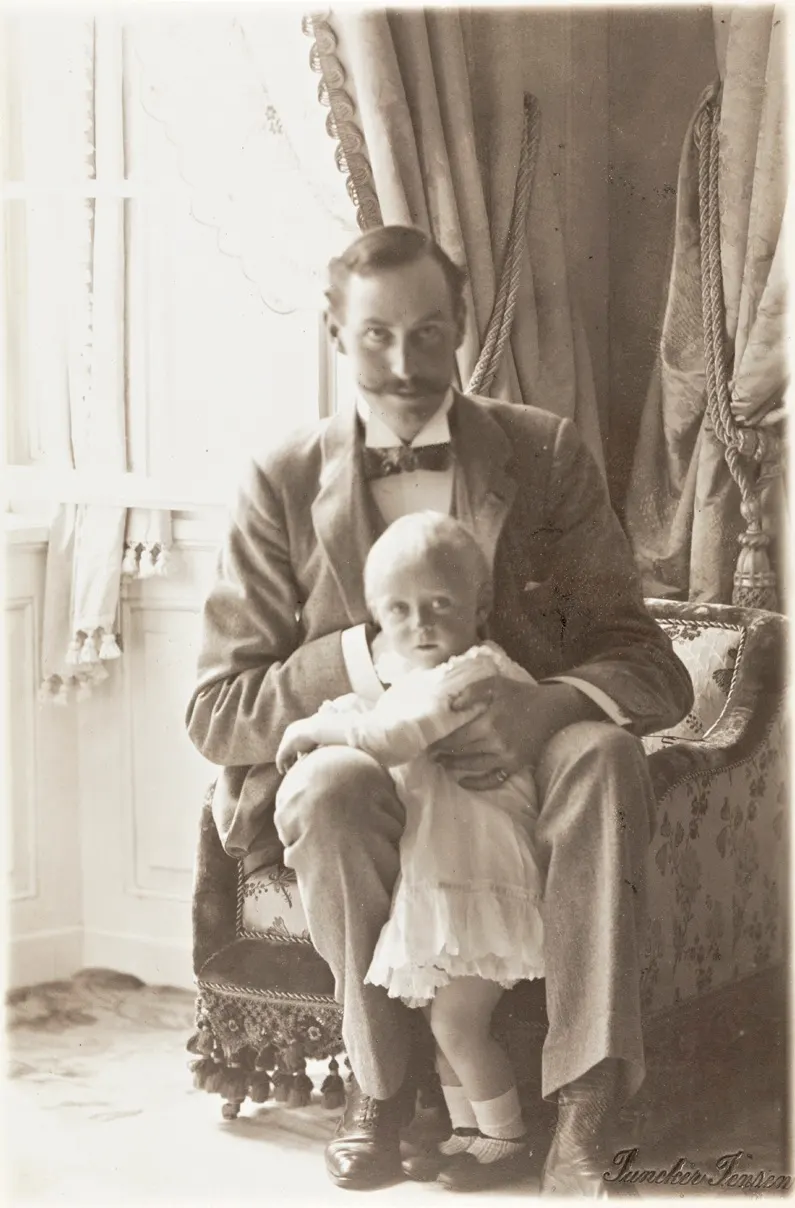
Haakon VII with his son, the future Olav V, in 1905.Haakon VII with his son, the future Olav V, in 1905.Image: Nasjonalbiblioteket · CC BY 2.0
politics · Europe

Norway chooses a Danish prince as king

Having ended its union with Sweden, Norway held a referendum on 12-13 November 1905 in which a large majority voted to keep a monarchy. On 18 November the Storting elected Prince Carl of Denmark as king, and he accepted by telegram, taking the old Norwegian royal name Haakon VII. He reigned for more than half a century and became a symbol of resistance during the German occupation.

Source: The Royal House of Norway: Election of a king ↗
1918
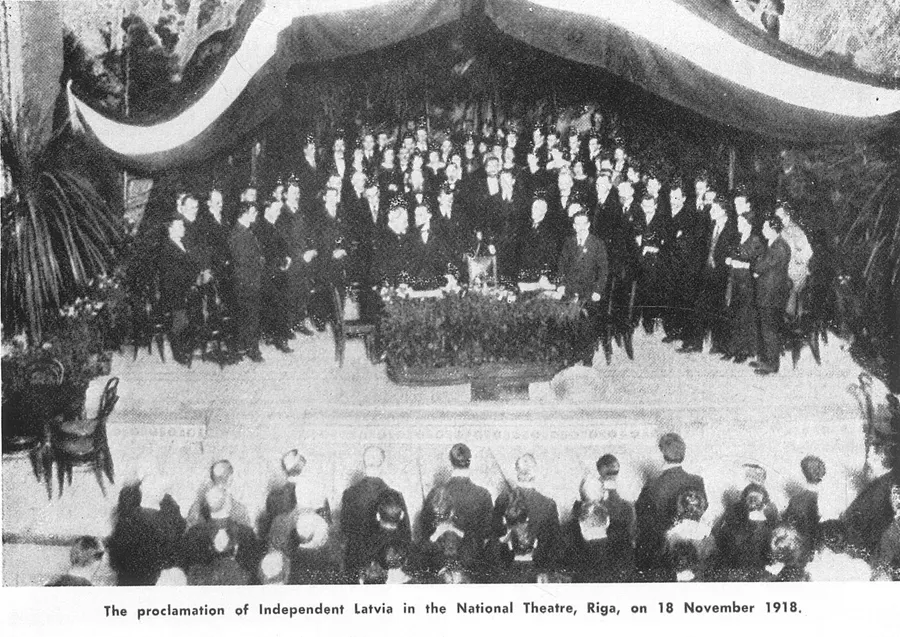
The proclamation of Latvia's independence in the National Theatre, Riga, 18 November 1918.The proclamation of Latvia’s independence in the National Theatre, Riga, 18 November 1918.Image: Saulite-a · CC0
politics · Europe

Latvia proclaims its independence

A week after the armistice that ended the First World War, the newly formed Latvian People’s Council met in the Second City Theatre in Riga, now the National Theatre, at 4.30 in the afternoon of 18 November 1918. It proclaimed Latvia an independent, democratic state and set up a provisional government under Kārlis Ulmanis. Independence had to be defended in a war against both Bolshevik and German forces that lasted until 1920. Latvia was occupied by the Soviet Union in 1940 and regained its freedom in 1991, and 18 November is still its national day.

Source: President of Latvia: History ↗
1928
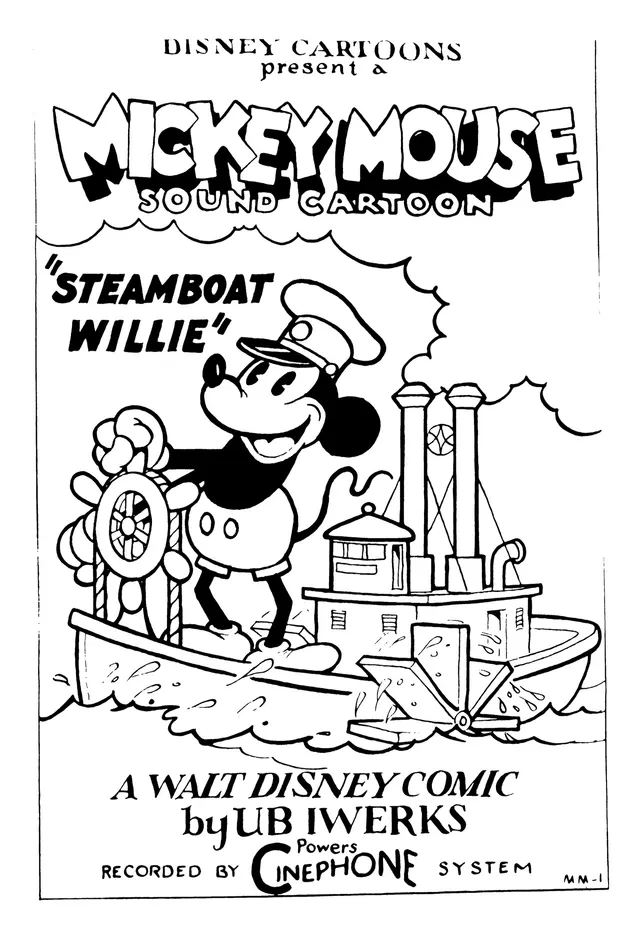
The original poster for Steamboat Willie, 1928.The original poster for Steamboat Willie, 1928.Image: Walt Disney / Ub Iwerks · Public domain
culture · Americas

Steamboat Willie introduces Mickey Mouse

Walt Disney’s Steamboat Willie opened at the Colony Theatre in New York on 18 November 1928. It was the first cartoon with a fully synchronised soundtrack, with music, sound effects and voices matched to the action, and it made a star of Mickey Mouse, drawn by Ub Iwerks. Audiences loved it: Variety called it ‘a wow’. Disney treats the premiere as Mickey’s birthday.

Source: Library of Congress National Film Preservation Board: Steamboat Willie, by Dave Smith ↗
1993
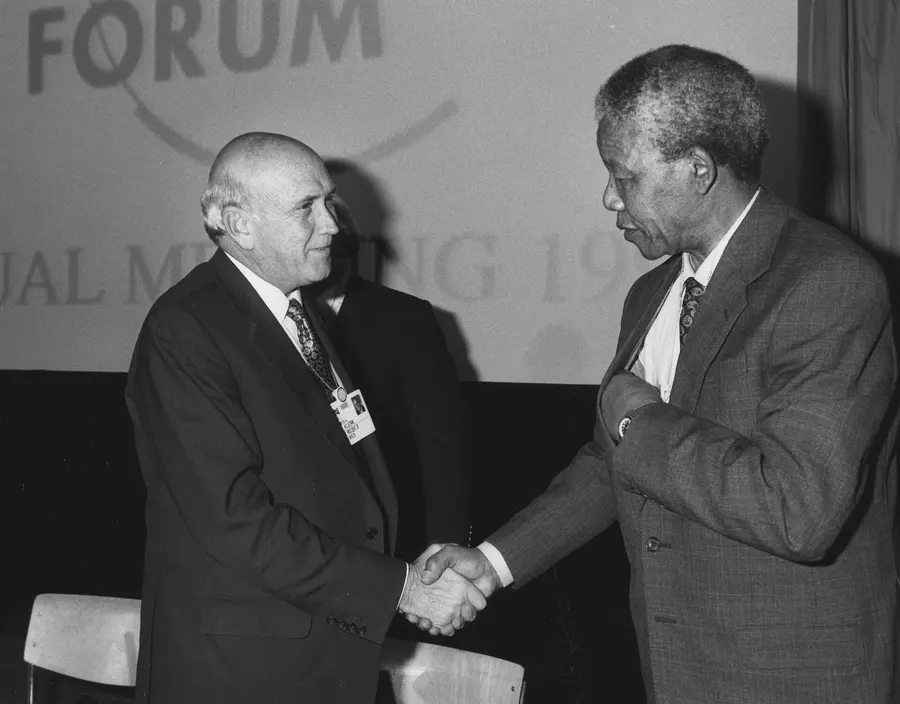
F. W. de Klerk and Nelson Mandela at the World Economic Forum in Davos, 1992.F. W. de Klerk and Nelson Mandela at the World Economic Forum in Davos, 1992.Image: Copyright World Economic Forum (www.weforum.org) · CC BY-SA 2.0
politics · Africa

South Africa agrees a democratic constitution

After more than two years of often violent upheaval, the multi-party negotiations at the World Trade Centre in Kempton Park, near Johannesburg, reached agreement on 18 November 1993 on an interim constitution to end the legal order of apartheid. It was passed by the last apartheid parliament as the Constitution of the Republic of South Africa, Act 200 of 1993. Described as a ‘historic bridge’ between past and future, it governed the country’s first all-race election in April 1994 and stayed in force while an elected assembly wrote the final constitution of 1996.

Source: South African History Online: The Interim South African Constitution 1993 ↗
VI
2000 TO TODAY

Modern Day

The events of recent decades that have already become part of the historical record.

2013
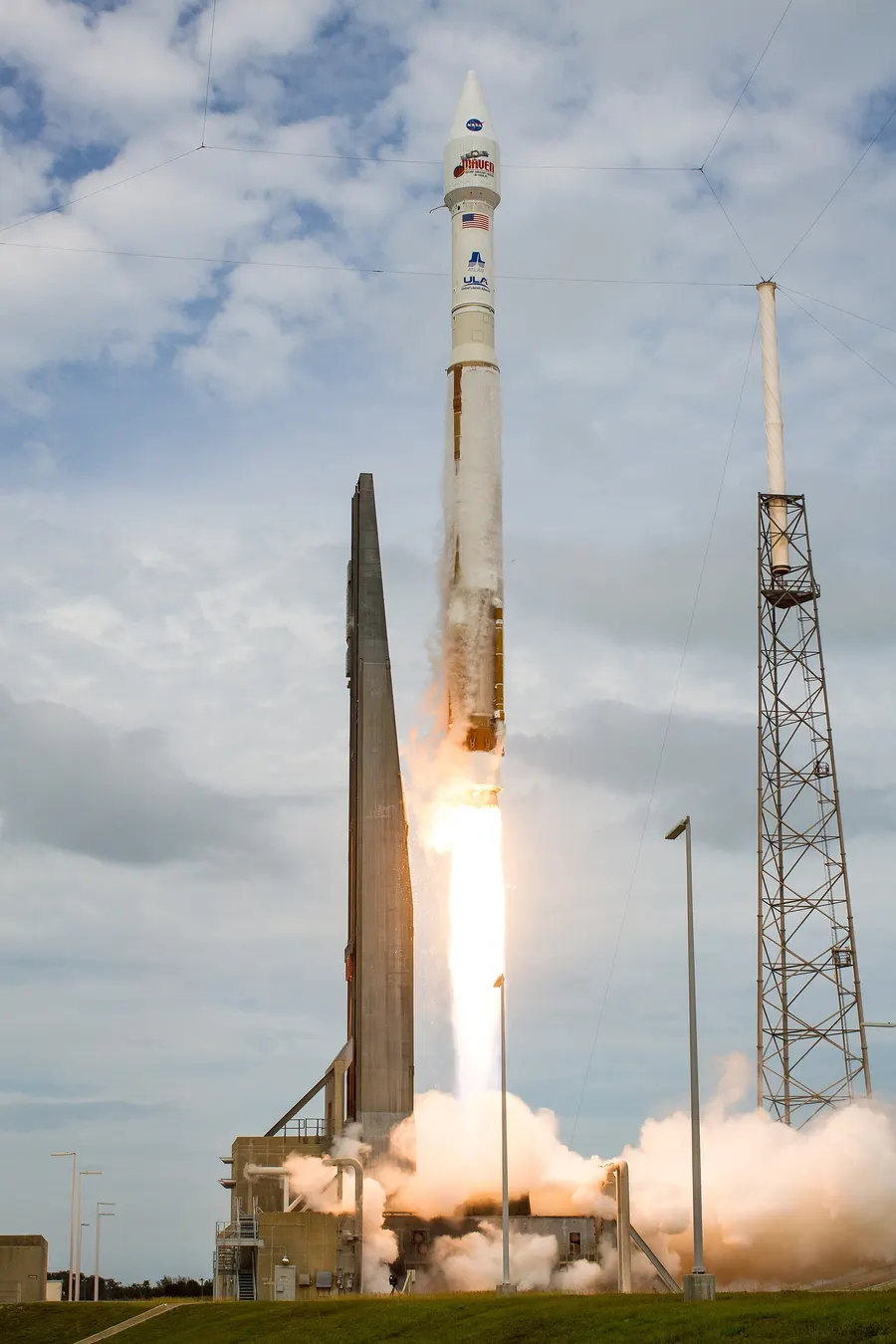
The Atlas V rocket carrying MAVEN lifts off from Cape Canaveral, 18 November 2013.The Atlas V rocket carrying MAVEN lifts off from Cape Canaveral, 18 November 2013.Image: Bill Ingalls · Public domain
science · Americas

MAVEN sets out to study the air of Mars

NASA’s Mars Atmosphere and Volatile Evolution spacecraft, MAVEN, was launched on an Atlas V rocket from Cape Canaveral on 18 November 2013. It was the first mission devoted to the upper atmosphere of Mars. MAVEN entered orbit around Mars in September 2014. Its measurements showed how the solar wind has stripped away much of the planet’s atmosphere over billions of years, helping to explain how a once wetter Mars became cold and dry.

Source: NASA Space Science Data Coordinated Archive: MAVEN ↗
WHY THESE MOMENTS?

Significance before volume

This page is not the longest possible list of events. It is a chronological journey through 18 November, where each entry is chosen for historical significance, human interest and reliability.

Facts are checked against authoritative museums, archives, universities and reference works. Where sources disagree, the page says so.

EXPLORED THE DEEPER STORY?

Return to the highlights of 18 November

Discover the lighter side of the date with famous birthdays, culture, firsts and lives remembered.

Explore This Day →