HISTORY & TIMELINE
17 November

A journey through
17 November in history

From the choice of a Scottish king in 1292 to a student march in Prague in 1989, 17 November has seen crowns change hands and peoples demand their freedom. This timeline follows the date across seven centuries.

JUMP THROUGH TIME
II
THE MIDDLE AGES

Medieval History

Kingdoms, conflict, faith, power and the changing medieval world.

1292
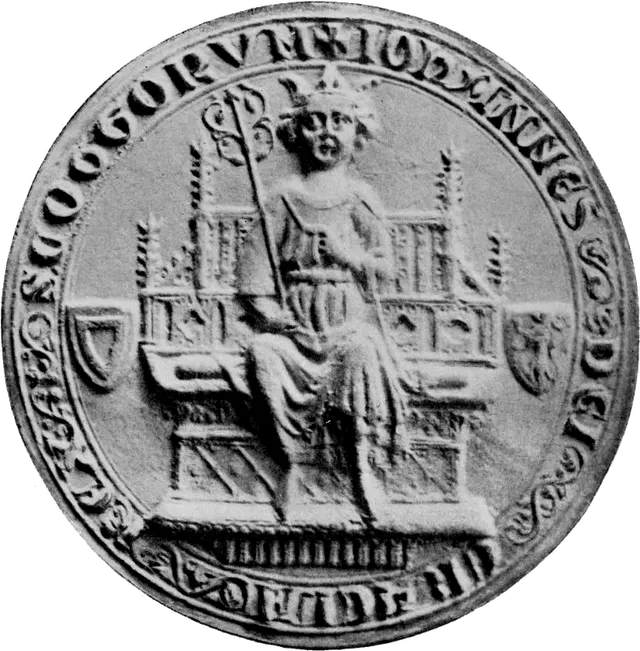
The seal of John Balliol, King of Scots.The seal of John Balliol, King of Scots.Image: Unknown authorUnknown author · Public domain
politics · Europe

John Balliol is chosen King of Scots

After the deaths of Alexander III and his granddaughter Margaret, the Maid of Norway, left Scotland without an obvious heir, thirteen claimants put their case to Edward I of England, who had been asked to judge. At Berwick on 17 November 1292 Edward and his assessors awarded the crown to John Balliol. The new king did homage to Edward, who soon treated Scotland as a vassal state; within four years Balliol was forced to abdicate.

Source: The Royal Family: John Balliol (r. 1292-1296) ↗
III
A CHANGING WORLD

Early Modern Era

Exploration, political change, scientific development and expanding global connections.

1558
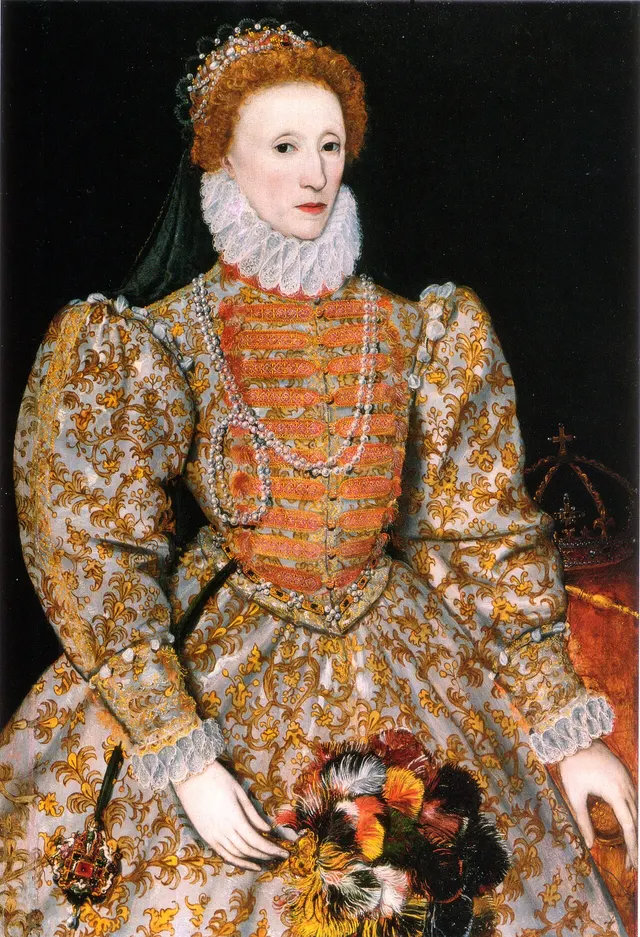
Elizabeth I in the 'Darnley Portrait', painted around 1575.Elizabeth I in the ‘Darnley Portrait’, painted around 1575.Image: Unidentified painter · Public domain
politics · Europe

Elizabeth I becomes Queen of England

Queen Mary I of England died on 17 November 1558, and her 25-year-old Protestant half-sister Elizabeth succeeded her. Mary had kept Elizabeth under close watch and once imprisoned her in the Tower of London, but in her last illness acknowledged her as heir. The new queen’s accession was greeted with bells and bonfires. On her first morning as queen she chose William Cecil, later Lord Burghley, as her principal secretary, and her reign of 44 years gave its name to the Elizabethan age. The anniversary of her accession was celebrated in England for generations afterwards.

Source: Royal Museums Greenwich: Becoming Queen Elizabeth I ↗
IV
THE NINETEENTH CENTURY

The 1800s

Industry, empire, invention, reform and a century of enormous transformation.

1800
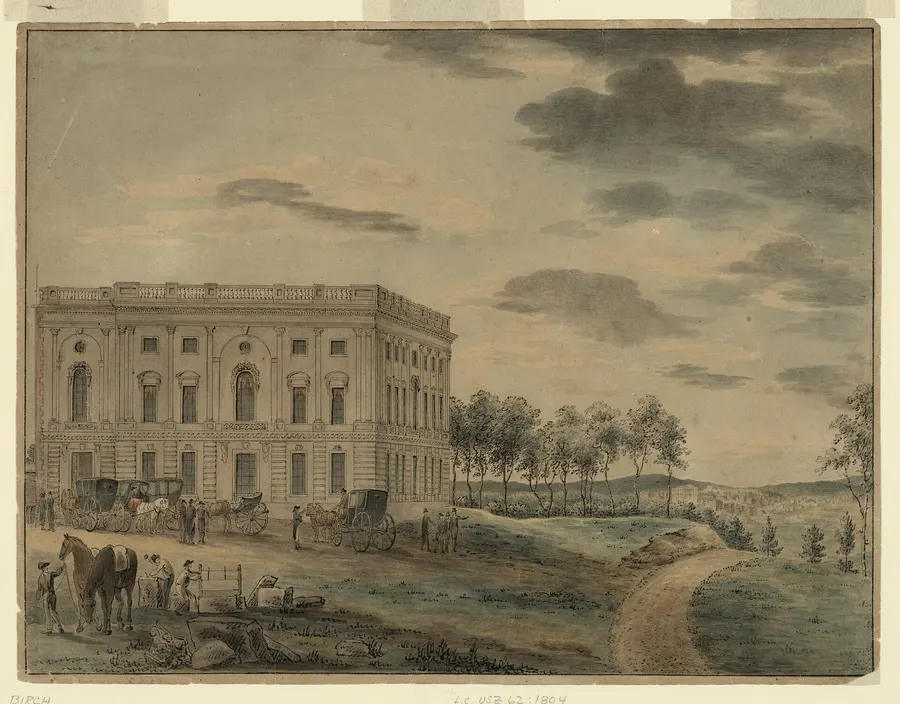
The Capitol before it was burned by the British in 1814, a watercolour by William Russell Birch.The Capitol before it was burned by the British in 1814, a watercolour by William Russell Birch.Image: Birch, William Russell, 1755-1834, artist · Public domain
politics · Americas

Congress meets in Washington for the first time

After ten years in Philadelphia, the United States Congress moved to the new federal city of Washington, and the Senate met for the first time in the Capitol on 17 November 1800. Only the north wing of the building was finished, and it had to house the Senate, the House of Representatives, the Supreme Court and the new Library of Congress.

Source: United States Senate: The Senate moves to Washington ↗
1869
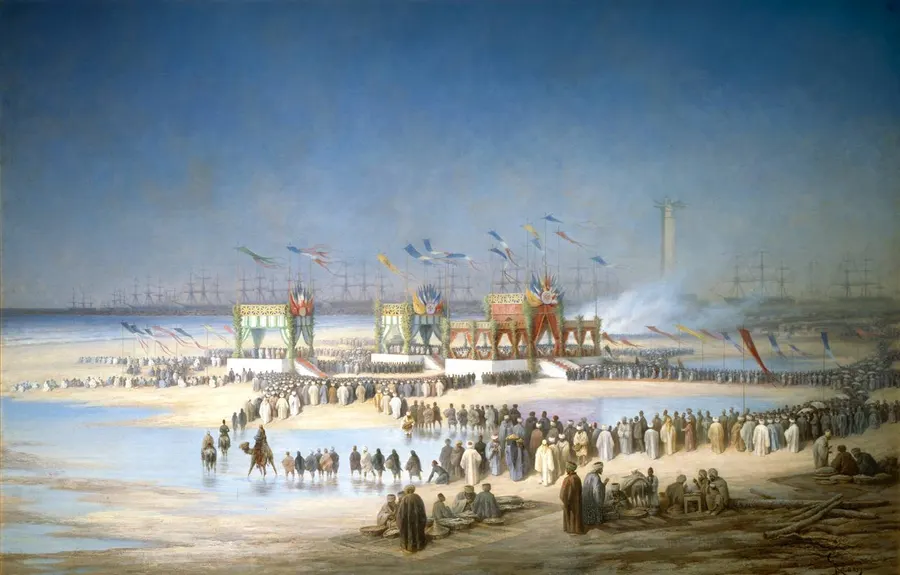
The inauguration of the Suez Canal at Port Said, painted by Édouard Riou in 1869.The inauguration of the Suez Canal at Port Said, painted by Édouard Riou in 1869.Image: Édouard Riou · Public domain
world · Africa

The Suez Canal is opened

After ten years of digging across the Egyptian desert, the Suez Canal linking the Mediterranean with the Red Sea was inaugurated on 17 November 1869. About 6,000 guests came to Port Said at the invitation of Egypt’s khedive, Ismail Pasha, among them the Emperor of Austria, the Crown Prince of Prussia and the Norwegian playwright Henrik Ibsen. The French imperial yacht L’Aigle, carrying the Empress Eugénie, led a procession of ships into the canal. Built by a company led by the French diplomat Ferdinand de Lesseps, the canal cut thousands of miles from the sea route between Europe and Asia and became one of the most important waterways in the world.

Source: Suez Canal Authority: Canal history ↗
V
THE TWENTIETH CENTURY

The 1900s

War and peace, technological leaps, social change, politics, sport and popular culture.

1950
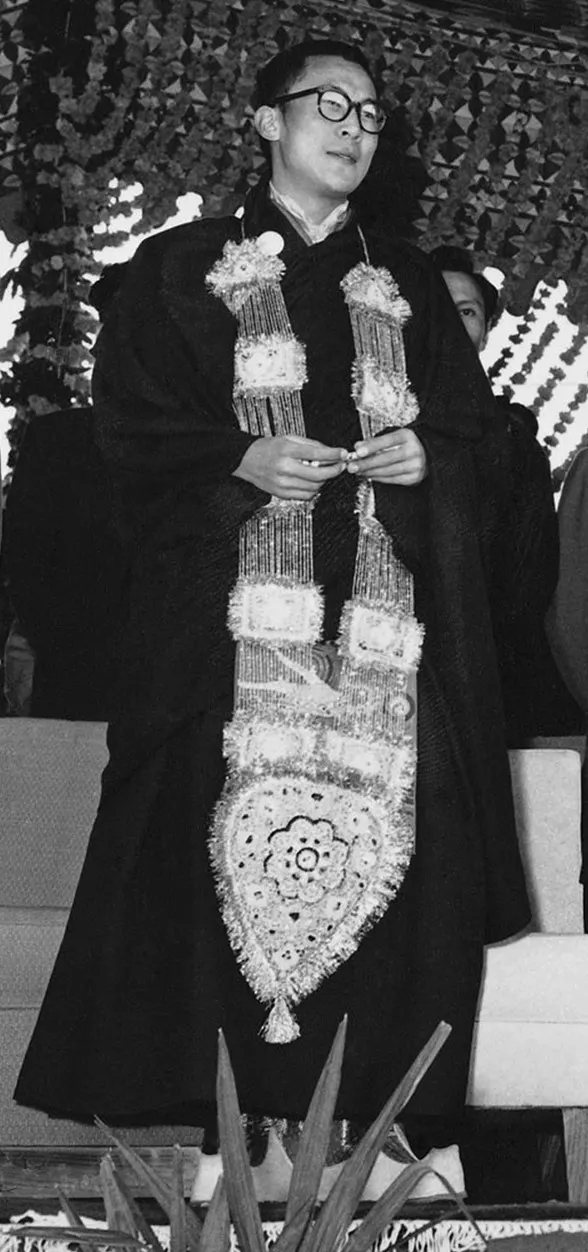
The 14th Dalai Lama on a visit to Delhi in 1956.The 14th Dalai Lama on a visit to Delhi in 1956.Image: Homai Vyarawalla · Public domain
politics · Asia

The 15-year-old Dalai Lama takes power in Tibet

In October 1950 Chinese troops crossed into eastern Tibet. As the news worsened, Tibet’s leaders urged that the young 14th Dalai Lama, Tenzin Gyatso, should take full political authority years before the usual age. On 17 November 1950, at the age of fifteen, he was enthroned as Tibet’s temporal leader at the Norbulingka Palace in Lhasa. He tried for nine years to work with the Chinese authorities, but after the failed Tibetan uprising of 1959 he fled to India, where he has led a government in exile ever since. He was awarded the Nobel Peace Prize in 1989.

Source: Office of His Holiness the Dalai Lama: Birth to exile ↗
1969
politics · Global

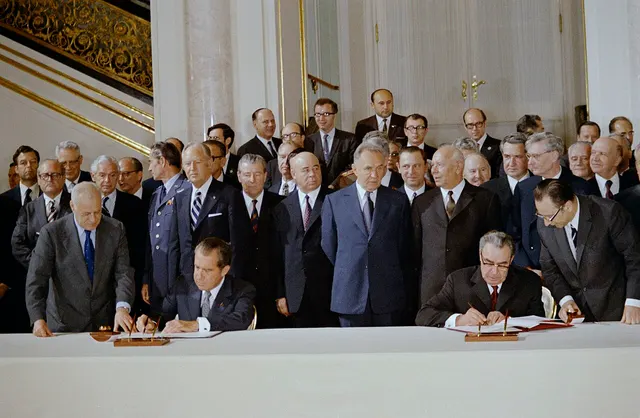
The SALT arms talks open in Helsinki

American and Soviet negotiators opened the Strategic Arms Limitation Talks in Helsinki on 17 November 1969, the first serious attempt to limit the two superpowers’ nuclear arsenals. The talks led to the Anti-Ballistic Missile Treaty and an interim agreement on offensive missiles, signed by Richard Nixon and Leonid Brezhnev in Moscow in May 1972.

Source: US Office of the Historian: Strategic Arms Limitations Talks, SALT I and II ↗
1970
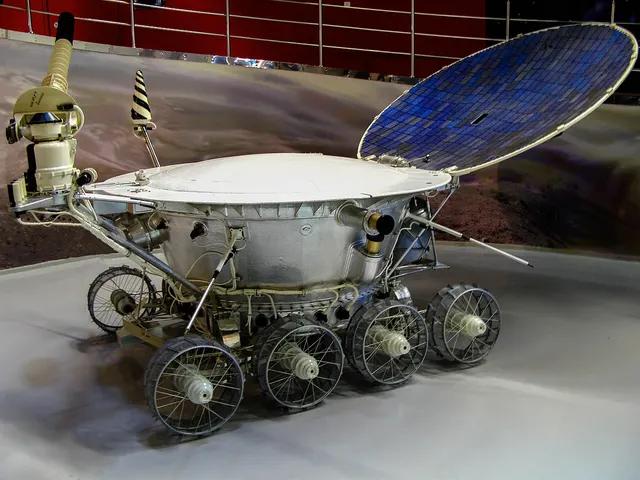
A full-size model of the Lunokhod 1 rover.A full-size model of the Lunokhod 1 rover.Image: Petar Milošević · CC BY-SA 3.0
science · Europe

Lunokhod 1, the first rover on the Moon

The Soviet spacecraft Luna 17 landed in the Sea of Rains on 17 November 1970 and rolled out Lunokhod 1, a remote-controlled eight-wheeled vehicle steered by a team of drivers on Earth. It was the first robot rover to explore another world. Built to work for three lunar days, it kept going for eleven, travelling more than 10 kilometres and sending back over 20,000 television pictures and more than 200 panoramas over about ten months.

Source: NASA Space Science Data Coordinated Archive: Lunokhod 1 ↗
1973
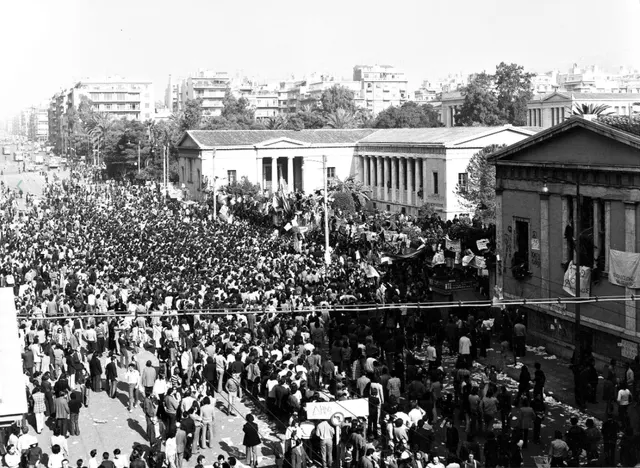
Crowds outside the Athens Polytechnic during the uprising, November 1973.Crowds outside the Athens Polytechnic during the uprising, November 1973.Image: Unknown authorUnknown author · CC BY-SA 4.0
politics · Europe

The Athens Polytechnic uprising is crushed

From 15 November 1973 thousands of students occupied the Athens Polytechnic in protest against Greece’s military dictatorship, broadcasting calls for ‘Bread, education, freedom’ from their own radio station. In the early hours of 17 November the regime sent a tank crashing through the gates; at least 24 civilians were killed in the crackdown. The junta fell in July 1974, and 17 November is marked in Greece every year.

Source: Greek News Agenda: The Athens Polytechnic uprising ↗
1989
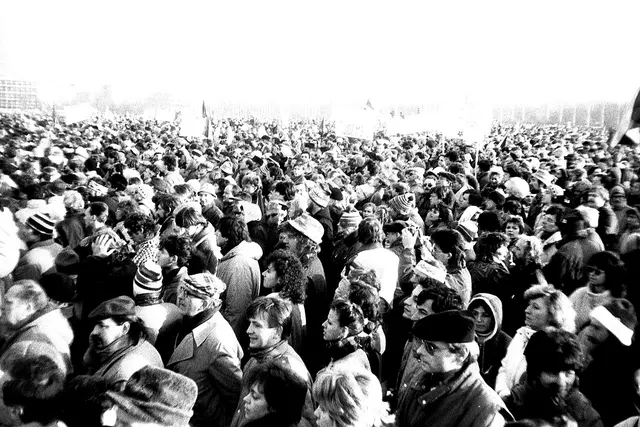
A huge crowd on Letná plain in Prague during the Velvet Revolution, 25 November 1989.A huge crowd on Letná plain in Prague during the Velvet Revolution, 25 November 1989.Image: ŠJů (cs:ŠJů) · CC BY-SA 3.0
politics · Europe

Prague’s students start the Velvet Revolution

On 17 November 1989 students in Prague gathered to mark the fiftieth anniversary of the Nazi crackdown on Czech universities. The officially approved march turned into a protest against the communist government, and on Národní třída riot police trapped and beat the demonstrators, who chanted ‘We have bare hands’. The violence set off strikes and daily mass demonstrations across Czechoslovakia. Within weeks the Communist Party gave up its monopoly of power, and on 29 December the dissident playwright Václav Havel was elected president. Because hardly a shot was fired, it became known as the Velvet Revolution.

Source: Radio Prague International: The Velvet Revolution ↗
WHY THESE MOMENTS?

Significance before volume

This page is not the longest possible list of events. It is a chronological journey through 17 November, where each entry is chosen for historical significance, human interest and reliability.

Facts are checked against authoritative museums, archives, universities and reference works. Where sources disagree, the page says so.

EXPLORED THE DEEPER STORY?

Return to the highlights of 17 November

Discover the lighter side of the date with famous birthdays, culture, firsts and lives remembered.

Explore This Day →