
HISTORY & TIMELINE
18 May

A journey through
18 May in history

The story of 18 May runs from a medieval royal marriage that joined England’s future king to the richest heiress in Europe in 1152 to a breakaway republic declared in the Horn of Africa in 1991. In between come the fall of Acre, an Ottoman armada off Malta, an emperor proclaimed in France, a US court ruling that entrenched segregation, a peace conference at The Hague, a treaty with Tonga, the capture of Monte Cassino, a nuclear test in the Rajasthan desert and a volcano and an uprising in the same year.

JUMP THROUGH TIME
II
THE MIDDLE AGES

Medieval History

Kingdoms, conflict, faith, power and the changing medieval world.

1152
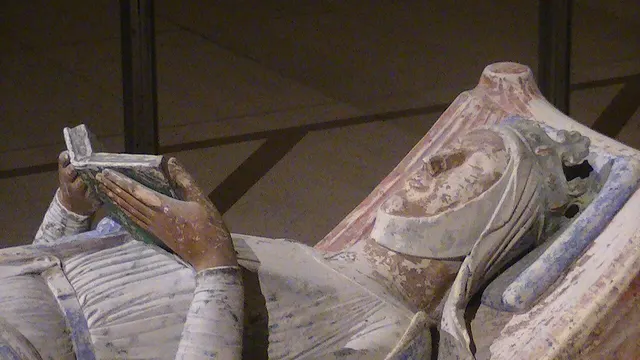
The tomb effigy of Eleanor of Aquitaine at Fontevraud AbbeyThe tomb effigy of Eleanor of Aquitaine at Fontevraud AbbeyImage: Adam Bishop · CC BY-SA 3.0
politics · Europe

Henry of Anjou marries Eleanor of Aquitaine

Only weeks after her marriage to King Louis VII of France was annulled, Eleanor, duchess of Aquitaine, married Henry Plantagenet, count of Anjou and duke of Normandy, on 18 May 1152. The match brought him her vast lands in south-west France. Two years later he became King Henry II of England, ruling a realm that stretched from the Scottish border to the Pyrenees. Two of their sons, Richard and John, became kings.

Source: Westminster Abbey: Henry II ↗
1291
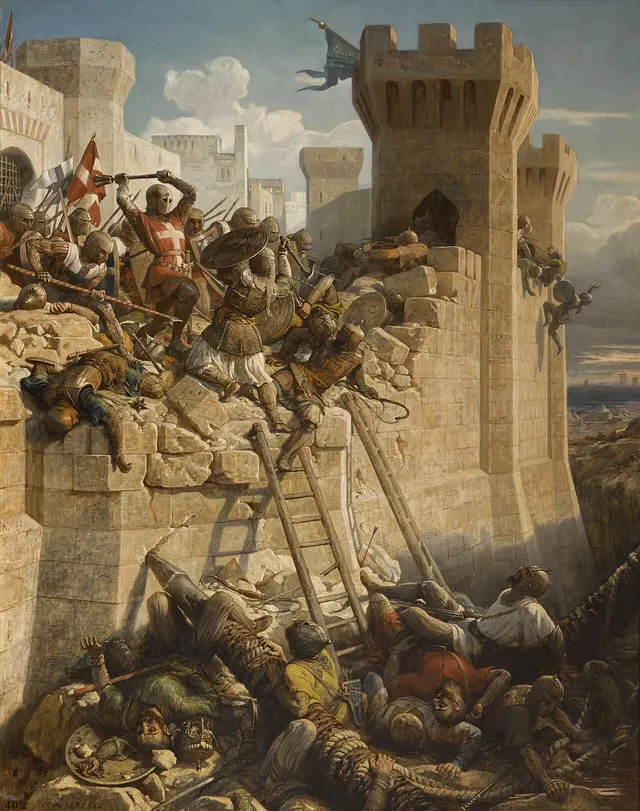
A later painting of the knights defending the walls of Acre during the siege of 1291A later painting of the knights defending the walls of Acre during the siege of 1291Image: Louis-Dominique Papety · Public domain
world · Middle East

Acre falls and the crusader states come to an end

By the late 13th century the crusader kingdoms that had once held Jerusalem had shrunk to a string of coastal towns, and Acre was the greatest of them. In April 1291 the Mamluk sultan of Egypt, al-Ashraf Khalil, arrived outside its walls with a huge army and siege engines. His miners brought down towers one after another, and on 18 May his troops broke into the city. Much of Acre was sacked, and many who could not reach the ships were killed or enslaved. Within weeks the remaining Christian-held towns of Tyre, Sidon and Beirut surrendered. After almost two centuries the crusaders had lost their last real foothold in the Holy Land, and the survivors regrouped on Cyprus.

Source: World History Encyclopedia: The Siege of Acre, 1291 CE ↗
III
A CHANGING WORLD

Early Modern Era

Exploration, political change, scientific development and expanding global connections.

1565
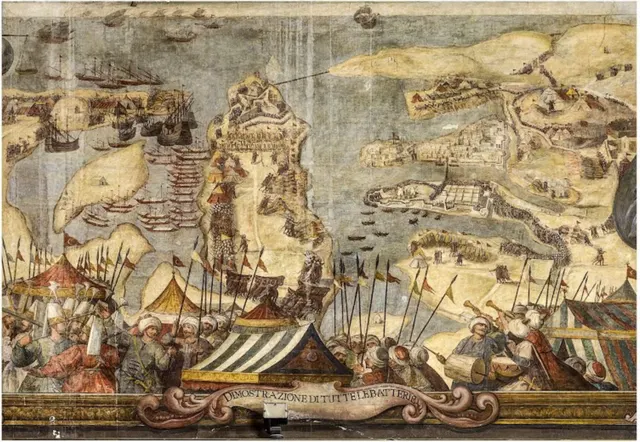
A fresco of the Great Siege of Malta by Matteo Perez d'AleccioA fresco of the Great Siege of Malta by Matteo Perez d’AleccioImage: Mattia Perez d'Aleccio · Public domain
world · Europe

An Ottoman armada arrives to besiege Malta

On 18 May 1565 a vast Ottoman fleet carrying tens of thousands of troops appeared off Malta, the island base of the Knights Hospitaller. Led by their Grand Master, Jean de la Valette, a few hundred knights and several thousand Maltese soldiers and islanders held out through a summer of attacks. The Ottomans withdrew in September, and the victory halted their advance into the western Mediterranean.

Source: Britannica: Siege of Malta (1565) ↗
IV
THE NINETEENTH CENTURY

The 1800s

Industry, empire, invention, reform and a century of enormous transformation.

1804
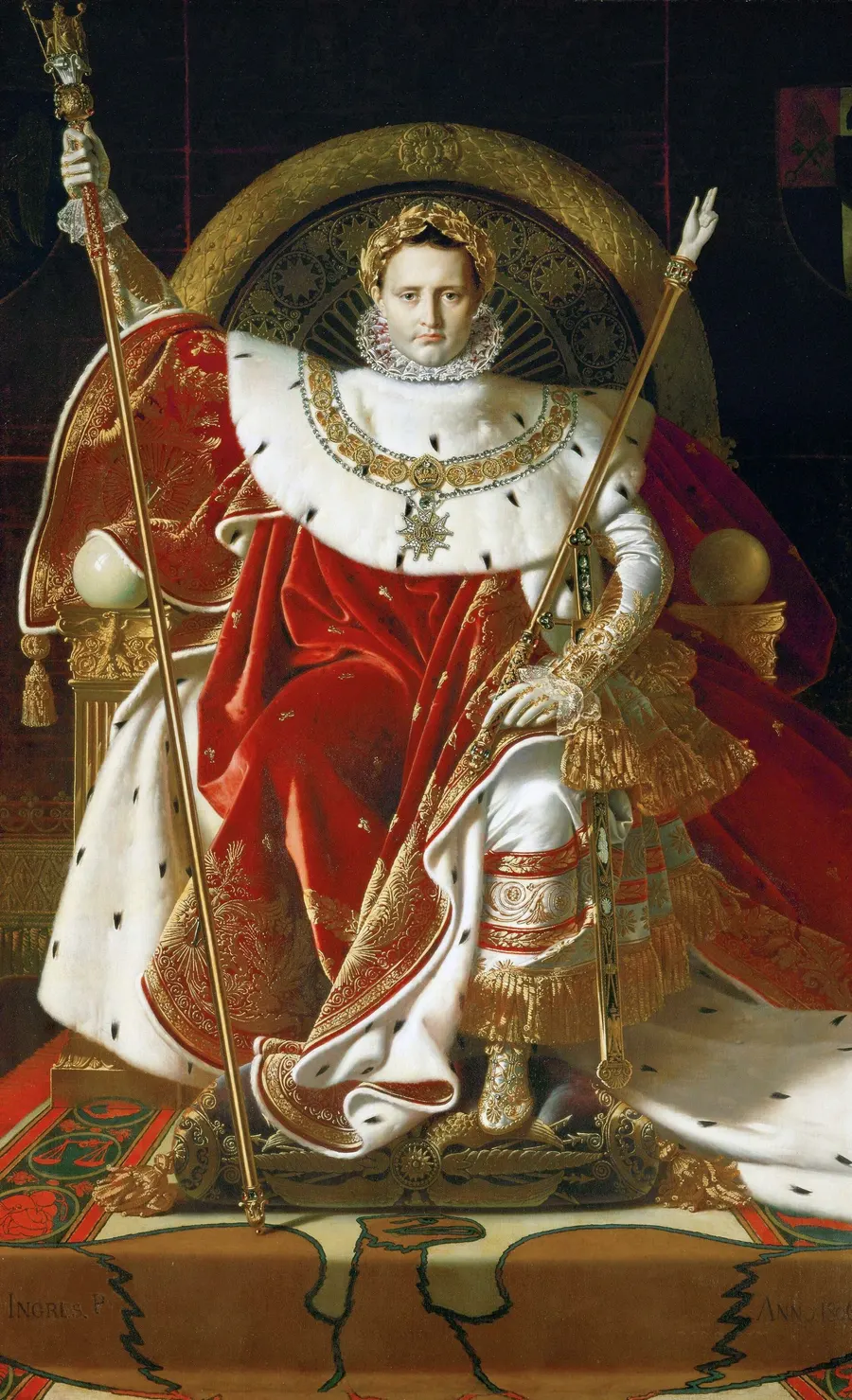
Ingres's 1806 portrait of Napoleon I on his imperial throneIngres’s 1806 portrait of Napoleon I on his imperial throneImage: Jean-Auguste-Dominique Ingres · Public domain
politics · Europe

The French Senate proclaims Napoleon emperor

Napoleon Bonaparte had ruled France as First Consul since 1799 and had already been made consul for life. On 18 May 1804 the Senate adopted a decree that entrusted the government of the Republic to a hereditary emperor, and named him Napoleon I, Emperor of the French. Senators travelled out to his palace at Saint-Cloud to give him the news in person. The change was later approved by a public vote. The grand coronation at Notre-Dame in Paris followed on 2 December, but it was the Senate’s decree that created the empire in law. Napoleon went on to dominate Europe for another decade before his final defeat in 1815.

Source: Fondation Napoléon: The proclamation of Empire, 18 May 1804 ↗
1896
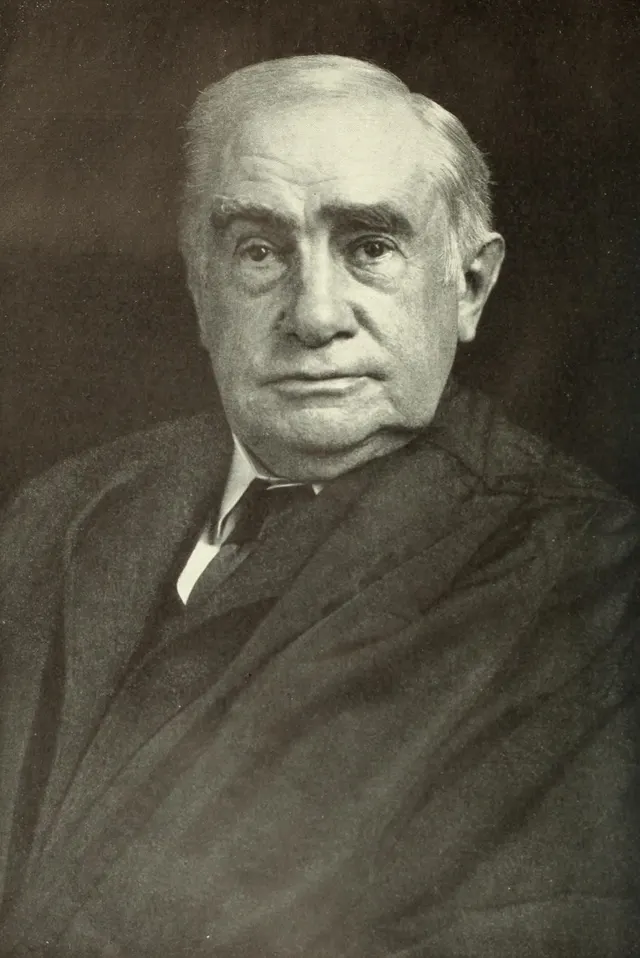
Justice Henry Billings Brown, who wrote the majority opinion in Plessy v. FergusonJustice Henry Billings Brown, who wrote the majority opinion in Plessy v. FergusonImage: Frances Benjamin Johnston · Public domain
world · Americas

The US Supreme Court upholds ‘separate but equal’ in Plessy v. Ferguson

Homer Plessy had deliberately sat in a whites-only railway carriage in Louisiana in 1892 to challenge a state law segregating trains. On 18 May 1896 the US Supreme Court ruled seven to one against him, holding that separate facilities for Black and white Americans were lawful if they were equal. Justice John Marshall Harlan dissented alone. The ruling underpinned segregation until the court overturned it in 1954.

Source: US National Archives: Plessy v. Ferguson (1896) ↗
1899
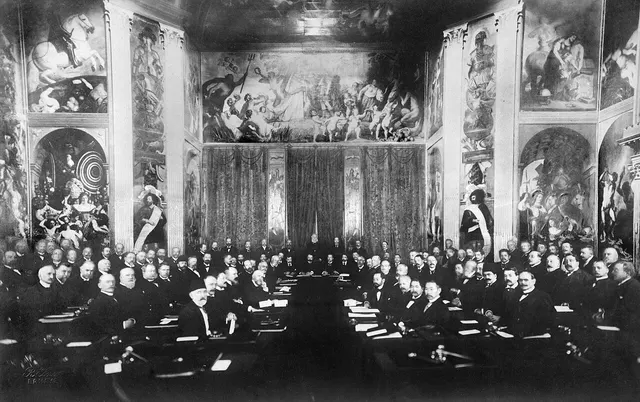
Delegates in session at the first Hague Peace Conference in 1899Delegates in session at the first Hague Peace Conference in 1899Image: Unknown author (Imperial War Museum HU 67224) · Public domain
politics · Europe

The first Hague Peace Conference opens

Called at the invitation of Russia’s Tsar Nicholas II, delegates from 26 countries gathered in The Hague on 18 May 1899, the tsar’s birthday. Hopes of limiting armaments came to little, but by the time the conference closed on 29 July it had agreed conventions on the laws of war on land and at sea and created the Permanent Court of Arbitration, which still settles international disputes today.

Source: Britannica: Hague Conventions ↗
V
THE TWENTIETH CENTURY

The 1900s

War and peace, technological leaps, social change, politics, sport and popular culture.

1900
King George Tupou II of Tonga, who signed the 1900 treatyKing George Tupou II of Tonga, who signed the 1900 treatyImage: Herman John Schmidt · Public domain
politics · Oceania

Tonga signs a treaty placing it under British protection

With European powers competing for influence in the Pacific, King George Tupou II of Tonga signed a treaty of friendship with Great Britain at Nuku’alofa on 18 May 1900. Tonga became a British protected state, with Britain handling its foreign affairs, but it kept its own monarchy and was never colonised. It regained full control of its affairs in 1970.

Source: Kingdom of Tonga, Attorney General’s Office: Tonga Treaty Collection ↗
1917
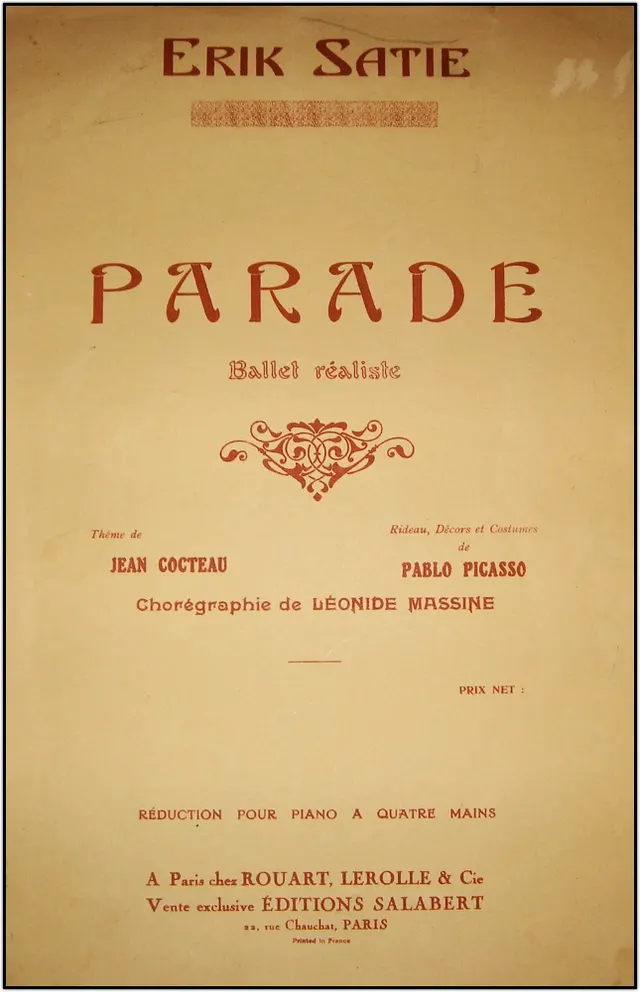
The cover of Erik Satie's published score for ParadeThe cover of Erik Satie’s published score for ParadeImage: Rouart, Lerolle & Cie. · Public domain
culture · Europe

Parade shocks Paris with Picasso, Satie and Cocteau

In the middle of the First World War, Serge Diaghilev’s Ballets Russes staged a new one-act ballet at the Théâtre du Châtelet in Paris on 18 May 1917. Parade told the story of circus performers trying to lure a crowd into their show. The idea came from the poet Jean Cocteau, the music was by Erik Satie, the dances by Léonide Massine and the sets and costumes by Pablo Picasso. Satie’s score included the sounds of a typewriter, sirens and pistol shots, and Picasso dressed some dancers in towering Cubist constructions. Many in the audience were outraged. The poet Guillaume Apollinaire’s programme note described the work with a new word, surrealism, which would soon name a whole art movement.

Source: Britannica: Parade, ballet by Satie and Cocteau ↗
1944
The rebuilt Abbey of Monte Cassino on its hilltop in central ItalyThe rebuilt Abbey of Monte Cassino on its hilltop in central ItalyImage: Monticiano · CC BY-SA 4.0

world · Europe

Polish troops take Monte Cassino

For four months the ruined abbey of Monte Cassino blocked the Allied advance on Rome. After a fourth offensive began on 11 May 1944, soldiers of the Polish II Corps finally reached the summit on 18 May and raised their flag over the rubble, finding it abandoned except for some wounded Germans. More than 900 Polish soldiers died in the assault, and a Polish war cemetery lies below the rebuilt abbey.

Source: The National WWII Museum: The Destruction of Monte Cassino ↗
1960
Hampden Park in Glasgow, the stadium where the 1960 final was played, seen during the 2007 UEFA Cup finalHampden Park in Glasgow, the stadium where the 1960 final was played, seen during the 2007 UEFA Cup finalImage: Alan O'Dowd · CC BY-SA 2.0
sport · Europe

Real Madrid beat Eintracht Frankfurt 7-3 at Hampden Park

More than 127,000 spectators packed Hampden Park in Glasgow on 18 May 1960 for the final of the European Cup. Real Madrid had won every edition of the competition since it began in 1956, and their opponents, Eintracht Frankfurt, had crushed Rangers 12-4 over two legs in the semi-final. The German side even took the lead. What followed is still remembered as one of the finest displays in football history. Ferenc Puskás scored four goals and Alfredo Di Stéfano three as Madrid won 7-3, lifting the trophy for the fifth year in a row, a run no club has matched since.

Source: UEFA: Real Madrid 7-3 Frankfurt, 1959/60 final ↗
1969
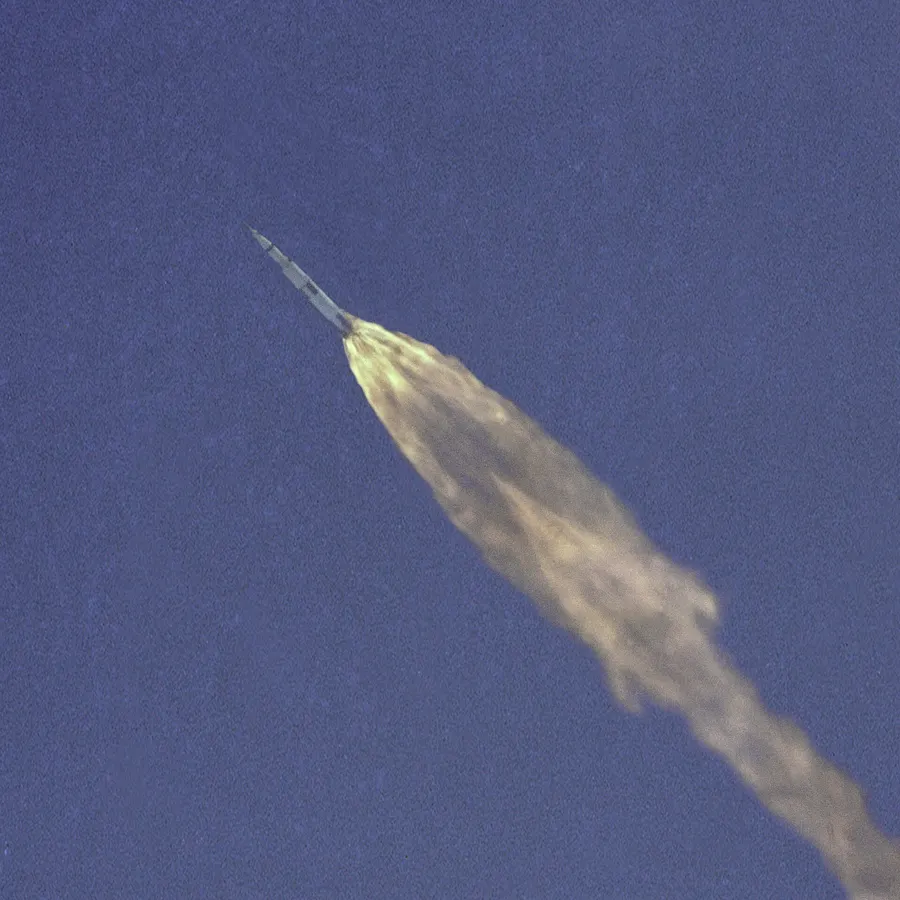
Apollo 10's Saturn V rocket climbing into the sky after launch on 18 May 1969Apollo 10’s Saturn V rocket climbing into the sky after launch on 18 May 1969Image: NASA/photographer unknown · Public domain
science · Americas

Apollo 10 lifts off for a dress rehearsal of the Moon landing

At 12.49 in the afternoon on 18 May 1969, a Saturn V rocket carried Thomas Stafford, John Young and Eugene Cernan away from the Kennedy Space Center in Florida. Apollo 10 was the first mission to take the complete Apollo spacecraft, including the lunar module, to the Moon, and it was planned to test every step of a landing except the touchdown itself. In lunar orbit, Stafford and Cernan took the lunar module, nicknamed Snoopy, down to within about 50,000 feet of the surface while Young waited in the command module Charlie Brown. The crew splashed down safely on 26 May, clearing the way for Apollo 11 to land two months later.

Source: NASA: Apollo 10 ↗
1974
Indira Gandhi, India's prime minister when the 1974 test was carried outIndira Gandhi, India’s prime minister when the 1974 test was carried outImage: Anefo · CC0
world · Asia

India tests its first nuclear device

Deep under the desert at Pokhran in Rajasthan, Indian scientists set off a plutonium device on 18 May 1974. The test was code-named Smiling Buddha, and the Indian government described it as a peaceful nuclear explosion, insisting it had no plan to build weapons. It made India the sixth country known to have exploded a nuclear device. The plutonium had come from a research reactor built with Canadian help and fuelled with American heavy water on the understanding that it would be used only for peaceful purposes. Canada quickly cut off nuclear co-operation, and the test led to the creation of the Nuclear Suppliers Group to tighten controls on nuclear exports.

Source: CTBTO: 18 May 1974, Smiling Buddha ↗
1980
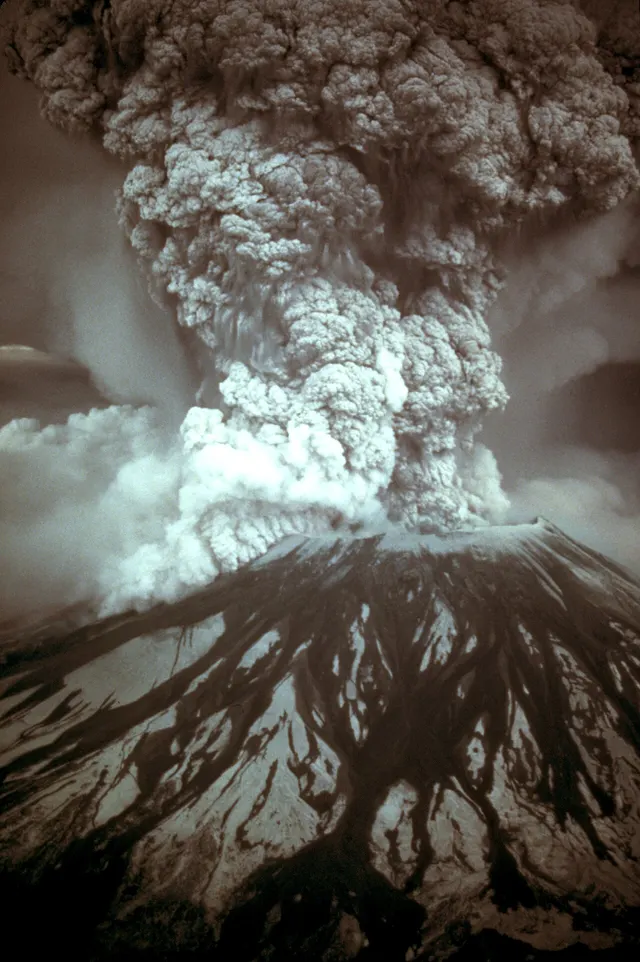
The ash column rising from Mount St Helens on 18 May 1980The ash column rising from Mount St Helens on 18 May 1980Image: Austin Post · Public domain
world · Americas

Mount St Helens erupts in Washington State

For two months Mount St Helens had been rumbling and its north side had been bulging outwards as magma pushed up inside. At 8.32 in the morning on 18 May 1980 an earthquake shook the bulge loose, and the whole north face slid away in the largest landslide in recorded history. With the pressure suddenly released, the volcano exploded sideways in a blast that flattened forests for miles. An ash column rose high into the sky and winds carried the ash east across the United States, turning day into darkness in Spokane. Mudflows swept down the river valleys. Fifty-seven people died, making it the most destructive eruption in US history, and the lessons learned changed how scientists monitor volcanoes.

Source: USGS: 1980 Cataclysmic Eruption ↗
1980
A memorial hall at the May 18th National Cemetery in GwangjuA memorial hall at the May 18th National Cemetery in GwangjuImage: Schlarpi · CC BY-SA 3.0
politics · Asia

The Gwangju democratic uprising begins in South Korea

After General Chun Doo-hwan extended martial law and closed the universities, students in the city of Gwangju protested on 18 May 1980. Paratroopers attacked them, and citizens joined the resistance, driving the troops out for several days before the army retook the city on 27 May with heavy loss of life. The uprising became a lasting symbol of South Korea’s struggle for democracy, and its archives are on UNESCO’s Memory of the World register.

Source: Britannica: Gwangju Uprising ↗
1991
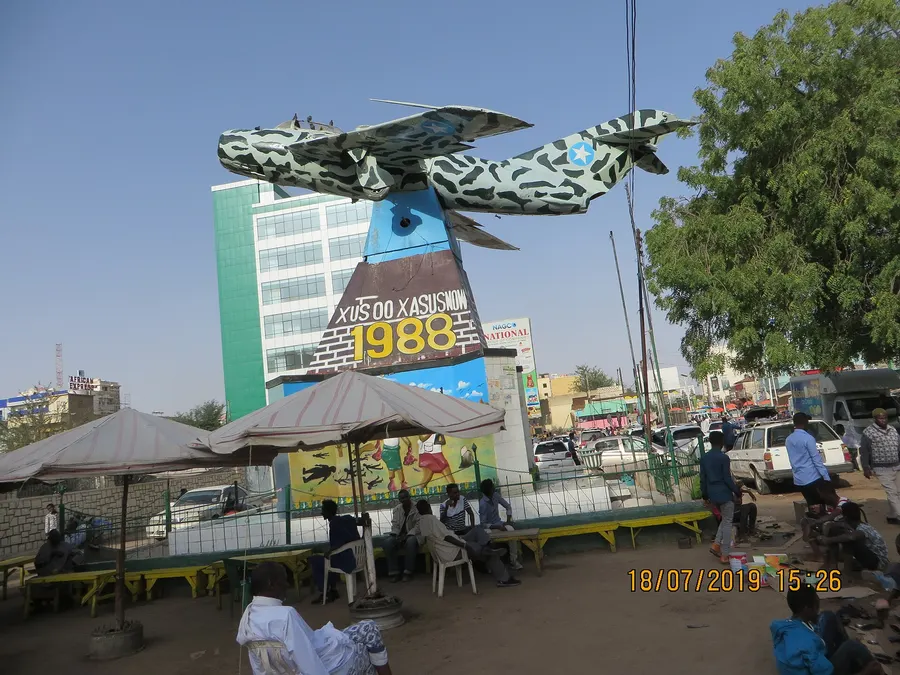
The Hargeisa War Memorial, a downed fighter jet on a plinth in the Somaliland capital, photographed in 2019The Hargeisa War Memorial, a downed fighter jet on a plinth in the Somaliland capital, photographed in 2019Image: Gerard van de Bruinhorst · CC BY-SA 4.0
politics · Africa

Somaliland declares its independence from Somalia

The former British Somaliland had joined the former Italian colony to form Somalia in 1960. In the 1980s the north suffered brutally in a civil war against the government of Siad Barre, and when his regime collapsed in early 1991 the Somali National Movement controlled the region. At a congress in the town of Burao on 18 May 1991, northern leaders proclaimed the Republic of Somaliland. Somaliland has since built its own government, currency and elections, and has been far more stable than much of the rest of Somalia. Yet it has struggled for decades to win formal recognition as an independent state from other countries and international organisations.

Source: Britannica: Republic of Somaliland ↗
WHY THESE MOMENTS?

Significance before volume

This page is not the longest possible list of events. It is a chronological journey through 18 May, where each entry is chosen for historical significance, human interest and reliability.

Facts are checked against authoritative museums, archives, universities and reference works. Where sources disagree, the page says so.

EXPLORED THE DEEPER STORY?

Return to the highlights of 18 May

Discover the lighter side of the date with famous birthdays, culture, firsts and lives remembered.

Explore This Day →
← PREVIOUS DAY17 May
HISTORY & TIMELINE18 May
NEXT DAY →19 May