HISTORY & TIMELINE
5 March

A journey through
5 March in history

From the Church’s ban on Copernicus in 1616 to the launch of a British home computer for under £100 in 1981, 5 March has seen wars declared, bridges completed and the first flight of an Allied jet fighter. This timeline follows the date across almost four centuries.

JUMP THROUGH TIME
III
A CHANGING WORLD

Early Modern Era

Exploration, political change, scientific development and expanding global connections.

1616
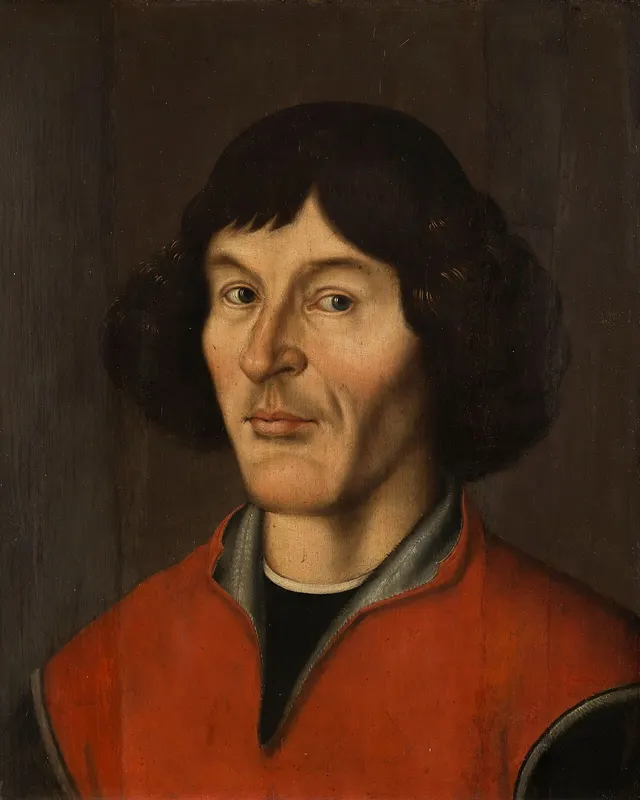
Nicolaus Copernicus, in a portrait kept in Toruń, the city of his birth.Nicolaus Copernicus, in a portrait kept in Toruń, the city of his birth.Image: Unknown authorUnknown author · Public domain
science · Europe

The Church suspends Copernicus’s book

On 5 March 1616 the Catholic Church’s Congregation of the Index issued a decree declaring the idea that the Earth moves round the Sun false and contrary to Scripture. Copernicus’s great book of 1543, On the Revolutions of the Heavenly Spheres, was suspended ‘until corrected’. The decree came as Galileo was arguing publicly for the Copernican view, and it set the stage for his trial in 1633. Corrections to the book were issued in 1620, but it stayed on the Index of forbidden books until 1835.

Source: Stanford Encyclopedia of Philosophy: Galileo Galilei ↗
1770
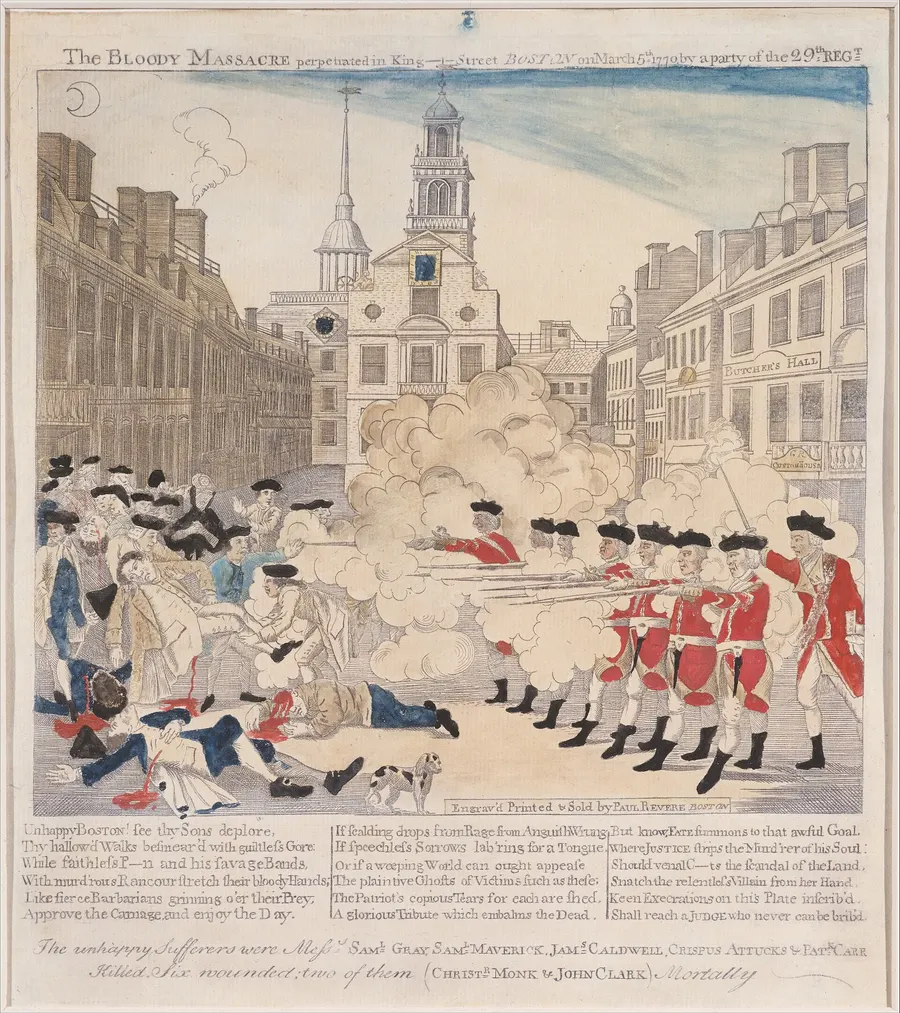
Paul Revere's engraving of the shooting, published weeks later as anti-British propaganda, 1770.Paul Revere’s engraving of the shooting, published weeks later as anti-British propaganda, 1770.Image: Paul Revere · Public domain
politics · Americas

British soldiers fire on a crowd in Boston

On the snowy evening of 5 March 1770 a crowd jeering and throwing snowballs gathered round a British sentry outside the Custom House on King Street in Boston. Soldiers of the 29th Regiment came to his aid and opened fire. Three men died that night, including Crispus Attucks, a sailor of African and Native American descent, and two more died later. Colonists called it the Boston Massacre, and Paul Revere’s engraving spread the story. At trial, defended by John Adams, the captain and six soldiers were acquitted and two were convicted of manslaughter. The shooting became a rallying point on the road to the American Revolution.

Source: National Park Service: Boston Massacre ↗
IV
THE NINETEENTH CENTURY

The 1800s

Industry, empire, invention, reform and a century of enormous transformation.

1824
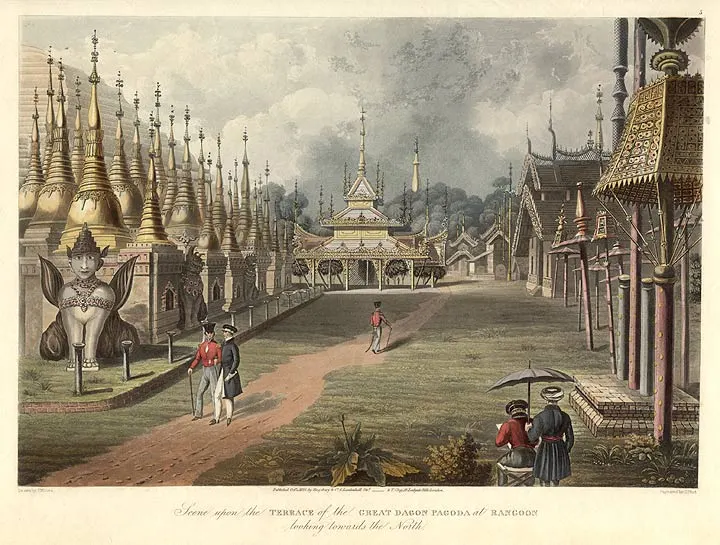
The terrace of the Great Dagon (Shwedagon) Pagoda at Rangoon during the British occupation, from a print of about 1825.The terrace of the Great Dagon (Shwedagon) Pagoda at Rangoon during the British occupation, from a print of about 1825.Image: Unknown authorUnknown author · Public domain
world · Asia

Britain declares war on Burma

After clashes on the frontier between British Bengal and the expanding Burmese kingdom of Ava, the Governor-General of India, Lord Amherst, declared war on 5 March 1824. British forces took Rangoon that May, but most of the 15,000 British and Indian soldiers who died were killed by disease. The Treaty of Yandabo in 1826 forced Burma to give up Assam, Arakan and Tenasserim, the first step in its conquest.

Source: National Army Museum: First Burma War ↗
1850
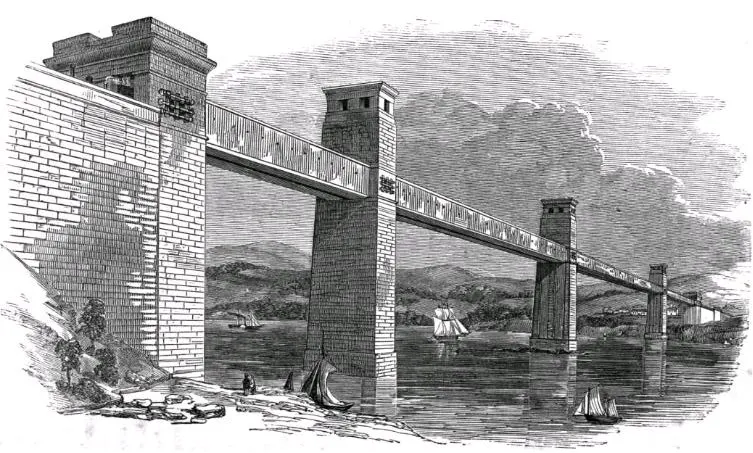
The Britannia tubular bridge over the Menai Strait, about 1852.The Britannia tubular bridge over the Menai Strait, about 1852.Image: Unknown artist · Public domain
science · Europe

The Britannia Bridge is completed across the Menai Strait

On 5 March 1850 Robert Stephenson drove in the last of about two million rivets on the Britannia Bridge, and the first train crossed the Menai Strait from mainland Wales to Anglesey. Its wrought-iron box tubes, each weighing about 1,800 tonnes, had been floated into place and jacked up, a feat of engineering that linked London to Holyhead and the ferries to Ireland.

Source: Network Rail: The history of the Britannia Bridge, North Wales ↗
1872
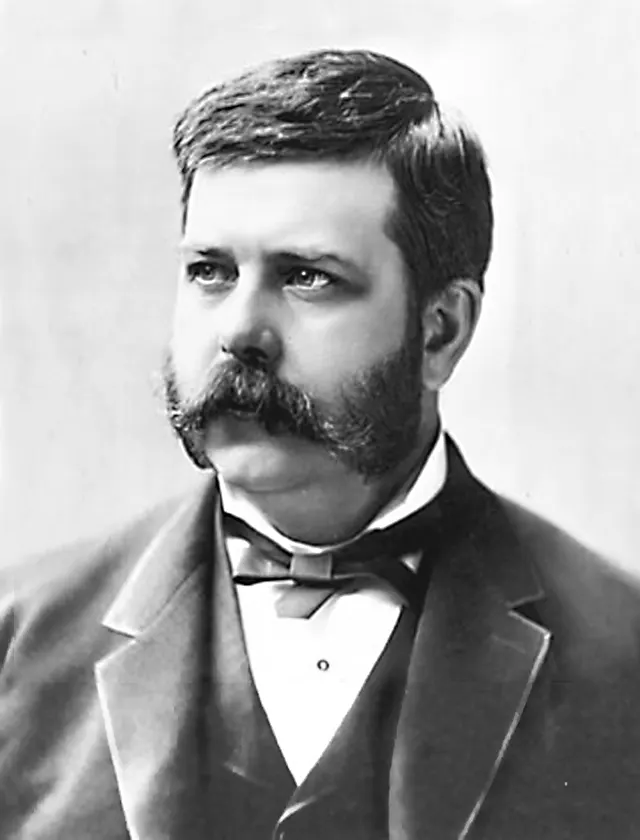
George Westinghouse in 1884.George Westinghouse in 1884.Image: unknown (Life time: subject died before 1914) · Public domain
science · Americas

Westinghouse patents a fail-safe train brake

On 5 March 1872 George Westinghouse was granted a US patent for an improved automatic air brake. Each railway carriage carried its own air reservoir and a ‘triple valve’, and air pressure held the brakes off. If a hose burst or a train came apart, the pressure dropped and the brakes went on by themselves. The fail-safe design made trains far safer and allowed them to run faster and longer, and the principle is still used on railways today.

Source: American Society of Mechanical Engineers: George Westinghouse Jr., landmark brochure ↗
V
THE TWENTIETH CENTURY

The 1900s

War and peace, technological leaps, social change, politics, sport and popular culture.

1931
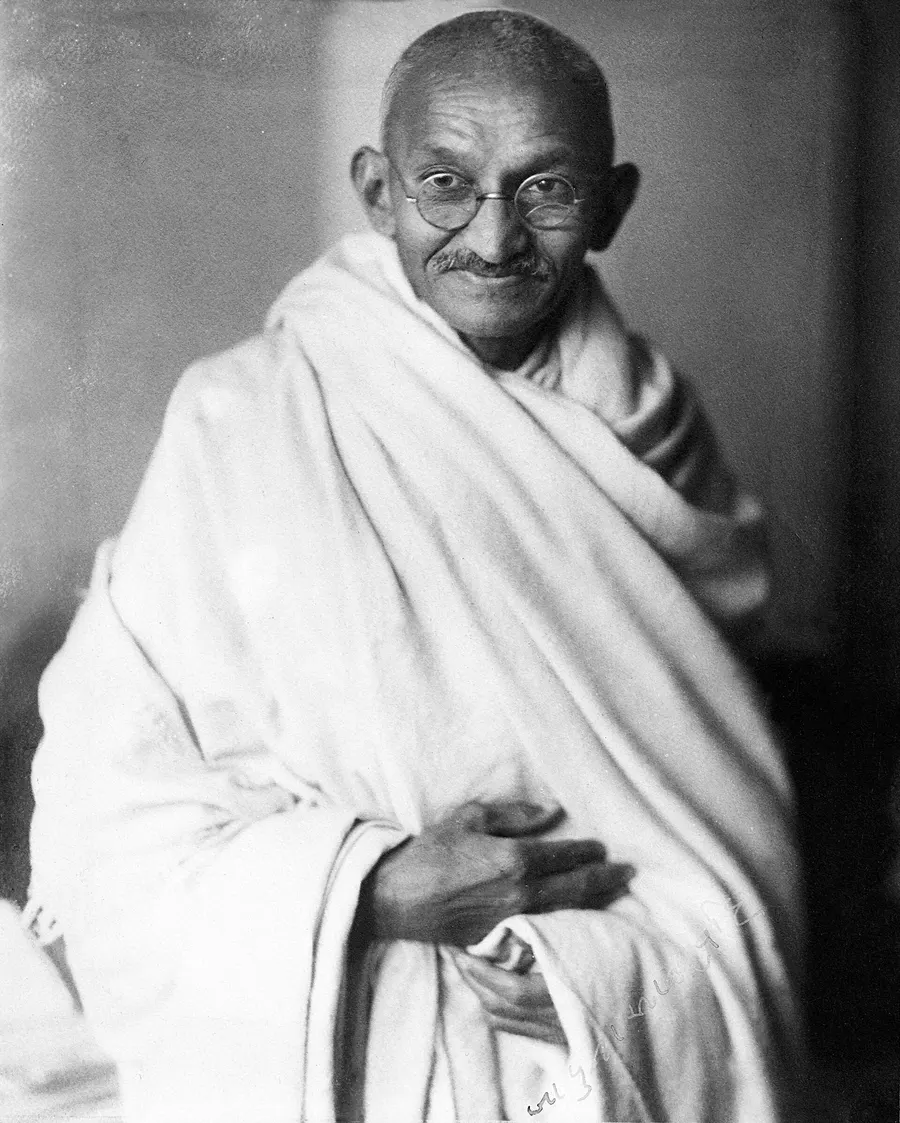
Mahatma Gandhi photographed by Elliott and Fry in London, 1931.Mahatma Gandhi photographed by Elliott and Fry in London, 1931.Image: Elliott & Fry · Public domain
politics · Asia

Gandhi and the Viceroy sign a truce

After weeks of talks in Delhi, Mahatma Gandhi and the Viceroy of India, Lord Irwin, signed an agreement on 5 March 1931. Gandhi called off the campaign of civil disobedience that had begun with his Salt March a year earlier. In return the government agreed to release the protesters it had imprisoned and to let people along the coast make salt for their own use. Later that year Gandhi sailed to London to represent the Indian National Congress at the Round Table Conference.

Source: Encyclopaedia Britannica: Gandhi-Irwin Pact ↗
1940
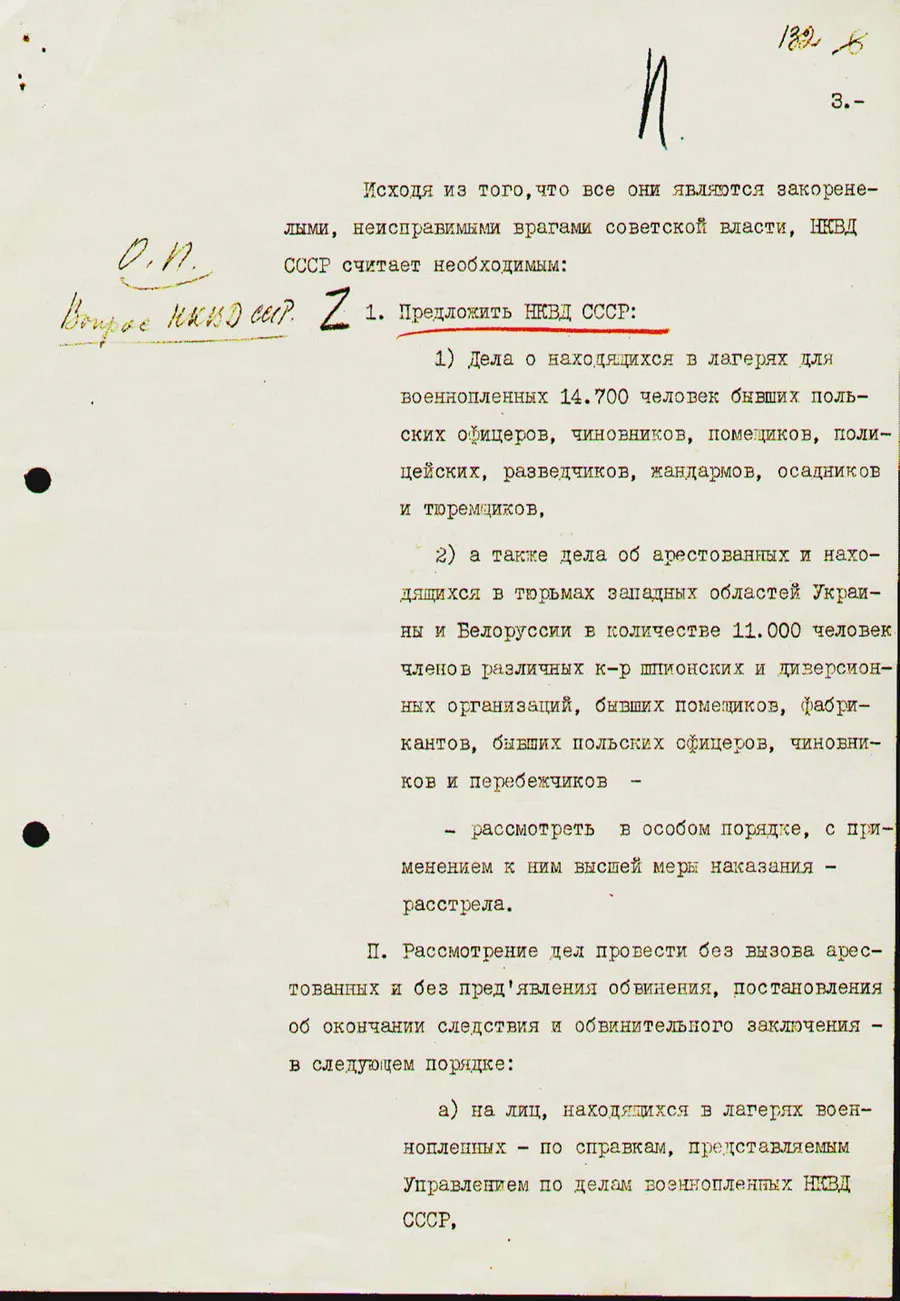
A page of Beria's proposal of 5 March 1940, approved by the Politburo.A page of Beria’s proposal of 5 March 1940, approved by the Politburo.Image: Soviet government document (Lavrentiy Beria's proposal) · Public domain
world · Europe

Stalin’s Politburo orders the Katyn massacre

On 5 March 1940 the Soviet Politburo approved a proposal from the secret police chief Lavrentiy Beria to shoot Polish officers, policemen and other prisoners held since the Soviet invasion of eastern Poland. Nearly 22,000 people were killed that spring, many in the Katyn forest near Smolensk. The Soviet Union blamed Nazi Germany and admitted the crime only in 1990.

Source: Institute of National Remembrance (Poland): Soviet Politburo order for the NKVD to murder Polish POWs and detainees ↗
1943
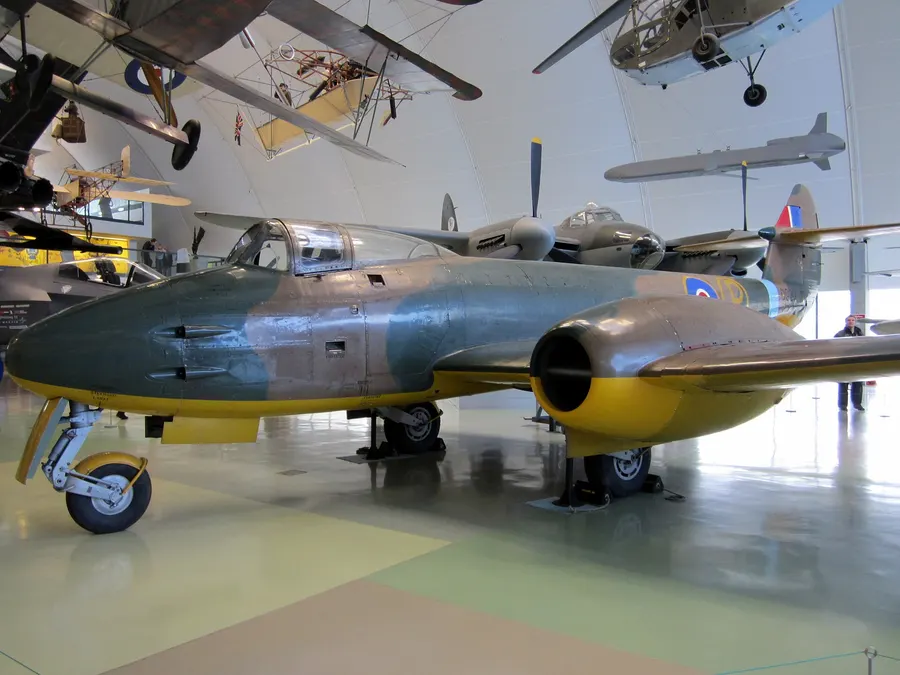
A Gloster Meteor prototype, DG202/G, in the RAF Museum, London.A Gloster Meteor prototype, DG202/G, in the RAF Museum, London.Image: Nick-D · CC BY-SA 3.0
science · Europe

The Gloster Meteor jet fighter first flies

At RAF Cranwell on 5 March 1943 the test pilot Michael Daunt took the prototype Gloster Meteor into the air for the first time. The Meteor became Britain’s first jet fighter and the only Allied jet to fly in combat during the Second World War, chasing down V-1 flying bombs over southern England in 1944.

Source: BAE Systems Heritage: Gloster Meteor ↗
1946
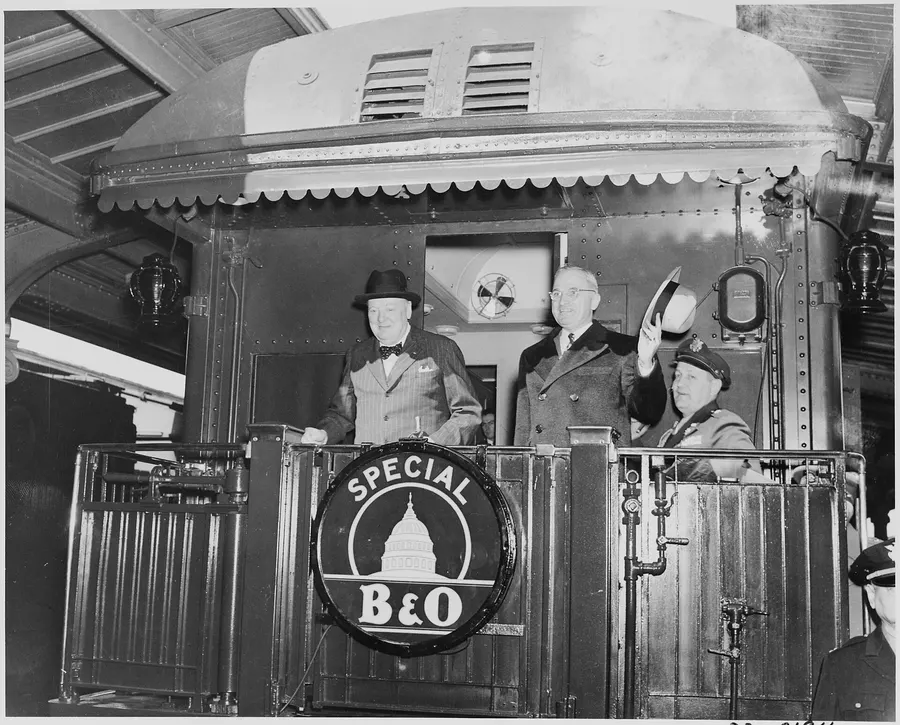
Winston Churchill and President Truman on the train taking them to Fulton, Missouri, March 1946.Winston Churchill and President Truman on the train taking them to Fulton, Missouri, March 1946.Image: Abbie Rowe · Public domain
politics · Europe

Churchill warns of an ‘iron curtain’

Speaking at Westminster College in Fulton, Missouri, on 5 March 1946, with President Harry Truman beside him, Winston Churchill declared that ‘from Stettin in the Baltic to Trieste in the Adriatic, an iron curtain has descended across the Continent’. Churchill was then leader of the opposition in Britain, but his speech, which he called ‘The Sinews of Peace’, drew attention around the world. It also popularised the idea of a ‘special relationship’ between Britain and the United States, and it is often seen as an opening statement of the Cold War.

Source: America’s National Churchill Museum: Sinews of Peace, Iron Curtain speech ↗
1970
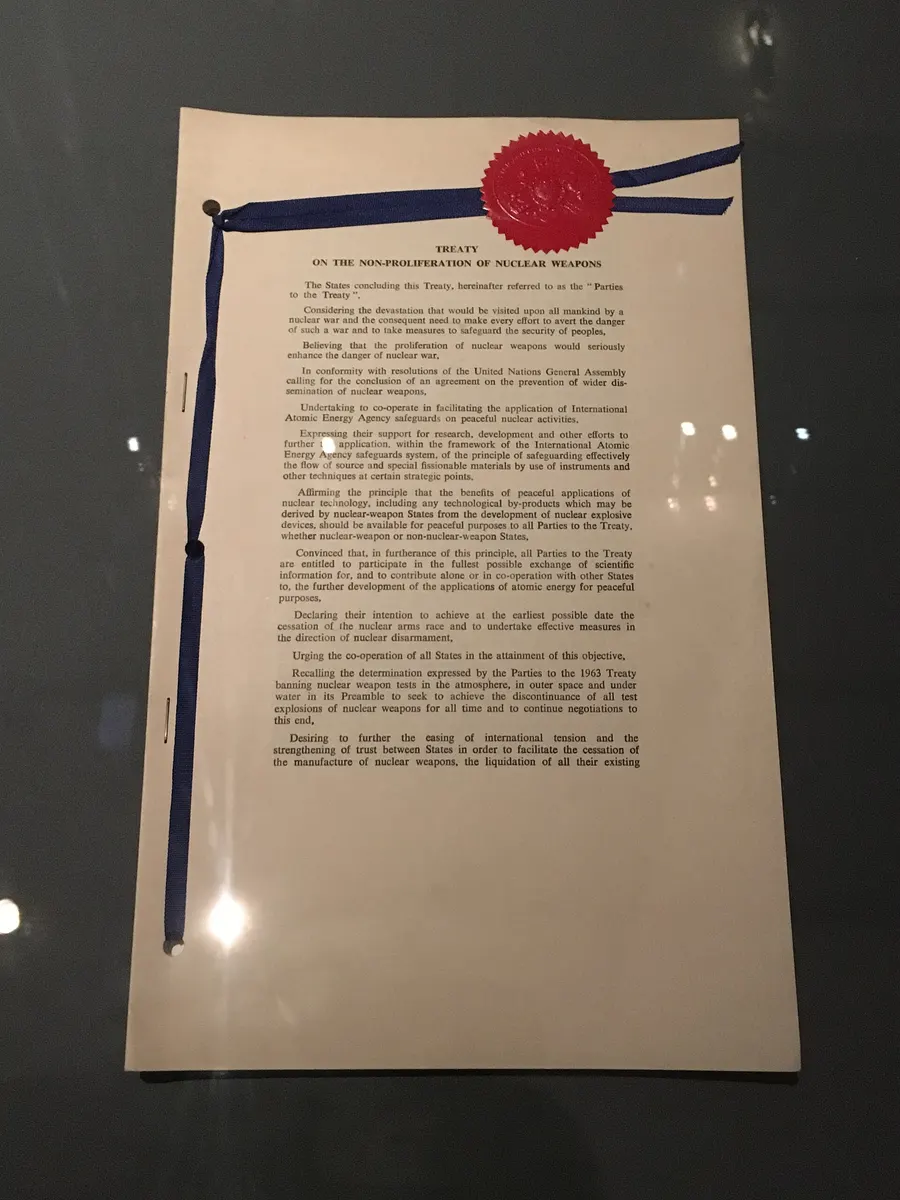
A signed copy of the Treaty on the Non-Proliferation of Nuclear Weapons on display.A signed copy of the Treaty on the Non-Proliferation of Nuclear Weapons on display.Image: Marc Baronnet · CC BY-SA 4.0
world · Global

The Nuclear Non-Proliferation Treaty comes into force

The Treaty on the Non-Proliferation of Nuclear Weapons, opened for signature in London, Moscow and Washington in July 1968, came into force on 5 March 1970, once the United States, Britain, the Soviet Union and 40 other states had ratified it. Countries without nuclear weapons promised not to acquire them, the nuclear powers promised to work towards disarmament, and all agreed to share peaceful nuclear energy under inspection by the International Atomic Energy Agency. Almost every country in the world has since joined.

Source: International Atomic Energy Agency: Treaty on the Non-Proliferation of Nuclear Weapons (NPT) ↗
1979
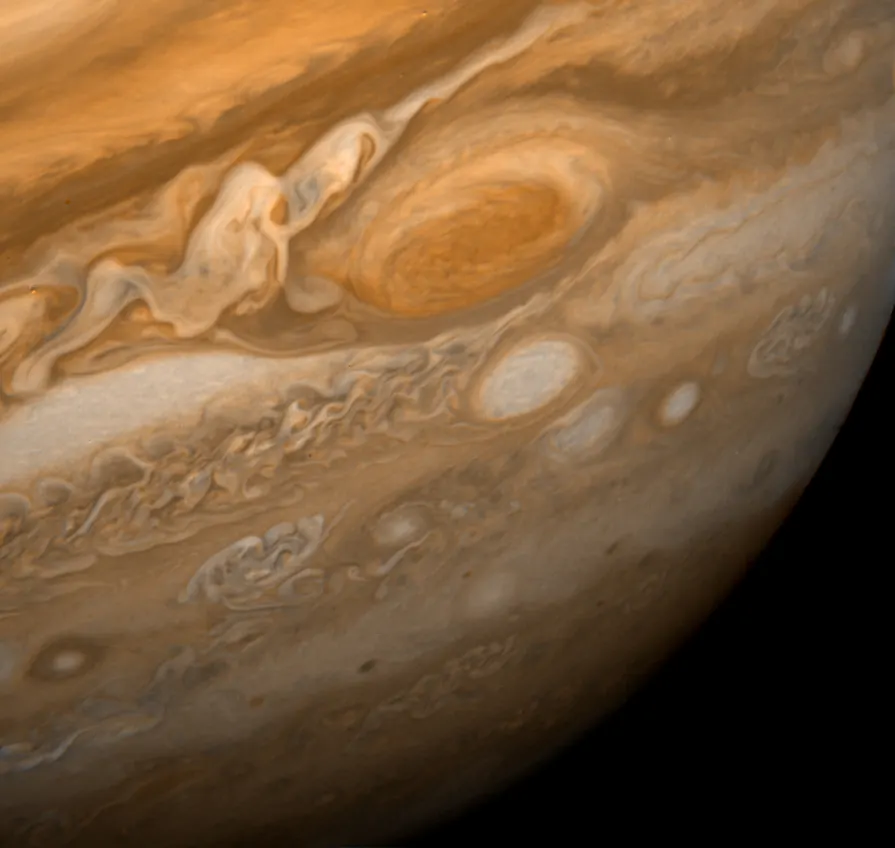
Jupiter's Great Red Spot, photographed by Voyager 1 on its approach, 25 February 1979.Jupiter’s Great Red Spot, photographed by Voyager 1 on its approach, 25 February 1979.Image: NASA · Public domain
science · Americas

Voyager 1 swings past Jupiter

NASA’s Voyager 1 made its closest approach to Jupiter on 5 March 1979, passing about 280,000 kilometres above the cloud tops. Its cameras sent back the most detailed pictures yet of the planet’s storms and of its large moons. The flyby brought surprises: a thin ring round Jupiter, two new small moons, and active volcanoes on the moon Io, the first seen anywhere beyond Earth. Voyager 1 went on to Saturn and is now the most distant human-made object.

Source: NASA Jet Propulsion Laboratory: Slice of history, 45 years since Voyager 1’s Jupiter closest encounter ↗
1981
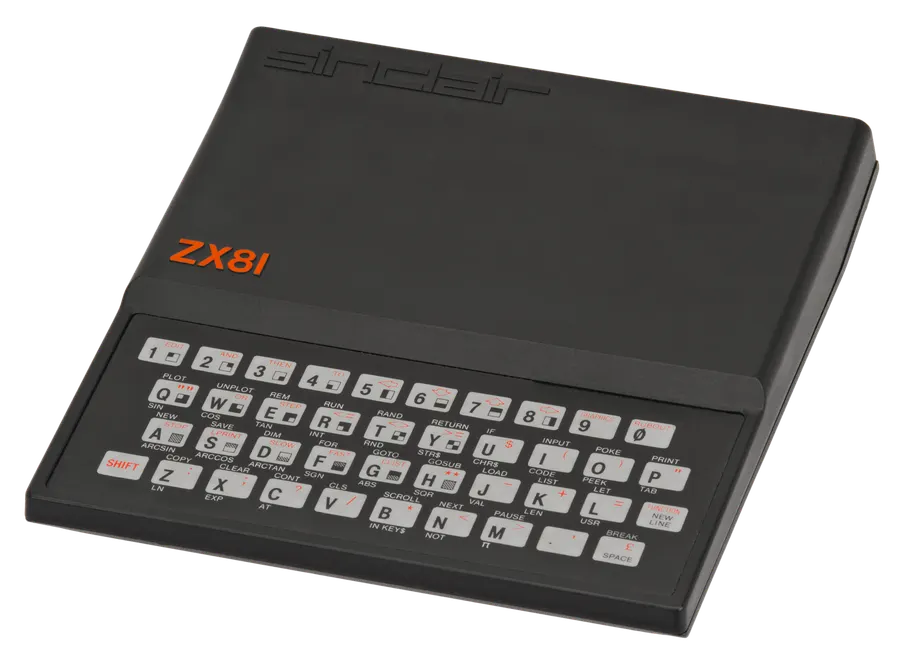
The Sinclair ZX81 home computer.The Sinclair ZX81 home computer.Image: Evan-Amos · CC BY-SA 3.0
science · Europe

Sinclair launches the ZX81

On 5 March 1981 Clive Sinclair’s company launched the ZX81, a small black home computer that plugged into a television set and cost under £100, cheaper than its predecessor, the ZX80. It was sold ready-built or as a kit, and by the end of the year more than 250,000 had been sold. For many families in Britain it was the first computer in the house, and a generation of programmers started on it.

Source: Centre for Computing History: Sinclair launches the ZX81 ↗
RESEARCH

Sources & Further Reading

Selected authoritative references supporting the events on this page.

Stanford Encyclopedia of Philosophy: Galileo Galilei↗Vatican Observatory: Galileo on the decree of the Congregation of the Index↗National Park Service: Boston Massacre↗Massachusetts Historical Society: Perspectives on the Boston Massacre↗National Army Museum: First Burma War↗History of War: First Anglo-Burmese War, 1823-26↗Network Rail: The history of the Britannia Bridge, North Wales↗The Victorian Web: Robert Stephenson’s Britannia Bridge, North Wales↗American Society of Mechanical Engineers: George Westinghouse Jr., landmark brochure↗Wabtec Corporation: The Fab Four, the Wabtec patents that rocked the world↗Encyclopaedia Britannica: Gandhi-Irwin Pact↗Gandhi Heritage Portal: Gandhi-Irwin Pact↗Institute of National Remembrance (Poland): Soviet Politburo order for the NKVD to murder Polish POWs and detainees↗Institute of National Remembrance (Poland): The Katyn massacre, basic facts↗BAE Systems Heritage: Gloster Meteor↗The History Press: The first flight of the Gloster Meteor↗America’s National Churchill Museum: Sinews of Peace, Iron Curtain speech↗International Churchill Society: The Sinews of Peace (‘Iron Curtain Speech’)↗International Atomic Energy Agency: Treaty on the Non-Proliferation of Nuclear Weapons (NPT)↗Arms Control Association: Timeline of the Nuclear Nonproliferation Treaty↗NASA Jet Propulsion Laboratory: Slice of history, 45 years since Voyager 1’s Jupiter closest encounter↗NASA: 40 years ago, Voyager 1 explores Jupiter↗Centre for Computing History: Sinclair launches the ZX81↗Science Museum Group: Sinclair ZX 81 microcomputer, 1981-1985↗
WHY THESE MOMENTS?

Significance before volume

This page is not the longest possible list of events. It is a chronological journey through 5 March, where each entry is chosen for historical significance, human interest and reliability.

Facts are checked against authoritative museums, archives, universities and reference works. Where sources disagree, the page says so.

EXPLORED THE DEEPER STORY?

Return to the highlights of 5 March

Discover the lighter side of the date with famous birthdays, culture, firsts and lives remembered.

Explore This Day →
← PREVIOUS DAY4 March
HISTORY & TIMELINE5 March
NEXT DAY →6 March