
HISTORY & TIMELINE
28 July

A journey through
28 July in history

The story of 28 July runs from a pope anointing a Frankish king at Saint-Denis in 754 to the IRA’s decision to put down its guns in 2005. In between come the death of Bach, the first ascent of Austria’s highest mountain, Peru’s proclamation of independence, the Fourteenth Amendment’s certification, Austria-Hungary’s declaration of war on Serbia, the landing of US Marines in Haiti, the first flight of the Flying Fortress, the Tangshan earthquake, Vietnam’s entry into ASEAN and the discovery of Kennewick Man.

II
THE MIDDLE AGES

Medieval History

Kingdoms, conflict, faith, power and the changing medieval world.

754
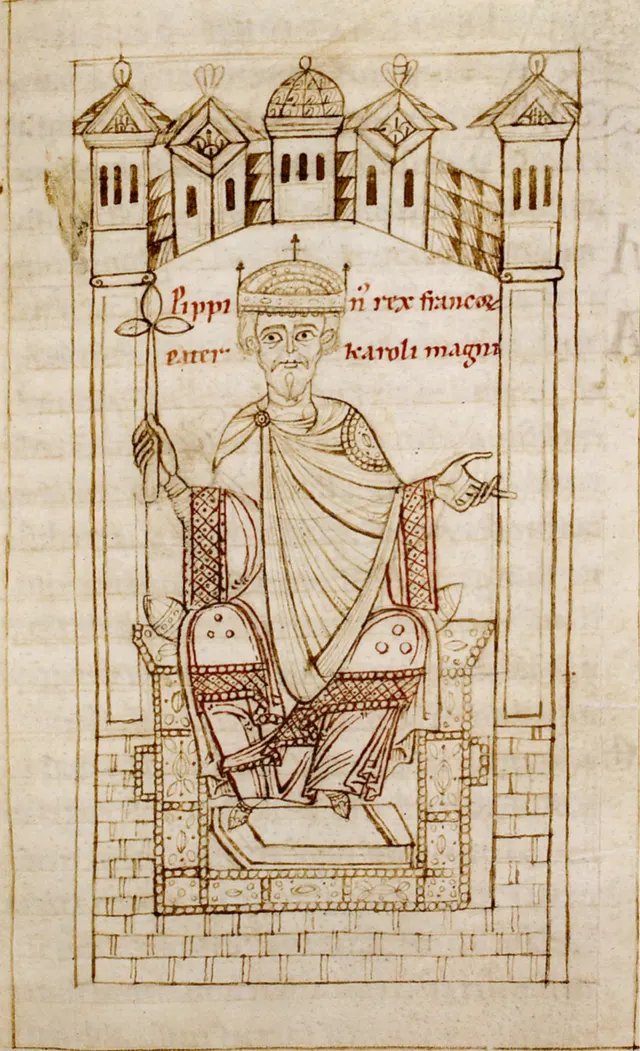
Pepin the Short in a medieval manuscript of the Imperial ChroniclePepin the Short in a medieval manuscript of the Imperial ChronicleImage: from the Middle Ages, unknown · Public domain
culture · Europe

Pope Stephen II anoints Pepin and his sons at Saint-Denis

Pepin the Short had pushed aside the last Merovingian king in 751 and taken the Frankish crown himself. When Pope Stephen II crossed the Alps to seek help against the Lombards, he anointed Pepin at the abbey of Saint-Denis near Paris on 28 July 754, together with his sons Charles, the future Charlemagne, and Carloman. The pope forbade the Franks ever to choose a king from another family, and Pepin in return marched into Italy against the Lombards.

Source: Catholic Encyclopedia: Pepin the Short ↗
III
A CHANGING WORLD

Early Modern Era

Exploration, political change, scientific development and expanding global connections.

1750
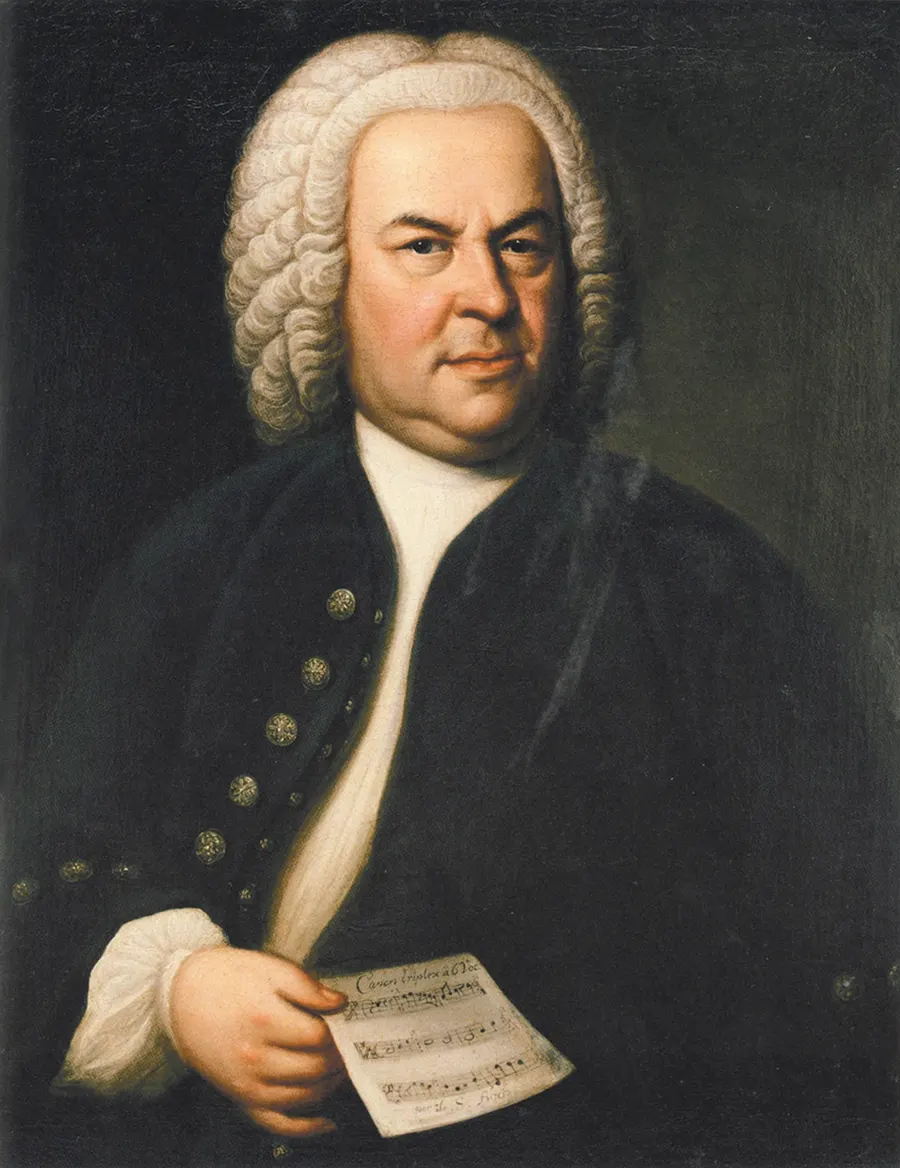
Johann Sebastian Bach in a portrait by Elias Gottlob Haussmann, holding a sheet of musicJohann Sebastian Bach in a portrait by Elias Gottlob Haussmann, holding a sheet of musicImage: Elias Gottlob Haussmann · Public domain
culture · Europe

Johann Sebastian Bach dies in Leipzig

From 1723 Johann Sebastian Bach was cantor of St Thomas’s School and director of music for the main churches of Leipzig, writing cantatas week after week for their services, along with the St Matthew Passion, the Mass in B minor and a stream of keyboard and organ works. In his last years his eyesight failed, and in 1750 he underwent two operations on his eyes by a travelling English surgeon, which left him weaker still. Bach died in Leipzig on 28 July 1750, aged 65, after a stroke. In his lifetime he was admired above all as an organist, and after his death his music was seen as old-fashioned and was rarely performed, although composers such as Mozart and Beethoven studied it. Felix Mendelssohn’s performance of the St Matthew Passion in Berlin in 1829 began a revival that made Bach one of the most celebrated of all composers.

Source: Bach-Archiv Leipzig: Johann Sebastian Bach, a chronology ↗
IV
THE NINETEENTH CENTURY

The 1800s

Industry, empire, invention, reform and a century of enormous transformation.

1800
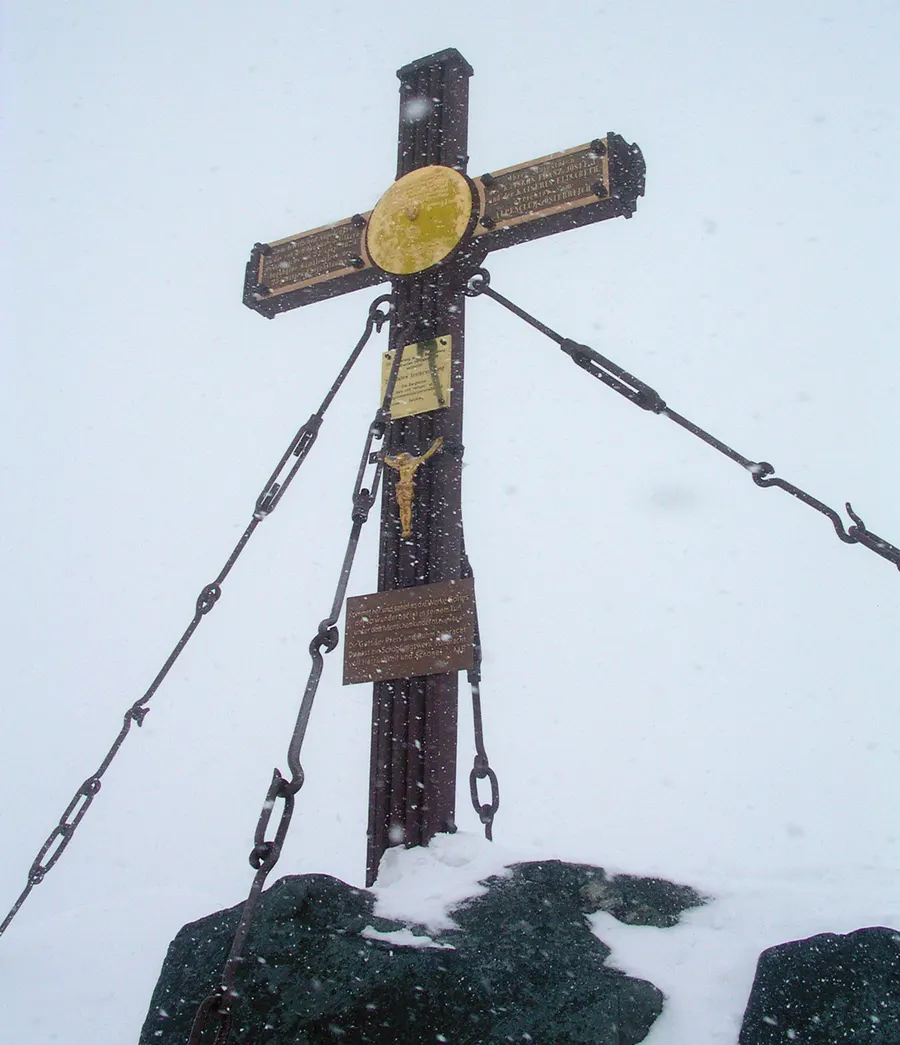
The cross that stands on the summit of the Großglockner todayThe cross that stands on the summit of the Großglockner todayImage: Svíčková · CC BY-SA 3.0
world · Europe

Climbers reach the summit of the Großglockner

The Großglockner, at 3,798 metres the highest mountain in Austria, had been attempted the year before by an expedition paid for by Franz Xaver von Salm-Reifferscheid, Prince-Bishop of Gurk, who had a hut built high on its flanks. His second expedition, with scientists among its many members, succeeded: on 28 July 1800 a small party that included the brothers Klotz and the priest Horasch stood on the summit and set up a cross there.

Source: Großglockner Hochalpenstraße: The history of the first ascent of the Großglockner ↗
1821
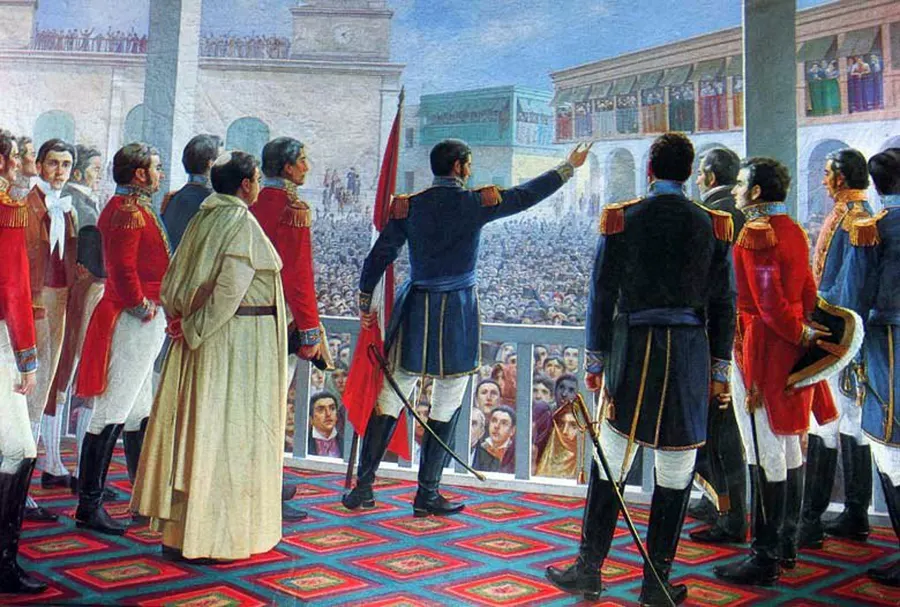
The proclamation of Peru's independence in Lima, as painted by Juan LepianiThe proclamation of Peru’s independence in Lima, as painted by Juan LepianiImage: Juan Lepiani · Public domain
politics · Americas

San Martín proclaims the independence of Peru in Lima

Peru was the heart of Spain’s power in South America, and Lima, seat of a viceroy, was its most loyal city. After freeing Chile, the Argentine general José de San Martín sailed north with a liberating army and landed on the Peruvian coast in 1820. Rather than storm Lima, he waited, and in July 1821 the viceroy José de la Serna abandoned the city and withdrew into the mountains. On 15 July an open meeting of Lima’s leading citizens signed an act declaring independence. On 28 July 1821 San Martín proclaimed Peru’s independence in the main square of Lima, repeating the proclamation in other squares across the city, before cheering crowds. He soon took the title of Protector of Peru. Spanish armies still held much of the country, and independence was only secured after the Battle of Ayacucho in 1824, but 28 July remains Peru’s national day, celebrated as the Fiestas Patrias.

Source: Britannica: Peru, achievement of independence ↗
1868
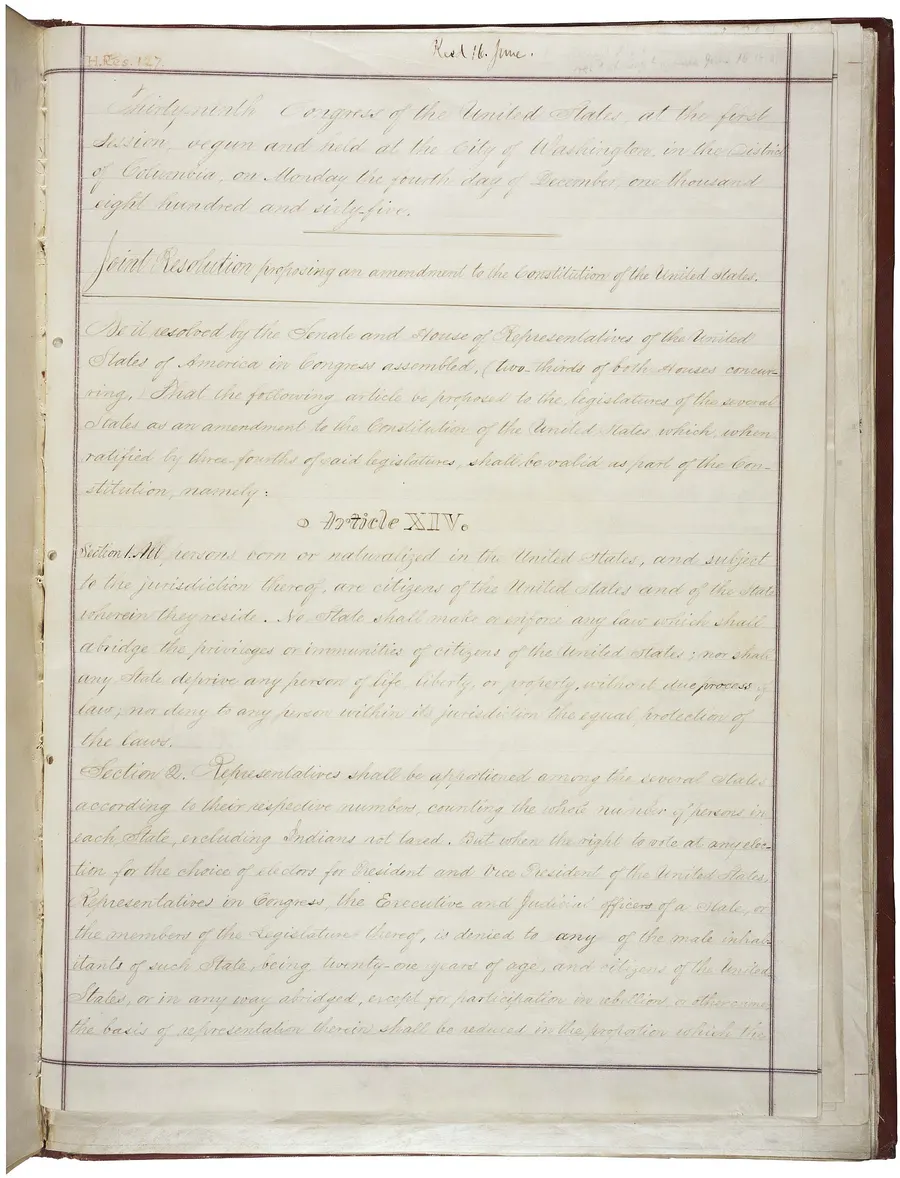
The first page of the Fourteenth Amendment, in the National ArchivesThe first page of the Fourteenth Amendment, in the National ArchivesImage: National Archives of the United States · Public domain
politics · Americas

The Fourteenth Amendment becomes part of the US Constitution

Passed by Congress in 1866 after the Civil War, the Fourteenth Amendment made every person born or naturalised in the United States a citizen, including the formerly enslaved, and required states to give all people due process and the equal protection of the laws. Once enough states had ratified it, Secretary of State William Seward certified on 28 July 1868 that it was part of the Constitution. It became the basis of many later civil rights rulings.

Source: National Archives: 14th Amendment to the U.S. Constitution: Civil Rights (1868) ↗
V
THE TWENTIETH CENTURY

The 1900s

War and peace, technological leaps, social change, politics, sport and popular culture.

1914
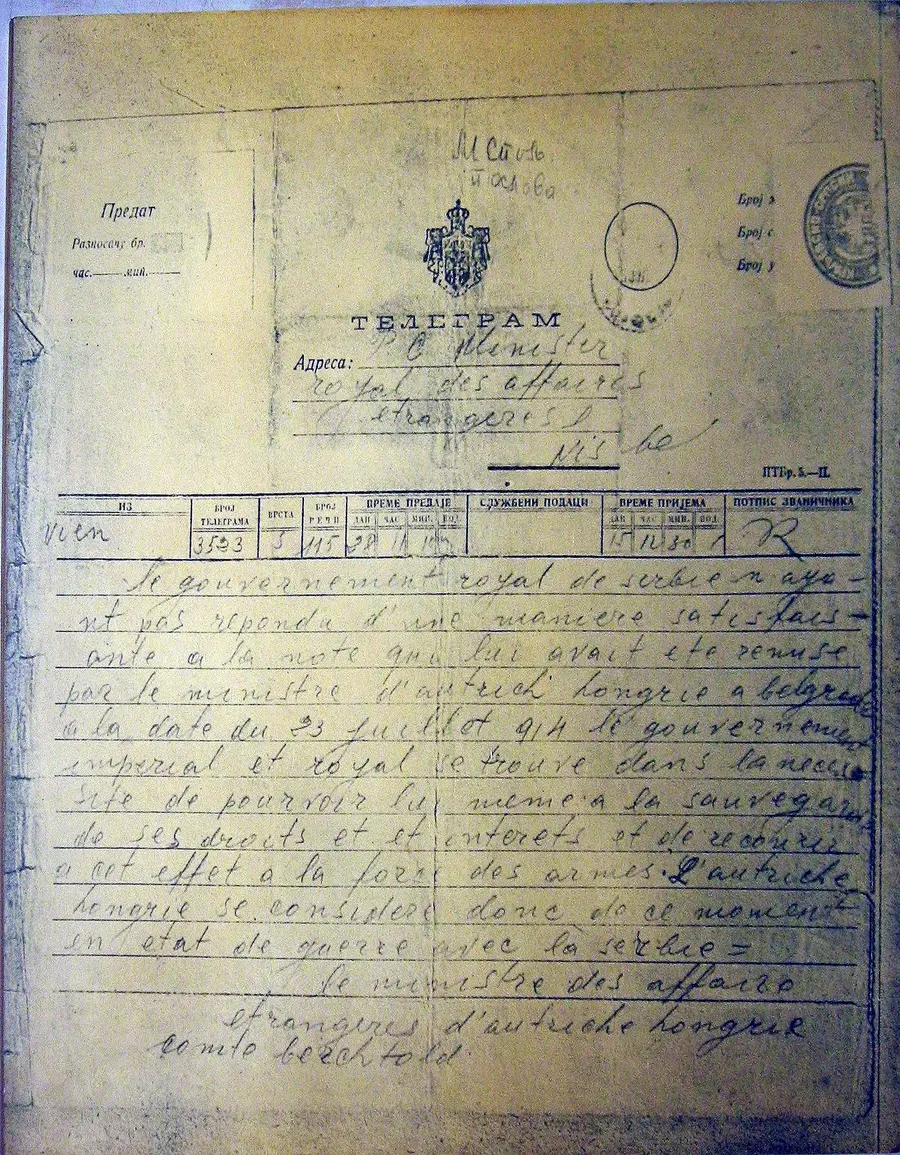
The Austro-Hungarian government's telegram of 28 July 1914 declaring war on SerbiaThe Austro-Hungarian government’s telegram of 28 July 1914 declaring war on SerbiaImage: Austro-Hungarian government · Public domain
world · Europe

Austria-Hungary declares war on Serbia

On 28 June 1914 Archduke Franz Ferdinand, heir to the Austro-Hungarian throne, and his wife Sophie were shot dead in Sarajevo by Gavrilo Princip, a young Bosnian Serb nationalist backed by a secret society with links to Serbian army officers. Vienna blamed Serbia and, sure of German support, sent Belgrade a harsh ultimatum on 23 July. Serbia accepted most of the demands but not those that would have let Austro-Hungarian officials act inside the country. On 28 July 1914 Austria-Hungary declared that it considered itself at war with Serbia, sending the news by telegram, and its guns began shelling Belgrade the next day. Russia, Serbia’s protector, started to mobilise, and the alliances that bound Europe’s great powers began to pull them in one after another. Within a week a local quarrel in the Balkans had become the First World War.

Source: Imperial War Museums: The outbreak of the First World War ↗
1915
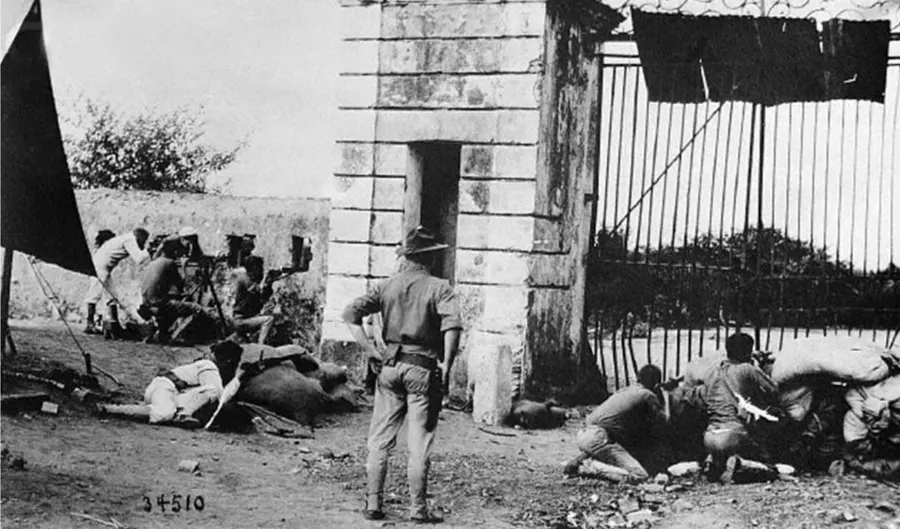
US Marines guarding a gateway in Cap-Haïtien in 1915US Marines guarding a gateway in Cap-Haïtien in 1915Image: East Oregonian · Public domain
world · Americas

US Marines land in Haiti, beginning a 19-year occupation

Haiti had gone through several presidents in a few years when, in July 1915, President Vilbrun Guillaume Sam ordered the killing of political prisoners and was then dragged from the French legation and killed by a crowd. On 28 July 1915 US sailors and Marines landed at Port-au-Prince on President Woodrow Wilson’s orders. The United States took control of Haiti’s finances and customs, crushed armed resistance, and kept its forces there until 1934.

Source: US Department of State, Office of the Historian: U.S. invasion and occupation of Haiti, 1915-34 ↗
1935
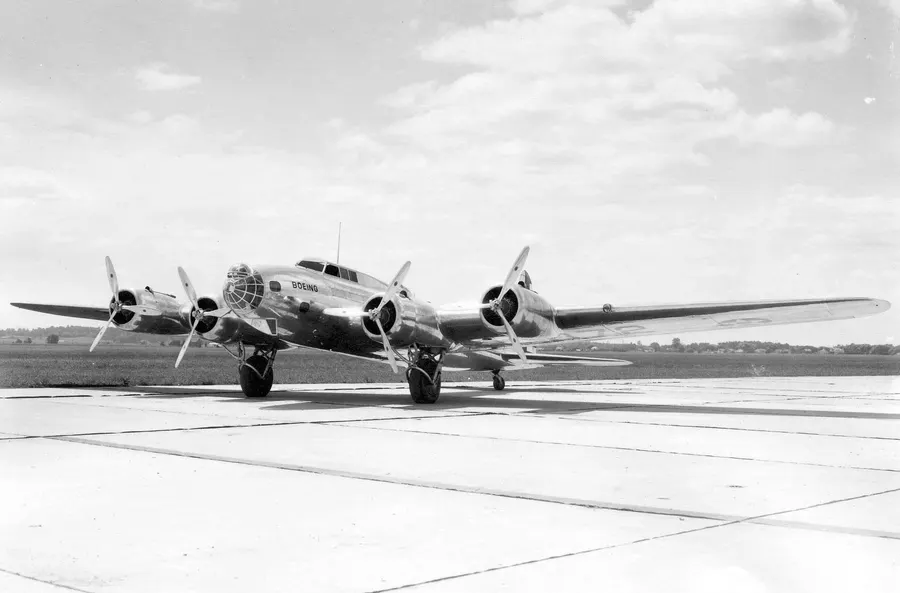
The Boeing Model 299, prototype of the B-17 Flying FortressThe Boeing Model 299, prototype of the B-17 Flying FortressImage: U.S. Air Force · Public domain
science · Americas

Boeing’s Model 299, the first Flying Fortress, takes to the air

Built by Boeing at its own expense in under a year to compete for a US Army bomber contract, the four-engined Model 299 first flew from Boeing Field in Seattle on 28 July 1935. A newspaper reporter’s description of it as a ‘flying fortress’ stuck. The prototype crashed that October when its controls had been left locked, but the Army ordered the design as the B-17, and more than 12,000 were built for the Second World War.

Source: Boeing: Historical snapshot, B-17 Flying Fortress ↗
1976
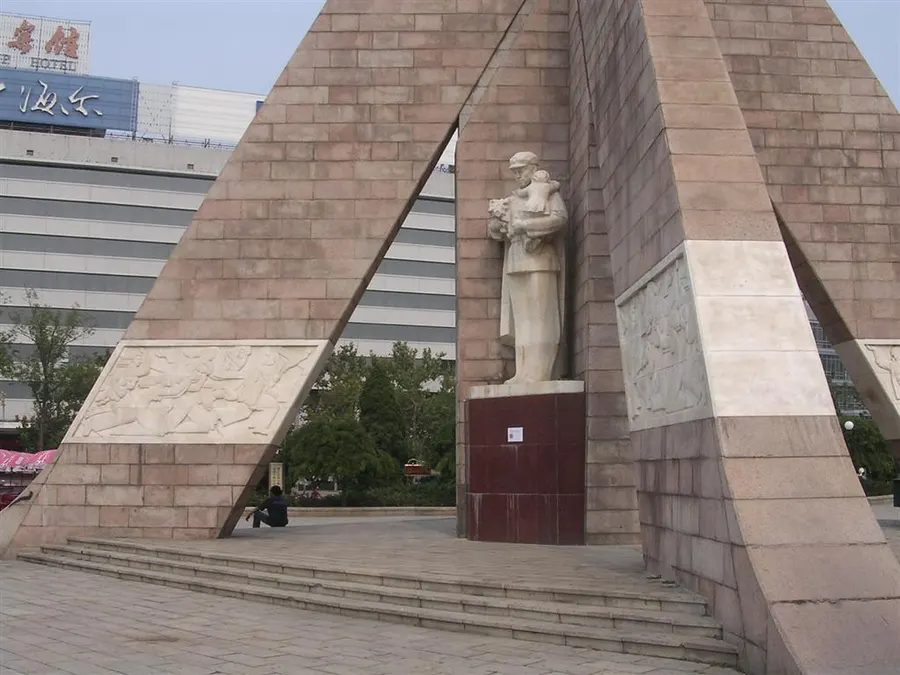
The Tangshan Earthquake Memorial in the rebuilt cityThe Tangshan Earthquake Memorial in the rebuilt cityImage: Alexis Rondeau · CC BY-SA 2.0
world · Asia

An earthquake destroys the city of Tangshan

Tangshan was an industrial and coal-mining city of about a million people in Hebei province, east of Beijing. In the early hours of 28 July 1976, while most people were asleep, a powerful earthquake struck directly beneath it. In a few seconds most of the city’s buildings, many of them unreinforced brick, collapsed, and a strong aftershock that evening brought down more. The official death toll was about 242,000, though other estimates run much higher, and hundreds of thousands more were injured. China, in the last months of the Mao era, turned down offers of foreign help, and soldiers and survivors dug through the rubble themselves. It was one of the deadliest earthquakes of the 20th century. Tangshan was rebuilt on the same site with stricter building rules, and a memorial now stands at its centre.

Source: Britannica: Tangshan earthquake of 1976 ↗
1995
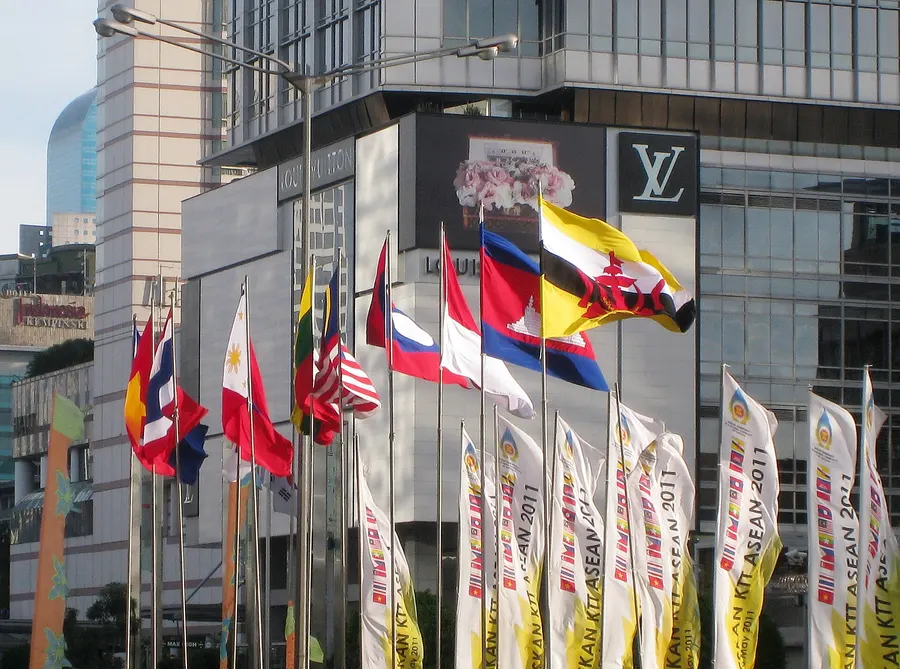
The flags of ASEAN's member states lining a street in Jakarta during a summit in 2011The flags of ASEAN’s member states lining a street in Jakarta during a summit in 2011Image: Gunawan Kartapranata · CC BY-SA 3.0
politics · Asia

Vietnam joins ASEAN

The Association of Southeast Asian Nations was founded in 1967 by five countries wary of communism, and in the 1980s it led opposition to Vietnam’s occupation of Cambodia. After Vietnam withdrew its troops and opened its economy, it was admitted as ASEAN’s seventh member on 28 July 1995, at a meeting of foreign ministers in Bandar Seri Begawan, Brunei. Laos, Myanmar and Cambodia followed by 1999, bringing the group to ten.

Source: ASEAN: Vietnam in ASEAN, toward cooperation for mutual benefits ↗
1996
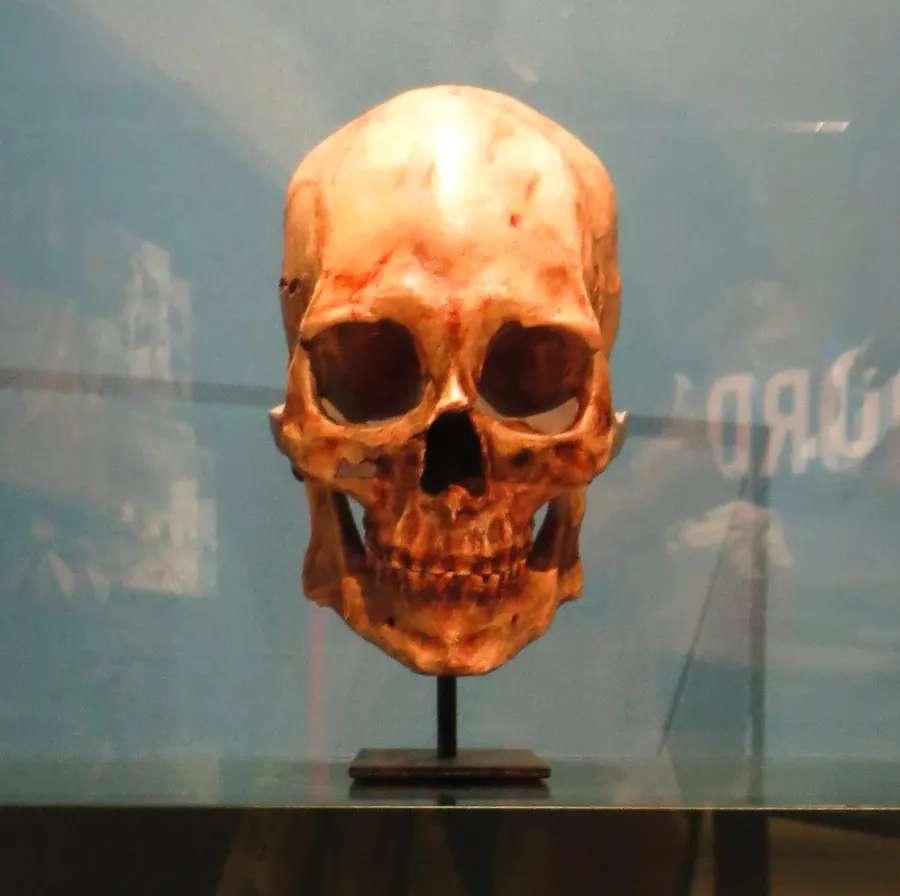
A cast of the Kennewick Man skull shown at the Natural History Museum in Karlsruhe, GermanyA cast of the Kennewick Man skull shown at the Natural History Museum in Karlsruhe, GermanyImage: Ghedoghedo · CC BY-SA 4.0
science · Americas

The skull of Kennewick Man is found in the Columbia River

On 28 July 1996 two young men wading in the shallows of the Columbia River at Columbia Park in Kennewick, Washington, came across a human skull. Searches over the following weeks recovered an almost complete skeleton. Radiocarbon dating showed that the man had lived about 8,400 to 8,700 years ago, making him one of the oldest and most complete skeletons ever found in the Americas. Local Native American tribes claimed him as an ancestor, whom they call the Ancient One, and asked to rebury him, while a group of scientists went to court to study the bones. The legal battle lasted years. In 2015 a DNA study showed that he was more closely related to modern Native Americans than to any other living people, and in February 2017 his remains were returned to the tribes and buried.

Source: Burke Museum: The Ancient One, Kennewick Man ↗
VI
2000 TO TODAY

Modern Day

The events of recent decades that have already become part of the historical record.

2005
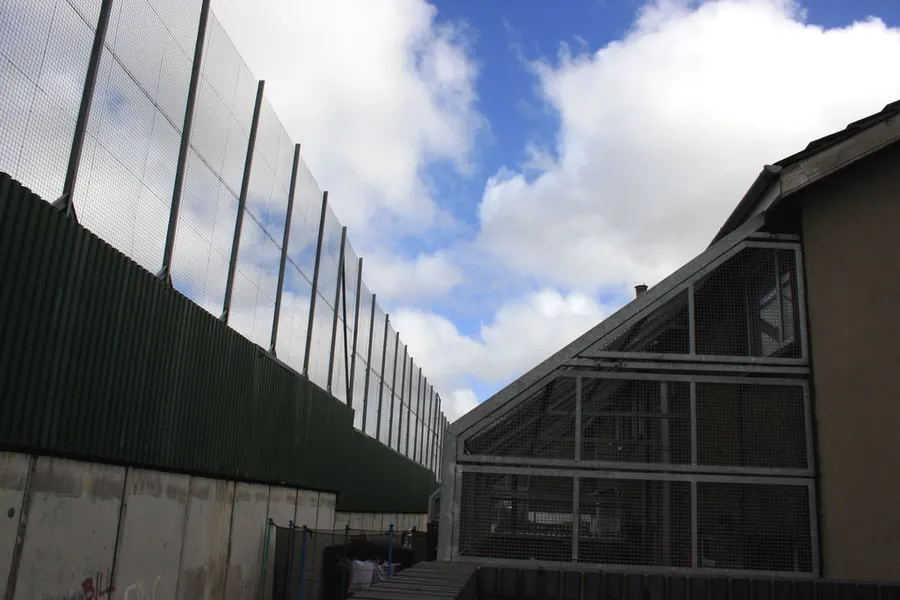
A 'peace line' wall at Bombay Street in west Belfast, built to keep neighbouring communities apartA ‘peace line’ wall at Bombay Street in west Belfast, built to keep neighbouring communities apartImage: Supermac1961 · CC BY 2.0
politics · Europe

The IRA formally ends its armed campaign

For more than 30 years the Provisional IRA fought to force Britain out of Northern Ireland, in a conflict known as the Troubles that cost more than 3,500 lives on all sides. It called ceasefires in the 1990s, and the Good Friday Agreement of 1998 set up shared government in Belfast, but the IRA’s refusal to give up its weapons kept that government stalling and collapsing. On 28 July 2005 the IRA released a statement ordering all its units to dump their arms from four o’clock that afternoon and to pursue their aims only by peaceful, political means. The statement was read out on video by a former prisoner, Séanna Walsh. Two months later the independent decommissioning body confirmed that the IRA’s arsenal had been put beyond use, clearing the way for power-sharing to return in 2007.

Source: CAIN, Ulster University: IRA statement on the ending of the armed campaign, 28 July 2005 ↗
RESEARCH

Sources & Further Reading

Selected authoritative references supporting the events on this page.

WHY THESE MOMENTS?

Significance before volume

This page is not the longest possible list of events. It is a chronological journey through 28 July, where each entry is chosen for historical significance, human interest and reliability.

Facts are checked against authoritative museums, archives, universities and reference works. Where sources disagree, the page says so.

EXPLORED THE DEEPER STORY?

Return to the highlights of 28 July

Discover the lighter side of the date with famous birthdays, culture, firsts and lives remembered.

Explore This Day →
← PREVIOUS DAY27 July
HISTORY & TIMELINE28 July
NEXT DAY →29 July