
HISTORY & TIMELINE
24 January

A journey through
24 January in history

The twenty-fourth day of the year has seen India’s first modern university founded in Calcutta, Roosevelt demand the unconditional surrender of the Axis at Casablanca, a Japanese soldier found hiding in the jungle of Guam 28 years after the war and Voyager 2 sweep past Uranus. This timeline follows 24 January from the first century to the twentieth.

I
EARLIEST RECORDS

Ancient & Early History

The earliest worthwhile records and events connected with this date.

41
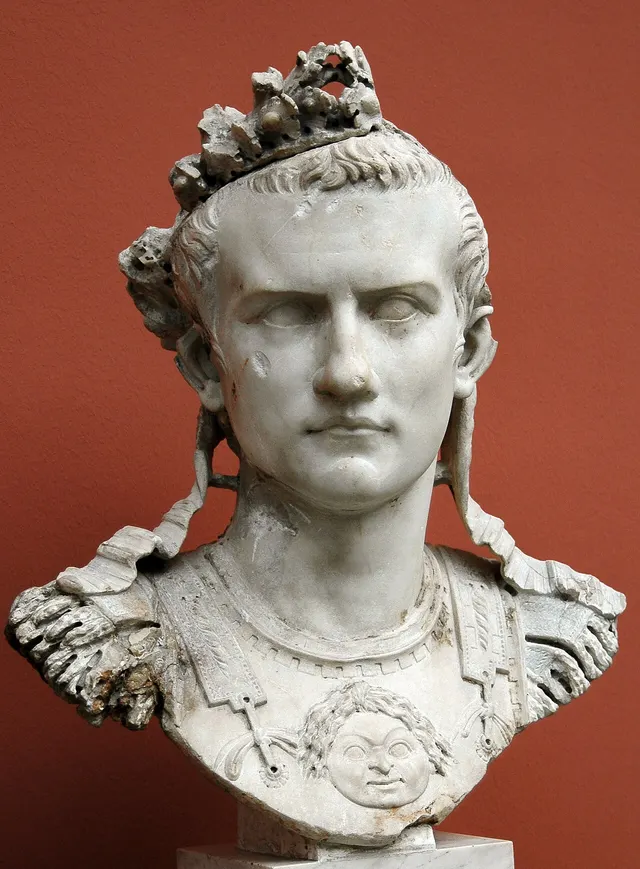
A marble bust of the emperor Caligula in the Ny Carlsberg Glyptotek, Copenhagen.A marble bust of the emperor Caligula in the Ny Carlsberg Glyptotek, Copenhagen.Image: Sergey Sosnovskiy from Saint-Petersburg, Russia · CC BY-SA 2.0
politics · Europe

The emperor Caligula is murdered by his own guards

Gaius Caesar, known from boyhood by his nickname Caligula, ‘little boot’, became Roman emperor in AD 37 to great rejoicing. Within months his rule turned cruel and erratic: ancient writers describe executions on a whim, ruinous spending and his demand to be worshipped as a god. On 24 January 41, during games on the Palatine Hill, he was attacked in a passage near his palace by Cassius Chaerea, a tribune of the Praetorian Guard whom he had often mocked, and other officers, and stabbed to death. His wife and daughter were also killed. The guardsmen found his uncle Claudius hiding in the palace and proclaimed him emperor.

Source: Encyclopaedia Britannica: Caligula ↗
II
THE MIDDLE AGES

Medieval History

Kingdoms, conflict, faith, power and the changing medieval world.

1458
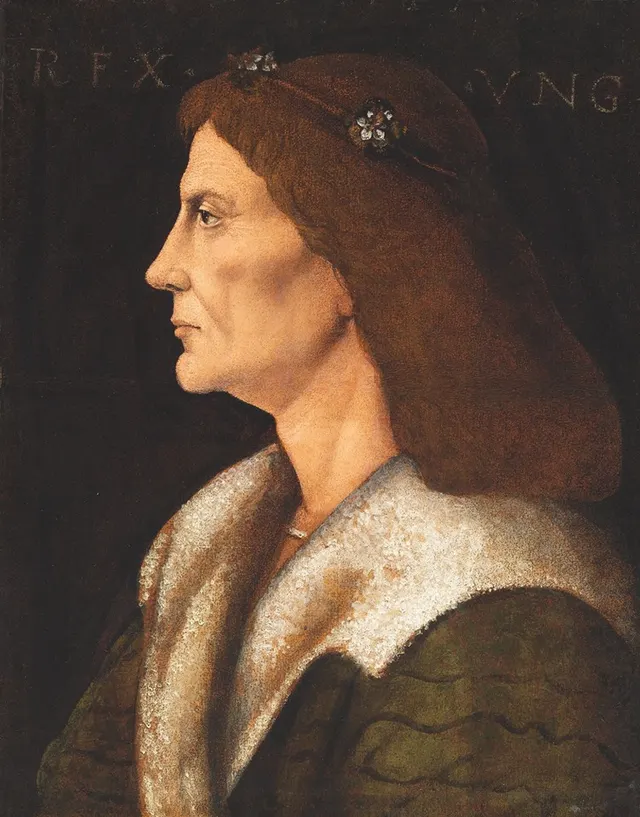
King Matthias Corvinus of Hungary in profile, a portrait attributed to Andrea Mantegna.King Matthias Corvinus of Hungary in profile, a portrait attributed to Andrea Mantegna.Image: Andrea Mantegna · Public domain
politics · Europe

Hungary’s nobles choose Matthias Corvinus as king

When the young king Ladislas V died suddenly in 1457, Hungary had no obvious heir. The nobles gathered at Buda and Pest, and on 24 January 1458 they elected the fifteen-year-old Matthias Hunyadi, son of the great general János Hunyadi, who had defeated the Ottomans at Belgrade. He was the first king of medieval Hungary without royal ancestry. Matthias became one of the most powerful rulers of his age. He built a standing army, the Black Army, conquered Moravia, Silesia and even Vienna, and made his court at Buda a centre of the Italian Renaissance, with a library of illuminated manuscripts, the Corvinas, that was famous across Europe.

Source: Encyclopaedia Britannica: Matthias I ↗
IV
THE NINETEENTH CENTURY

The 1800s

Industry, empire, invention, reform and a century of enormous transformation.

1848
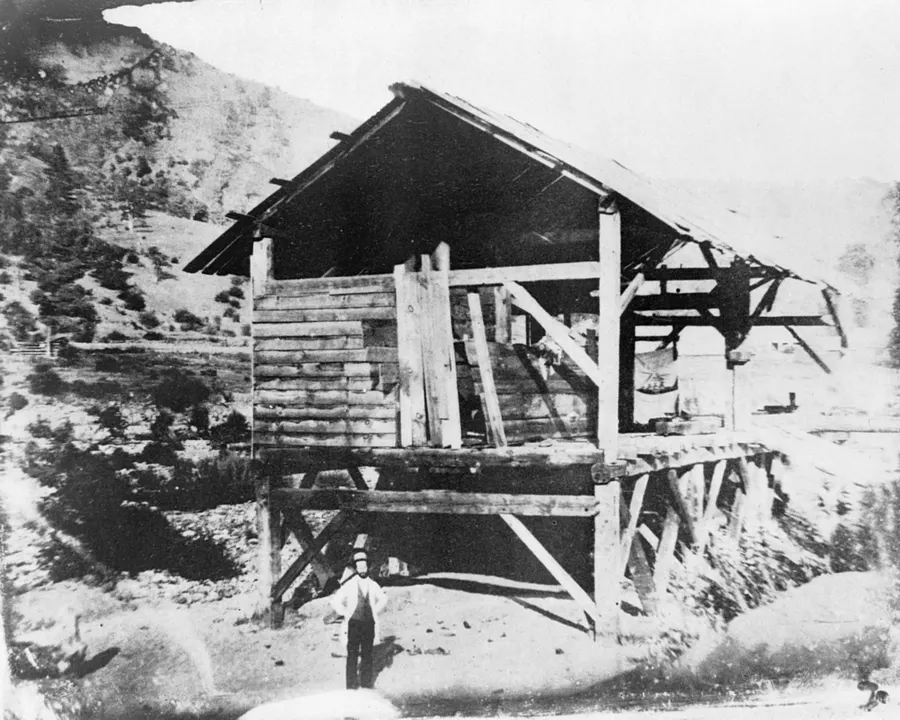
Sutter's sawmill at Coloma, California, from a daguerreotype of about 1850 by R. H. Vance; the man in front has long been said to be James Marshall, though that is doubtful.Sutter’s sawmill at Coloma, California, from a daguerreotype of about 1850 by R. H. Vance; the man in front has long been said to be James Marshall, though that is doubtful.Image: R. H. Vance · Public domain
world · Americas

A carpenter finds gold at Sutter’s Mill

James Marshall, a carpenter from New Jersey, was building a water-powered sawmill for the Swiss settler John Sutter on the American River at Coloma, in the foothills of the Sierra Nevada. On the morning of 24 January 1848 he went to check the tailrace, the channel that carried water away from the wheel. ‘My eye was caught by something shining in the bottom of the ditch,’ he later said. It was gold. Sutter tried to keep the find quiet, but by the end of the year the news had spread around the world, and in 1849 some 80,000 fortune-seekers, the ‘forty-niners’, poured into California. The gold rush transformed the territory, which became a state in 1850, and devastated its Native peoples.

Source: California State Parks: Marshall Gold Discovery State Historic Park ↗
1857
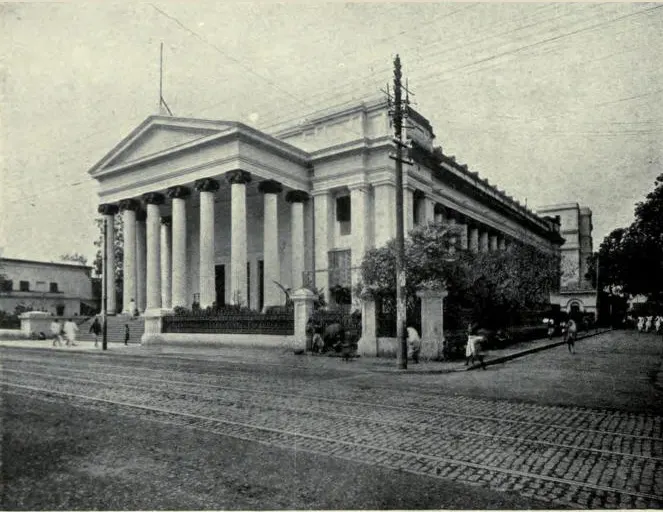
The Senate Hall of the University of Calcutta, photographed by Theodore Julius Hoffmann in 1910.The Senate Hall of the University of Calcutta, photographed by Theodore Julius Hoffmann in 1910.Image: Theodore Julius Hoffmann · Public domain
science · Asia

The University of Calcutta is founded

Following a plan sent from London in 1854, an act of the Legislative Council of British India established the University of Calcutta on 24 January 1857, the first modern university in South Asia; Bombay and Madras followed within months. Among its later students and teachers were Rabindranath Tagore, C. V. Raman and Satyendra Nath Bose.

Source: University of Calcutta: about the university ↗
V
THE TWENTIETH CENTURY

The 1900s

War and peace, technological leaps, social change, politics, sport and popular culture.

1943
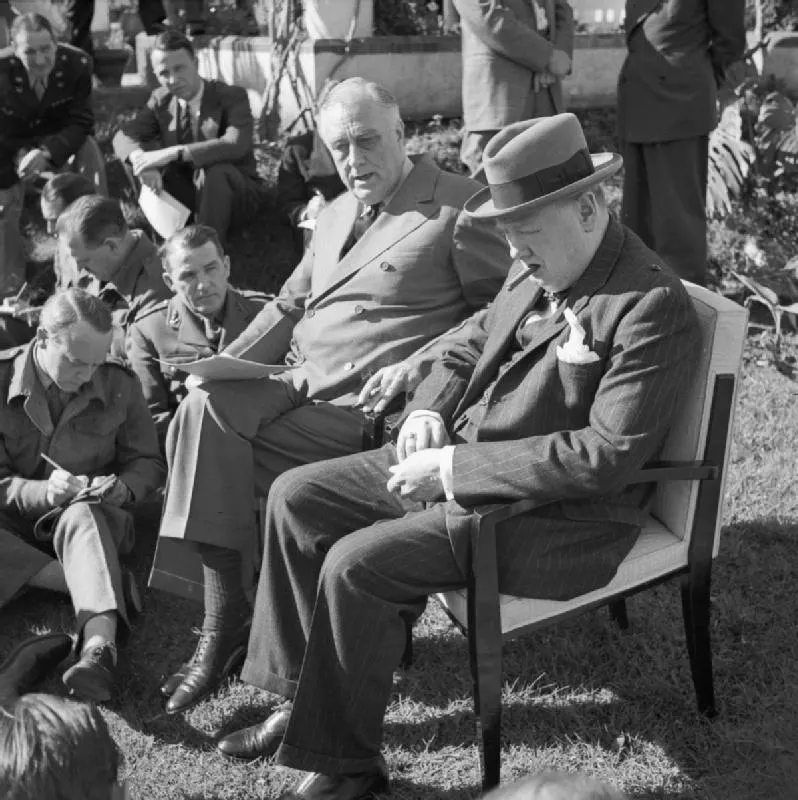
Roosevelt and Churchill talk to the press at the villa Dar es Saada during the Casablanca conference, 24 January 1943.Roosevelt and Churchill talk to the press at the villa Dar es Saada during the Casablanca conference, 24 January 1943.Image: No 2 Army Film & Photographic Unit · Public domain
world · Africa

At Casablanca, Roosevelt demands the Axis’s unconditional surrender

For ten days Franklin Roosevelt, Winston Churchill and their military chiefs met at Anfa, outside Casablanca in French Morocco, to plan the next stage of the war. At a press conference in the villa’s garden on 24 January 1943, Roosevelt announced that the Allies would accept nothing less than the unconditional surrender of Germany, Italy and Japan.

Source: US Office of the Historian: the Casablanca Conference, 1943 ↗
1966
Indira Gandhi photographed in March 1977.Indira Gandhi photographed in March 1977.Image: Anefo · CC0
politics · Asia

Indira Gandhi becomes India’s first woman prime minister

When the prime minister Lal Bahadur Shastri died suddenly in Tashkent in January 1966, the leaders of the Congress party looked for a successor. They chose Indira Gandhi, the daughter of India’s first prime minister, Jawaharlal Nehru, partly because they expected her to be easy to guide. She beat the veteran Morarji Desai for the party’s leadership by 355 votes to 169. She was sworn in on 24 January 1966, India’s first and so far only woman prime minister. She proved far tougher than her backers had imagined, leading India to victory over Pakistan in 1971, and she ruled for sixteen years in all, including the Emergency of 1975-77, before her assassination in 1984.

Source: Prime Minister of India: Smt. Indira Gandhi ↗
1972
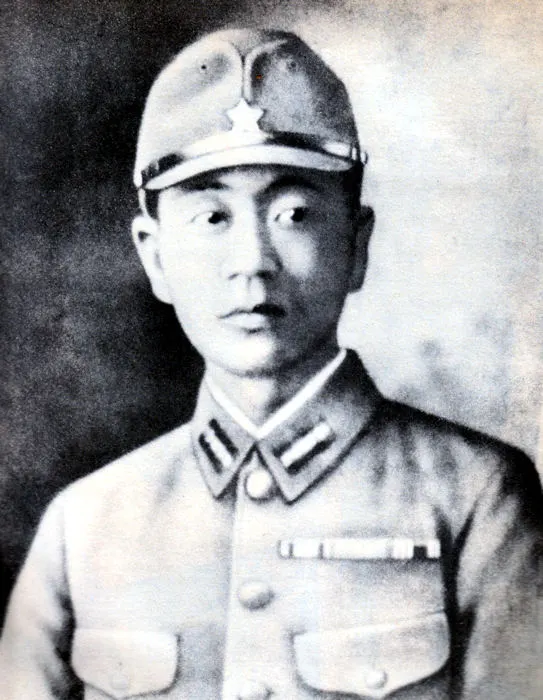
Shoichi Yokoi in Japanese army uniform, from a wartime photograph.Shoichi Yokoi in Japanese army uniform, from a wartime photograph.Image: 投稿者が出典雑誌より取り込み · Public domain

world · Oceania

A Japanese soldier is found in the jungle of Guam, 28 years on

When American forces retook Guam in 1944, Sergeant Shoichi Yokoi and other Japanese soldiers fled into the jungle rather than surrender. He lived there alone for years in an underground shelter, making his own clothes. On 24 January 1972 two local hunters came across him setting shrimp traps near Talofofo. He returned to Japan a celebrity, 28 years after the war he had gone to fight.

Source: Guampedia: WWII, Sgt. Shoichi Yokoi, last straggler on Guam ↗
1986
Uranus photographed by Voyager 2 in January 1986, a nearly featureless blue-green globe.Uranus photographed by Voyager 2 in January 1986, a nearly featureless blue-green globe.Image: NASA/JPL-Caltech · Public domain
science · Global

Voyager 2 sweeps past Uranus

Launched in 1977, Voyager 2 had already visited Jupiter and Saturn when it reached Uranus, a planet so far away that even the largest telescopes showed only a small blur. Its closest approach came on 24 January 1986, about 81,500 kilometres above the cloud tops. In a few hours the spacecraft discovered ten new moons and two new rings, found a magnetic field tilted far from the planet’s axis and photographed the strange, scarred surface of the moon Miranda. It is still the only spacecraft ever to visit Uranus; it went on to Neptune in 1989.

Source: NASA: 35 years ago, Voyager 2 explores Uranus ↗
WHY THESE MOMENTS?

Significance before volume

This page is not the longest possible list of events. It is a chronological journey through 24 January, where each entry is chosen for historical significance, human interest and reliability.

Facts are checked against authoritative museums, archives, universities and reference works. Where sources disagree, the page says so.

EXPLORED THE DEEPER STORY?

Return to the highlights of 24 January

Discover the lighter side of the date with famous birthdays, culture, firsts and lives remembered.

Explore This Day →
← PREVIOUS DAY23 January
HISTORY & TIMELINE24 January
NEXT DAY →25 January