
HISTORY & TIMELINE
23 January

A journey through
23 January in history

The twenty-third day of the year has seen Elizabeth I open London’s Royal Exchange, the emperor create the principality of Liechtenstein, two men reach the deepest point of the ocean and the British Eighth Army march into Tripoli. This timeline follows 23 January from the sixteenth century to the twentieth.

JUMP THROUGH TIME
III
A CHANGING WORLD

Early Modern Era

Exploration, political change, scientific development and expanding global connections.

1556
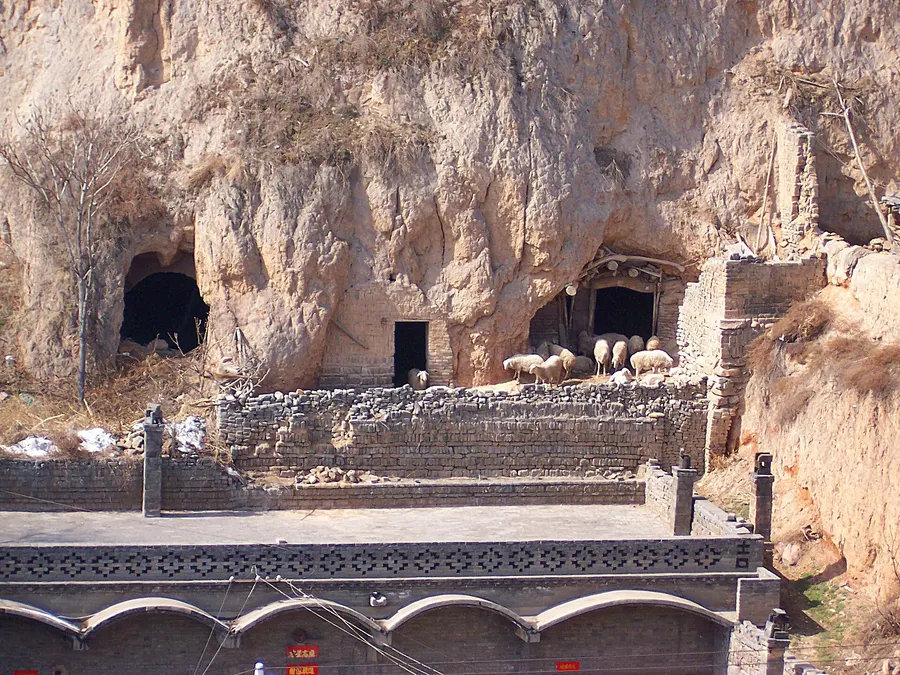
Cave houses dug into the soft loess of Shanxi province, the kind of homes that collapsed in 1556.Cave houses dug into the soft loess of Shanxi province, the kind of homes that collapsed in 1556.Image: Meier&Poehlmann · CC BY 3.0
world · Asia

The deadliest earthquake on record strikes northern China

In the Wei River valley of Ming China, millions of people lived in yaodong, cave homes cut into the soft, wind-laid soil called loess. They were warm in winter and cool in summer, but they could not stand a great earthquake. Early on 23 January 1556 an earthquake of perhaps magnitude 8 struck Shaanxi and neighbouring Shanxi province. The cave homes collapsed on their sleeping families, landslides buried villages and fires burned for days. About 830,000 people are believed to have died, the highest toll of any earthquake in recorded history.

Source: Encyclopaedia Britannica: Shaanxi province earthquake of 1556 ↗
1571
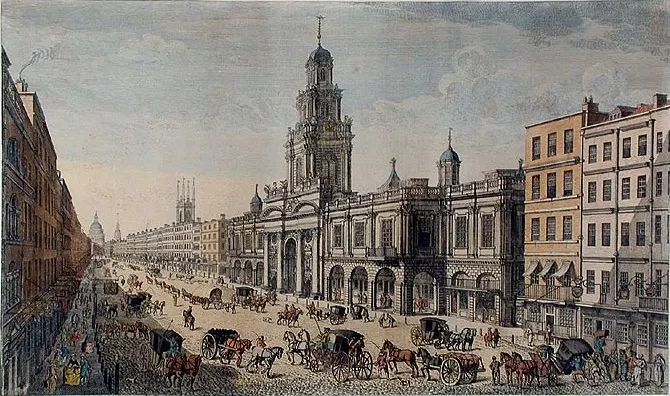
The second Royal Exchange, built after the Great Fire, in a print published by Thomas Bowles in 1751.The second Royal Exchange, built after the Great Fire, in a print published by Thomas Bowles in 1751.Image: Thomas Bowles · Public domain
world · Europe

Elizabeth I opens London’s Royal Exchange

The merchant Thomas Gresham built London a bourse on the model of Antwerp’s, a courtyard where traders could meet, with shops above. Elizabeth I visited on 23 January 1571 and proclaimed that it should be called the Royal Exchange. Gresham’s building burned in the Great Fire of 1666; the Exchange was rebuilt twice on the same site.

Source: London Museum: a history of the Royal Exchange ↗
1719
Anton Florian, the first reigning prince of Liechtenstein, in an eighteenth-century portrait.Anton Florian, the first reigning prince of Liechtenstein, in an eighteenth-century portrait.Image: Unidentified painter · Public domain
politics · Europe

The emperor creates the principality of Liechtenstein

The Liechtenstein family, great landowners in Austria and Moravia, had bought the small lordships of Schellenberg and Vaduz on the upper Rhine to win a seat in the imperial diet. On 23 January 1719 Emperor Charles VI united them as the imperial principality of Liechtenstein, under Prince Anton Florian. It is today one of the smallest countries in Europe.

Source: The Princely House of Liechtenstein: history of the princely house ↗
IV
THE NINETEENTH CENTURY

The 1800s

Industry, empire, invention, reform and a century of enormous transformation.

1849
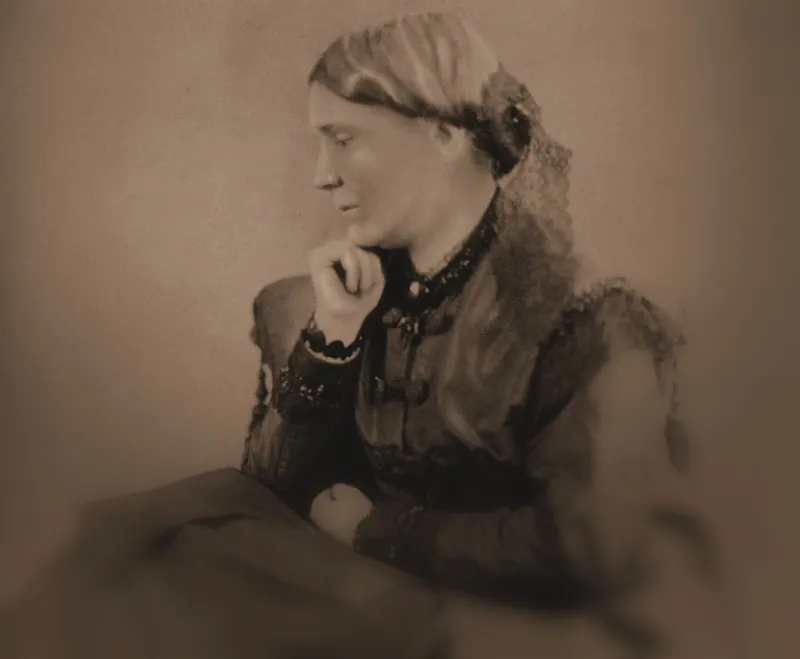
Elizabeth Blackwell, M.D., photographed by Ernest Edwards about 1860.Elizabeth Blackwell, M.D., photographed by Ernest Edwards about 1860.Image: Ernest Edwards · Public domain
science · Americas

Elizabeth Blackwell becomes the first woman to earn a medical degree in the United States

Elizabeth Blackwell, born in Bristol and raised in the United States, applied to twelve medical schools in the north-eastern states and was accepted by only one. At Geneva Medical College in New York the faculty let the all-male students vote on her admission, and they voted yes, apparently as a joke. On 23 January 1849 she received her degree of Doctor of Medicine, first in her class, the first woman to do so in the United States. Barred from most hospitals, she opened a dispensary in New York with her sister Emily, later a hospital and a medical college for women, and she became the first woman on the British medical register.

Source: US National Library of Medicine: Changing the Face of Medicine, Dr Elizabeth Blackwell ↗
V
THE TWENTIETH CENTURY

The 1900s

War and peace, technological leaps, social change, politics, sport and popular culture.

1943
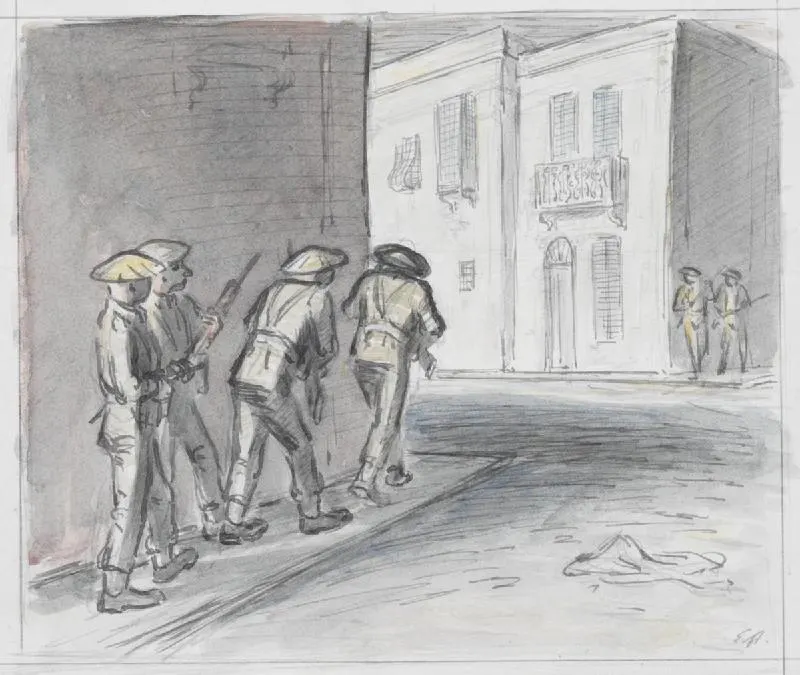
British soldiers moving warily through a street as they enter Tripoli in the early morning; a wartime drawing by Edward Ardizzone (Imperial War Museums).British soldiers moving warily through a street as they enter Tripoli in the early morning; a wartime drawing by Edward Ardizzone (Imperial War Museums).Image: Edward Ardizzone · Public domain
world · Africa

The British Eighth Army enters Tripoli

Three months after its victory at El Alamein, Montgomery’s Eighth Army had chased Rommel’s German and Italian forces 2,000 kilometres across Egypt and Libya. On 23 January 1943 its troops entered Tripoli, the capital of Italy’s Libyan colony, where the city’s mayor surrendered to Montgomery. The Axis armies fell back into Tunisia and surrendered there in May.

Source: New Zealand History (Ministry for Culture and Heritage): Tunisia and victory, the North African campaign ↗
1960
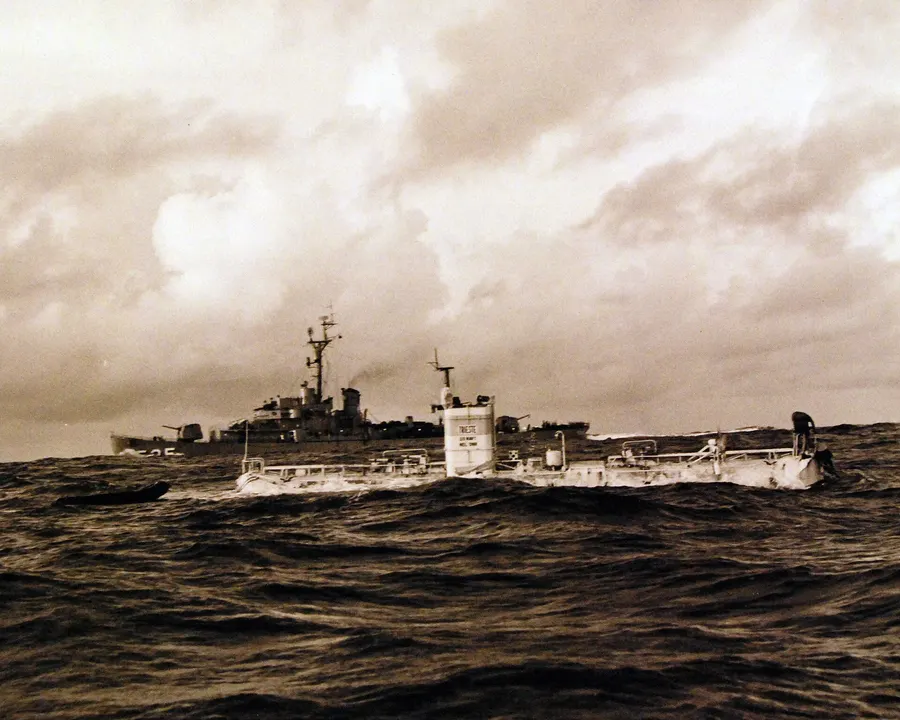
The bathyscaphe Trieste in heavy seas off Guam just before her record dive, 23 January 1960.The bathyscaphe Trieste in heavy seas off Guam just before her record dive, 23 January 1960.Image: Unknown · Public domain
science · Global

Two men reach the deepest point of the ocean

The bathyscaphe Trieste, designed by the Swiss scientist Auguste Piccard, was a steel sphere for two people hung beneath a float filled with petrol, which is lighter than water and does not compress. The US Navy bought her in 1958 and fitted a stronger sphere. On 23 January 1960 Piccard’s son Jacques and Lieutenant Don Walsh of the US Navy sank to the bottom of the Challenger Deep in the Mariana Trench, nearly 11,000 metres down, after almost five hours’ descent. The water pressure there is more than a thousand times that at the surface. No one returned to the Challenger Deep for 52 years.

Source: Naval History and Heritage Command: H-041-6, Bathyscaphe Trieste’s deep dive ↗
1968
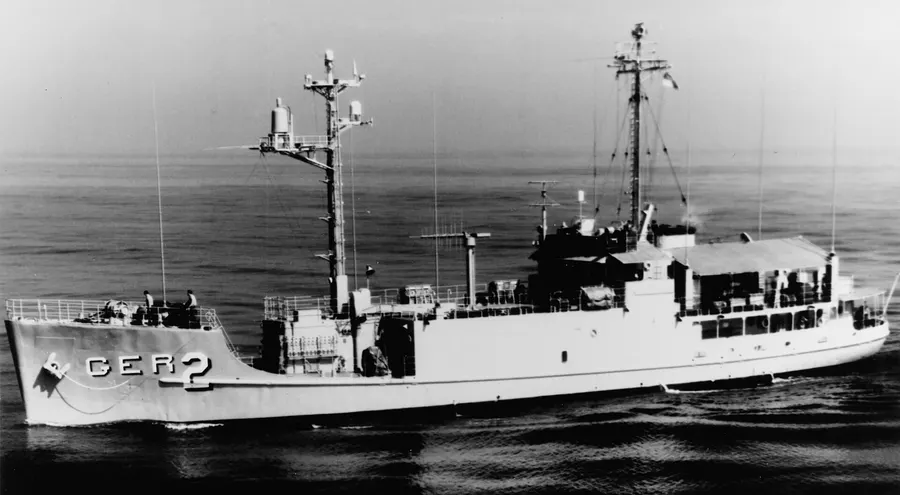
The US Navy intelligence ship Pueblo off San Diego in October 1967, three months before her capture.The US Navy intelligence ship Pueblo off San Diego in October 1967, three months before her capture.Image: U.S. Navy · Public domain
politics · Asia

North Korea seizes the American spy ship Pueblo

USS Pueblo was a small, lightly armed US Navy ship fitted to collect radio and radar signals. In January 1968 she was sent to watch the coast of North Korea near the port of Wonsan. On 23 January North Korean patrol boats and fighter aircraft surrounded her in waters the United States said were international, opened fire and boarded her. One sailor was killed and the other 82 crew were taken prisoner. They were held for eleven months and beaten before their release in December. North Korea kept the ship, which is now a museum in Pyongyang, and she remains a commissioned US Navy vessel.

Source: Naval History and Heritage Command: H-014-1, the seizure of USS Pueblo (AGER-2) ↗
1973
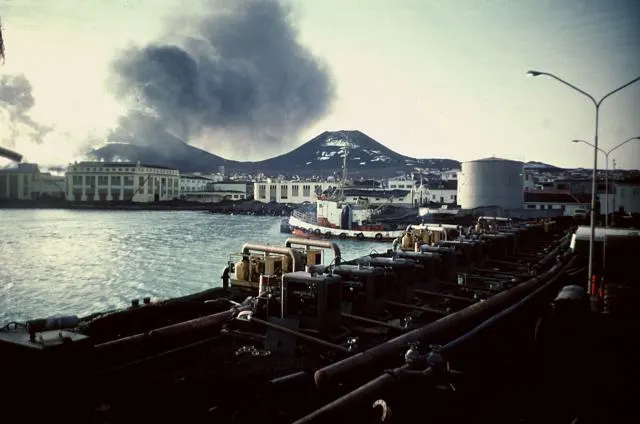
Ash rises from the new volcano behind the town of Vestmannaeyjar in 1973; in front, the pumps that sprayed sea water on the lava.Ash rises from the new volcano behind the town of Vestmannaeyjar in 1973; in front, the pumps that sprayed sea water on the lava.Image: Photo by Jack Lockwood, 1973 (U.S. Geological Survey). · Public domain
world · Europe

A volcano erupts on the edge of an Icelandic fishing town

Heimaey, off the south coast of Iceland, was home to the country’s most important fishing port. In the early hours of 23 January 1973 a fissure split open on the edge of the town and began spraying lava and ash. Almost all of the island’s 5,000 people were taken off by the fishing fleet that same night. Over the next five months the new volcano, Eldfell, buried hundreds of houses, and lava crept towards the harbour mouth. Islanders and scientists pumped sea water onto the flow, cooling and slowing it, and the harbour was saved. Most residents came home, and the eruption left the harbour better sheltered than before.

Source: US Geological Survey: Man against volcano, the eruption on Heimaey, Vestmannaeyjar, Iceland ↗
WHY THESE MOMENTS?

Significance before volume

This page is not the longest possible list of events. It is a chronological journey through 23 January, where each entry is chosen for historical significance, human interest and reliability.

Facts are checked against authoritative museums, archives, universities and reference works. Where sources disagree, the page says so.

EXPLORED THE DEEPER STORY?

Return to the highlights of 23 January

Discover the lighter side of the date with famous birthdays, culture, firsts and lives remembered.

Explore This Day →
← PREVIOUS DAY22 January
HISTORY & TIMELINE23 January
NEXT DAY →24 January