
HISTORY & TIMELINE
19 January

A journey through
19 January in history

The nineteenth day of the year has seen Rouen starve into surrender to Henry V, the British seize the port of Aden, Verdi’s Il trovatore take the stage in Rome and the Allies set up a court in Tokyo to try Japan’s wartime leaders. This timeline follows 19 January from the fifteenth century to the twenty-first.

JUMP THROUGH TIME
II
THE MIDDLE AGES

Medieval History

Kingdoms, conflict, faith, power and the changing medieval world.

1419
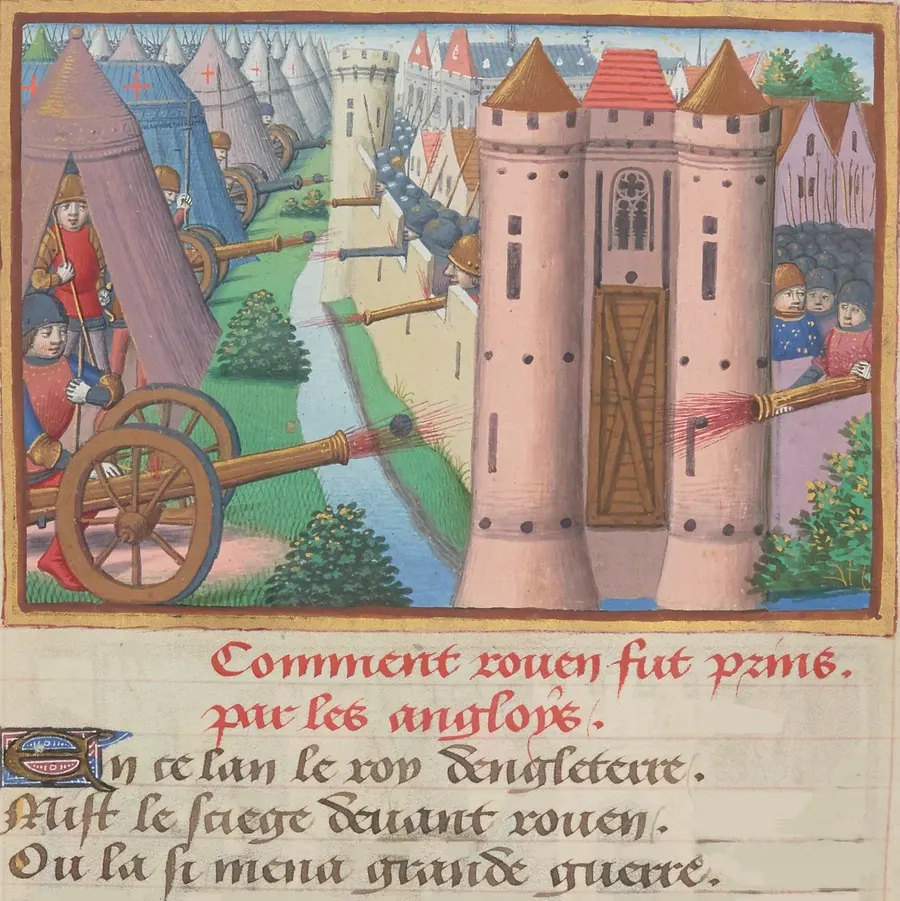
The siege of Rouen, a miniature from Martial d'Auvergne's Vigiles de Charles VII, about 1484 (Bibliothèque nationale de France).The siege of Rouen, a miniature from Martial d’Auvergne’s Vigiles de Charles VII, about 1484 (Bibliothèque nationale de France).Image: Unknown authorUnknown author · Public domain
world · Europe

Rouen surrenders to Henry V after a starving siege

Henry V of England besieged Rouen, the capital of Normandy, from the summer of 1418, too short of men to storm its walls and determined to starve it out. Thousands of the poorest inhabitants were driven out and left to die between the walls and the English lines. The city surrendered in January 1419, on the 19th by Britannica’s account, completing Henry’s conquest of Normandy.

Source: Encyclopaedia Britannica: siege of Rouen (1418-19) ↗
IV
THE NINETEENTH CENTURY

The 1800s

Industry, empire, invention, reform and a century of enormous transformation.

1839
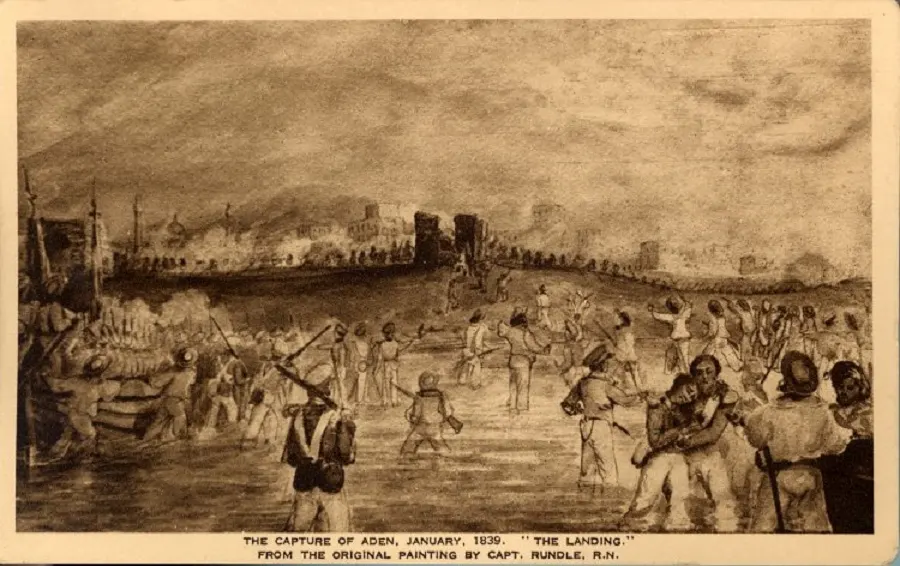
British troops landing at Aden in January 1839, from a painting by Captain J. S. Rundle of the Royal Navy, who took part.British troops landing at Aden in January 1839, from a painting by Captain J. S. Rundle of the Royal Navy, who took part.Image: Early 20th century British postcard showing a painting by Captain Joseph Sparkhall Rundle (1815-1880) · Public domain
world · Asia

The British seize the port of Aden

Wanting a coaling station and a base on the sea route between Suez and India, the East India Company sent ships and troops from Bombay against Aden, at the southern tip of Arabia. They captured it on 19 January 1839. Aden was ruled from India until 1937 and remained British until 1967.

Source: Qatar Digital Library: mapping Aden, the British occupation of a vital trading port ↗
1853
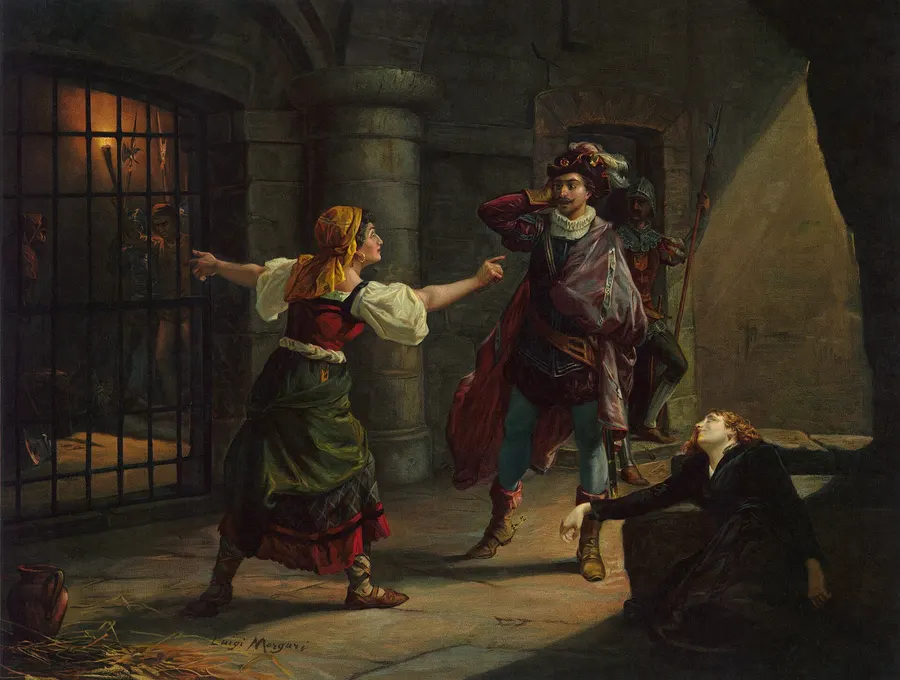
A scene from Il trovatore, from a nineteenth-century print by Luigi Morgari.A scene from Il trovatore, from a nineteenth-century print by Luigi Morgari.Image: Luigi Morgari / Adam Cuerden · Public domain
culture · Europe

Verdi’s Il trovatore opens in Rome

Giuseppe Verdi’s Il trovatore, a dark tale of a gypsy’s revenge, rival lovers and a child thrown on a fire, is set in fifteenth-century Spain and based on a Spanish play by Antonio García Gutiérrez. It had its first performance at the Teatro Apollo in Rome on 19 January 1853 and was an immediate success. Written between Rigoletto and La traviata, it completed the trio of operas that made Verdi the most popular composer in Italy, and its Anvil Chorus remains one of the best-known tunes in all opera.

Source: Encyclopaedia Britannica: Il trovatore ↗
1861
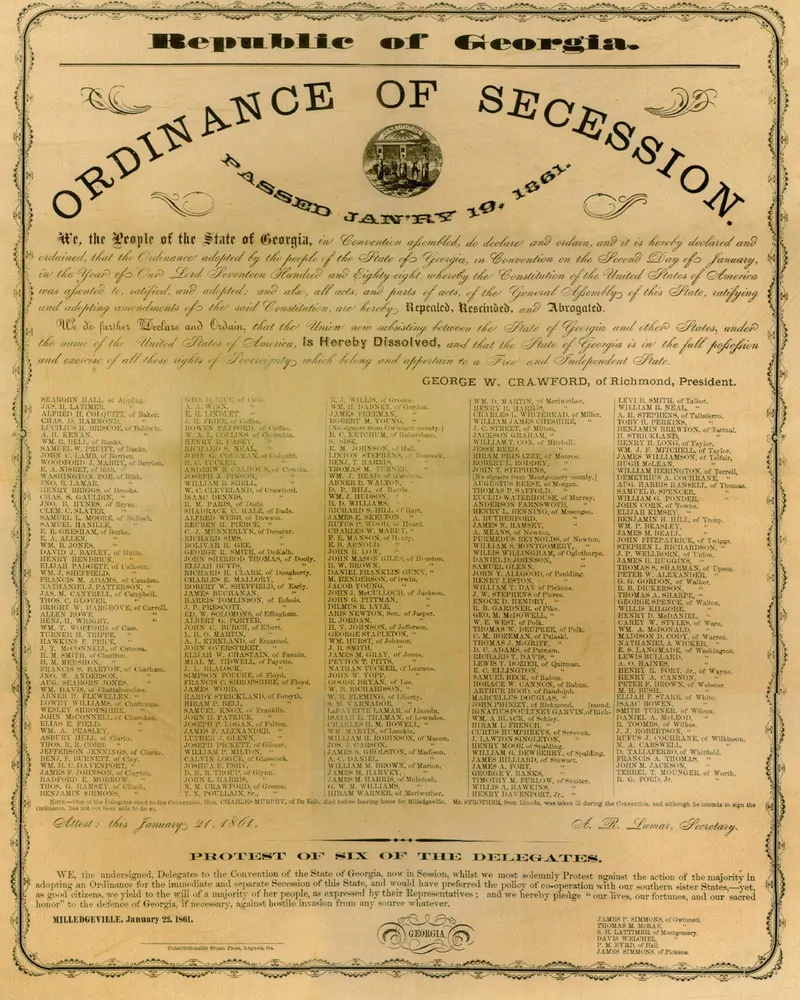
A printed copy of Georgia's ordinance of secession, 'passed Jan'ry 19, 1861', with the names of the signers.A printed copy of Georgia’s ordinance of secession, ‘passed Jan’ry 19, 1861’, with the names of the signers.Image: Georgia Legislature · Public domain
politics · Americas

Georgia votes to leave the Union

Abraham Lincoln’s election as president in November 1860 convinced many white Southerners that slavery was no longer safe inside the United States. South Carolina seceded in December, and Mississippi, Florida and Alabama followed early in January. Georgia, the most populous state of the Deep South, met in convention at its capital, Milledgeville. On 19 January 1861 a last attempt to delay secession failed by 208 votes to 89, and at two in the afternoon the convention’s president declared the union between Georgia and the other states dissolved. Within weeks Georgia helped found the Confederate States of America, and the Civil War began in April.

Source: New Georgia Encyclopedia: Georgia Secession Convention of 1861 ↗
1899
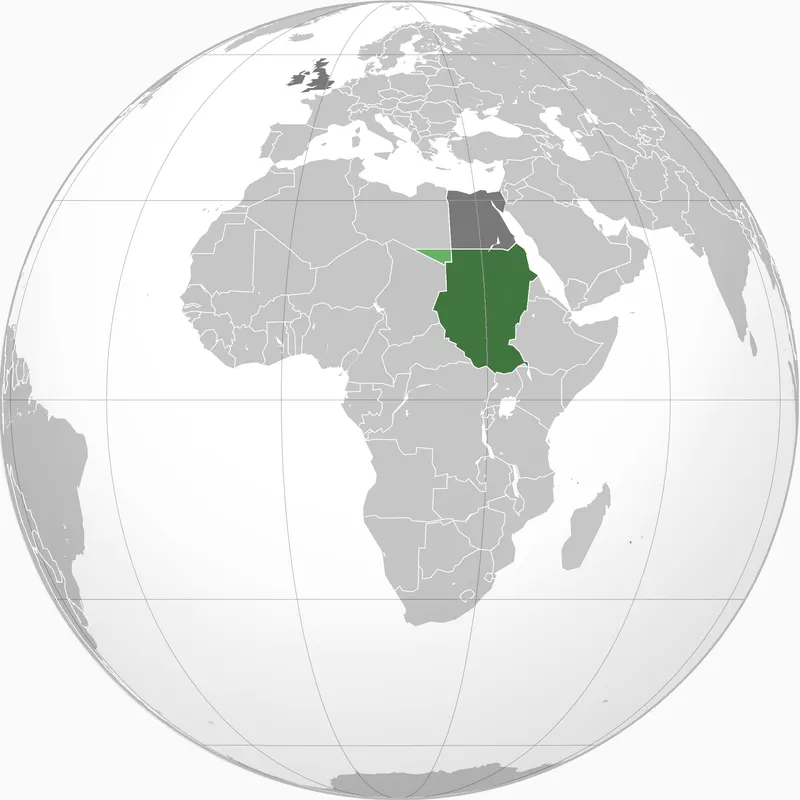
A map of the Anglo-Egyptian Sudan (green), the vast territory ruled jointly in name by Britain and Egypt from 1899 to 1956.A map of the Anglo-Egyptian Sudan (green), the vast territory ruled jointly in name by Britain and Egypt from 1899 to 1956.Image: VoodooIsland at English Wikipedia · Public domain
politics · Africa

Britain and Egypt agree to rule the Sudan together

In September 1898 an Anglo-Egyptian army under Herbert Kitchener destroyed the forces of the Mahdist state at Omdurman, ending thirteen years of independent Sudanese rule that had begun with the fall of Khartoum. On 19 January 1899 Britain and Egypt signed an agreement setting up a ‘condominium’, a joint government of the Sudan. A governor-general, nominated by Britain and appointed by the khedive of Egypt, held supreme civil and military power. Egypt shared the rule in name, but in practice Britain was in control. The arrangement lasted until the Sudan became an independent republic on 1 January 1956.

Source: Encyclopaedia Britannica: Anglo-Egyptian Condominium ↗
V
THE TWENTIETH CENTURY

The 1900s

War and peace, technological leaps, social change, politics, sport and popular culture.

1915
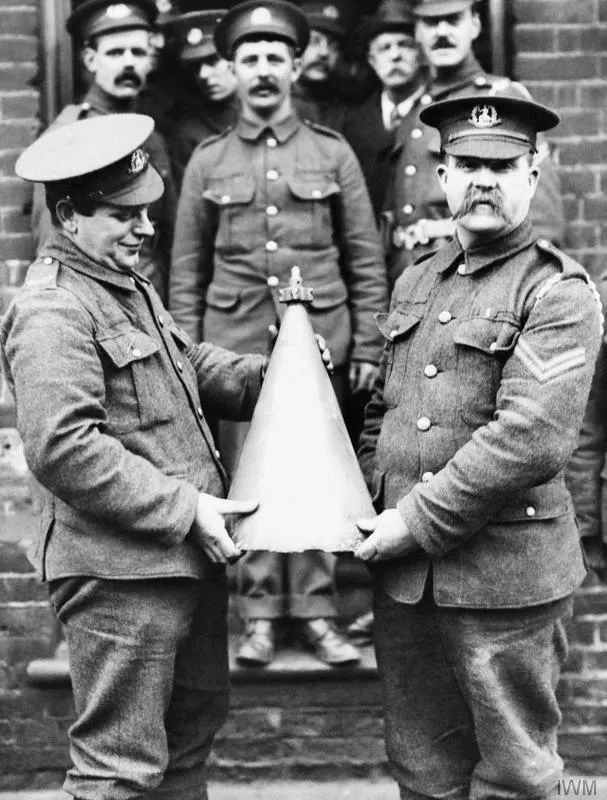
Men of the Norfolk Regiment with part of a German bomb dropped on Great Yarmouth by Zeppelin L3 on 19 January 1915.Men of the Norfolk Regiment with part of a German bomb dropped on Great Yarmouth by Zeppelin L3 on 19 January 1915.Image: Unknown authorUnknown author · Public domain

world · Europe

German airships bomb Britain for the first time

Early in the First World War Germany began using its giant Zeppelin airships to carry the war to Britain’s home front. On the morning of 19 January 1915 two naval airships, L3 and L4, set off from near Hamburg, aiming for the Humber. Bad weather blew them off course, and that evening they dropped their bombs on Great Yarmouth, King’s Lynn and villages in Norfolk instead. Four people were killed, among them Samuel Smith and Martha Taylor in Great Yarmouth, the first British civilians to die in an air raid. More than fifty Zeppelin raids were made on Britain during the war, and the fear they caused, more than the damage, changed how Britain thought about defence.

Source: The National Archives: Zeppelin raids ↗
1915
A neon-filled glass tube bent into the element's symbol, Ne, glowing its characteristic red-orange.A neon-filled glass tube bent into the element’s symbol, Ne, glowing its characteristic red-orange.Image: User:Pslawinski · CC BY-SA 2.5
science · Europe

Georges Claude patents the neon lamp

The French engineer Georges Claude made his fortune separating liquid air into its gases for industry, which left him with neon, a rare gas with no obvious use. Passing an electric current through a tube of pure neon, he found that it glowed a brilliant red-orange, and he first showed neon lighting in Paris in 1910. On 19 January 1915 the United States granted him a patent for his system of lighting with luminescent tubes, which used specially designed electrodes to keep the tubes glowing for long periods. Claude’s company licensed the design around the world, and neon signs soon lit up the shopfronts and theatres of the 1920s.

Source: Google Patents: US1125476A, system of illuminating by luminescent tubes (G. Claude, patented 19 January 1915) ↗
1946
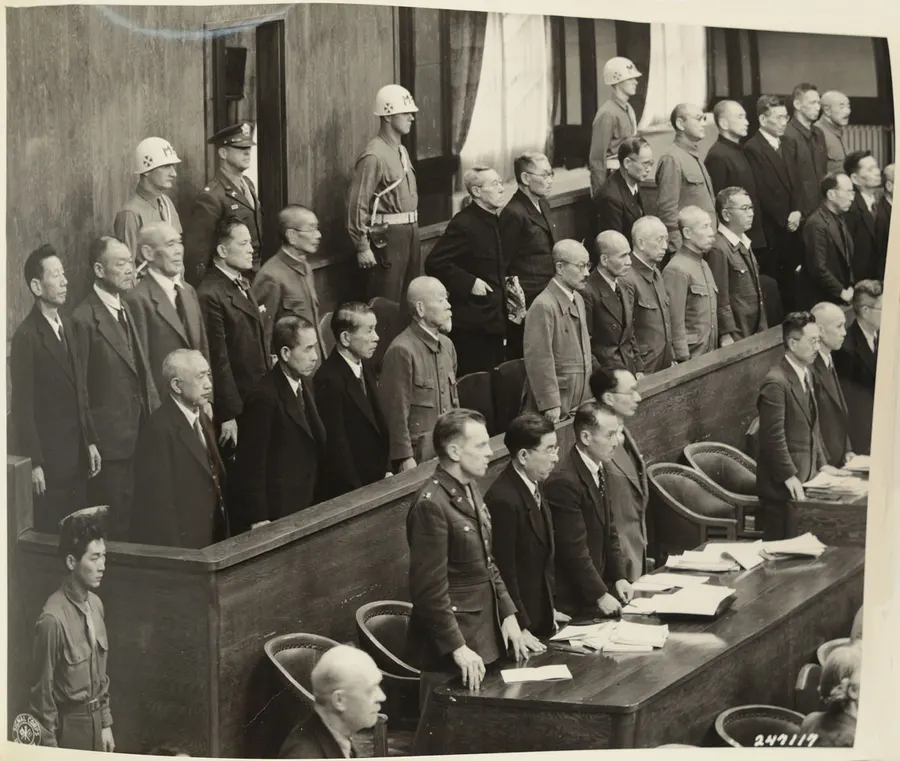
The accused stand as the judges enter the courtroom of the Tokyo tribunal, May 1946.The accused stand as the judges enter the courtroom of the Tokyo tribunal, May 1946.Image: The Occupation administration · Public domain
politics · Asia

A tribunal is set up in Tokyo to try Japan’s wartime leaders

On 19 January 1946 General Douglas MacArthur, commander of the Allied occupation of Japan, issued a proclamation establishing the International Military Tribunal for the Far East. Judges from eleven nations tried 28 Japanese leaders; the court first sat that April, and in 1948 seven of the accused, including the former prime minister Tojo Hideki, were sentenced to death.

Source: United Nations: charter of the International Military Tribunal for the Far East (1946) ↗
1978
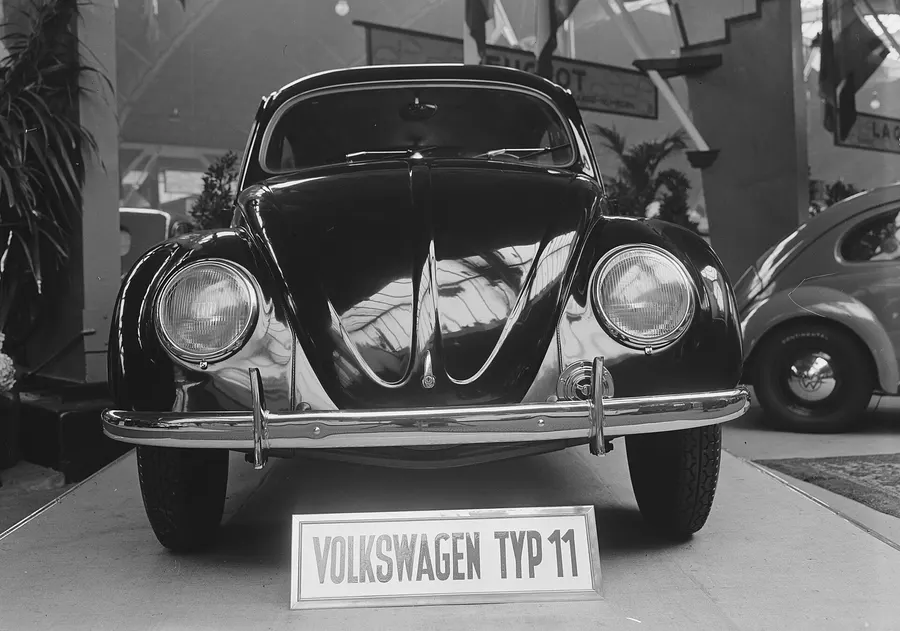
An early export Volkswagen, sold as the Type 11, on show at the Amsterdam motor show in 1948.An early export Volkswagen, sold as the Type 11, on show at the Amsterdam motor show in 1948.Image: Nationaal Archief · CC0
world · Europe

The last Beetle built in Germany leaves the factory

The Volkswagen Beetle was designed in the 1930s as a ‘people’s car’ for Nazi Germany but went into mass production only after the war, under British supervision, at Wolfsburg. It became the symbol of West Germany’s economic recovery and was sold around the world. By the 1970s newer models such as the Golf were taking over, and Beetle production ended at Wolfsburg in 1974. On 19 January 1978 the last German-built Beetle, one of more than 16 million, came off the line at Emden and went to the company museum. Production continued in Brazil and Mexico, where the final Beetle was built in 2003.

Source: Volkswagen Newsroom: VW Beetle, the real miracle ↗
1981
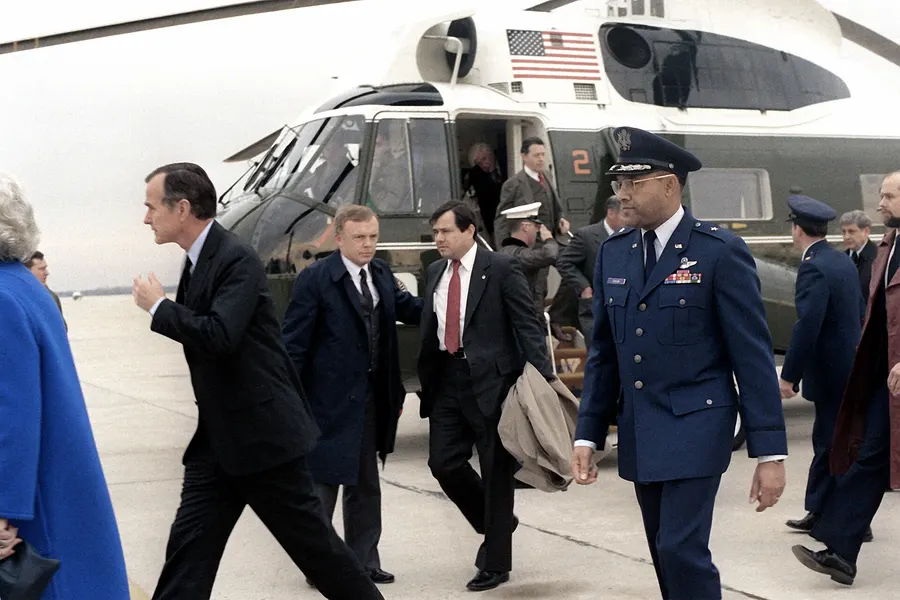
Vice-President George Bush waits at Andrews Air Force Base to welcome the freed hostages home, 27 January 1981.Vice-President George Bush waits at Andrews Air Force Base to welcome the freed hostages home, 27 January 1981.Image: Photographer's Name: Templeton · Public domain
politics · Asia

The United States and Iran sign the deal to free the hostages

In November 1979 Iranian students stormed the United States embassy in Tehran and took its staff hostage. Fifty-two Americans were held for more than a year while negotiations stalled and a military rescue attempt failed in the desert. Algerian diplomats carried messages between the two governments, and on 19 January 1981 the Algiers Accords were signed: Iran would release the hostages, and the United States would unfreeze Iranian assets and settle claims through an international tribunal. The hostages were freed the next day, minutes after Ronald Reagan was sworn in as president, after 444 days in captivity.

Source: US Office of the Historian: an end to the hostage crisis ↗
VI
2000 TO TODAY

Modern Day

The events of recent decades that have already become part of the historical record.

2006
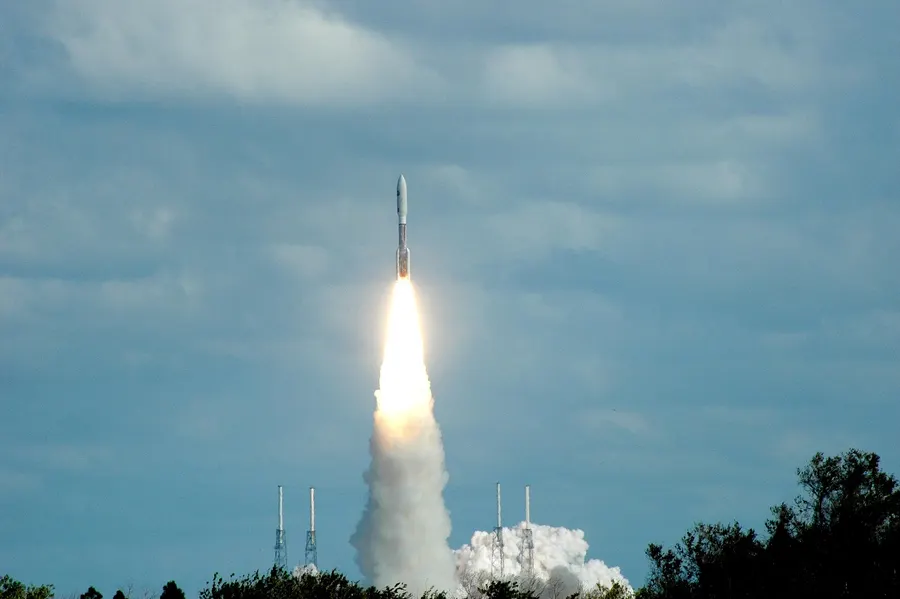
New Horizons lifts off aboard an Atlas V rocket from Cape Canaveral, 19 January 2006.New Horizons lifts off aboard an Atlas V rocket from Cape Canaveral, 19 January 2006.Image: NASA/Ken Thornsley · Public domain
science · Global

New Horizons sets off for Pluto

Pluto, discovered in 1930, was the only planet of the classical nine never visited by a spacecraft. On 19 January 2006 NASA launched New Horizons, a probe about the size of a piano, on an Atlas V rocket from Cape Canaveral, leaving Earth faster than any spacecraft before it. After a journey of nine and a half years it flew past Pluto on 14 July 2015, revealing mountains of water ice, plains of frozen nitrogen and a thin blue haze of atmosphere. It went on to pass Arrokoth, a small icy world in the Kuiper Belt, on New Year’s Day 2019, the most distant object ever explored close up.

Source: NASA: 19 January 2006, New Horizons launches for Pluto ↗
RESEARCH

Sources & Further Reading

Selected authoritative references supporting the events on this page.

WHY THESE MOMENTS?

Significance before volume

This page is not the longest possible list of events. It is a chronological journey through 19 January, where each entry is chosen for historical significance, human interest and reliability.

Facts are checked against authoritative museums, archives, universities and reference works. Where sources disagree, the page says so.

EXPLORED THE DEEPER STORY?

Return to the highlights of 19 January

Discover the lighter side of the date with famous birthdays, culture, firsts and lives remembered.

Explore This Day →
← PREVIOUS DAY18 January
HISTORY & TIMELINE19 January
NEXT DAY →20 January