
HISTORY & TIMELINE
17 January

A journey through
17 January in history

The seventeenth day of the year has seen France grant its Protestants a first, fragile toleration, James Cook sail across the Antarctic Circle, a British square broken and re-formed at Abu Klea and a ceasefire signed between the Netherlands and Indonesia aboard an American warship. This timeline follows 17 January from the fourteenth century to the twentieth.

JUMP THROUGH TIME
II
THE MIDDLE AGES

Medieval History

Kingdoms, conflict, faith, power and the changing medieval world.

1377
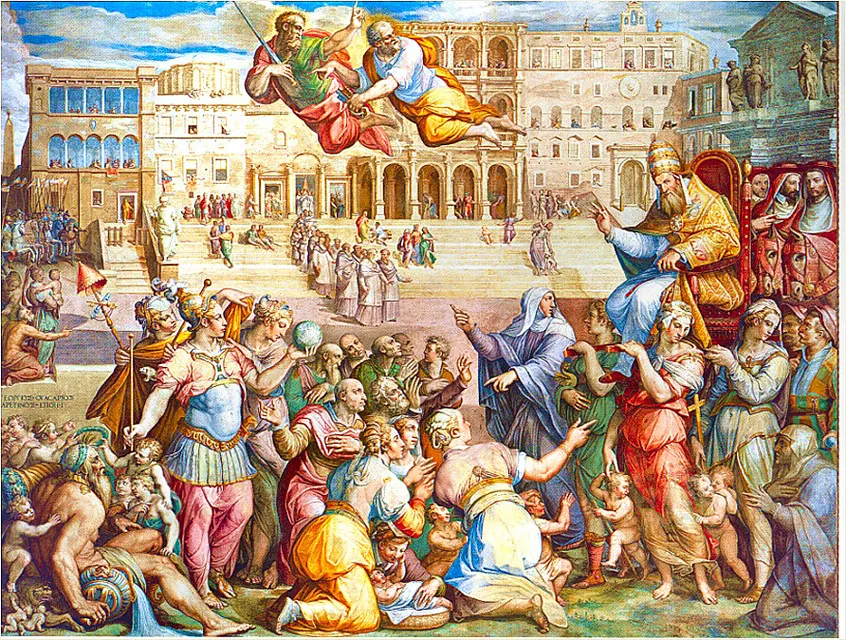
An idealised picture of Gregory XI's return to Rome, a fresco by Giorgio Vasari in the Vatican.An idealised picture of Gregory XI’s return to Rome, a fresco by Giorgio Vasari in the Vatican.Image: Unknown · Public domain
culture · Europe

Pope Gregory XI brings the papacy back to Rome

For almost seventy years from 1309 the popes lived not in Rome but at Avignon in southern France, where they were widely seen as too close to the French crown. Rome decayed, the Papal States slid into disorder, and critics such as Catherine of Siena urged the popes to return. Gregory XI, a Frenchman, left Avignon in September 1376 against the wishes of the French king and most of his cardinals. On 17 January 1377 he made his solemn entry into Rome. He died the next year, and the disputed election that followed split the Church for four decades between rival popes, but the papacy has been based in Rome ever since.

Source: Encyclopaedia Britannica: Gregory XI ↗
III
A CHANGING WORLD

Early Modern Era

Exploration, political change, scientific development and expanding global connections.

1562
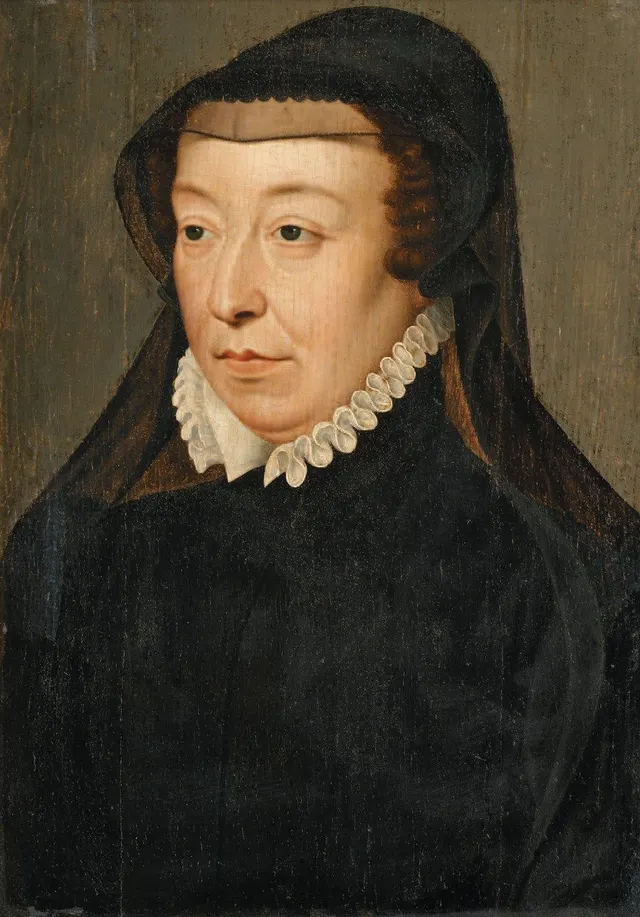
Catherine de' Medici in widow's black, from the workshop of François Clouet, about 1560.Catherine de’ Medici in widow’s black, from the workshop of François Clouet, about 1560.Image: Workshop of François Clouet · Public domain
culture · Europe

France grants its Protestants a limited toleration

Guided by her chancellor Michel de L’Hospital, the regent Catherine de’ Medici issued the Edict of January, signed at Saint-Germain on 17 January 1562. It allowed French Protestants, the Huguenots, to worship outside town walls. Many Catholics were outraged, and within two months the massacre of Protestants at Wassy set off the Wars of Religion.

Source: Encyclopaedia Britannica: Edict of January ↗
1773
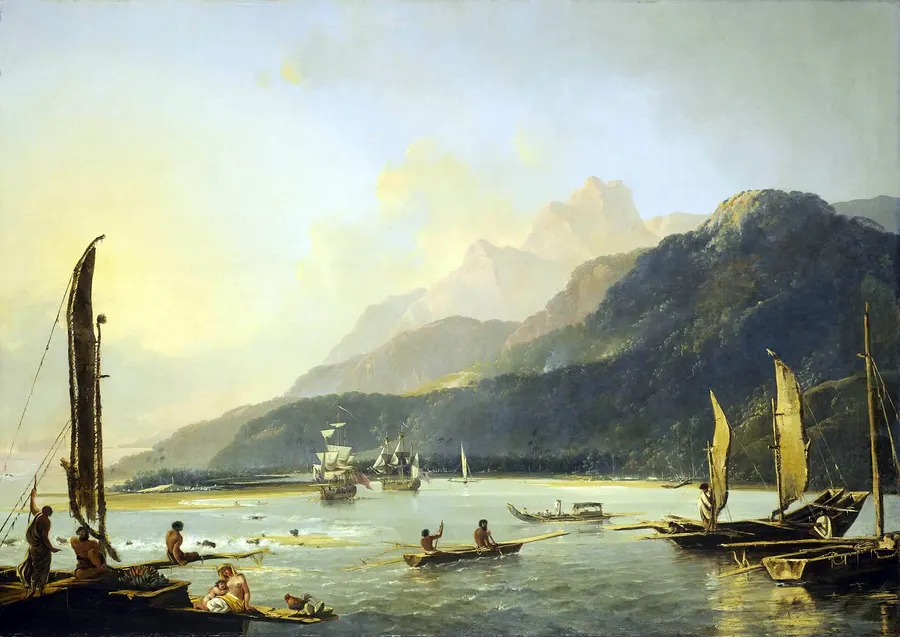
Resolution and Adventure, the ships of Cook's second voyage, at anchor in Matavai Bay, Tahiti; painted by William Hodges in 1776.Resolution and Adventure, the ships of Cook’s second voyage, at anchor in Matavai Bay, Tahiti; painted by William Hodges in 1776.Image: William Hodges · Public domain
science · Global

James Cook sails across the Antarctic Circle

For centuries geographers imagined a great southern continent balancing the lands of the north. On his second voyage, the British Admiralty sent James Cook with two ships, Resolution and Adventure, to find it or prove it did not exist. On 17 January 1773 his ships crossed the Antarctic Circle, the first known to have done so. Pack ice forced them back, and over the next year Cook crossed the circle twice more, reaching 71°10’ south, but he never sighted the continent itself. He concluded that any southern land must lie locked in ice, of no use to anyone.

Source: Royal Museums Greenwich: Captain James Cook timeline ↗
IV
THE NINETEENTH CENTURY

The 1800s

Industry, empire, invention, reform and a century of enormous transformation.

1885
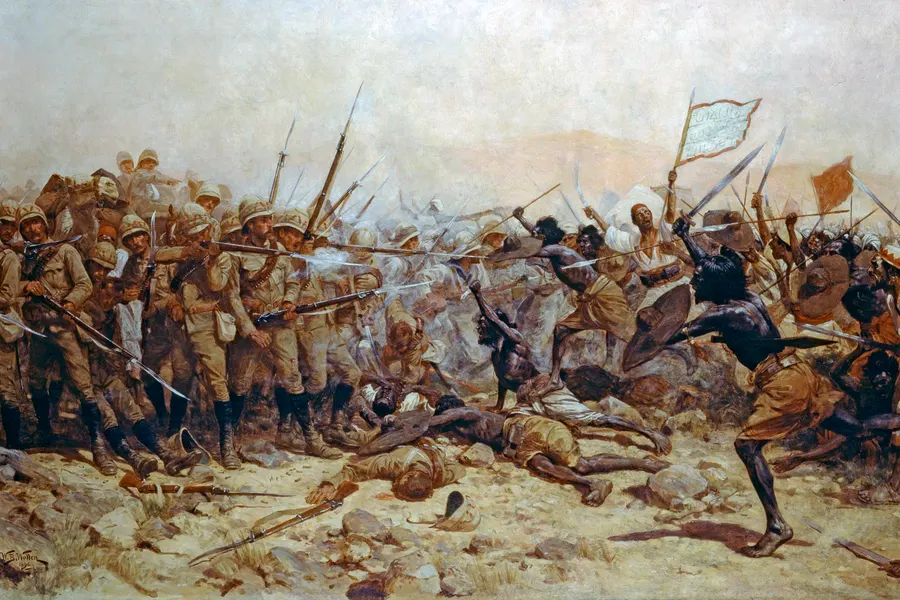
The Battle of Abu Klea, painted by William Barnes Wollen.The Battle of Abu Klea, painted by William Barnes Wollen.Image: William Barnes Wollen · Public domain
world · Africa

The Battle of Abu Klea

Racing across the Sudanese desert to relieve General Gordon, besieged in Khartoum by the forces of the Mahdi, a British camel-mounted column under Sir Herbert Stewart was attacked at the wells of Abu Klea on 17 January 1885. The Mahdists broke into the British square before being driven off after savage fighting. The column reached Khartoum on 28 January, two days after the city fell.

Source: National Army Museum: Egypt and Sudan ↗
V
THE TWENTIETH CENTURY

The 1900s

War and peace, technological leaps, social change, politics, sport and popular culture.

1912
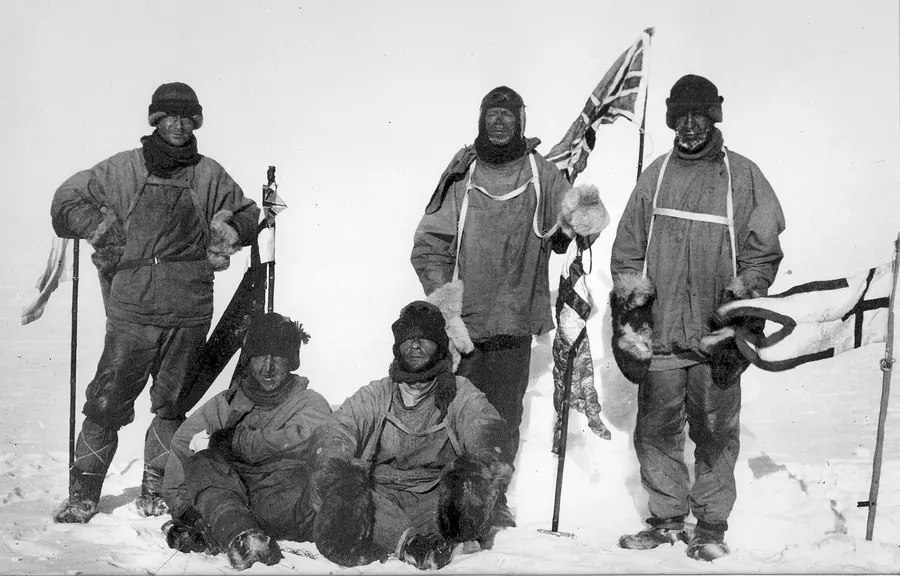
Scott's party at the South Pole on 18 January 1912: Wilson, Scott and Oates standing, Bowers and Evans seated; photographed by Bowers.Scott’s party at the South Pole on 18 January 1912: Wilson, Scott and Oates standing, Bowers and Evans seated; photographed by Bowers.Image: Henry Bowers (1883–1912) · Public domain
science · Global

Scott reaches the South Pole, a month too late

Robert Falcon Scott’s Terra Nova expedition set out to be first to the South Pole, but the Norwegian Roald Amundsen, using dogs and skis, raced him for it. Scott’s final party of five, Scott, Edward Wilson, Henry Bowers, Lawrence Oates and Edgar Evans, man-hauled their sledges across the polar plateau. On 17 January 1912 they reached the Pole and found Amundsen’s tent and flag: the Norwegians had been there in mid-December. ‘Great God! this is an awful place,’ Scott wrote in his diary. On the long march back all five men died of cold, hunger and exhaustion; their last camp was found that November.

Source: Royal Museums Greenwich: the race to the South Pole, Scott and Amundsen ↗
1948
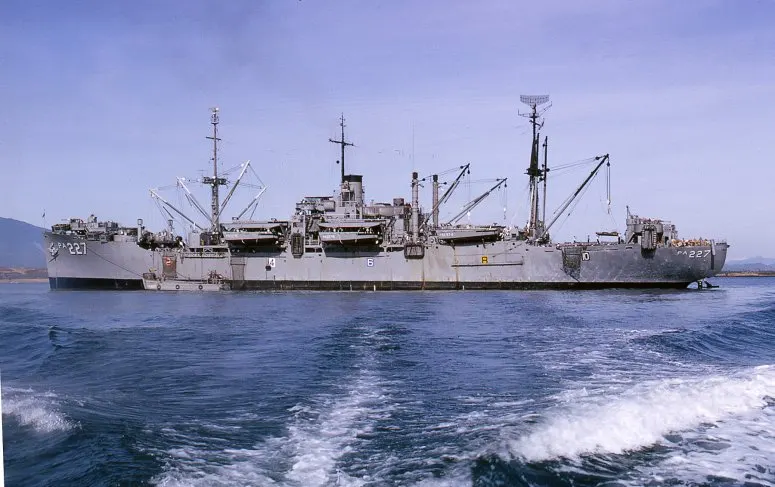
USS Renville at anchor, photographed in 1966.USS Renville at anchor, photographed in 1966.Image: Lt. Richard Dawson USNR USS Renville. · Public domain
politics · Asia

The Renville Agreement is signed

After Indonesia declared independence in 1945, the Netherlands fought to restore its rule. Under UN mediation, the two sides signed a ceasefire on 17 January 1948 aboard the American warship USS Renville, anchored off Jakarta. It left the Dutch holding much of Java and Sumatra, and it broke down that December; the Netherlands recognised Indonesia’s independence in 1949.

Source: Encyclopaedia Britannica: Renville Agreement ↗
1961
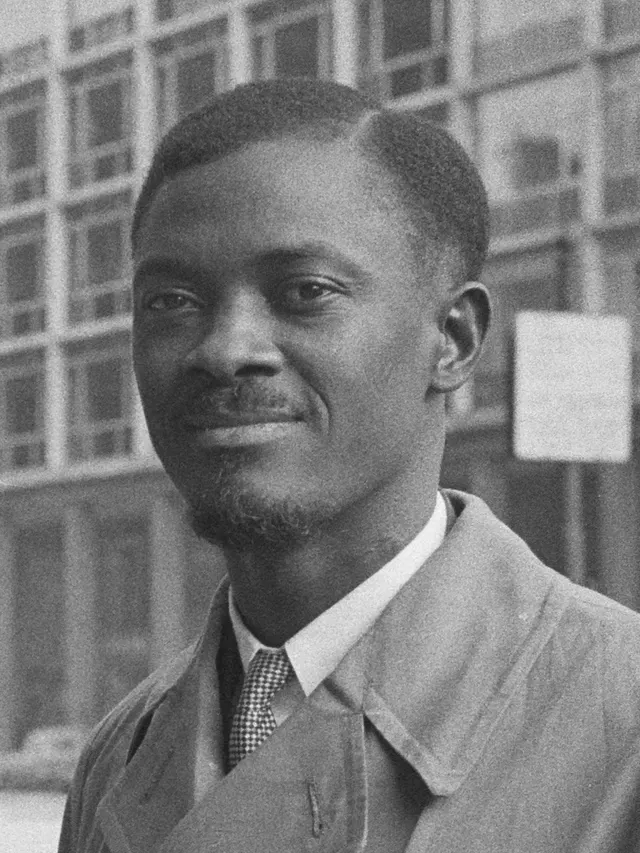
Patrice Lumumba in Brussels, 26 January 1960, during the talks on the Congo's independence.Patrice Lumumba in Brussels, 26 January 1960, during the talks on the Congo’s independence.Image: Harry Pot for Anefo ) · CC BY 4.0
politics · Africa

Patrice Lumumba, the Congo’s first prime minister, is killed

Patrice Lumumba led the Congo to independence from Belgium in June 1960 and became its first prime minister. Within weeks the country was in crisis: the army mutinied, the mineral-rich province of Katanga broke away with Belgian support, and Lumumba’s appeal to the Soviet Union for help alarmed the West. In September he was removed from office, and in December he was arrested. On 17 January 1961 he and two colleagues, Maurice Mpolo and Joseph Okito, were flown to Katanga and shot the same night by a firing squad, in the presence of Katangan leaders and Belgian officers. His death was announced only weeks later. A Belgian parliamentary inquiry in 2001 found that Belgium bore a moral responsibility.

Source: Encyclopaedia Britannica: Patrice Lumumba ↗
1995
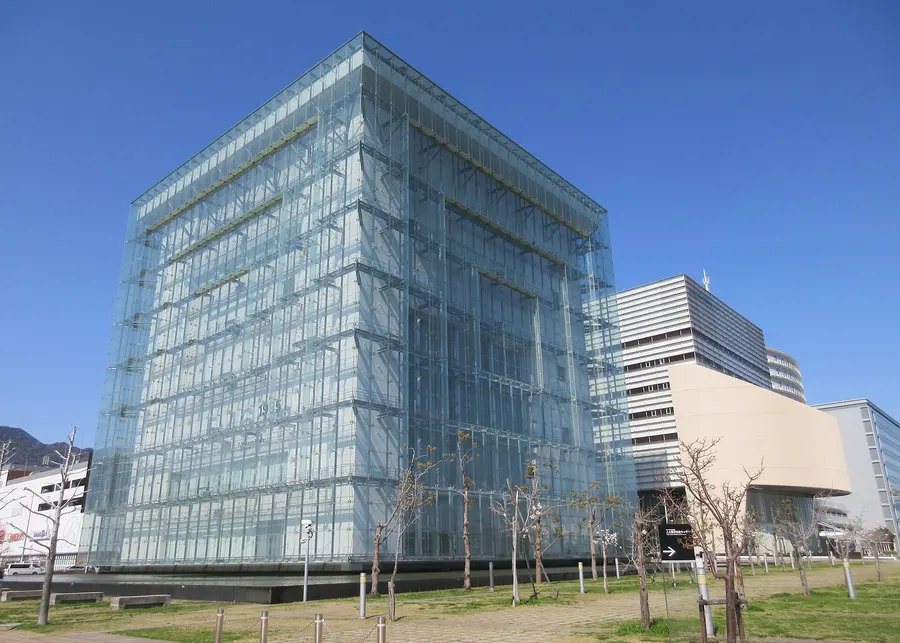
The Disaster Reduction and Human Renovation Institution in Kobe, a museum and research centre built in memory of the 1995 earthquake.The Disaster Reduction and Human Renovation Institution in Kobe, a museum and research centre built in memory of the 1995 earthquake.Image: KishujiRapid · CC BY-SA 4.0
world · Asia

An earthquake devastates Kobe

At 5.46 in the morning on 17 January 1995 an earthquake of magnitude 6.9 struck beneath Awaji Island and the port city of Kobe in western Japan. In about twenty seconds it brought down more than 100,000 houses, toppled a long section of elevated motorway and set off fires that burned whole districts. It killed 6,434 people and injured more than 40,000. Japan had believed its cities well prepared, and the disaster led to stronger building rules, a new emphasis on volunteers and local rescue, and a museum and research centre in Kobe dedicated to reducing the harm of future disasters.

Source: US Geological Survey: the 1995 Hanshin-Awaji (Kobe), Japan, earthquake ↗
WHY THESE MOMENTS?

Significance before volume

This page is not the longest possible list of events. It is a chronological journey through 17 January, where each entry is chosen for historical significance, human interest and reliability.

Facts are checked against authoritative museums, archives, universities and reference works. Where sources disagree, the page says so.

EXPLORED THE DEEPER STORY?

Return to the highlights of 17 January

Discover the lighter side of the date with famous birthdays, culture, firsts and lives remembered.

Explore This Day →
← PREVIOUS DAY16 January
HISTORY & TIMELINE17 January
NEXT DAY →18 January