
HISTORY & TIMELINE
29 February

A journey through
29 February in history

From a moon turned red over Jamaica in 1504 to a president’s flight from Haiti in 2004, the leap day has collected more history than its rarity suggests. This timeline follows 29 February across five centuries, including the year Sweden needed a 30 February as well.

III
A CHANGING WORLD

Early Modern Era

Exploration, political change, scientific development and expanding global connections.

1504
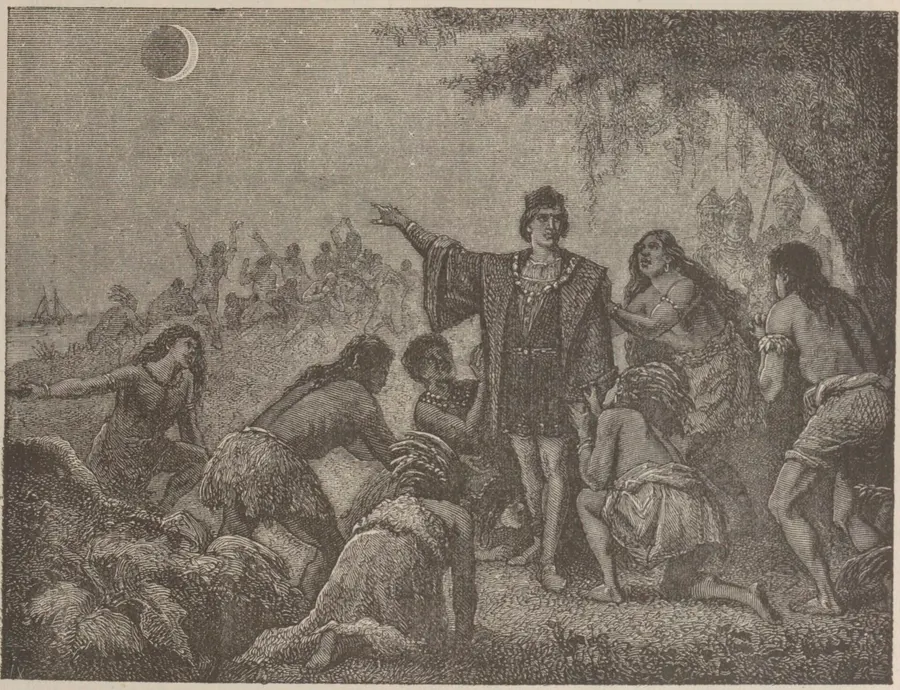
Columbus and the eclipse, as imagined in Camille Flammarion's Astronomie populaire, 1881.Columbus and the eclipse, as imagined in Camille Flammarion’s Astronomie populaire, 1881.Image: Camille Flammarion · Public domain
world · Americas

Columbus borrows the Moon to win food in Jamaica

On his fourth voyage Christopher Columbus had been stranded on Jamaica for months, his worm-eaten ships beached, and the Taíno had stopped bringing food. From an astronomical almanac he knew that a total eclipse of the Moon was due, and he warned the local leaders that God was angry and would show it in the sky. On the evening of 29 February 1504 the Moon rose and darkened to a deep red, as he had foretold. The frightened Taíno promised to keep the Spaniards supplied, and Columbus’s party survived until a rescue ship arrived in June.

Source: NASA Goddard Space Flight Center: Lunar eclipses of history ↗
1712
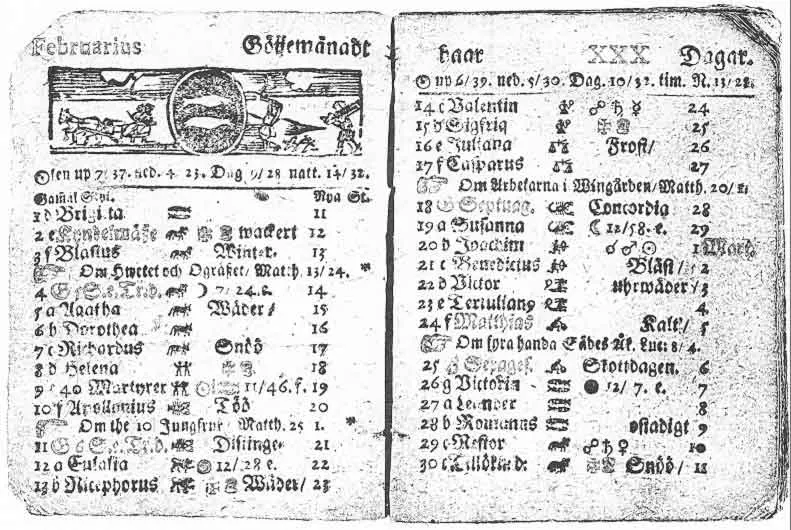
A Swedish almanac for February 1712, with the 30th day at the foot of the right-hand page.A Swedish almanac for February 1712, with the 30th day at the foot of the right-hand page.Image: Sendker · Public domain
science · Europe

Sweden adds a 30 February

In 1700 Sweden began a gradual move to the Gregorian calendar by leaving out leap days, but in the upheaval of the Great Northern War it failed to skip 1704 and 1708, leaving it out of step with everyone. In 1712 it gave up and returned to the old Julian calendar by keeping both 29 February and an extra 30 February, a year of 367 days. Sweden finally switched to the Gregorian calendar in 1753.

Source: Encyclopaedia Britannica: Ten days that vanished, the switch to the Gregorian calendar ↗
IV
THE NINETEENTH CENTURY

The 1800s

Industry, empire, invention, reform and a century of enormous transformation.

1880
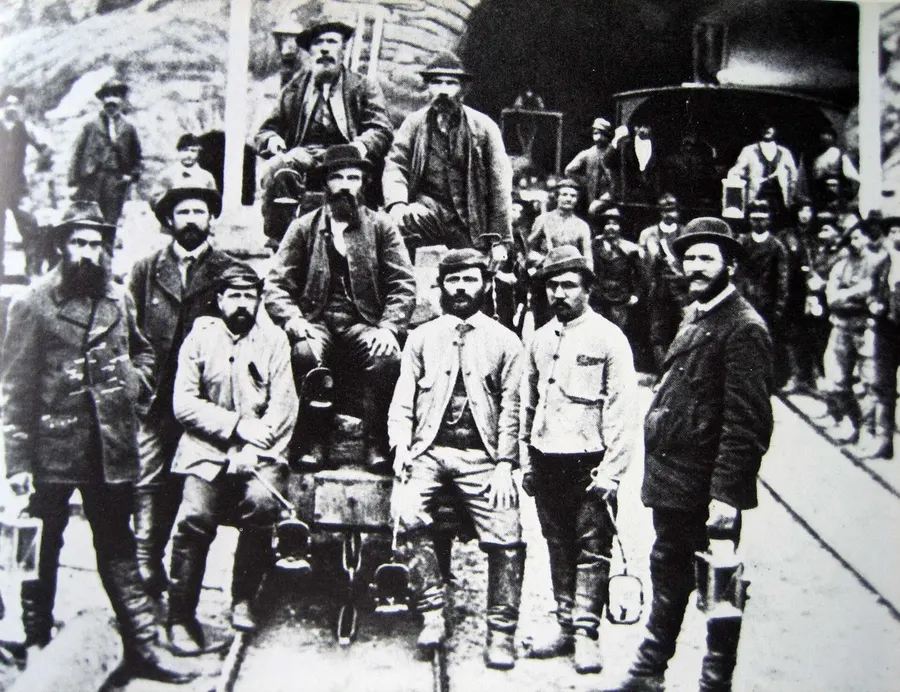
Workers on the Gotthard tunnel at Airolo, 1880.Workers on the Gotthard tunnel at Airolo, 1880.Image: Unknown photographer · Public domain

science · Europe

Tunnellers meet beneath the Gotthard

On Sunday 29 February 1880 the crews digging the Gotthard rail tunnel from Göschenen in the north and Airolo in the south broke through to each other beneath the Swiss Alps. After seven and a half years of work the two headings met only 33 centimetres apart sideways and less than 10 centimetres in height. At about 15 kilometres it was the longest railway tunnel in the world. The cost was high: the engineer Louis Favre had died inside it the year before, and some 177 workers lost their lives. Trains began running through it in 1882.

Source: ETH Zurich, ETHeritage: Tunneldurchstich am Gotthard ↗
V
THE TWENTIETH CENTURY

The 1900s

War and peace, technological leaps, social change, politics, sport and popular culture.

1920
The closing page of the 1920 constitution, headed by President T. G. Masaryk and his ministers.The closing page of the 1920 constitution, headed by President T. G. Masaryk and his ministers.Image: Czechoslovak Republic · Public domain

politics · Europe

Czechoslovakia adopts its constitution

On 29 February 1920 the National Assembly adopted the constitution of the young Czechoslovak Republic. It set up a parliamentary democracy with a Chamber of Deputies and a Senate, and gave women the vote. It remained in force until the Communist takeover of 1948.

Source: Government of the Czech Republic: The 1920 constitution ↗
1940
Hattie McDaniel at her dressing table in Los Angeles, 11 February 1940.Hattie McDaniel at her dressing table in Los Angeles, 11 February 1940.Image: Los Angeles Times · CC BY-SA 4.0
culture · Americas

Hattie McDaniel wins an Oscar

At the 12th Academy Awards, held at the Cocoanut Grove in Los Angeles on 29 February 1940, Hattie McDaniel won Best Supporting Actress for her role as Mammy in Gone with the Wind. She was the first Black person to be nominated for, and to win, an Academy Award. The venue was segregated, and she sat at a separate table away from the film’s other stars. Her plaque later went missing; in 2023 the Academy presented a replacement to Howard University.

Source: Academy of Motion Picture Arts and Sciences: The 12th Academy Awards, 1940 ↗
1944
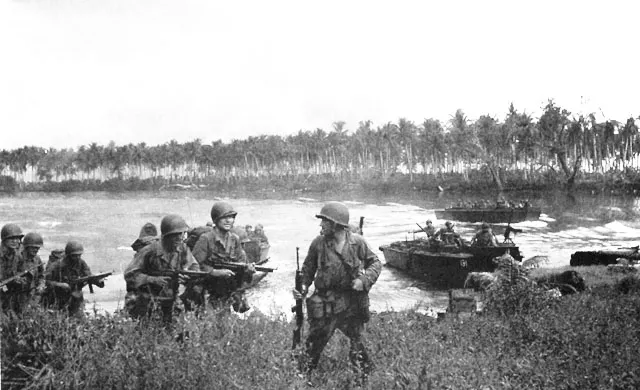
The first wave of American troops at Los Negros, Admiralty Islands, 1944.The first wave of American troops at Los Negros, Admiralty Islands, 1944.Image: U.S. Army Center of Military History · Public domain
world · Oceania

American troops land in the Admiralty Islands

On the morning of 29 February 1944 about 1,000 men of the US 1st Cavalry Division landed at Hyane Harbour on Los Negros, in the Admiralty Islands north of New Guinea, in a reconnaissance in force. They took Momote airfield and held on through days of fierce Japanese counter-attacks. The islands’ great harbour became a major Allied base for the Pacific war.

Source: US Naval History and Heritage Command: Gamble at Los Negros, the Admiralty Islands campaign ↗
1956
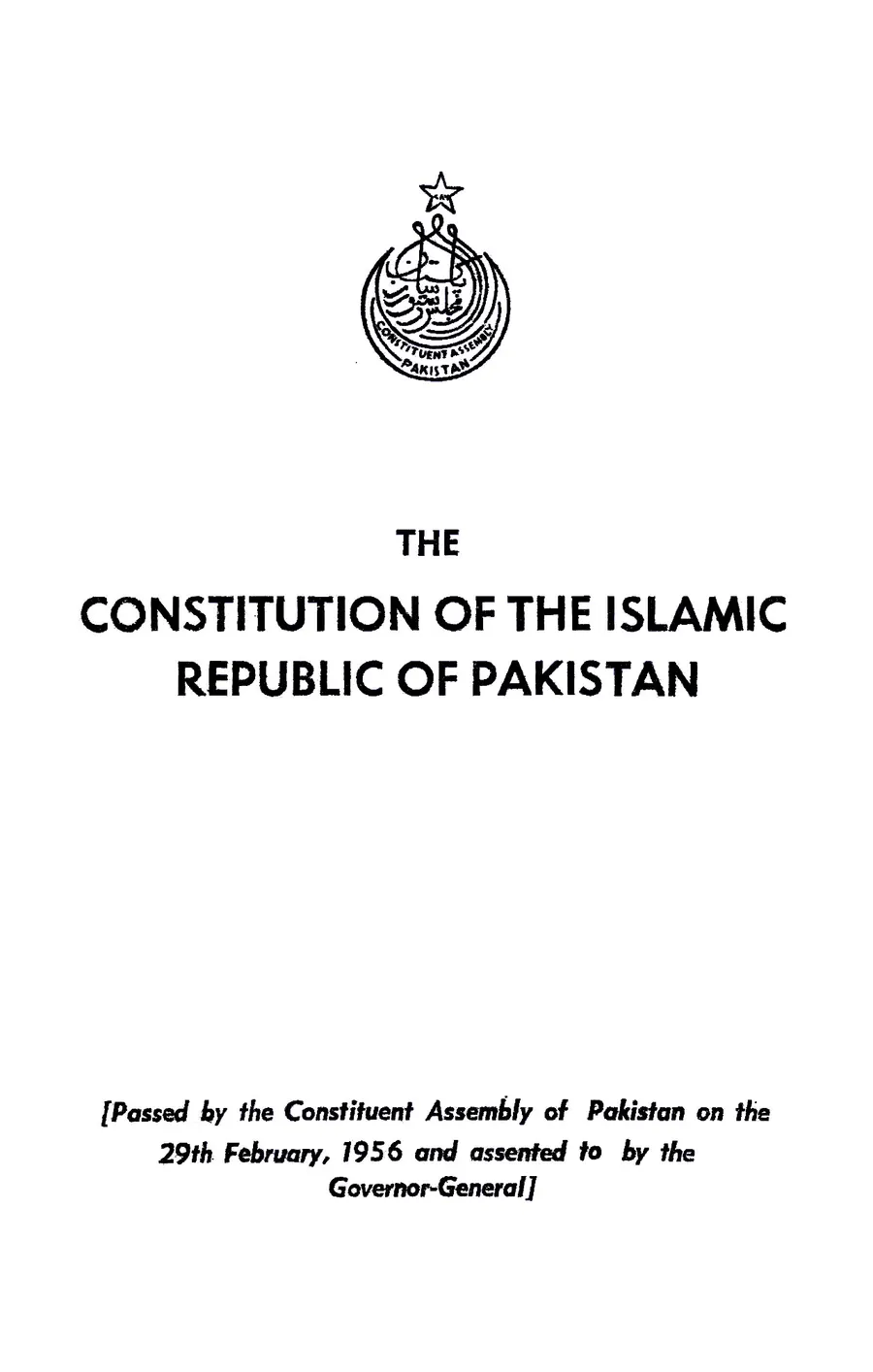
The cover of Pakistan's first constitution, 'passed by the Constituent Assembly of Pakistan on the 29th February, 1956'.The cover of Pakistan’s first constitution, ‘passed by the Constituent Assembly of Pakistan on the 29th February, 1956’.Image: Government of Pakistan, edited by Kaim Amin · Public domain

politics · Asia

Pakistan adopts its first constitution

Nine years after independence, Pakistan’s second Constituent Assembly passed the country’s first constitution on 29 February 1956. It made Pakistan an Islamic republic, ending its status as a British dominion, and came into force on 23 March. The constitution had 234 articles but a short life. Members from East Pakistan’s Awami League and the Hindu minority parties rejected it on the final day, and it was set aside when martial law was declared in October 1958.

Source: National Assembly of Pakistan: History ↗
1960
Destroyed buildings in Agadir after the earthquake, 1960.Destroyed buildings in Agadir after the earthquake, 1960.Image: American Red Cross, Boston Metropolitan Chapter · Public domain
world · Africa

An earthquake destroys Agadir

Late on the evening of 29 February 1960 an earthquake of magnitude 5.9 struck directly beneath Agadir, on Morocco’s Atlantic coast. It was not a large quake by global standards, but it was shallow, and within seconds much of the city had collapsed. At least 12,000 people were killed, around a third of the population, and as many again were injured. The true toll will never be known, because the rubble was cleared quickly to stop disease spreading.

Source: NOAA National Centers for Environmental Information: Significant earthquake, Agadir, 1960 ↗
1988
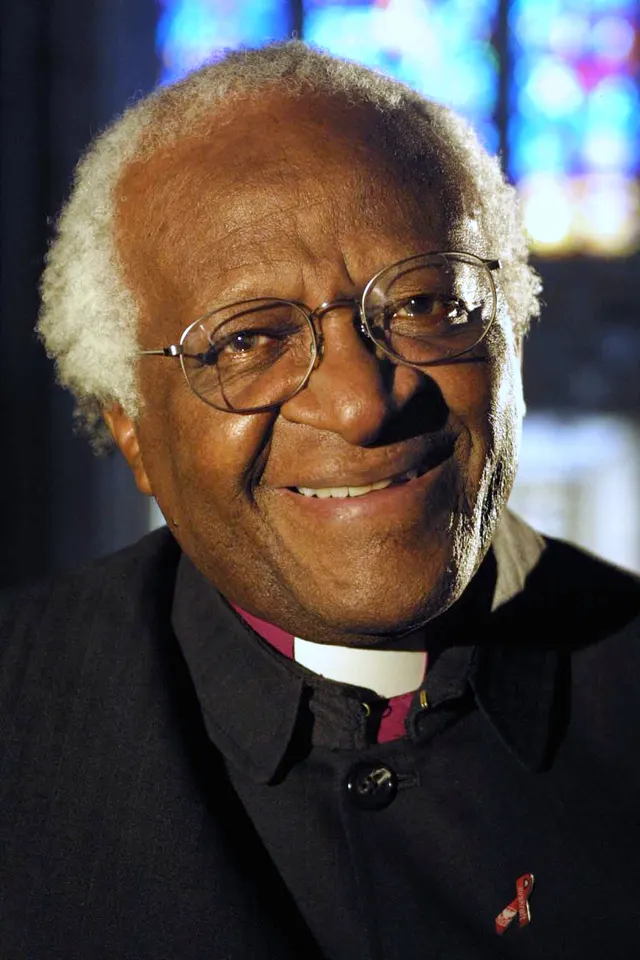
Archbishop Desmond Tutu in later life.Archbishop Desmond Tutu in later life.Image: Benny Gool · Public domain

world · Africa

Police arrest Desmond Tutu in Cape Town

Days after South Africa’s government banned leading anti-apartheid organisations, church leaders led a march from St George’s Cathedral in Cape Town towards Parliament on 29 February 1988 to deliver a petition. Riot police stopped them, turned a water cannon on kneeling clergy and detained dozens. Among those held were Archbishop Desmond Tutu, the Reverend Allan Boesak and the Catholic Archbishop Stephen Naidoo. They were freed within hours, but the arrests made headlines around the world.

Source: UPI Archives: Riot police briefly detained Archbishop Desmond Tutu and other church leaders, 29 February 1988 ↗
VI
2000 TO TODAY

Modern Day

The events of recent decades that have already become part of the historical record.

2004
Jean-Bertrand Aristide on a visit to the European Commission in 1991.Jean-Bertrand Aristide on a visit to the European Commission in 1991.Image: European Communities, 1991 / EC - Audiovisual Service · CC BY 4.0
politics · Americas

President Aristide leaves Haiti

After months of protests and an armed rebellion that had seized several cities, Haiti’s president, Jean-Bertrand Aristide, resigned and flew out of the country on 29 February 2004. The chief justice, Boniface Alexandre, became interim president. Aristide later said he had been forced out by the United States, which denied it; he returned from exile in 2011.

Source: US Department of State (2001-2009 archive): Resignation of President Jean-Bertrand Aristide of Haiti ↗
RESEARCH

Sources & Further Reading

Selected authoritative references supporting the events on this page.

WHY THESE MOMENTS?

Significance before volume

This page is not the longest possible list of events. It is a chronological journey through 29 February, where each entry is chosen for historical significance, human interest and reliability.

Facts are checked against authoritative museums, archives, universities and reference works. Where sources disagree, the page says so.

EXPLORED THE DEEPER STORY?

Return to the highlights of 29 February

Discover the lighter side of the date with famous birthdays, culture, firsts and lives remembered.

Explore This Day →
← PREVIOUS DAY28 February
HISTORY & TIMELINE29 February
NEXT DAY →1 March