HISTORY & TIMELINE
21 December

A journey through
21 December in history

From the first crossword to the first people to leave Earth’s orbit, 21 December is a date of beginnings, and of one terrible night over a Scottish town. This timeline follows the date across the twentieth century and beyond.

JUMP THROUGH TIME
IV
THE NINETEENTH CENTURY

The 1800s

Industry, empire, invention, reform and a century of enormous transformation.

1891
James Naismith with a ball and a peach basket.James Naismith with a ball and a peach basket.Image: Unknown authorUnknown author · Public domain
sport · Americas

The first game of basketball

On 21 December 1891, at the YMCA training school in Springfield, Massachusetts, the physical education instructor James Naismith gave a restless class a new indoor game for the winter. He nailed two peach baskets to the balcony at either end of the gym, ten feet above the floor, and divided eighteen men into two teams of nine with a football. Naismith, a Canadian, wrote thirteen rules. By 1894 the game was being played in France, China and India, and it became an Olympic sport in 1936, when Naismith was there to see it.

Source: Springfield College: the birthplace of basketball ↗
V
THE TWENTIETH CENTURY

The 1900s

War and peace, technological leaps, social change, politics, sport and popular culture.

1913
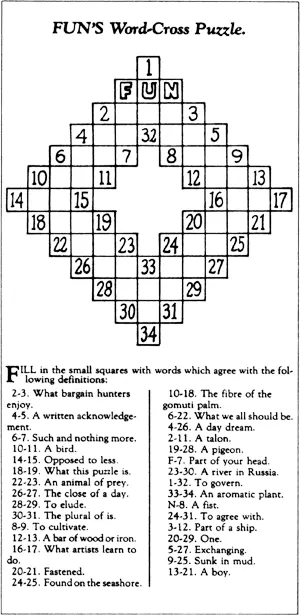
A re-creation of Arthur Wynne's 'Word-Cross' puzzle from the New York World, 21 December 1913.A re-creation of Arthur Wynne’s ‘Word-Cross’ puzzle from the New York World, 21 December 1913.Image: Arthur Wynne · Public domain
culture · Americas

The first crossword is published

Arthur Wynne, an English-born editor on the New York World, needed something to fill the Christmas edition of the paper’s Sunday supplement, Fun. On 21 December 1913 he published a diamond-shaped grid of numbered squares with clues and called it a ‘Word-Cross’. It is taken to be the first modern crossword. Readers took to it at once and complained when it was missing. Within weeks a typesetter’s slip had turned the name into ‘Cross-Word’, and by the mid-1920s crossword books were a national craze.

Source: Library of Congress, Headlines and Heroes: word cross, crosswords and acrostics ↗
1937
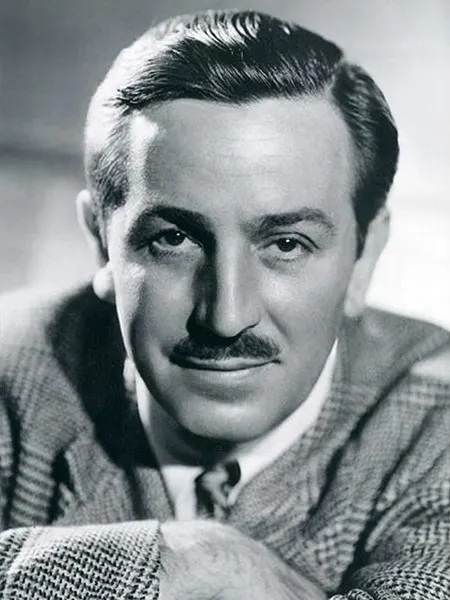
Walt Disney in 1946.Walt Disney in 1946.Image: Boy Scouts of America · Public domain
culture · Americas

Snow White and the Seven Dwarfs has its premiere

Walt Disney’s Snow White and the Seven Dwarfs, the first full-length animated feature made in the United States, had its premiere at the Carthay Circle Theatre in Los Angeles on 21 December 1937. Charlie Chaplin, Clark Gable and Marlene Dietrich were in the audience, and some 30,000 people gathered outside. Hollywood had called the project ‘Disney’s folly’. The audience applauded and wept, and the film became the most successful film of its time, paying for the studio in Burbank that Disney built with the profits.

Source: The Walt Disney Family Museum: Snow White and the Seven Dwarfs, the opening ↗
1958
politics · Europe

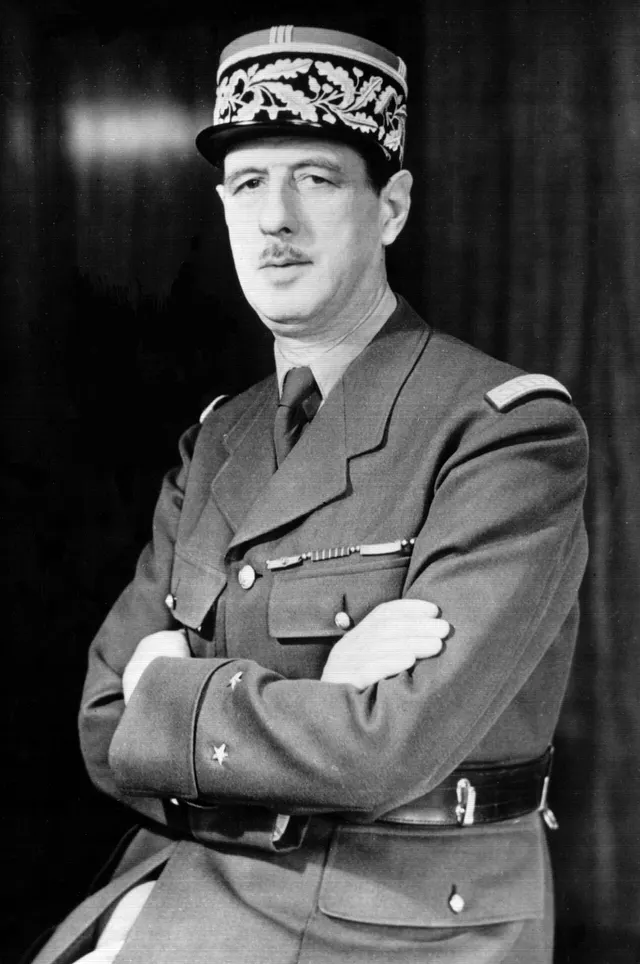
De Gaulle is elected President of France

On 21 December 1958 an electoral college of some 80,000 members — parliamentarians, councillors and representatives of local councils — elected Charles de Gaulle the first President of the Fifth Republic, by a very large majority. He had been brought back to power in June, in the crisis over the war in Algeria, and the new constitution, approved by referendum in September, had been written around him. He took office in January 1959. In 1962 he changed the rules again by referendum, so that from 1965 the president would be elected directly by the people. He resigned in 1969.

Source: Élysée: Charles de Gaulle ↗
1965
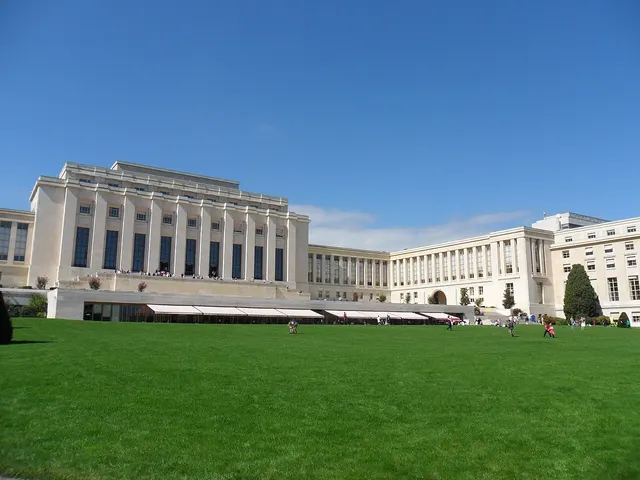
The Palace of Nations in Geneva, where the UN's human rights committees meet.The Palace of Nations in Geneva, where the UN’s human rights committees meet.Image: Credits to Mourad Ben Abdallah / Wikimedia Commons · CC BY-SA 3.0
world · Global

The UN adopts its convention against racial discrimination

On 21 December 1965 the UN General Assembly adopted the International Convention on the Elimination of All Forms of Racial Discrimination. Drafted in the years of decolonisation and the American civil rights movement, it was the first of the core UN human rights treaties, and it set up the first UN committee of experts to check whether states were keeping their promises. It came into force on 4 January 1969.

Source: UN Human Rights Office (OHCHR): the Convention, 50 years of fighting racism ↗
1968
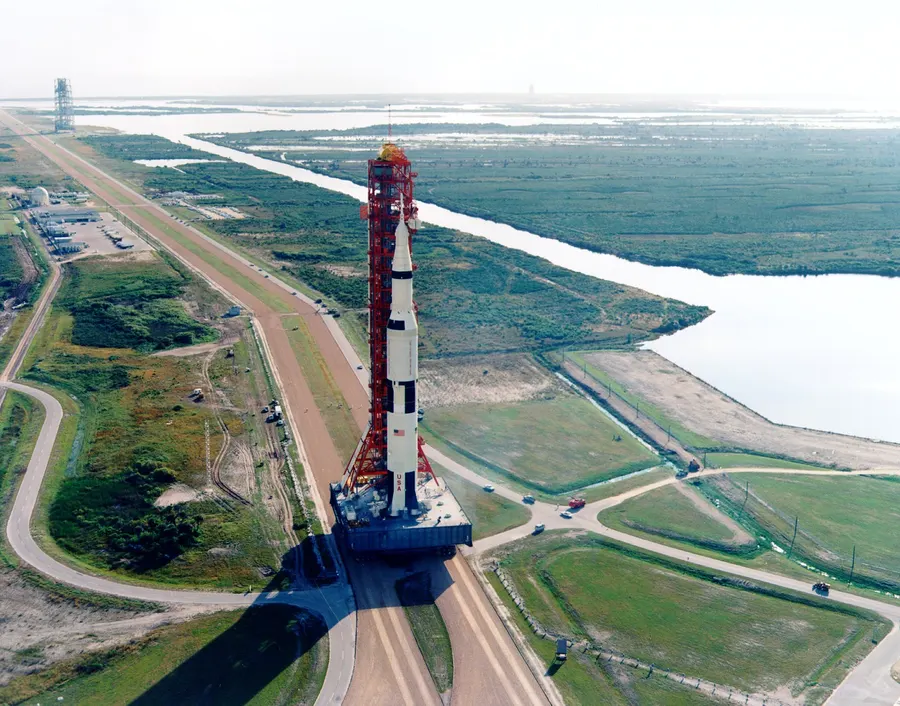
The Apollo 8 Saturn V being rolled out to the launch pad at Kennedy Space Center, 9 October 1968.The Apollo 8 Saturn V being rolled out to the launch pad at Kennedy Space Center, 9 October 1968.Image: NASA · Public domain
science · Americas

Apollo 8 sets off for the Moon

At 7.51 in the morning of 21 December 1968 a Saturn V rocket lifted off from Kennedy Space Center carrying Frank Borman, Jim Lovell and Bill Anders. It was the first time the giant rocket had carried a crew, and less than three hours later they fired the third stage and became the first people ever to leave Earth’s orbit. They reached the Moon on Christmas Eve and circled it ten times, the first humans to see its far side with their own eyes. The mission had been brought forward by months, partly out of fear that the Soviet Union would send cosmonauts round the Moon first. They splashed down safely in the Pacific on 27 December.

Source: NASA: Apollo 8 ↗
1988
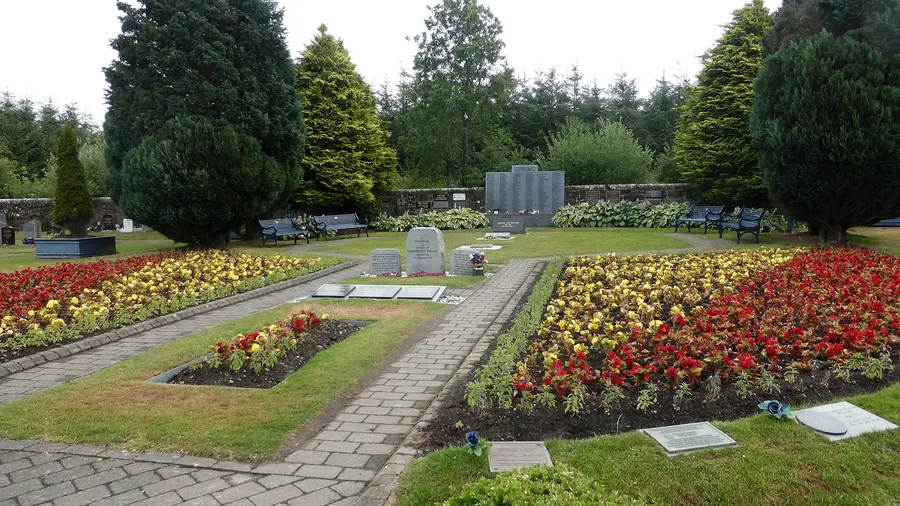
The memorial garden at Lockerbie.The memorial garden at Lockerbie.Image: Sandy Gerrard · CC BY-SA 2.0

world · Europe

The bombing of Pan Am Flight 103

On the evening of 21 December 1988 Pan Am Flight 103, from London to New York, was destroyed by a bomb over the Scottish town of Lockerbie, less than forty minutes after take-off. All 259 people on board were killed, 190 of them Americans, among them 35 students from Syracuse University, and 11 people died on the ground. It remains the deadliest terrorist attack in British history. After a long international investigation a Libyan intelligence officer, Abdelbaset al-Megrahi, was convicted in 2001 by Scottish judges sitting in the Netherlands.

Source: Federal Bureau of Investigation: Pan Am 103 bombing ↗
1988
The An-225 Mriya coming in to land at Hostomel after the Independence Day parade in 2021.The An-225 Mriya coming in to land at Hostomel after the Independence Day parade in 2021.Image: Zavryk · CC BY-SA 4.0
science · Europe

The world’s largest aircraft takes off

The Antonov An-225 Mriya — ‘dream’ in Ukrainian — made its first flight from the Antonov factory airfield at Sviatoshyn in Kyiv on 21 December 1988, with a crew led by Oleksandr Galunenko. It was built to carry the Soviet Buran space shuttle and parts of the Energia rocket on its back. With six engines and a wingspan of 88 metres it was the heaviest aircraft ever built, and after the Soviet shuttle programme ended it flew outsize cargo around the world. Only one was completed. It was destroyed at Hostomel airfield near Kyiv in the first days of Russia’s invasion of Ukraine in February 2022.

Source: Antonov: the An-225 Mriya ↗
1991
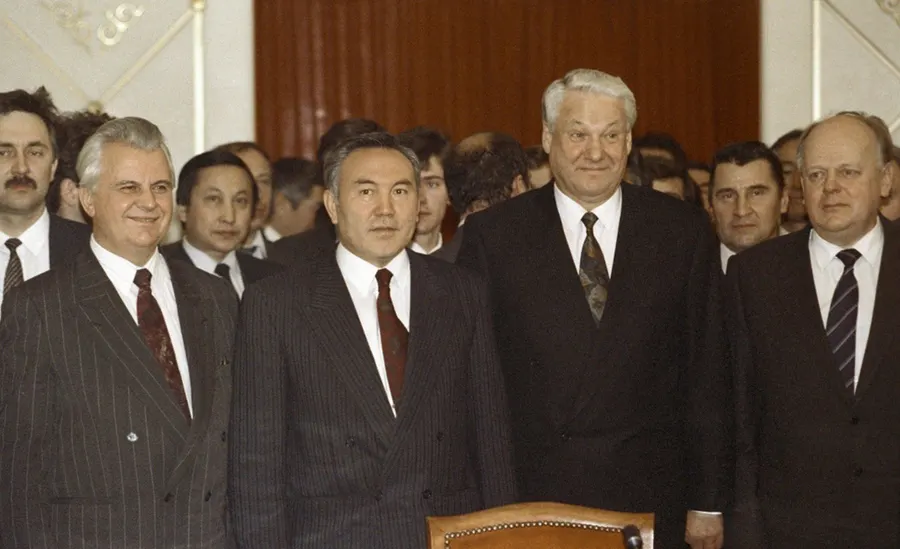
Leonid Kravchuk, Nursultan Nazarbayev, Boris Yeltsin and Stanislav Shushkevich at Alma-Ata, 21 December 1991.Leonid Kravchuk, Nursultan Nazarbayev, Boris Yeltsin and Stanislav Shushkevich at Alma-Ata, 21 December 1991.Image: Dmitryi Donskoy / Дмитрий Донской · CC BY-SA 3.0
politics · Asia

Eleven republics bury the Soviet Union

On 21 December 1991 the leaders of eleven of the fifteen Soviet republics met in Alma-Ata, the capital of Kazakhstan, and signed the documents that founded the Commonwealth of Independent States. They declared that with its formation the Union of Soviet Socialist Republics would cease to exist. Russia, Ukraine and Belarus had agreed to form the Commonwealth near Minsk two weeks earlier; at Alma-Ata the Central Asian republics, Armenia, Azerbaijan and Moldova joined them. The Baltic states and Georgia stayed out. Four days later Mikhail Gorbachev resigned as Soviet president.

Source: Encyclopaedia Britannica: Commonwealth of Independent States ↗
WHY THESE MOMENTS?

Significance before volume

This page is not the longest possible list of events. It is a chronological journey through 21 December, where each entry is chosen for historical significance, human interest and reliability.

Facts are checked against authoritative museums, archives, universities and reference works. Where sources disagree, the page says so.

EXPLORED THE DEEPER STORY?

Return to the highlights of 21 December

Discover the lighter side of the date with famous birthdays, culture, firsts and lives remembered.

Explore This Day →