
HISTORY & TIMELINE
18 December

A journey through
18 December in history

From the fall of Muslim Zaragoza in 1118 to the first satellite to carry a human voice from space, 18 December has seen long wars end, great frauds begin and a ballet that became a Christmas habit. This timeline follows the date across nine centuries.

JUMP THROUGH TIME
II
THE MIDDLE AGES

Medieval History

Kingdoms, conflict, faith, power and the changing medieval world.

1118
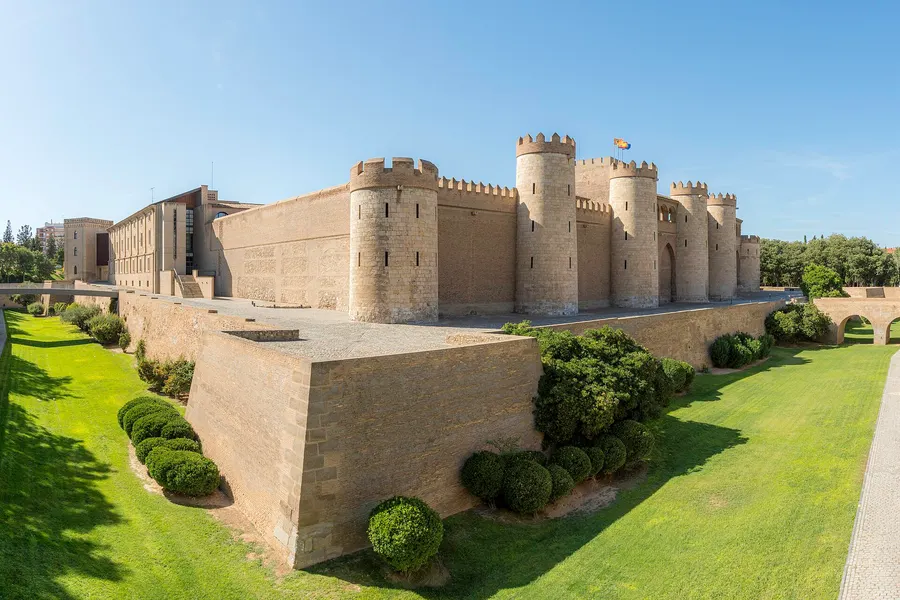
The Aljafería palace in Zaragoza.The Aljafería palace in Zaragoza.Image: Fernando · CC BY-SA 4.0
world · Europe

Alfonso the Battler takes Zaragoza

After a siege of seven months, King Alfonso I of Aragon, known as the Battler, entered Zaragoza on 18 December 1118 and went to the Aljafería, the palace of its former Muslim rulers. The city had been in Muslim hands for four centuries and under the Almoravids of North Africa since 1110. Its fall was one of the great gains of the Christian kingdoms in Spain; Zaragoza became the capital of Aragon and the Aljafería a royal palace.

Source: Ayuntamiento de Zaragoza: in December 1118 Alfonso I of Aragon conquers Zaragoza ↗
IV
THE NINETEENTH CENTURY

The 1800s

Industry, empire, invention, reform and a century of enormous transformation.

1865
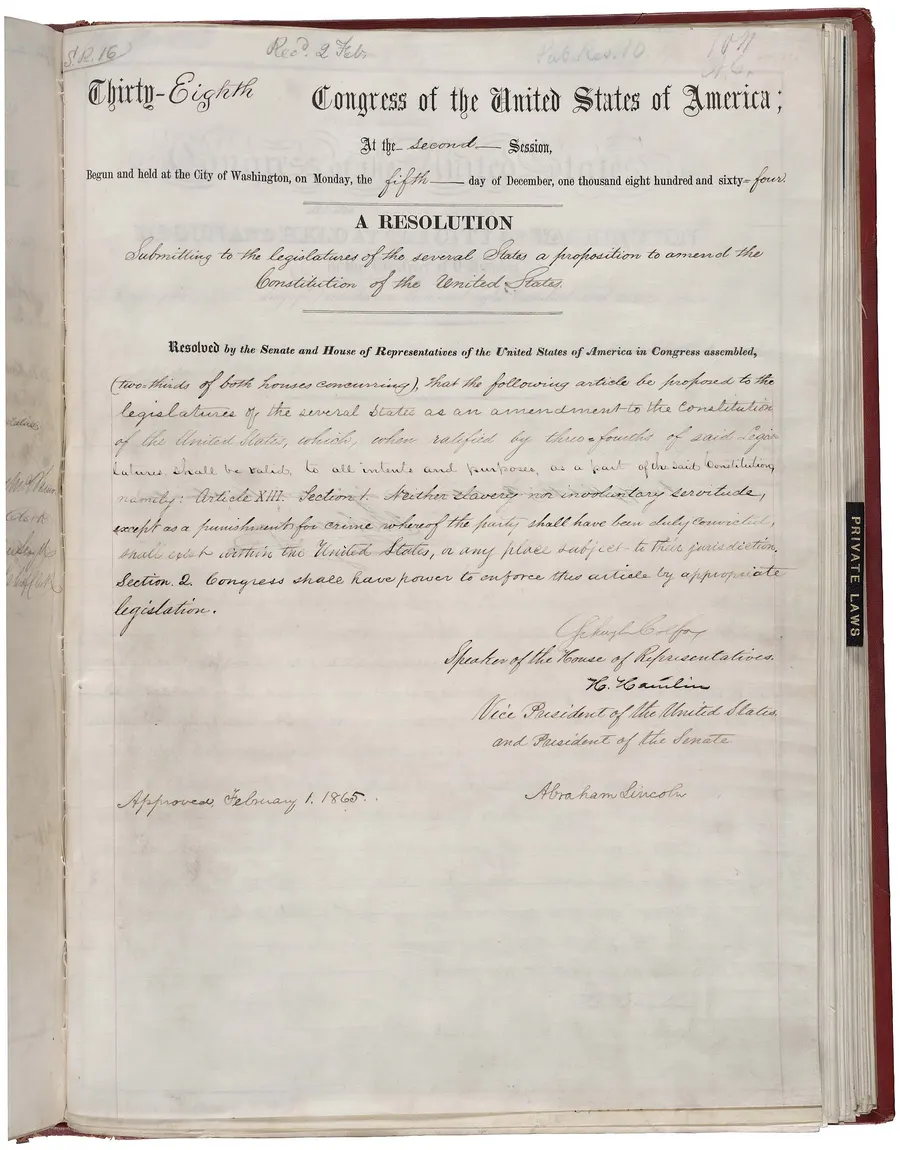
The joint resolution of Congress proposing the Thirteenth Amendment, held by the US National Archives.The joint resolution of Congress proposing the Thirteenth Amendment, held by the US National Archives.Image: Nationalbdgf Archives of the Unites States · Public domain
politics · Americas

Slavery is abolished in the United States

On 18 December 1865 Secretary of State William Seward certified that the Thirteenth Amendment had been ratified by three-quarters of the states and was part of the Constitution. Its first section is one sentence: neither slavery nor involuntary servitude, except as a punishment for crime, shall exist within the United States. Congress had passed the amendment on 31 January 1865, three months before the Civil War ended. Georgia’s vote on 6 December made the required twenty-seven; Seward’s proclamation twelve days later made it law. About four million people had been enslaved in the country in 1860.

Source: US National Archives: 13th Amendment to the U.S. Constitution, abolition of slavery (1865) ↗
1892
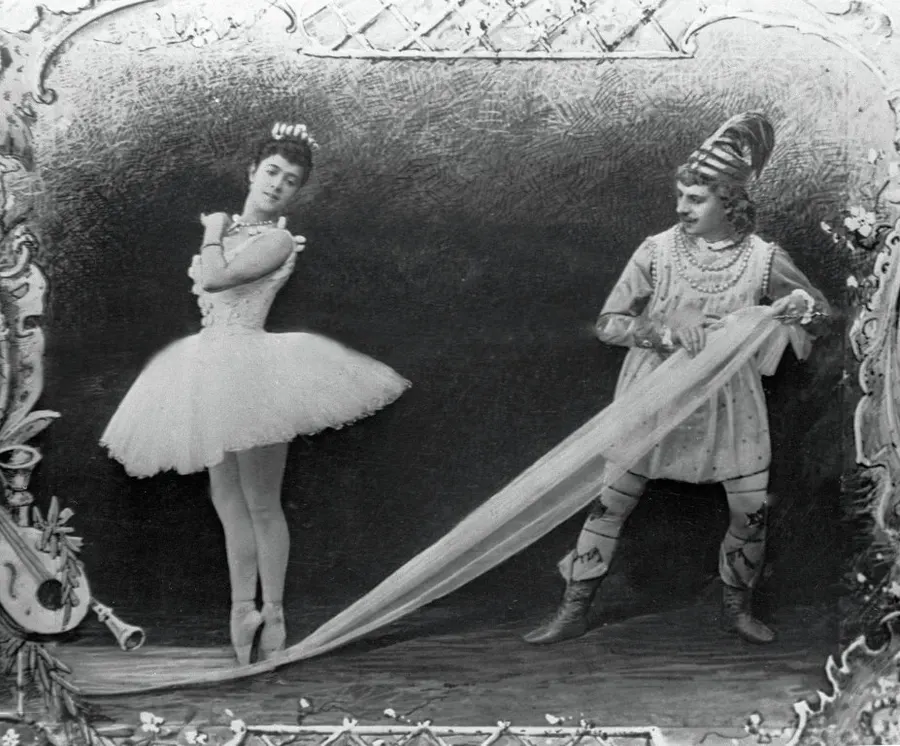
Dancers in the first production of The Nutcracker at the Mariinsky Theatre, 1892.Dancers in the first production of The Nutcracker at the Mariinsky Theatre, 1892.Image: anonymous Russian 19th century photographer · Public domain
culture · Europe

The Nutcracker is first performed

Tchaikovsky’s ballet The Nutcracker was first performed at the Mariinsky Theatre in St Petersburg on 6 December 1892 by the Russian calendar of the day — 18 December in the modern calendar — on a double bill with his one-act opera Iolanta. Lev Ivanov choreographed it, from a plan by Marius Petipa, and the story came from a tale by E. T. A. Hoffmann. The first reviews were cool, and Tchaikovsky himself thought the ballet came off as rather dull. He died less than a year later. The suite he drew from it was popular from the start, and in the second half of the twentieth century the full ballet became a Christmas fixture for companies around the world.

Source: Encyclopaedia Britannica: The Nutcracker ↗
V
THE TWENTIETH CENTURY

The 1900s

War and peace, technological leaps, social change, politics, sport and popular culture.

1912
John Cooke's 1915 painting of scientists examining the Piltdown skull; Charles Dawson and Arthur Smith Woodward stand at the back.John Cooke’s 1915 painting of scientists examining the Piltdown skull; Charles Dawson and Arthur Smith Woodward stand at the back.Image: John Cooke · Public domain
science · Europe

Piltdown Man is announced to the world

At a crowded meeting of the Geological Society of London on 18 December 1912, Charles Dawson, a Sussex solicitor and amateur collector, and Arthur Smith Woodward of the British Museum presented pieces of a skull and jaw from a gravel pit at Piltdown. They named the creature Eoanthropus dawsoni and presented it as an early human with an ape-like jaw — a missing link, found in England. It took forty years to expose. In 1953 fluorine and other tests showed that the bones had been stained to look ancient and that the jaw came from an orangutan, with its teeth filed down. It remains the best-known fraud in the history of science.

Source: Natural History Museum: Piltdown Man ↗
1916
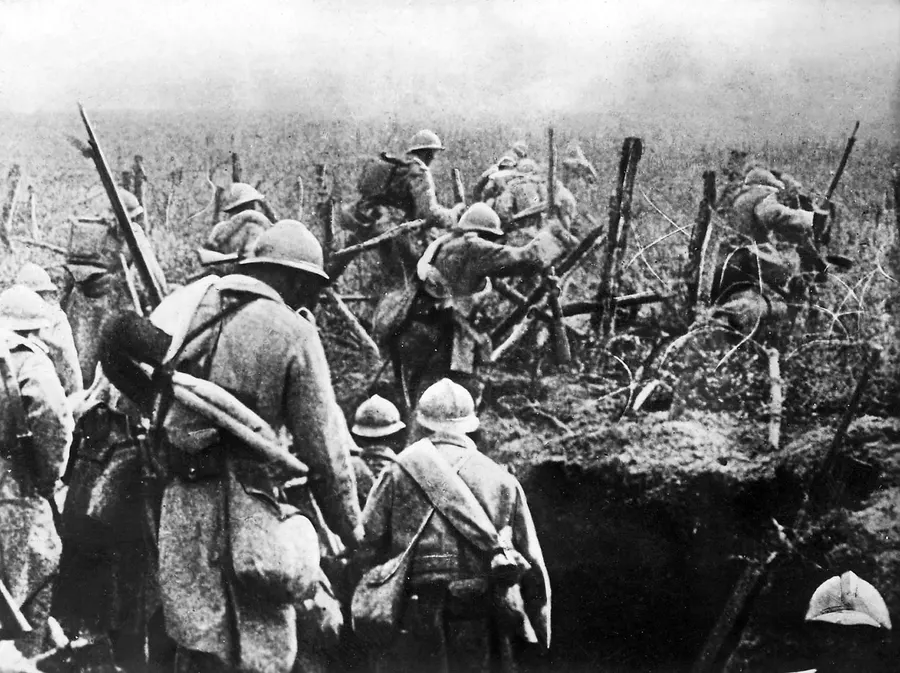
French soldiers leaving their trench to attack during the Battle of Verdun, 1916.French soldiers leaving their trench to attack during the Battle of Verdun, 1916.Image: Collection DocAnciens/docpix.fr · Public domain
world · Europe

The Battle of Verdun ends

The Battle of Verdun, which began with a German bombardment on 21 February 1916, ended on 18 December when a French counter-offensive took Chambrettes Farm and pushed the line back close to where it had started. The ten months of fighting on the hills north of the town made it one of the longest battles in history. The French lost about 163,000 dead and the Germans about 143,000, with hundreds of thousands more wounded on both sides, for almost no change of ground. For France the defence of Verdun, under the slogan ‘they shall not pass’, became the symbol of the whole war.

Source: Mémorial de Verdun: the Battle of Verdun ↗
1958
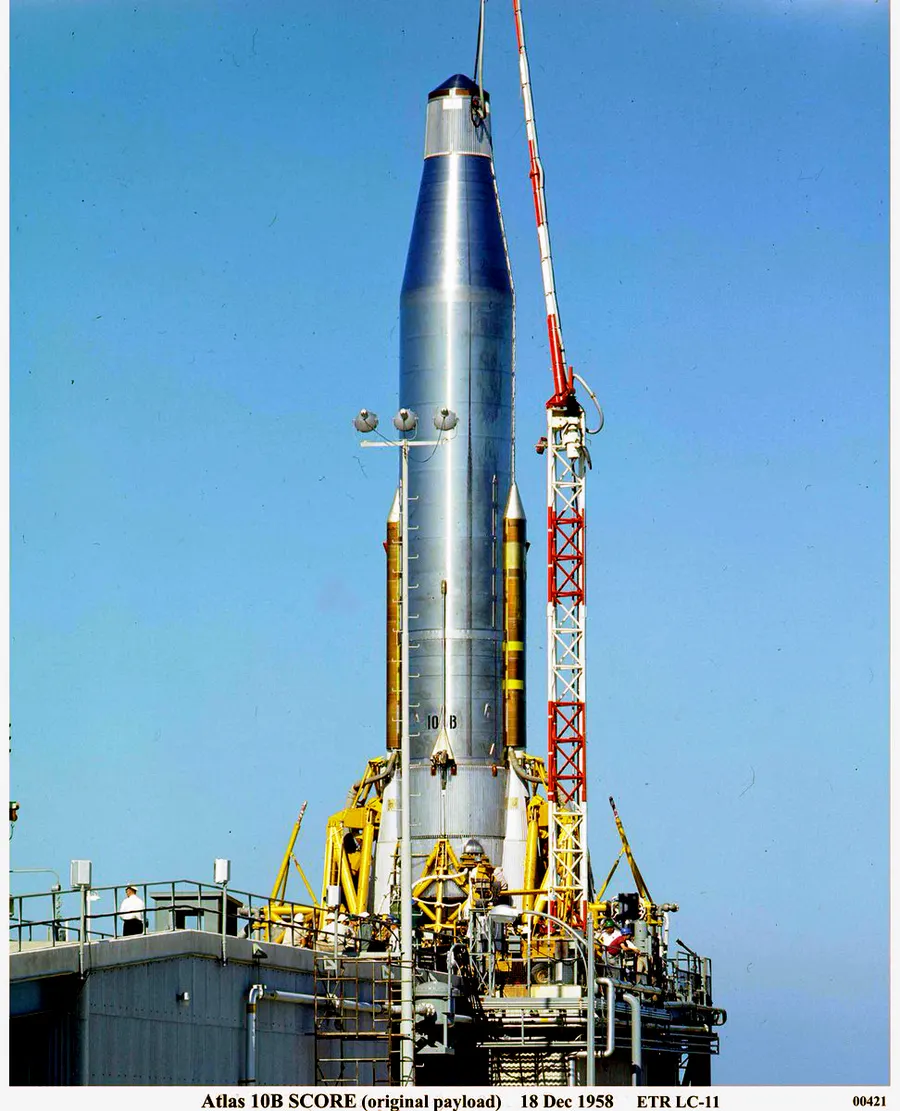
The Atlas 10B rocket carrying SCORE at Cape Canaveral, 18 December 1958.The Atlas 10B rocket carrying SCORE at Cape Canaveral, 18 December 1958.Image: NASA · Public domain
science · Americas

The first communications satellite carries a Christmas message

Project SCORE was launched from Cape Canaveral on 18 December 1958: the whole Atlas missile went into orbit, with the US Army’s relay equipment on board. It was the first satellite built to pass messages from one place on Earth to another. Its best-known task was to broadcast a recorded Christmas greeting from President Eisenhower, the first human voice sent from space, wishing ‘peace on Earth and goodwill toward men everywhere’. It fell back into the atmosphere in January 1959.

Source: National Air and Space Museum: communications satellite, SCORE ↗
1979
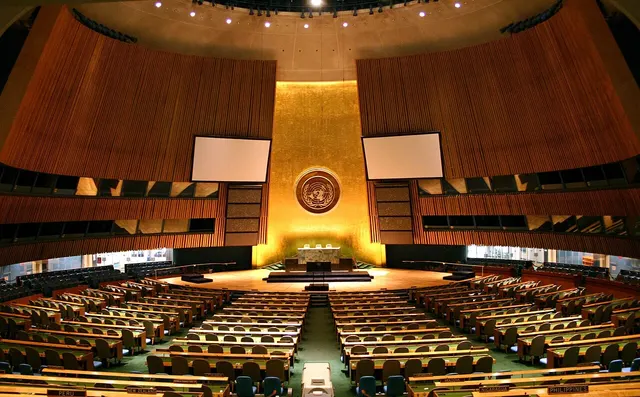
The United Nations General Assembly hall in New York.The United Nations General Assembly hall in New York.Image: Patrick Gruban, cropped and downsampled by Pine · CC BY-SA 2.0
world · Global

The UN adopts its convention on women’s rights

On 18 December 1979 the United Nations General Assembly adopted the Convention on the Elimination of All Forms of Discrimination against Women, often called CEDAW, or an international bill of rights for women. It commits the states that join it to end discrimination against women in law, politics, work, education, health and family life. It was the result of more than thirty years’ work by the UN Commission on the Status of Women, set up in 1946, and came into force on 3 September 1981 once twenty countries had ratified it. Almost every country in the world is now a party to it.

Source: UN Human Rights Office (OHCHR): Convention on the Elimination of All Forms of Discrimination against Women ↗
VI
2000 TO TODAY

Modern Day

The events of recent decades that have already become part of the historical record.

2022
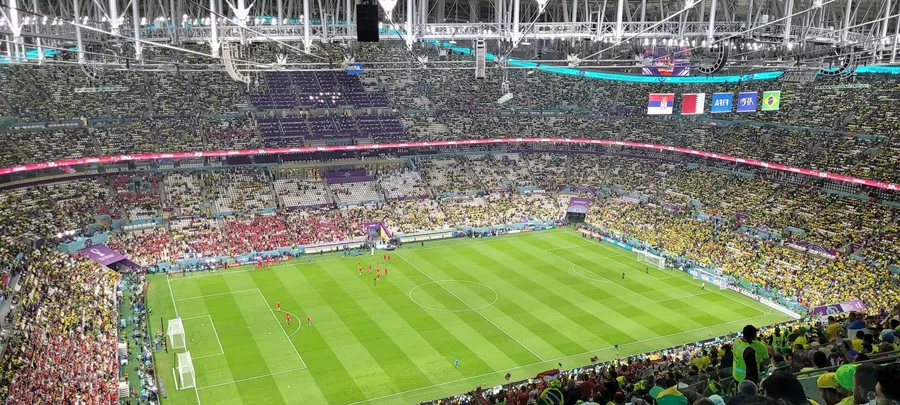
Lusail Stadium, north of Doha, during a group match at the 2022 World Cup.Lusail Stadium, north of Doha, during a group match at the 2022 World Cup.Image: Adnen1985 · CC BY-SA 4.0
sport · Americas

Argentina win the World Cup in Qatar

The 2022 World Cup final, played at Lusail Stadium in Qatar on 18 December, finished 3-3 after extra time. Lionel Messi scored twice for Argentina and Kylian Mbappé three times for France, the first hat-trick in a final since Geoff Hurst’s in 1966. Argentina won the shoot-out 4-2. It was Argentina’s third world title, after 1978 and 1986, and the one trophy Messi had never won. The tournament, the first held in the Middle East and the first played in November and December, was also criticised over the treatment of the migrant workers who built its stadiums.

Source: FIFA: triumphant Argentina conclude unprecedented FIFA World Cup ↗
WHY THESE MOMENTS?

Significance before volume

This page is not the longest possible list of events. It is a chronological journey through 18 December, where each entry is chosen for historical significance, human interest and reliability.

Facts are checked against authoritative museums, archives, universities and reference works. Where sources disagree, the page says so.

EXPLORED THE DEEPER STORY?

Return to the highlights of 18 December

Discover the lighter side of the date with famous birthdays, culture, firsts and lives remembered.

Explore This Day →