

HISTORY & TIMELINE
13 August

A journey through
13 August in history

The story of 13 August runs from the election of Pope Paschal II in 1099 to the announcement in 2020 that Israel and the United Arab Emirates would open full relations. In between come the fall of Tenochtitlan, the Battle of Blenheim, Alexander Gordon Laing’s arrival in Timbuktu, the great Arica earthquake, the opening of the first Bayreuth Festival, the discovery of the asteroid Eros, Norway’s vote to leave its union with Sweden, the start of the Battle of Shanghai, the first broadcast of Pakistan’s national anthem, the independence of the Central African Republic, the building of the Berlin Wall and San Lorenzo’s first Copa Libertadores.

II
THE MIDDLE AGES

Medieval History

Kingdoms, conflict, faith, power and the changing medieval world.

1099
Pope Paschal II, in a medieval manuscript illustrationPope Paschal II, in a medieval manuscript illustrationImage: Unknown author · Public domain
culture · Europe

Cardinal Rainerius is elected pope as Paschal II

Pope Urban II, who had launched the First Crusade, died in Rome at the end of July 1099, before news arrived that the crusaders had taken Jerusalem. The cardinals met at the church of San Clemente, and on 13 August 1099 they chose its cardinal-priest, a monk named Rainerius, who protested in vain that he was unworthy. Consecrated the next day as Paschal II, he reigned until 1118, much of it in conflict with the German emperors over who had the right to appoint bishops.

Source: Catholic Encyclopedia: Pope Paschal II ↗
III
A CHANGING WORLD

Early Modern Era

Exploration, political change, scientific development and expanding global connections.

1521
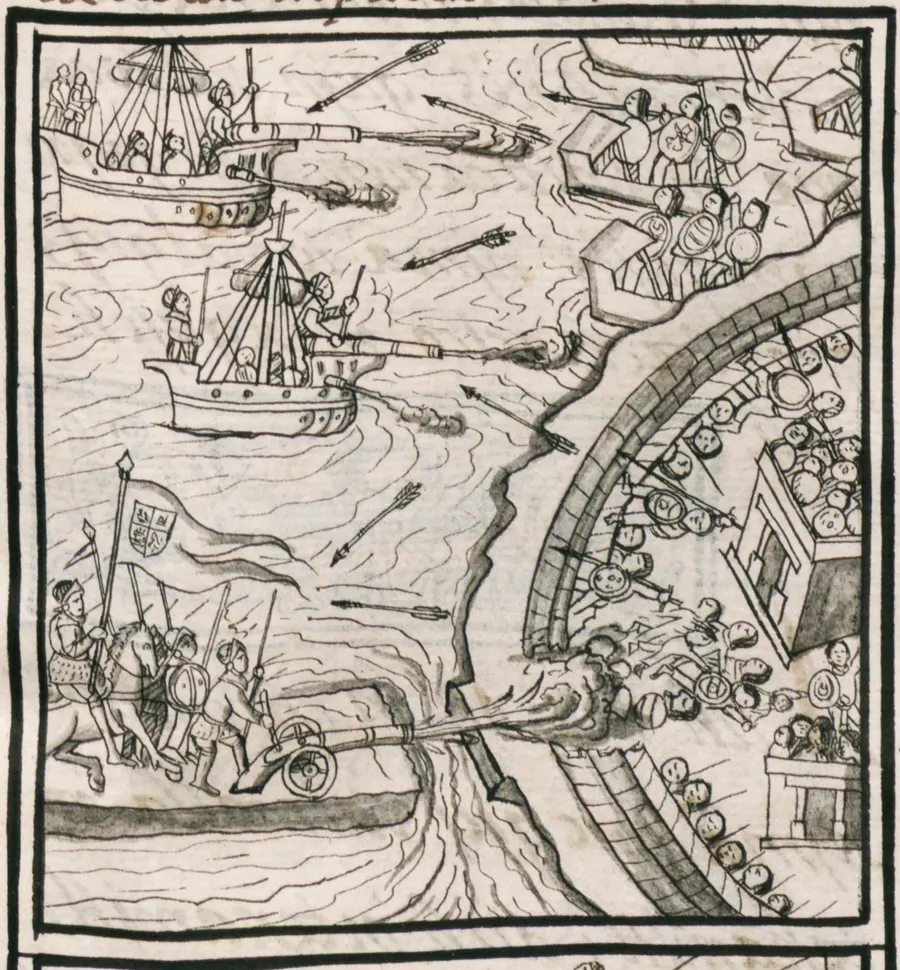
Spanish brigantines on the lake during the siege of Tenochtitlan, from the Florentine Codex compiled by Bernardino de SahagúnSpanish brigantines on the lake during the siege of Tenochtitlan, from the Florentine Codex compiled by Bernardino de SahagúnImage: Bernardino de Sahagún · Public domain
world · Americas

Tenochtitlan, the Aztec capital, falls to Cortés and his allies

Tenochtitlan, built on an island in Lake Texcoco and joined to the shore by causeways, was one of the largest cities in the world. Hernán Cortés and his Spanish soldiers had been driven out of it in June 1520, but they returned the next year with tens of thousands of Indigenous allies, above all from Tlaxcala, who had their own reasons to hate Aztec rule. Cortés had a fleet of small sailing warships built so that he could control the lake and cut the causeways. The siege began in May 1521. Smallpox, brought by the Europeans, had already killed many of the city’s people, including the emperor Cuitláhuac, and now food and fresh water ran out as the attackers fought their way in street by street. On 13 August 1521, after some 93 days, the young emperor Cuauhtémoc was captured as he tried to escape across the lake in a canoe, and the city fell. The Spaniards built Mexico City on its ruins.

Source: World History Encyclopedia: The Fall of Tenochtitlan ↗
1704
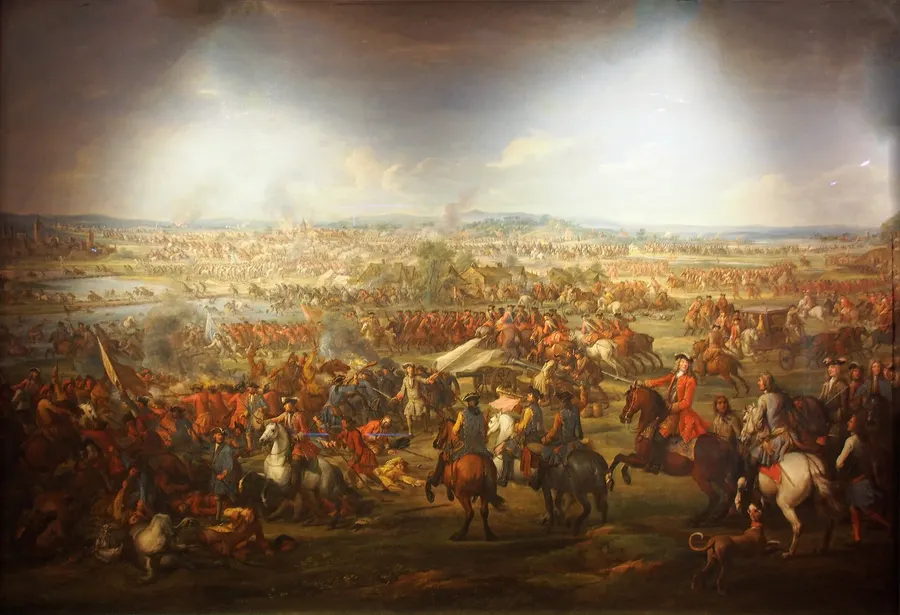
The Battle of Blenheim, 13 August 1704, painted by John WoottonThe Battle of Blenheim, 13 August 1704, painted by John WoottonImage: John Wootton · Public domain
world · Europe

Marlborough and Prince Eugene win the Battle of Blenheim

In the War of the Spanish Succession a French and Bavarian army threatened Vienna. The Duke of Marlborough marched an allied army some 400 kilometres from the Low Countries to the Danube in five weeks and joined the imperial forces of Prince Eugene of Savoy. On 13 August 1704, near the village of Blindheim in Bavaria, they routed the Franco-Bavarian army and captured its commander, Marshal Tallard. The victory saved Vienna, and a grateful nation built Marlborough Blenheim Palace.

Source: National Army Museum: The Battle of Blenheim, 13 August 1704 ↗
IV
THE NINETEENTH CENTURY

The 1800s

Industry, empire, invention, reform and a century of enormous transformation.

1826
The house in Timbuktu where Alexander Gordon Laing stayed in 1826, marked with a plaque by its doorThe house in Timbuktu where Alexander Gordon Laing stayed in 1826, marked with a plaque by its doorImage: upyernoz from Haverford, USA · CC BY 2.0
world · Africa

Alexander Gordon Laing reaches Timbuktu

The Scottish army officer Alexander Gordon Laing set out from Tripoli in July 1825 to cross the Sahara and reach Timbuktu, a city Europeans knew only from legend. On the way he was attacked and badly wounded, but in August 1826 he became the first European known to arrive there: The National Archives gives the date as 13 August, while some accounts say 18 August. He left the city in late September and was murdered in the desert a few days later.

Source: The National Archives blog: From Tripoli to Timbuktu ↗
1868
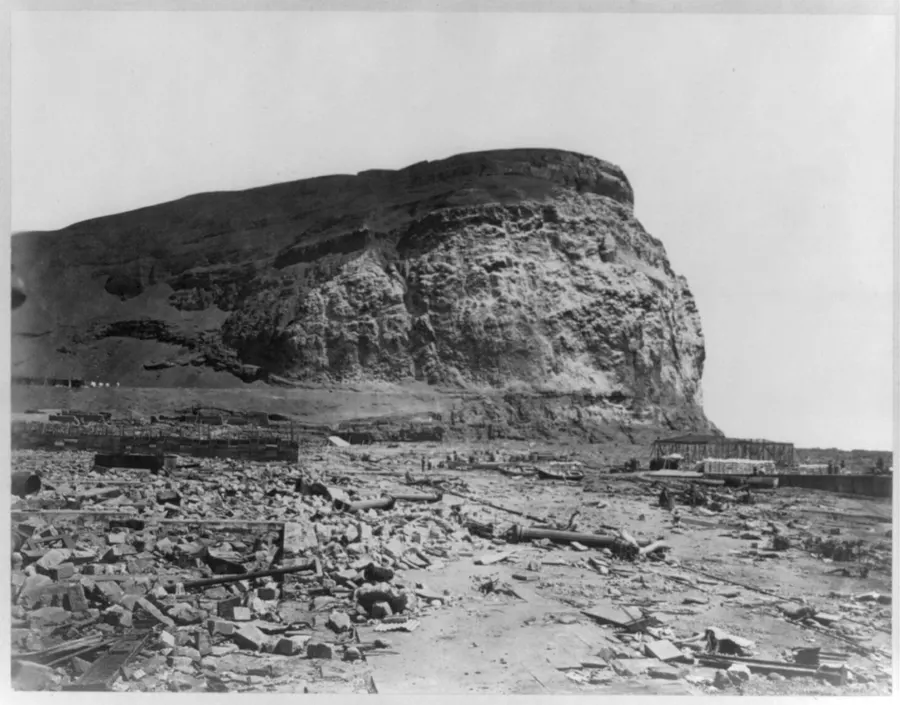
Arica in ruins after the earthquake of 1868, beneath the headland of the MorroArica in ruins after the earthquake of 1868, beneath the headland of the MorroImage: Unknown author · Public domain
world · Americas

A great earthquake and tsunami strike the coast at Arica

In the late afternoon of 13 August 1868 a huge earthquake struck the Pacific coast near Arica, then in Peru and now in Chile. Arica, Arequipa and other towns were largely destroyed, and thousands of people were killed. The sea drew back and returned as a tsunami that was recorded right across the Pacific, as far as Hawaii, New Zealand and Japan. At Arica the wave carried the American warship USS Wateree hundreds of metres inland and left her stranded.

Source: US Naval History and Heritage Command: Reports of the Arica, Peru earthquake from USS Powhatan and USS Wateree ↗
1876
The Festspielhaus at Bayreuth, the theatre Wagner built for his own operas, photographed in 2006The Festspielhaus at Bayreuth, the theatre Wagner built for his own operas, photographed in 2006Image: Rico Neitzel · CC BY-SA 2.5

culture · Europe

Wagner’s first Bayreuth Festival opens with Das Rheingold

Richard Wagner spent more than a quarter of a century on Der Ring des Nibelungen, four operas telling one vast story of gods, giants, dwarfs and a cursed gold ring. He wanted it staged as a festival in a theatre of his own, and with money from King Ludwig II of Bavaria and from Wagner societies he built the Festspielhaus in the small Franconian town of Bayreuth, with a hidden orchestra pit and seats arranged like an ancient amphitheatre. On 13 August 1876 Das Rheingold opened the first complete performance of the cycle, with Die Walküre, Siegfried and Götterdämmerung following over the next four days. Emperor Wilhelm I and many of Europe’s leading musicians came to see it. The festival lost a great deal of money and was not held again until 1882, but it still runs every summer, devoted to Wagner’s works alone.

Source: Britannica: Der Ring des Nibelungen ↗
1898
The asteroid Eros photographed by NASA's NEAR Shoemaker spacecraftThe asteroid Eros photographed by NASA’s NEAR Shoemaker spacecraftImage: NASA/NEAR Project (JHU/APL). · Public domain
science · Europe

Gustav Witt discovers Eros, the first known near-Earth asteroid

On the night of 13 August 1898 Gustav Witt, at the Urania observatory in Berlin, took a two-hour photographic exposure to follow a known asteroid. His plate also showed a short trail left by an unknown object moving unusually fast across the sky. The same night Auguste Charlois at Nice in France recorded it too. Its orbit turned out to bring it closer to the Sun than Mars and, at times, near the Earth: it was the first near-Earth asteroid ever found, and was named Eros. Astronomers used its close approaches to measure the scale of the solar system more accurately, and in 2000 NASA’s NEAR Shoemaker became the first spacecraft to orbit an asteroid when it went into orbit round Eros, before landing on it in 2001.

Source: NASA Science: 433 Eros ↗
V
THE TWENTIETH CENTURY

The 1900s

War and peace, technological leaps, social change, politics, sport and popular culture.

1905
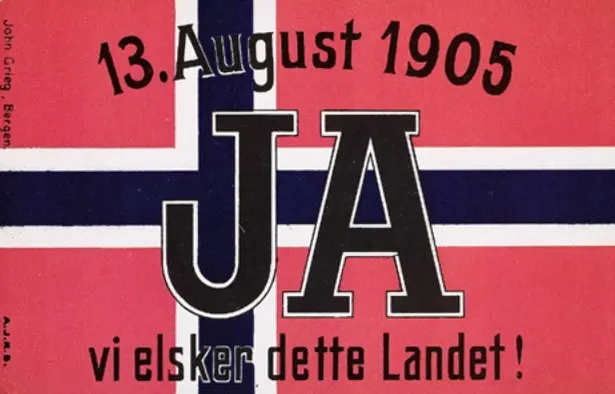
A postcard for the referendum of 13 August 1905, with the word JA (yes) over the Norwegian flagA postcard for the referendum of 13 August 1905, with the word JA (yes) over the Norwegian flagImage: Unknown author · Public domain
politics · Europe

Norwegians vote almost unanimously to leave the union with Sweden

On 7 June 1905 Norway’s parliament, the Storting, declared the union with Sweden dissolved, but Sweden argued that Norway could not end it alone. To show the world how the country felt, a referendum was held on 13 August 1905: 368,208 men voted for the dissolution and only 184 against. Women could not vote, but in the weeks before, the women’s movement gathered nearly 280,000 signatures in support. Sweden accepted the separation that autumn.

Source: Storting: Milestones in Norway’s democratic history ↗
1937
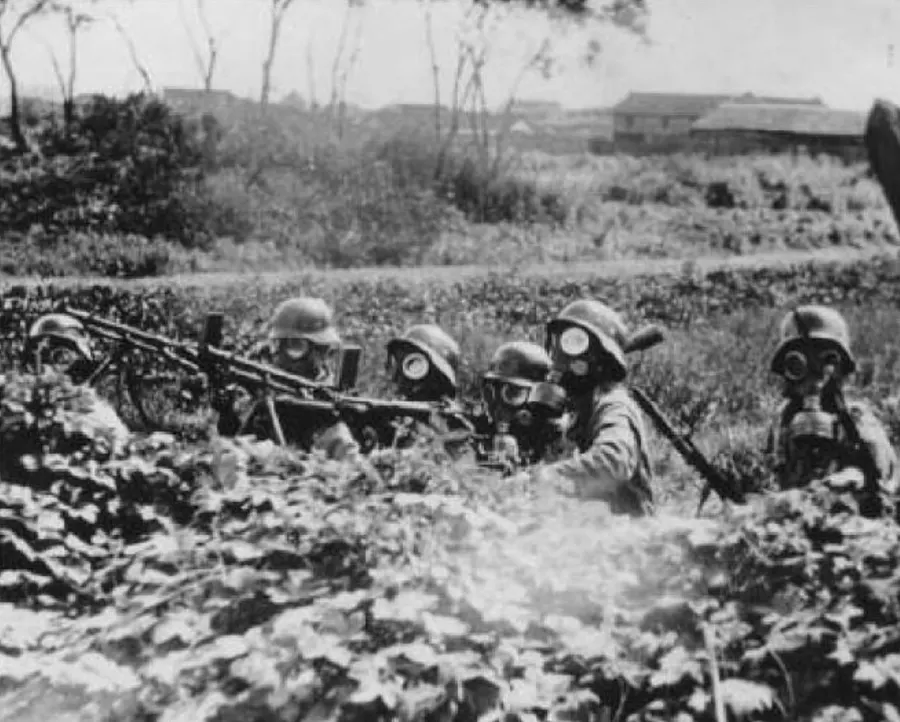
Chinese soldiers in gas masks man a machine gun outside Shanghai in 1937Chinese soldiers in gas masks man a machine gun outside Shanghai in 1937Image: Unknown photographer · Public domain
world · Asia

The Battle of Shanghai begins

In July 1937 a clash between Chinese and Japanese troops at the Marco Polo Bridge near Beijing turned into open war. Japan quickly took the north China plain, and China’s leader Chiang Kai-shek decided to fight back at Shanghai, the country’s greatest port and business centre, where Japan kept a garrison of marines and where foreign powers had their own districts. He hoped to tie down the Japanese army and win sympathy abroad. Fighting broke out in the city on 13 August 1937 and grew into one of the biggest battles of the war, with hundreds of thousands of men on each side and heavy bombing of the crowded streets. Chiang’s best divisions held on for three months before Japanese landings to the south forced them to retreat in November. Japan then marched on the capital, Nanjing, but the long defence of Shanghai had shown that China would not give in quickly.

Source: Britannica: Second Sino-Japanese War ↗
1954
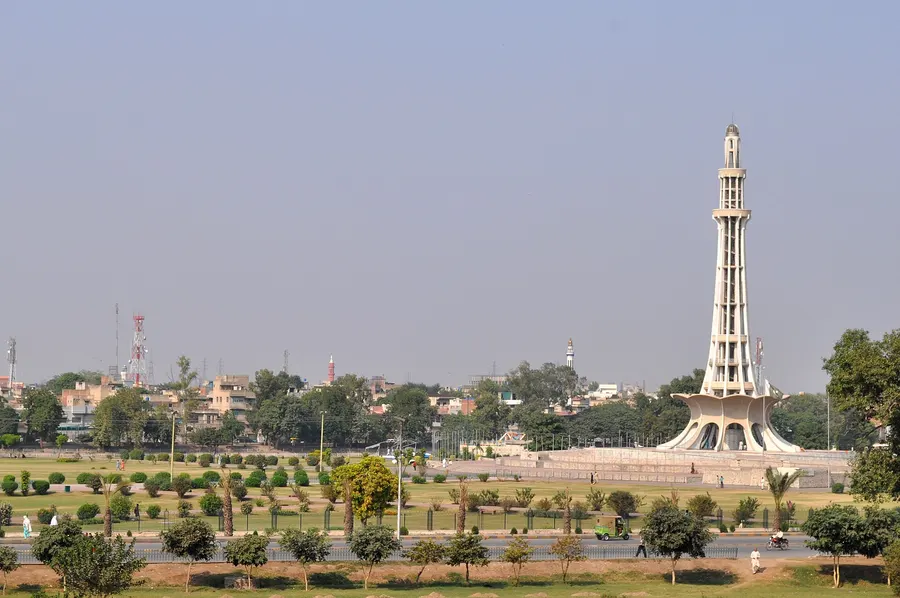
The Minar-e-Pakistan in Lahore, a national monumentThe Minar-e-Pakistan in Lahore, a national monumentImage: Irfan0552007 · CC BY-SA 3.0
culture · Asia

Pakistan’s national anthem is broadcast for the first time

For years after independence in 1947 Pakistan had no official national anthem. A tune by the composer Ahmed Ghulam Ali Chagla was chosen, and the poet Hafeez Jalandhari wrote Urdu words for it in praise of the ‘sacred land’. On 13 August 1954, on the eve of Independence Day, the Qaumi Tarana was sung on Radio Pakistan for the first time, and three days later the government formally adopted it.

Source: Britannica: Qaumi Tarana ↗
1960
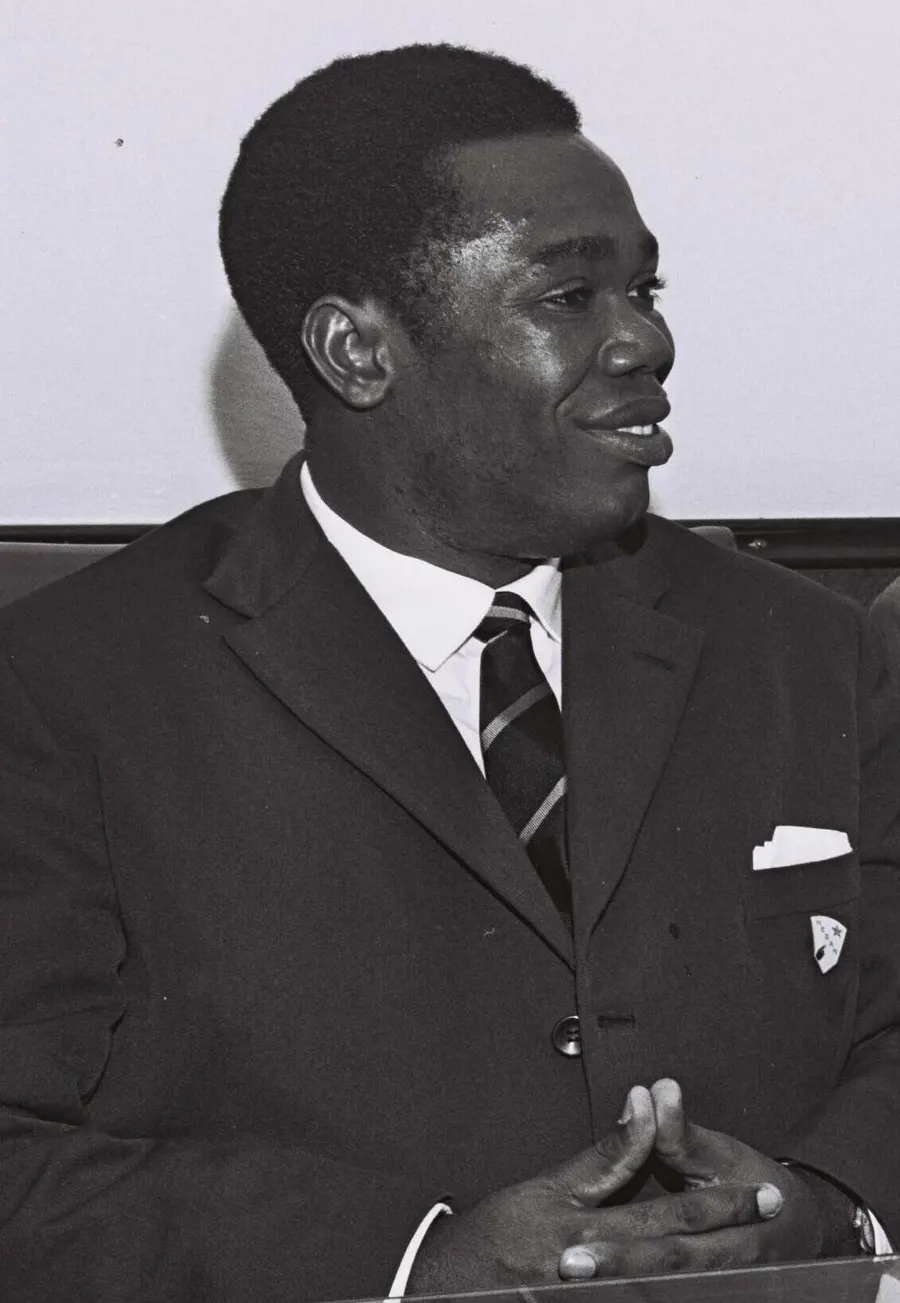
David Dacko, the first president of the Central African Republic, photographed in 1962David Dacko, the first president of the Central African Republic, photographed in 1962Image: Moshe Pridan · Public domain
politics · Africa

The Central African Republic becomes independent

The French colony of Ubangi-Shari, in the heart of the continent, was part of French Equatorial Africa and was run for decades largely for the profit of concession companies. Its leading nationalist was Barthélemy Boganda, a Catholic priest turned politician, who dreamed of a united state of central Africa. In December 1958 the territory became the self-governing Central African Republic with Boganda at its head, but in March 1959 he was killed in a plane crash. His place was taken by David Dacko, a former schoolteacher, and on 13 August 1960 the Central African Republic became fully independent from France, with Dacko as its first president. He soon made his party the only legal one, and at the end of 1965 he was overthrown by the army commander Jean-Bédel Bokassa, who later crowned himself emperor. Independence Day is still celebrated on 13 August.

Source: Britannica: Central African Republic, Independence ↗
1961
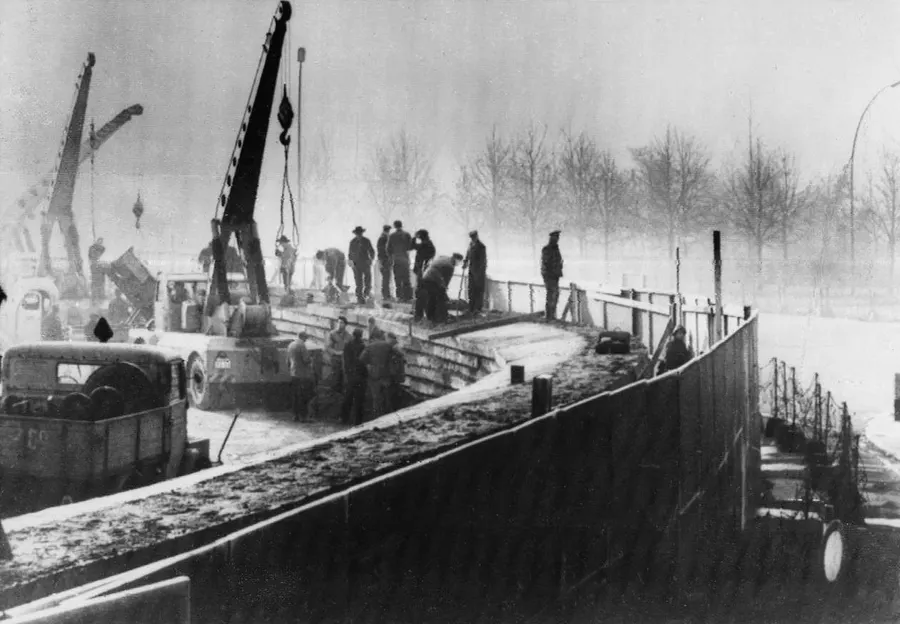
East German workers use cranes to strengthen the new wall in Berlin, 20 November 1961East German workers use cranes to strengthen the new wall in Berlin, 20 November 1961Image: National Archives · Public domain
politics · Europe

Barbed wire goes up across Berlin, the first stage of the Berlin Wall

After the Second World War Berlin was divided into four sectors, and when Germany split in two in 1949 the city’s western half stayed tied to West Germany, an island deep inside the communist East. The border between the two halves of the city stayed open. Every year tens of thousands of East Germans simply took the train or walked into West Berlin and flew on to a new life in the West, and by 1961 the drain of young and skilled people was threatening to cripple East Germany. In the early hours of Sunday 13 August 1961 East German police, soldiers and workers rolled out barbed wire along the sector border, tore up streets and blocked train and underground lines. Over the following days and months the wire was replaced by concrete walls, watchtowers and a guarded ‘death strip’. Families and friends were cut off from one another, and well over a hundred people were killed trying to cross. The Wall stood for 28 years, until the night of 9 November 1989.

Source: German Federal Government: Construction of the Berlin Wall ↗
VI
2000 TO TODAY

Modern Day

The events of recent decades that have already become part of the historical record.

2014
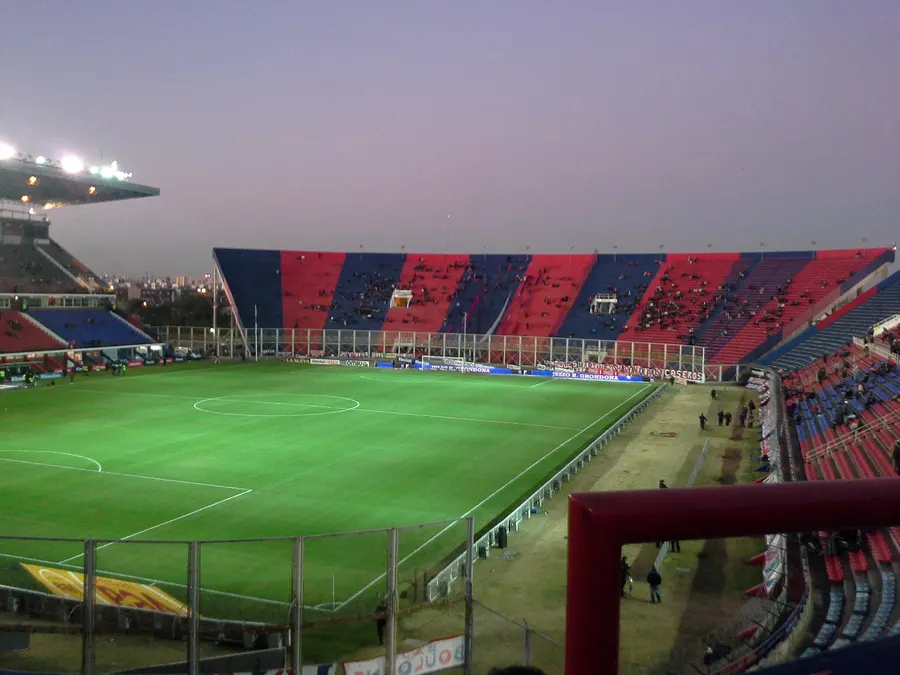
The stands of San Lorenzo's stadium in Buenos Aires, the Estadio Pedro Bidegain, known as the Nuevo GasómetroThe stands of San Lorenzo’s stadium in Buenos Aires, the Estadio Pedro Bidegain, known as the Nuevo GasómetroImage: Nicocuervo95 · CC BY-SA 4.0
sport · Americas

San Lorenzo win the Copa Libertadores for the first time

The Copa Libertadores, South America’s club championship, began in 1960, and San Lorenzo of Buenos Aires reached the semi-finals of that first competition. In the half-century that followed every other member of Argentina’s traditional ‘big five’ clubs won it, but San Lorenzo never did, and the gap became a running joke among rival fans. In 2014 they reached the final against Nacional of Paraguay and drew the first leg 1-1 in Asunción. In the second leg, at their own stadium in Buenos Aires on 13 August 2014, the midfielder Néstor Ortigoza scored from a penalty in the 36th minute, and San Lorenzo held on to win 1-0 and take the cup 2-1 on aggregate, the first major international title in the club’s history.

Source: CONMEBOL: Histórica final San Lorenzo-Nacional para alzar la Copa por primera vez ↗
2020
The Abraham Accords declaration, signed at the White House on 15 September 2020The Abraham Accords declaration, signed at the White House on 15 September 2020Image: The White House · Public domain
politics · Middle East

Israel and the United Arab Emirates agree to open full relations

On 13 August 2020 a joint statement from the United States, Israel and the United Arab Emirates announced that Israel and the UAE would establish full diplomatic relations, with embassies, direct flights and trade, while Israel suspended plans to annex parts of the occupied West Bank. The UAE became the third Arab state to recognise Israel, after Egypt and Jordan. The agreement, part of the Abraham Accords, was signed at the White House on 15 September 2020.

Source: US Department of State: Joint Statement of the United States, the State of Israel, and the United Arab Emirates ↗
RESEARCH

Sources & Further Reading

Selected authoritative references supporting the events on this page.

Catholic Encyclopedia: Pope Paschal II↗The Holy See: Paschal II↗World History Encyclopedia: The Fall of Tenochtitlan↗Britannica: Cuauhtémoc↗National Army Museum: The Battle of Blenheim, 13 August 1704↗Britannica: Eugene of Savoy↗The National Archives blog: From Tripoli to Timbuktu↗Britannica: Alexander Gordon Laing↗US Naval History and Heritage Command: Reports of the Arica, Peru earthquake from USS Powhatan and USS Wateree↗US Geological Survey: Eyewitness accounts tell terror of huge quake in 1868↗Britannica: Der Ring des Nibelungen↗Bayreuth Festival: Festival history↗NASA Science: 433 Eros↗Britannica: Eros (asteroid)↗Storting: Milestones in Norway’s democratic history↗Store norske leksikon: Folkeavstemningen om unionsoppløsning i 1905↗Britannica: Second Sino-Japanese War↗US Office of the Historian: Foreign Relations of the United States, 1937, vol. III, August 13-31, 1937↗Britannica: Qaumi Tarana↗Dawn: The national anthem of Pakistan↗Britannica: Central African Republic, Independence↗US Department of State: Background Note, Central African Republic↗German Federal Government: Construction of the Berlin Wall↗Berlin Wall Memorial: The Berlin Wall↗CONMEBOL: Histórica final San Lorenzo-Nacional para alzar la Copa por primera vez↗ESPN: San Lorenzo 1-0 Nacional, 13 August 2014↗US Department of State: Joint Statement of the United States, the State of Israel, and the United Arab Emirates↗UAE Ministry of Foreign Affairs: Joint statement of the United States, the State of Israel and the United Arab Emirates↗
WHY THESE MOMENTS?

Significance before volume

This page is not the longest possible list of events. It is a chronological journey through 13 August, where each entry is chosen for historical significance, human interest and reliability.

Facts are checked against authoritative museums, archives, universities and reference works. Where sources disagree, the page says so.

EXPLORED THE DEEPER STORY?

Return to the highlights of 13 August

Discover the lighter side of the date with famous birthdays, culture, firsts and lives remembered.

Explore This Day →
← PREVIOUS DAY12 August
HISTORY & TIMELINE13 August
NEXT DAY →14 August