
HISTORY & TIMELINE
10 August

A journey through
10 August in history

The story of 10 August runs from Otto I’s victory over the Magyars on the Lechfeld in 955 to a presidential apology to Japanese Americans in 1988. In between come the sinking of the Vasa, the Pueblo Revolt in New Mexico, the fall of the French monarchy at the Tuileries, the opening of the Louvre, the first junta of Quito, the founding of the Smithsonian Institution, a naval battle in the Yellow Sea, the Treaty of Bucharest, the Treaty of Sèvres, the first Formula One race behind the Iron Curtain and the arrival of the Magellan probe at Venus.

JUMP THROUGH TIME
II
THE MIDDLE AGES

Medieval History

Kingdoms, conflict, faith, power and the changing medieval world.

955
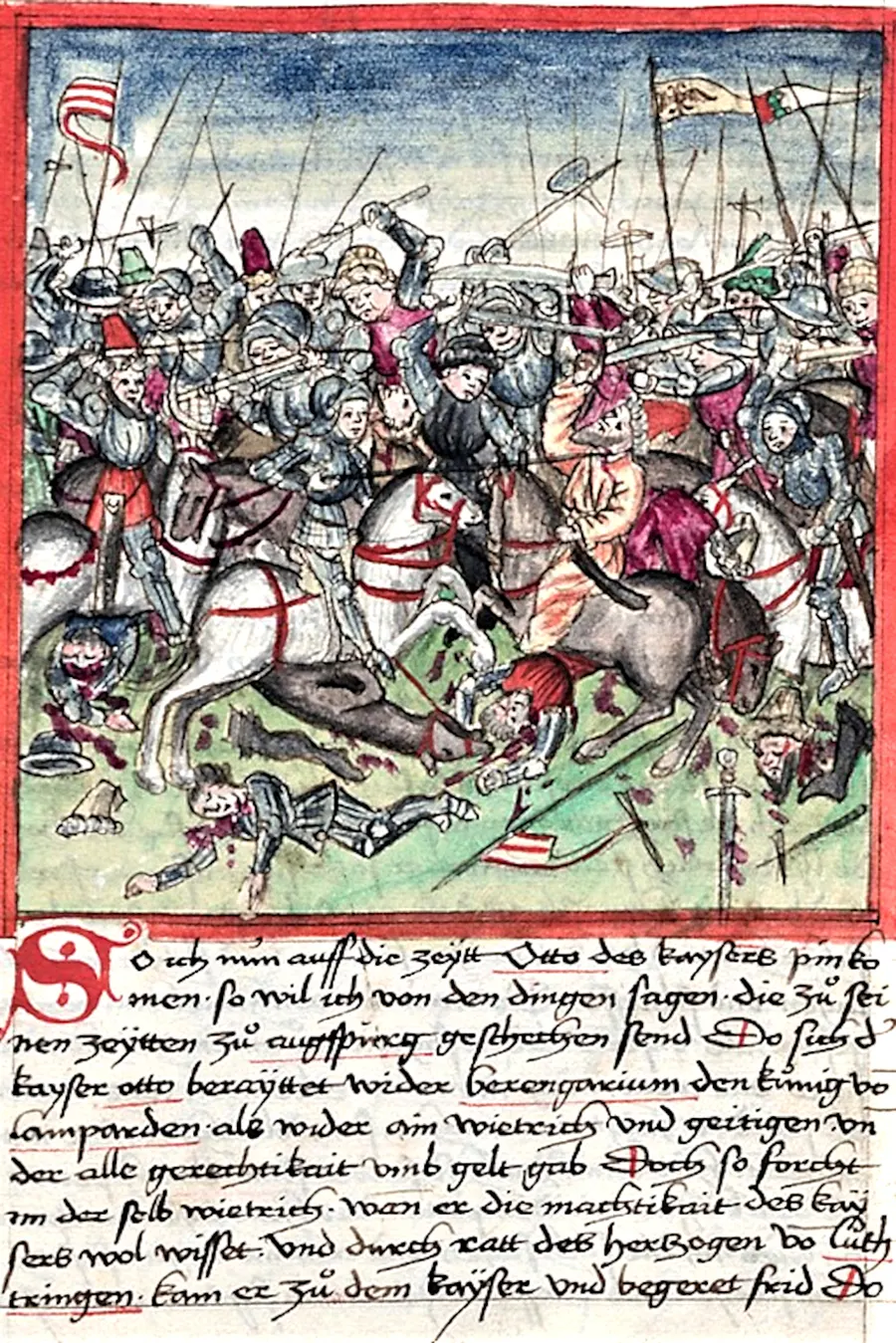
The Battle of the Lechfeld in a chronicle of Augsburg illustrated by Hektor Mülich in 1457The Battle of the Lechfeld in a chronicle of Augsburg illustrated by Hektor Mülich in 1457Image: Hektor Mülich · Public domain
world · Europe

Otto I defeats the Magyars on the Lechfeld

For half a century Magyar horsemen from the Hungarian plain had raided deep into Germany, Italy and France. In 955 a great Magyar army besieged Augsburg, and the German king Otto I marched to relieve it. On 10 August 955, on the Lechfeld plain near the city, his army routed the raiders. The Magyars never invaded Germany again, and Otto’s victory helped him win the imperial crown in Rome in 962.

Source: Britannica: Battle of Lechfeld ↗
III
A CHANGING WORLD

Early Modern Era

Exploration, political change, scientific development and expanding global connections.

1628
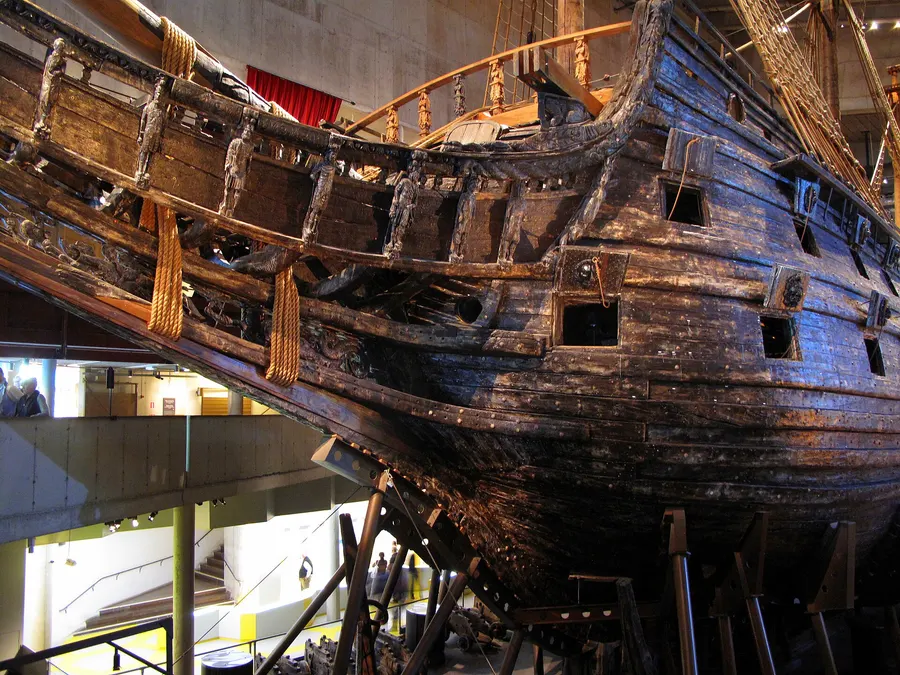
The bow of the Vasa, raised from Stockholm harbour in 1961 and now displayed in the Vasa MuseumThe bow of the Vasa, raised from Stockholm harbour in 1961 and now displayed in the Vasa MuseumImage: Davisbc · CC BY-SA 3.0
world · Europe

The warship Vasa sinks minutes into her maiden voyage

King Gustav II Adolf of Sweden was at war around the Baltic and wanted a warship that would overawe his enemies. The Vasa, built at the royal shipyard in Stockholm, carried 64 guns on two gun decks and was covered in hundreds of painted and gilded carvings. But her tall, heavy upper works sat on too little hull below the waterline, and her centre of gravity was dangerously high. On 10 August 1628 crowds lined the quays to watch her sail for the first time, and some of the crew had brought their families aboard. Within minutes a gust heeled her over, water poured in through the open gunports and she sank in the harbour, taking 30 to 50 people with her. Found again in the 1950s, she was raised almost intact in 1961 and is now the centrepiece of the Vasa Museum in Stockholm.

Source: Vasa Museum: The disaster ↗
1680
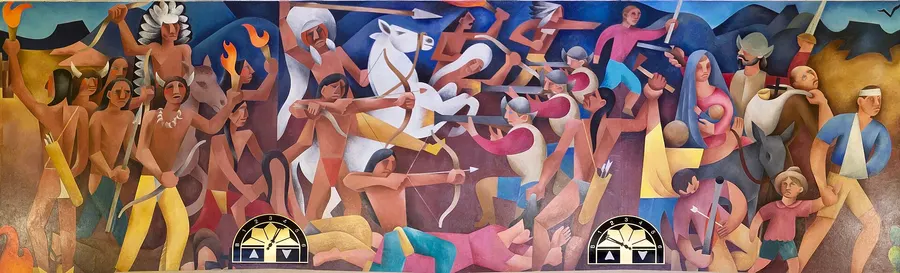
Loren Mozley's 1936 mural of the Pueblo Revolt of 1680, painted under a New Deal art programme for a federal building in AlbuquerqueLoren Mozley’s 1936 mural of the Pueblo Revolt of 1680, painted under a New Deal art programme for a federal building in AlbuquerqueImage: Loren Mozley · Public domain
politics · Americas

The Pueblo peoples of New Mexico rise against Spanish rule

Spain had ruled New Mexico since 1598. Pueblo villages were forced to hand over labour and crops to colonists, Franciscan friars suppressed their ceremonies, and religious leaders were flogged or hanged. In 1680 Po’pay, a Tewa religious leader from Ohkay Owingeh, organised a secret alliance of pueblos that spoke different languages and lived hundreds of miles apart. Runners carried knotted cords to each village; one knot was untied each day to count down to the rising. The attack was set for 11 August, but the Spanish captured two messengers on 9 August, so the leaders struck a day early. On 10 August 1680 the pueblos rose together, killing hundreds of colonists and many of the friars and burning churches. Warriors then besieged Santa Fe, and the Spanish governor and the survivors retreated south to El Paso. The Pueblo peoples governed themselves for 12 years before the Spanish returned in 1692.

Source: Library of Congress, In Custodia Legis: 1680, the Pueblo Revolt ↗
1792
The storming of the Tuileries palace on 10 August 1792, painted by Jacques Bertaux in 1793The storming of the Tuileries palace on 10 August 1792, painted by Jacques Bertaux in 1793Image: Jacques Bertaux · Public domain
politics · Europe

Paris storms the Tuileries and the French monarchy falls

Three years into the French Revolution, Louis XVI was still king, but he was trusted by almost no one. France had gone to war with Austria in April 1792, the queen, Marie Antoinette, was the Austrian emperor’s aunt, and many Parisians suspected the court of hoping for a foreign victory. In late July the Prussian commander, the Duke of Brunswick, issued a manifesto threatening Paris with destruction if the royal family were harmed, and it had exactly the opposite effect. Before dawn on 10 August 1792 an insurrectionary Commune took over the Hôtel de Ville, and armed crowds and volunteer units from the provinces marched on the Tuileries palace. The royal family fled to the nearby Legislative Assembly, but fighting broke out at the palace and hundreds of the Swiss Guards defending it were killed. That day the Assembly suspended the king and called elections for a new National Convention. The monarchy was abolished the following month, and Louis was executed in January 1793.

Source: Britannica: French Revolution, counterrevolution, regicide and the Reign of Terror ↗
1793
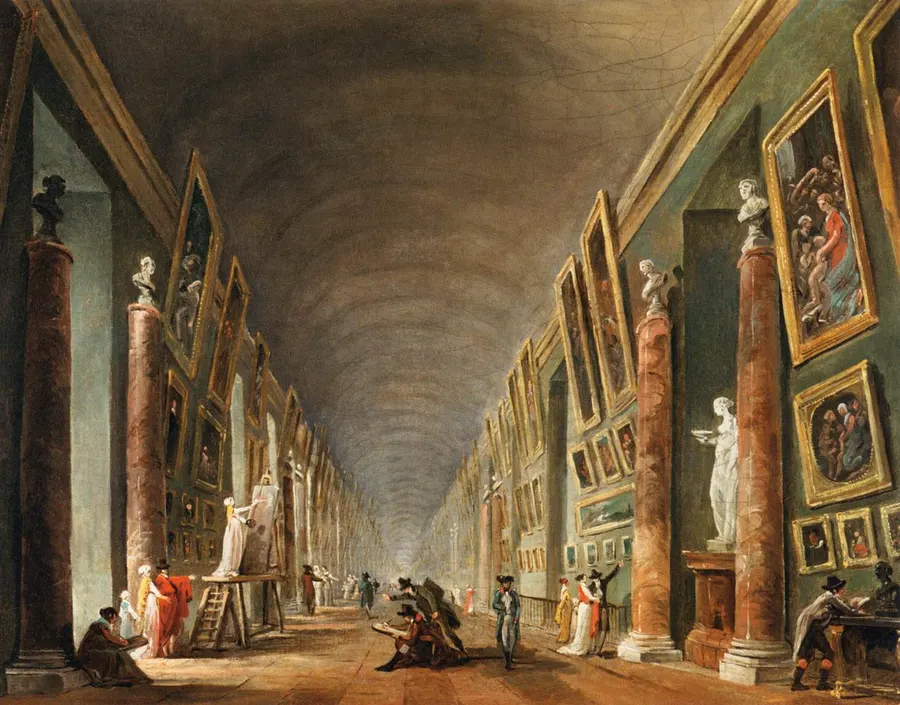
The Grande Galerie of the Louvre painted by Hubert Robert, the artist who helped turn the palace into a museumThe Grande Galerie of the Louvre painted by Hubert Robert, the artist who helped turn the palace into a museumImage: Hubert Robert · Public domain
culture · Europe

The Louvre opens its doors as a public museum

The Louvre had been a royal palace for centuries, but the kings had moved to Versailles, and paintings from the royal collection were seen by few people. Plans to show them to the public had been discussed since the 1740s. After the monarchy fell, the revolutionary government seized the royal collections, along with art taken from the church and from émigré nobles, and decided they should belong to the nation. The Muséum central des arts opened in the Louvre’s Grande Galerie on 10 August 1793, chosen as the first anniversary of the fall of the monarchy. Many difficulties followed and the museum was not fully open until 1801, and under Napoleon it filled with works seized from across Europe. Today the Louvre is the most visited art museum in the world.

Source: Musée du Louvre press office: The Musée du Louvre at a glance ↗
IV
THE NINETEENTH CENTURY

The 1800s

Industry, empire, invention, reform and a century of enormous transformation.

1809
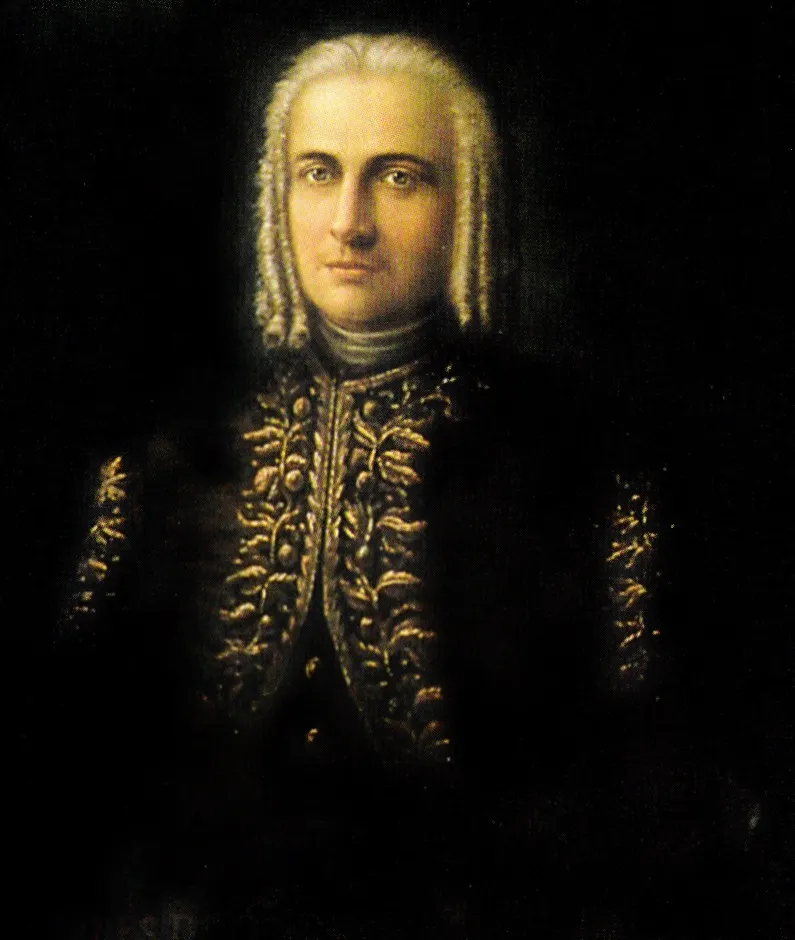
Juan Pío Montúfar, Marquis of Selva Alegre, president of the junta formed in Quito on 10 August 1809Juan Pío Montúfar, Marquis of Selva Alegre, president of the junta formed in Quito on 10 August 1809Image: Unknown painter (photo: Fzura) · CC BY-SA 3.0
politics · Americas

Quito’s patriots form a junta: the ‘first cry’ of independence

In 1808 Napoleon forced the Spanish king Ferdinand VII off his throne, and across Spanish America local leaders began to ask who now had the right to govern them. In Quito, the capital of a Spanish audiencia in what is now Ecuador, a group of Creole aristocrats, lawyers and doctors met secretly on the night of 9 August 1809 at the house of Manuela Cañizares. In the early hours of 10 August 1809 they removed the Spanish president of the audiencia, the Count Ruiz de Castilla, and set up a governing junta led by Juan Pío Montúfar, Marquis of Selva Alegre. The junta claimed to rule in the name of the captive Ferdinand, and it collapsed within months; many of its leaders were killed in prison in August 1810. Ecuador won its independence only in 1822, but it remembers 10 August as its first cry of independence, a national holiday.

Source: Asamblea Nacional del Ecuador: 206 años del Primer Grito de la Independencia ↗
1846
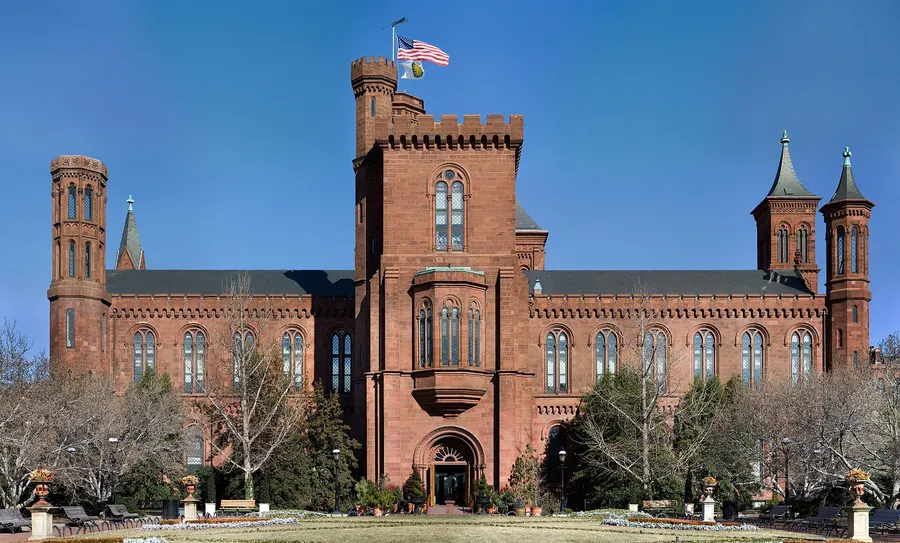
The Smithsonian Institution Building, the red sandstone 'Castle' on the National Mall, completed in 1855The Smithsonian Institution Building, the red sandstone ‘Castle’ on the National Mall, completed in 1855Image: Noclip · Public domain
science · Americas

The Smithsonian Institution is founded in Washington

James Smithson, an English chemist who never visited America, left his fortune to the United States to found in Washington ‘an establishment for the increase and diffusion of knowledge’. Congress argued for a decade over what that should be. On 10 August 1846 President James K. Polk signed the act organising the Smithsonian Institution, with a building for collections, a laboratory, a library and an art gallery. It is now the world’s largest museum, education and research complex.

Source: Smithsonian Institution Archives: An Act to Establish the Smithsonian Institution, 1846 ↗
V
THE TWENTIETH CENTURY

The 1900s

War and peace, technological leaps, social change, politics, sport and popular culture.

1904
The Russian battleship Tsesarevich at Toulon in 1903, a year before she led the break-out from Port ArthurThe Russian battleship Tsesarevich at Toulon in 1903, a year before she led the break-out from Port ArthurImage: Unknown author · Public domain
world · Asia

Japan’s fleet turns back the Russians in the Yellow Sea

Early in the Russo-Japanese War the Russian Pacific squadron was trapped in Port Arthur by the Japanese navy. Ordered by the tsar to break out for Vladivostok, Rear Admiral Wilgelm Vitgeft sailed on 10 August 1904 and was caught by Admiral Tōgō Heihachirō’s fleet. After hours of gunfire a Japanese shell struck the Russian flagship Tsesarevich, killing Vitgeft and jamming her steering. The squadron scattered, most of it back to Port Arthur, where it was lost when the port fell.

Source: Britannica: Battle of the Yellow Sea ↗
1913
Delegates at the peace negotiations in Bucharest in 1913Delegates at the peace negotiations in Bucharest in 1913Image: Unknown author · Public domain
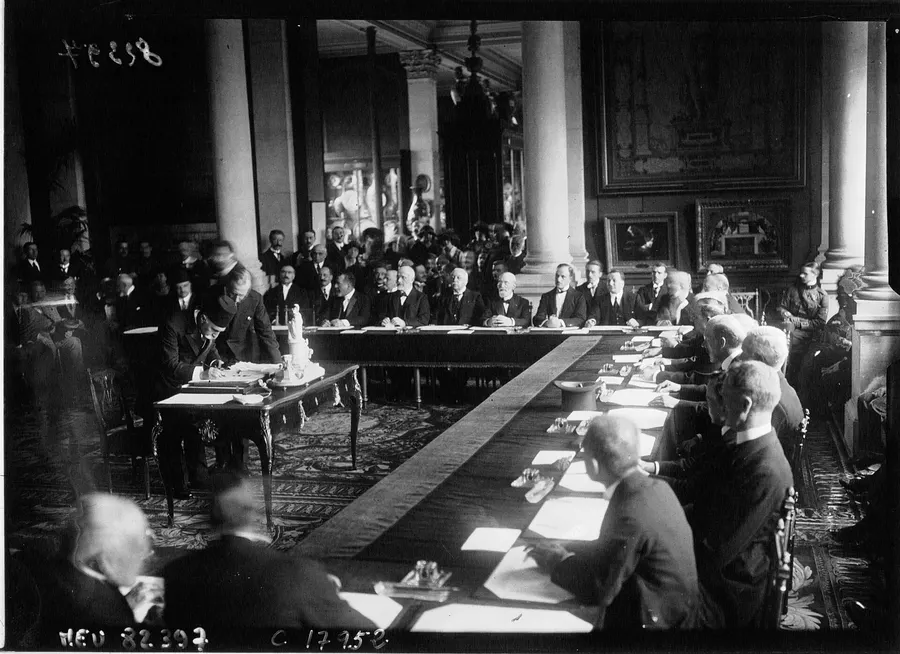
politics · Europe

The Treaty of Bucharest ends the Second Balkan War

After the First Balkan War drove the Ottomans out of most of Europe, the victors quarrelled over the spoils, and in June 1913 Bulgaria attacked its former allies Serbia and Greece. Romania and the Ottoman Empire joined in against it, and Bulgaria was quickly beaten. The treaty signed in Bucharest on 10 August 1913 divided Macedonia between Serbia and Greece, gave southern Dobruja to Romania and left Bulgaria bitter, one of the tensions that fed into the First World War.

Source: Britannica: Treaty of Bucharest (1913) ↗
1920
The Ottoman delegation signs the Treaty of Sèvres on 10 August 1920, in a press photograph by the Agence MeurisseThe Ottoman delegation signs the Treaty of Sèvres on 10 August 1920, in a press photograph by the Agence MeurisseImage: Agence Meurisse · Public domain
politics · Middle East

The Allies impose the Treaty of Sèvres on the Ottoman Empire

The Ottoman Empire had fought on the losing side in the First World War, and by 1920 Allied troops occupied Constantinople and much of the empire. On 10 August 1920, in the showroom of the porcelain factory at Sèvres near Paris, delegates of Sultan Mehmed VI’s government signed the peace treaty the victors had drawn up. Its terms were severe. The Ottomans gave up their Arab lands and North Africa, and the straits were placed under international control. The treaty provided for an independent Armenia and an autonomous Kurdistan, and it gave Greece eastern Thrace and the administration of Smyrna. Turkish nationalists led by Mustafa Kemal rejected it and fought on; only Greece ratified it, and after the nationalists’ victory it was replaced by the Treaty of Lausanne in 1923.

Source: Britannica: Treaty of Sèvres ↗
1986
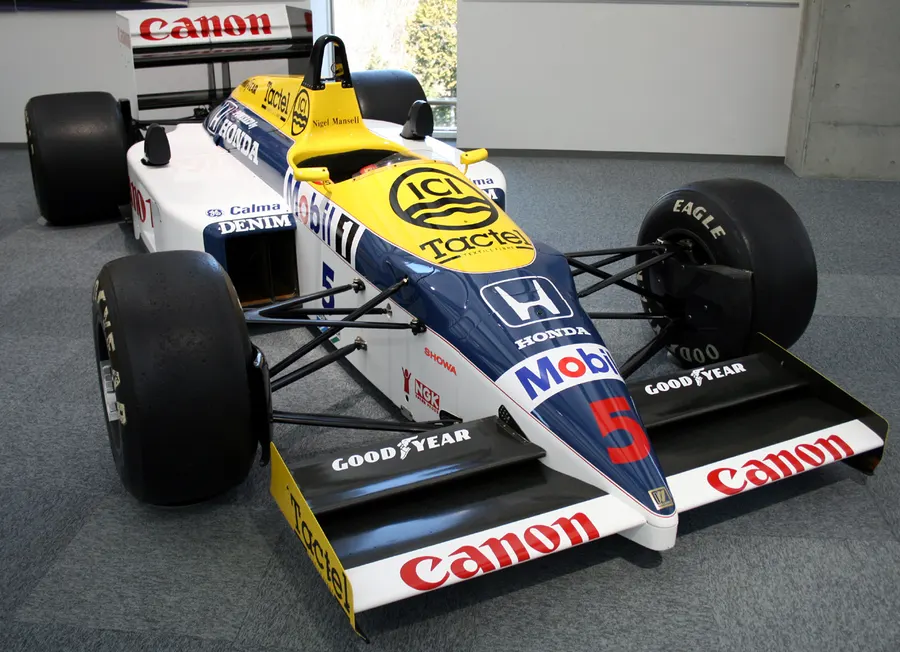
A Williams-Honda FW11, the model Nelson Piquet drove to victory in the first Hungarian Grand Prix; this one carries the number 5 of his team-mate Nigel MansellA Williams-Honda FW11, the model Nelson Piquet drove to victory in the first Hungarian Grand Prix; this one carries the number 5 of his team-mate Nigel MansellImage: Morio · CC BY-SA 3.0
sport · Europe

Formula One races behind the Iron Curtain for the first time

For decades the Formula One world championship had no race in the communist countries of Eastern Europe. That changed when Hungary agreed to host a Grand Prix, and the Hungaroring circuit was built in about eight months in the hills at Mogyoród, north-east of Budapest. The first Hungarian Grand Prix was held on 10 August 1986 before a crowd estimated at 200,000 or more. The Brazilian Nelson Piquet, driving a Williams-Honda, won it after overtaking his compatriot Ayrton Senna’s Lotus with a daring slide around the outside of a corner, one of the most famous passes in the sport. The Hungarian Grand Prix has been part of the championship ever since.

Source: Hungaroring: History of the race track ↗
1988
President Ronald Reagan signs the Civil Liberties Act at the White House on 10 August 1988President Ronald Reagan signs the Civil Liberties Act at the White House on 10 August 1988Image: Unknown author · Public domain
politics · Americas

The United States apologises for interning Japanese Americans

During the Second World War about 120,000 people of Japanese descent, most of them American citizens, were forced from their homes on the West Coast and held in camps. In 1983 a congressional commission found this had been a grave injustice driven by racial prejudice, war hysteria and a failure of political leadership. On 10 August 1988 President Ronald Reagan signed the Civil Liberties Act, which gave a formal apology and $20,000 to each surviving internee; more than 82,000 people were paid.

Source: National Archives: World War II Japanese American incarceration, post-war legacy ↗
1990
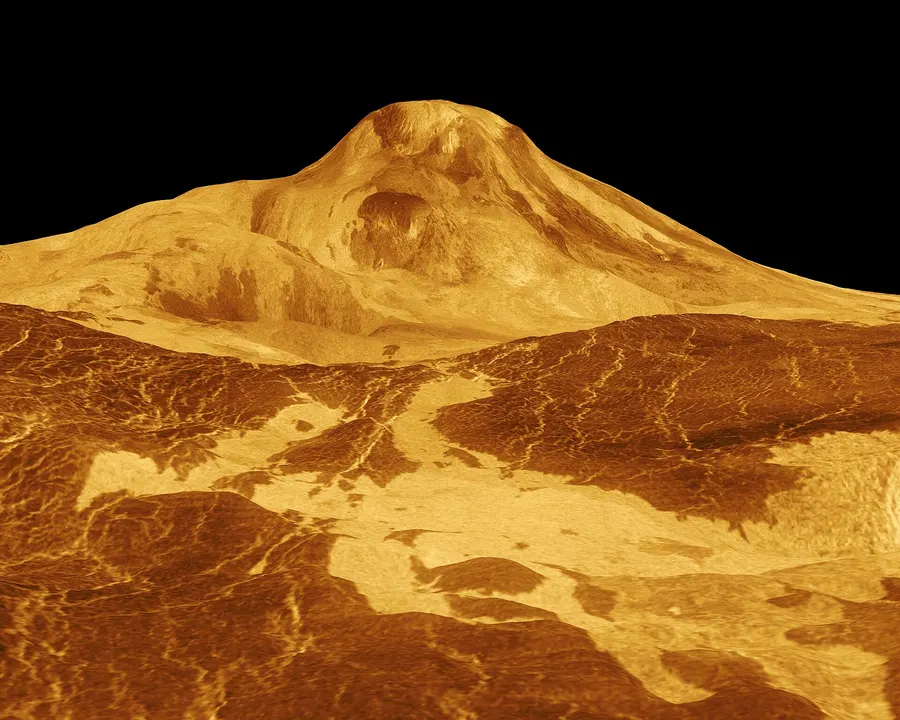
Maat Mons, a volcano on Venus, in a three-dimensional view built from Magellan's radar data, with the height exaggeratedMaat Mons, a volcano on Venus, in a three-dimensional view built from Magellan’s radar data, with the height exaggeratedImage: NASA - Jet Propulsion Laboratory · Public domain
science · Global

The Magellan probe arrives at Venus to map it by radar

Venus is wrapped in thick clouds that hide its surface from ordinary cameras. NASA’s Magellan spacecraft, released from the Space Shuttle Atlantis in May 1989, carried a radar that could see through them. On 10 August 1990, after a looping journey of more than a year, it swung over the north pole of Venus, passed behind the planet and fired its solid rocket motor for 84 seconds to brake into orbit. Over the next four years Magellan mapped about 98 per cent of the surface in fine detail, revealing a young landscape of volcanoes, lava plains and strange domes and craters, and measured the planet’s gravity. In October 1994 it was steered down into the thick atmosphere, where it broke up, gathering data to the end.

Source: NASA Jet Propulsion Laboratory: Magellan orbits Venus ↗
RESEARCH

Sources & Further Reading

Selected authoritative references supporting the events on this page.

WHY THESE MOMENTS?

Significance before volume

This page is not the longest possible list of events. It is a chronological journey through 10 August, where each entry is chosen for historical significance, human interest and reliability.

Facts are checked against authoritative museums, archives, universities and reference works. Where sources disagree, the page says so.

EXPLORED THE DEEPER STORY?

Return to the highlights of 10 August

Discover the lighter side of the date with famous birthdays, culture, firsts and lives remembered.

Explore This Day →
← PREVIOUS DAY9 August
HISTORY & TIMELINE10 August
NEXT DAY →11 August