
HISTORY & TIMELINE
5 April

A journey through
5 April in history

From Alexander Nevsky’s victory on the frozen Lake Peipus in 1242 to the opening of the world’s longest suspension bridge in Japan in 1998, 5 April has seen the wedding of Pocahontas, the first presidential veto, the start of the War of the Pacific, the death of Chiang Kai-shek and the launch of a great gamma-ray observatory. This timeline follows the date across more than seven centuries.

JUMP THROUGH TIME
II
THE MIDDLE AGES

Medieval History

Kingdoms, conflict, faith, power and the changing medieval world.

1242
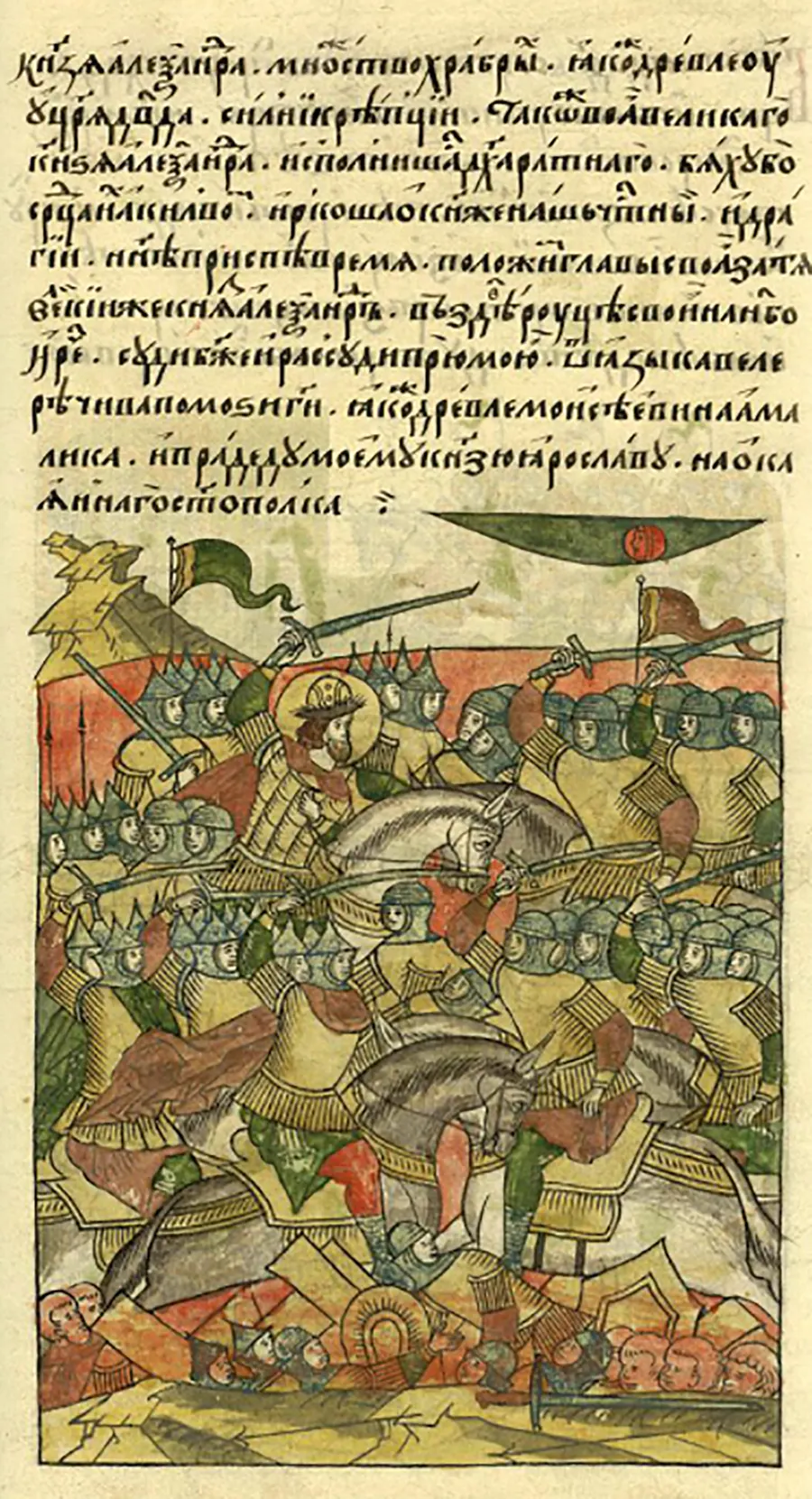
The Battle on the Ice in the Illustrated Chronicle of Ivan the Terrible, painted in the 1560s-70s.The Battle on the Ice in the Illustrated Chronicle of Ivan the Terrible, painted in the 1560s-70s.Image: Anonymous Russian manuscript illuminators (Illustrated Chronicle of Ivan the Terrible, 1560s-70s) · Public domain
world · Europe

The Battle on the Ice

On the frozen Lake Peipus, between today’s Estonia and Russia, Prince Alexander Nevsky of Novgorod defeated the knights of the Livonian Order, who had been pushing east into Russian lands. The order gave up its conquests. The battle became a national legend, retold in Sergei Eisenstein’s 1938 film Alexander Nevsky. The date is by the Julian calendar.

Source: Encyclopaedia Britannica: Battle of Lake Peipsi ↗
III
A CHANGING WORLD

Early Modern Era

Exploration, political change, scientific development and expanding global connections.

1614
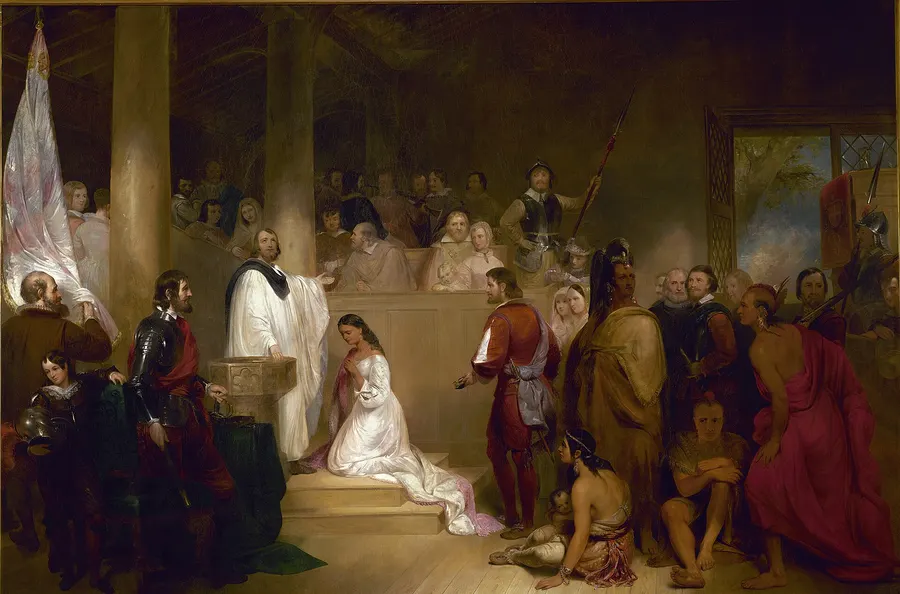
The Baptism of Pocahontas, painted by John Gadsby Chapman in 1840 for the US Capitol.The Baptism of Pocahontas, painted by John Gadsby Chapman in 1840 for the US Capitol.Image: John Gadsby Chapman (photograph courtesy Architect of the Capitol) · Public domain
world · Americas

Pocahontas marries John Rolfe

On or about 5 April, in the church at Jamestown, Virginia, Pocahontas, daughter of the Powhatan leader Wahunsenaca, married the English tobacco planter John Rolfe. She had been held captive by the colonists and baptised with the name Rebecca. Her father sent relatives to witness it, and the marriage brought several years of peace between the Powhatan people and the English.

Source: Encyclopedia Virginia: John Rolfe ↗
1722
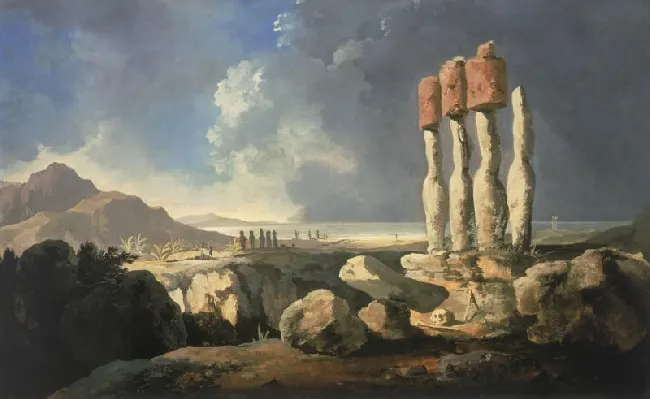
The great stone statues of Easter Island, painted by William Hodges, who visited with Captain Cook in 1774.The great stone statues of Easter Island, painted by William Hodges, who visited with Captain Cook in 1774.Image: William Hodges · Public domain
world · Oceania

Europeans reach Easter Island

On Easter Sunday, 5 April 1722, a Dutch expedition led by Jacob Roggeveen sighted a small island in the far south-east Pacific and named it Paasch-Eyland, Easter Island. They were the first Europeans known to reach Rapa Nui, as its Polynesian people call it. The Dutch stayed only about a day, but described the islanders and the giant stone figures, the moai, standing on platforms along the shore. The moai, carved centuries earlier, have become one of the most famous sights in the world.

Source: Encyclopaedia Britannica: Jacob Roggeveen ↗
1792
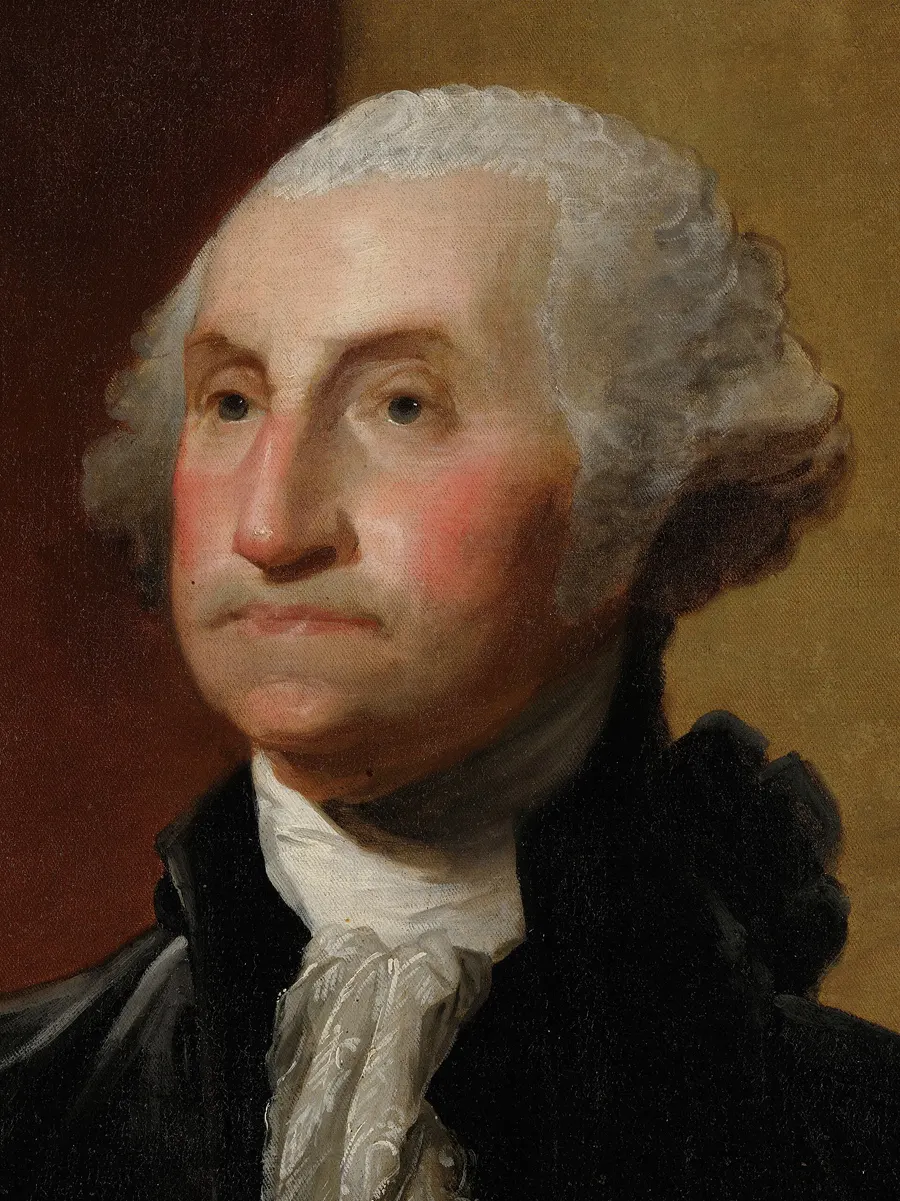
George Washington, painted by Gilbert Stuart.George Washington, painted by Gilbert Stuart.Image: Gilbert Stuart · Public domain
politics · Americas

George Washington’s first veto

President George Washington used the veto for the first time, rejecting a bill that shared out seats in the House of Representatives after the 1790 census. He judged that it broke the Constitution’s rule of no more than one representative for every 30,000 people. The House failed to override him, and a new bill became law nine days later.

Source: Founders Online, US National Archives: To the House of Representatives, 5 April 1792 ↗
IV
THE NINETEENTH CENTURY

The 1800s

Industry, empire, invention, reform and a century of enormous transformation.

1818
The Embrace of Maipú: San Martín and O'Higgins meet after the victory, painted by Pedro Subercaseaux in 1908.The Embrace of Maipú: San Martín and O’Higgins meet after the victory, painted by Pedro Subercaseaux in 1908.Image: Pedro Subercaseaux · Public domain
world · Americas

The Battle of Maipú wins Chile’s freedom

On the plains of Maipú, just south of Santiago, the Argentine and Chilean army led by José de San Martín defeated the Spanish royalist army on 5 April 1818, after about six hours of fighting. It ended Spain’s hopes of taking back Chile, which had declared its independence that February. Bernardo O’Higgins, Chile’s leader, rode wounded to embrace San Martín on the battlefield, a moment every Chilean schoolchild knows. San Martín went on to free Peru.

Source: Encyclopaedia Britannica: Battle of Maipú ↗
1879
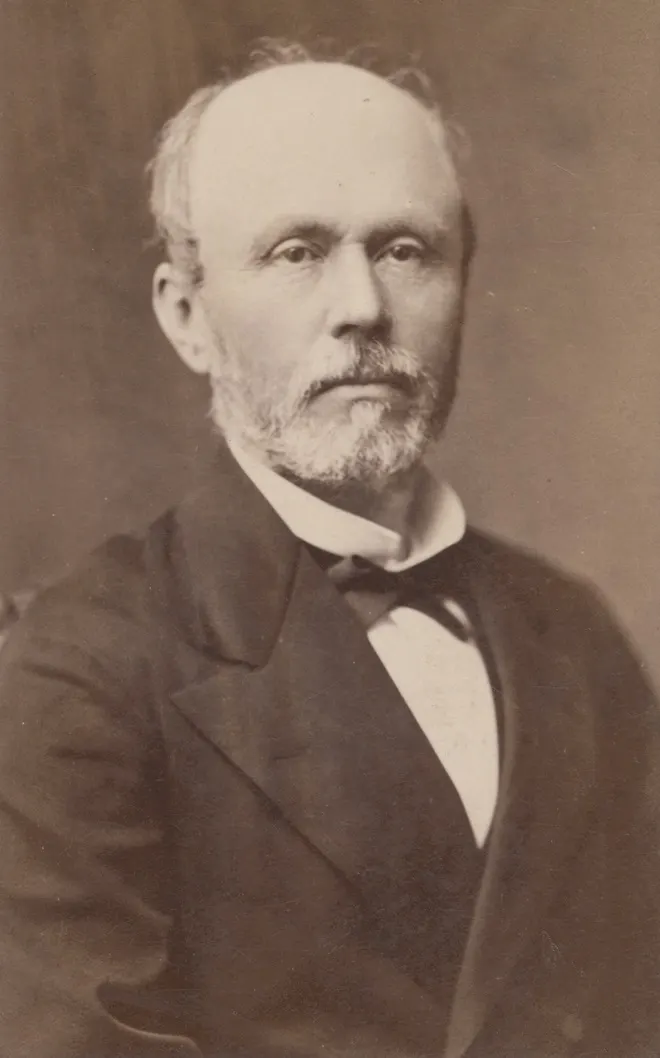
Aníbal Pinto, President of Chile from 1876 to 1881.Aníbal Pinto, President of Chile from 1876 to 1881.Image: Library of the National Congress of Chile · CC BY 3.0 cl
world · Americas

Chile goes to war with Peru and Bolivia

Chile declared war on Peru and Bolivia in a quarrel over the nitrate-rich Atacama Desert, where Bolivia had raised taxes on a Chilean mining company. The War of the Pacific lasted until 1883; Chile won and took the coastal provinces, leaving Bolivia without a coastline, a loss it still disputes.

Source: Encyclopaedia Britannica: War of the Pacific ↗
V
THE TWENTIETH CENTURY

The 1900s

War and peace, technological leaps, social change, politics, sport and popular culture.

1955
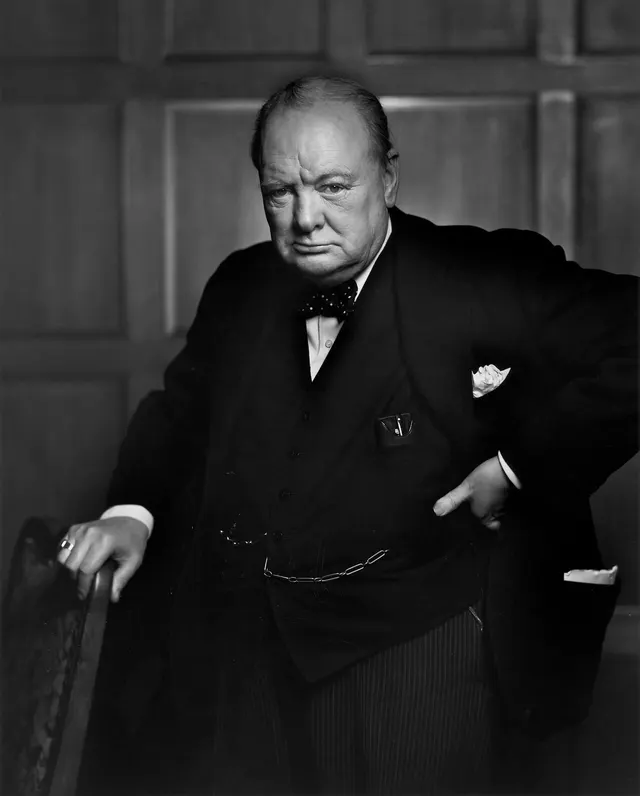
Winston Churchill photographed by Yousuf Karsh in 1941.Winston Churchill photographed by Yousuf Karsh in 1941.Image: Yousuf Karsh · Public domain
politics · Europe

Winston Churchill steps down

On 5 April 1955 Winston Churchill, aged 80 and in failing health after a stroke, went to Buckingham Palace and resigned as prime minister, ending his second term in office. Queen Elizabeth II had dined with him at Downing Street the night before. His foreign secretary, Anthony Eden, succeeded him. Churchill stayed in the House of Commons until 1964 and died the following year.

Source: GOV.UK: History of Sir Winston Churchill ↗
1975
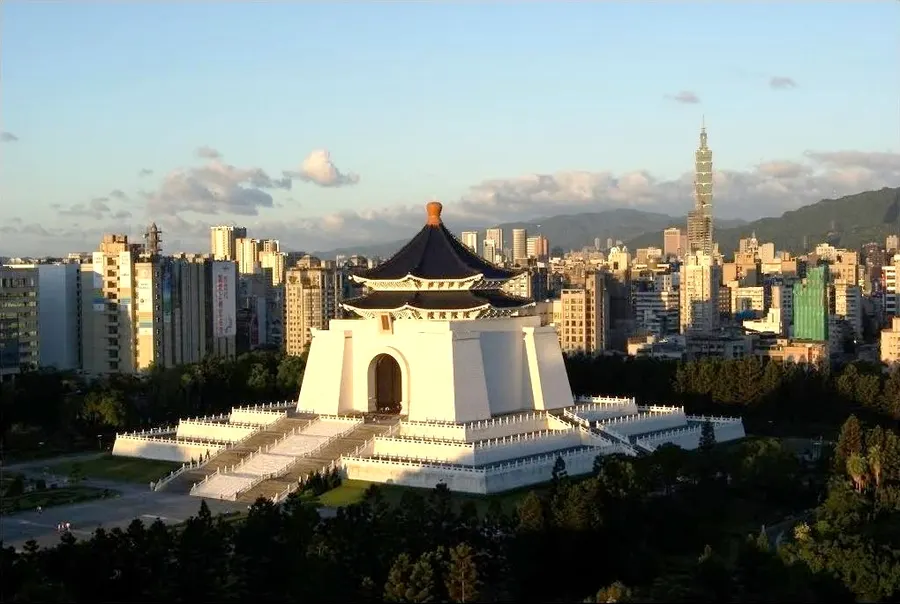
The National Chiang Kai-shek Memorial Hall in Taipei, 2010.The National Chiang Kai-shek Memorial Hall in Taipei, 2010.Image: Ma Jien-kuo · Public domain
politics · Asia

Chiang Kai-shek dies in Taipei

Chiang Kai-shek, who led China’s Nationalist government from 1928 and then ruled Taiwan after losing the civil war to the Communists in 1949, died in Taipei aged 87. His rule on Taiwan was authoritarian, under martial law, while the island’s economy grew fast. A vast memorial hall was built in his honour; how to remember him is still debated in Taiwan.

Source: Encyclopaedia Britannica: Chiang Kai-shek ↗
1976
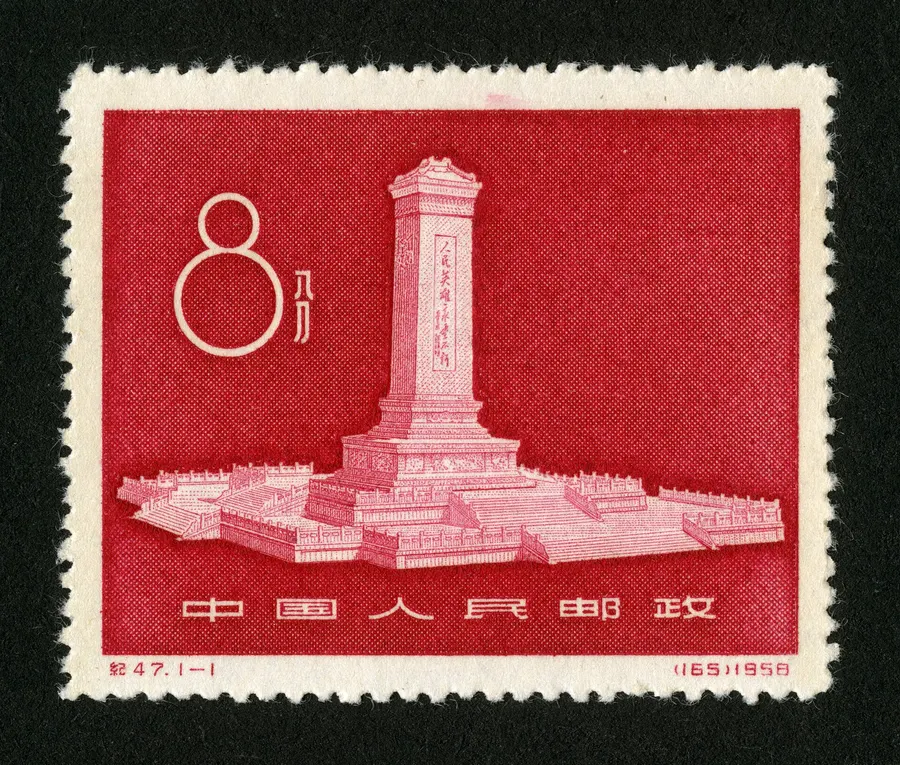
The Monument to the People's Heroes in Tiananmen Square, on a Chinese stamp of 1958. Mourners heaped wreaths around it in 1976.The Monument to the People’s Heroes in Tiananmen Square, on a Chinese stamp of 1958. Mourners heaped wreaths around it in 1976.Image: Liu Shuoren and Sun Chuanzhe (China Post stamp design) · Public domain
politics · Asia

Mourners for Zhou Enlai clash with police in Tiananmen Square

For days during the Qingming festival for remembering the dead, people in Beijing laid wreaths and poems in Tiananmen Square for the popular premier Zhou Enlai, who had died in January. Many of the verses attacked the radical ‘Gang of Four’. When the wreaths were removed overnight, huge crowds gathered on 5 April 1976 and clashed with the authorities, and the square was cleared that night. The leadership called it counter-revolutionary and blamed Deng Xiaoping, who was stripped of his posts. After Mao’s death that September, the verdict was reversed, and Deng went on to lead China.

Source: Encyclopaedia Britannica: Tiananmen Square incident ↗
1991
The Compton Gamma Ray Observatory drifts away from the shuttle Atlantis after its release, 7 April 1991.The Compton Gamma Ray Observatory drifts away from the shuttle Atlantis after its release, 7 April 1991.Image: NASA/Ken Cameron · Public domain
science · Global

The Compton Gamma Ray Observatory is launched

The space shuttle Atlantis lifted off on 5 April 1991 carrying NASA’s Compton Gamma Ray Observatory, at about 17 tonnes the heaviest astronomy satellite flown until then. When its antenna jammed, two astronauts made an unplanned spacewalk to free it before it was released. For nine years it studied the most violent events in the universe, and showed that the mysterious bursts of gamma rays come from far beyond our galaxy.

Source: NASA: This week in NASA history, Compton Gamma Ray Observatory launches ↗
1998
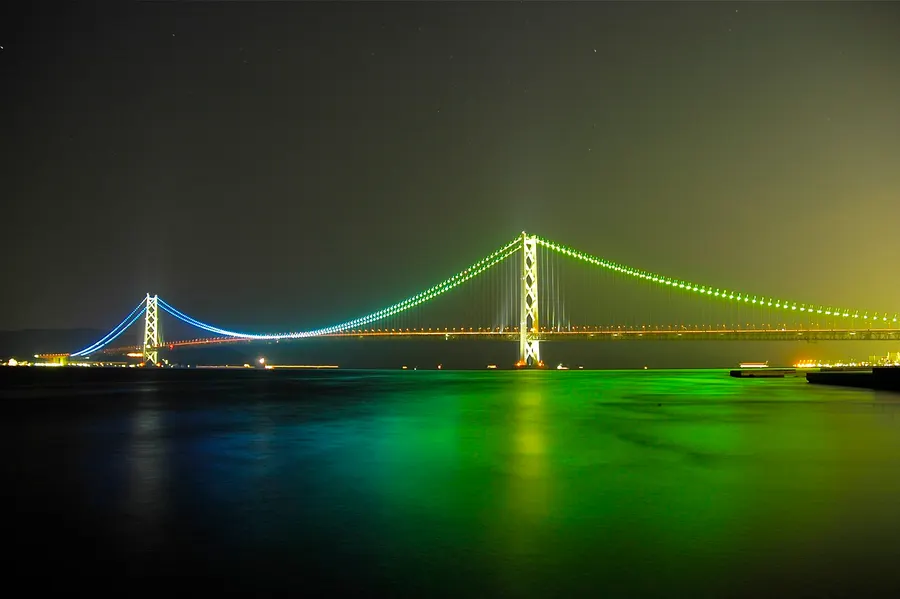
The Akashi Kaikyō Bridge lit up at night, seen from Maiko, 2006.The Akashi Kaikyō Bridge lit up at night, seen from Maiko, 2006.Image: Stingy Scoundrel from Osaka, Japan · Public domain
science · Asia

The world’s longest suspension span opens

The Akashi Kaikyō Bridge, linking Kobe on Japan’s main island of Honshu with Awaji Island, opened to traffic on 5 April 1998. Its central span of 1,991 metres was the longest of any suspension bridge in the world, a record it held for more than twenty years. Built across a busy strait prone to typhoons and earthquakes, it survived the 1995 Kobe earthquake while under construction; the quake moved its towers apart and lengthened the span by almost a metre.

Source: Encyclopaedia Britannica: Akashi Kaikyo Bridge ↗
WHY THESE MOMENTS?

Significance before volume

This page is not the longest possible list of events. It is a chronological journey through 5 April, where each entry is chosen for historical significance, human interest and reliability.

Facts are checked against authoritative museums, archives, universities and reference works. Where sources disagree, the page says so.

EXPLORED THE DEEPER STORY?

Return to the highlights of 5 April

Discover the lighter side of the date with famous birthdays, culture, firsts and lives remembered.

Explore This Day →
← PREVIOUS DAY4 April
HISTORY & TIMELINE5 April
NEXT DAY →6 April