HISTORY & TIMELINE
5 October

A journey through
5 October in history

From the founding of Concepción in Chile in 1550 to the fall of Slobodan Milošević in 2000, 5 October has seen revolutions, surrenders, disasters and remarkable debuts. This timeline follows the date across four and a half centuries.

III
A CHANGING WORLD

Early Modern Era

Exploration, political change, scientific development and expanding global connections.

1550
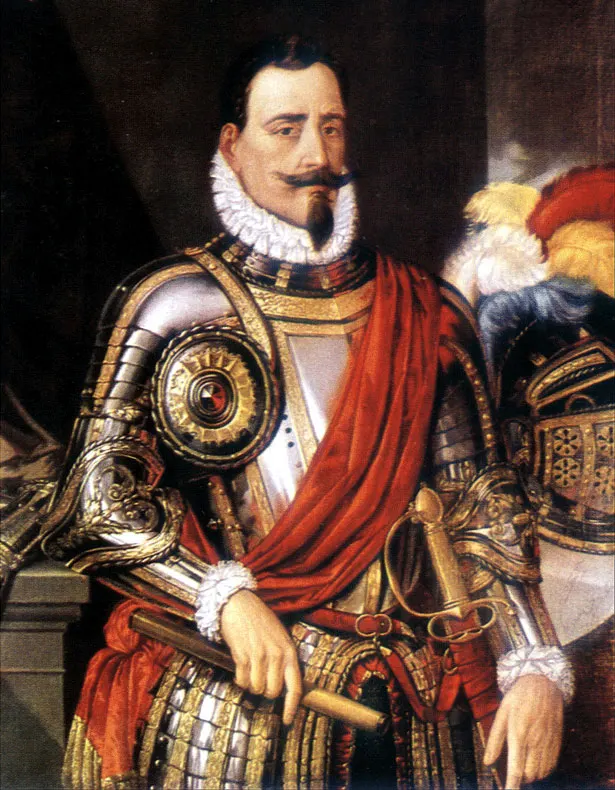
Pedro de Valdivia, painted by Federico de Madrazo.Pedro de Valdivia, painted by Federico de Madrazo.Image: Federico de Madrazo y Kuntz · Public domain
world · Americas

Valdivia founds Concepción in Chile

On 5 October 1550 the Spanish conquistador Pedro de Valdivia, governor of Chile and founder of Santiago, formally founded the city of Concepción del Nuevo Extremo on the coast of southern Chile. It was an important step in Spain’s advance into the lands of the Mapuche people; the city was later moved to its present site on the Biobío River.

Source: Chilean National Archives: The beginnings of the city of Concepción ↗
1789
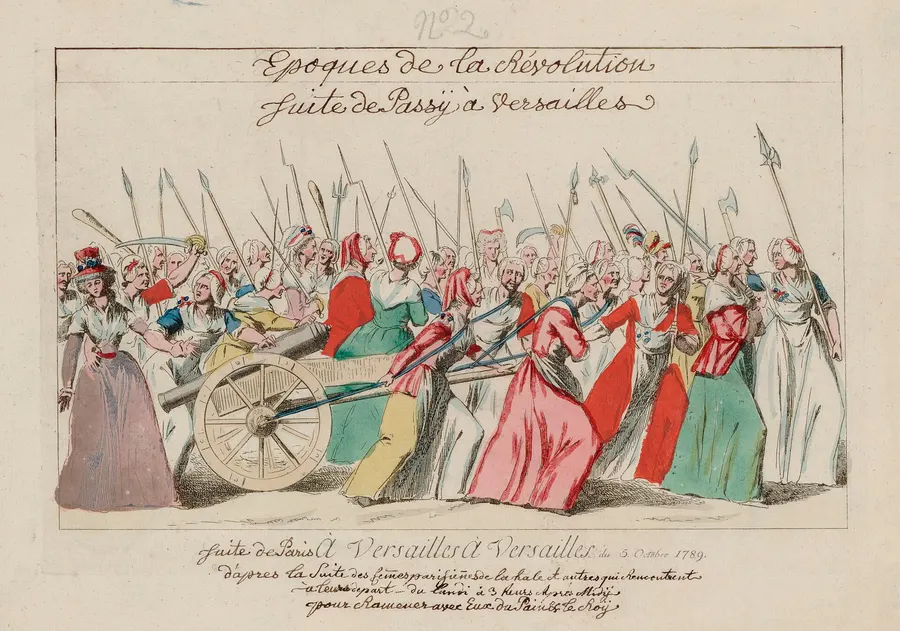
The women of Paris set off for Versailles, in a contemporary print of 1789.The women of Paris set off for Versailles, in a contemporary print of 1789.Image: Unknown authorUnknown author · Public domain
politics · Europe

The women of Paris march on Versailles

On 5 October 1789, angered by the price and scarcity of bread and by reports of a lavish banquet for the king’s guards at the palace, thousands of Parisian women, many from the city’s markets, marched through the rain to the palace of Versailles. National Guardsmen followed them. Early the next morning part of the crowd forced its way into the palace. Louis XVI promised bread and agreed to go to Paris, and that afternoon the royal family left Versailles for the Tuileries, escorted by the crowd. The king was now effectively a prisoner of the Revolution.

Source: Château de Versailles: Versailles at the heart of the French Revolution, 1789 ↗
IV
THE NINETEENTH CENTURY

The 1800s

Industry, empire, invention, reform and a century of enormous transformation.

1877
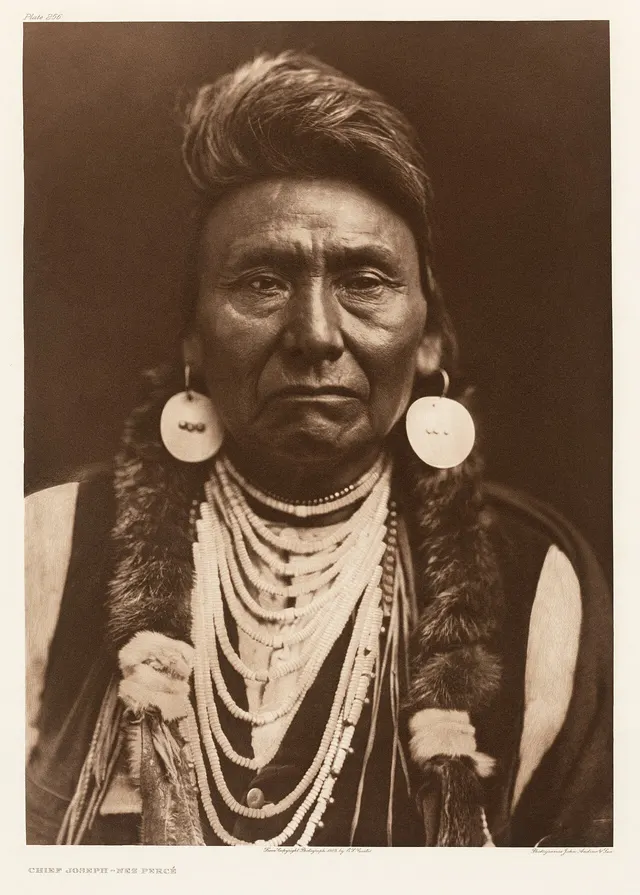
Chief Joseph, photographed by Edward S. Curtis in 1903.Chief Joseph, photographed by Edward S. Curtis in 1903.Image: Edward S. Curtis / Adam Cuerden · Public domain
world · Americas

Chief Joseph surrenders in the Bear Paw Mountains

On 5 October 1877, after a five-day siege in the Bear Paw Mountains of Montana, forty miles short of the Canadian border, Chief Joseph surrendered to General Nelson Miles. For more than three months his band of about 700 Nez Perce, fewer than 200 of them fighting men, had outmanoeuvred pursuing US troops across roughly 1,000 miles of Oregon, Washington, Idaho and Montana. More than 200 of his people had died. His surrender speech, ending ‘From where the sun now stands, I will fight no more forever’, became one of the most quoted in American history. The survivors were sent into exile rather than home to their valley.

Source: National Park Service: Bear Paw Battlefield ↗
V
THE TWENTIETH CENTURY

The 1900s

War and peace, technological leaps, social change, politics, sport and popular culture.

1910
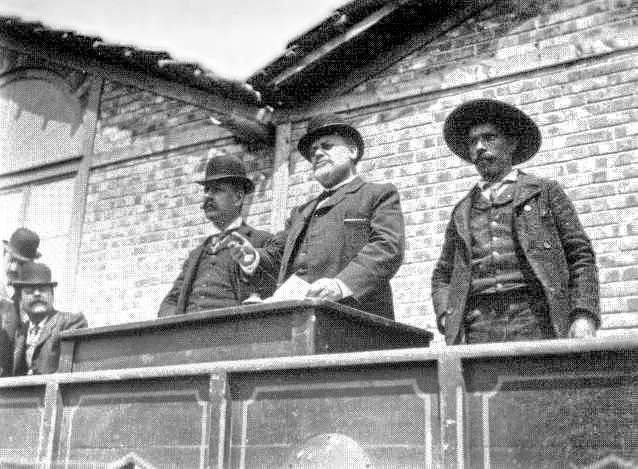
A republican rally in Lisbon on 1 May 1907, three years before the revolution.A republican rally in Lisbon on 1 May 1907, three years before the revolution.Image: Unknown authorUnknown author · Public domain
politics · Europe

Portugal becomes a republic

On the morning of 5 October 1910 the Portuguese Republic was proclaimed from the balcony of Lisbon’s city hall, after a revolution that had begun the day before. Armed civilians, soldiers and sailors on warships in the Tagus had risen against the monarchy, led by the republican activist António Machado Santos. King Manuel II, only 20, escaped on the royal yacht to Gibraltar and then to England, where he lived in exile until his death in 1932. Portugal marks 5 October as Republic Day.

Source: Encyclopaedia Britannica: History of Portugal, the First Republic, 1910-26 ↗
1947
politics · Americas

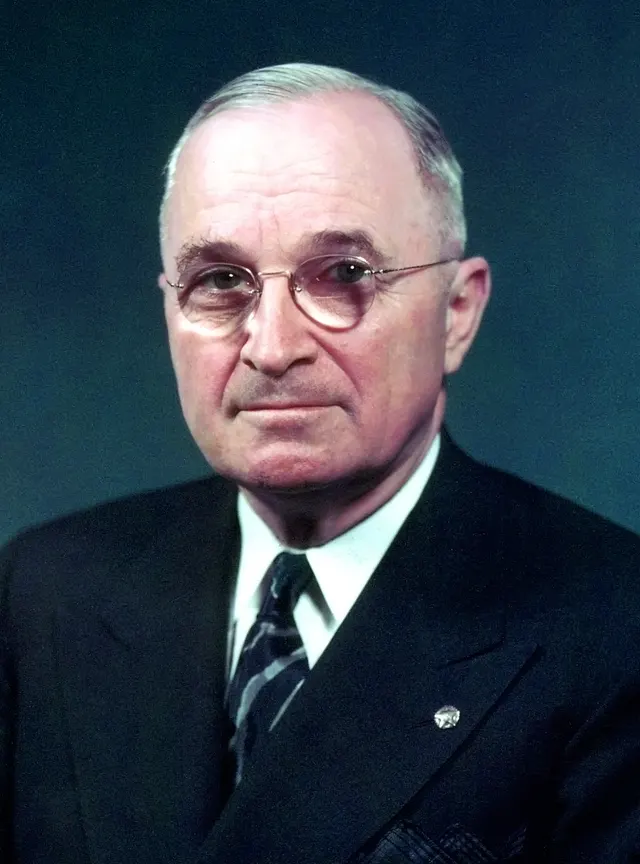
The first televised address from the White House

On the evening of 5 October 1947 Harry S. Truman became the first president to make a televised address from the White House. Speaking from the Diplomatic Reception Room, he asked Americans to save food so that more could be sent to hungry Europe, with requests such as ‘Save a slice of bread every day’ and no poultry or eggs on Thursdays.

Source: Harry S. Truman Library: First televised speech from the White House ↗
1948
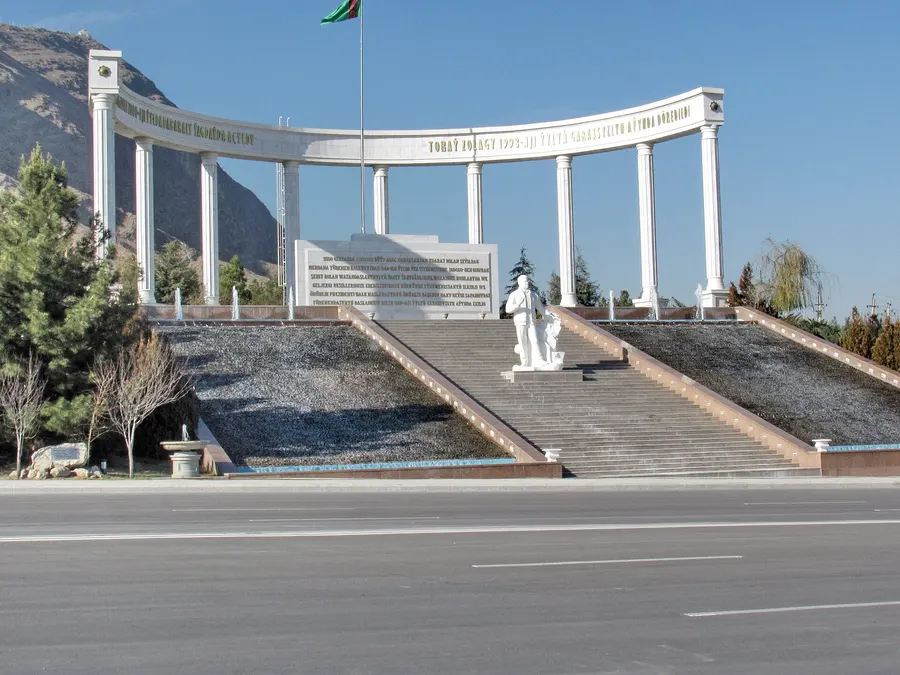
The monument in Ashgabat to the victims of the 1948 earthquake.The monument in Ashgabat to the victims of the 1948 earthquake.Image: Incredible · CC BY 3.0
world · Asia

An earthquake destroys Ashgabat

A magnitude 7.2 earthquake struck close to Ashgabat, the capital of Soviet Turkmenistan, in the early hours of 6 October 1948, local time, late on 5 October by the clocks further west. Almost every brick building in the city and the villages around it collapsed. Soviet authorities gave the death toll as 10,000; only in 1988 was a figure of about 110,000 released. The city was rebuilt on the same plan, and Turkmenistan holds a day of remembrance each year.

Source: US Geological Survey: M 7.2, 14 km north of Ashgabat, Turkmenistan ↗
1962
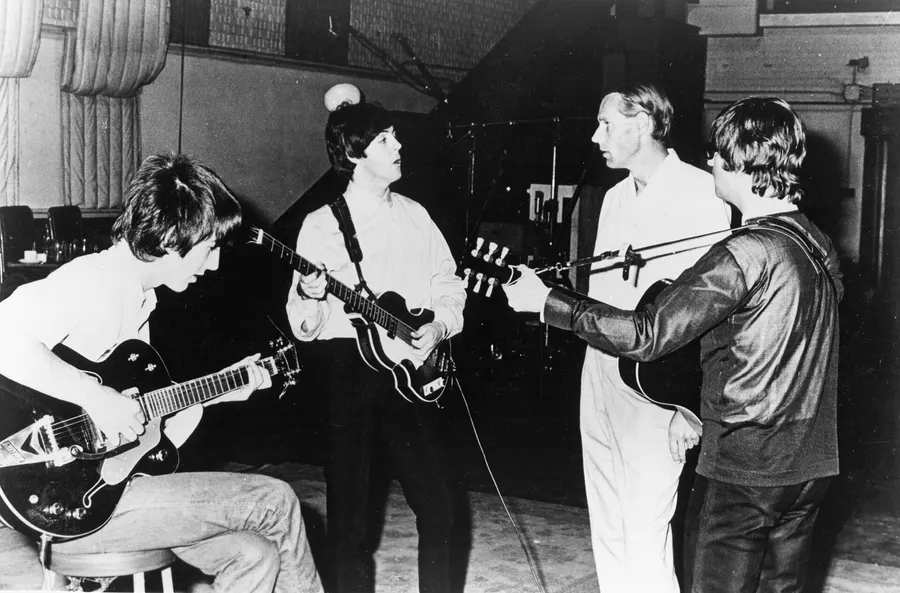
John Lennon, George Harrison and Paul McCartney with their producer George Martin at Abbey Road, 1966.John Lennon, George Harrison and Paul McCartney with their producer George Martin at Abbey Road, 1966.Image: Capitol Records · Public domain
culture · Europe

James Bond and the Beatles make their debuts

5 October 1962 was a remarkable day for British popular culture. In London the first James Bond film, Dr. No, starring Sean Connery and based on Ian Fleming’s novel, had its world premiere at the London Pavilion; the date is now celebrated as Global James Bond Day. On the same day Parlophone released the Beatles’ first single, ‘Love Me Do’, backed with ‘P.S. I Love You’. It reached number 17 in the British charts. Within little more than a year Beatlemania had swept Britain and was about to reach America.

Source: 007.com (EON Productions): Dr. No ↗
1969
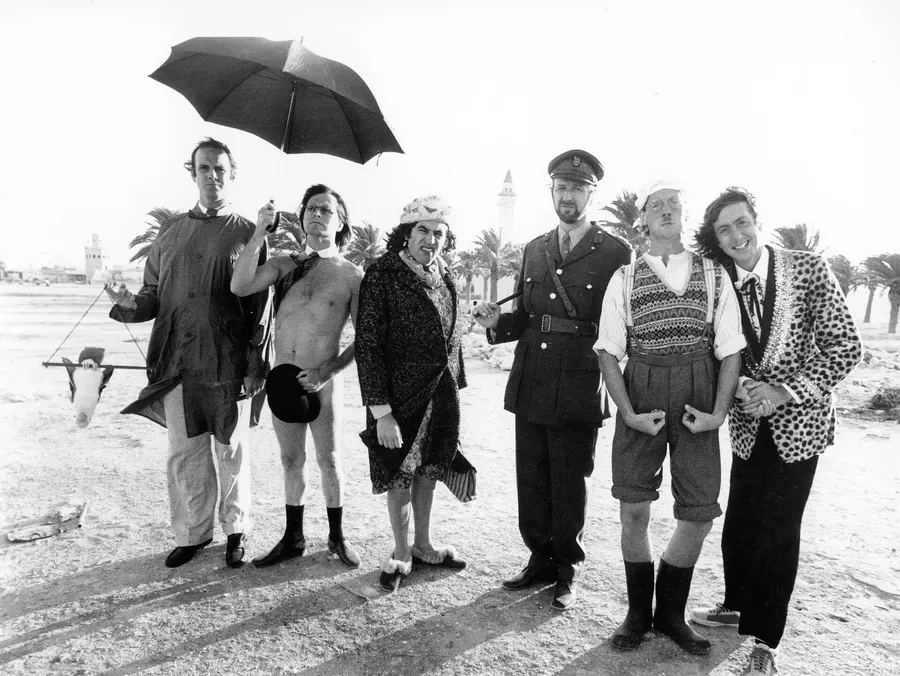
The six Pythons in Tunisia in 1978: John Cleese, Terry Gilliam, Terry Jones, Graham Chapman, Michael Palin and Eric Idle.The six Pythons in Tunisia in 1978: John Cleese, Terry Gilliam, Terry Jones, Graham Chapman, Michael Palin and Eric Idle.Image: Distributed by Arista Records (Q664167) · Public domain
culture · Europe

Monty Python’s Flying Circus is first broadcast

The first episode of Monty Python’s Flying Circus, ‘Whither Canada?’, was shown on BBC1 on the night of 5 October 1969. It mixed sketches, parodies of television and Terry Gilliam’s cut-out animations, and included ‘The Funniest Joke in the World’. The series ran until 1974 and changed television comedy, with its surreal humour and sketches that ended without punchlines. Repeats on American public television built a huge following in the United States, and the team went on to make films including Monty Python and the Holy Grail and Life of Brian.

Source: Monty Python (official site): Monty Python’s Flying Circus, series 1 ↗
1984
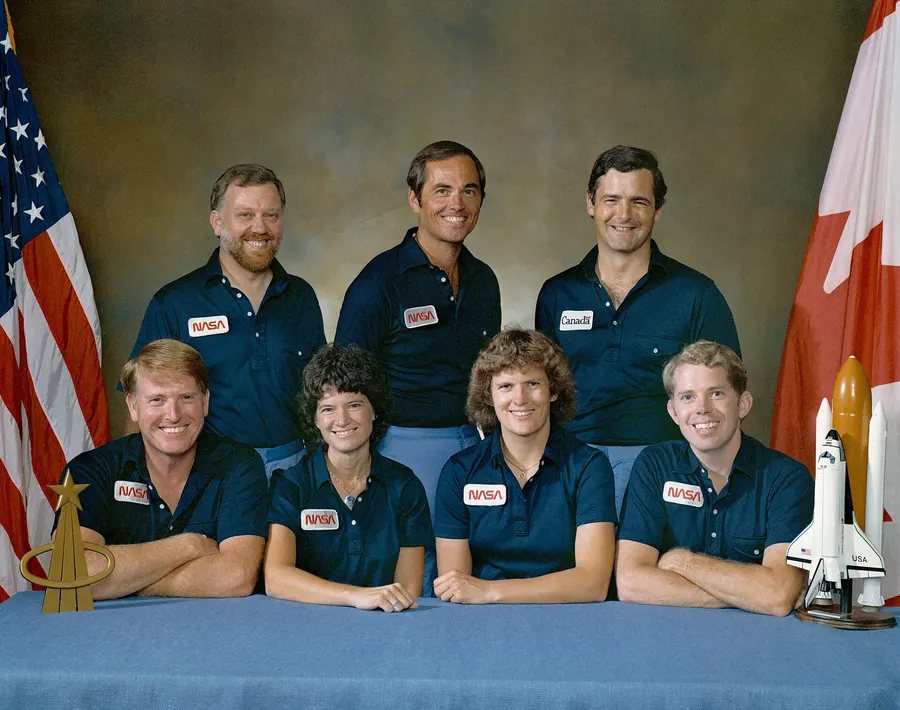
The STS-41G crew. Marc Garneau stands second from the right.The STS-41G crew. Marc Garneau stands second from the right.Image: NASA · Public domain
science · Americas

The first Canadian in space

On 5 October 1984 the space shuttle Challenger lifted off on mission STS-41G with Marc Garneau aboard as payload specialist, making him the first Canadian in space. He carried out ten Canadian experiments in space technology, space science and life sciences. The flight set other records too: seven crew, the largest to that date, and the first with two women, Sally Ride and Kathryn Sullivan, who became the first American woman to walk in space. Garneau flew twice more and later became a Canadian government minister.

Source: Canadian Space Agency: Mission STS-41G, first Canadian in space ↗
1988
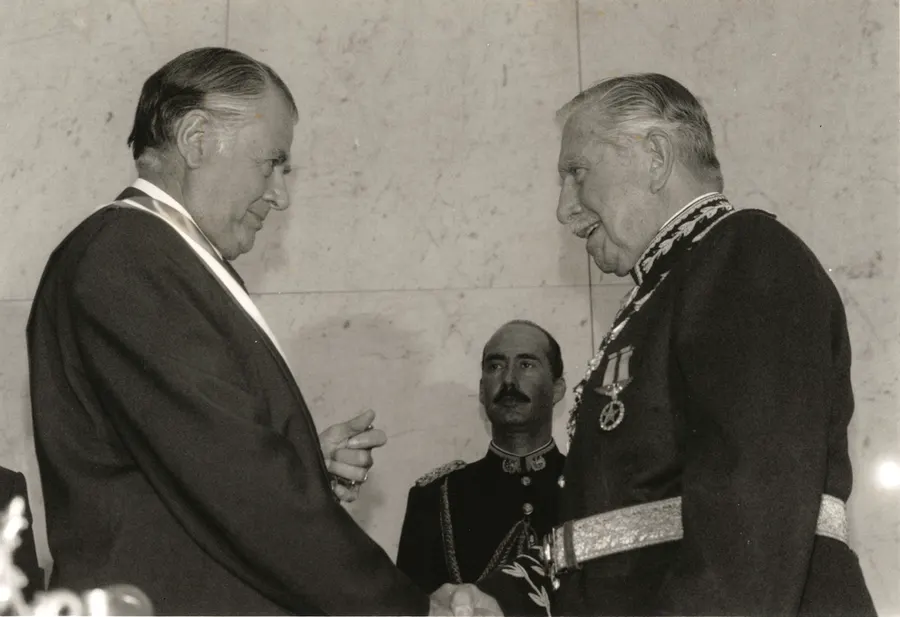
Augusto Pinochet hands power to the elected president, Patricio Aylwin, in March 1990.Augusto Pinochet hands power to the elected president, Patricio Aylwin, in March 1990.Image: Biblioteca del Congreso Nacional - Chile · CC BY-SA 3.0 cl
politics · Americas

Chileans vote no to Pinochet

On 5 October 1988 Chileans voted in a plebiscite on whether General Augusto Pinochet, in power since the 1973 coup, should rule for another eight years. The ‘No’ campaign won 54.7% of the valid votes against 43% for ‘Yes’. Declassified US documents show that Pinochet had contingency plans to overturn a defeat, but members of his own regime refused to go along. The result led to free presidential and parliamentary elections in 1989, and Pinochet handed over the presidency to Patricio Aylwin in March 1990.

Source: Memoria Chilena (National Library of Chile): The plebiscite of 5 October 1988 ↗
VI
2000 TO TODAY

Modern Day

The events of recent decades that have already become part of the historical record.

2000
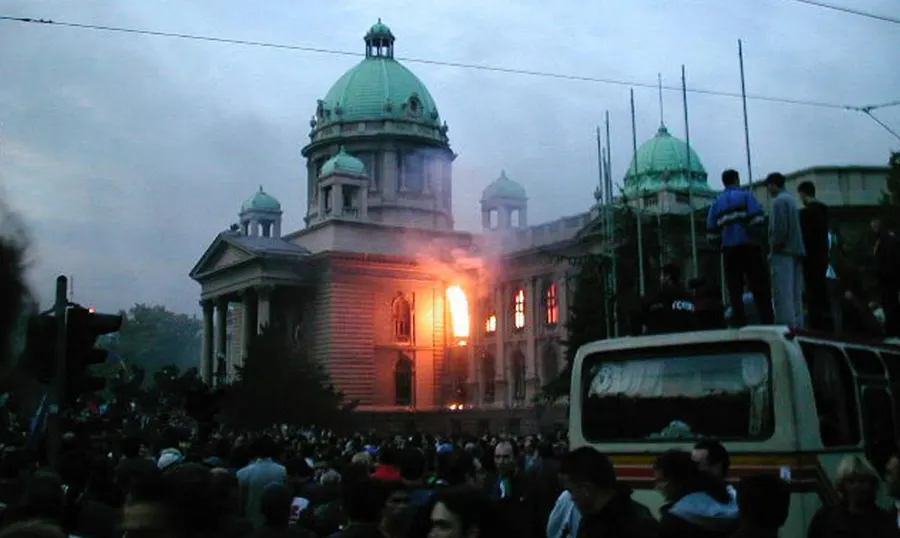
The federal parliament in Belgrade on fire during the protests of 5 October 2000.The federal parliament in Belgrade on fire during the protests of 5 October 2000.Image: WagingNonViolence/Viktor Sekularac · CC BY 4.0
politics · Europe

Protesters bring down Slobodan Milošević

On 5 October 2000, after Slobodan Milošević refused to accept defeat in the Yugoslav presidential election, hundreds of thousands of people converged on Belgrade. Protesters stormed the federal parliament, which was set on fire, and took over state television. Two days later Milošević conceded, and the opposition candidate Vojislav Koštunica was sworn in as president. In 2001 Milošević was handed over to the UN war crimes tribunal in The Hague.

Source: Human Rights Watch: World Report 2001, Federal Republic of Yugoslavia ↗
RESEARCH

Sources & Further Reading

Selected authoritative references supporting the events on this page.

Chilean National Archives: The beginnings of the city of Concepción↗Encyclopaedia Britannica: Pedro de Valdivia↗Château de Versailles: Versailles at the heart of the French Revolution, 1789↗Roy Rosenzweig Center for History and New Media (George Mason University): Stanislas Maillard describes the women’s march to Versailles↗National Park Service: Bear Paw Battlefield↗Encyclopaedia Britannica: Chief Joseph↗Encyclopaedia Britannica: History of Portugal, the First Republic, 1910-26↗Museum of the Presidency of the Portuguese Republic: The proclamation of the Republic↗Harry S. Truman Library: First televised speech from the White House↗The American Presidency Project (UC Santa Barbara): Radio and television address concluding a program by the Citizens Food Committee↗US Geological Survey: M 7.2, 14 km north of Ashgabat, Turkmenistan↗Encyclopaedia Britannica: Ashgabat↗007.com (EON Productions): Dr. No↗The Beatles (official site): Love Me Do↗Monty Python (official site): Monty Python’s Flying Circus, series 1↗Encyclopaedia Britannica: Monty Python’s Flying Circus↗Canadian Space Agency: Mission STS-41G, first Canadian in space↗NASA: 40 years ago, STS-41G, a flight of many firsts and records↗Memoria Chilena (National Library of Chile): The plebiscite of 5 October 1988↗National Security Archive (George Washington University): Pinochet’s plot recalled on the 30th anniversary of the ‘No’ vote↗Human Rights Watch: World Report 2001, Federal Republic of Yugoslavia↗Encyclopaedia Britannica: Slobodan Milošević↗
WHY THESE MOMENTS?

Significance before volume

This page is not the longest possible list of events. It is a chronological journey through 5 October, where each entry is chosen for historical significance, human interest and reliability.

Facts are checked against authoritative museums, archives, universities and reference works. Where sources disagree, the page says so.

EXPLORED THE DEEPER STORY?

Return to the highlights of 5 October

Discover the lighter side of the date with famous birthdays, culture, firsts and lives remembered.

Explore This Day →
← PREVIOUS DAY4 October
HISTORY & TIMELINE5 October
NEXT DAY →6 October