
HISTORY & TIMELINE
28 November

A journey through
28 November in history

From Skanderbeg raising his flag over Krujë in 1443 to East Timor’s short-lived declaration of independence in 1975, 28 November has seen new nations, new voters, a first look at Mars and the first broadcast of the Grand Ole Opry. This timeline follows the date across more than five centuries.

JUMP THROUGH TIME
II
THE MIDDLE AGES

Medieval History

Kingdoms, conflict, faith, power and the changing medieval world.

1443
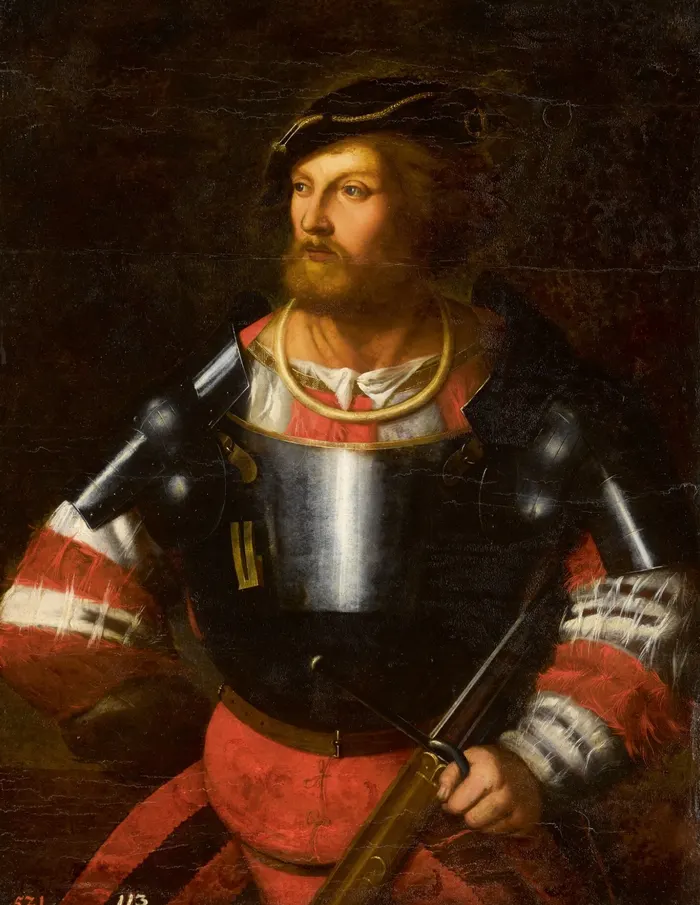
Skanderbeg, in a portrait by an unknown north Italian painter of about 1520.Skanderbeg, in a portrait by an unknown north Italian painter of about 1520.Image: North Italian School · Public domain
world · Europe

Skanderbeg raises his flag over Krujë

George Kastrioti, known as Skanderbeg, an Albanian noble raised at the Ottoman court, broke with the sultan and on 28 November 1443 raised his red flag with a black eagle over the fortress of Krujë. For the next 25 years he held off every Ottoman attempt to retake Albania. His flag became the flag of modern Albania.

Source: Encyclopaedia Britannica: Flag of Albania ↗
III
A CHANGING WORLD

Early Modern Era

Exploration, political change, scientific development and expanding global connections.

1520
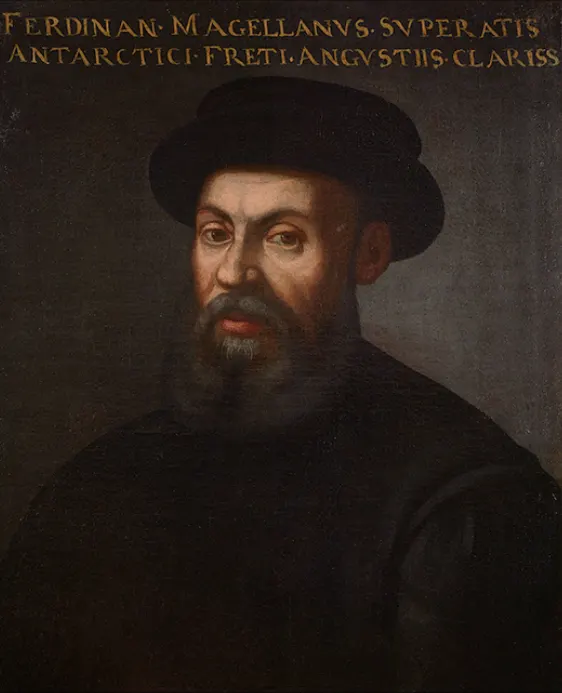
Ferdinand Magellan, in a portrait painted in the late sixteenth or early seventeenth century.Ferdinand Magellan, in a portrait painted in the late sixteenth or early seventeenth century.Image: Unknown authorUnknown author · Public domain
world · Americas

Magellan’s ships sail out into the Pacific

Ferdinand Magellan, a Portuguese captain sailing for Spain, set out in 1519 to reach the Spice Islands by sailing west. On 21 October 1520 his ships entered a winding channel near the southern tip of South America, now the Strait of Magellan. After more than a month of threading through it, and the desertion of one ship, the three remaining vessels came out into the open ocean on 28 November 1520. Magellan called it the Pacific, the peaceful sea. He was killed in the Philippines in 1521, but one ship, the Victoria, completed the first voyage round the world in 1522.

Source: Encyclopaedia Britannica: Strait of Magellan ↗
IV
THE NINETEENTH CENTURY

The 1800s

Industry, empire, invention, reform and a century of enormous transformation.

1893
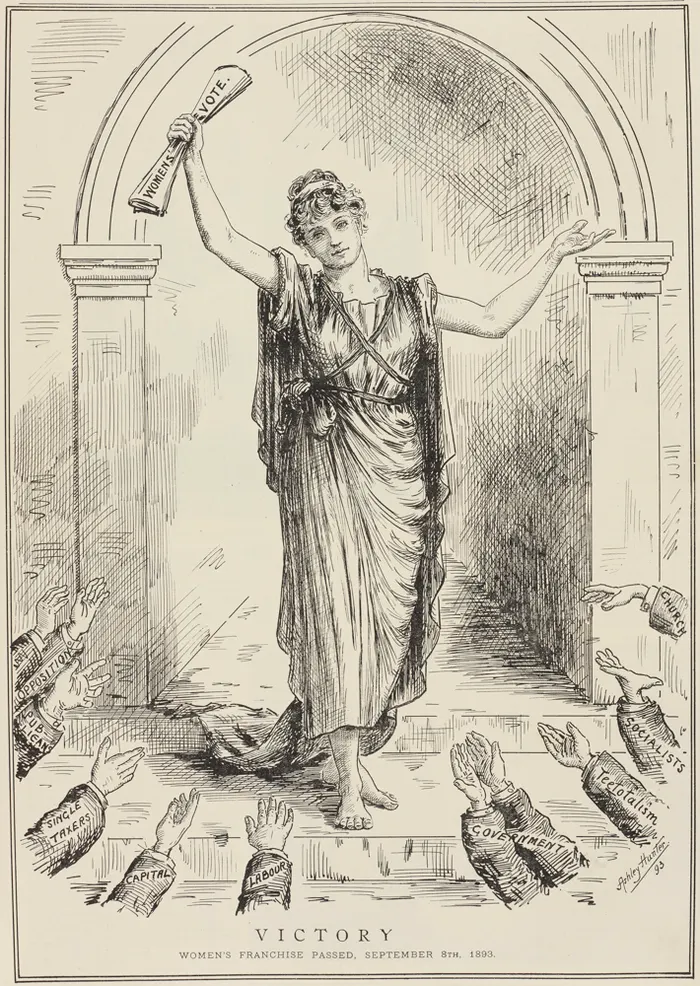
'Victory', a cartoon in the New Zealand Graphic celebrating the passing of women's franchise, September 1893.‘Victory’, a cartoon in the New Zealand Graphic celebrating the passing of women’s franchise, September 1893.Image: Ashley Hunter (1854 - 1932) see [3] · Public domain
politics · Oceania

New Zealand’s women vote in a general election

In September 1893 New Zealand became the first self-governing country in which women won the right to vote in parliamentary elections, after petitions signed by tens of thousands of women. Just ten weeks later, on 28 November 1893, more than 90,000 women went to the polls. About 82 per cent of those enrolled voted, a higher turnout than among men, and the day passed in what one Christchurch newspaper called the atmosphere of a garden party.

Source: NZHistory (Ministry for Culture and Heritage): Women vote in first general election ↗
V
THE TWENTIETH CENTURY

The 1900s

War and peace, technological leaps, social change, politics, sport and popular culture.

1919
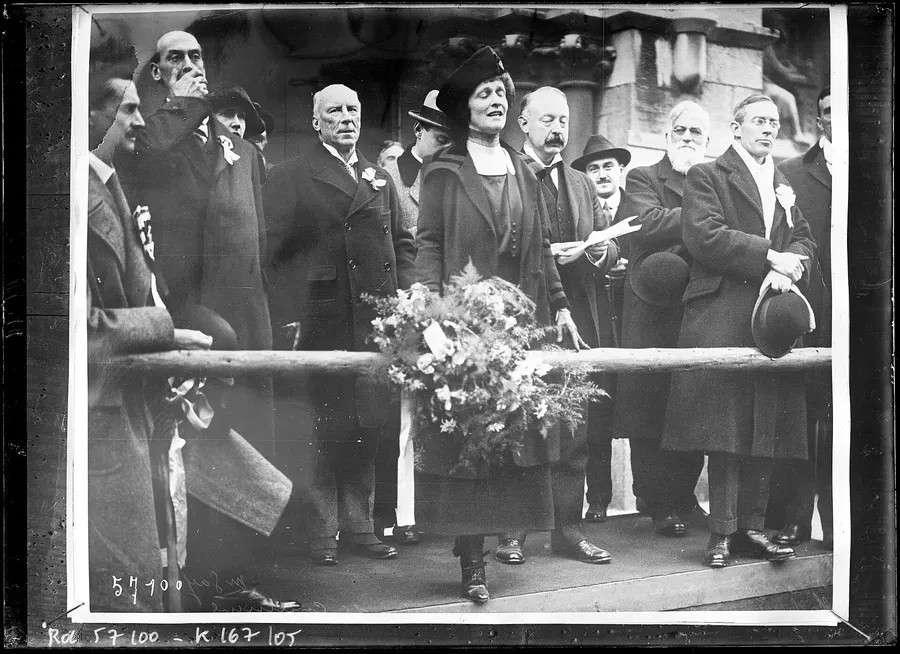
Nancy Astor after her election at Plymouth, November 1919, with her defeated opponents Isaac Foot and William Gay.Nancy Astor after her election at Plymouth, November 1919, with her defeated opponents Isaac Foot and William Gay.Image: Agence Rol. Agence photographique (commanditaire) · Public domain
politics · Europe

Nancy Astor is elected to Parliament

When her husband Waldorf inherited a peerage and had to leave the House of Commons, the American-born Nancy Astor stood in his place and won the Plymouth Sutton by-election on 28 November 1919. Taking her seat on 1 December, she became the first woman to sit in the Commons, and she served until 1945.

Source: UK Parliament: Nancy Astor MP, the first woman to sit in the House of Commons, 1919-1945 ↗
1925
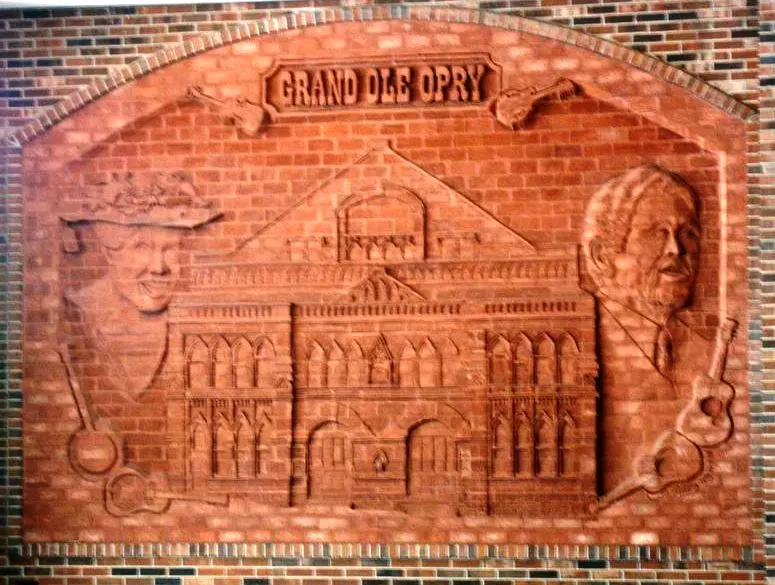
A brick relief marking the Grand Ole Opry in Nashville, photographed in 2003.A brick relief marking the Grand Ole Opry in Nashville, photographed in 2003.Image: Deirdre 11:55, 27 February 2007 (UTC) · CC BY-SA 3.0
culture · Americas

The Grand Ole Opry goes on the air

On 28 November 1925 the new Nashville radio station WSM put a fiddler in his seventies, Uncle Jimmy Thompson, on the air, introduced by the announcer George D. Hay. Listeners wrote in asking for more, and Hay turned it into a weekly show of local string bands, the WSM Barn Dance. Renamed the Grand Ole Opry in 1927, it became one of the longest-running radio programmes in the United States and the most famous stage in country music.

Source: Tennessee Encyclopedia (Tennessee Historical Society): Grand Ole Opry ↗
1943
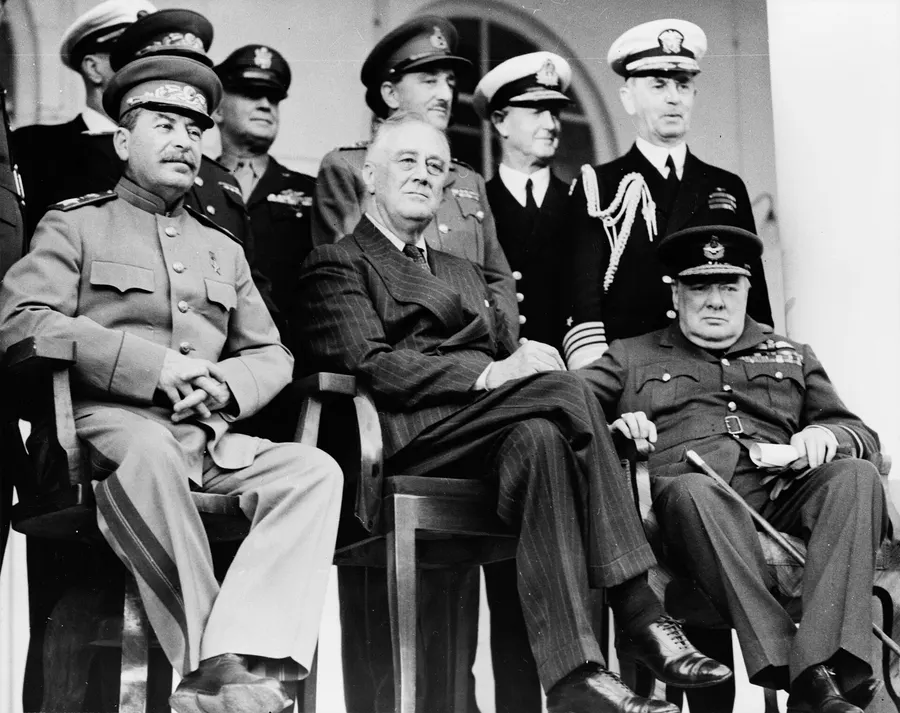
Stalin, Roosevelt and Churchill with their chiefs of staff on the portico of the Soviet embassy in Tehran, 1943.Stalin, Roosevelt and Churchill with their chiefs of staff on the portico of the Soviet embassy in Tehran, 1943.Image: United States Army 12th Air Force · Public domain
world · Asia

The ‘Big Three’ meet at Tehran

Franklin Roosevelt, Winston Churchill and Joseph Stalin met together for the first time in Tehran, the capital of Iran, from 28 November to 1 December 1943. The American and British leaders committed themselves to invading northern France, the operation that became D-Day, by May 1944. Stalin promised in principle to join the war against Japan once Germany was beaten, and the three began to discuss Poland’s post-war borders and a new world organisation, the future United Nations.

Source: US Department of State, Office of the Historian: The Tehran Conference, 1943 ↗
1960
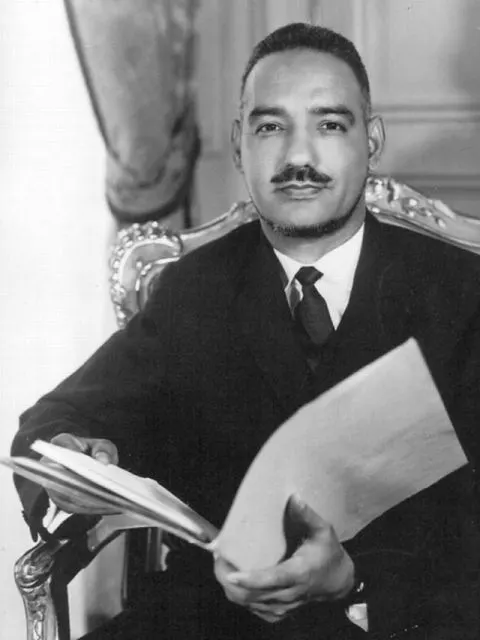
Moktar Ould Daddah, Mauritania's first head of government and president, in 1960.Moktar Ould Daddah, Mauritania’s first head of government and president, in 1960.Image: Unknown authorUnknown author · Public domain
politics · Africa

Mauritania becomes independent

The Islamic Republic of Mauritania, a vast desert land in north-west Africa ruled by France since the early twentieth century, declared its independence on 28 November 1960. It was proclaimed in Nouakchott, a new capital then only a few years old. Moktar Ould Daddah, the first Mauritanian to graduate from university, led the country as president until he was overthrown in a military coup in 1978. The country balanced its Arab and African roots, later joining both the Organisation of African Unity and the Arab League.

Source: Encyclopaedia Britannica: Mauritania, history ↗
1964
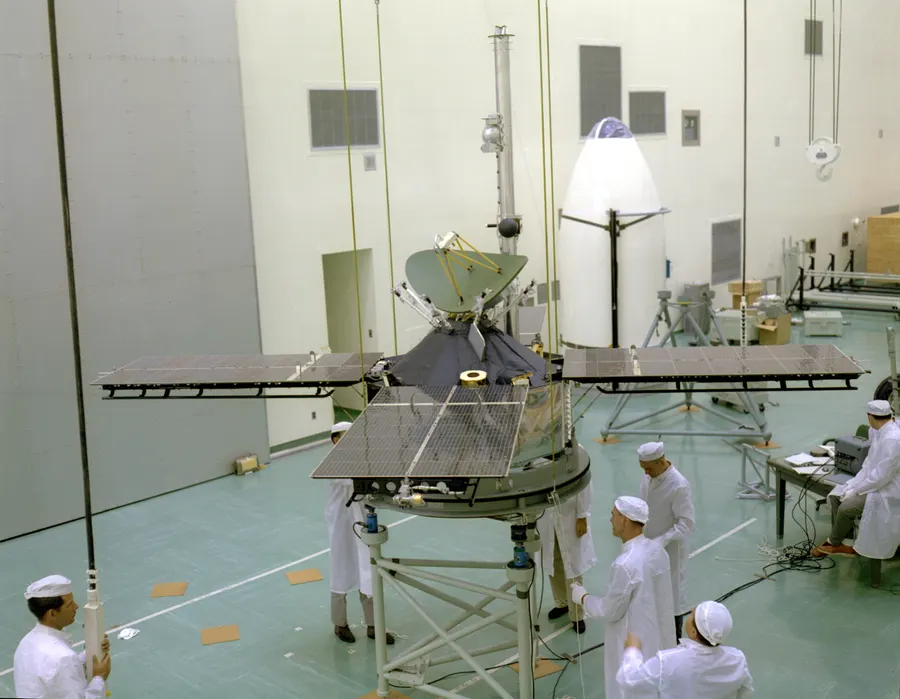
Mariner 4 being prepared for a weight test before its launch, November 1963.Mariner 4 being prepared for a weight test before its launch, November 1963.Image: NASA/JPL · Public domain
science · Americas

Mariner 4 sets off to become the first spacecraft to visit Mars

NASA launched Mariner 4 from Cape Kennedy on 28 November 1964, days before the launch window closed. After a flight of 228 days it flew past Mars on 14 July 1965, the first spacecraft to do so successfully. It sent back 22 photographs, the first close-up pictures of another planet. They showed a cratered, Moon-like surface, ending hopes of finding canals or a thriving world.

Source: NASA Science: Mariner 4 ↗
1975
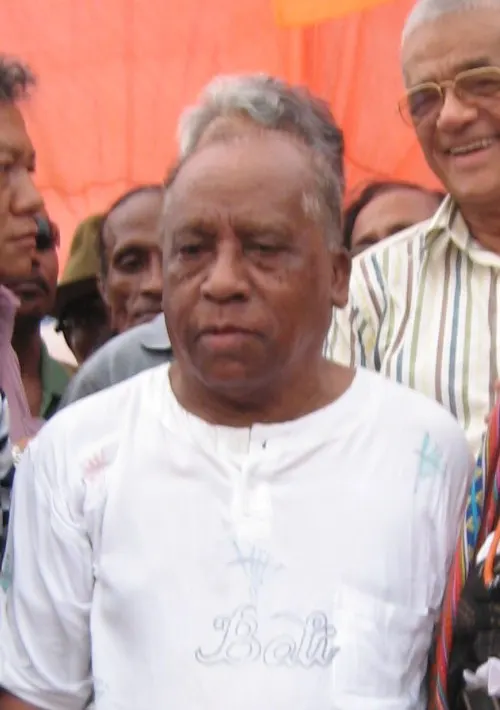
Francisco Xavier do Amaral, who proclaimed East Timor's independence in 1975, photographed in 2007.Francisco Xavier do Amaral, who proclaimed East Timor’s independence in 1975, photographed in 2007.Image: Wahlkampf_JRH_mit_Francisco_do_Amaral_u._Mario_Carrascalao.JPG: Jörg Meier, Watch Indonesia! derivative work: Patrick (talk) · CC BY-SA 3.0
politics · Asia

East Timor declares independence from Portugal

As Portugal withdrew from its colonies after its 1974 revolution, the independence movement Fretilin won control of East Timor and on 28 November 1975 declared the Democratic Republic of East Timor, with Francisco Xavier do Amaral as president. Nine days later Indonesia invaded, and it ruled the territory for 24 years, an occupation in which a large part of the population died. After a UN-run vote in 1999, East Timor became independent in 2002, and Timorese mark 28 November as their Proclamation of Independence Day.

Source: Encyclopaedia Britannica: 1975 invasion of East Timor ↗
WHY THESE MOMENTS?

Significance before volume

This page is not the longest possible list of events. It is a chronological journey through 28 November, where each entry is chosen for historical significance, human interest and reliability.

Facts are checked against authoritative museums, archives, universities and reference works. Where sources disagree, the page says so.

EXPLORED THE DEEPER STORY?

Return to the highlights of 28 November

Discover the lighter side of the date with famous birthdays, culture, firsts and lives remembered.

Explore This Day →