
HISTORY & TIMELINE
25 November

A journey through
25 November in history

From the wreck of the White Ship in 1120 to the vote that divided Czechoslovakia in 1992, 25 November has seen crusader battles, the last redcoats leave New York, a new king for Norway and nations taking charge of their own affairs. This timeline follows the date across nearly nine centuries.

JUMP THROUGH TIME
II
THE MIDDLE AGES

Medieval History

Kingdoms, conflict, faith, power and the changing medieval world.

1120
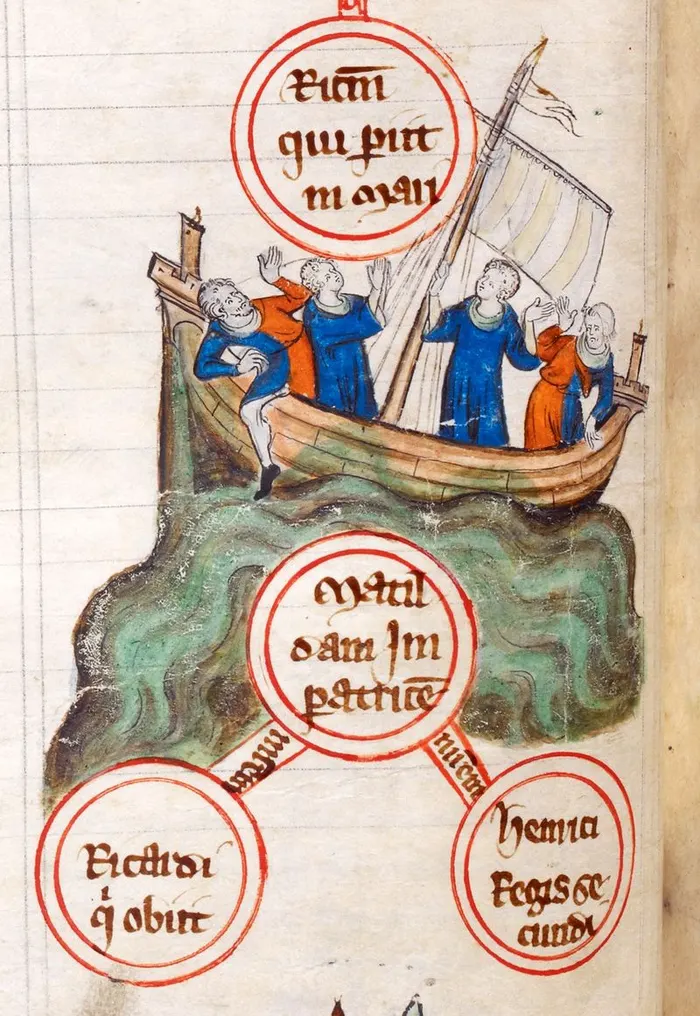
The sinking of the White Ship, in an English chronicle of about 1321.The sinking of the White Ship, in an English chronicle of about 1321.Image: UnknownUnknown , produced for the Corporation of the City of London · Public domain
world · Europe

The White Ship sinks, and with it England’s heir

On the evening of 25 November 1120 the White Ship, a new vessel carrying about 300 people, left Barfleur in Normandy for England. On board was William Adelin, the 17-year-old only legitimate son of King Henry I, with many young nobles. Soon after setting out in the dark the ship struck a rock and sank; only one man is said to have survived. Henry was left without a male heir. He named his daughter Matilda to succeed him, but on his death in 1135 his nephew Stephen seized the throne, and nearly twenty years of civil war, known as the Anarchy, followed.

Source: British Library: 900 years since the White Ship disaster ↗
1177
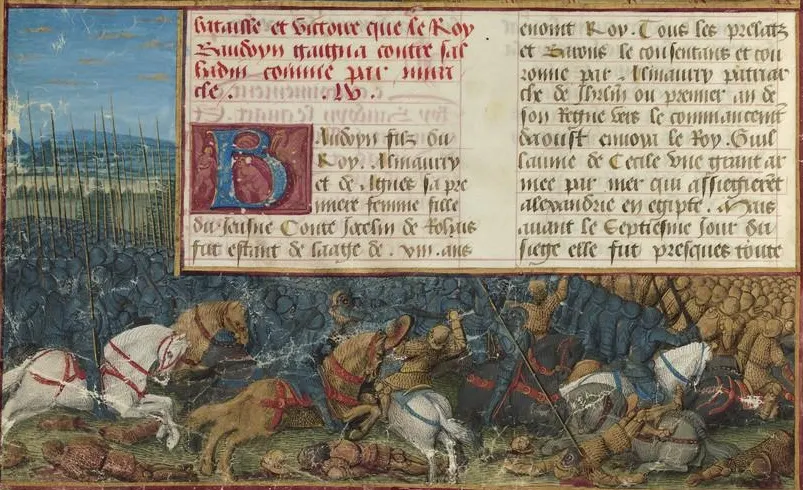
The battle of 1177, in a fifteenth-century manuscript of Sébastien Mamerot now in the Bibliothèque nationale de France.The battle of 1177, in a fifteenth-century manuscript of Sébastien Mamerot now in the Bibliothèque nationale de France.Image: Unknown authorUnknown author · Public domain
world · Asia

The leper king Baldwin IV defeats Saladin at Montgisard

In November 1177 Saladin, sultan of Egypt and Syria, marched north into the crusader Kingdom of Jerusalem with a large army. Its young king, Baldwin IV, only 16 and already disabled by leprosy, gathered a much smaller force and caught Saladin’s army near Ramla. On 25 November, St Catherine’s Day, the crusaders routed it at Montgisard; the chronicler William of Tyre says Saladin escaped on a racing camel. It was one of Saladin’s worst defeats, although ten years later he took Jerusalem.

Source: Encyclopaedia Britannica: Baldwin IV ↗
III
A CHANGING WORLD

Early Modern Era

Exploration, political change, scientific development and expanding global connections.

1783
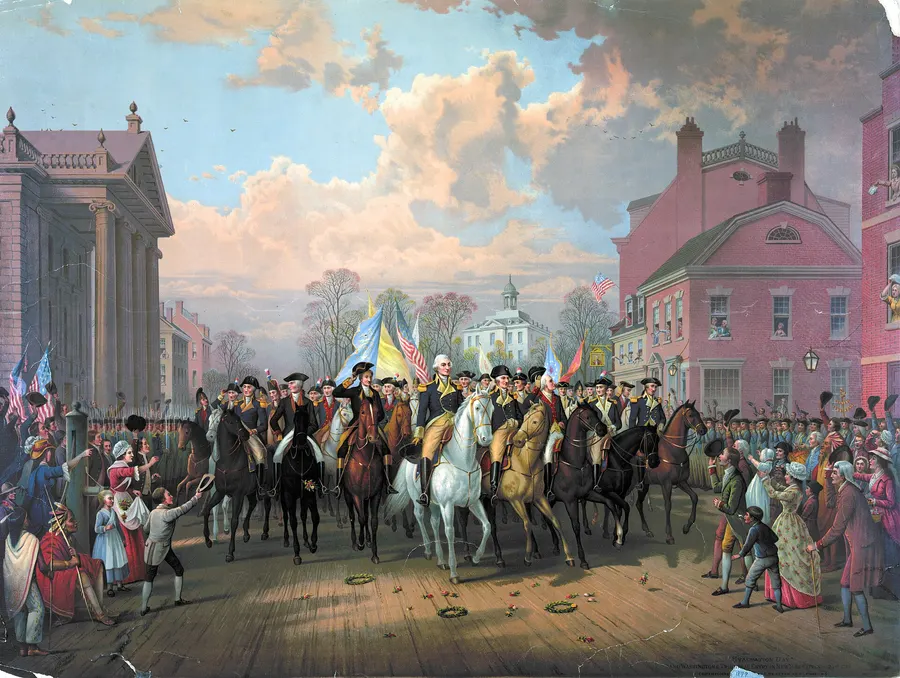
'Evacuation Day' and Washington's entry into New York, in a chromolithograph of 1879.‘Evacuation Day’ and Washington’s entry into New York, in a chromolithograph of 1879.Image: E.P. & L. Restein · Public domain
world · Americas

The last British troops leave New York

Less than three months after the Treaty of Paris ended the American War of Independence, the last British troops sailed out of New York on 25 November 1783, and George Washington rode into the city at the head of the Continental Army. New Yorkers celebrated ‘Evacuation Day’ for more than a century afterwards.

Source: Library of Congress: Evacuation of New York by the British, November 25, 1783 (print) ↗
V
THE TWENTIETH CENTURY

The 1900s

War and peace, technological leaps, social change, politics, sport and popular culture.

1905
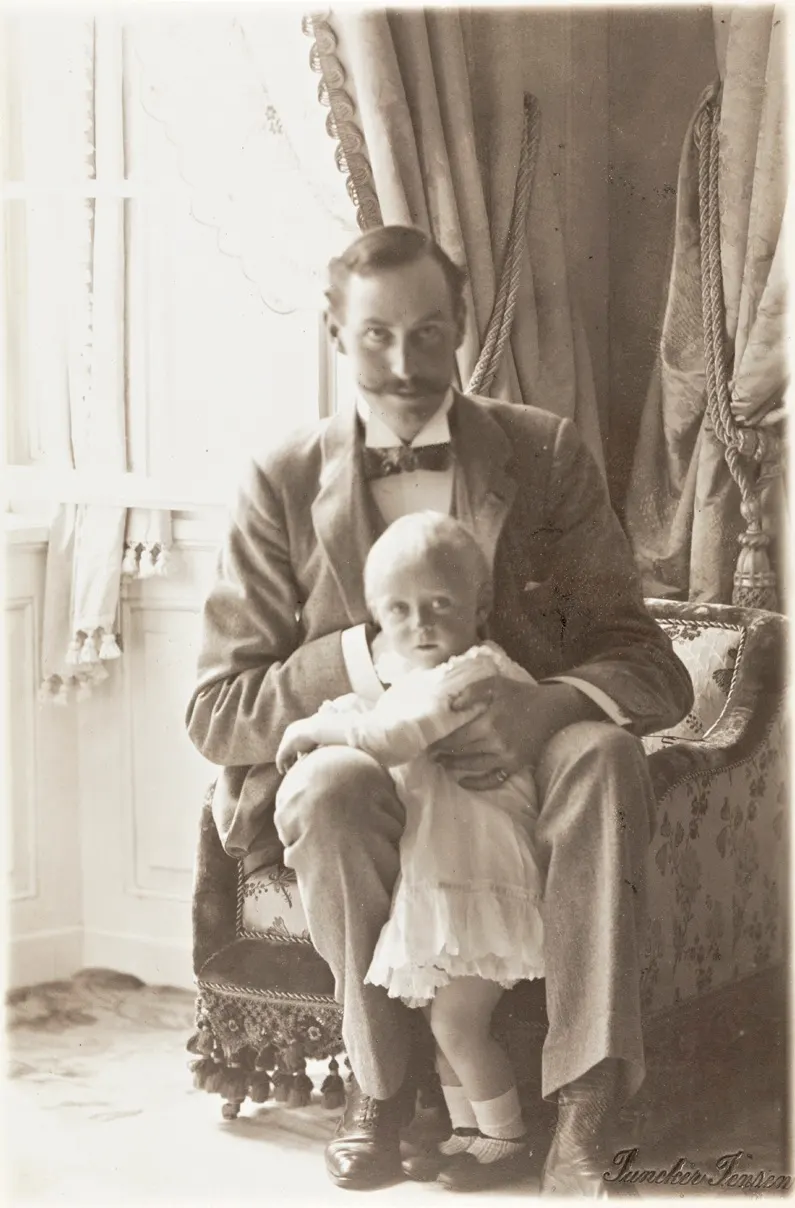
King Haakon VII with the young Crown Prince Olav, 1905.King Haakon VII with the young Crown Prince Olav, 1905.Image: Nasjonalbiblioteket · CC BY 2.0
politics · Europe

Norway’s new king arrives in Kristiania

Months after Norway ended its union with Sweden, the Storting elected Prince Carl of Denmark as king on 18 November 1905. Taking the name Haakon VII, he stepped ashore in Kristiania (now Oslo) with Queen Maud and their small son, now Crown Prince Olav, on 25 November 1905. He reigned until 1957 and became a symbol of resistance during the German occupation.

Source: The Royal House of Norway: King Haakon VII, biography ↗
1915
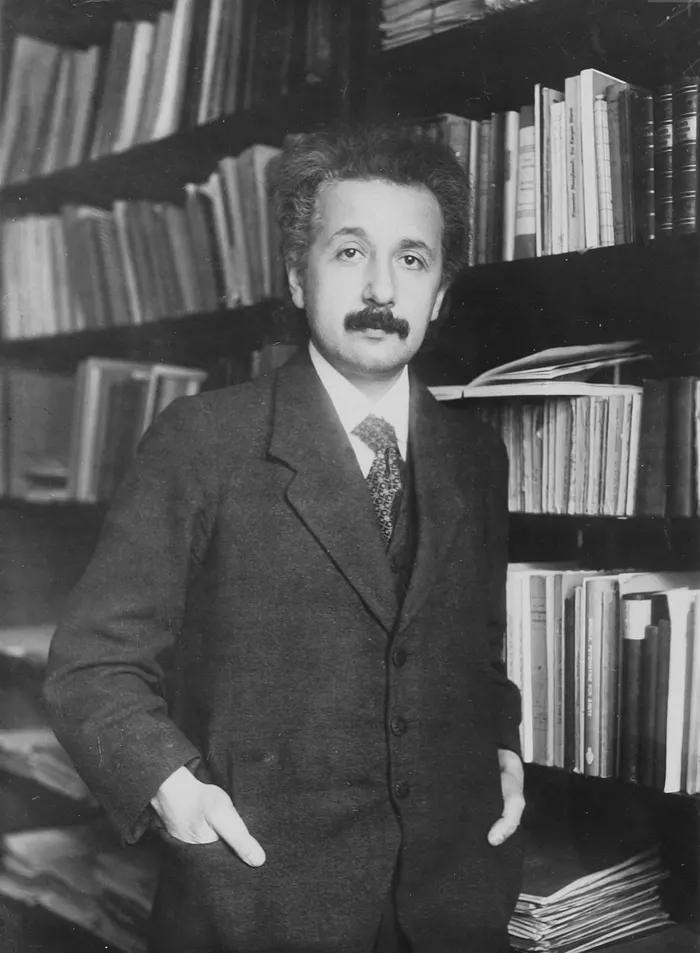
Albert Einstein in Paul Ehrenfest's library in Leiden, 1916.Albert Einstein in Paul Ehrenfest’s library in Leiden, 1916.Image: Paul Ehrenfest · Public domain
science · Europe

Einstein presents the field equations of general relativity

In November 1915, in a burst of work, Albert Einstein gave four papers to the Prussian Academy of Sciences in Berlin. In the last, a four-page paper on ‘The Field Equations of Gravitation’ presented on 25 November 1915, he set out the equations of his general theory of relativity in their final form. They describe gravity not as a force but as the curving of space and time by matter and energy. A week earlier he had shown that the theory explained a long-standing puzzle in the orbit of Mercury; the bending of starlight seen in the eclipse of 1919 made him world-famous.

Source: Physics Today (American Institute of Physics): Arch and scaffold, how Einstein found his field equations ↗
1936
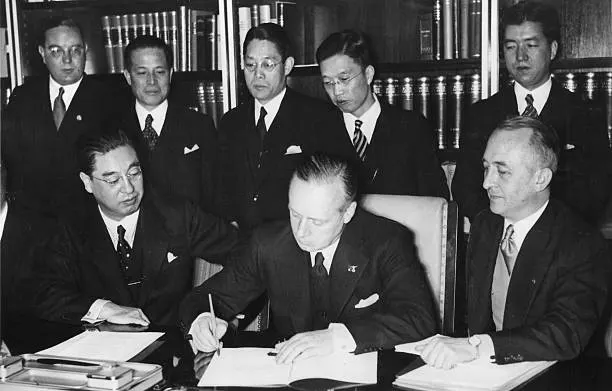
Joachim von Ribbentrop signs the pact beside the Japanese ambassador Kintomo Mushanokōji, Berlin, 25 November 1936.Joachim von Ribbentrop signs the pact beside the Japanese ambassador Kintomo Mushanokōji, Berlin, 25 November 1936.Image: Unknown photographer · Public domain
world · Asia

Germany and Japan sign the Anti-Comintern Pact

In Berlin on 25 November 1936 Nazi Germany and Imperial Japan signed the Anti-Comintern Pact, publicly aimed at the Communist International and in practice at the Soviet Union. Italy joined a year later, drawing together the powers that became the Axis.

Source: The Avalon Project (Yale Law School): Anti-Comintern Pact ↗
1947
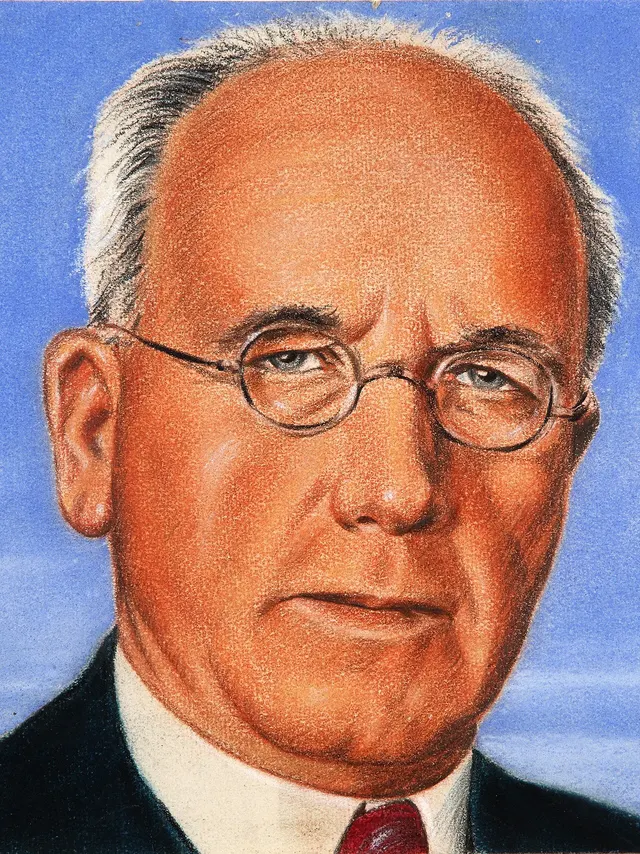
Peter Fraser, prime minister of New Zealand from 1940 to 1949, in a wartime portrait by William Timym.Peter Fraser, prime minister of New Zealand from 1940 to 1949, in a wartime portrait by William Timym.Image: William Timym · Public domain
politics · Oceania

New Zealand adopts the Statute of Westminster

The Statute of Westminster of 1931 let Britain’s dominions make their own laws free of the British Parliament, but New Zealand had not taken it up. On 25 November 1947 the Statute of Westminster Adoption Act became law, and New Zealand, the last dominion to do so, gained full legislative independence.

Source: NZHistory (Ministry for Culture and Heritage): Statute of Westminster enacted ↗
1953
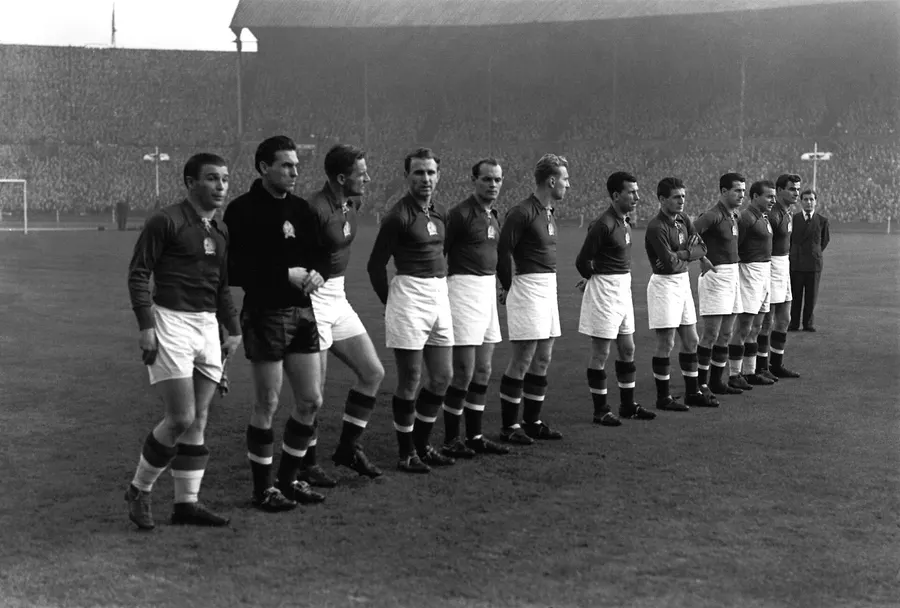
The Hungarian team lines up at Wembley before the match, 25 November 1953.The Hungarian team lines up at Wembley before the match, 25 November 1953.Image: FOTO:Fortepan — ID 134742: Adományozó/Donor: Kovács József. · CC BY-SA 3.0
sport · Europe

Hungary’s ‘Magical Magyars’ beat England 6-3 at Wembley

The Olympic champions Hungary, led by Ferenc Puskás, scored in the first minute at Wembley on 25 November 1953 through Nándor Hidegkuti, who went on to complete a hat-trick. Hungary led 4-2 at half-time and won 6-3. England had never before lost at home to a team from outside the British Isles. The Hungarians’ fluid, swapping positions left England’s defenders unable to follow their men, and the match changed how football was coached across Europe.

Source: National Football Museum: When Hungary stunned Wembley, and the world ↗
1975
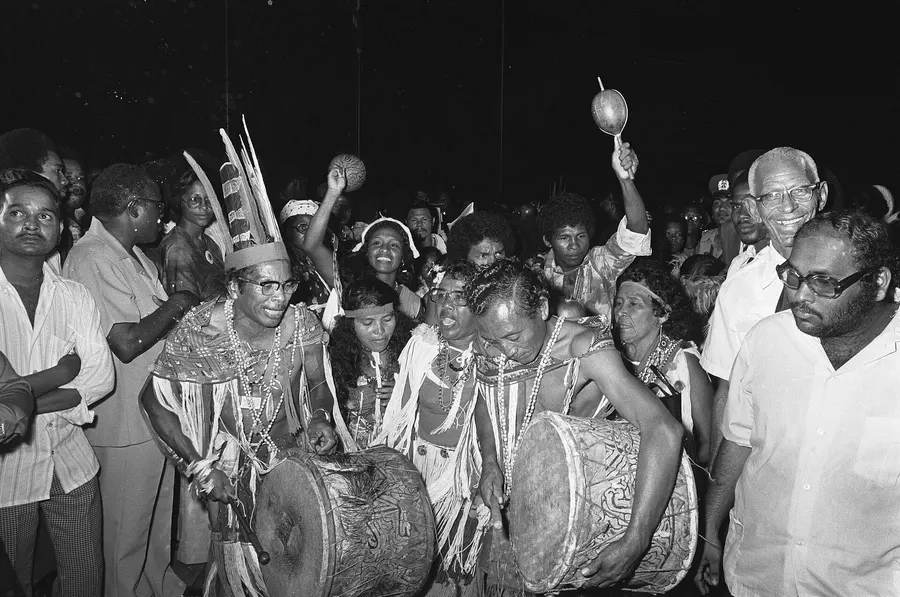
Celebrations in the stadium in Paramaribo at Suriname's independence, November 1975.Celebrations in the stadium in Paramaribo at Suriname’s independence, November 1975.Image: Bert Verhoeff / Anefo · CC0
politics · Americas

Suriname becomes independent

Suriname, on the north-east coast of South America, had been a Dutch plantation colony since 1667, worked first by enslaved Africans and later by indentured labourers from India and Java. It gained self-government within the Kingdom of the Netherlands in 1954. On 25 November 1975 it became a fully independent republic, and the flags were changed at a ceremony in the stadium in Paramaribo. Prime Minister Henck Arron, in office since 1973, had led the country to independence.

Source: Encyclopaedia Britannica: History of Suriname ↗
1992
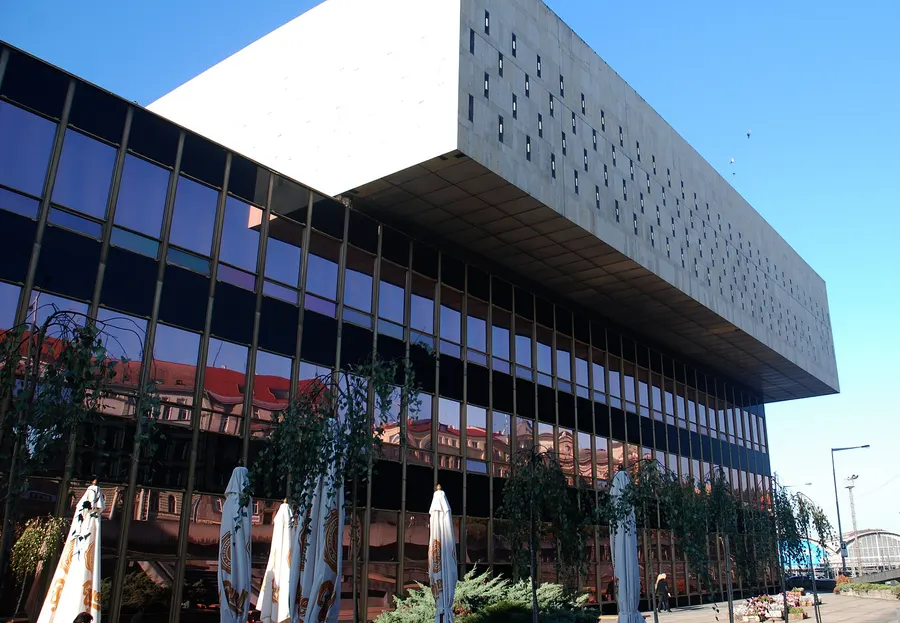
The former Federal Assembly building in Prague, photographed in 2011.The former Federal Assembly building in Prague, photographed in 2011.Image: Pastorius · CC BY-SA 3.0
politics · Europe

Czechoslovakia votes to divide in two

After elections in June 1992 the Czech leader Václav Klaus and the Slovak leader Vladimír Mečiar could not agree how the country should be run, and agreed instead to separate. On 25 November 1992 the Federal Assembly in Prague adopted the constitutional act dissolving the Czech and Slovak Federal Republic. At midnight on 31 December 1992 the Czech Republic and Slovakia became independent states, each an equal successor to the old federation. The peaceful parting became known as the Velvet Divorce.

Source: Parliament of the Czech Republic, Chamber of Deputies: The tradition of Czech parliamentarism ↗
WHY THESE MOMENTS?

Significance before volume

This page is not the longest possible list of events. It is a chronological journey through 25 November, where each entry is chosen for historical significance, human interest and reliability.

Facts are checked against authoritative museums, archives, universities and reference works. Where sources disagree, the page says so.

EXPLORED THE DEEPER STORY?

Return to the highlights of 25 November

Discover the lighter side of the date with famous birthdays, culture, firsts and lives remembered.

Explore This Day →