HISTORY & TIMELINE
15 November

A journey through
15 November in history

From Pizarro’s entry into Cuzco in 1533 to a record-equalling world title in 2020, 15 November has seen empires fall, new states proclaimed and new machines take flight. This timeline follows the date across nearly five centuries.

III
A CHANGING WORLD

Early Modern Era

Exploration, political change, scientific development and expanding global connections.

1533
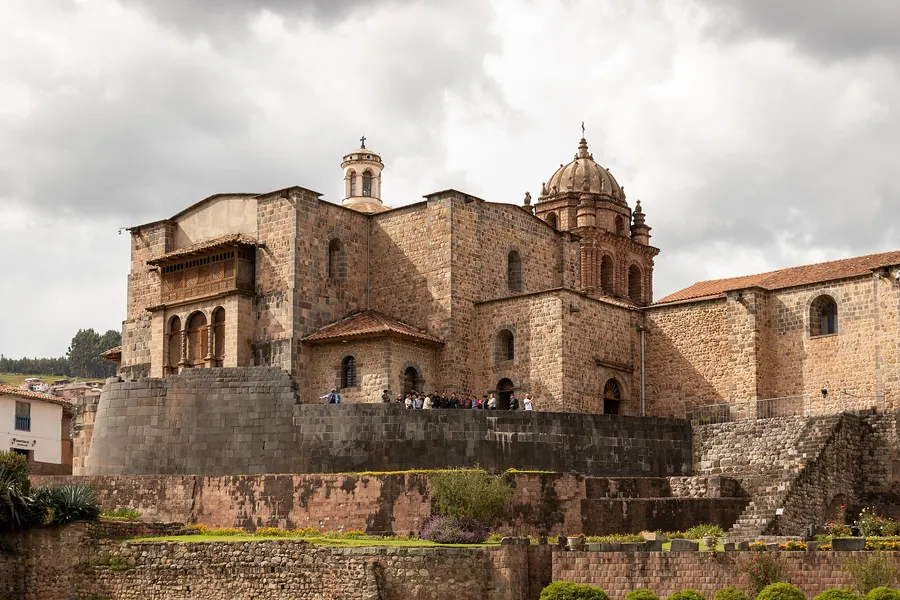
The Convent of Santo Domingo in Cuzco, built on the walls of the Inca temple of the Coricancha.The Convent of Santo Domingo in Cuzco, built on the walls of the Inca temple of the Coricancha.Image: Brian Jeffery Beggerly · CC BY 2.0
world · Americas

Pizarro’s conquistadors enter Cuzco

A year after seizing the Inca ruler Atahualpa at Cajamarca, and months after having him executed, Francisco Pizarro’s Spanish force entered Cuzco, the Inca capital, on 15 November 1533 without a battle. The city’s treasures, including the gold of the Coricancha temple, were stripped and melted down, and a Spanish city was built on Inca foundations.

Source: Encyclopaedia Britannica: Francisco Pizarro ↗
1777
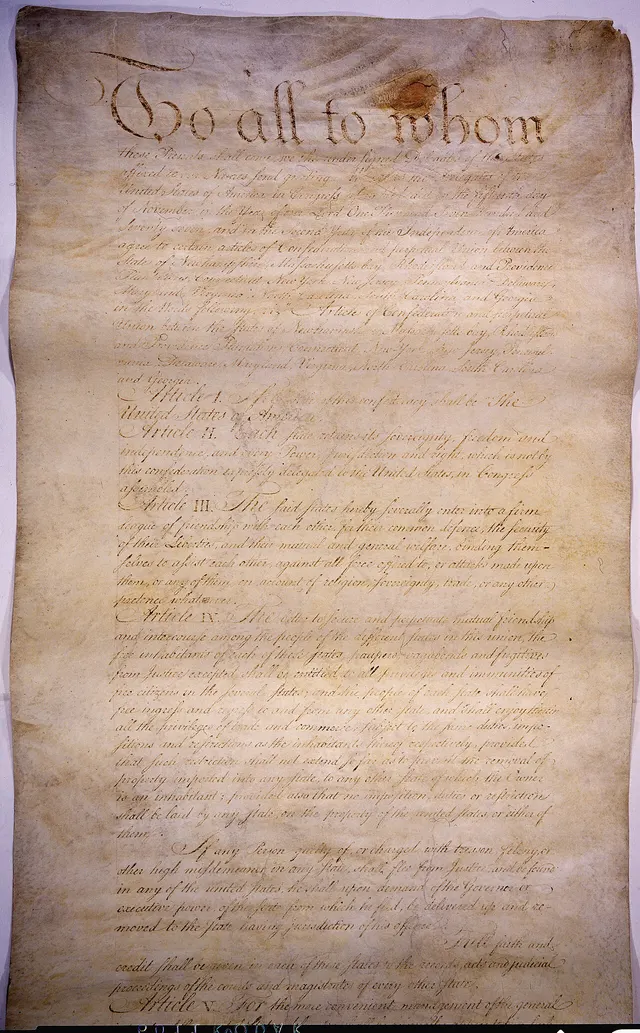
The first page of the Articles of Confederation.The first page of the Articles of Confederation.Image: The U.S. Government. · Public domain
politics · Americas

Congress adopts the Articles of Confederation

After more than a year of debate, the Second Continental Congress adopted the Articles of Confederation on 15 November 1777 and sent them to the thirteen states. Drafted largely by John Dickinson, they were the first constitution of the United States, creating a loose league of sovereign states with a weak central Congress. They took effect only in March 1781 and were replaced by the present Constitution in 1789.

Source: US National Archives: Articles of Confederation (1777) ↗
IV
THE NINETEENTH CENTURY

The 1800s

Industry, empire, invention, reform and a century of enormous transformation.

1864
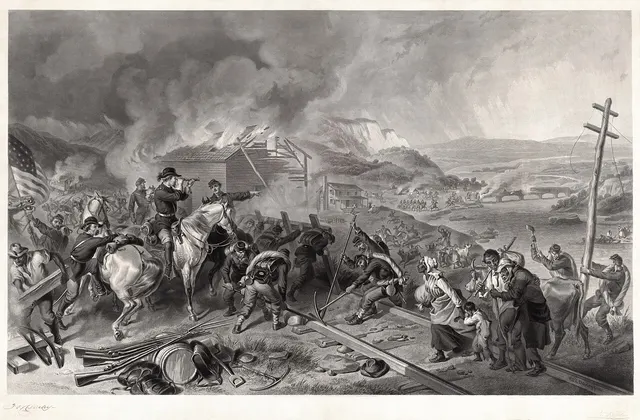
Sherman's March to the Sea, an engraving after F. O. C. Darley, about 1868.Sherman’s March to the Sea, an engraving after F. O. C. Darley, about 1868.Image: F. O. C. Darley / Alexander Hay Ritchie / Adam Cuerden · Public domain
world · Americas

Sherman’s March to the Sea begins

On 15 November 1864 the Union general William Tecumseh Sherman left a burning Atlanta with about 62,000 men and set out across Georgia towards the coast. Living off the land, his columns destroyed railways, supplies and property along a path some 285 miles long, to break the Confederacy’s will to fight. Savannah surrendered on 21 December.

Source: American Battlefield Trust: Sherman’s March to the Sea ↗
1884
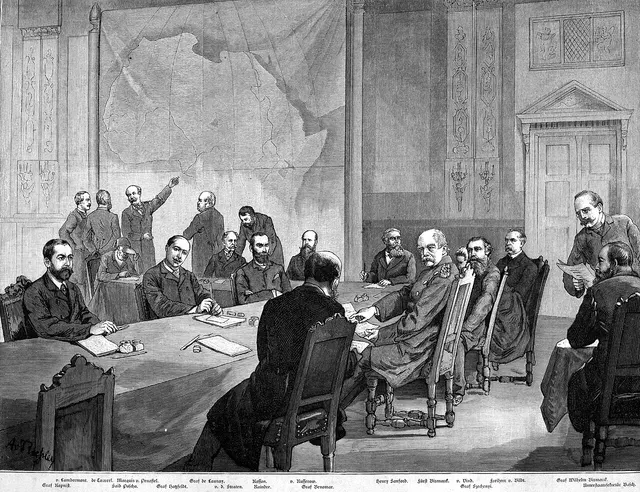
The delegates of the Berlin Conference, in a drawing by Adalbert von Rössler, 1884.The delegates of the Berlin Conference, in a drawing by Adalbert von Rössler, 1884.Image: Adalbert von Roessler · Public domain
politics · Africa

The Berlin Conference on Africa opens

At the invitation of the German chancellor Otto von Bismarck, representatives of more than a dozen European powers, the Ottoman Empire and the United States met in Berlin on 15 November 1884 to agree common rules for trade and colonisation in Africa. No African was invited. The General Act signed on 26 February 1885 declared the Congo and Niger rivers open to shipping and set out how a power should announce a new claim to African territory. In the years that followed, European claims multiplied rapidly in what became known as the Scramble for Africa.

Source: Encyclopaedia Britannica: Berlin West Africa Conference ↗
1889
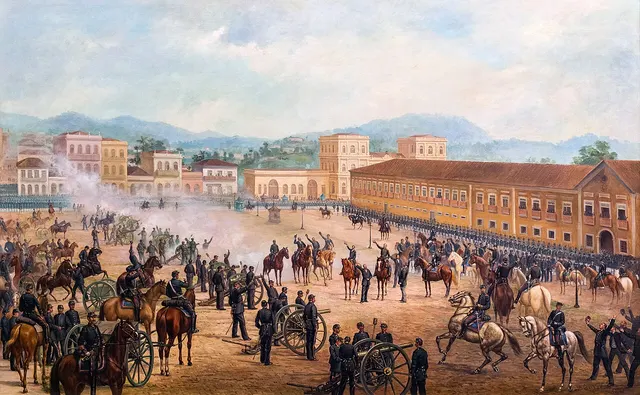
The Proclamation of the Republic, painted by Benedito Calixto in 1893.The Proclamation of the Republic, painted by Benedito Calixto in 1893.Image: Benedito Calixto · Public domain
politics · Americas

Brazil becomes a republic

On 15 November 1889 army officers led by Marshal Manuel Deodoro da Fonseca overthrew the Brazilian monarchy in a largely bloodless coup in Rio de Janeiro. The Church, the army and many landowners had turned against the empire, and republicans such as Benjamin Constant and Rui Barbosa had spent years preparing the ground. Deodoro proclaimed the Republic of the United States of Brazil and headed a provisional government. Emperor Pedro II, who had reigned for nearly half a century, left for exile in Europe within days. A republican constitution followed in February 1891, and 15 November is still a national holiday in Brazil.

Source: Library of Congress: Brazil-U.S. relations, the First Republic (1889-1930) ↗
V
THE TWENTIETH CENTURY

The 1900s

War and peace, technological leaps, social change, politics, sport and popular culture.

1920
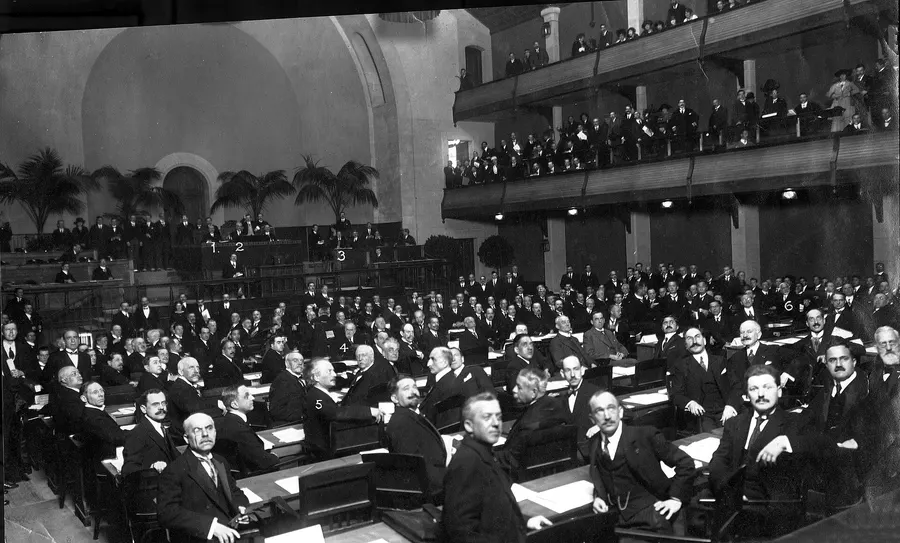
Delegates at the first session of the League of Nations Assembly in Geneva, 1920.Delegates at the first session of the League of Nations Assembly in Geneva, 1920.Image: Unknown authorUnknown author · Public domain
politics · Europe

The League of Nations holds its first Assembly

The League of Nations, created by the peace settlement after the First World War, had formally come into being on 10 January 1920. On 15 November 1920 delegates of 41 member states gathered in Geneva for the opening of its first Assembly, representing more than 70 per cent of the world’s population. It was the first standing organisation of states set up to keep the peace and settle disputes by discussion. The United States, whose president had championed the idea, never joined, and the League failed to stop the aggression of the 1930s, but its ideas and many of its agencies passed to the United Nations in 1946.

Source: United Nations Office at Geneva: The League of Nations ↗
1942
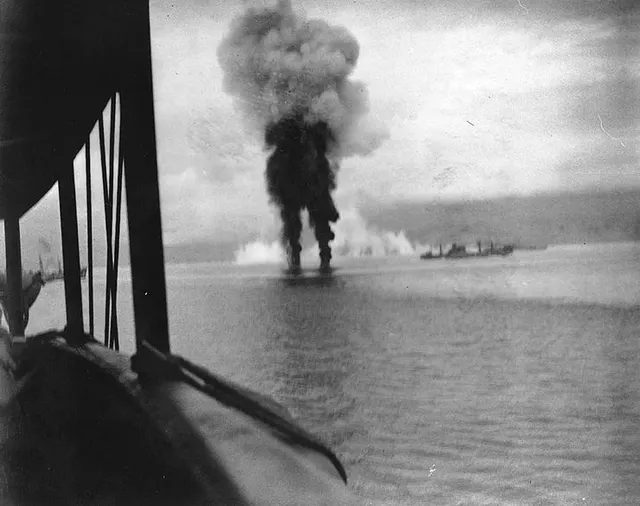
Smoke from two Japanese planes shot down on 12 November 1942, the first day of the battle.Smoke from two Japanese planes shot down on 12 November 1942, the first day of the battle.Image: Official U.S. Navy photograph · Public domain
world · Oceania

The Naval Battle of Guadalcanal ends

Four days of air and sea fighting off Guadalcanal in the Solomon Islands ended on 15 November 1942. The United States Navy suffered heavy losses, but it stopped a Japanese bombardment of Henderson Field and sank most of a convoy carrying reinforcements. Japan could no longer build up its forces on the island, and the Americans were able to go on the offensive.

Source: Naval History and Heritage Command: Naval Battle of Guadalcanal ↗
1971
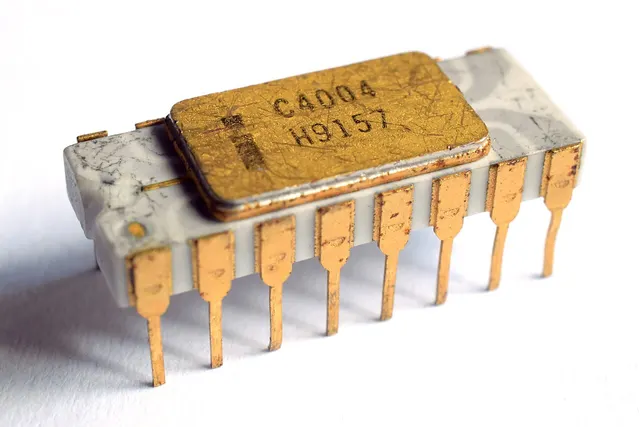
An Intel C4004 microprocessor.An Intel C4004 microprocessor.Image: Thomas Nguyen · CC BY-SA 4.0
science · Americas

The first microprocessor is advertised

On 15 November 1971 Intel announced ‘a new era of integrated electronics’ in an advertisement in the trade paper Electronic News. It offered the MCS-4 family of chips, whose centrepiece, the 4004, put a complete central processing unit on a single chip for the first time. The 4004 had been designed for a Japanese calculator maker, Busicom, by Intel’s Ted Hoff, Stan Mazor and Federico Faggin. Its 2,300 transistors made it the ancestor of the processors in almost every computer and phone today.

Source: Intel: Announcing a new era of integrated electronics ↗
1988
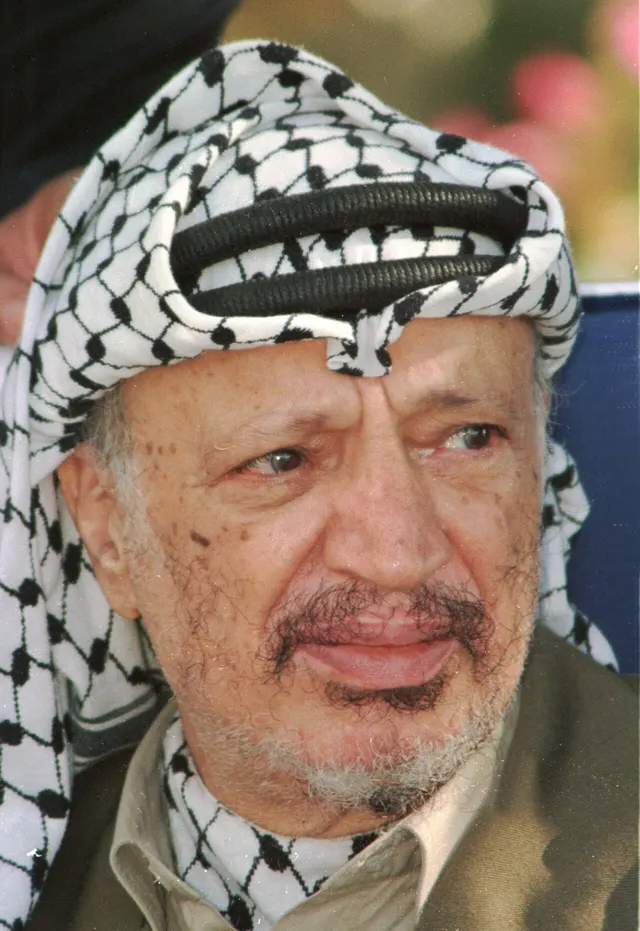
Yasser Arafat, chairman of the PLO, photographed in 1996.Yasser Arafat, chairman of the PLO, photographed in 1996.Image: Gideon Markowiz · CC BY 4.0
politics · Asia

The Palestinian Declaration of Independence

Meeting in exile in Algiers, the Palestine National Council, the parliament of the Palestine Liberation Organization, ended its session on 15 November 1988 by proclaiming a State of Palestine, with Jerusalem as its capital. The declaration was read by the PLO chairman Yasser Arafat. Alongside it, the council’s political statement implicitly accepted United Nations Security Council resolutions 242 and 338, a step towards negotiation with Israel. By the end of 1988 more than 80 countries had recognised the new state, and the UN General Assembly began using the name Palestine in place of PLO.

Source: United Nations: Declaration of State of Palestine, Palestine National Council ↗
1988
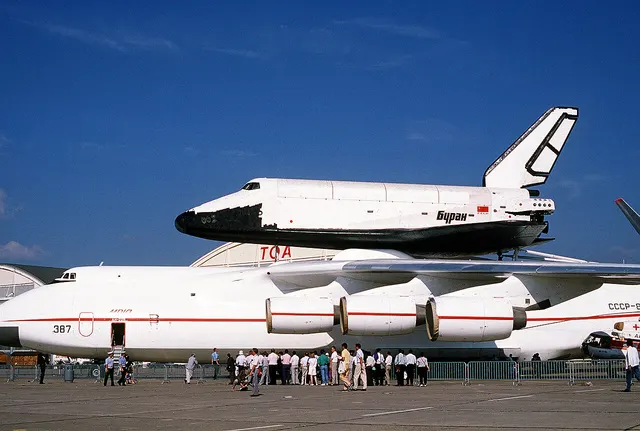
The Buran orbiter on the back of the An-225 Mriya at the Paris Air Show, June 1989.The Buran orbiter on the back of the An-225 Mriya at the Paris Air Show, June 1989.Image: MASTER SGT. DAVE CASEY · Public domain
science · Asia

The Soviet shuttle Buran makes its only flight

In the early hours of 15 November 1988 the Soviet Union’s reusable spaceplane Buran lifted off from the Baikonur cosmodrome in Kazakhstan on an Energia rocket. There was nobody on board: the whole flight was controlled automatically. Buran circled the Earth twice, re-entered the atmosphere and landed safely back at Baikonur. The flight was a technical success, but the programme was starved of money as the Soviet Union collapsed, and Buran never flew again.

Source: European Space Agency: 1988 launch of Soviet Buran shuttle ↗
VI
2000 TO TODAY

Modern Day

The events of recent decades that have already become part of the historical record.

2020
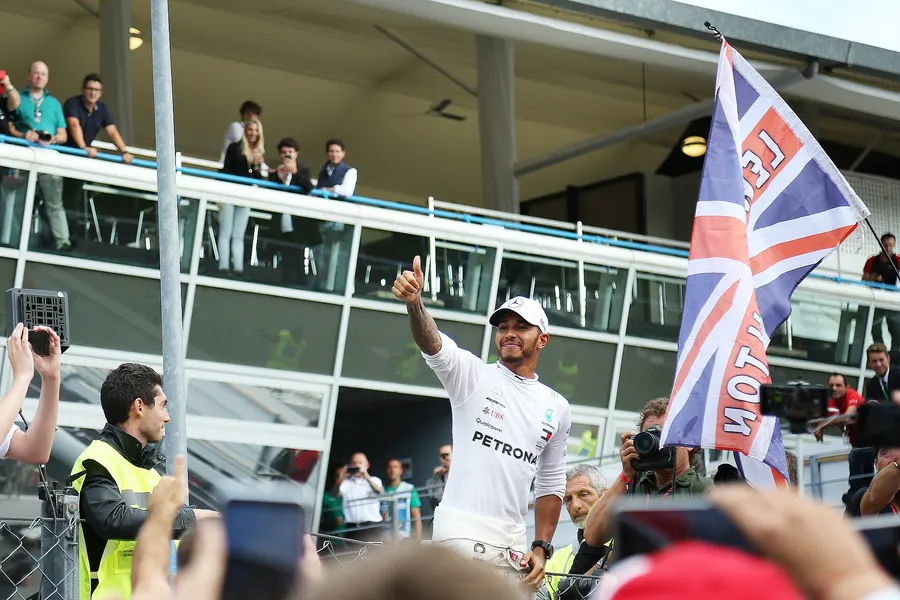
Lewis Hamilton greets the crowd at the Italian Grand Prix, 2018.Lewis Hamilton greets the crowd at the Italian Grand Prix, 2018.Image: https://www.flickr.com/photos/78475089@N02/ · CC BY-SA 2.0
sport · Europe

Hamilton equals Schumacher’s seven world titles

Lewis Hamilton won a wet Turkish Grand Prix at Istanbul Park on 15 November 2020 and with it the Formula One drivers’ championship for the seventh time, equalling the record set by Michael Schumacher. He started sixth and won comfortably after staying out on one set of worn intermediate tyres. Earlier in the same season the British driver had also overtaken Schumacher’s record of 91 Grand Prix victories.

Source: FIA: Hamilton wins in Turkey to clinch record-equalling seventh world title ↗
RESEARCH

Sources & Further Reading

Selected authoritative references supporting the events on this page.

WHY THESE MOMENTS?

Significance before volume

This page is not the longest possible list of events. It is a chronological journey through 15 November, where each entry is chosen for historical significance, human interest and reliability.

Facts are checked against authoritative museums, archives, universities and reference works. Where sources disagree, the page says so.

EXPLORED THE DEEPER STORY?

Return to the highlights of 15 November

Discover the lighter side of the date with famous birthdays, culture, firsts and lives remembered.

Explore This Day →