
HISTORY & TIMELINE
4 January

A journey through
4 January in history

The fourth day of the year has seen the first satellite fall back to Earth, a NASA rover bounce to a landing on Mars, the world’s tallest building open in Dubai and seven European countries form a free-trade club. This timeline follows 4 January from Victorian London to the twenty-first century.

JUMP THROUGH TIME
IV
THE NINETEENTH CENTURY

The 1800s

Industry, empire, invention, reform and a century of enormous transformation.

1884
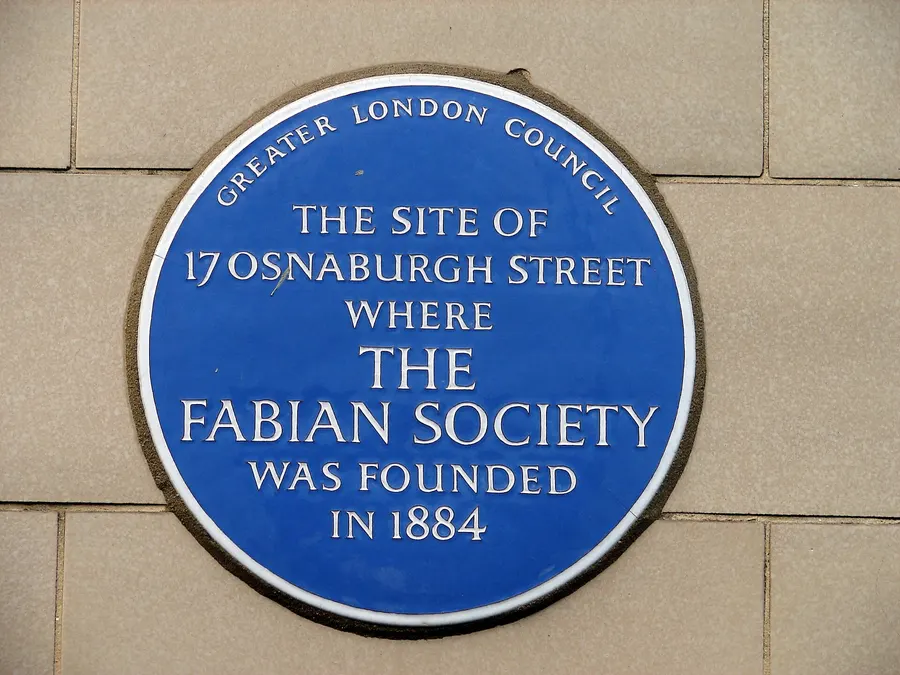
The blue plaque at 17 Osnaburgh Street, London, marking the site where the Fabian Society was founded in 1884.The blue plaque at 17 Osnaburgh Street, London, marking the site where the Fabian Society was founded in 1884.Image: Simon Harriyott from Uckfield, England · CC BY 2.0
politics · Europe

The Fabian Society is founded

On 4 January 1884 a small group of young socialists met at 17 Osnaburgh Street in London and founded the Fabian Society. Named after a Roman general famous for patient tactics, it aimed at socialism by gradual reform rather than revolution. George Bernard Shaw, Sidney and Beatrice Webb and H. G. Wells joined, and the society helped found the Labour Party and the London School of Economics.

Source: Fabian Society: our history ↗
1896
A 'Welcome Utah' statehood postcard of about 1909, showing the organ and choir of the Tabernacle in Salt Lake City.A ‘Welcome Utah’ statehood postcard of about 1909, showing the organ and choir of the Tabernacle in Salt Lake City.Image: Familypapers · Public domain
politics · Americas

Utah becomes the 45th state

Utah was settled from 1847 by members of the Church of Jesus Christ of Latter-day Saints, and they applied for statehood again and again. Congress turned them down for decades, above all because the church allowed plural marriage. After the church ended the practice in 1890, the way was clear. On 4 January 1896 President Grover Cleveland signed the proclamation admitting Utah as the 45th state, ending the longest territorial period of any state. Its constitution gave women the vote, and two days later Salt Lake City held a Statehood Day of celebration.

Source: Utah Division of State History (I Love History): Statehood, 1896 ↗
V
THE TWENTIETH CENTURY

The 1900s

War and peace, technological leaps, social change, politics, sport and popular culture.

1932
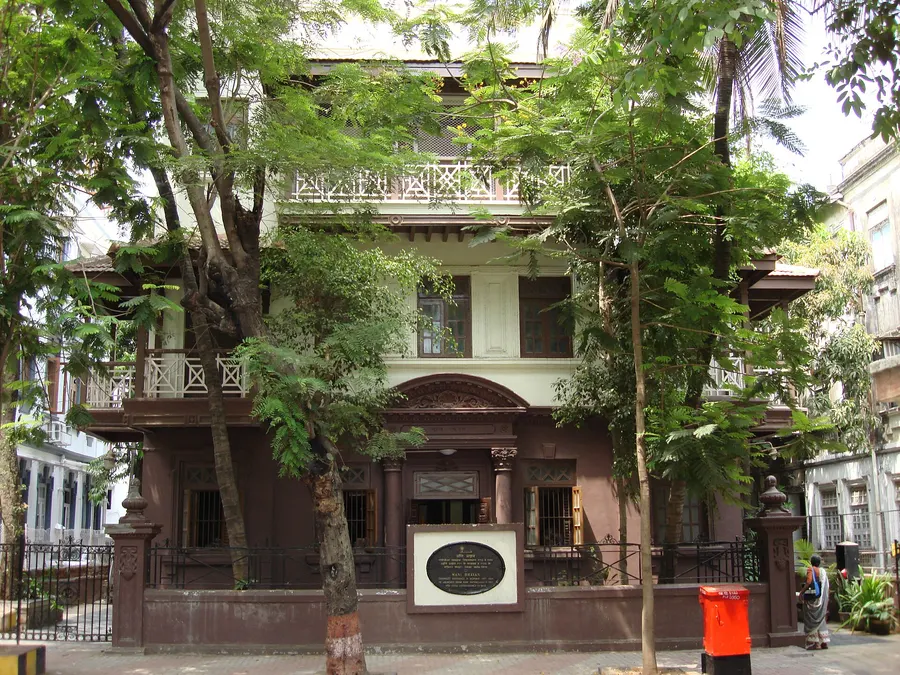
Mani Bhavan in Mumbai, Gandhi's base in the city, where he was arrested in 1932; it is now a museum.Mani Bhavan in Mumbai, Gandhi’s base in the city, where he was arrested in 1932; it is now a museum.Image: Jorge Láscar · CC BY-SA 2.0
politics · Asia

The British arrest Gandhi in Bombay

Mahatma Gandhi came home from the Round Table Conference in London at the end of 1931 with nothing to show for it, to find his colleagues under arrest and the government ruling by emergency ordinance. The Congress party decided to resume civil disobedience. Early on 4 January 1932 police arrested Gandhi as he slept on the roof terrace of Mani Bhavan, the house in Bombay where he stayed, and took him to Yerwada jail near Poona. Bombay answered with a complete strike and huge processions, and tens of thousands of Indians were jailed over the months that followed.

Source: Mani Bhavan Gandhi Sangrahalaya (mkgandhi.org): years of arrests and imprisonments of Mahatma Gandhi ↗
1948
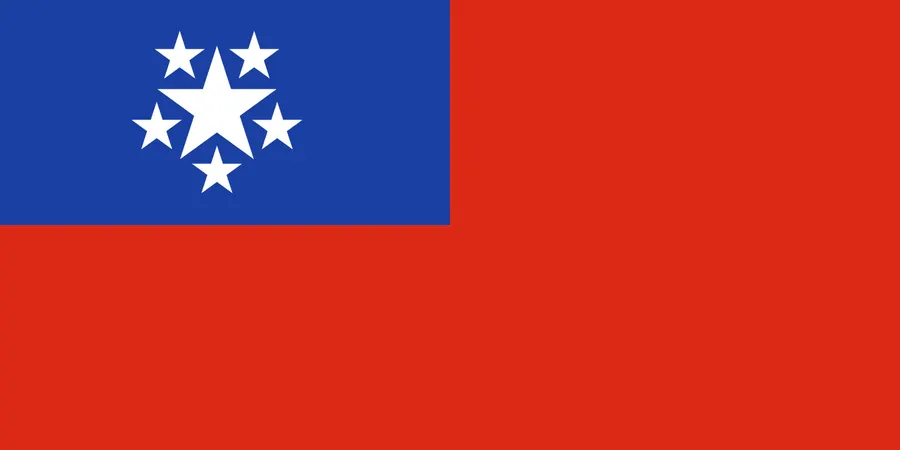
The flag of the Union of Burma, used from independence in 1948 until 1974.The flag of the Union of Burma, used from independence in 1948 until 1974.Image: LMgamer36 · CC BY-SA 4.0
politics · Asia

Burma becomes independent

Britain had ruled Burma since the nineteenth century, first as part of British India and from 1937 as a separate colony. After the Japanese occupation of the Second World War, the nationalist leader Aung San negotiated independence in London in 1947, but he was assassinated with most of his cabinet that July, months before it came. The Union of Burma became independent in the early hours of 4 January 1948, with Sao Shwe Thaik as its first president and U Nu as prime minister. Unlike India and Pakistan, it chose not to join the Commonwealth. The day is still celebrated as Independence Day in Myanmar.

Source: US Department of State, Office of the Historian: Burma ↗
1958
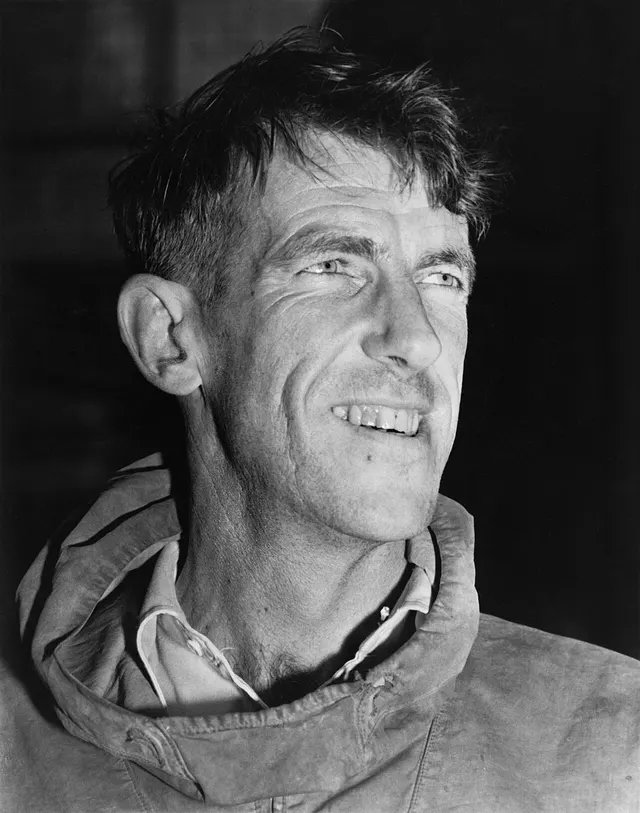
Edmund Hillary, the New Zealand mountaineer and explorer.Edmund Hillary, the New Zealand mountaineer and explorer.Image: Photographer unidentified. Retouched by TimofKingsland. · Public domain
world · Oceania

Hillary drives a tractor to the South Pole

Edmund Hillary’s job in the Commonwealth Trans-Antarctic Expedition was to lay supply depots from the Ross Sea for the British party of Vivian Fuchs, who were crossing the continent from the other side. His New Zealand team did it with three converted Ferguson farm tractors, with windscreens but no cabs. Having finished the depots, Hillary pushed on, without the blessing of the expedition’s committee, and on 4 January 1958 his party reached the South Pole. They were the first to get there overland since Scott in 1912, and the first ever to do it in motor vehicles.

Source: New Zealand Ministry for Culture and Heritage (NZ History): Hillary leads New Zealand party to South Pole ↗
1958
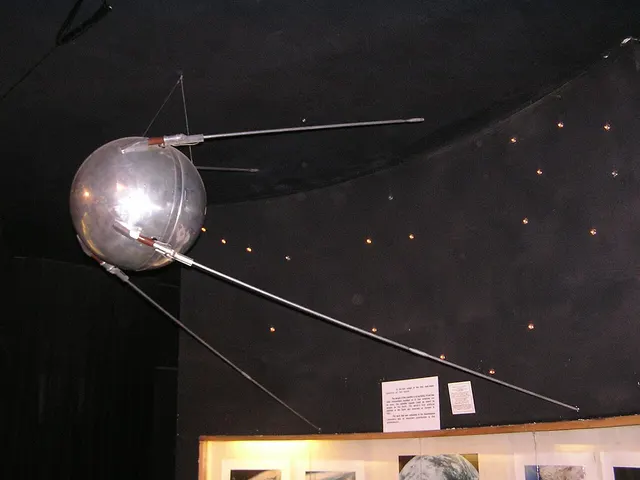
A replica of Sputnik 1, the first artificial satellite.A replica of Sputnik 1, the first artificial satellite.Image: Andrey Butko · CC BY-SA 3.0

science · Global

The first satellite falls back to Earth

Sputnik 1, the polished metal ball launched by the Soviet Union on 4 October 1957, had shocked the world and started the space race. Its radio fell silent after three weeks when its batteries ran out, but it kept circling the planet. After 92 days and about 1,400 orbits, the drag of the thin upper atmosphere brought it down, and on 4 January 1958 it burned up on re-entry. By then a second Sputnik, carrying the dog Laika, was in orbit, and the United States was weeks away from launching Explorer 1.

Source: NASA Space Science Data Coordinated Archive: Sputnik 1 ↗
1960
EFTA House in Brussels, on the Avenue des Arts, photographed in 2022.EFTA House in Brussels, on the Avenue des Arts, photographed in 2022.Image: Boubloub · CC BY-SA 4.0
politics · Europe

Seven countries form the European Free Trade Association

On 4 January 1960 ministers of Austria, Denmark, Norway, Portugal, Sweden, Switzerland and the United Kingdom signed the Stockholm Convention, creating the European Free Trade Association. It was the answer of countries outside the new European Economic Community: free trade in industrial goods, without political union. Most of its members later joined the EEC; Iceland, Liechtenstein, Norway and Switzerland remain in EFTA.

Source: European Free Trade Association: EFTA celebrates 60th anniversary ↗
VI
2000 TO TODAY

Modern Day

The events of recent decades that have already become part of the historical record.

2004
Spirit's empty lander platform (lower left) near Bonneville crater on Mars, photographed from orbit by NASA.Spirit’s empty lander platform (lower left) near Bonneville crater on Mars, photographed from orbit by NASA.Image: NASA/JPL-Caltech/Univ. of Arizona · Public domain
science · Global

The Spirit rover bounces down on Mars

Wrapped in airbags, NASA’s Mars Exploration Rover Spirit hit the surface of Mars at 04:35 GMT on 4 January 2004, the evening of 3 January in California, and bounced and rolled to a stop in Gusev crater. Three weeks later its twin, Opportunity, landed on the other side of the planet. Spirit was built to work for three months. It explored for more than six years, climbing into the Columbia Hills and finding rocks and soils that had been altered by water long ago, before it became stuck in soft sand and fell silent in 2010.

Source: NASA Jet Propulsion Laboratory: Mars Exploration Rover Spirit mission status ↗
2010
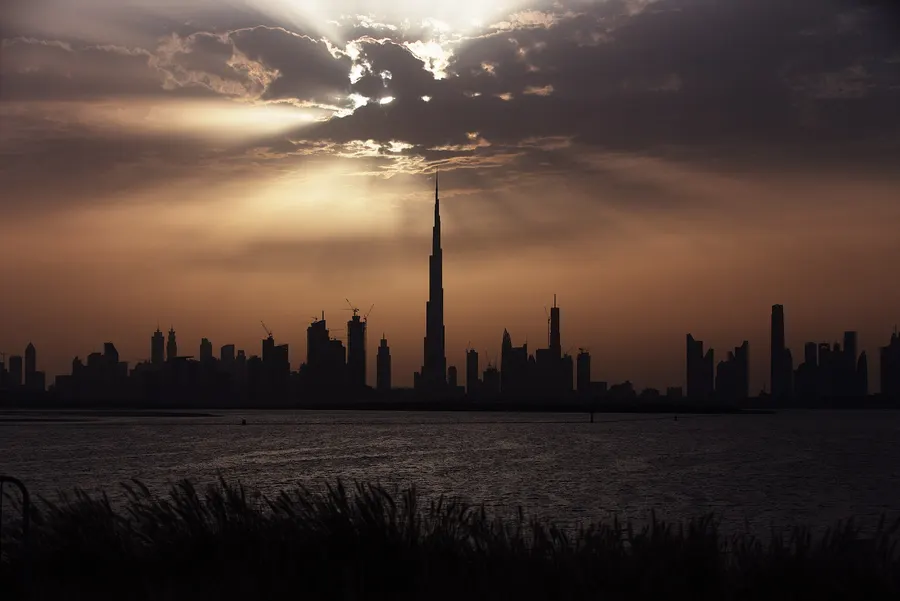
The Burj Khalifa rising above the Dubai skyline at sunset.The Burj Khalifa rising above the Dubai skyline at sunset.Image: imran shahabuddin · CC BY 2.0
culture · Asia

The Burj Khalifa opens in Dubai

Until its opening night the builders kept its final height a secret. On 4 January 2010, amid fireworks and light shows, Dubai revealed that its new tower rose 828 metres, far taller than any building before it. At the last minute it was renamed the Burj Khalifa, after the ruler of neighbouring Abu Dhabi, who had helped Dubai through the financial crisis. Designed by the American firm Skidmore, Owings and Merrill, it has more than 160 floors. It is still the tallest building in the world.

Source: Encyclopaedia Britannica: Burj Khalifa ↗
WHY THESE MOMENTS?

Significance before volume

This page is not the longest possible list of events. It is a chronological journey through 4 January, where each entry is chosen for historical significance, human interest and reliability.

Facts are checked against authoritative museums, archives, universities and reference works. Where sources disagree, the page says so.

EXPLORED THE DEEPER STORY?

Return to the highlights of 4 January

Discover the lighter side of the date with famous birthdays, culture, firsts and lives remembered.

Explore This Day →
← PREVIOUS DAY3 January
HISTORY & TIMELINE4 January
NEXT DAY →5 January