
HISTORY & TIMELINE
31 January

A journey through
31 January in history

The thirty-first day of the year has seen Guy Fawkes executed at Westminster, America’s first satellite launched into orbit and the first McDonald’s in the Soviet Union open its doors on Pushkin Square. This timeline follows 31 January from the seventeenth century to the twenty-first.

III
A CHANGING WORLD

Early Modern Era

Exploration, political change, scientific development and expanding global connections.

1606
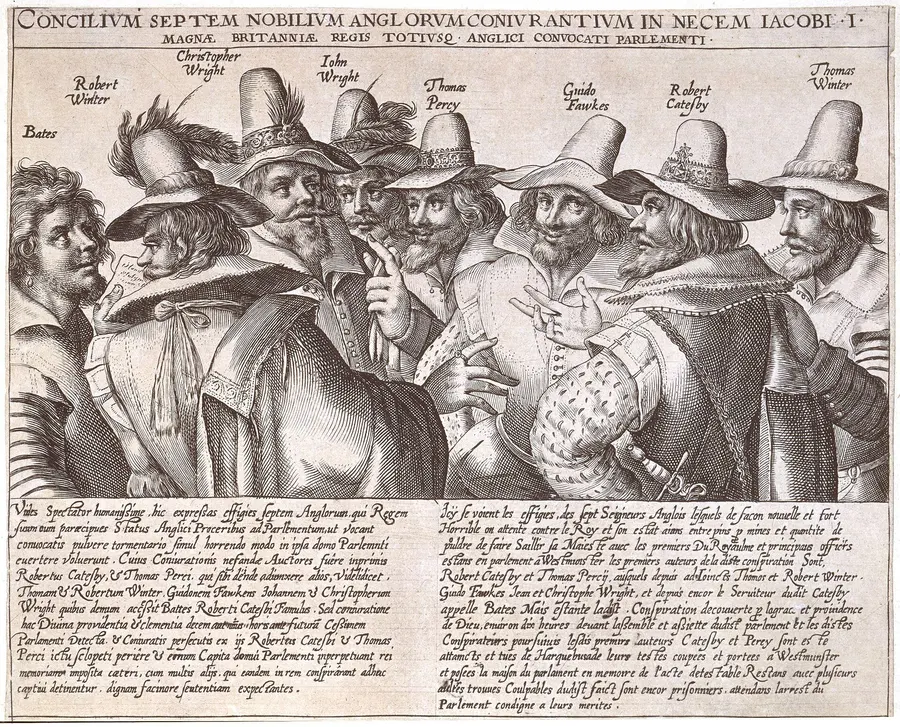
Eight of the Gunpowder Plot conspirators, Guy Fawkes among them, in an engraving by Crispijn van de Passe the Elder.Eight of the Gunpowder Plot conspirators, Guy Fawkes among them, in an engraving by Crispijn van de Passe the Elder.Image: Crispijn van de Passe the Elder · Public domain
politics · Europe

Guy Fawkes is executed at Westminster

Guy Fawkes had been caught beneath the House of Lords on the night of 4-5 November 1605 guarding the gunpowder meant to kill James I at the opening of Parliament. After being tortured in the Tower of London, he and seven other surviving plotters were tried on 27 January 1606. Four were hanged, drawn and quartered in St Paul’s Churchyard on the 30th, and Fawkes and the remaining three in Old Palace Yard, Westminster, on 31 January. Weakened by torture, Fawkes broke his neck in the fall from the gallows.

Source: UK Parliament: torture, trial and execution of the Gunpowder plotters ↗
IV
THE NINETEENTH CENTURY

The 1800s

Industry, empire, invention, reform and a century of enormous transformation.

1865
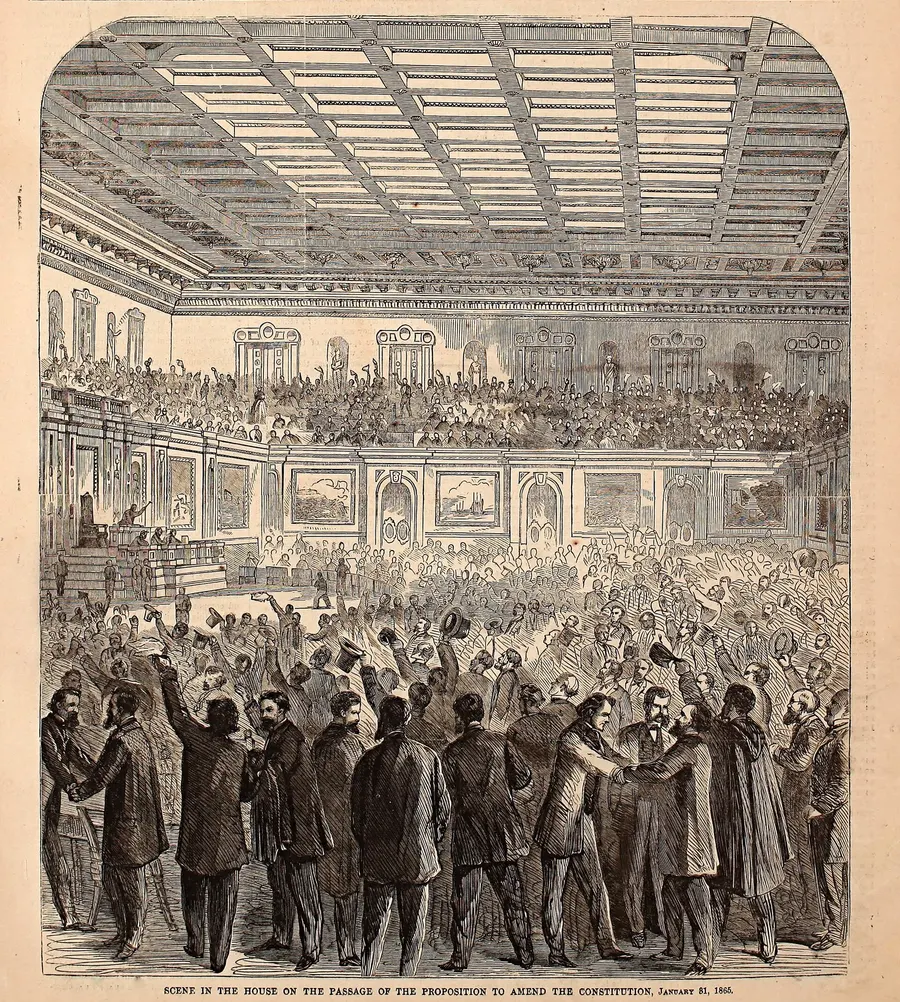
Harper's Weekly's engraving of the celebration in the House of Representatives after the vote on the Thirteenth Amendment, published 18 February 1865.Harper’s Weekly’s engraving of the celebration in the House of Representatives after the vote on the Thirteenth Amendment, published 18 February 1865.Image: Harper's Weekly, 18 February 1865 · Public domain
politics · Americas

The House of Representatives votes to abolish slavery

Abraham Lincoln’s Emancipation Proclamation of 1863 had freed enslaved people only in the rebel states, as a war measure that the courts might overturn. To end slavery everywhere and for good, the Constitution itself had to be changed. The Senate passed an amendment in April 1864, but it fell short of the two-thirds needed in the House. After Lincoln’s re-election he and his allies pressed wavering Democrats hard, and on 31 January 1865 the House passed the Thirteenth Amendment by 119 votes to 56. Members cheered, wept and embraced, and the crowded galleries erupted in applause. Three-quarters of the states had ratified it by 6 December 1865.

Source: US House of Representatives, History, Art & Archives: the Thirteenth Amendment ↗
V
THE TWENTIETH CENTURY

The 1900s

War and peace, technological leaps, social change, politics, sport and popular culture.

1943
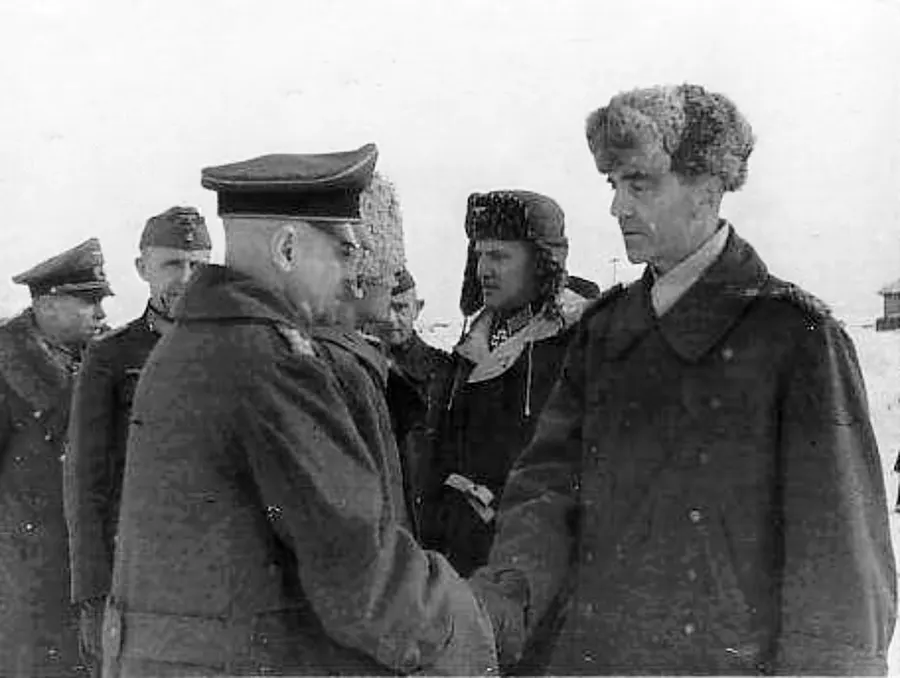
Field Marshal Friedrich Paulus, left, with other captured German officers after the surrender at Stalingrad, February 1943.Field Marshal Friedrich Paulus, left, with other captured German officers after the surrender at Stalingrad, February 1943.Image: Unknown authorUnknown author · Public domain
world · Europe

Field Marshal Paulus surrenders at Stalingrad

In November 1942 the Red Army encircled the German Sixth Army at Stalingrad on the Volga. Hitler forbade any attempt to break out, the airlift meant to supply the trapped troops failed, and through December and January the soldiers starved and froze in the ruined city. On 30 January Hitler promoted the army’s commander, Friedrich Paulus, to field marshal, since no German field marshal had ever surrendered. The next day, 31 January 1943, Paulus gave himself up to the Soviets in the southern pocket. The last Germans in the north surrendered on 2 February. About 91,000 men went into captivity, and fewer than 6,000 of them ever came home. Stalingrad was the turning point of the war in the east.

Source: Encyclopaedia Britannica: Battle of Stalingrad ↗
1958
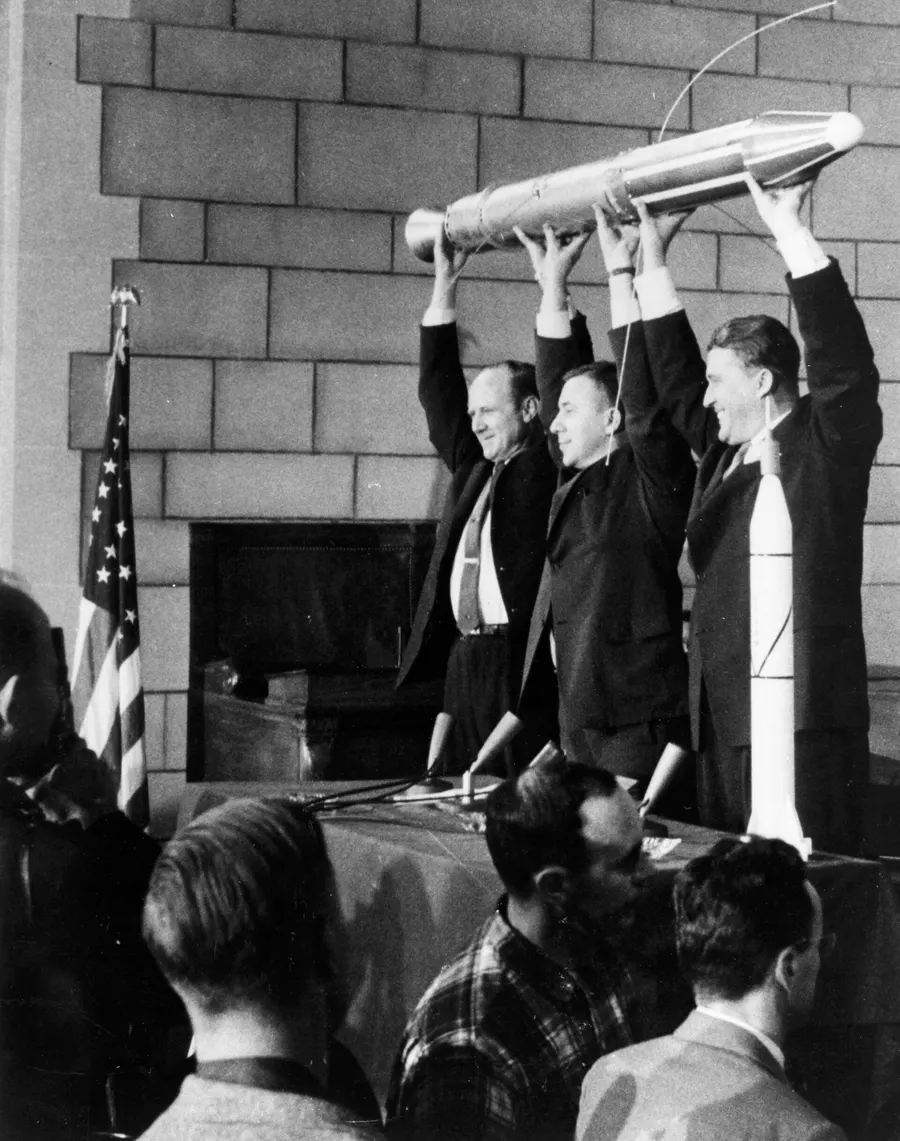
William Pickering, James Van Allen and Wernher von Braun hold up a model of Explorer 1 at the press conference after the launch.William Pickering, James Van Allen and Wernher von Braun hold up a model of Explorer 1 at the press conference after the launch.Image: NASA · Public domain
science · Americas

America’s first satellite reaches orbit

The Soviet Union’s Sputnik, launched in October 1957, shocked the United States, and the failure of the US Navy’s Vanguard rocket on live television that December made things worse. A US Army team under Wernher von Braun and the Jet Propulsion Laboratory were given the chance to try. At 10.48 pm Florida time on 31 January 1958 a Jupiter-C rocket lifted off from Cape Canaveral carrying Explorer 1, a slim satellite with a Geiger counter built by James Van Allen of the University of Iowa. It reached orbit, and its readings, with those of later Explorers, revealed belts of intense radiation around the Earth, now named the Van Allen belts.

Source: NASA Jet Propulsion Laboratory: Explorer 1, the beginning of American space science ↗
1968
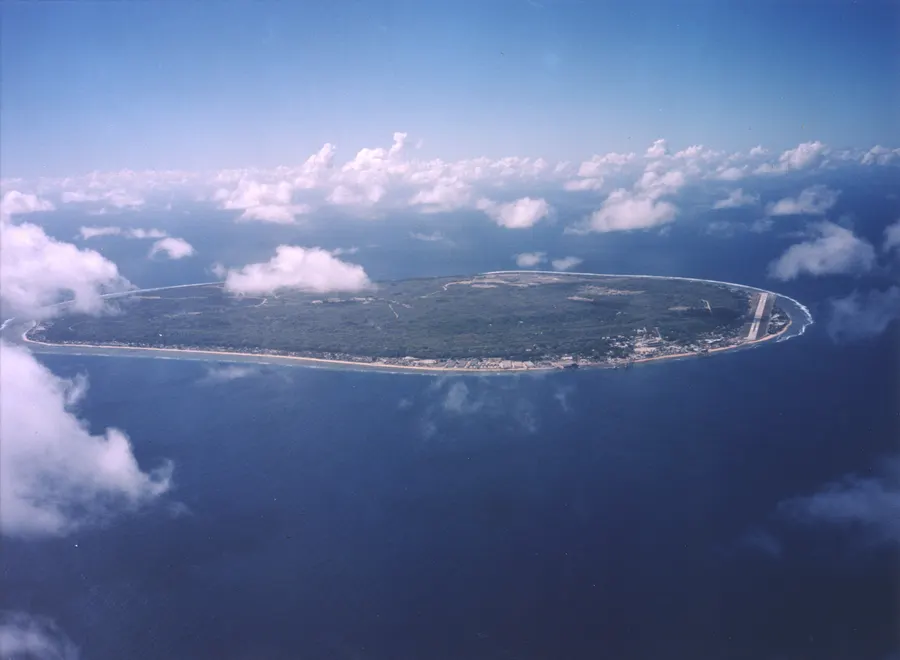
Nauru from the air, 1999: the whole island is about 21 square kilometres.Nauru from the air, 1999: the whole island is about 21 square kilometres.Image: U.S. Department of Energy's Atmospheric Radiation Measurement Program · Public domain
politics · Oceania

Nauru becomes the world’s smallest republic

Nauru, a single island in the central Pacific, was rich in phosphate rock, which foreign companies mined for fertiliser. After the First World War it was ruled by Australia on behalf of the League of Nations and later the United Nations. In the Second World War Japan occupied it and deported about 1,200 islanders to Truk, where many died. Led by their head chief, Hammer DeRoburt, the Nauruans won control of the phosphate industry and then independence, which came on 31 January 1968. The date marked the anniversary of the survivors’ return from Truk in 1946. Nauru became the smallest independent republic in the world, with DeRoburt as its first president.

Source: Encyclopaedia Britannica: Nauru, history ↗
1990
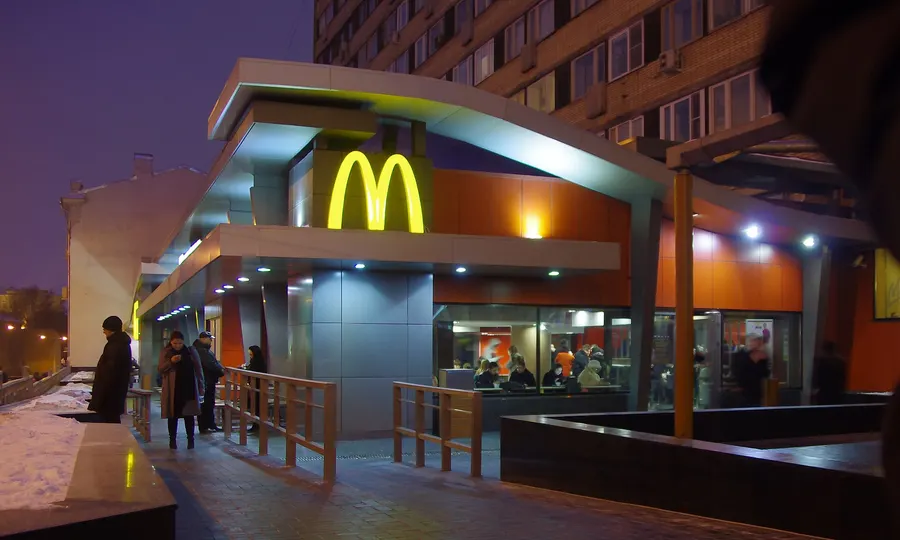
The McDonald's restaurant on Pushkin Square, Moscow, photographed in 2013.The McDonald’s restaurant on Pushkin Square, Moscow, photographed in 2013.Image: Artem Svetlov from Moscow, Russia · CC BY 2.0
culture · Europe

The first McDonald’s in the Soviet Union opens in Moscow

Under Mikhail Gorbachev the Soviet Union began to open up to Western business. McDonald’s of Canada spent years negotiating a joint venture with the city of Moscow, building its own farms and a food-processing plant because Soviet suppliers could not meet its standards. On 31 January 1990 the restaurant opened on Pushkin Square, with 900 seats, then the largest McDonald’s in the world. Muscovites queued for hours in the cold, and some 30,000 people were served on the first day. The restaurant became a symbol of the end of the Cold War; McDonald’s left Russia in 2022.

Source: McDonald’s Corporation: our history ↗
VI
2000 TO TODAY

Modern Day

The events of recent decades that have already become part of the historical record.

2020
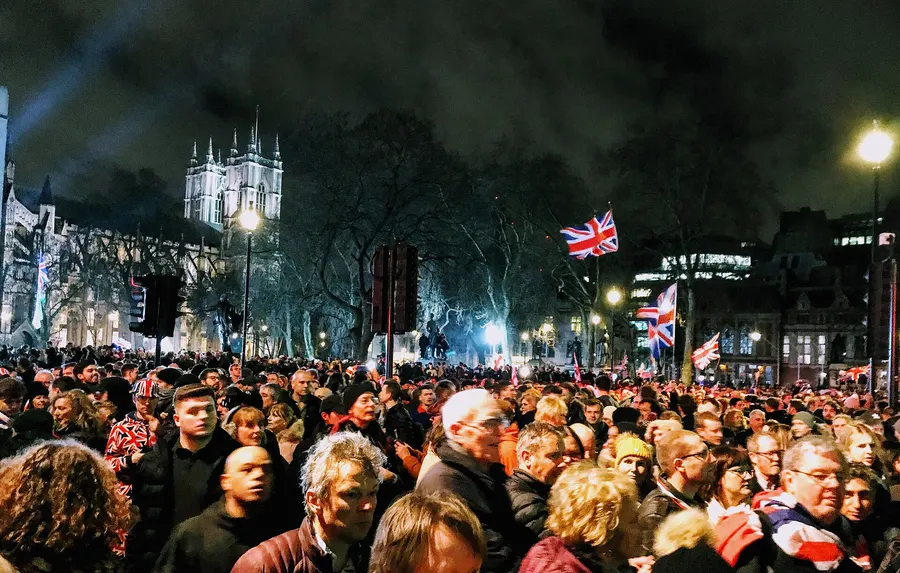
Crowds in Parliament Square, London, on the evening of 31 January 2020.Crowds in Parliament Square, London, on the evening of 31 January 2020.Image: Andrew Davidson · CC BY-SA 4.0
politics · Europe

The United Kingdom leaves the European Union

Britain joined the European Economic Community in 1973. In a referendum in June 2016, 52 per cent of those who voted chose to leave the European Union, and years of negotiation and political crisis followed before Parliament approved a withdrawal agreement in January 2020. At 11 pm London time on 31 January 2020, midnight in Brussels, the United Kingdom ceased to be a member of the EU after 47 years, the first country ever to leave. Supporters celebrated in Parliament Square. EU rules continued to apply during a transition period until the end of 2020, when the UK left the single market and customs union.

Source: House of Commons Library: Brexit timeline, events leading to the UK’s exit from the European Union ↗
WHY THESE MOMENTS?

Significance before volume

This page is not the longest possible list of events. It is a chronological journey through 31 January, where each entry is chosen for historical significance, human interest and reliability.

Facts are checked against authoritative museums, archives, universities and reference works. Where sources disagree, the page says so.

EXPLORED THE DEEPER STORY?

Return to the highlights of 31 January

Discover the lighter side of the date with famous birthdays, culture, firsts and lives remembered.

Explore This Day →
← PREVIOUS DAY30 January
HISTORY & TIMELINE31 January
NEXT DAY →1 February