
HISTORY & TIMELINE
14 January

A journey through
14 January in history

The fourteenth day of the year has seen Congress ratify the peace that ended the American War of Independence, Puccini’s Tosca open in Rome, the first climber stand on top of the Americas and a European probe land on Saturn’s moon Titan. This timeline follows 14 January from the eighteenth century to the twenty-first.

III
A CHANGING WORLD

Early Modern Era

Exploration, political change, scientific development and expanding global connections.

1761
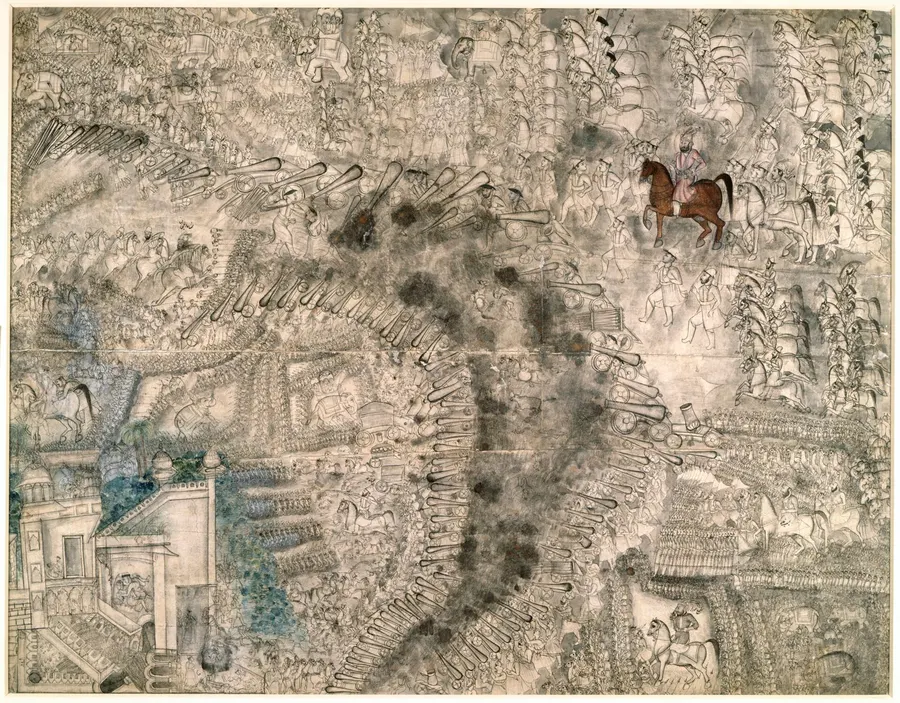
The Third Battle of Panipat in a Faizabad-style drawing of about 1770, with the lines of guns firing at each other across the field.The Third Battle of Panipat in a Faizabad-style drawing of about 1770, with the lines of guns firing at each other across the field.Image: AnonymousUnknown author · Public domain
world · Asia

Afghans and Marathas fight the Third Battle of Panipat

By the 1750s the Mughal empire had crumbled and the Marathas, from western India, had become the strongest power in the subcontinent, pushing north as far as the Punjab. There they collided with Ahmad Shah Durrani, ruler of Afghanistan, who had invaded India several times. On 14 January 1761 the two armies met at Panipat, about 80 kilometres north of Delhi, after weeks facing each other. The Marathas under Sadashiv Rao Bhau gained ground at first, but the Afghans threw in fresh cavalry in the afternoon and broke them. Tens of thousands died in the battle and the slaughter that followed. The defeat halted Maratha expansion and left the way open for the British East India Company.

Source: Encyclopaedia Britannica: Third Battle of Panipat ↗
1784
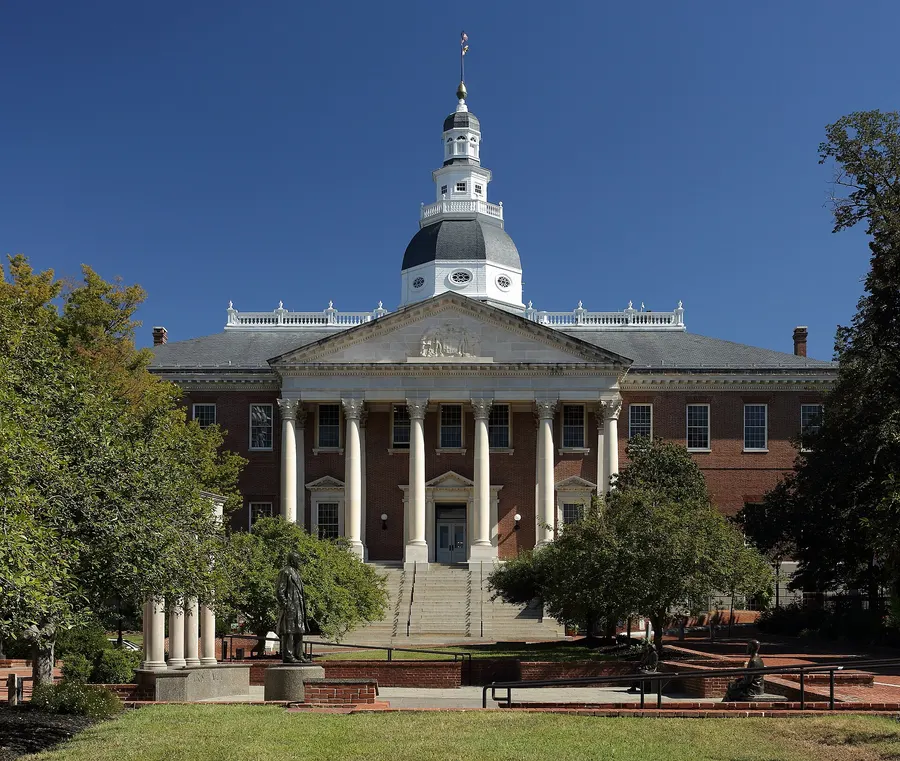
The Maryland State House in Annapolis, where Congress ratified the treaty; photographed in 2013.The Maryland State House in Annapolis, where Congress ratified the treaty; photographed in 2013.Image: Martin Falbisoner · CC BY-SA 3.0
politics · Americas

Congress ratifies the Treaty of Paris

Meeting in the Maryland State House at Annapolis, the Congress of the Confederation ratified the Treaty of Paris on 14 January 1784, once enough delegates had arrived to make a quorum. The treaty, signed in September 1783, ended the War of Independence, and Britain recognised the United States as independent.

Source: Maryland State Archives: ratification of the Treaty of Paris ↗
IV
THE NINETEENTH CENTURY

The 1800s

Industry, empire, invention, reform and a century of enormous transformation.

1814
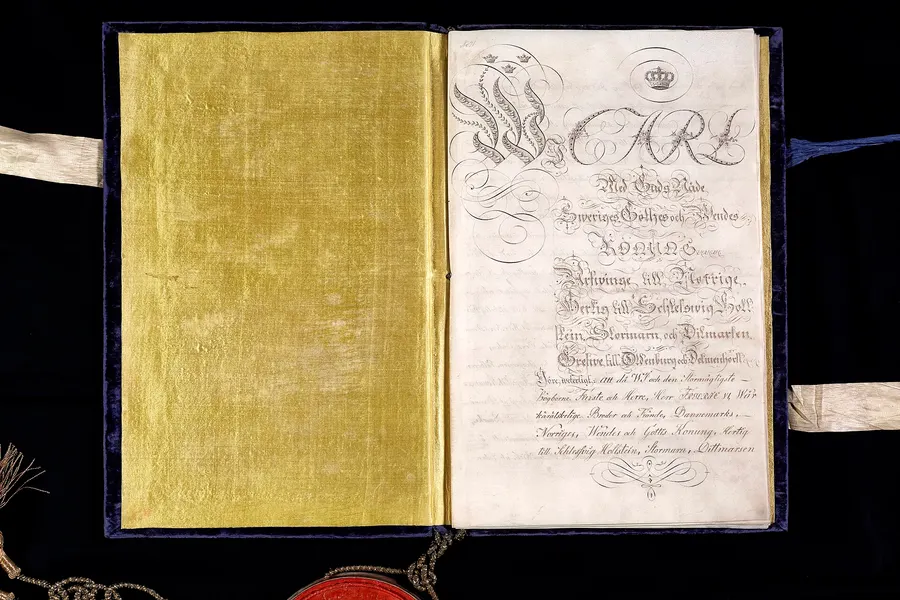
The Treaty of Kiel in its bound original, held by the Danish National Archives (Rigsarkivet).The Treaty of Kiel in its bound original, held by the Danish National Archives (Rigsarkivet).Image: Rigsarkivet - Danish National Archives · CC BY-SA 2.0
politics · Europe

Denmark hands Norway to Sweden at Kiel

Denmark and Norway had shared a king for more than four hundred years. In the Napoleonic Wars Denmark stayed loyal to France, and after Napoleon’s defeat at Leipzig in 1813 Sweden, led by its crown prince, the former French marshal Bernadotte, invaded Denmark from the south. At Kiel on 14 January 1814 Denmark made peace and gave Norway to the king of Sweden, keeping only the old Norwegian islands of Greenland, Iceland and the Faroes. The Norwegians refused to be handed over: they wrote their own constitution at Eidsvoll that May. After a short war they accepted union with Sweden, but kept their constitution, and in 1905 Norway became fully independent.

Source: Encyclopaedia Britannica: Treaty of Kiel ↗
1897
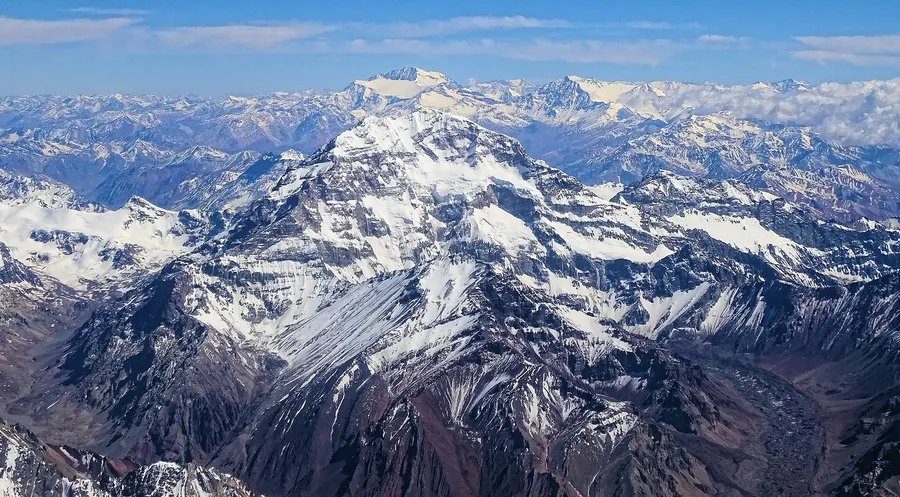
Aconcagua, the highest mountain in the Americas, seen from the air in December 2016.Aconcagua, the highest mountain in the Americas, seen from the air in December 2016.Image: Bjørn Christian Tørrissen · CC BY-SA 4.0
sport · Americas

A Swiss guide reaches the top of Aconcagua

At 6,961 metres, Aconcagua in the Argentine Andes is the highest mountain outside Asia. In 1896-97 an expedition led by the English climber Edward FitzGerald, with several Swiss mountain guides, spent weeks trying to reach its summit through cold, wind and altitude sickness. On 14 January 1897 the guide Matthias Zurbriggen went on alone from the last camp and reached the top, the first recorded ascent. FitzGerald, ill with the altitude, had to turn back. A month later, on 13 February, Stuart Vines and another guide made the second ascent.

Source: Encyclopaedia Britannica: Matthias Zurbriggen ↗
V
THE TWENTIETH CENTURY

The 1900s

War and peace, technological leaps, social change, politics, sport and popular culture.

1900
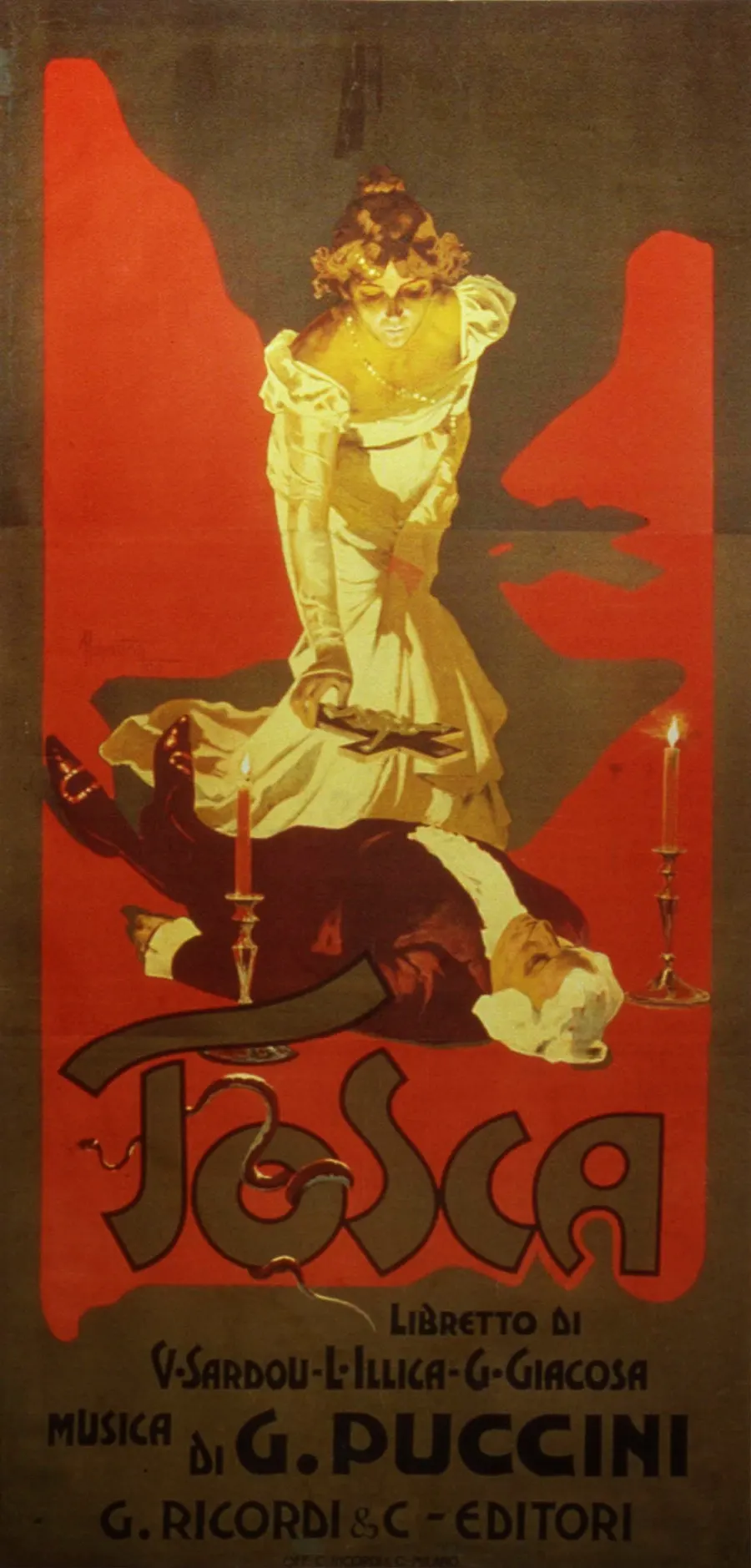
Adolfo Hohenstein's cover for the first edition of the piano score of Tosca, published by Ricordi in 1899.Adolfo Hohenstein’s cover for the first edition of the piano score of Tosca, published by Ricordi in 1899.Image: Adolfo Hohenstein · Public domain
culture · Europe

Puccini’s Tosca opens in Rome

Giacomo Puccini had made his name with Manon Lescaut and La bohème. For his next opera he turned to a French melodrama set in Rome in 1800, in which the singer Floria Tosca tries to save her lover from the cruel police chief Scarpia. Tosca had its premiere at the Teatro Costanzi in Rome on 14 January 1900, with Hariclea Darclée in the title role. Critics were divided, but audiences loved it, and it was soon performed around the world. With arias such as ‘Vissi d’arte’, it remains one of the most often staged operas.

Source: Metropolitan Opera: what to expect from Tosca (educator guide) ↗
1943
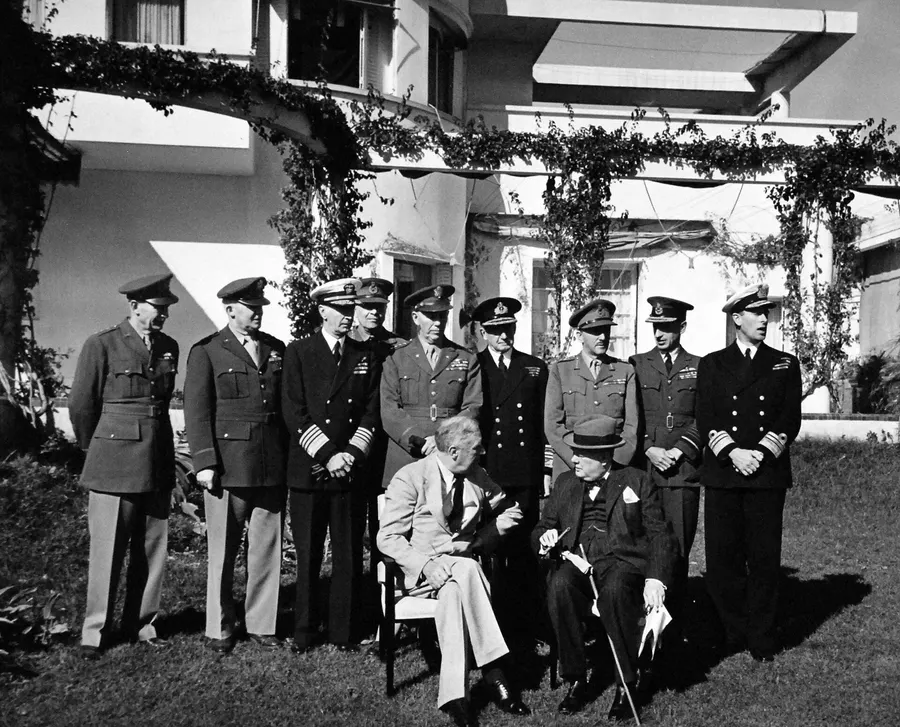
President Roosevelt and Prime Minister Churchill, seated, with their Combined Chiefs of Staff at the Casablanca Conference, January 1943.President Roosevelt and Prime Minister Churchill, seated, with their Combined Chiefs of Staff at the Casablanca Conference, January 1943.Image: National Museum of the U.S. Navy · Public domain

world · Africa

Roosevelt and Churchill meet at Casablanca

Two months after Allied troops landed in French North Africa, President Franklin D. Roosevelt and Prime Minister Winston Churchill met with their military chiefs at Anfa, outside Casablanca in Morocco, to plan the next stage of the war. The conference opened on 14 January 1943 and lasted ten days. They agreed to invade Sicily once North Africa was won, to step up the bombing of Germany and to keep up the fight against the U-boats in the Atlantic. At a press conference on the last day, Roosevelt announced that the Allies would accept nothing less than the unconditional surrender of Germany, Italy and Japan.

Source: US Office of the Historian: the Casablanca Conference, 1943 ↗
1972
Queen Margrethe II of Denmark in 2012.Queen Margrethe II of Denmark in 2012.Image: Johannes Jansson · CC BY 2.5 dk
politics · Europe

Margrethe II becomes Queen of Denmark

King Frederik IX of Denmark died on 14 January 1972, and his eldest daughter was proclaimed Queen Margrethe II, the first reigning queen of Denmark since 1412. A change to the succession law in 1953 had allowed women to inherit the throne. She reigned for exactly 52 years, until she abdicated in favour of her son on the same day in 2024.

Source: Danish Royal House: HM Queen Margrethe ↗
1973
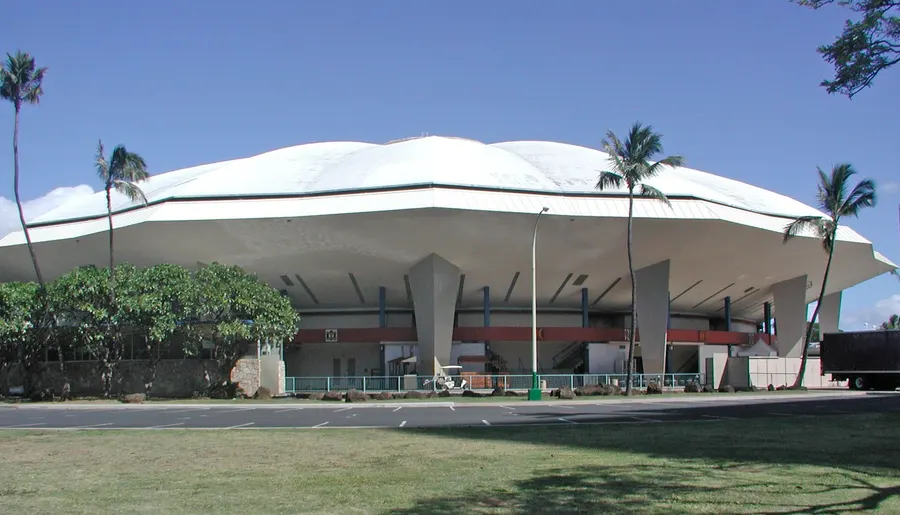
The arena in Honolulu, then called the Honolulu International Center, where Elvis Presley played Aloha from Hawaii; photographed in 2010.The arena in Honolulu, then called the Honolulu International Center, where Elvis Presley played Aloha from Hawaii; photographed in 2010.Image: Robert.Allen · CC BY-SA 3.0
culture · Americas

Elvis sings to the world by satellite

By the early 1970s communications satellites could carry live television across oceans. Elvis Presley’s manager, Colonel Tom Parker, arranged a concert in Honolulu to be beamed live to audiences around the Pacific. Presley played Aloha from Hawaii after midnight on 14 January 1973, Hawaiian time. It went out live by satellite to Australia, Japan, the Philippines, South Korea and other countries, and later to Europe; American viewers saw it that April. It was the first concert by a single performer broadcast around the world by satellite, and Graceland estimates that more than a billion people watched.

Source: Graceland: the concert seen around the world, Aloha from Hawaii ↗
VI
2000 TO TODAY

Modern Day

The events of recent decades that have already become part of the historical record.

2005
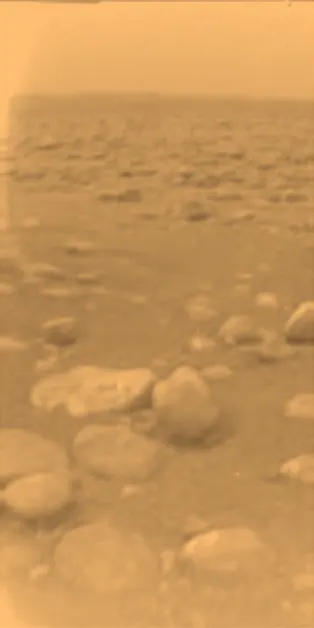
The surface of Titan, photographed by the Huygens probe after landing on 14 January 2005.The surface of Titan, photographed by the Huygens probe after landing on 14 January 2005.Image: ESA/NASA/JPL/University of Arizona · Public domain

science · Global

Huygens lands on Saturn’s moon Titan

Titan, the largest moon of Saturn, is hidden under a thick orange haze. The European Space Agency’s Huygens probe travelled there for seven years aboard NASA’s Cassini spacecraft and separated from it on Christmas Day 2004. On 14 January 2005 Huygens parachuted for about two and a half hours through Titan’s atmosphere and landed gently on the surface, the first landing on a world in the outer solar system. It sent back pictures of rounded pebbles of water ice, and signs that liquid methane flows across Titan’s surface as water does on Earth.

Source: European Space Agency: the Huygens probe lands on Titan ↗
2011
A protester holds a sign reading 'Ben Ali dehors' (Ben Ali out) outside the Interior Ministry on Avenue Habib Bourguiba, Tunis, on 14 January 2011.A protester holds a sign reading ‘Ben Ali dehors’ (Ben Ali out) outside the Interior Ministry on Avenue Habib Bourguiba, Tunis, on 14 January 2011.Image: Skotch 79 · CC0
politics · Africa

Tunisia’s president flees and the Arab Spring begins

In December 2010 Mohamed Bouazizi, a young street trader in the Tunisian town of Sidi Bouzid, set himself on fire in protest after officials seized his goods. His act set off demonstrations against unemployment, corruption and the police state of President Zine al-Abidine Ben Ali, who had ruled since 1987. They spread across the country despite a violent crackdown. On 14 January 2011, as huge crowds filled the centre of Tunis, Ben Ali gave up and flew into exile in Saudi Arabia. The uprising, often called the Jasmine Revolution, inspired protests across the Arab world within weeks. Tunisia went on to hold free elections and adopt a new constitution in 2014.

Source: Encyclopaedia Britannica: Jasmine Revolution ↗
WHY THESE MOMENTS?

Significance before volume

This page is not the longest possible list of events. It is a chronological journey through 14 January, where each entry is chosen for historical significance, human interest and reliability.

Facts are checked against authoritative museums, archives, universities and reference works. Where sources disagree, the page says so.

EXPLORED THE DEEPER STORY?

Return to the highlights of 14 January

Discover the lighter side of the date with famous birthdays, culture, firsts and lives remembered.

Explore This Day →
← PREVIOUS DAY13 January
HISTORY & TIMELINE14 January
NEXT DAY →15 January