HISTORY & TIMELINE
16 February

A journey through
16 February in history

The sixteenth day of February has seen American sailors burn a captured frigate in Tripoli harbour, Chopin give his last concert in Paris and Spain elect the Popular Front government that preceded its civil war. This timeline follows 16 February from the nineteenth century to the twenty-first.

JUMP THROUGH TIME
IV
THE NINETEENTH CENTURY

The 1800s

Industry, empire, invention, reform and a century of enormous transformation.

1804
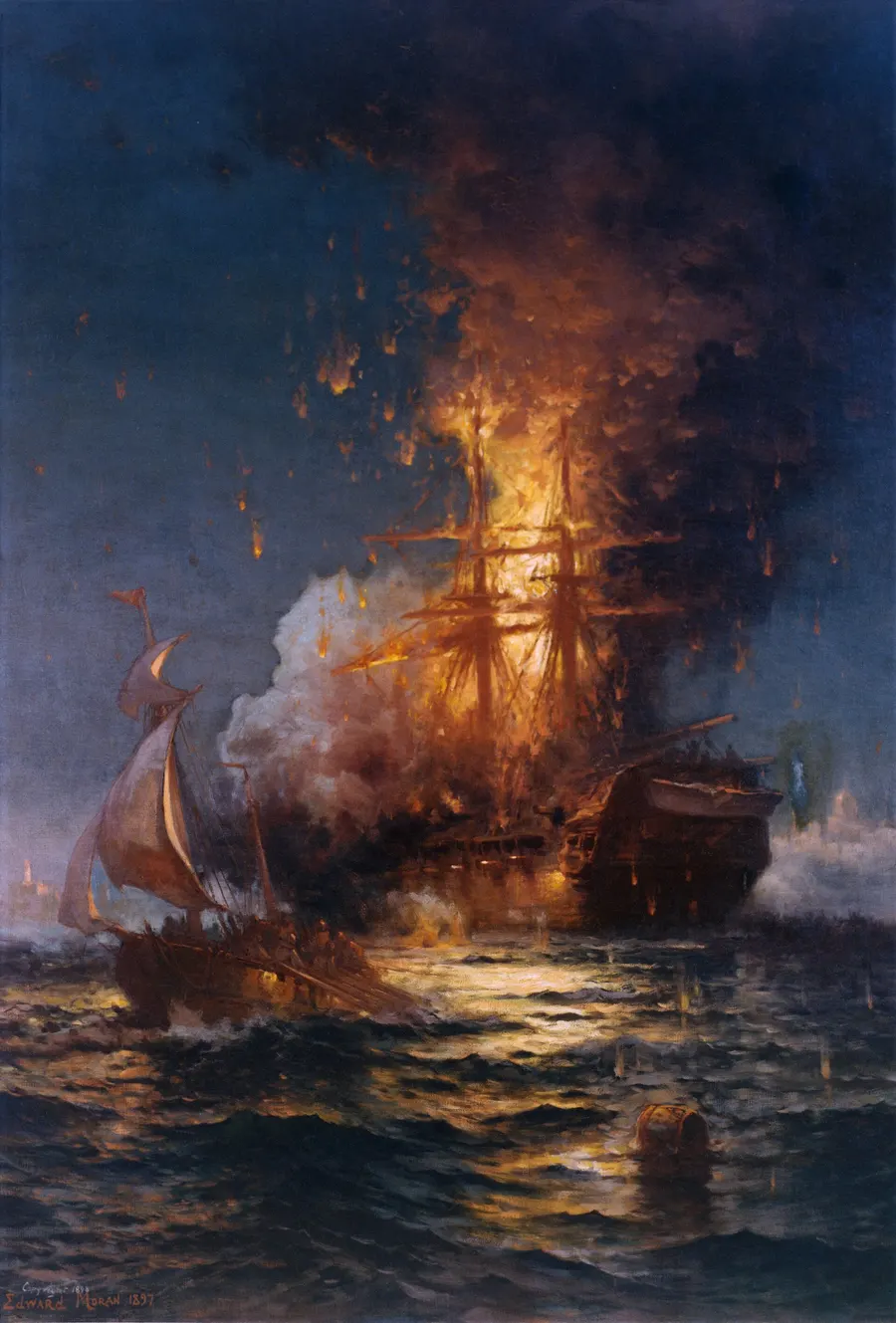
The Philadelphia ablaze in Tripoli harbour, with the Intrepid escaping in the foreground, painted by Edward Moran in 1897.The Philadelphia ablaze in Tripoli harbour, with the Intrepid escaping in the foreground, painted by Edward Moran in 1897.Image: Edward Moran · Public domain
world · Africa

Stephen Decatur burns the captured frigate Philadelphia in Tripoli harbour

During the First Barbary War between the United States and Tripoli, the US frigate Philadelphia ran aground off Tripoli in 1803 and was captured with her crew. On the night of 16 February 1804 Lieutenant Stephen Decatur sailed into the harbour with volunteers in a captured ketch, the Intrepid, disguised as a merchant vessel. They boarded the Philadelphia, set her on fire and escaped without losing a man. Britain’s Admiral Nelson is said to have called it the most daring act of the age.

Source: Naval History and Heritage Command: February 16, 1804, burning of the frigate Philadelphia ↗
1848
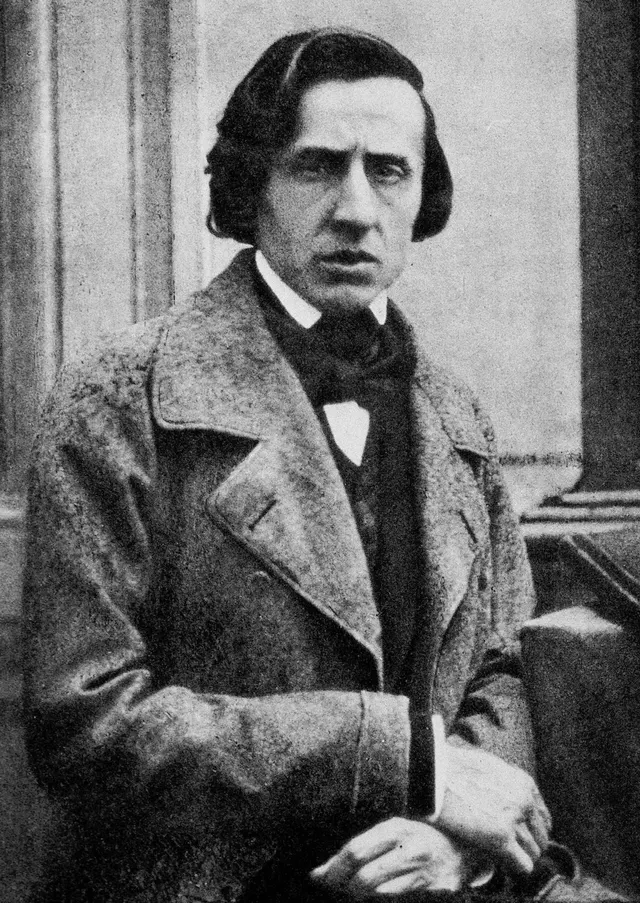
Frédéric Chopin, photographed in the last years of his life.Frédéric Chopin, photographed in the last years of his life.Image: Louis-Auguste Bisson · Public domain
culture · Europe

Chopin gives his last concert in Paris

Frédéric Chopin, the Polish composer who had lived in Paris since 1831, rarely played in public, preferring the salons of friends. By 1848 he was seriously ill with tuberculosis, and his long relationship with the novelist George Sand had ended. Persuaded by friends, including the piano maker Camille Pleyel, he gave a concert at the Salle Pleyel on 16 February 1848. All 300 tickets had sold out a week before. He played études, preludes, mazurkas and waltzes, his Barcarolle and Berceuse, and his Cello Sonata with his friend Auguste Franchomme. It was his last concert in Paris; a week later revolution broke out, and he died in October 1849.

Source: Fryderyk Chopin Institute: Chopin’s life, 1848 ↗
1862
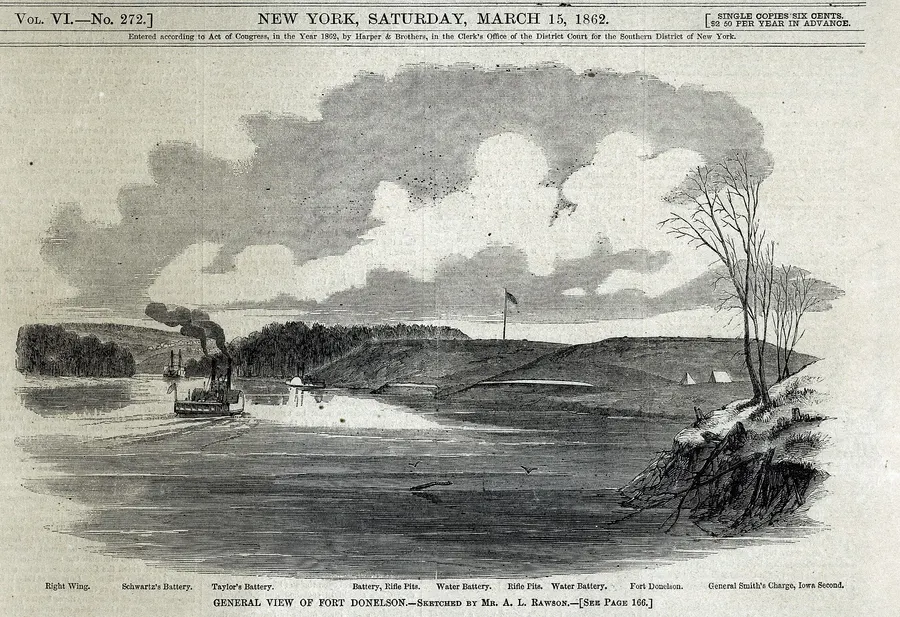
A general view of Fort Donelson from the river, sketched by A. L. Rawson for Harper's Weekly, March 1862.A general view of Fort Donelson from the river, sketched by A. L. Rawson for Harper’s Weekly, March 1862.Image: A.L. Rawson · Public domain
world · Americas

Fort Donelson surrenders to ‘Unconditional Surrender’ Grant

In February 1862 Union forces under Ulysses S. Grant moved up the rivers of Tennessee against the Confederate forts guarding them. After Fort Henry fell, Grant besieged Fort Donelson on the Cumberland River. When the Confederate commander, Simon Buckner, asked for terms, Grant replied that no terms except ‘unconditional and immediate surrender’ could be accepted, and on 16 February about 15,000 Confederate troops surrendered. It was the Union’s first major victory of the Civil War and made Grant famous.

Source: US National Park Service: Grant at Fort Donelson ↗
V
THE TWENTIETH CENTURY

The 1900s

War and peace, technological leaps, social change, politics, sport and popular culture.

1918
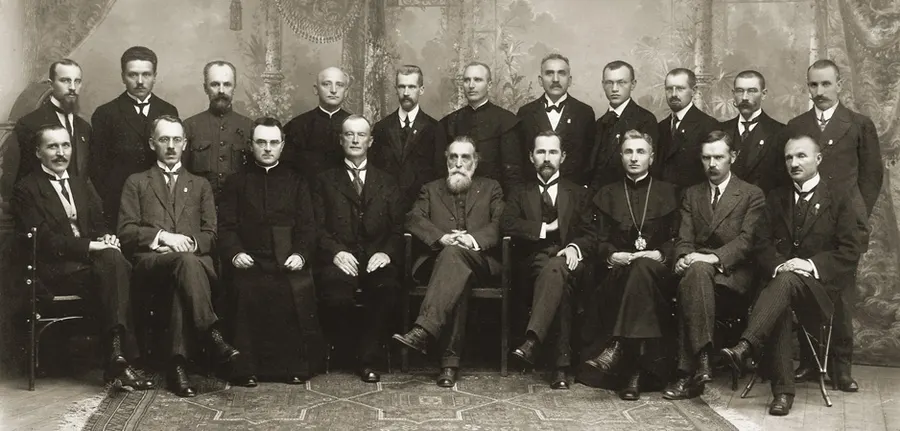
Members of the Council of Lithuania in 1917, with its chairman Jonas Basanavičius seated at the centre.Members of the Council of Lithuania in 1917, with its chairman Jonas Basanavičius seated at the centre.Image: Photographer is unknown · Public domain
politics · Europe

Lithuania declares its independence

Lithuania had been part of the Russian Empire since the partitions of Poland-Lithuania in the eighteenth century. During the First World War German armies occupied it, and in 1917 a Council of Lithuania of twenty members was elected at a conference in Vilnius. The Germans wanted a Lithuania tied to Germany. Instead, at 11 o’clock on 16 February 1918, the council under Jonas Basanavičius unanimously declared the restoration of an independent Lithuanian state, built on democratic lines, with Vilnius as its capital. It took years of fighting to secure the new republic. The day is Lithuania’s national holiday, and in 2017 a historian found the long-lost signed original in a German diplomatic archive.

Source: Seimas of the Republic of Lithuania: origins of modern parliamentarianism ↗
1923
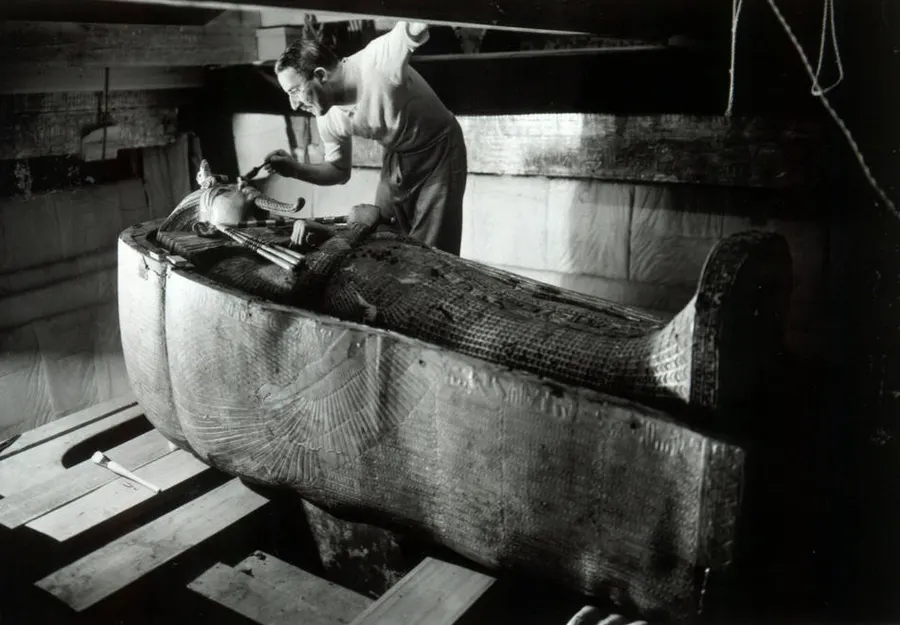
Howard Carter at work on the stone sarcophagus in the burial chamber of Tutankhamun's tomb.Howard Carter at work on the stone sarcophagus in the burial chamber of Tutankhamun’s tomb.Image: Harry Burton · Public domain
science · Africa

Howard Carter opens Tutankhamun’s burial chamber

In November 1922 the British archaeologist Howard Carter, funded by Lord Carnarvon, found the steps to a tomb in Egypt’s Valley of the Kings. Its antechamber was crammed with gilded furniture, chariots and statues, and it proved to be the almost untouched tomb of the boy king Tutankhamun, who died around 1323 BC. Two life-size statues of the king guarded a sealed doorway. On 16 February 1923, before Egyptian officials and invited guests, Carter took it down to reveal the burial chamber, almost filled by a huge gilded wooden shrine. It took years more to dismantle the nested shrines and open the stone sarcophagus and three coffins, the last of solid gold, around the king’s mummy and its famous gold mask.

Source: Griffith Institute, University of Oxford: Tutankhamun, first season 1922-1923 ↗
1959
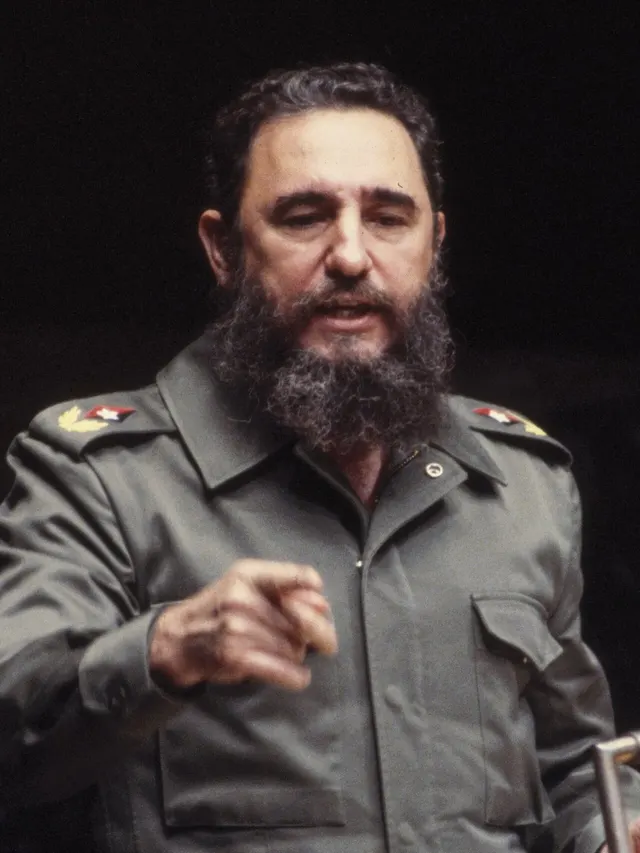
Fidel Castro speaking at the United Nations in New York.Fidel Castro speaking at the United Nations in New York.Image: Bernard Gotfryd · Public domain
politics · Americas

Fidel Castro becomes prime minister of Cuba

Fidel Castro’s guerrilla war against the dictator Fulgencio Batista began in the mountains of the Sierra Maestra in 1956. On 1 January 1959 Batista fled the country, and Castro entered Havana a week later to a hero’s welcome, although at first he held only the post of commander of the armed forces. A moderate lawyer, José Miró Cardona, became prime minister, but real power lay with Castro. Miró resigned with his cabinet on 13 February, and on 16 February 1959 Castro was sworn in as prime minister. Within two years he had declared Cuba a socialist state allied with the Soviet Union, and he ruled until 2008.

Source: US Department of State, Office of the Historian: Foreign Relations of the United States, 1958-1960, Cuba ↗
VI
2000 TO TODAY

Modern Day

The events of recent decades that have already become part of the historical record.

2005
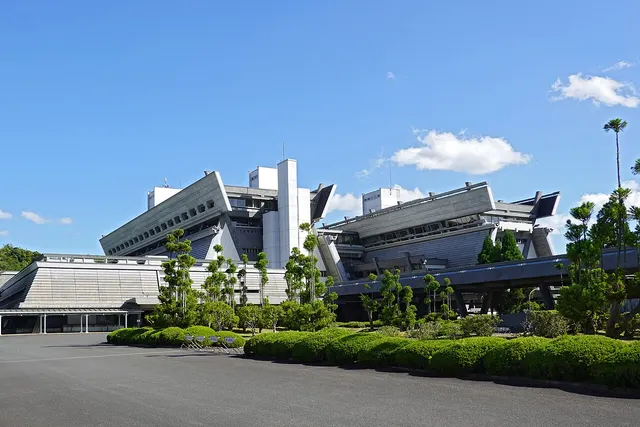
The Kyoto International Conference Center in Japan, where the protocol was adopted in December 1997, photographed in 2023.The Kyoto International Conference Center in Japan, where the protocol was adopted in December 1997, photographed in 2023.Image: 663highland · CC BY-SA 4.0
science · Global

The Kyoto Protocol on climate change comes into force

At a conference in Kyoto in December 1997, governments agreed the first treaty setting legally binding limits on the greenhouse gases that warm the climate. Industrialised countries promised to cut their combined emissions below 1990 levels by 2008-2012. The treaty could only take effect once countries responsible for at least 55 per cent of the developed world’s carbon dioxide emissions had ratified it. When the United States withdrew its support in 2001, Russia’s decision became crucial, and after Russia ratified in November 2004, the Kyoto Protocol came into force on 16 February 2005. It was later followed by the Paris Agreement of 2015.

Source: UNFCCC: the Kyoto Protocol ↗
WHY THESE MOMENTS?

Significance before volume

This page is not the longest possible list of events. It is a chronological journey through 16 February, where each entry is chosen for historical significance, human interest and reliability.

Facts are checked against authoritative museums, archives, universities and reference works. Where sources disagree, the page says so.

EXPLORED THE DEEPER STORY?

Return to the highlights of 16 February

Discover the lighter side of the date with famous birthdays, culture, firsts and lives remembered.

Explore This Day →